Review: Half of a Yellow Sun by Chimamanda Ngozi Adichie

“I do hereby solemnly proclaim that the territory and region known as and called Eastern Nigeria, together with her continental shelf and territorial waters, shall henceforth be an independent sovereign state of the name and title of The Republic of Biafra.”
~Chukwuemeka Odumegwu Ojukwu

Half of a Yellow Sun follows the lives of three central characters before and during the Nigerian-Biafran War of 1967-1970. The first character we meet is Ugwu, a thirteen-year-old boy from a small village, who comes to the town of Nsukka to take up a position as houseboy to Odenigbo. Odenigbo is a university professor who regularly plays host to a lively gathering of friends who are all very opinionated on the political issues facing Nigeria. His girlfriend, Olanna, is the daughter of a rich businessman and is an educated woman with a degree in sociology. Early in the book she travels to Nsukka to live with Odenigbo and Ugwu. The third main protagonist is Richard Churchill, an Englishman drawn to Nigeria by his interest in Igbo-Ukwu art. Richard falls in love with Kainene, Olanna’s intelligent and sarcastic twin sister.

This is the first book I’ve read by Chimamanda Ngozi Adichie and also the first time I’ve read anything on this subject. However, my unfamiliarity with the history, politics and geography of Nigeria wasn’t a problem, because the book explained things very well, on a personal, as well as a political level. The important thing to understand is that the nation of Biafra was formed when one of Nigeria’s ethnic groups, the Igbo, attempted to secede from Nigeria and establish their own country – but the newly-created Republic of Biafra received little support from the rest of the world and lasted less than three years. The Biafran flag (shown to the right) consisted of red, black and green horizontal stripes, with half of a yellow sun in the middle.

The book has an unusual structure: as well as being told from the alternating viewpoints of Ugwu, Olanna and Richard, the story also moves backwards and forwards in time. This structure didn’t really work for me, as I felt it disrupted the flow of the story. It also took me a while to start to feel anything for the characters, which was a problem for me at first. What I did like, though, was that the central protagonists were all from very different backgrounds which gave us the opportunity to see things from three entirely different perspectives.

Then suddenly, the Republic of Biafra was established, the war began, and from this point I became swept into the story and really began to love and care about the characters. We were given some vivid and harrowing descriptions of the suffering of the Biafran people – how children were dying of starvation, how people were murdered and abused, how homes were being destroyed. There’s one memorable scene where Olanna is sitting next to a woman on a train who is holding a calabash containing the severed head of her daughter. There was a lot of violence in the book, but I never felt that it was gratuitous.

The characters all develop over the course of the story, which is always a good thing. Ugwu was probably my favourite character. At the beginning of the book he arrives in Odenigbo’s home as an uneducated teenage boy, who feels bewildered by the new life he has suddenly been thrust into, but as he learns he grows in confidence and becomes a valued member of the family. However, there’s an incident near the end of the book that disappointed me and made me lose respect for him, although the fact that this occurs shows us how war and fear makes people behave in ways that they wouldn’t normally.

The other character I found particularly interesting was Richard. As an Englishman and initally an ‘outsider’, he comes to consider himself a Biafran and wants to write about his experiences, but eventually begins to question whether it’s right for him to tell this story or if it should be left for somebody else to tell. There were also several scenes which took place towards the end of the war when he was accompanying two American journalists who had come to report on the war. The ignorance and insensitivity of the journalists gives an idea of how the situation may have been viewed by some of those outside Nigeria.

There are a few surprises at the end of the book and it certainly didn’t conclude the way I was expecting it to. I can’t really say that I ‘enjoyed’ this book but I’m glad I read it because I now have a much better understanding of this period of Nigerian/Biafran history – and also because the story itself was so moving and one that really affected me.

I’ll leave you with a quote from the book in which Odenigbo explains why his mother, a woman from a small bush village, feels threatened by an educated woman like Olanna.

“The real tragedy of our postcolonial world is not that the majority of people had no say in whether or not they wanted this new world; rather, it is that the majority have not been given the tools to negotiate this new world.”

Highly recommended
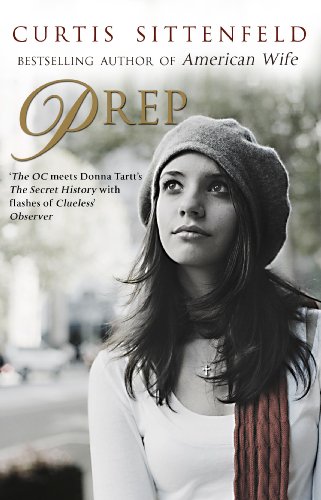
Summer Reading Challenge: Prep by Curtis Sittenfeld

Prep tells the story of four years in the life of Lee Fiora, who wins a scholarship to an exclusive boarding school in Massachusetts. Because most of the other students at Ault have rich parents, Lee feels inadequate and inferior. A lot of her unhappiness is caused by her own insecurities – people do try to be friends with her, but her shyness and paranoia makes her push them away. But Lee is more than just shy; she suffers from social anxiety. She agonises over every decision; she analyses every word anybody says to her. She misses out on parties, meals, trips to Boston and other social activities because she doesn’t know how to deal with them. She has trouble fitting in and feels out of place at Ault.

“Of course, now I wonder where I had gotten the idea that for you to participate in a gathering, the other people had to really, really want you to be there and that anything short of rabid enthusiasm on their part meant you’d be a nuisance…Sometimes now I think of all the opportunities I didn’t take – to get a manicure in town, to watch television in another dorm, to go outside for a snowball fight – and of how refusal became a habit for me, and then I felt it would be conspicuous if I ever did join in.”

Prep is a very well written book (though not quite “Sweet Valley High as written by George Eliot” as was quoted on the cover) and because Lee spends so much of her time observing people and situations, we get a lot of insights into every aspect of boarding school life. I grew up reading boarding school stories such as Enid Blyton’s Malory Towers and St Clare’s series and despite some obvious differences (the Enid Blyton books were set in Britain in the 1940s; Prep is set in America in what appears to be the 1980s or early 90s), there are actually some elements that are very similar. This is definitely not a children’s book, however, but one that will appeal to both adults and young adults.

As this is Lee’s story and we spend the entire book inside Lee’s head, whether or not you like the book will probably depend on what you think of her as a character. I immediately felt that she was somebody I could understand and identify with. She worried about a lot of the same things I worried about myself as a teenager (things that many of us probably worried about, actually, such as saying the wrong thing when answering questions in class, who to sit beside on the bus etc). I was never one of the most popular girls at school so I could relate to Lee and at first I was pleased to have discovered a character who felt so real, but after around 100 pages I started to feel differently about her. She began to come across as shallow, judgmental and difficult to like. I was torn between feeling sorry for Lee and feeling frustrated with her as she made one mistake after another. I also found some of her experiences painful to read about because they reminded me of all the things I didn’t like about going to school and being a teenager!

The other characters in the book (mostly Lee’s fellow students) are interesting because they represent all the different types of people we all knew when we were at school. I did feel that some of them were racial or class stereotypes, though as we only saw them through Lee’s eyes it’s difficult to know whether that was just the way Lee perceived them.

The story is narrated by an older Lee looking back on her school days and there are times when she recognises that she should have handled a situation differently and that she wasted a lot of opportunities, but there’s otherwise very little character development in this book. Although it would have been unrealistic to expect her to have a complete personality change, Lee is almost the same person at the end of her senior year as she was at the beginning of her freshman year, which is a bit disappointing. For this reason, I found Prep slightly dissatisfying, considering the book is almost 500 pages long, but I would recommend it as an accurate portrayal of the awkwardness of adolescence.

I received a copy of this book from Transworld Publishers as part of their Summer Reading Challenge – this is book 4/4 and completes the challenge

Bleak House Readalong: Chapters 1-7

Charles Dickens’ Bleak House is a book that, like Middlemarch by George Eliot, I have attempted to read before but abandoned after a few chapters. This summer I took part in a Middlemarch readalong and finally finished the book (and ended up loving it) so I’m hoping that this Bleak House readalong will be equally successful. I’ve read Chapters 1-7 this week and have now passed the point where I lost interest and stopped reading the last time.

In Bleak House, Dickens divides the narrative between an orphan called Esther Summerson and an unnamed omniscient narrator, which is an interesting technique but one that isn’t really working for me. The book begins by telling us about a long-running court case called Jarndyce and Jarndyce, which has gone on for so many years that the original parties in the suit are now dead and nobody can remember what it was about. In the opening chapter Dickens tells us about the fog that is enveloping London, which can be seen as a metaphor hinting that the court case and much of the following story is going to be shrouded in fog as well.

“Fog everywhere. Fog up the river, where it flows among green aits and meadows; fog down the river, where it rolls defiled among the tiers of shipping and the waterside pollutions of a great (and dirty) city. Fog on the Essex marshes, fog on the Kentish heights. Fog creeping into the cabooses of collier-brigs; fog lying out on the yards, and hovering in the rigging of great ships; fog drooping on the gunwales of barges and small boats…”

When Ada and Richard, two wards of court, are sent to live with John Jarndyce in his home, Bleak House, Esther is asked to accompany them. At the moment we don’t know why this is, or how Esther is connected with the Jarndyce suit. On their way to Bleak House, they meet a variety of interesting people including Mrs Jellyby, who seems more interested in Africa than in her own family, an eccentric old lady who has been closely following the Jarndyce case, and the old lady’s landlord, Mr Krook.

The first seven chapters are concerned with setting the scene and not much has happened yet. I’m not really a lover of long descriptive passages but most of those were confined to the first two chapters. From the third chapter onwards, when the story really began, I started to enjoy it.

We are introduced to a huge number of characters in the first seven chapters. So far I’ve found it easy enough to remember who they all are, but I suspect that it might get more confusing later. One of the problems I had on my first attempt at reading this book was that Esther irritated me – and unfortunately she’s still irritating me this time. I hope I’m going to like her more as the book continues. I also dislike Mr Skimpole. He takes money from Richard and Esther to pay his debts, but everyone seems to think that’s okay because he’s such a harmless, childlike person.

“When you come to think of it, it’s the height of childishness in you — I mean me —” said Mr Jarndyce, “to regard him for a moment as a man. You can’t make him responsible. The idea of Harold Skimpole with designs or plans, or knowledge of consequences! Ha, ha, ha!”

So far I’m undecided about this book. I’m not loving it yet, but I’m not hating it either. Although Bleak House is a very long book (over 700 pages in my edition) and I’m only around 80 pages into it, I don’t think I’ll have any trouble finishing it. I found with the Middlemarch readalong that making a long classic my secondary book to read alongside several shorter books is a method that works perfectly for me.

I’ll try to post another progress update next Wednesday, when I hope to be able to tell you that I’ve started to love the book!

You can see other participants’ thoughts at The Zen Leaf.

Readalong: Middlemarch by George Eliot

I have had two previous attempts at reading George Eliot’s Middlemarch but both times abandoned the book after a few chapters. When I saw that Nymeth was planning a readalong this summer, I thought this might give me the motivation to persevere and actually finish the book. I think part of the problem with my past attempts was that I found the book so long and slow-moving it didn’t hold my attention and I ended up being tempted by other books on my shelf. This time round I decided to do things differently. I started reading the book at the end of June alongside other books (something I don’t usually do – I prefer to concentrate on one book at a time) and worked slowly through it, interspersing it with an occasional shorter book. As it turned out, this was the perfect way for me to read Middlemarch, as it meant I could take my time and give it the attention it deserved. And this is a book that really benefits from being read slowly.

The plot is so layered, every sentence filled with so much meaning, that I’m sure there are a lot of things that I’ve missed and will have to pick up on a subsequent reading. It certainly is a book that you need to concentrate on. There are so many characters, who all seem to be related by marriage in some way, that I had to make notes as I was reading and would never have kept all the characters straight otherwise.  I highly recommend you do the same as I found my amateurish family trees became invaluable as I progressed through the book!

So what is Middlemarch about? Well, even after finishing the book I don’t really know how to describe the plot.  Middlemarch is the story, not just of one or two people, but of an entire town and its inhabitants. It portrays the atmosphere of life in a small community where everybody knows everybody else’s business and most people’s biggest concern is what their neighbours will think of them. The relationships and interactions between the characters are wonderfully complex and Eliot cleverly weaves their storylines together, so that the actions of one person may have unforeseen consequences on the life of another.

The prologue certainly seems to refer to Dorothea Brooke and at first it appears that the book is going to be about Dorothea and her marriage to the dry and scholarly Edward Casaubon.  Dorothea is an intelligent, sincere, idealistic girl who despite the warnings of her friends and family becomes determined to marry Mr Casaubon, insisting that he has a “great soul” and that nothing will give her greater happiness in life than assisting him with his studies.

“In this latter end of autumn, with a sparse remnant of yellow leaves falling slowly athwart the dark evergreens in a stillness without sunshine, the house too had an air of autumnal decline, and Mr. Casaubon, when he presented himself, had no bloom that could be thrown into relief by that background.”

Just as we’re becoming absorbed in her story, however, Dorothea disappears for several chapters and we are introduced to some new characters.  The first is a newcomer to Middlemarch: Tertius Lydgate, a young doctor with some new and radical ideas.  Soon after his arrival, Lydgate enters into a relationship with Rosamond Vincy, which proves to be just as difficult and disappointing as Dorothea’s marriage to Mr Casaubon.

“Lydgate could only say, “Poor, poor darling!” – but he secretly wondered over the terrible tenacity of this mild creature. There was gathering within him an amazed sense of his powerlessness over Rosamond. His superior knowledge and mental force, instead of being, as he had imagined, a shrine to consult on all occasions, was simply set aside on every practical question.”

We also follow Rosamond’s brother Fred Vincy as he tries to find his true vocation in life and to earn the respect of Mary Garth, the woman he loves.  These three storylines (and several other subplots) all run alongside each other, meeting and intersecting from time to time.

There are many things that make this book so impressive and so notable but the most striking, in my opinion, is the incredibly detailed characterisation. Every character Eliot introduces us to is interesting, nuanced and believable. She even gives her characters distinctive voices (literally!) – we are repeatedly told that Celia speaks “with a quiet staccato” and that Mr Brooke has a habit of repeating himself (“I thought you had more of your own opinion than most girls. I thought you liked your own opinion – liked it, you know”).

We see almost every conceivable personality type; we experience almost every imaginable human emotion. And most importantly, the characters develop throughout the book – they mature, they learn from their mistakes, they become better people.  I could find something to admire in almost all of the characters. They all have their own flaws and faults but also have some good qualities – this makes even less likeable people such as Mr Bulstrode interesting to read about and allows us to empathise with them.  There are plenty of characters who are very likeable, though.  I particularly loved Mary Garth and her father Caleb.

“Mary was fond of her own thoughts, and could amuse herself well sitting in twilight with her hands in her lap; for, having early had strong reason to believe that things were not likely to be arranged for her peculiar satisfaction, she wasted no time in astonishment and annoyance at that fact. And she had already come to take life very much as a comedy in which she had a proud, nay, a generous resolution not to act the mean or treacherous part. Mary might have become cynical if she had not had parents whom she honored, and a well of affectionate gratitude within her, which was all the fuller because she had learned to make no unreasonable claims.”

I am not usually very good at spotting themes in books, but I could find several in Middlemarch. The most obvious is marriage and how it often fails to live up to our expectations (i.e. Dorothea Brooke and Mr Casaubon; Rosamond Vincy and Tertius Lydgate). In her portrayals of these marriages, George Eliot never places the blame entirely on either the husband or the wife.  Instead, she shows how an unhappy or problematic marriage can be caused by personality differences, unrealistic idealism and a failure to understand the person we are married to.

“All these are crushing questions; but whatever else remained the same, the light had changed, and you cannot find the pearly dawn at noonday. The fact is unalterable, that a fellow-mortal with whose nature you are acquainted solely through the brief entrances and exits of a few imaginative weeks called courtship, may, when seen in the continuity of married companionship, be disclosed as something better or worse than what you have preconceived, but will certainly not appear altogether the same.”

Another theme is change: we should remember that although Middlemarch was published in the 1870s, it was set around forty years earlier at a time of great change: there were changes in politics (the Reform Bill of 1832); changes in transport (the arrival of the railway) and changes in medicine (as portrayed through Tertius Lydgate’s new ideas and theories).

There are so many other aspects of this book that I wanted to discuss here, but I have to stop somewhere!  I haven’t even mentioned Will Ladislaw, who is made to feel unwelcome in Middlemarch by his relative, Mr Casaubon; or Mr Farebrother, who is in love with Mary Garth; or Raffles, who is as close to a villain as we get in Middlemarch.

After reaching the final page I can now see why so many people love this book so much. I would recommend Middlemarch to all lovers of Victorian fiction who are prepared to invest the time it takes to read such a long and complex novel. I don’t think this book would be for everyone though. If you prefer faster-paced stories you may have trouble getting into it, as I did on my earlier attempts. My advice to you would be to stick with it, take your time and savour every word, and the story does become more compelling as it goes on.

If I’m going to be completely honest, there are a lot of classics that I’ve enjoyed a lot more than this one, but I can’t think of any that are greater in scope, more insightful or offer a more penetrating study of humanity. After spending the summer with Dorothea and Will, Tertius and Rosamond, Fred and Mary, and the others, I’m really going to miss them all.

I’ll leave you with some more quotes from the book:

“But indefinite visions of ambition are weak against the ease of doing what is habitual or beguilingly agreeable; and we all know the difficulty of carrying out a resolve when we secretly long that it may turn out to be unnecessary.”

“And certainly, the mistakes that we male and female mortals make when we have our own way might fairly raise some wonder that we are so fond of it.”

Please see this post at Things Mean a Lot for other bloggers’ thoughts on Middlemarch

Review: The Tapestry of Love by Rosy Thornton

When Rosy Thornton offered me a review copy of her new novel, The Tapestry of Love, I thought it looked and sounded wonderful – but I wasn’t sure what I would think of it as it’s a bit different from the type of book I usually read. I needn’t have worried though, because I thoroughly enjoyed it! I admit that I had previously been unfamiliar with Rosy Thornton and her books, but now that I’ve been enlightened I would definitely like to read more of her work.

The Tapestry of Love is the story of Catherine Parkstone, a forty-eight year old divorced woman who decides to sell her home in England and buy a cottage in the mountainous Cévennes region of France. Catherine intends to start her own business providing home furnishings for her neighbours, but unfortunately things don’t go quite according to plan. And her life becomes even more complicated when her sister Bryony arrives on a three month sabbatical!

Although the book has a quiet, gentle tone, the plot was interesting enough to hold my attention from beginning to end. There were enough moments of drama to keep the story moving along and some humourous scenes too – for example, Catherine’s telephone conversations with her daughter Lexie, an aspiring journalist who is feeling increasingly disillusioned with her job at a cake-decorating magazine.

I particularly enjoyed reading about all the little details of Catherine’s new life: gardening, cooking, beekeeping, shopping at the market. The real highlight of this book though, is the sense of community: when Catherine first arrives in La Grelaudiere she is a stranger, an outsider, but over time she begins to gain the trust and respect of her neighbours and starts to forge some real friendships. We get to know Monsieur Bouschet and his wife; the reclusive Guillaume; the elderly widow Madame Volpiliere and the enigmatic Patrick Castagnol. The author skilfully brings the characters to life and makes them feel completely realistic.

I’ve never been to the Cévennes, but the mountains, remote hamlets and picturesque villages are described so vividly I could easily build a picture of the area in my mind. While I don’t think I’d be brave enough to do what Catherine did and leave my home and family to move there all on my own, it does seem like a beautiful and peaceful place to live, the kind of place you could easily fall in love with.

I very much enjoyed spending time in the mountains with Catherine and her neighbours. If you’re interested in France, needlework, nature or good food, or if you’re simply looking for an absorbing and well-written story with likeable, believable characters, you should find plenty here to keep you happy.

Recommended

I received a copy of this book from the author for review

Picture from Wikipedia

Summer Reading Challenge: After You by Julie Buxbaum

Eight-year-old Sophie has been left traumatised after witnessing the murder of her mother, Lucy, in the street near their London home. Sophie’s reaction to the tragedy is simply to stop speaking. Lucy’s best friend, Ellie Lerner, has travelled from America to London to try to help her goddaughter and she becomes determined to break through Sophie’s self-imposed silence. Knowing how much Sophie loves reading books, Ellie decides to introduce her to one of her own childhood favourites – The Secret Garden by Frances Hodgson Burnett.

However, Ellie has plenty of problems of her own. She’s left her husband Phillip at home in Boston – and she’s not sure if she wants to go back to him. Lucy’s grieving husband, Greg, is drinking too much and Ellie doesn’t want to leave him alone with Sophie just yet. And her divorced parents have just announced that they’re getting married again.

I was very unsure about this book at first; it looked very ‘chick lit’ and I’m not usually a fan of chick lit. So why did I request it from Transworld for their Summer Reading Challenge, you might ask? Well, the plot sounded interesting and the Secret Garden connection piqued my curiosity (The Secret Garden was one of my favourite books when I was a child – I really need to reread it sometime!). It’s nice to think that sharing a special book with someone can help them through a difficult time. I also learned a few interesting facts about the book – I never knew Frances Hodgson Burnett was inspired by the walled garden at Great Maytham Hall, for example.

The author has given Sophie a well-developed personality of her own, making her a believable and endearing eight-year-old. She’s a girl who prefers reading to playing games and as a result isn’t very popular with other children her age; Ellie’s own love of books helps her to form a bond with Sophie and watching their friendship develop was one of the highlights of the story.

This book is not just about Sophie though. I was kept guessing how Ellie’s relationships were going to resolve themselves, as it wasn’t immediately obvious what was going to happen. Would she go back to her husband? Or would she end up with Greg or someone else entirely? As the main character and narrator, I didn’t always agree with Ellie’s actions (particularly the way she had left Phillip without giving him a proper explanation) but as the book progresses it becomes obvious that she is grieving too – and not just for Lucy – and is trying to work out what she wants from life.

Another aspect of the book I found interesting was the way Ellie, as an American woman from Boston, had to adapt to the British culture and life in London.

So, although this was not a book I would usually have chosen to read, I did enjoy it. It was a much more complex and emotional story than I had been expecting with some important messages about love, loss, relationships and family.

I received a review copy of this book from Transworld Publishers as part of their Summer Reading Challenge.

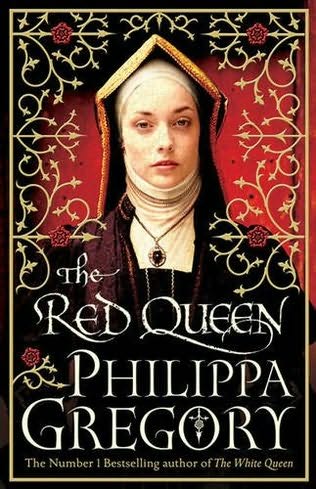
Review: The Red Queen by Philippa Gregory

This is the second book in Philippa Gregory’s new series set during the Wars of the Roses, a tumultuous period of English history in which the rival houses of York and Lancaster struggled for power. In The White Queen we met Elizabeth Woodville, wife of Edward IV of York, sister-in-law of Richard III and mother of the two young princes who mysteriously disappeared in the Tower of London in 1483. The Red Queen is the story of another woman who also played an important part in the Wars of the Roses: Margaret Beaufort of Lancaster, the mother of King Henry VII.

Although this is the second book in the series, I wouldn’t really describe it as a sequel – that is, The Red Queen doesn’t just pick up where The White Queen left off. The two books overlap somewhat and cover some of the same events, but from opposing sides of the conflict. You don’t really need to have read the first book to understand this one, although it would probably make sense to read them in the correct order. I really like the concept of two books each telling the story from a different perspective; throughout much of The White Queen, Margaret Beaufort and the Tudors were shadowy characters in the background, plotting and scheming from afar, so it was good to have them take centre stage in The Red Queen.

One of the themes running throughout the book is Margaret’s belief that God has chosen her to be another Joan of Arc, who will lead the House of Lancaster to victory, and that God’s will is for her son Henry Tudor to be crowned King. Margaret was not very likeable – in fact she came across as a very cold, ambitious and unpleasant person – but as far as I can tell, this is probably true of the historical Margaret. I was surprised that I could still enjoy this book despite the narrator being so unsympathetic; sometimes obnoxious characters can be fun to read about, and I found Margaret’s uncharitable thoughts about the House of York and the Woodville family quite funny at times.

I can’t really comment on the historical accuracy of this book because I have never studied the period in any depth – however, my lack of knowledge meant that I could just concentrate on enjoying the story! The Wars of the Roses were a complex and long-running series of conflicts, during which many of the key players changed their allegiances several times (and just to confuse things further, many of them also had the same names – lots of Henrys and Edwards, for example) but Philippa Gregory has made it easy to understand and follow what’s going on. I do think a more detailed family tree would have been helpful though – the one provided in the book was incomplete and I didn’t find it very useful.

The book is written in the same format as The White Queen, with most of the story being told in the first person present tense, occasionally switching to the third person to relate important events at which Margaret was not present, such as the Battle of Bosworth Field. I really like the way Philippa Gregory writes battle scenes using language that I can understand, as I often find reading about battles very confusing! The whole book is written in quite simplistic prose and can be repetitive at times, but it always held my attention and drew me into the story.

If you are new to the Wars of the Roses – a fascinating period of history – then I would recommend either The Red Queen or The White Queen as an excellent starting point. I also think that if you’ve tried Philippa Gregory in the past and didn’t find her books to your taste, it could be worth giving her another chance as these newest books are quite different from the Tudor ones that I’ve read.

Recommended

I received a copy of this book from Simon & Schuster UK for their Red Queen Blog Tour