A Short Story for Wednesday: The Signal-Man by Charles Dickens

The Signal-Man by Charles Dickens (1866)

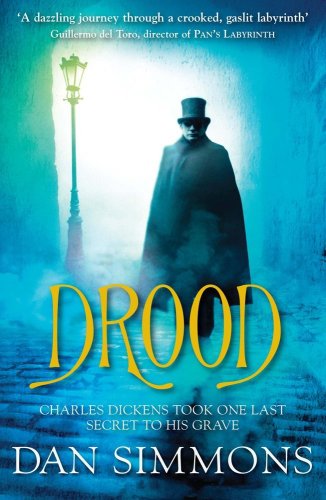
After recently reading Drood by Dan Simmons which described Charles Dickens’ involvement in the Staplehurst Rail Disaster, I decided to read Dickens’ short story, The Signal-Man. Although it doesn’t directly reference the Staplehurst incident, The Signal-Man was written the following year so was almost certainly influenced by his experience.

Whilst taking a walk one evening, the unnamed narrator discovers an isolated railway station and makes the acquaintance of the lonely signalman. The signalman tells him of a ghostly figure that he has previously witnessed on two occasions standing below the danger light in the entrance to the tunnel. On both occasions, the ghost’s appearance has been followed by tragedy. Now the spectre has appeared again and the signalman is convinced that another disaster is imminent…

This is the first of Charles Dickens’ short stories that I’ve ever read and having read some of his full-length novels, I was surprised by how quick and easy The Signal-Man was to read. Although the outcome of the story was very predictable, Dickens creates a wonderfully eerie and foreboding atmosphere. Highly recommended if you’re in the mood for a classic ghost story.

“His post was in as solitary and dismal a place as ever I saw…So little sunlight ever found its way to this spot, that it had an earthy, deadly smell; and so much cold wind rushed through it, that it struck chill to me, as if I had left the natural world.”

Read The Signal-Man online

* Clayton Tunnel picture – in the public domain

Review: The Castle of Otranto by Horace Walpole

When I first opened this book I was confronted by page after page of almost continuous text with virtually no paragraph breaks and no quotation marks or any way of marking when one person stops speaking and the next begins. This made it difficult to follow the dialogue but otherwise the story is easy enough to understand considering it was published in 1764.

Manfred, the Prince of Otranto, has arranged a marriage between his fifteen year old son Conrad and the princess Isabella. However, on the day of the wedding Conrad is found crushed to death in the courtyard beneath an enormous black feathered helmet which appears to have fallen from the sky. As his son is obviously now in no position to go ahead with the wedding, Manfred decides to marry Isabella himself, but Isabella has other ideas…cue a never-ending chain of misunderstandings, coincidences and mayhem.

The Castle of Otranto is historically important because it was the first gothic novel – complete with haunted castles, underground tunnels, damsels in distress, knights, ghosts and paintings that move – but don’t expect a piece of great literature. In places the plot is so ridiculous and the writing so melodramatic that it’s actually hilarious.

The Castle of Otranto is funny and entertaining – and very short – but I can’t imagine ever wanting to read it again. For a better introduction to gothic fiction I would recommend The Mysteries of Udolpho by Ann Radcliffe, which is a longer book but much better written.

Genre: Gothic Fiction/Pages: 176/Publisher: Oxford World’s Classics/Year: 1998 – originally published 1764/Source: My own copy bought new

The Sunday Salon: My favourite bookshop

Sunday again! They seem to be coming round very quickly. I didn’t manage to post any reviews last week, but that doesn’t mean I haven’t been reading. I finished The Castle of Otranto by Horace Walpole yesterday (my first book for the Gothic Novels Challenge) so you can look out for my review tomorrow. As you may know, I’ve also been trying to read at least one short story per week as part of a personal challenge – last week I read The Signal-Man by Charles Dickens and will be posting my review of that one soon too.

Yesterday I went to my favourite bookshop, Barter Books in Alnwick. If you’re ever in the north east of England you should pay it a visit – it’s one of the biggest second-hand bookstores in the country and you’ll be able to find almost any book you can think of. It was converted from an old Victorian train station, so the building is enormous and complete with open fires and model train sets – browsing through all the books can be overwhelming though, especially when you know your family are waiting impatiently outside in the car! (There’s free parking by the way, but it gets very busy – particularly on a rainy day like yesterday.) It’s probably best to go with a specific list of books in mind rather than trying to look at everything.

See their website for more information:
http://www.barterbooks.co.uk

What are your favourite bookshops?

* Picture of Barter Books by wfmillar used under Creative Commons Attribution Share-alike license 2.0

The Classics Challenge


I’ve been trying to decide whether to sign up for this challenge, but in the end I couldn’t resist it. The challenge is hosted by Trish and runs from April 1 – October 31 2010.

There are 3 levels to choose from:

1. Classics Snack – Read FOUR classics
2. Classics Entree – Read FIVE classics
3. Classics Feast – Read SIX classics

Here are the rules from the challenge blog:

**Rules/Guidelines
1. Cross-posting with other challenges is allowed (and encouraged!)
2. Audiobooks are fine
3. Re-reads are acceptable, BUT books must be finished after April 1st to count for the challenge
4. Lists don’t have to be set in stone; you can change your selections at any time
5. Have Fun!!
6. You do NOT need a blog to participate.

I’m signing up at the Classics Feast level and have posted my list below (there are lots of other classics I want to read too so I might change my mind about some of these). There will also be some crossovers with the other challenges I’m participating in – e.g. the Brontes challenge, Our Mutual Read challenge and Gothic Novels challenge.

Books read for this challenge (updated 8th April 2010):

The Doctor’s Wife by Mary Elizabeth Braddon
Villette by Charlotte Bronte
The Warden by Anthony Trollope
The Haunted Hotel by Wilkie Collins
Frankenstein by Mary Shelley
Bleak House by Charles Dickens

Fiendish Fridays #6: Mrs Danvers

Fiendish Fridays is hosted here at She Reads Novels, profiling some of our favourite literary villains. You can see a complete list of previous Fiends and suggest one of your own here.

This week’s Fiend is a controversial one – she is often cited as one of literature’s greatest female villains, but some people don’t consider her to be a villain at all. What do you think?

#6 – Friday 19 March 2010: Mrs Danvers

Name: Mrs Danvers

Appears in: Rebecca by Daphne du Maurier

Who is she? Mrs Danvers is the housekeeper at Manderley, the house where Maxim de Winter lived with his wife Rebecca before her tragic death. When Maxim brings home his second wife whom he has met in Monte Carlo, Mrs Danvers is not happy!

What is she like? The character was famously portrayed by Judith Anderson who received an Oscar nomination for her role in the 1940 Alfred Hitchcock film. In the book she is described as ‘someone tall and gaunt, dressed in deep black, whose prominent cheek-bones and great, hollow eyes gave her a skull’s face, parchment-white, set on a skeleton’s frame’.

What makes her a Friday Fiend? She does her best to make the second Mrs de Winter unwelcome at Manderley by constantly undermining her confidence and making her the target of some cruel tricks, causing her to feel inferior to Rebecca in every way.

Redeeming features: Her devotion and loyalty to Rebecca even after her death can be seen as an admirable quality and is the reason for her behaving the way she does.

Have you read Rebecca? What do you think about this week’s Friday Fiend?

Review: Drood by Dan Simmons

I think I liked the idea of this book more than the book itself. A gothic mystery/horror story set in Victorian London, featuring Charles Dickens and narrated by Wilkie Collins sounded like exactly the kind of book I would enjoy. Unfortunately it didn’t quite live up to its fascinating premise and I was left with mixed feelings about it.

Drood is told in the form of a memoir written by Wilkie Collins (a close friend and collaborator of Charles Dickens, as well as being the author of The Woman in White, The Moonstone and many other novels and plays) and addressed to an unknown reader in the future – that is, to us.

The story begins with the Staplehurst Rail Disaster of 1865, when the train on which Charles Dickens is travelling crashes, sending most of the carriages plummeting over a viaduct into the riverbed below. Luckily Dickens is in one of the few carriages that doesn’t fall. As he helps to rescue people from the wreckage, he encounters a mysterious figure dressed in a black cape who introduces himself only as ‘Drood’. In the days following the train crash, Dickens becomes obsessed with finding Drood and discovering his true identity. With the reluctant help of Wilkie Collins, Dickens begins a search for Drood which leads them through the dark alleys and underground catacombs of London.
Interspersed with the Drood storyline are long passages in which we learn about the family life and living arrangements of both Dickens and Collins, how much they earned for their various novels, their walking tour of Cumberland in 1857, the details of Wilkie’s laudanum addiction, the story of the Swiss chalet given to Dickens by his friend Charles Fechter, Dickens’ interest in mesmerism and every other piece of biographical information you could possibly want to know. Simmons also incorporates some genuine historical letters and quotes which adds some authenticity to the book. I can see why some readers might find this boring, but I enjoyed these sections – I thought the descriptions of Dickens’ reading tours were particularly fascinating.

Simmons has attempted to imitate Wilkie Collins’ narrative style (including the Victorian habit of talking directly to the reader) but I felt that he didn’t get it quite right. He also uses a lot of words and phrases that just sound either too modern or too American to me (the real Collins or Dickens would have walked on the pavement rather than the sidewalk, for example). This is only a small complaint though, as overall, Dear Reader, I thought his style was quite convincing.

I do like the way the book takes us through the process of researching and writing The Moonstone. However, some important plot points are given away so if you haven’t already read The Moonstone and think you might want to, then I would suggest you read it before you begin Drood. It might also be a good idea to read The Mystery of Edwin Drood first (I didn’t and kept wishing I had). Another thing I liked about the book was the way Simmons deliberately tries to confuse and mislead the reader – at several points in the novel we are made to wonder whether something we’ve just read is real or an illusion.

This journey through the cemeteries, opium dens and underground sewers of London is a good atmospheric read for a cold dark night, but I was slightly disappointed by it and despite reading all 775 pages I still can’t decide whether I enjoyed it or not! However, it will almost certainly leave you wanting to learn more about Dickens and Collins and their works, which can only be a good thing. If you like this type of book I would also recommend The Quincunx by Charles Palliser – another book set in Victorian England and written in a 19th century style.
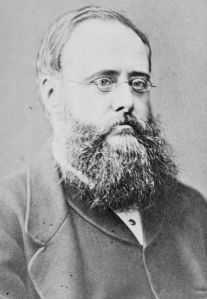
Before I come to the end of this review I would just like to say a few words in defence of poor Wilkie Collins, who happens to be one of my favourite authors. Simmons clearly doesn’t rate Wilkie as a writer (I saw an interview where he described him as ‘mediocre’) and in Drood, the character is portrayed as a not very talented, second-rate author who is consumed with jealousy of the more successful Dickens and becomes increasingly bitter and unlikeable as the book goes on. I admit I’m biased because I’ve absolutely loved every Wilkie Collins book I’ve read; he was a much better writer than Drood suggests and definitely not mediocre, at least in my opinion!

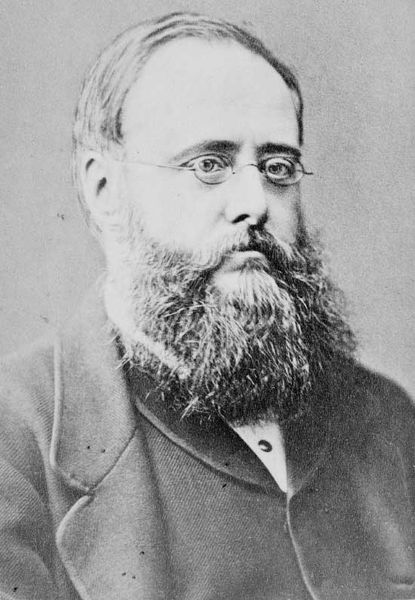
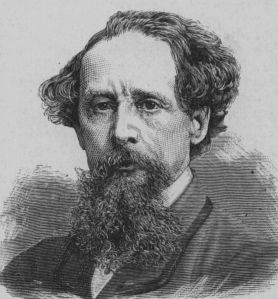
*Pictures of Charles Dickens (top) and Wilkie Collins (bottom) both in the public domain

Genre: Historical Fiction/Horror/Pages: 775/Publisher: Quercus Fiction/Year: 2009/Source: My own copy bought new

A Short Story for Saturday: The Artist of the Beautiful by Nathaniel Hawthorne

The Artist of the Beautiful by Nathaniel Hawthorne (1844)

Owen Warland is a young watchmaker who devotes his life to the creation of a beautiful mechanical butterfly which he presents to his friend Annie as a wedding gift. Annie and her family are not artists and they are unable to appreciate the beauty of Owen’s butterfly or to understand why he wasted so much time making it when he could have been doing something more useful. Each character in the story represents a different side of human nature and it’s interesting to see how Owen’s butterfly reacts differently to each of them.

This is a beautifully written story with the message that not everything in life needs to have a purpose – some things are worth doing just for the sake of doing them. Despite being ridiculed by the other townspeople, Owen doesn’t let other people’s opinions stop him in his pursuit of spiritual happiness.

“Yes, Annie; it may well be said to possess life, for it has absorbed my own being into itself; and in the secret of that butterfly, and in its beauty – which is not merely outward, but deep as its whole system – is represented the intellect, the imagination, the sensibility, the soul of an Artist of the Beautiful!”

Read The Artist of the Beautiful online here

* Butterfly picture by Galawebdesign used under a Creative Commons Attribution 3.0 Unported license.