Typically British Reading Challenge 2010

This challenge is hosted by Book Chick City and runs from 1st Jan 2010 – 31st Dec 2010. The idea is to read books by British authors.

There are four levels:

• “Put The Kettle On” – Read 2 Typically British novels.
• “Gordon Bennett” – Read 4 Typically British novels.
• “Bob’s Your Uncle” – Read 6 Typically British novels.
• “Cream Crackered” – Read 8 Typically British novels.

I’m joining at the Cream Crackered level. This is one challenge I shouldn’t have a problem completing!

For more information please see the challenge post at Book Chick City.

Books read for this challenge (Updated 8 April 2010)

1. The Tenant of Wildfell Hall by Anne Bronte
2. The Castle of Otranto by Horace Walpole
3. Watership Down by Richard Adams
4. The Doctor’s Wife by Mary Elizabeth Braddon

Forgotten English: 2010 Calendar

I received this 2010 calendar for Christmas and thought I’d mention it here as I think it might appeal to other book lovers too (although it’s not exactly book-related).


The calendar has a tear-off page for every day of the year and each page features a different word that has now disappeared from the modern English language, along with an item of folklore relevant to that particular date.

You can order the calendar through Jeffrey Kacirk’s website (link below) and it’s also available from Amazon.
http://www.forgottenenglish.com/Calendar.htm

The Sunday Salon: 27th December 2009

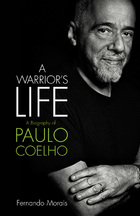
I hope you all had a great Christmas and are looking forward to 2010! I managed to get more reading done than I expected this week and posted two reviews. The first was a review of an old favourite, A Christmas Carol by Charles Dickens. This counted towards the Christmas Reading Challenge. One Christmas book is enough to meet the requirements of the challenge, but I’m hoping to read another one this week before the challenge ends on Thursday. The second book I reviewed was A Warrior’s Life: A Biography of Paulo Coelho by Fernando Morais. I received a copy from LibraryThing Early Reviewers and would probably not have thought about reading it otherwise, but I still found it quite interesting.

I was thinking this morning about how the most memorable characters in books are often the villains, rather than the heroes and heroines! I’m considering a weekly feature in which I would profile a different literary villain every week, but I’m not sure if anyone is already doing this? If you know of any features like this, please comment and let me know so I can make sure mine is not exactly the same.

I’m also going to be looking ahead to 2010 this week. It will be my first full year of book blogging and my first full year of reading challenges, so I’ll have to plan what books I need to read in January for challenges etc.

Well, have a great week – and enjoy your New Year celebrations!

New Book Arrivals – 27th December 2009

Some books that I received for Christmas. What did Santa bring you this year?
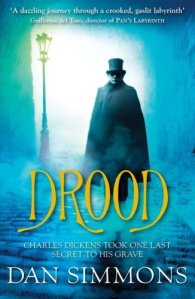
In 1865 Charles Dickens, the world’s most famous writer, narrowly escapes death in the Staplehurst Rail Disaster. He will never be the same again. A public hero for rescuing survivors, he slowly descends into madness as he hunts the individual he believes to be responsible for the carnage: a spectral figure known only as Drood.
His best friend, Wilkie Collins, is enlisted for the pursuit. Together they venture into Undertown, the shadowy, lawless web of crypts and catacombs beneath London. Here Drood is rumoured to hold sway over a legion of brainwashed followers. But as Wilkie spirals ever further into opium addiction and jealousy of the most successful novelist, he must face a terrifying possibility: is Charles Dickens really capable of murder?
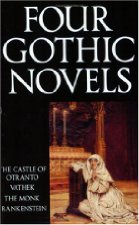
Macabre and melodramtic, set in haunted castles or fantastic landscapes, Gothic tales became fashionable in the late eighteenth century with the publication of Horace Walpole’s The Castle of Otranto (1764). Crammed with catastrophe, terror, and ghostly interventions, the novel was an immediate success, and influenced numerous followers. These include William Beckford’s Vathek (1786), which alternates grotesque comedy with scenes of exotic magnificence in the story of the ruthless Caliph Vathek’s journey to damation. The Monk (1796), by Matthew Lewis, is a violent tale of ambition, murder, and incest, set in the sinister monastery of the Capuchins in Madrid. Frankenstein (1818, 1831) is Mary Shelley’s disturbing and perennially popular tale of young student who learns the secret of giving life to a creature made from human relics, with horrific consequences. This collection illustrates the range and the attraction of the Gothic novel.

The first in a stunning new series, The Cousins War, is set amid the tumult and intrigue of The War of the Roses. Internationally bestselling author Philippa Gregory brings this family drama to colourful life through its women, beginning with the story of Elizabeth Woodville, the White Queen The White Queen tells the story of a common woman who ascends to royalty by virtue of her beauty, a woman who rises to the demands of her position and fights tenaciously for the success of her family, a woman whose two sons become the central figures in a mystery that has confounded historians for centuries: the Princes in the Tower whose fate remains unknown to this day. From her uniquely qualified perspective, Philippa Gregory explores the most famous unsolved mystery, informed by impeccable research and framed by her inimitable storytelling skills.

[Synopsis for above books taken from Amazon.co.uk]

Review: A Warrior’s Life: A Biography of Paulo Coelho by Fernando Morais

Biographies are difficult to review – no matter how good the biographer’s writing might be, the success of the book really depends on how interesting the subject of the biography is. Fortunately for Fernando Morais and the reader, Paulo Coelho has evidently had a far more eventful life than the average person. The first half of the book, which dealt with Coelho’s early life, was fascinating although I found I started to lose interest nearer the end.

Paulo Coelho was born in Rio de Janeiro, Brazil, in 1947. As a teenager he was a rebel who performed badly at school and was constantly getting into trouble, insisting that all he wanted to do was read and write. His parents, not knowing what else to do with him, sent him to a psychiatric clinic where he was given electroshock therapy. Paulo later began experimenting with drugs and became involved in black magic. In 1974, he was arrested and imprisoned after being accused of subversive activities against the Brazilian government. His life reached a turning point in 1986, when he went on a pilgrimage to Santiago de Compostela, a journey that inspired one of his first major books, The Pilgrimage. Today, Coelho is one of the world’s most popular authors and has sold over 100 million copies worldwide.

Many biographers (particularly the authors of unauthorised biographies) allow their own opinions and speculations to get in the way of the facts – Fernando Morais does not do this. The book was written with the full cooperation of Paulo Coelho and Morais writes in a professional, factual style. He was given full access to Coelho’s diaries which date back to his teenage years, though he repeatedly points out that Coelho tended to fantasize in his diary entries and therefore we can’t place too much reliance on them. However, the inclusion of the diary entries, along with other fragments of Coelho’s writing, gives us a better insight into his mind.

Morais looks at every stage of Coelho’s life in so much depth it’s obvious that he spent a lot of time researching the book thoroughly. He provides a complete list of all the people he interviewed during his research including some of Paulo’s friends, family members and former girfriends. Some of Coelho’s fans may be disappointed and disillusioned as he is often portrayed in a bad light, but as the biography was published with Coelho’s blessing, he was obviously happy for us to read about the negative aspects of his character as well as the positive.

A Warrior’s Life was an interesting book to read, despite the fact that before beginning it I knew almost nothing about Paulo Coelho. I received a review copy from LibraryThing Early Reviewers and was glad to have an opportunity to read a biography I would probably never have read otherwise.

Genre: Non-Fiction (Biography)/Pages: 496/Publisher: Harper Collins/Year: 2009/Source: Received from LibraryThing Early Reviewers

Booking Through Thursday: History

Here’s this week’s question from Booking Through Thursday.

Given the choice, which do you prefer? Real history? Or historical fiction? (Assume, for the purposes of this discussion that they are equally well-written and engaging.)

Historical fiction is my favourite genre of book. If I’m reading real, factual history (even when it’s well-written) I sometimes find it boring, whereas historical fiction helps to bring the past to life in an entertaining, enjoyable way. I often find I learn a lot about historical events through reading fiction. However, it’s important to remember that it is fiction and not necessarily 100% accurate.

I very rarely read non-fiction, so if anyone would like to recommend some well-written and engaging history books it would be very much appreciated.

What about you? Do you prefer real history or historical fiction?