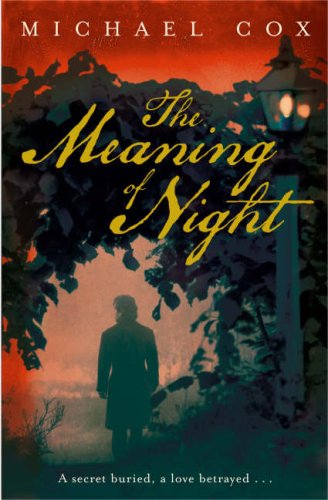
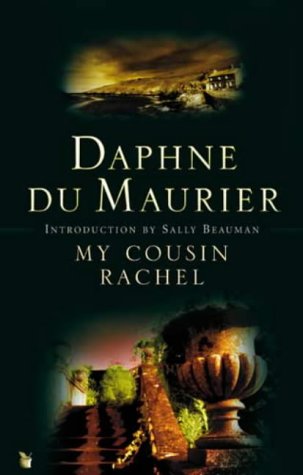
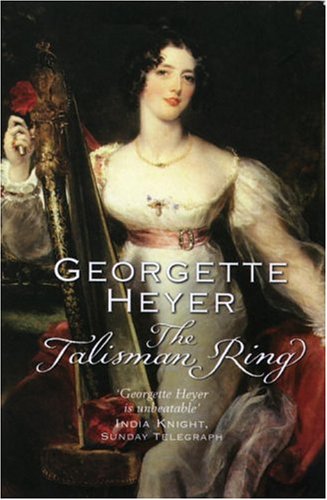
The books are now on my TBR list for 2010.
Review: The Moonlit Cage by Linda Holeman
“I have always been told I was wicked…”
I really enjoyed this book and found it difficult to put down. The first two thirds, which took place in Afghanistan and India, were fascinating, though I didn’t like the way the storyline developed after Darya’s arrival in England. The only other problem I had with the book was that while Darya was an interesting, likeable character, I found David Ingram, as the hero of the story, quite boring and two-dimensional.I admired the way Darya’s strength and courage helped her to survive all kinds of pain and abuse.
New Book Arrivals – 25th November 2009
I won these two books in a competition on the Portobello Books website. It was a nice surprise as I’m not usually lucky enough to win anything!
The End of the Alphabet by CS Richardson (signed copy)
Teaser Tuesday: The Moonlit Cage
Teaser Tuesdays is a weekly meme hosted by MizB of Should Be Reading. The rules:
* Grab your current read
* Open to a random page
* Share two teaser sentences from somewhere on that page (avoiding spoilers)
One day as I ground roots, putting all my anger into the satisfying crunch of the stone against stone, she put her hand on my arm, and I stopped.
“Sometimes, Darya, a curse may be a blessing,” she said.
p. 114 “The Moonlit Cage” by Linda Holeman
Musing Mondays: Reading at School
What books did you read while in school? Were there any that you particular liked, or even hated? Did any become lifelong favourites?
Here are a few of the books we read at school. I’m sure there must have been lots of others, but these are the only ones I can remember at the moment!
Beowulf – I remember reading this at school when we were 11 or 12 – it would have been an abridged version, though, and definitely not in the original Old English!
The Pearl by John Steinbeck – I’ve had a copy of this on my shelf for years but have never read it since I was at school. Maybe I should try reading it again sometime.
Frankenstein’s Aunt by Allan Rune Pettersson – I didn’t enjoy reading this at all. I suppose the teacher chose it thinking it would appeal to 12/13 year olds – but it didn’t appeal to me.
Across the Barricades by Joan Lingard – We read this in Year 10 (age 14/15). Considering this would have been in the 1990s when Northern Ireland was often in the news, it was quite an appropriate book to read – the story took place in Belfast and the two main characters were Kevin, a Catholic boy, and Sadie, his Protestant girlfriend. I can’t remember much about the story, though.
Roll of Thunder, Hear My Cry by Mildred D. Taylor – This was one of the best books we read at school. It reminded me of To Kill A Mockingbird (another teacher had recommended TKAM to me the previous year and I loved it).
Shakespeare – Like most English classes, we also read some Shakespeare – Romeo and Juliet, A Midsummer Night’s Dream and Macbeth.
I also read Pride and Prejudice, Mansfield Park, Animal Farm and Silas Marner, but these were books that my English teacher told me I should read, rather than books I had to read.
I won’t list everything I read outside of school, as there would be far too many books to mention here!
Review: The Woman in White by Wilkie Collins
There, in the middle of the broad bright high-road – there, as if it had that moment sprung out of the earth or dropped from the heaven – stood the figure of a solitary Woman, dressed from head to foot in white garments, her face bent in grave inquiry on mine, her hand pointing to the dark cloud over London, as I faced her.
I first read The Woman in White in 2006 – it was the first Wilkie Collins book I ever read and the one that turned me into a huge fan of his work. I just wish I had discovered him sooner!
The Woman in White was the most popular book of the 1860s; when it was originally serialised in Charles Dickens’ periodical All The Year Round large crowds gathered outside the newspaper offices every time the latest edition went on sale; you could buy Woman in White perfume, bonnets and shawls and dance the Woman in White waltz…and all of this was 150 years before Harry Potter!
So what is it about? I won’t go into the plot in too much detail, as I don’t want to spoil the fun for those of you who haven’t read it yet. The story begins with drawing master Walter Hartright’s meeting on a lonely London road with a mysterious woman dressed all in white who has escaped from an Asylum. The next day Walter takes up a teaching position at Limmeridge House in Cumberland where he finds that one of his students, Laura Fairlie, bears a striking resemblance to the woman in white…
The novel follows an epistolary style, meaning it is narrated by several different characters in turn, sometimes in the form of journal entries or letters. I love the way Collins gives each of his narrators a unique ‘voice’ – he really makes the characters come alive. Another thing I love about Wilkie Collins’ writing is his sense of humour…some of the scenes involving Laura’s hypochondriac uncle Mr Fairlie are hilarious!
Marian Halcombe, Laura Fairlie’s sister, is one of my favourite female characters in literature. Contrary to the usual portrayal of 19th century women, she is a brave, intelligent, courageous person who on several occasions puts herself in danger in order to protect her sister Laura. Another great character is Count Fosco. One of the most unusual and memorable villains I’ve ever encountered in any book, he’s an old, fat, opera-loving Italian completely devoted to his pet canaries and white mice. I remember being surprised when I first read the description of Fosco, as he wasn’t what I had been expecting at all!
The Woman in White is an example of the genre known as sensation fiction – including elements such as forgery, identity theft and insanity. Although it was written in the 19th century it’s as exciting and gripping as a modern day thriller – even when reading the book for the second time and knowing what was going to happen! It’s a long book (569 pages in my Penguin Popular Classics version) but there’s enough tension and suspense to keep the reader interested right through to the end.
There are some classics that are a struggle to read but you persevere with them simply because they’re classics and you feel as if you should. The Woman in White does not fall into that category – yes, it’s a classic but it’s also one of the most readable and enjoyable books I’ve ever read.
If you liked this book I would recommend you read The Moonstone, Armadale or No Name next. As I mentioned at the start of this review, I am a big fan of Wilkie Collins so you can expect to see more of my reviews of his work coming soon!
Highly Recommended
Genre: Classics – Sensation Fiction/Pages: 576 pages/Publisher: Penguin Popular Classics/Year: Originally published 1859/Source: Purchased new from Amazon.co.uk
This review is part of my Great Books series.
100+ Reading Challenge 2010

The rules:
1. The goal is to read 100 or more books. Anyone can join. You don’t need a blog to participate.
2. Audio, Re-reads, eBooks, YA, Young Reader, Nonfiction – as long as the book has an ISBN or equivalent or can be purchased as such, the book counts.
3. No need to list your books in advance. You may select books as you go. Even if you list them now, you can change the list if needed.
4. Crossovers from other reading challenges count.
5. Challenge begins January 1st thru December, 2010. Books started before the 1st do not count.
You can sign up on the challenge page at J. Kaye’s Book Blog.
I’m looking forward to this challenge as it will be interesting to see how many books I can read in 2010!
[Updated 16 April 2010]
Books read so far in 2010
1. The White Queen by Philippa Gregory
2. Madame Verona Comes Down the Hill by Dimitri Verhulst
3. The Divine Sacrifice by Tony Hays
4. The End of the Alphabet by CS Richardson
5. Spring Bear by Betsy Connor Bowen
6. The Far Pavilions by M. M. Kaye
7. The Tenant of Wildfell Hall by Anne Bronte
8. Lean on Pete by Willy Vlautin
9. Alice I Have Been by Melanie Benjamin
10. Whistling in the Dark by Tamara Allen
11. Drood by Dan Simmons
12. The Castle of Otranto by Horace Walpole
13. In a Far Country by Linda Holeman
14. O, Juliet by Robin Maxwell
15. Watership Down by Richard Adams
16. The Doctor’s Wife by Mary Elizabeth Braddon
17. Our Promised Land by Michael T. Darkow
18. The Warden by Anthony Trollope
19.