Six Degrees of Separation: From Hydra to Cleopatra’s Daughter

It’s the first Saturday of the month, which means it’s time for another Six Degrees of Separation, hosted by Kate of Books are my Favourite and Best. The idea is that Kate chooses a book to use as a starting point and then we have to link it to six other books of our choice to form a chain. A book doesn’t have to be connected to all of the others on the list – only to the one next to it in the chain.

This month we’re starting with Hydra by Adriane Howell. Not a book I’ve read, but here’s what it’s about:

Anja is a young, ambitious antiquarian, passionate for the clean and balanced lines of mid-century furniture. She is intent on classifying objects based on emotional response and when her career goes awry, Anja finds herself adrift. Like a close friend, she confesses her intimacies and rage to us with candour, tenderness, and humour.
Cast out from the world of antiques, she stumbles upon a beachside cottage that the neighbouring naval base is offering for a 100-year lease. The property is derelict, isolated, and surrounded by scrub. Despite of, or because of, its wildness and solitude, Anja uses the last of the inheritance from her mother to lease the property. Yet a presence – human, ghost, other – seemingly inhabits the grounds.

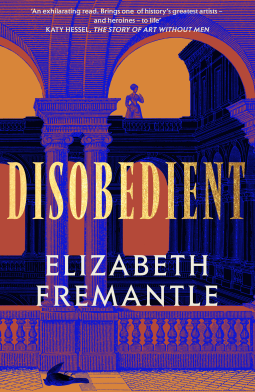
I’m using the reference to furniture and antiques as my first link. Great House by Nicole Krauss (1) features four separate but interconnected stories, linked by an antique writing desk that once belonged to a Chilean poet. Although the desk touches the lives of all of the characters in some way, it barely appears in some of the stories and you need to read all four before you can put the pieces of the puzzle together and see all of the connections.

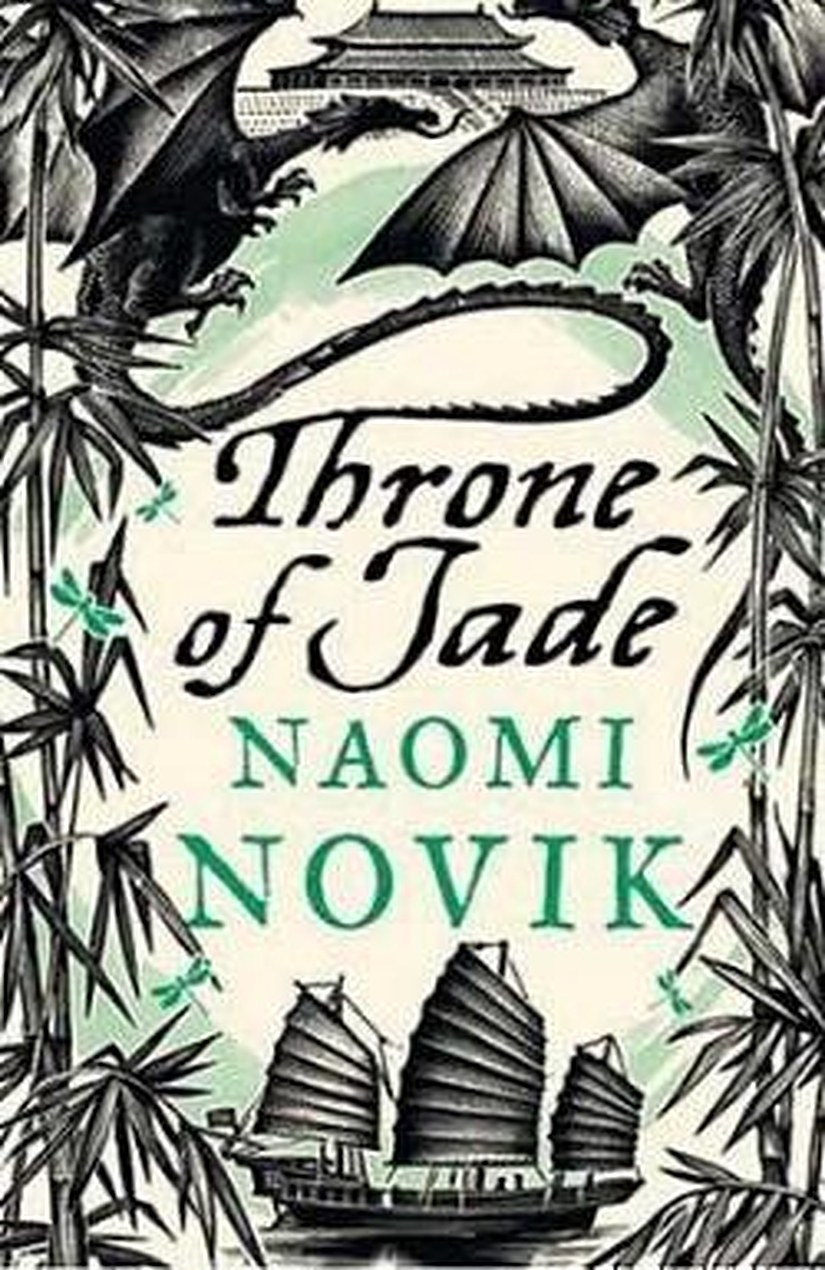
I’ve read a lot of other books with the word ‘house’ in the title, but as Daphne du Maurier Reading Week is starting on Monday I’ve chosen The House on the Strand (2). This is a wonderful time travel novel moving between the 1960s and the 14th century and is one of my favourites by du Maurier.

Like many of du Maurier’s novels, The House on the Strand is set in Cornwall, where she lived and worked for so many years. The White Hare by Jane Johnson (3) is also set in Cornwall, in a fictional valley which is beautifully and vividly described. Johnson works the legend of the white hare into the novel – a legend which really is a part of Cornish forklore.

I’m linking from hares to rabbits now – not the same animal, I know, but I think they’re close enough! When God Was a Rabbit by Sarah Winman (4) is the story of Elly Portman and her family across four decades from the 1960s to the 1990s (God is the name of the pet rabbit she has as a child).

Another book with a title beginning with the word ‘when’ is When Women Ruled the World by Kara Cooney (5). This is a non-fiction book which explores the lives of six female rulers from Ancient Egypt – Merneith, Neferusobek, Hatshepsut, Nefertiti, Tawosret and Cleopatra. I found it interesting because I knew nothing at all about some of these women, but I also felt that Cooney spent too much time drawing parallels with modern day world leaders, which seemed to be the main focus of the book.

I’m going to finish my chain with Cleopatra’s Daughter by Michelle Moran (6), a novel about Kleopatra Selene, the daughter of Cleopatra and Marc Antony, who joins the household of Octavian’s sister in Rome. I read this book twelve years ago and although I thought it lacked depth, I learned a lot from it as I’d previously read very little about Ancient Rome (something I’ve tried to rectify since then).

~

And that’s my chain for May! My links have included: furniture, the word ‘house’, Cornwall, rabbit, titles beginning with ‘when’ and Cleopatra.

In June we’ll be starting with Friendaholic by Elizabeth Day.

Homecoming by Kate Morton

‘People who grow up in old houses come to understand that buildings have characters. That they have memories and secrets to tell. One must merely learn to listen, and then to comprehend, as with any language.’

The Christmas Eve of 1959 is a hot summer’s day in South Australia. Isabel Turner takes her four children out into the grounds of their Adelaide Hills home for a picnic – and this is where they are found later that day by a man delivering groceries. At first he thinks they are asleep in the sun but, sensing an unnatural stillness, he comes closer and makes the shocking discovery that the Turners are all dead. The local police are convinced that Isabel, who is believed to have been depressed, must have poisoned herself and the children, but the case is never fully solved and becomes the subject of a true crime book, As If They Were Asleep, written by American journalist Daniel Miller.

Almost sixty years later, in 2018, Jess Turner-Bridges is living in London when she receives a call from a hospital in Sydney informing her that her beloved grandmother, Nora, has had a fall and is in a serious condition. Jess hasn’t been back to Australia for years, but her grandmother is the person who raised her when her own mother was unable to, so she leaves for Sydney immediately to be by Nora’s side. Alone in Nora’s house, Jess discovers Daniel Miller’s book in her grandmother’s bedroom and is drawn into the story of the Turner Family Tragedy. Having been unaware until now of her own connection with this tragic incident, Jess is shocked by what she reads, but now that Nora is dying it seems that her chance to find out the truth could be slipping away.

Homecoming, like the other books I’ve read by Australian author Kate Morton, is deeply layered, containing stories within stories, multiple viewpoints and alternating timelines. It’s a long novel and I felt there were things that could probably have been left out without affecting the story too much – Jess’s life in London at the beginning and the backgrounds of some of the minor characters, for example – but otherwise I was completely gripped and read it much more quickly than I would usually read such a long book.

I loved the descriptions of rural Australia and the portrayal of 1950s Tambilla, the small town where the story takes place. As the title suggests, the theme of ‘homecoming’ plays an important part in the story: what it’s like to come home after a long absence and the idea of ‘home’ being not just the opposite of ‘away’ but also of ‘loneliness’. And for forty-year-old Jess, despite living in London for most of her adult life, Australia is still the place where she feels most at home.

The mystery at the heart of the novel – the deaths of Isabel Turner and her children – is not resolved until the end of the book and although the clues were all there, I didn’t pick up on them so didn’t work out what happened. However, there’s another family secret which has big implications for Jess and I found that one very easy to guess, which took away some of the fun. Maybe I’ve just read too many books like this one, but I thought it was very obvious! I did very much enjoy reading Daniel Miller’s As If They Were Asleep (not a real book, of course) which is reproduced in full, a few chapters here and there. It sheds some light on both mysteries, as well as allowing us to see the Turners and their friends and neighbours from a different perspective.

I do wonder whether this book might have worked just as well as a straightforward crime novel set in the 1950s, without the additional family secrets and the Jess and Nora storylines, but I know that’s not what Kate Morton does and probably not what her readers would expect from her! Anyway, apart from guessing the twist too soon, I did love this book and still have one or two of her earlier ones to look forward to.

Thanks to Pan Macmillan for providing a copy of this book for review via NetGalley.

This is book 15/50 read for the 2023 Historical Fiction Reading Challenge.
My Commonplace Book: April 2023

A selection of words and pictures to represent April’s reading:

commonplace book
noun
a book into which notable extracts from other works are copied for personal use.

~

It is quite possible to live happily with a person who does not think as you do about the eternal verities, but it is not possible to live happily with someone who wants the window open when you want it shut, or shut when you want it open, or with someone who likes a fire when you don’t, or doesn’t like it when you do.

The Bird in the Tree by Elizabeth Goudge (1940)

~

“Somehow I don’t dare. It’s queer. I’ve always thought that innocent persons who became involved with criminals were absolutely idiotic not to go to the police first thing instead of muddling along, getting in worse stews. But here I am. Afraid – of what I don’t know.”

The So Blue Marble by Dorothy B. Hughes (1940)

~

In medicine or in any other enquiry, you didn’t go looking for what you wanted to be true, not least because that way you might miss the truth when it was right in front of you.

Voices of the Dead by Ambrose Parry (2023)

~

Siege of Badajoz by Richard Caton Woodville Jr

The shops displayed the most attractive wares; the cafés set out their little tables on either side of the Prado; guitar-players sang to any party of officers who looked as though they might be good for a peseta or two; the ladies of the town paraded in their best silk petticoats, and smartest satin bodices, flirting their fans, setting the long fringes on their skirts swinging with the provocative play of their hips; lemonade-sellers, in sleeveless waistcoats and white kilts, went up and down, doing a roaring trade under the avenues of trees; the gayest mats were hung out as sunblinds, creating a strange medley of bright hues in streets where the houses were already stained every colour of the rainbow.

The Spanish Bride by Georgette Heyer (1940)

~

All witnesses, metaphorically, wear black spectacles. They can neither see clearly, nor interpret what they see in the proper colours. They do not know what goes on on the stage, still less what goes on in the audience. Show them a black-and-white record of it afterwards, and they will believe you; but even then they will be unable to interpret what they see.

The Black Spectacles by John Dickson Carr (1939)

~

“You did, in fact, everything you set out to do.”

“There’s only one thing that’s more important,” he answered, “and that is, after you’ve done what you set out to do, to feel that it’s been worth doing.”

Random Harvest by James Hilton (1941)

~

Arid land in the Flinders Ranges, Australia

Billy wonders if the rest of his life will be spent crossing back and forth across the plain, which he has heard described as an empty wasteland but knows to be dense with motion: the motion of ancestors, spirits, the animals that should be here and the animals that shouldn’t, songs, stories, people, goods, water, minerals, the railway, the roads, stock tracks, fire, and the celestial bodies. When he crosses the plain, he both lives inside this density and passes over it.

The Sun Walks Down by Fiona McFarlane (2022)

~

Some people tell you that they are not influenced by the atmosphere around them. They are quite mistaken. We are all more or less affected by the spoken or unspoken thoughts of others.

Inquest by Henrietta Clandon (1933)

~

“It’s no good going back over the past. It’s the future one has to live for.”

Murder is Easy by Agatha Christie (1939)

~

Favourite books read in April:

The Bird in the Tree, The Black Spectacles, Random Harvest and Voices of the Dead

Places visited in my April reading:

England, US, Scotland, Spain, France, Australia

Authors read for the first time in April:

Fiona McFarlane

~

Reading notes: My April began with some 1940 novels for 1940 Club, then I seemed to stay around that era for most of the month. I only managed to read one new author, but sometimes it’s comforting to stick to authors you already know and enjoy. I’m starting my May reading with a re-read of one of my favourite Daphne du Maurier books for Heavenali’s DDM Reading Week, but I don’t have any plans other than that.

How was your April? What are you hoping to read in May?

Prize Women by Caroline Lea

Caroline Lea chooses such interesting subjects and settings for her novels. The first one I read, The Glass Woman, was a Gothic novel set in 17th century Iceland, and the second, The Metal Heart, explored the building of a chapel in the Orkney Islands by Italian prisoners of war. In her latest novel, Prize Women, she takes us to Canada in the early 20th century and introduces us to two women who are taking part in a very unusual contest: the Great Stork Derby.

When Canadian millionaire Charles Vance Millar dies in 1926, he leaves behind a very controversial will. He bequeaths shares in a brewery to a group of teetotal ministers, a house in Jamaica to three men who hate each other, jockey club stocks to anti-horse racing campaigners – and in the strangest bequest of all, he leaves a large sum of money to the Toronto woman who gives birth to the most children in a ten year period.

Lily di Marco is trapped in an unhappy marriage so when her town is hit by an earthquake, she sees a chance to escape and flees to Toronto with her young son. Arriving in the city tired and homeless, Lily meets Mae Thebault, the wife of a wealthy factory owner, who agrees to let Lily stay with them in return for helping to take care of the Thebaults’ five children. Despite their differences in background and social status, Lily and Mae quickly become close friends – but then comes the Wall Street Crash and the start of the Great Depression.

By this point Lily already has several babies who will count towards the Great Stork Derby and decides to enter the contest in the hope of winning the money and improving the lives of herself and her children. But the Thebaults’ financial situation has also changed and Mae finds herself in desperate need of money too. Soon the former best friends are competing against each other, but with the outcome due to be decided by a jury, which of the women – if either – will be declared the winner?

Lily’s story is very moving and often heartbreaking. It’s so sad to see the way she is treated by her violent, alcoholic husband, the racism and discrimination she faces due to her Italian background, the squalid, impoverished surroundings she lives in and the impact all of this has on the health and wellbeing of her children. I was in tears several times, so be prepared – this is not exactly a cheerful, uplifting read! Mae also has obstacles to overcome and suffers some personal traumas, but her story didn’t affect me the way Lily’s did and the way she behaved during the later stages of the contest annoyed me, even while I understood her reasons. Maybe because the two women end up in direct competition with each other, it makes it difficult to side with both of them at the same time.

The Great Stork Derby itself – something that really happened, by the way – is a cruel and irresponsible concept in many ways, but even more cruel were the modifications made to the will by the courts, stating that children who were stillborn or born outside of wedlock wouldn’t count. Also, there was no consideration given to the effect on women’s bodies of so many pregnancies in a short space of time, or how poor families would afford to feed so many children if they didn’t win the prize money. Naturally, the contest received a lot of media attention at the time and also caused a lot of debate around contraception and women’s rights.

I enjoyed this book, despite the sadness, and I enjoyed getting to know Lily and Mae. However, there was one aspect of their storyline that I found unconvincing and slightly contrived; it wasn’t enough to spoil the book for me, but it was the only thing I didn’t like in this otherwise excellent novel.

Thanks to Michael Joseph for providing a copy of this book for review via NetGalley.

This is book 14/50 read for the 2023 Historical Fiction Reading Challenge.
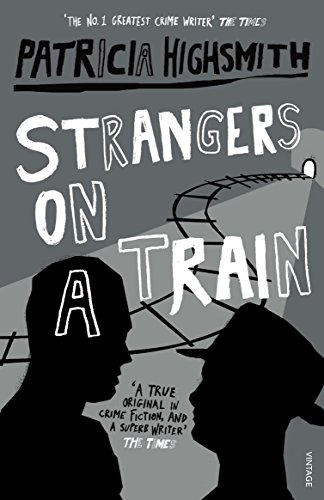
Murder is Easy by Agatha Christie

April’s theme for the Read Christie 2023 challenge is poison, but I have read all of the suggested titles on the official challenge page, some quite recently. As I missed taking part last month, I decided to read the book I had planned to read in March instead – Christie’s 1939 novel Murder is Easy. There’s a new BBC adaptation coming later this year and I always prefer to read before watching, if possible!

Murder is Easy is one of the Christie novels that stars neither of her most famous detectives, Poirot or Miss Marple – although it does feature another of her recurring characters, Superintendent Battle. However, even he doesn’t appear until very near the end and plays no part in actually solving the mystery. Instead, almost the entire novel is written from the perspective of Luke Fitzwilliam, a retired police officer and amateur detective.

At the beginning of the novel, Luke has just returned to England from India and is taking a train to London, where he finds himself sharing a carriage with an old lady who introduces herself as Miss Pinkerton. She confides in him that she is on her way to Scotland Yard to report a serial killer in her village. Miss Pinkerton believes that this person – whom she doesn’t name – has murdered at least three people already and has chosen as their next victim the village doctor, Dr Humbleby. Luke assumes she has an overactive imagination, but the next day he reads in the newspaper that a Miss Pinkerton has been hit by a car and killed crossing the road outside Scotland Yard – and when news of the death of Dr Humbleby in the village of Wychwood-under-Ashe follows, he becomes convinced that she was telling the truth after all.

Determined to find out more, Luke heads for Wychwood, where he stays with a friend’s cousin, Bridget Conway, who happens to be engaged to the local lord of the manor. Luke is posing as an author researching a new book on witchcraft and superstition, but Bridget guesses the real reason for his visit and together they begin to investigate the recent deaths.

I really enjoyed this book and for once I correctly identified the murderer, though more through instinct than because I had spotted any particular clue. There are plenty of suspects ranging from the solicitor Mr Abbot and the late Dr Humbleby’s younger partner, Dr Thomas, to the widower Major Horton and the antiques dealer Mr Ellsworthy, who dabbles in black magic. We are told that the village of Wychwood has connections with witchcraft and the occult, but we don’t really explore that in any depth and the setting doesn’t have quite the same eerie atmosphere as the village in Christie’s The Pale Horse.

While Miss Marple doesn’t appear in this book, I found Miss Pinkerton a very Marple-ish character – an old lady with a shrewd mind and sharp observational skills – and was sorry she was killed so early in the story. Luke himself does very little detecting – despite interviewing all of the suspects, he doesn’t arrive at the right solution until somebody else reaches it first – but I still enjoyed following the progress of his investigations. And knowing that Christie often likes to work a nursery rhyme into the text or title of her novels, I was intrigued to come across the lines “I do not like thee, Doctor Fell; The reason why I cannot tell” – the same lines that are quoted in John Dickson Carr’s The Black Spectacles, which I coincidentally read just last week!

Although I didn’t choose Murder is Easy specifically to fit this month’s Read Christie theme, I was pleased to find that poison does feature in the plot, albeit in a small way. The May prompt is ‘betrayal’, if you want to take part.

Atalanta by Jennifer Saint

Having enjoyed Jennifer Saint’s first two novels, Ariadne and Elektra, I was looking forward to reading her third one, Atalanta. Like the others, it explores the life of a woman from Greek mythology, in this case Atalanta, famous as a hunter, a runner and the only female Argonaut.

Daughter of the King of Arcadia, the baby Atalanta is left to die on a mountain because her father had hoped for a son. Rescued by bears and raised along with their cubs, Atalanta grows up under the watchful eye of Artemis, goddess of the hunt, who later takes her to live amongst the nymphs in the forest. As she reaches adulthood, it is clear that Atalanta possesses special skills in hunting, shooting and running. Elsewhere, Jason is preparing to set out aboard the Argo on his mission to obtain the Golden Fleece from the King of Colchis. With the blessing of Artemis, Atalanta joins the quest, but it won’t be easy to persuade Jason and his men to accept her as a fellow Argonaut.

I won’t go into all the details of the myth here, but Saint incorporates most of the elements that are often associated with Atalanta: the Calydonian boar hunt, her relationship with the Argonaut Meleager, the footrace and the golden apples. I say ‘often’ because, as with many Greek myths, there are different versions of Atalanta’s story. In some, she isn’t mentioned as part of the Argonaut legend at all; in others, she is the daughter of the King of Boeotia rather than Arcadia. I have read about Atalanta before, in Emily Hauser’s For the Winner, and I think overall I preferred that book which was more of a ‘reimagining’ with lots of extra little touches rather than this one which I would describe as a straightforward ‘retelling’. Still, it’s interesting to see how different authors choose to approach the same myth, what they include and leave out and how they interpret the actions and motivations of the characters.

I liked this book more than Elektra, but not as much as Ariadne. I felt that it was a bit slow to get started – the section set in the woods with the nymphs seemed to last forever – but once Atalanta joined the Argonauts on their quest it all became much more compelling. Although romance isn’t a big part of Atalanta’s story, I also enjoyed following her relationships with first Meleager and then Hippomenes and I appreciated the way Saint found a way to retell the myth from a feminist perspective without portraying all of the men in a negative light. And it’s always good to read a book about Greek mythology that doesn’t involve the Trojan War – not that it’s not interesting, but there have been so many Troy novels in the last few years I don’t think there’s really any need for any more.

This is not my favourite Jennifer Saint book, then, but it’s still an interesting read, particularly if you know nothing about Atalanta and her story. Now I’m looking forward to seeing which Greek heroine Saint will write about next.

Thanks to Headline for providing a copy of this book for review via NetGalley.

Historical Musings #79: The CWA Historical Dagger Longlist 2023

Welcome to my series of posts on all things historical fiction!

Just a quick post this month as the Crime Writers’ Association revealed the longlists for their 2023 Dagger awards yesterday. I don’t usually follow the CWA awards, but noticed that I had read three of the books longlisted in this year’s Historical Dagger category and this made me curious about the other titles, particularly as I haven’t even heard of some of them!

The Historical Dagger is awarded to ‘the best historical crime novel, first published in the UK in English during the judging period, set in any period up to 50 years prior to the year in which the award will be made’. Here are the twelve books on the 2023 longlist:

The Darkest Sin by DV Bishop
Blackstone Fell by Martin Edwards
Two Storm Wood by Philip Gray
The Lost Diary of Samuel Pepys by Jack Jewers
The Bookseller of Inverness by SG MacLean
The Clockwork Girl by Anna Mazzola
Death at the Dolphin by Gretta Mulrooney
The Homes by JB Mylet
The Bangalore Detectives Club by Harini Nagendra
Blue Water by Leonora Nattrass
Hear No Evil by Sarah Smith
The Mushroom Tree Mystery by Ovidia Yu

~

Of the three books I have read, two of them – The Clockwork Girl, an atmospheric Gothic novel inspired by the real life case of the ‘Vanishing Children of Paris’ and the 18th century advances in the creation of automata, and Blue Water, a wonderful historical mystery set during a long sea voyage in 1794 – were on my Books of the Year list for 2022. The other, The Bookseller of Inverness, I found interesting for the setting (Scotland in the aftermath of the 1745 Jacobite rebellion) but not a particularly strong mystery.

I know very little about any of the other longlisted books. I probably won’t read Blackstone Fell as I wasn’t all that impressed with the previous Martin Edwards book, Mortmain Hall, but if you’ve read any of the others please let me know what you thought!

The shortlist will be announced on 12th May and the winner on 6th July. More details and the full lists of nominees for all of the other Dagger categories can be found on the CWA website.