Piranesi by Susanna Clarke

I wish it hadn’t taken me so long to decide to read Piranesi. Although I loved Susanna Clarke’s Jonathan Strange and Mr Norrell, this one sounded very different and didn’t immediately appeal to me, but I did still intend to read it sooner rather than later. Now that I have, I think Jonathan Strange is still my favourite, but I enjoyed this book a lot more than I expected to.

Our narrator, Piranesi, lives in a place he calls ‘the House’, a vast, labyrinthine structure containing hundreds of interconnected halls and vestibules. The lower levels of the building are flooded and there is a complex system of tides that only Piranesi understands. The House is his entire world; he believes he has always lived there and can’t remember any other way of life. His only human contact comes twice a week when he meets a man he thinks of as ‘the Other’ and assists him in his quest to find the Great and Secret Knowledge. Apart from himself and the Other, Piranesi is only aware of thirteen more people who have ever existed in the world, all now skeletons resting in the niches and alcoves of the House.

Piranesi is quite content with his solitary existence, exploring the enormous halls and passageways, studying the impressive statues he finds there and recording his discoveries in a series of notebooks. Then one day, everything changes. Could there be a sixteenth person in the world – and if so, who are they and what do they want?

I’m not going to say any more about the plot than that, partly because it’s a story that I don’t want to spoil for anyone who hasn’t read it yet but also because I found the plot secondary to the setting and the sense of place. The atmosphere Clarke creates really is wonderful; from the first chapter I felt fully immersed in the majestic, watery world of Piranesi’s House, a world that is somehow simultaneously both vast and claustrophobic. The book was published during the first year of the pandemic in 2020 and I’m sure if I’d read it then the themes of solitude and a life cut off from the outside world would have resonated with me even more than they did now. It’s no coincidence that Piranesi was also the name of an 18th century Venetian architect and artist famous for his etchings of ‘Imaginary Prisons’ showing huge subterranean vaults complete with staircases, arches and towers.

Towards the end of the book, as we finally began to learn more about the House and how Piranesi and the Other came to be there, I felt that the story started to slightly lose its magic. I had loved the eerie, otherworldly feel of the first half of the book and was less interested in the revelations that came at the end. Still, Piranesi is a very impressive novel and one that I would probably have to read again to fully appreciate everything Susanna Clarke was trying to say.
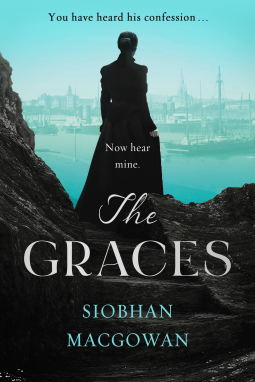
The Graces by Siobhan MacGowan

I found Siobhan MacGowan’s first novel, The Trial of Lotta Rae, a very powerful, emotional read and I was hoping for something similar from her new book, The Graces. I’m pleased to say that I thought this one was even better.

The novel opens on an August evening in 1918, as a group of pilgrims make their way to the bell tower of Mount St Kilian Abbey in Dublin. As Brother Thomas and Father Sheridan watch the candlelit procession weaving through the trees below the abbey, they remember the woman to whom the pilgrims are paying homage – Rosaleen Moore, known as The Rose, who died just three years earlier. On her deathbed, Rosaleen revealed a terrible secret to Father Sheridan, something which has left him so disturbed he decides to discuss it with Brother Thomas tonight.

In a series of long flashbacks, Rosaleen’s story unfolds, beginning with her childhood in rural County Clare, where she first discovers that, like her grandmother, she has been ‘touched by the Graces’ and is blessed – or cursed – with the sight. When her gift gets her into trouble in the village, she is sent away to live with an aunt in Dublin. Here she finds herself befriended by a group of spiritualists and healers who encourage her to use her special talents to help others. However, Rosaleen will learn that meddling in things she doesn’t fully understand is not a good idea and could have disastrous results.

The Graces is a fascinating, moving story, exploring the clashes between superstition and science and the consequences of thinking we know best. It reminded me of Hannah Kent’s The Good People and Emma Donoghue’s The Wonder, which have similar themes and are also set in Ireland, but although it’s bleak at times, the book is also very gripping and leaves you with a lot to think about after reaching the final page. Rosaleen herself is not always an easy character to like – her arrogance leads her to make poor decisions and I was disappointed in the role she plays in a love triangle with two different men, Lorcan and Rian – but I could still have sympathy with her situation because the whole thing is so desperately sad.

Away from the central plot, the political developments in early 20th century Ireland also form an important part of the story. Rosaleen is in Dublin during the time of the Easter Rising, the formation of the Cumann na mBan (an Irish republican women’s paramilitary group) and the move towards independence. Through her relationship with Lorcan, who is involved in all of these things, Rosaleen is exposed to new ideas and new ways of thinking, but she doesn’t fully embrace them herself and feels caught in the middle between two extreme views.

Having enjoyed both of Siobhan MacGowan’s novels (although I always feel that ‘enjoyed’ isn’t quite the right word to use with this sort of book), I’m already hoping for a third!

Thanks to Welbeck Fiction for providing a copy of this book for review via NetGalley.

This is book 5/20 of my 20 Books of Summer 2023

This is book 27/50 for the 2023 Historical Fiction Reading Challenge.

Historical Musings #81: Exploring Canada

Welcome to this month’s post on all things historical fiction!

Earlier this year, I read Prize Women by Caroline Lea, a fascinating and moving novel about the Great Stork Derby, a contest to see who can give birth to the most children in a ten year period (yes, it really happened). The story takes place in 1920s Toronto and it occurred to me that I’ve read very little historical fiction set in Canada.

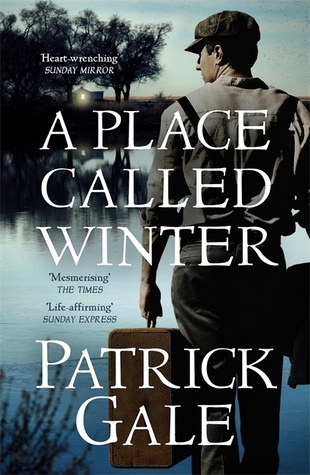
A quick look through my review archives shows that since I started blogging I’ve only read five historical (or partly historical) novels with a Canadian setting. One of these was shortlisted for the Walter Scott Prize for Historical Fiction a few years ago: A Place Called Winter by Patrick Gale, the story of an Englishman who decides to start a new life in Winter, a small, remote settlement in Saskatchewan. I enjoyed it and really need to read more books by Patrick Gale! Touch by Alexi Zentner is also set in a remote part of Canada – the fictional gold rush town of Sawgamet – and is part historical/part magical realism. It’s a beautifully written book and the descriptions of life in a harsh, wild landscape are very well done.

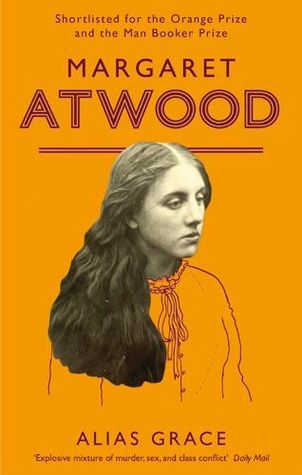
Margaret Atwood’s Alias Grace is another book based on a true story – the story of Grace Marks, who was sentenced to life imprisonment for murder in 1840s Canada. It’s probably my favourite of the Atwood novels I’ve read so far. There’s also Fifth Business by Robertson Davies, the first in his Deptford Trilogy, which begins in 1908 with our narrator Dunstan Ramsay growing up in the Canadian town of Deptford. The book was published in 1970 and by the end we have been brought up to date in the 1960s, but enough of the story takes place earlier in the century for it to be classed as historical, I think! Finally, I’ve read Perdita by Hilary Scharper, a dual timeline novel about a woman who claims to be 134 years old. This unusual novel moves backwards and forwards in time between the 19th century and the modern day and is set on the Bruce Peninsula in Ontario.

***

Have you read any of these? Which other books about Canada and its history can you recommend?

The Summer Tree by Guy Gavriel Kay

Having read most of Guy Gavriel Kay’s more recent novels, I decided it was time to go back to the beginning and read his earliest work, The Fionavar Tapestry, a fantasy trilogy published between 1984 and 1986. I had been warned that this was very different from his later books, and now that I’ve read the first volume, The Summer Tree, I would agree, but I was pleased to find that I enjoyed it anyway.

The Summer Tree begins with five Canadian students – Kevin Laine, Paul Schafer, Kimberly Ford, Jennifer Lowell and Dave Martyniuk – attending a lecture by Professor Lorenzo Marcus at Toronto University. After the lecture, the Professor invites the five of them back to his hotel, where he reveals to them that his true identity is Loren Silvercloak, a mage from the land of Fionavar. His High King, Ailell of Brennin, is celebrating his fiftieth year on the throne, and Loren has been sent to our world to bring five guests to the celebrations. Once in Fionavar, however, the five find themselves caught up in the politics of this other land and discover that each of them will have a part to play in the upcoming battle against the evil god Rakoth Maugrim, the Unraveller.

I was already familiar with Guy Gavriel Kay’s incredible worldbuilding from his other books – the way he plunges the reader straight into fully formed landscapes based on thinly disguised versions of real historical settings (such as China’s Song Dynasty in River of Stars or medieval Spain in The Lions of Al-Rassan). The worldbuilding is just as strong in this novel, but although he does draw on the mythology of our own world (particularly Celtic and Norse), this time he relies much more heavily on Tolkien and traditional high fantasy. That’s not surprising as Kay did work with Tolkien’s son Christopher on the editing of Tolkien’s posthumous book The Silmarillion. And so, in The Summer Tree we have Loren Silvercloak in the role of Gandalf the Grey, Rakoth Maugrim who resembles Sauron, an exiled Dwarf king, and the Elf-like lios alfar and their counterparts the svart alfar. There’s also a CS Lewis influence, I think, as there’s a character with the name Maugrim in the Narnia books and the Fionavar city of Paras Derval made me think of Narnia’s Cair Paravel.

With such a vast and complicated world to explore, Kay gives each of his five main characters individual storylines, taking them to different areas of Fionavar and allowing them to interact with different groups and tribes. For example, Dave Martyniuk becomes separated from the others early on and spends most of the novel getting to know the Dalrei, a plains-dwelling tribe of hunters, while Kim Ford discovers that she has the powers to become a Seer. However, I felt that some of the characters lacked depth and the novel as a whole feels less mature and polished than his later books.

I didn’t love The Summer Tree, but I liked it enough to want to continue with the second book in the series, The Wandering Fire – and as this one ended on a cliffhanger I probably shouldn’t wait too long before picking the next one up! I also still have A Song for Arbonne and The Sarantine Mosaic left to read, although at this point I’ll be surprised if anything surpasses Tigana as my favourite book by Kay.

This is book 4/20 of my 20 Books of Summer 2023

Six in Six: The 2023 Edition

We’re more than halfway through the year and Six in Six, hosted by Jo of The Book Jotter, is back again! I love taking part in this as I think it’s the perfect way to look back at our reading over the first six months of the year.

The idea of Six in Six is that we choose six categories (Jo has provided a list of suggestions or you can come up with new topics of your own if you prefer) and then fit six of the books or authors we’ve read this year into each category. It’s more difficult than it sounds, especially as I try not to use the same book in more than one category, but it’s always fun to do – and always a bit different as my reading tastes and patterns seem to change slightly each year.

Here is my 2023 Six in Six, with links to my reviews where available:

~

Six books set in a country other than my own:

1. Prize Women by Caroline Lea (Canada)
2. The Orange Girl by Jostein Gaarder (Norway)
3. Homecoming by Kate Morton (Australia)
4. Music in the Dark by Sally Magnusson (Scotland)
5. These Days by Lucy Caldwell (Ireland)
6. My Father’s House by Joseph O’Connor (Italy)

~

Six authors I’ve read for the first time this year:

1. Edgar Rice Burroughs (The Efficiency Expert)
2. Helen Scarlett (The Lodger)
3. Fiona McFarlane (The Sun Walks Down)
4. Geoffrey Household (Rogue Male)
5. Lucy Barker (The Other Side of Mrs Wood)
6. Isabelle Schuler (Lady MacBethad)

~

Six authors I had read before this year:

1. Georgette Heyer (The Spanish Bride)
2. RF Delderfield (Farewell, the Tranquil Mind)
3. Hilary Mantel (The Giant, O’Brien)
4. Thomas Hardy (A Laodicean)
5. Dorothy B. Hughes (The So Blue Marble)
6. Joan Aiken (The Embroidered Sunset)

~

Six classic mysteries:

1. The Inugami Curse by Seishi Yokomizo
2. The Black Spectacles by John Dickson Carr
3. Inquest by Henrietta Clandon
4. The Cat Saw Murder by Dolores Hitchens
5. Hickory Dickory Dock by Agatha Christie
6. Death of an Author by ECR Lorac

~

Six books with a touch of myth or magic:

1. Savage Beasts by Rani Selvarajah
2. Clytemnestra by Costanza Casati
3. Atalanta by Jennifer Saint
4. Once a Monster by Robert Dinsdale (review to follow)
5. Assassin’s Fate by Robin Hobb
6. The Summer Tree by Guy Gavriel Kay (review to follow)

~

Six books I loved and haven’t mentioned yet:

1. The Bird in the Tree by Elizabeth Goudge
2. The Square of Sevens by Laura Shepherd-Robinson
3. Random Harvest by James Hilton
4. The Scapegoat by Daphne du Maurier
5. The New Magdalen by Wilkie Collins
6. The Empty World by D.E. Stevenson

~

Have you read any of these books or authors this year? Will you be taking part in Six in Six?

The Housekeepers by Alex Hay

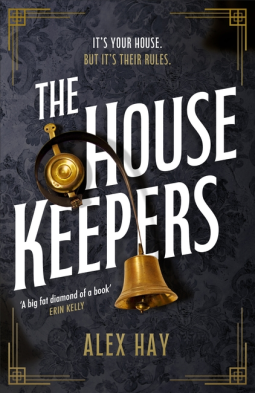
It’s June 1905 and plans are underway for a ball at the grandest house on London’s Park Lane. Miss de Vries, who has recently inherited the house from her millionaire father, has decided to throw the party of the season to launch herself into society and find a suitable husband. However, someone else also sees the night of the ball as a great opportunity – an opportunity for revenge. She is Mrs King, the former housekeeper, who was dismissed from her job just a few weeks earlier and is now planning a daring heist. On the night of the Park Lane ball, she and a group of other carefully recruited servants will strip the house of its treasures – its artworks, books, furniture, silverware, even the carpets – and Miss de Vries and her guests won’t notice a thing until it’s too late. But will this plan work or will the housekeepers be caught in the act?

The Housekeepers is Alex Hay’s debut novel and I found it an entertaining read. It was fascinating to see how carefully Mrs King and her accomplices plan the heist – preparing inventories of each room, taking measurements, identifying escape routes and making sure nothing is left to chance! Despite their detailed planning, there are still some factors outside their control and a lot of things that could go wrong, so there’s plenty of suspense as we wait to see whether or not they will succeed. As the novel progresses and we learn more about what has been going on behind the doors of the Park Lane house, I found I didn’t have much sympathy for Miss de Vries and was definitely rooting for the servants!

The heist is Mrs King’s idea, but I thought some of the other women she enlists were more interesting characters. These include Mrs Bone, who runs a criminal network but seems to have a moral code of her own, the actress Hephzibah and the two trapeze artist sisters referred to as Jane-one and Jane-two. There’s also Winnie, who held the position of housekeeper before Mrs King, and Alice the sewing maid who is befriended by Miss de Vries and faces a battle with her conscience. I felt that too many characters were introduced too quickly at the beginning of the book, which made things confusing for a while, but I eventually managed to keep them all straight in my mind.

The novel is also an interesting exploration of the class system and the injustice of some people being born into a life of privilege while others are not. In his author’s note, Alex Hay describes the satisfaction of imagining the servants trying to claim some of that privilege for themselves! However, Miss de Vries herself is looked down upon by the people she most wants to impress because she had a father who made his fortune through diamond mining rather than inheriting wealth passed down through the generations.

I thought The Housekeepers was fun to read and with its period setting, portrayal of life above and below stairs, and vividly described heist sequences, I could easily imagine a BBC adaptation. As a first novel it’s quite impressive and I’ll certainly be looking out for more from Alex Hay!

Thanks to Headline Review for providing a copy of this book for review via NetGalley.

This is book 26/50 read for the 2023 Historical Fiction Reading Challenge.

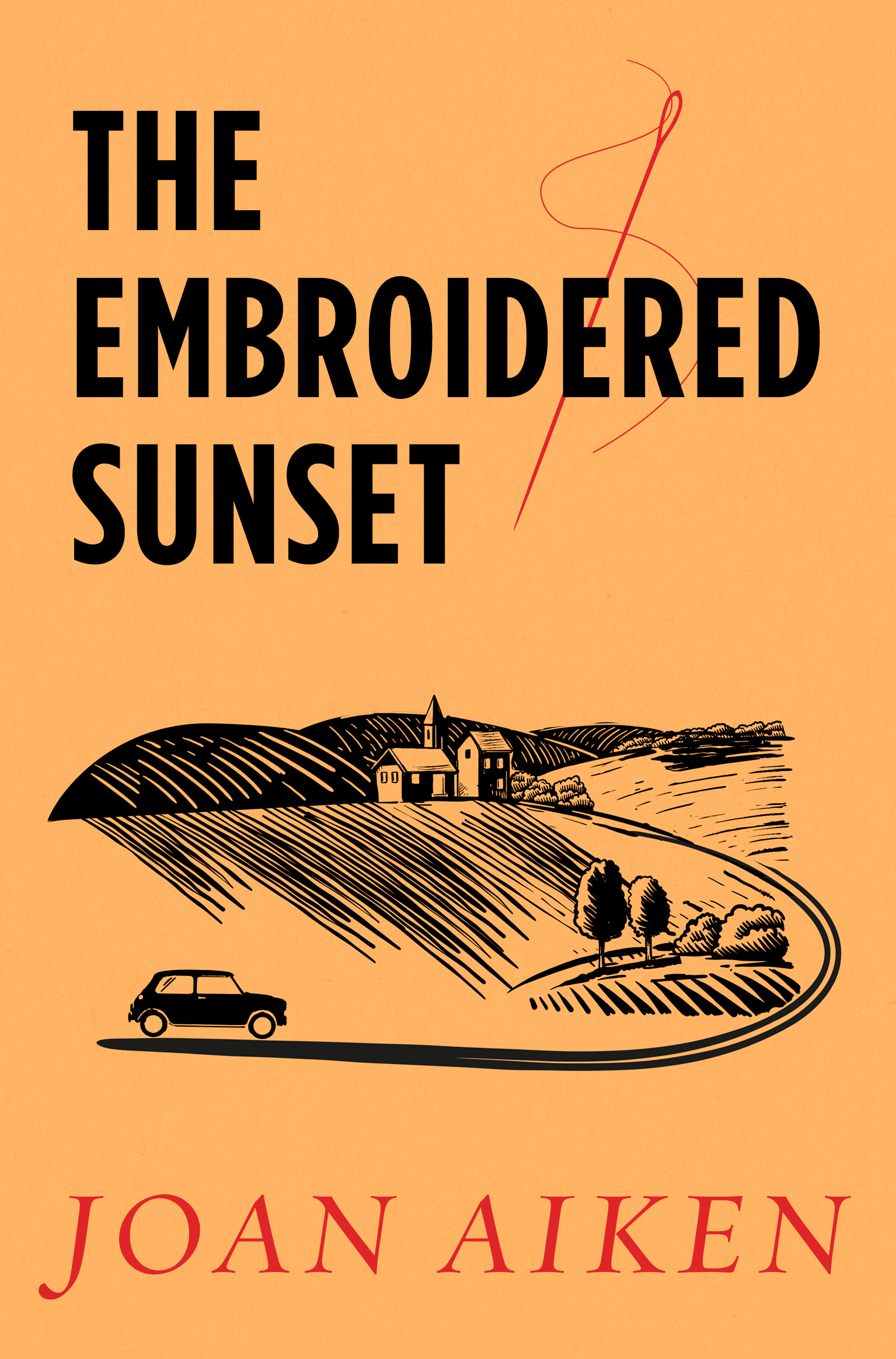
The Embroidered Sunset by Joan Aiken

This is the second of Joan Aiken’s contemporary suspense novels I’ve read; I enjoyed The Butterfly Picnic which I read last year, but I found the plot very bizarre and I was curious to see whether this one would be the same. Well, I can tell you that it’s maybe not quite as over-the-top, but it does come close!

First published in 1970, The Embroidered Sunset begins by introducing us to Lucy Culpepper, a young Englishwoman who has been raised in America by her Uncle Wilbie and Aunt Rose following her parents’ deaths. Lucy is a talented musician who dreams of being taught by the renowned pianist Max Benovek, but her hopes are shattered when Uncle Wilbie confesses that he has spent her inheritance and there’s no money left to pay a piano teacher.

Cleaning the attic later that day, Lucy discovers some beautiful embroidered biblical pictures, the work of Wilbie’s Aunt Fennel who lives in England and used to write regularly, but hasn’t been heard from for a long time. Reminded of the pictures, Wilbie comes up with a plan: if Lucy goes to England and obtains more of Aunt Fennel’s pictures, he will pay her a commission for each one she locates and she can spend the money on piano lessons. While there, she can also try to find Aunt Fennel herself – if the old lady is still alive, that is.

If The Butterfly Picnic felt like a homage to Mary Stewart, this one is packed with references to the Brontës. As well as being set in Yorkshire, there’s a Thrushcross Grange and a Wildfell Hall and even a Colonel Linton and a Cathy Earnshaw, while another character refers to Lucy as Lucy Snowe, the heroine of Villette. However, that’s where the Brontë similarities end; this book has a lively, contemporary feel (for 1970) and while there are some elements that could probably be described as Gothic – an abandoned house, an escaped prisoner, rainy weather – they are woven very lightly into the plot.

I really enjoyed the first half of the novel, with Lucy arriving in Aunt Fennel’s small Yorkshire village, getting to know the eccentric residents and searching for her missing relative. When Lucy does eventually find the old lady, she can’t even be sure whether she really is Aunt Fennel or somebody else, and Aiken keeps us questioning this for the entire book, in a way that I thought was very cleverly done. I felt that the plot lost its way slightly in the second half and the ending seemed to come out of nowhere, with a very surprising fate for one main character and a romance that certainly wasn’t resolved as I’d expected. Still, this is an entertaining novel and perfect escapism, if that’s what you’re looking for!

My favourite Aiken novel so far is still Castle Barebane, but I’ll continue to explore her other books and am hoping to read The Wolves of Willoughby Chase soon.

This is book 3/20 of my 20 Books of Summer 2023