Random Harvest by James Hilton

“Sometimes I have a feeling of being — if it isn’t too absurd to say such a thing — of being half somebody else. Some casual little thing — a tune or a scent or a name in a newspaper or a look of something or somebody will remind me, just for a second — and yet I haven’t time to get any grip of what it does remind me of — it’s a sort of wisp of memory that can’t be trapped before it fades away…”
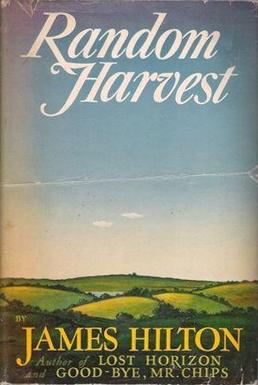
After enjoying Lost Horizon and Goodbye, Mr Chips, I decided that the next James Hilton book I read would be his 1941 novel Random Harvest. I knew very little about it except that it was very popular at the time it was published and that the film starring Greer Garson and Ronald Colman is one of my mother’s favourites. I haven’t seen it, but I think reading the book first was the right decision anyway, for reasons I’ll explain later.

The novel opens in 1937 with our narrator, Mr Harrison, falling into conversation with a stranger, Charles Rainier, whom he meets on a train to London. Rainier is now a successful businessman and politician, but he confesses to Harrison that since returning from fighting in World War I twenty years ago a whole chunk of memory has been lost to him. He remembers being injured in the trenches of France in 1917 and he remembers waking up in Liverpool one day in 1919, but can recall nothing at all of what happened in between – a period of two years which are now a complete blank to him.

When the train arrives at the station, the two men go their separate ways, but their paths soon cross again and Rainier offers Harrison a job as his secretary. As they get to know each other better, Rainier tells his new friend the story of his life since that day in Liverpool and gradually his earlier memories begin to return, with surprising results.

This book wasn’t quite what I’d expected; I thought it was going to be more of a romance, but although it does have a very moving love story at its heart, there’s much more to Random Harvest than that. It can be considered an anti-war novel, with it’s theme of loss that runs through the story from beginning to end – not just the obvious loss of memory, but also lost opportunities, lost or broken relationships, lost innocence and, on a wider scale, a way of life that has been lost forever as the world moves on from one war and heads straight for another:

It all depended whether one were tired or eager after the strain. Most of us were both — tired of the war and everything connected with it, eager to push ahead into something new. We soon stopped hating the Germans, and just as soon we began to laugh at the idea of anyone caring enough about the horrid past to ask us that famous question on the recruiting posters — ‘What did you do in the Great War?’ But even the most cynical of us couldn’t see ahead to a time when the only logical answer to that question would be another one — ‘WHICH Great War?’

The book has an unusual structure, divided into five long sections with no chapter breaks and moving backwards and forwards in time, piecing together Rainier’s memories as they begin to flood back. However, it’s always easy enough to follow what’s happening. The plot never becomes confusing and the story is structured the way it is for a good reason, allowing Hilton to obscure whole episodes in Rainier’s life from the reader and also from Rainier himself until it’s the right time to reveal them. And when the final revelation comes, right at the end of the book, I was taken completely by surprise as I hadn’t seen it coming at all. Apparently the film is structured differently, with the truth obvious from the beginning instead of being saved for the end, which is why I’m so glad I’ve read the book first and could experience everything as Hilton intended it.

This is a great book, possibly even better than Lost Horizon, and I’ll definitely be looking for more by James Hilton.

This is book 39/50 read from my second Classics Club list.

Historical Musings #80: Books to look out for from July to December

Welcome to this month’s post on all things historical fiction!

First of all, congratulations to Lucy Caldwell, the winner of this year’s Walter Scott Prize for Historical Fiction, announced at the Borders Book Festival last week. The winning novel, These Days, is set in Northern Ireland during the Belfast Blitz and is one of the few books I’ve actually managed to read from this year’s shortlist so far. It’s difficult for me to say whether it’s a deserving winner as I’ve only read two of the other books, but I did like it better than The Sun Walks Down and possibly Act of Oblivion as well.

Moving on, last December I posted a list of upcoming historical fiction being published in 2023. Now that we’re halfway through the year, more titles have been announced so I thought I would post an updated list below for July to December. This is a selection of books that have caught my attention for one reason or another – some are review copies I’ve received (and in a few cases have already read), some are new books by authors I’ve previously enjoyed and others just sounded interesting. I hope there’s something here that appeals to you.

Dates provided are for the UK and were correct at the time of posting.

~

July

The Witching Tide by Margaret Meyer (6th July 2023) – This is on my 20 Books of Summer list, as are several of the others mentioned here. It’s Meyer’s debut novel, based on the real life 17th century East Anglia witch trials.

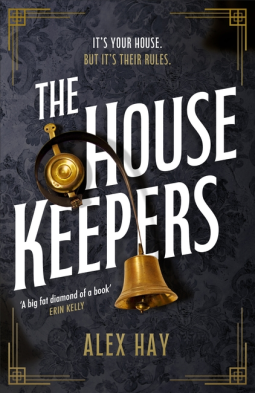
The Housekeepers by Alex Hay (6th July 2023) – I’ve read and enjoyed this debut novel in which a group of servants plan to carry out a daring heist in a grand London house in 1905. My review will be up in a few weeks!

Disobedient by Elizabeth Fremantle (27th July 2023) – A new Fremantle novel is always something to look forward to and this one, about the 17th century artist Artemisia Gentileschi, sounds great.

August

Fair Rosaline by Natasha Solomons (3rd August 2023) – The first of two novels I’m listing here that have a Shakespeare connection, this is the story of Rosaline, the woman Romeo loved before beginning his tragic romance with Juliet.

The Black Crescent by Jane Johnson (3rd August 2023) – I enjoyed some of Jane Johnson’s previous books set in Morocco; this is another and it sounds fascinating.

The Orchid Hour by Nancy Bilyeau (10th August 2023) – I’ve already read my copy of this new Bilyeau novel and will be sharing my review with you in August. It’s set in a 1920s New York nightclub during the era of prohibition.

Learned by Heart by Emma Donoghue (24th August 2023) – I’ve loved some of Emma Donoghue’s historical novels, but not others so I’ll be interested to see what I think of this one about Anne Lister (better known as ‘Gentleman Jack’) and her relationship with Eliza Raine.

A Lady’s Guide to Scandal by Sophie Irwin (31st August 2023) – A Lady’s Guide to Fortune-Hunting was one of my favourite books of 2022, so I have high hopes for this one. Like some of the others listed here, it’s on my 20 Books of Summer list.

September

Night Train to Marrakech by Dinah Jefferies (14th September 2023) – The third book in the Daughters of War trilogy is going to be set in 1960s Morocco. I’m looking forward to finding out how the story ends.

Once a Monster by Robert Dinsdale (21st September 2023) – I’ve just finished reading this one, but you’ll have to wait until nearer publication date for my review. The book is set in 19th century London but inspired by the legend of the minotaur.

The Armour of Light by Ken Follett (26th September 2023) – The new book in Follett’s Kingsbridge series covers the beginnings of the Industrial Revolution. I still haven’t read the previous book, The Evening and the Morning, but as they are set in different periods with different characters I think I could probably read them in either order.

October

Menewood by Nicola Griffith (3rd October 2023) – The long-awaited sequel to Hild, this book will continue the story of St Hilda of Whitby. The first book was beautifully written and I’ve been looking forward to this one for years!

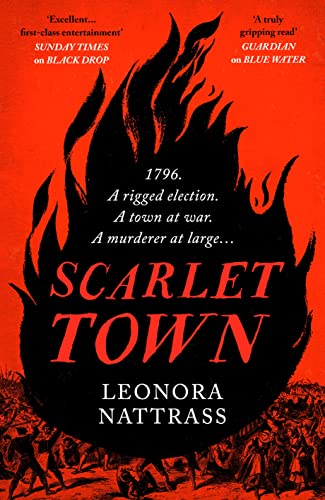
Scarlet Town by Leonora Nattrass (5th October 2023) – This will be the third book in Nattrass’ Laurence Jago mystery series. The last one, Blue Water, was another of my 2022 favourites so I’m hoping this one will be equally good.

The Murder Wheel by Tom Mead (12th October 2023) – Last year when I read Death and the Conjuror, Mead’s first Golden Age style murder mystery, I said I hoped we’d be meeting his magician detective, Joseph Spector, again. My wish has come true as Spector is returning in October with a second mystery to solve!

The Wayward Sisters by Kate Hodges (26th October 2023) – In the second novel on this list with a link to Shakespeare, the three witches from Macbeth reappear in 1780s Scotland.

November

The Temple of Fortuna by Elodie Harper (23rd November 2023) – This will be the final book in Elodie Harper’s trilogy set in ancient Pompeii. I loved The Wolf Den but still need to read the middle book; it’s on my 20 Books of Summer list, so I’m hoping to get to it soon.

December

The Witch’s Daughter by Imogen Edwards-Jones (7th December 2023) – The sequel to The Witches of St Petersburg is set in 1916 and will follow the story of Princess Militza’s daughter Nadezhda as the Russian Revolution approaches.

~

Are you tempted by any of these? Which other new historical novels are you looking forward to before the end of the year? And what do you think about These Days winning the 2023 Walter Scott Prize?

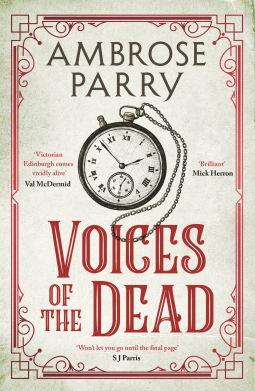
Voices of the Dead by Ambrose Parry

This is the fourth book in Ambrose Parry’s series of crime novels set in the medical world of 19th century Edinburgh – and it’s my favourite so far. Ambrose Parry is a pseudonym of Dr Marisa Haetzman, a consultant anaesthetist, and her husband, the crime author Chris Brookmyre, and they each bring their own set of skills and knowledge to the writing of these books. The series follows Dr Will Raven, assistant to the great Scottish obstetrician James Simpson (a real historical figure), and Sarah Fisher, who dreams of one day becoming a doctor herself, so each book includes a wealth of medical detail as well as a murder mystery to be solved.

In Voices of the Dead, set in 1854, Will is now married with a child and another on the way, but he doesn’t have much time to enjoy being a husband and father – not only is he struggling to move out from under the wing of Dr Simpson and establish his own reputation, he has also become mixed up in yet another murder case. Parts of a dismembered body have been turning up in random places around Edinburgh and Will’s friend, Dr Henry Littlejohn, has asked for his help in identifying the victim.

Meanwhile, Sarah Fisher’s plans to study medicine and follow in the footsteps of Dr Elizabeth Blackwell have had to be put on hold. Disappointed and frustrated, she turns instead to the emerging science of mesmerism, which is beginning to grow in popularity. An American mesmerist has just arrived in Edinburgh and Sarah is keen to learn more about the possible uses of mesmerism in healing patients. Will Raven, however, has a low opinion of such things and, not for the first time, he and Sarah find themselves in conflict. Eventually, however, Sarah is also drawn into the murder investigation and she and Will must work together again to find the culprit.

If you’re new to this series you may be wondering whether you could start here without having read the previous three books. Well, this one does work as a standalone mystery, but I would recommend reading all four in order if you can, starting with The Way of All Flesh. Will and Sarah have a complex relationship – made even more complex by the addition of Will’s wife, Eugenie – and it would be best to get to know them both from the beginning. There are also lots of recurring characters who develop throughout the series; in this book, I particularly enjoyed being reacquainted with Gregor the giant. Like the real life Irishman Charles Byrne (whom I read about recently in Hilary Mantel’s The Giant, O’Brien), Gregor’s size has made him the target of unscrupulous men who hope to acquire his body for exhibition after his death.

As well as the usual details of Will’s work as an obstetrician, I found it fascinating to read about the public displays of mesmerism, hypnotism and spiritualism being staged across Edinburgh and the differing views people held towards them. Were the mesmerists and spiritualists really just frauds preying on gullible victims, as Will believed, or were they acting with the best intentions, trying to provide comfort to people who needed it? This storyline introduces some colourful new characters, including a magician of whom I became quite fond and am hoping we’ll meet again.

Every book in this series has been very enjoyable, but I think this one is the best yet. I’m looking forward to the next one and hope we won’t have to wait too long for it!

Thanks to Canongate for providing a copy of this book for review via NetGalley.

This is book 23/50 read for the 2023 Historical Fiction Reading Challenge.

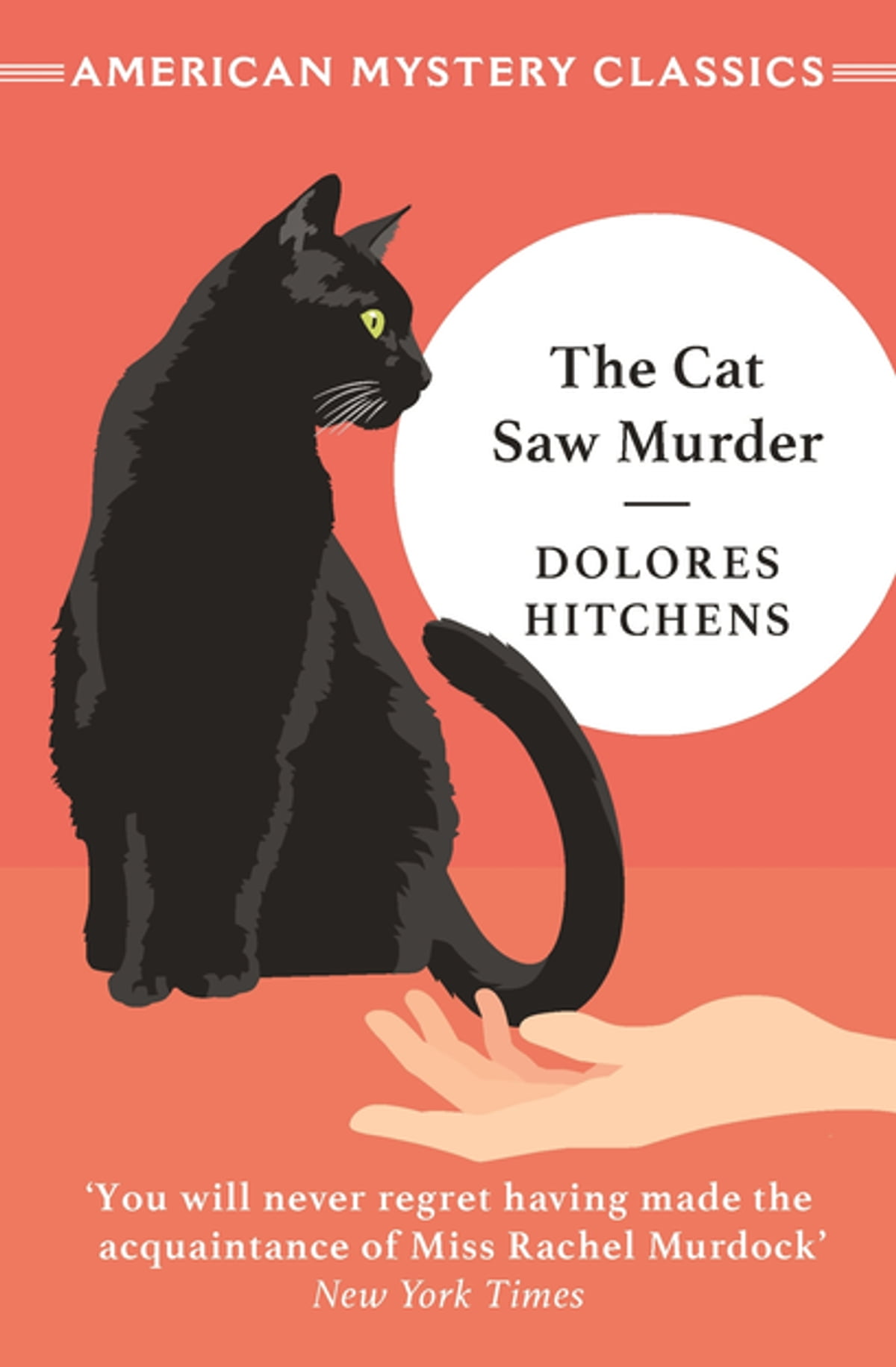
The Cat Saw Murder by Dolores Hitchens

This week, Mallika of Literary Potpourri is hosting Reading the Meow, a celebration of books featuring cats. When this event was first announced, I wasn’t sure if I had anything suitable; The Life and Opinions of the Tomcat Murr by ETA Hoffmann would have been perfect, if I hadn’t just read it last year. Then I came across a whole series of books with cats in them (or in the titles, at least): Dolores Hitchens’ Rachel Murdock mysteries, some of which have now been reissued as part of the American Mystery Classics imprint. The Cat Saw Murder, originally published in 1939, is the first and I hoped it would be a good choice for Reading the Meow.

The novel begins with elderly Miss Rachel Murdock going to stay with her adopted niece, Lily Sticklemann, who lives at Breakers Beach near Los Angeles. Lily has hinted that she’s in trouble and needs advice, so Miss Rachel has packed her case and set off by train to see if she can help. Her less adventurous sister Jennifer has stayed behind, but Miss Rachel is accompanied by Samantha, the black cat who once belonged to their other sister, Agatha. Agatha was an eccentric woman and on her death she left her fortune to the cat, meaning that Samantha is now a wealthy heiress in her own right. After meeting Lily and discovering that she is having financial difficulties, Miss Rachel becomes concerned for Samantha’s safety, suspecting that Lily has her eye on the cat’s inheritance. However, Lily herself is the one who is murdered – and it seems that Samantha may have been a witness.

There are plenty of suspects – Lily lives in a boarding house, Surf House, and is murdered in her bedroom, which means all of the other residents of the building immediately come under suspicion. Several also have a motive for the crime, as Lily owes gambling debts to some of them and is thought to have been romantically involved with another. Although this is not a locked-room mystery exactly (we know that the bedroom door opens and closes more than once during the night of the murder), it does share many elements of that kind of mystery, but thankfully never becomes too concerned with the puzzle-solving aspects at the expense of the characters and motives.

Miss Rachel is a great character; I found her very endearing and quite similar to Agatha Christie’s Miss Marple in many ways, although she’s more agile and energetic for her age than Miss Marple is and spends a portion of the book searching rooms and crawling around in the attic. She has a good relationship with the detective investigating the murder, Lieutenant Mayhew, and they both contribute, in their different ways, to the solving of the mystery.

The plot feels slightly disjointed at times and there are some confusing shifts between past and present tense (the book seems to be narrated by someone at an unspecified future date looking back on Mayhew and Miss Rachel’s first case), but otherwise I really enjoyed this book and it did turn out to be a good choice for Reading the Meow. Samantha the cat, although not the main focus of the story, does have a substantial part to play and provides some intriguing clues. The second book in the series is The Alarm of the Black Cat and I think I’ll be tempted to read it soon!

This is book 1/20 of my 20 Books of Summer 2023

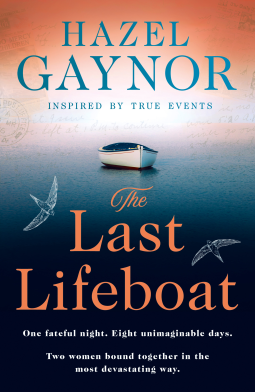
The Last Lifeboat by Hazel Gaynor

We hear a lot about children being evacuated from the cities to the British countryside during World War II, but not so much about those who were sent away to safety overseas. Hazel Gaynor’s new novel, The Last Lifeboat, explores this often overlooked aspect of the war, taking as its inspiration the real life tragedy of the SS City of Benares, a British evacuee ship which was torpedoed by a German U-boat in September 1940 with almost 100 children on board.

The novel follows the stories of two women: Alice King and Lily Nicholls. Lily, who lives in London, is a widow and the mother of two young children, Georgie and Arthur. All she wants is to keep her children safe, but as bombs begin to rain down on the city, Lily starts to fear for their lives and when she hears about a new government scheme to evacuate children to other countries, she has a difficult decision to make. Meanwhile, schoolteacher Alice King is looking for a way to ‘do her bit’ for the war effort and has signed up with CORB (the Children’s Overseas Reception Board) as a volunteer escort who will accompany a group of children on a ship sailing for Canada.

These two separate storylines connect when Lily entrusts Arthur and Georgie to Alice’s care as parents are not allowed to accompany their children overseas. The ship on which they set sail – the SS Carlisle – is part of a large convoy so everyone assumes they will be protected from the German U-boats, but once out in the Atlantic things go badly wrong. The ship is hit by a torpedo and begins to sink, leaving the passengers and crew to pile into the lifeboats. Some are rescued, others are thrown into the waves, but one lifeboat drifts out of range with Alice King on board. The days that follow will be a traumatic period for Alice, as she and the others in the boat find themselves lost at sea with little hope of rescue and limited supplies of food and water, but it will be equally traumatic for Lily as news of the disaster reaches London and she discovers that one of her children is missing.

I think this is the best of the three Hazel Gaynor books I’ve read so far (the others are The Lighthouse Keeper’s Daughter, about Grace Darling, and The Cottingley Secret, the story of the Cottingley fairies). I liked both Lily and Alice and found each of their stories very moving. Alice’s is more dramatic as the days go by and she and the other lifeboat passengers struggle to survive while adrift in the Atlantic, but I could also feel Lily’s heartbreak and anger as she waits for news of her lost child and makes the shocking discovery that the evacuee ships were not being escorted to Canada as promised but left to fend for themselves after passing a certain point. Knowing that the book is based on a true story and that real people did have to go through the things that Alice and Lily went through just makes it even more powerful.

Thanks to HarperCollins for providing a copy of this book for review via NetGalley.

This is book 22/50 read for the 2023 Historical Fiction Reading Challenge.

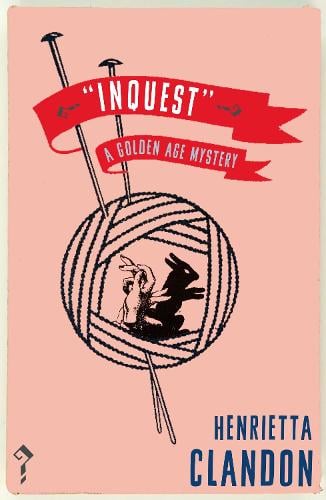
Inquest by Henrietta Clandon

Inquest is one of four Henrietta Clandon mysteries available from Dean Street Press. Many of you will have heard the sad news earlier this year of DSP publisher Rupert Heath’s death, but it has been confirmed that the titles currently in print will still be available as long they have the copyrights. I loved the first Clandon novel I read, Good by Stealth, so I thought I would read another one while I still had the opportunity.

Henrietta Clandon was a pseudonym of John Haslette Vahey, a Northern Irish author who also wrote under several other names, most often Vernon Loder. Inquest, originally published in 1933, was the first of his books under the Clandon name. I’ve never read anything else he has written, so I don’t know how much difference there is between the various pseudonyms in terms of writing style or topics.

The novel opens six months after the death of William Hoe-Luss, an English businessman believed to have been poisoned by consuming deadly mushrooms during a house party in France. Now his widow, Marie Hoe-Luss, has assembled all of the original guests – with the addition of Dr Soame, William’s physician – for another house party at Hebble Chase, her estate in England, where she plans to hold a sort of informal ‘inquest’ into her late husband’s death. However, when one of the guests breaks their neck falling from a high window, it seems that the killer may have struck again.

Although the police do eventually arrive on the scene, most of the sleuthing in the book is done by Dr Soame, who also narrates the whole novel. He’s an interesting choice of narrator as his medical knowledge and previous experience as a police surgeon means he works alongside the detectives at times, while also being one of the party, mixing with the suspects. Soame already knows some of the guests through his position as the Hoe-Luss family doctor, but others are new to him which allows the reader to get to know them along with Soame.

I enjoyed the first half of the book, which introduces the characters as they arrive at the estate for Marie’s inquest – an assortment of friends, family members, business partners and former lovers, which means there are plenty of tensions, entanglements and motives for murder. They aren’t the most pleasant bunch of people, but that’s common in Golden Age mysteries so not unexpected and not too much of a problem! However, I felt that later in the book, after the second death takes place, the plot became unnecessarily complicated and I began to struggle to keep everything straight in my mind.

I really wanted to love this book, so I’m disappointed that I didn’t. It’s a good, solid mystery novel, apart from getting a bit confusing towards the end, but there’s nothing to make it stand out from other similar books in the genre, unlike Good by Stealth, which was unusual, witty and clever. I’m not sure whether I’ll read the other two Henrietta Clandon books – I suspect I’ve already read the best one – but maybe I’ll try a Vernon Loder at some point.

Six Degrees of Separation: From Friendaholic to To the Lighthouse

It’s the first Saturday of the month, which means it’s time for another Six Degrees of Separation, hosted by Kate of Books are my Favourite and Best. The idea is that Kate chooses a book to use as a starting point and then we have to link it to six other books of our choice to form a chain. A book doesn’t have to be connected to all of the others on the list – only to the one next to it in the chain.

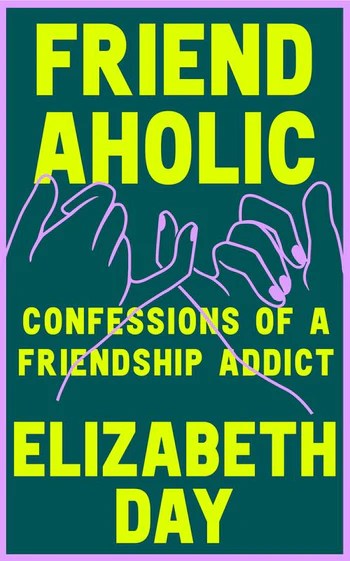
This month we’re starting with Friendaholic by Elizabeth Day. It’s not a book that I’ve read, but here’s what it’s about:

As a society, there is a tendency to elevate romantic love. But what about friendships? Aren’t they just as – if not more – important? So why is it hard to find the right words to express what these uniquely complex bonds mean to us? In Friendaholic: Confessions of a Friendship Addict, Elizabeth Day embarks on a journey to answer these questions.

I’m starting my chain by linking to a novel about complex friendships: China Dolls by Lisa See (1). It’s set in the 1930s and 40s and follows the stories of three young women – two Chinese and one Japanese – who meet while auditioning as dancers at a San Francisco nightclub. The three quickly become friends, until they are torn apart by secrets, betrayals and the events of World War II. I remember being both fascinated and confused by the friendship angle, as all three women repeatedly talk about how close they are while behaving more as if they hate each other!

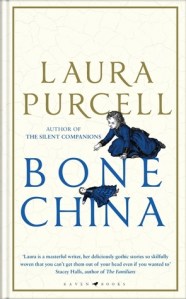
Another book with the word ‘China’ in the title (but a different kind of china) is Bone China by Laura Purcell (2), a Gothic novel set in the 19th century on the coast of Cornwall. Our narrator, Hester Why, has just arrived from London to take up a new position as nurse to Louise Pinecroft, a woman who barely speaks or moves and sits all day in a room surrounded by china cups and plates. I found it an atmospheric book, let down slightly by a weak ending.

A subplot in Bone China involves a doctor carrying out some experiments to try to find a cure for consumption (tuberculosis). In The Lady of the Camellias by Alexandre Dumas fils (3) – the book that inspired Verdi’s opera La traviata – we know from the start that Marguerite Gautier is going to die of consumption. The novel tells the story of her time as a Parisian courtesan who uses bouquets of red and white camellias to send messages to her lovers. I read it in an English translation by Liesl Schillinger.

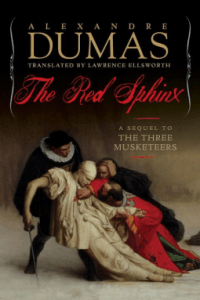
I did enjoy The Lady of the Camellias, but I prefer the work of Dumas’ father, the more famous Alexandre Dumas père. The Count of Monte Cristo, The Three Musketeers series and The Black Tulip are my favourites, but The Red Sphinx (4) is the one I’m including in my chain because it’s much less well known and deserves some attention! It’s a Musketeers sequel, although d’Artagnan and the other Musketeers don’t actually appear in it at all. I described it in my review as a story of ‘dashing young heroes and beautiful heroines; duels, battles and sieges; spies and smugglers; secret messages, clever disguises, letters written in code – and political and romantic intrigue in abundance.’

My next link is to another book with a colour in the title – not red this time, but green. It’s The Land of Green Ginger by Winifred Holtby (5), the story of a missionary’s daughter, Joanna Burton, who is born in South Africa but raised by her aunts in a small rural community in England. I prefer Holtby’s other books, but this one does have a lot of interesting elements, looking at the aftermath of the First World War, the contrast between post-war life in Britain and other parts of Europe, and attitudes towards immigrants.

The Land of Green Ginger was published in 1927. Another book also published in the same year was To the Lighthouse by Virginia Woolf (6). Although it’s one of Woolf’s best known books, it’s actually my least favourite of the four I’ve read by her so far, mainly because I’m not a fan of the stream of consciousness writing style. I can understand why other people love it, but it wasn’t for me.

~

And that’s my chain for June. My links have included friendships, the word China, tuberculosis, father and son authors, colours in titles and books published in 1927.

In July we’ll be starting with the winner of the International Booker Prize, Time Shelter by Georgi Gospodinov and translated by Angela Rodel.