Lady MacBethad by Isabelle Schuler

The character of Lady Macbeth is known to many of us through Shakespeare’s play, but who was she really? What kind of person was she and what were the events that led to her marriage to Macbeth and the beginning of the story we think we know? These are the questions Isabelle Schuler attempts to answer in her new novel, Lady MacBethad.

The book is set in the first half of the 11th century and is narrated by Gruoch, the woman who will become Lady Macbeth. With royal blood in her veins, Gruoch has grown up listening to her Picti grandmother’s prophecies that one day she will be Queen of Alba. When she is betrothed to Duncan, heir to the throne, it seems that the prophecy is going to come true and although she is sorry to leave behind her family and her close childhood friend MacBethad, she heads for Scone to join Duncan’s court. However, she is unprepared for the hostility of Duncan’s mother, Bethoc, the scheming of her pagan friend, Ardith, and the arrival of another young woman, Suthen of Northumberland, who also catches Duncan’s eye.

When a dramatic turn of events leads to her having to flee Scone before the marriage can take place, Gruoch falls into the hands of Mael Colum of Moray and his brother, Gillecomghain. Her chances of becoming queen seem out of reach again, but Gruoch refuses to give up on her dream.

Lady MacBethad ends before Shakespeare’s Macbeth begins, so is not a retelling of the play but more of a prequel to it. Also, the characters in Schuler’s novel are based on the real historical figures rather than on Shakespeare’s interpretation of them, which of course can’t be taken as being particularly accurate! I was pleased to find that she tries to use language appropriate to the period and authentic medieval Gaelic naming, such as MacBethad mac Findlaich rather than the anglicised Macbeth. This was a relief after reading Joanna Courtney’s Blood Queen a few years ago, which renamed Gruoch as Cora and Gillecomghain as Gillespie, just in case the original names were too difficult for modern readers.

Schuler works some quotes from Shakespeare into the conversations between her characters – “Look like the innocent flower, but be the serpent beneath it” is advice given to Gruoch by her grandmother, for example – but no knowledge of the play is necessary to be able to understand and enjoy this book. It can be read as a straightforward work of historical fiction, bringing to life a fascinating and complex period of Scotland’s (or Alba’s) history. It explores the conflict between Christianity and the old pagan beliefs, the fading culture of the Picts and the warring factions trying to gain control of the throne.

Gruoch (or Groa, as her pagan friends call her) is portrayed as ambitious, determined and driven by her desire to become queen no matter what. Yet her narrative voice feels slightly too young and immature for me to find her completely convincing. I think having read Dorothy Dunnett’s wonderful King Hereafter, it was just too difficult for me to put Dunnett’s Groa out of my mind and fully embrace a different version of the character.

The way the book ends sets things up perfectly for a sequel, maybe incorporating some of the more familiar events of Macbeth. I wonder whether there will be one or whether Isabelle Schuler is moving on to other subjects now.

Thanks to Raven Books for providing a copy of this book for review via NetGalley.

This is book 7/50 read for the 2023 Historical Fiction Reading Challenge.

Six Degrees of Separation: From Passages to The Venice Train

It’s the first Saturday of the month, which means it’s time for another Six Degrees of Separation, hosted by Kate of Books are my Favourite and Best. The idea is that Kate chooses a book to use as a starting point and then we have to link it to six other books of our choice to form a chain. A book doesn’t have to be connected to all of the others on the list – only to the one next to it in the chain.

This month we’re starting with Passages by Gail Sheehy, a bestselling self-help title from the 1970s. I haven’t read this book and doubt I ever will, but here’s what it’s about:

At last, this is your story. You’ll recognize yourself, your friends, and your loves. You’ll see how to use each life crisis as an opportunity for creative change – to grow to your full potential. Gail Sheehy’s brilliant road map of adult life shows the inevitable personality and sexual changes we go through in our 20s, 30s, 40s, and beyond. The Trying 20s – The safety of home left behind, we begin trying on life’s uniforms and possible partners in search of the perfect fit. The Catch 30s – illusions shaken, it’s time to make, break, or deepen life commitments. The Forlorn 40s – Dangerous years when the dreams of youth demand reassessment, men and women switch characteristics, sexual panic is common, but the greatest opportunity for self-discovery awaits. The Refreshed (or Resigned) 50s – Best of life for those who let go old roles and find a renewal of purpose.

I couldn’t think of any way to link this book to anything else I’ve read so instead I’m linking to a book I haven’t read yet, but do have on my TBR – A Passage to India by EM Forster (1). So far I’ve only read Howards End and A Room With a View by Forster and although I enjoyed them both I still haven’t got round to trying any of his others. His 1924 novel set in India during the time of the British Raj will probably be the next one I read.

Damon Galgut’s Arctic Summer (2) is a fictional biography of Forster, concentrating on the time in his life when he was working on A Passage to India. I liked Galgut’s writing and the descriptions of India and Egypt, but otherwise found this book boring. I think my lack of familiarity with Forster’s life and work was partly to blame – all the more reason to read more of his books sooner rather than later – but I also felt that Galgut chose to focus too heavily on Forster’s sexuality and romantic relationships, which just didn’t interest me very much.

The Magician by Colm Tóibín (3) is another novel about the life of an author, in this case Thomas Mann. Again, my knowledge of Mann and his work is limited (I’ve only read Death in Venice and some of his short stories), but I’d seen a lot of praise for this book so tried it anyway. The book takes us through Mann’s childhood in Germany, his marriage, his experiences during World War II and his later years in Los Angeles and Switzerland. I found it interesting but didn’t connect with it on an emotional level and I prefer the way Tóibín writes about fictional characters.

The title of the Toibin novel makes me think of a book featuring a character who becomes a magician: Fifth Business by Robertson Davies (4). This is the first book in Davies’ Deptford Trilogy and although I enjoyed it, I still haven’t read the other two. Fifth Business is narrated by Dunstan Ramsay, who grows up in the small Canadian town of Deptford. Dunstan suffers from guilt after ducking to avoid a snowball with a stone in it which hits a pregnant woman instead and almost everything that happens to him from this point on can be traced back to that incident.

Another book in which snow plays a significant part in setting the plot in motion is Murder on the Orient Express by Agatha Christie (5). Hercule Poirot is a passenger on the Orient Express when the train comes to a stop in a heavy snowfall. When a man is found stabbed to death in his compartment, it seems clear that the murderer must be among the other passengers on the train. I already knew the solution before I started this book, but that didn’t stop me from enjoying it and I can see why it’s one of Christie’s most popular mysteries.

Christie has written several other novels set on trains, but I have chosen to end my chain with one by a different author: The Venice Train by Georges Simenon (6). This is one of Simenon’s standalone thrillers, which he described as romans durs or ‘hard novels’. On a train journey from Venice to Paris, Justin Calmar finds himself left with a briefcase belonging to another passenger and, unable to resist the temptation, breaks the locks and looks inside. The rest of this dark and suspenseful novel explores the psychological effects on Justin caused by the contents of the case.

And that’s my chain for March. My links included: the word ‘passage’, EM Forster, novels about authors, magicians, snow and trains. I like to look back and see whether I’ve made the chain come full circle, but the only connection I can find between the last and first book is the theme of journeys – The Venice Train deals with a physical journey and Passages with a journey through life.

In April we’ll be starting with Bruce Springsteen’s autobiography, Born to Run.

Old God’s Time by Sebastian Barry – #ReadingIrelandMonth23

Sebastian Barry is one of my favourite Irish authors; he writes beautifully and I’ve loved some of his previous books – in fact, the only one I’ve read that I didn’t like much was Days Without End, mainly because the subject (army life in the American West during the Indian Wars) didn’t really appeal to me. His new novel, Old God’s Time, has a very different setting – Ireland in the 1990s – and I hoped it would be another good one.

Old God’s Time is the story of Tom Kettle, a recently retired police detective who lives in the annex of a castle in Dalkey, a coastal resort to the southeast of Dublin. The castle overlooks the Irish Sea and Tom is finding some contentment in the quietness and solitude of his retirement…until, one day, two younger policeman arrive at his door. They are reopening an historic case Tom worked on in the 1960s and they want to hear his thoughts on it.

Forced to confront moments from his past that he would have preferred to forget, Tom begins to remember. He remembers his beloved wife June and his two children Joseph and Winnie, all now dead, in separate tragic incidents. He remembers his career as a detective and his time in the army. And he remembers that terrible, disturbing thirty-year-old case, linked to one of the darkest episodes in Ireland’s recent history.

When I first read the blurb for this book, it sounded like a crime novel, but being familiar with Sebastian Barry’s work, I knew it would probably be something quite different! In fact, the crime element is pushed into the background until much later in the book, and instead we spend time inside Tom’s head, watching him go about his daily business while memories fleet in and out of his mind, almost at random. The memories don’t come to him chronologically, but in a haphazard, disordered way and sometimes it is unclear whether he is even remembering things accurately. This doesn’t make for easy reading and I spent the first half of the novel feeling very confused. ‘Stream-of-consciousness’ writing is not my favourite style at the best of times and although it does usually work for me in Barry’s novels, I wasn’t won over until the second half of the book. From that point, I was gripped.

The story that does eventually unfold in Old God’s Time is very sad and very grim. It’s a subject that is painful and difficult to read about, but it’s one that needs to be discussed and not ignored. My heart broke for Tom, June and the other characters, but at the same time it’s not a completely miserable book and the beautiful descriptions of the Irish landscape provide a bit of respite from the sadness of the story. I didn’t like this book as much as The Secret Scripture or On Canaan’s Side, but it’s a powerful novel and one I’m pleased I read.

Thanks to Faber & Faber for providing a copy of this book for review via NetGalley.

I’m counting this towards Reading Ireland Month 2023, hosted by Cathy at 746 Books.

My Commonplace Book: February 2023

A selection of words and pictures to represent February’s reading:

commonplace book
noun
a book into which notable extracts from other works are copied for personal use.

~

Children are not born with memories of who insulted their mother or slew their grandfather or stole their land. Those hates are bequeathed to them, taught them, breathed into them. If adults didn’t tell children of their hereditary hates, perhaps we would do better.

Assassin’s Fate by Robin Hobb (2016)

~

My opinion is that, to be happy, it is best to think that, as we are the product of events, events will continue to produce that which is in harmony with us.

A Laodicean by Thomas Hardy (1881)

~

Medea the Sorceress by Valentine Cameron Prinsep, 1880

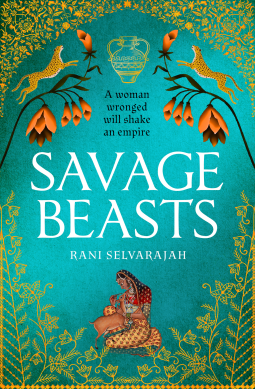
This was another lesson she had taught Meena: the world need not know your heart if it does not benefit you. And when your feelings do not suit the moment, conceal, pretend if you need to. Whatever you need to do to survive.

Savage Beasts by Rani Selvarajah (2023)

~

What he had not seen, he could not speak of. In his master’s employ, he had always followed that rule. Wise men have neither eyes nor ears.

Rivers of Treason by KJ Maitland (2023)

~

“Miss O’Connell is right,” he said gravely. “We are all human beings with equal rights, with liberty to regulate our own lives, and to choose for ourselves what we shall do, or not do. The only thing I want you to remember is that before our liberty comes our duty to each other – not any one person to anybody else, but each to all.”

The Empty World by D.E. Stevenson (1936)

~

First edition of The Square of Sevens by E. Irenaeus Stevenson, 1897

‘You have to dream,’ I said. ‘That’s how the impossible becomes possible. Show me a grand triumph that didn’t start out as a dream.’

The Square of Sevens by Laura Shepherd-Robinson (2023)

~

Nowhere was there cohesion or form. Unrelated incidents and people whirled round in space. But Poirot knew quite well that somehow and somewhere there must be a pattern. Possibly several patterns. Possibly each time one shook the kaleidoscope one got a different pattern…But one of the patterns would be the right pattern. The question was where to start…

Hickory Dickory Dock by Agatha Christie (1955)

~

I think, says Doreen, a lot of people go through life not-knowing a lot of things. It does take courage, you know. To live a life that, at least to yourself, is true. For a lot of people that’s too high a price to pay.

These Days by Lucy Caldwell (2022)

~

The Race between Atalanta and Hippomenes. Nicolas Colombel (1644–1717)

Jason thought the world was built for heroes. I knew we had to build it ourselves.

Atalanta by Jennifer Saint (2023)

~

Is it disrespectful to the House to love some Statues more than others? I sometimes ask Myself this question. It is my belief that the House itself loves and blesses equally everything that it has created. Should I try to do the same? Yet, at the same time, I can see that it is in the nature of men to prefer one thing to another, to find one thing more meaningful than another.

Piranesi by Susanna Clarke (2020)

~

The sublimity of the music reached a nerve deep within her and stirred up feelings and emotions she had thought long buried, for the music brought a sense of hope. Perhaps it was an idealistic, naive view of what the future might be – yet surely hope was part of what makes us human, she reflected. The future can’t be forever blighted.

The Lodger by Helen Scarlett (2023)

~

Favourite books read in February:

The Empty World, A Laodicean and The Square of Sevens

Authors read for the first time in February:

Helen Scarlett, Rani Selvarajah, Lucy Caldwell

Places visited in my February reading:

India, South Africa, England, Scotland, Greece, Ireland, France, Germany

~

Reading notes: February was another good month for me; although I didn’t read as many books as in January, I enjoyed most of those I did read, which I think is more important. I’ve also read a good variety of books, including fantasy, crime, historical fiction, mythology and science fiction! Now I just need to get on with posting the reviews. In March, I will be taking part in Reading Ireland Month, hosted by Cathy at 746 Books, and am also hoping to join in with Reading Wales, hosted by Paula at Book Jotter.

How was your February? Do you have any plans for your March reading?

Hickory Dickory Dock by Agatha Christie

February’s prompt for the Read Christie 2023 challenge is a murder method – the use of a blunt object. A lot of Christie’s novels involve murders carried out in this way and there were plenty of suggestions on the official challenge page this month. I chose a book I hadn’t read, Hickory Dickory Dock, which is a Poirot mystery first published in 1955.

The novel begins with the unthinkable – Poirot’s very efficient secretary, Miss Lemon, has made a mistake! Several mistakes, in fact, in a letter she has been typing. When Poirot asks her if something is wrong, she confesses that she’s worried about her sister, Mrs Hubbard, who has recently begun working at a student hostel on Hickory Road. Strange things have been happening at the hostel, Miss Lemon explains – a number of items have been stolen, but there seems to be no logic behind the thefts. A diamond ring, light bulbs, a stethoscope, lipstick, one shoe…what can be the connection? Finding an excuse to visit Hickory Road for himself, Poirot begins to investigate. At first it seems that there could be a fairly innocent explanation, but as these little incidents begin to take a more malicious turn, Poirot needs to discover the truth before somebody is killed.

This is one of several Christie novels that uses part of a children’s rhyme as its title, but apart from the name of the street, it doesn’t have any significance to the plot this time – unlike, for example, A Pocket Full of Rye or Five Little Pigs. That was a bit disappointing (surely a mouse or a clock could have been worked into the plot somehow!) but otherwise I enjoyed this book. I don’t think it’s one of the very best Poirot novels, but even a slightly weaker one is still fun to read. Although the crimes being committed seem quite trivial at the beginning, it gradually becomes clear that something more serious is going on in the background and once the murder takes place, the plot becomes much more compelling.

Setting the novel in a house full of students gives it a busy, bustling feel and means there’s a large cast of characters to provide both victims and suspects. The students are of all nationalities, some British, some French, with others from Africa, Jamaica, India and a whole range of other places. As the book was written in the 1950s, you can probably guess that the way these characters are portrayed is not always politically correct; there’s some racist language and some attitudes that aren’t considered acceptable today. However, for the most part, the students seem to mix together across racial and class boundaries, forming the usual friendships and rivalries you would find in any large group of young people.

I can’t really claim to have solved the mystery, as I worked out part of it but not all of it, but I don’t think it was one of Christie’s cleverest plots and the solution wasn’t as surprising as some of her others. Still, it was entertaining, as all of her books are, and I’m looking forward to reading more as Read Christie 2023 progresses. The March prompt is a motive – anger. I’m not sure yet whether I’ll be joining in with that one, but will see if I can fit it into my March reading.

Assassin’s Fate by Robin Hobb

It’s been almost nine years since I decided to read Assassin’s Apprentice, the first book in Robin Hobb’s sixteen-volume fantasy sequence following the adventures of FitzChivalry Farseer, his friend the Fool, and the people of Bingtown and the Rain Wilds. Not being a big reader of fantasy, I wasn’t sure what to expect, but I trusted the opinions of the fellow bloggers who had recommended it – and I loved it! I went on to read the other books in the individual trilogies and quartets that make up the sequence: the Farseer Trilogy, the Liveship Traders Trilogy, the Tawny Man Trilogy, the Rain Wild Chronicles and, finally, the Fitz and the Fool Trilogy. Assassin’s Fate is the final book in this final trilogy, bringing the entire series to a close.

Naturally, I can’t really discuss the last of sixteen books without spoiling certain aspects of the fifteen previous ones, so be warned! If you haven’t read any of these books yet, I strongly recommend starting at the beginning, with Assassin’s Apprentice – and I hope you’ll enjoy your journey through Robin Hobb’s world as much as I did. This particular novel, though, hasn’t become a favourite and even now, more than a week after I finished it I can’t really decide how I felt about it.

Assassin’s Fate picks up the story from the previous book, Fool’s Quest, with Fitz and his companions heading for the distant city of Clerres in pursuit of the people who have captured his young daughter, Bee. As well as Fitz, the party consists of the Fool, in his female guise of Amber, the trainee assassin Spark, Chade’s illegitimate son Lant, and the stableboy, Per. Fitz is convinced that Bee is dead and their mission is one of vengeance only, but Amber senses that she is still alive. Either way, now that they have embarked on their journey, they need to reach Clerres as quickly as possible and passage has been arranged on the liveship Paragon.

The story of Fitz’s journey alternates with chapters narrated by Bee as she describes her ordeal at the hands of her captors, led by the evil Dwalia. I’ve had mixed feelings about Bee throughout this trilogy – on the one hand, I like her as a character and I can see that her viewpoint allows us to witness things that Fitz does not and so fills in the gaps in the story; on the other, having spent the Farseer and Tawny Man trilogies solely inside Fitz’s head, I would have preferred to continue like that. I often find that I start to lose interest slightly when a long series or saga begins to move on to the next generation and the older characters I have grown to love start to take a back seat. In this book, the earlier Bee chapters felt drawn out and repetitive, although later on, when she and her captors arrived in Clerres, I found her story much more compelling.

A bigger problem for me was the amount of time spent on characters from the Liveship Traders and Rain Wilds novels. As this is the book that wraps up the whole sequence, it’s understandable that Hobb would want to give us a chance to say our farewells to the characters from those books as well as the Farseer ones, but I felt that they came to dominate the story too much. I was happy to see Paragon again and his captains Althea and Brashen, but I had no interest in their son Boy-O or in Kennitson of the Pirate Isles. Instead, I would have preferred more interactions between Fitz and the Fool (not Amber, as I shared Fitz’s dislike of her), more communication with Verity, which was hinted at in the previous book but not followed through, and while we were saying our goodbyes to various characters, I would have liked a better send-off for Chade.

I probably sound as though I didn’t enjoy this book much at all, but that’s not true! I did find plenty of things to like, such as the dramatic scenes within the walls of Clerres, the roles of Nighteyes and Motley the crow, and the final few chapters which, despite not being quite the ending to Fitz’s story I would have chosen, still made me cry. I’m just slightly disappointed that so much of this final novel was devoted to characters and storylines I didn’t feel very invested in. I’m sure people who loved the Liveship and Rain Wilds books more than I did will feel much more satisfied with it.

I’m not sure whether any of Robin Hobb’s other books appeal to me (she has also written as Megan Lindholm) but I’m pleased to have read these ones as overall, apart from a few that have been less successful, I’ve thoroughly enjoyed them.

The Empty World by D.E. Stevenson

Did you know that D.E. Stevenson had written a post-apocalyptic novel? I didn’t, until I read the description of this one and was intrigued by how different it sounded from her usual light romances and family sagas. First published in 1936, it’s available in ebook format from independent publisher Lume Books. I’m not sure whether ebooks count towards Karen and Lizzy’s #ReadIndies month, but this book seems to be currently out of print in physical form.

The Empty World begins with historical novelist Jane Forrest and her secretary, Maisie, boarding a flight from New York to London. Jane is prepared for a turbulent journey, but she and the other passengers are alarmed when a particularly violent electrical storm seems to knock them off course and cut off communication with the world below. Finally managing to land in Glasgow, the passengers and crew immediately sense that something is horribly wrong – the airport is eerily deserted and nobody comes to meet the plane. And it’s not just the airport…the city of Glasgow itself also appears to be completely empty of people, animals, birds and any other form of life. Eventually, Jane and her companions are forced to face the possibility that they could be the only human beings left in the whole world.

I don’t want to go into the plot in too much more detail as part of the enjoyment of reading this book was first in wondering what had happened to destroy life on earth and then in wondering how Jane and the other survivors would react. It would be nice to think that if a disaster threw you together with a random group of people you would all work together and cooperate, but of course that’s not what happens here and divisions and tensions within the group are apparent from the start. Some of these are romantic tensions, due to there being seventeen men in the group and only five women. Others arise from different views over how their new society should be run and whether everyone should be allowed to be part of it.

It seemed at first that the whole book would be written from Jane’s perspective and I did find her a likeable heroine, but we also get to know the other people who survived the disaster – thirteen passengers and nine crew members – and some of them go off and have adventures of their own as the novel progresses. As well as Jane and her secretary, these include newspaper proprietor Sir Richard Barton, who becomes the de facto leader of the group, Hollywood actress Iris Bright and her bullying manager, two elderly spinster sisters, and an assortment of pilots and engineers.

A few pages into the book, it began to occur to me that something didn’t feel quite right. I eventually looked back at the first page and discovered that although the book was published in 1936, the story is actually set in 1973, Stevenson’s future. That obviously hadn’t registered with me when I first started reading, although the description of a transatlantic flight only taking twelve hours should have told me it wasn’t the 1930s! To be fair, the setting is only vaguely futuristic and overall it does feel much more like the 30s than the 70s.

I don’t read a lot of post-apocalyptic fiction, but Stevenson seems to explore most of the issues that are usually raised in this kind of novel. Why did some people survive and not others? How should they go about rebuilding their lives and how will each survivor fit into the new community that begins to emerge from the ruins? Which ideas, inventions and customs of the former civilisation are worth preserving and which should be consigned to history? Money, for example, no longer has any meaning when you can walk into an abandoned shop and take whatever you need.

I loved the eerie atmosphere Stevenson creates as she describes a world without life, with inanimate objects frozen in place exactly as they were when the catastrophe struck. Trying to travel anywhere is an ordeal as the roads are blocked with crashed or stationary vehicles (although I don’t think Stevenson had fully appreciated how much busier the roads would have become between the 1930s and 1970s – and can you imagine how bad this problem would be in 2023!). I found it particularly poignant when three members of the party take a small plane and fly to Europe, only to find that the places they’d always dreamed of visiting – Rome and Venice, for example – have completely lost their magic now they are devoid of life. At least you can have the museums and galleries all to yourself!

It’s sad that The Empty World seems to have been almost forgotten and has never received the attention or acclaim of other dystopian novels. Maybe it was just too different from Stevenson’s other work to appeal to her existing readers while her reputation as an author of gentle, domestic fiction may have led to the book being overlooked by science fiction fans. I loved it anyway and found it a fascinating, thought provoking read. I would definitely recommend trying it if you can get hold of it – if you need it in physical format, used copies seem to be quite rare and expensive but maybe you’ll be lucky. The book has also been published in the US under the title of A World in Spell.