The Fortune Men by Nadifa Mohamed

The next book I’ve read from my 20 Books of Summer list is Nadifa Mohamed’s third novel, The Fortune Men. I enjoyed her previous book, The Orchard of Lost Souls, and was looking forward to this one, particularly as it has been so highly acclaimed, being shortlisted for the 2021 Booker Prize and Costa Novel Award and longlisted for the 2022 Walter Scott Prize for Historical Fiction. It’s based on a true story – the trial of a Somali man accused of murder in 1950s Wales. If you don’t already know all the details of the trial and its outcome, I would recommend not looking them up until you’ve finished the book. I’ve tried to avoid spoilers in this review!

I found the opening chapters of the novel slightly overwhelming, as we are introduced to a large number of characters of various nationalities and backgrounds, switching quickly from one viewpoint to another, but in hindsight I think this was probably intentional, designed to throw the reader straight into the bustling, multicultural heart of Cardiff’s Tiger Bay as it would have been in 1952. After a while, the focus tightens to concentrate on two main characters: the murder victim and the man accused of the murder. His name is Mahmood Mattan, a Somali sailor who has settled in the dockland area of Tiger Bay.

Things are not going well for Mahmood at the beginning of the novel – he has separated from his wife, Laura, a Welsh woman who lives nearby with their three sons, and he is staying in a boarding house with several other men, none of whom make him feel very welcome. He’s struggling to find work and is drifting into a life of petty crime and theft, with any money he does have being spent on gambling. However, when Violet Volacki is found dead on the floor of her shop, her throat slit and a large sum of money missing from the safe, Mahmood is blamed just because the victim’s sister and young niece – Diana and Grace – reported seeing a Somali man standing in the shop doorway just before the murder took place. Even when Diana and Grace say that Mahmood was not the man they saw, the police are adamant that they’ve caught the right man and that he will hang for what he’s done.

Although we know Mahmood is not a murderer, he is not a particularly easy character to like either. He’s a thief, a gambler and often his own worst enemy, as we see during his arrest and trial, when his attitude rubs everyone up the wrong way and makes things worse for himself. But he’s also a loving husband and father and despite feeling that she couldn’t go on living with him, Laura has not given up on their relationship and vows to help him in any way she can. In the middle of the book, we are given Mahmood’s backstory, with some insights into his childhood in British Somaliland (as it was known then), his days working as a ship’s stoker, and how he came to live in Wales and to marry Laura. While I think this information could have been worked into the story more gradually, it was good to learn more about Mahmood’s past and to discover what made him into the man he became.

We also get to know Violet Volacki and her widowed sister Diana – but I’m not sure how much of this part of the novel was based on fact and how much was fictional, because Violet Volacki was not the real name of the murder victim (it was Lily Volpert, apparently changed at the request of a family member). Still, it was interesting to see some of the story from a different perspective, although I thought Diana disappeared from the novel too soon after Violet’s death – I would have liked to have seen more of how she was coping in the aftermath of the murder and how she felt about Mahmood being blamed.

This is a powerful novel and becomes quite emotional as the full scale of this terrible miscarriage of justice is revealed. I can’t really say that it’s a book I loved, but it’s one that I’m glad I’ve read.

This is book 9/20 from my 20 Books of Summer list.

This is book 37/50 read for the Historical Fiction Reading Challenge 2022.

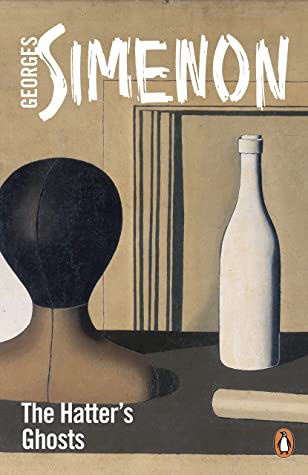
The Venice Train by Georges Simenon (trans. Ros Schwartz)

This is one of Georges Simenon’s many psychological thrillers, which he described as romans durs or ‘hard novels’. I’ve read two of his others – The Man from London and The Strangers in the House – and have enjoyed both, so was looking forward to reading this one. First published in 1965 as Le Train de Venise, it has just been reissued by Penguin Classics in a new English translation by Ros Schwartz.

The novel begins with Justin Calmar boarding a train in Venice to return to his home in Paris after a family holiday. His wife and two young children will follow in a few days’ time. During the journey, another passenger engages Justin in conversation and he finds himself agreeing to deliver a briefcase to an address in Lausanne when the train stops at the station there. However, things don’t go according to plan and Justin ends up returning to Paris with the case still in his possession. Unable to resist the temptation, he breaks the locks and looks inside…and what he finds there will change his life forever.

I won’t say too much more about the plot because I wouldn’t want to spoil the suspense of wondering what is inside the case and what Justin will decide to do with it. This is a very short book (176 pages in the paperback version) and for the first half, the tension builds and builds. It would have made a perfect Alfred Hitchcock film! It’s not a crime novel, however, so don’t go into it expecting one; the mystery is never fully explained or resolved, it ends abruptly and we are left with lots of unanswered questions. The events on the train are simply a starting point for Simenon to explore the psychological effects on Justin Calmar as he battles with nerves, guilt and paranoia, lying to his wife and his friends and finding that each lie leads to another.

The second half of the book isn’t quite as strong as the first and I do wish we’d had answers to at least some of those questions, but this is a fascinating and compelling story – my favourite by Georges Simenon so far.

Although I was slightly disappointed that only the first few pages of the book are actually set in Venice – the rest either on the train or in Paris – I wasn’t too disappointed because Paris is, of course, a great setting as well. And as Thyme for Tea and Readerbuzz are hosting their annual Paris in July event this month, the timing couldn’t be better!

Thanks to Penguin Classics for providing a copy of this book for review via NetGalley.

A Line to Kill by Anthony Horowitz

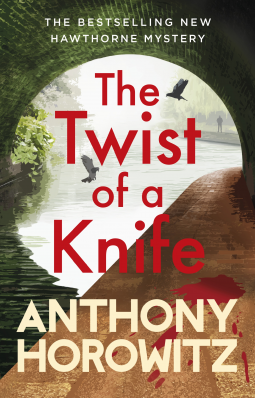
This is the third book in the Hawthorne and Horowitz mystery series; I enjoyed the first two, The Word is Murder and The Sentence is Death, and when I saw that the fourth book, The Twist of a Knife, is coming out in August it reminded me that I needed to catch up with this one.

If you’re not familiar with this series, I should start by telling you that it’s based around an unusual concept: the author Anthony Horowitz himself is one of the main characters, enlisted by the detective Daniel Hawthorne to write books about the cases he investigates. In this third novel, Horowitz and Hawthorne have been invited to attend a literary festival on the island of Alderney, one of the Channel Islands. There has never been a murder on Alderney before, as the islanders are quick to assure them, but this all changes soon after their arrival when an influential local businessman is found dead under suspicious circumstances.

There are plenty of suspects, including most of our duo’s fellow festival guests: a celebrity chef with a set of annoying catchphrases, a children’s author whose work has just been bought by Disney, a blind psychic who claims to hear voices from the spirit world and a French performance poet who is not all she seems. To complicate things further, the dead man has been at the centre of a controversial new scheme to run an electric power line across the island, something which has received a lot of opposition from the residents of Alderney. It seems that Hawthorne has found his next mystery to solve – and Horowitz has found his next novel.

I didn’t love this book as much as the first two in the series, maybe because I found the characters a particularly unpleasant bunch, but it’s still a clever, entertaining and absorbing murder mystery of the ‘locked room’ type – in which the whole island could be seen as the locked room, as once the murder takes place none of the suspects are allowed to leave. I think this is almost certainly the first and only book I’ve read with Alderney as a setting; I’m sure there must be others, but I’ve never come across them. The festival Anthony and Hawthorne attend is fictional, but in real life the island is establishing a literary reputation for itself, with an annual historical fiction festival and a recent Gothic literature event.

When writing yourself into a novel, it must be tempting to give yourself the starring role, but in this book that honour definitely goes to Daniel Hawthorne. With a lot of self-deprecating humour, Horowitz casts himself as the Watson to Hawthorne’s Holmes, always one step behind while Hawthorne picks up on clues that nobody else has even noticed. This creates a lot of tension between them (particularly when Anthony discovers that the festival-goers have no interest in his books – they only want to hear Hawthorne talk about the crimes he has solved). Their relationship has been a difficult one since the first novel, partly because Hawthorne is so secretive and shows Horowitz only the worst side of his personality. We are slowly learning a little bit more about him, but there’s still a lot we – and Anthony – don’t know.

I’m looking forward to reading The Twist of a Knife very soon…but what I’m really hoping for is a third book in the Magpie Murders series!

That Bonesetter Woman by Frances Quinn

I loved this! I’ll admit that when I first saw that this was a novel about a female bonesetter in the 18th century, I had my doubts. Was this really something a woman would be able to do at that time or was this going to be another book, like one or two others I’ve read recently, based around a completely anachronistic idea that could never have happened in reality? Then I discovered that there really was a female bonesetter working in London in the 1700s: her name was Sally Mapp and her story has provided Frances Quinn with the inspiration for her latest novel.

That Bonesetter Woman begins with Endurance Proudfoot – known as Durie – arriving in London in 1757 with her sister, Lucinda. The unmarried Lucinda has found herself pregnant and, with Durie accompanying her, has been hastily packed off to stay with an aunt so that she can give birth away from prying eyes at home. Durie is not at all happy to be sent away; she had been on the verge of persuading her father, a bonesetter, to allow her to work with him as his assistant. Now it looks as though the position will go to her younger brother instead. This is devastating for Durie – with her large hands and feet, social awkwardness and tendency to always say and do the wrong thing, bonesetting is the one thing she’s discovered she’s good at.

Watching with a mixture of admiration and resentment as Lucinda overcomes her own personal crisis and launches a new career for herself on the London stage, Durie decides it’s time to take matters into her own hands. She’s determined to find a way to do the work she loves and nothing is going to stop her.

This is a fascinating novel, particularly as it’s loosely based on the lives of real people (like Durie, Sally Mapp was believed to have a sister, Lavinia Fenton, who became a famous London actress). I enjoyed reading about Durie’s work as a bonesetter – similar to a modern-day chiropractor or osteopath, I think – but what particularly interested me was seeing the obstacles she had to overcome to be allowed to carry out her work at all, the mistrust from patients on discovering that they were going to be treated by a woman, and the hostility she faces from the existing, exclusively male, medical community. Poor Durie experiences one setback after another, but her passion for bonesetting and helping those in pain really shines through.

Although Durie is not considered a great beauty like her sister, she does have love interests throughout the novel but her lack of self-confidence leads to her making mistakes and poor decisions. Nothing ever seems to go her way, but while things often look bleak for Durie I never stopped hoping that she would find happiness and success in the end.

As I come to the end of this review I realise there are a lot of things I haven’t mentioned – the vivid portrayal of 18th century London, the menagerie in the Tower of London, the subplot involving the Foundling Hospital – but there’s so much going on in this novel, I can’t include all of it! It’s a great book and I will have to find time to read Frances Quinn’s previous novel, The Smallest Man.

Thanks to Simon & Schuster UK for providing a copy of this book for review via NetGalley.

This is book 36/50 read for the Historical Fiction Reading Challenge 2022.

At Bertram’s Hotel by Agatha Christie

July’s theme for Read Christie 2022 is ‘a story which takes place on holiday’; I didn’t take part in last month’s read as I’d already read the suggested title (Murder in Mesopotamia), but decided to join in this month with At Bertram’s Hotel.

This late Christie novel, first published in 1965, begins with Miss Marple arriving for a two-week stay at Bertram’s Hotel in London courtesy of her nephew who thought she might like to get away from the village of St Mary Mead for a while. The hotel is one that Miss Marple remembers fondly from her youth and, having heard that it has changed very little over the years, she is looking forward to staying there again. However, it turns out not to be quite the relaxing break she expected; first an elderly hotel guest, Canon Pennyfather, goes missing, then Miss Marple’s attention is drawn to the unusual behaviour of two more guests – the notorious Lady Sedgwick and her estranged teenage daughter, Elvira. It seems that something is not quite right about Bertram’s Hotel, but can Miss Marple help the police to discover exactly what is going on?

I enjoyed this book, although I don’t think it’s one of Christie’s best. There’s no central mystery to be solved – there’s the murder of a minor character which takes place late in the novel, but otherwise we hear about crimes that have happened ‘off the page’ rather than witnessing them ourselves. The sequence of events surrounding the disappearance of the absentminded Canon Pennyfather was fascinating, but again more of a subplot than the main focus of the story. What we do get is a growing sense of unease and a feeling that something is wrong without knowing precisely what it is.

I loved the portrayal of Bertram’s Hotel, which at first appears to be a quaint, old-fashioned establishment that has deliberately tried to preserve its Edwardian charm with the sort of atmosphere, furnishings and food that will appeal to a certain age and class of guest. As the story progresses, Miss Marple’s pleasure at finding the hotel just as she remembered it turns gradually to disappointment as she discovers that you can never really go back and that things don’t stay the same forever, no matter how much you want them to.

Sadly, Miss Marple herself doesn’t have a very big role to play in this novel. Chief Inspector Davy – known as ‘Father’ because he’s close to retirement age – is the person responsible for carrying out the investigations and we see more of him than we do of Miss Marple. However, as usual, she is the one who provides the vital clues and observations that enable the crimes to be solved and the culprits to be caught.

August’s Read Christie theme is a book ‘set in a hot climate’, if anyone wants to join in!

This is book 8/20 from my 20 Books of Summer list.

Historical Musings #74: Walter Scott Prize progress report – Part Two

Welcome to this month’s post on all things historical fiction!

As I mentioned in last month’s post, I am slowly working my way through all the titles shortlisted for the Walter Scott Prize since it began back in 2010. As I haven’t been making much progress with this recently, I decided it might be motivational to take a detailed look at which books I’ve read so far and which I still need to read. Last month I looked back at the 2010-2015 shortlists – you can see that post here – and now I’m going to focus on 2016-2022.

2016

READ:

A Place Called Winter by Patrick Gale
Mrs Engels by Gavin McCrea
Salt Creek by Lucy Treloar

STILL TO READ:

Tightrope by Simon Mawer (winner)
Sweet Caress by William Boyd
End Games in Bordeaux by Allan Massie

I enjoyed A Place Called Winter and found Mrs Engels and Salt Creek interesting, but didn’t think any of them were outstandingly good. I haven’t read the winner yet, though – it’s the sequel to Mawer’s The Girl Who Fell From the Sky and I was hoping to read the two books in the correct order. Similarly, the Allan Massie book is the last in a four-novel series and I decided to start at the beginning – I’ve only read the first two so far.

2017

READ:

Days Without End by Sebastian Barry (winner)
The Good People by Hannah Kent
Golden Hill by Francis Spufford
Mothering Sunday by Graham Swift
The Gustav Sonata by Rose Tremain

STILL TO READ:

Jo Baker – A Country Road, A Tree
Charlotte Hobson – The Vanishing Futurist

I’ve made good progress with the 2017 list, reading five of the seven books. Of the ones I’ve read, I would definitely have given the prize to Golden Hill which I thought was a wonderful book. I do usually love Sebastian Barry, but Days Without End was not a favourite. Of the two I haven’t read, I have a copy of The Vanishing Futurist which I hope I’ll have time for soon.

2018

READ:

Sugar Money by Jane Harris

STILL TO READ:

The Gallows Pole by Benjamin Myers (winner)
Manhattan Beach by Jennifer Egan
Grace by Paul Lynch
The Wardrobe Mistress by Patrick McGrath
Miss Boston and Miss Hargreaves by Rachel Malik

I’m not sure why I’ve still only read one book from the 2018 shortlist! Most of the others did sound good and I had every intention of reading them soon after they were published, but never did. Anyway, I loved Sugar Money and it would probably have been my choice of winner even if I’d read the whole list as I’m a big fan of Jane Harris – I just wish she had written more books!

2019

READ:

After The Party by Cressida Connolly
The Western Wind by Samantha Harvey
Now We Shall Be Entirely Free by Andrew Miller

STILL TO READ:

The Long Take by Robin Robertson (winner)
A Long Way From Home by Peter Carey
Warlight by Michael Ondaatje

I found Now We Shall Be Entirely Free a beautifully written novel and my favourite of the three I’ve read from the 2019 list – although it didn’t have much competition as the other two books just weren’t for me. I’m looking forward to reading Warlight, which will be my first Michael Ondaatje book.

2020

READ:

To Calais, in Ordinary Time by James Meek
Shadowplay by Joseph O’Connor

STILL TO READ:

The Narrow Land by Christine Dwyer Hickey (winner)
The Parisian by Isabella Hammad
The Redeemed by Tim Pears
A Sin of Omission by Marguerite Poland

I’ve read two books from the 2020 shortlist and of the two, I preferred Shadowplay. To Calais… was clever and imaginative, but not one that I particularly liked – although I had expected it to win as it’s the sort of book judges usually seem to go for. The other four don’t really appeal, but I’ll still give them a try.

2021

READ:

The Mirror and the Light by Hilary Mantel (winner)
Hamnet by Maggie O’Farrell

STILL TO READ:

The Tolstoy Estate by Steven Conte
A Room Made of Leaves by Kate Grenville
The Dictionary of Lost Words by Pip Williams

I didn’t manage to love Hamnet the way so many other readers have, but I did love The Mirror and the Light, which I just finished reading yesterday, having bought a copy the week it was published in March 2020 and then getting distracted by the pandemic. I do like the sound of all three of the other books and hope I’ll have the opportunity to read them soon, but I’ll be surprised if any of them impress me more than The Mirror and the Light!

2022

READ:

Rose Nicolson by Andrew Greig
Fortune by Amanda Smyth
The Magician by Colm Tóibín

STILL TO READ:

News of the Dead by James Robertson (winner)

This year the shortlist was disappointingly short – only four books. Typically, I have read three of them, but not the winner! I was hoping the prize would go to Rose Nicolson, which I loved. If News of the Dead is even better, then I’m very much looking forward to reading it!

~

Have you read any of these books? Do you agree with the judges’ choices?

Elizabeth of York: The Last White Rose by Alison Weir

When Alison Weir’s Six Tudor Queens series came to an end last year with Katharine Parr: the Sixth Wife, I discovered that she would be moving further back in time for her next novel, The Last White Rose, which would tell the story of Elizabeth of York. Elizabeth lived through – and played a role in – one of my favourite periods of history, the Wars of the Roses, so of course I wanted to read this one!

Born in 1466, Elizabeth of York is the eldest child of King Edward IV and his wife, Elizabeth Woodville. With plans for a marriage to the Dauphin of France, Elizabeth’s future looks bright – until her father’s sudden death in 1483 sends everything into turmoil. Her younger brother, now Edward V, succeeds him, but before he can be crowned he is deposed by their uncle, the Duke of Gloucester, who reigns in his place as Richard III. Along with Elizabeth’s other brother, Richard of York, Edward soon disappears from public view completely. With marriage to the Dauphin now out of the question, Elizabeth discovers that Richard III is thinking of marrying her himself – something she is prepared to consider, despite the possibility that he may have been responsible for the disappearance of her brothers.

Then comes the Battle of Bosworth and another change of monarch; Richard is dead and Henry Tudor – Henry VII – has taken the throne. Henry is keen to unite his house of Lancaster with Elizabeth’s house of York by taking her as his wife, which means Elizabeth becomes queen at last! The years that follow will continue to be eventful, however, as she and Henry face rebellion from the Yorkist noblemen, the threat of various pretenders to the throne – and the birth of another future king, their son Henry VIII.

I enjoyed this book, with a few reservations which I’ll mention below. It’s very similar, of course, to the non-fiction book Alison Weir wrote several years ago (Elizabeth of York: A Tudor Queen and Her World), which is not surprising as most of the source material will obviously be the same. If you’ve read one you may feel that you don’t need to read the other, but I’m happy to have read both as this is a period of history that particularly interests me. I do think that as factual information on Elizabeth is quite limited, her story perhaps works better in fictional form where it’s more acceptable (in my opinion) for the author to put forward personal theories, interpretations and assumptions.

My main problem with this book was the bias towards Henry VII and against Richard III – although I was expecting that, as Alison Weir hasn’t made any secret of her views on this subject in her previous books! Just to be clear, I’m happy to keep an open mind on the disappearance of the Princes in the Tower, in the absence of any real evidence, but I certainly can’t share Weir’s absolute conviction that Richard was definitely the culprit. Loving The Sunne in Splendour as I do makes it hard to think of him in a negative light, I suppose! And to be fair, I was impressed by the way Weir writes about Elizabeth’s feelings towards both Richard and Henry in this novel – her uncertainty over which of them, if either, has killed her brothers and how she reconciles that with the idea of first one, then the other, as a potential husband. I would have preferred the matter to have been left like that, but instead, developments towards the end of the book take away all the doubt and ambiguity.

I found Weir’s portrayal of the Woodville family interesting; Elizabeth clearly loves her mother and her Woodville aunts and uncles, but is not blind to their faults, questioning whether some of their actions, such as her mother’s decision to flee to sanctuary immediately that Richard took control of the young king, may have made things worse rather than better. This is such a long book, though! I read the ebook version but the print copy has over 600 pages. It gets off to a slow start with a lot of time spent on Elizabeth’s childhood, but by the middle of the book the pace picks up and it becomes much more compelling.

Elizabeth of York: The Last White Rose is the first in a planned trilogy. The second book will be about Henry VIII and the third about Mary I. I’m looking forward to the one on Henry, as it should provide a very different perspective on the stories told in the Six Tudor Queens series!

Thanks to Headline for providing a copy of this book for review via NetGalley.

This is book 35/50 read for the Historical Fiction Reading Challenge 2022.