It’s the first Saturday of the month which means it’s time for another Six Degrees of Separation, hosted by Kate of Books are my Favourite and Best. The idea is that Kate chooses a book to use as a starting point and then we have to link it to six other books of our choice to form a chain. A book doesn’t have to be connected to all of the others on the list – only to the one next to it in the chain.
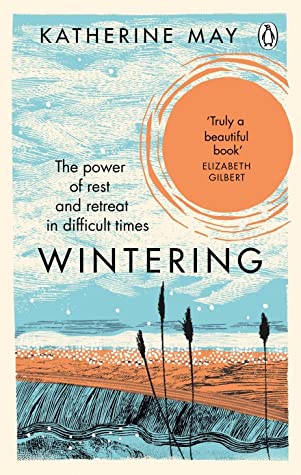
This month we’re starting with Wintering by Katherine May – yet another book that I haven’t read! This is what it’s about:
In Wintering, Katherine May recounts her own year-long journey through winter, sparked by a sudden illness in her family that plunged her into a time of uncertainty and seclusion. When life felt at is most frozen, she managed to find strength and inspiration from the incredible wintering experiences of others as well as from the remarkable transformations that nature makes to survive the cold.
This beautiful, perspective-shifting memoir teaches us to draw from the healing powers of the natural world and to embrace the winters of our own lives.

Although I haven’t read Wintering, it seems that Katherine May is using the idea of ‘winter’ as a metaphor for depression. In Mr Chartwell by Rebecca Hunt (1), depression is represented by a black dog. The ‘black dog’ is how Winston Churchill referred to his own periods of depression and in this very unusual novel, Rebecca Hunt brings the dog to life, giving him the name Mr Chartwell and describing his visits to Churchill’s home.
My next link is simply to another book with an author whose surname is Hunt: The Seas by Samantha Hunt (2), a novel about a young woman who lives in an isolated town by the sea and believes she is a mermaid. This is a beautifully written novel which combines mermaid mythology with the Iraq War, post traumatic stress disorder and the creation of a new dictionary, but it was a bit too strange for me and not a book I particularly enjoyed.
The sea also plays a part in the plot of The Sea Change by Joanna Rossiter (3). This is a novel set in two different countries and two different time periods: India in 1971 where a newly married couple are separated by a tsunami, and England during World War II, where the village of Imber is evacuated for use by the Army (and remains uninhabited to this day).


Some of the events of The Sea Change take place in 1971, so my next link is to a book that was published in 1971: Nemesis by Agatha Christie (4). This is a late Miss Marple novel in which Marple agrees to investigate a crime for an old friend – without having any idea of what the crime is or what she will need to do. During a coach tour of Britain’s historic houses and gardens, the details of her mission begin to unfold.
Strangers in Company by Jane Aiken Hodge (5) is also a mystery that takes place on a bus tour – this time it’s a tour of Greece’s famous archaeological sites. I’ve read quite a lot of Hodge’s novels now and this is the only contemporary one (the others I’ve read have been Gothic or Regency novels). It reminded me of Mary Stewart’s or M.M. Kaye’s romantic suspense novels, although I didn’t enjoy it quite as much as those.
My final link takes us to another book with ‘Strangers’ in the title: The Strangers in the House by Georges Simenon (6). This is one of Simenon’s romans dur, or ‘hard novels’; I have read a few of them over the last year or two and enjoyed them (I’m actually reading another one at the moment which I’ll be reviewing soon). The Strangers in the House is about a lawyer who fell into a depression and became an alcoholic after his wife left him. When his daughter becomes implicated in a murder investigation, he finds that he has a chance to redeem himself and repair his damaged relationships.
The theme of depression and finding a way to heal links back to Wintering, so I’ve managed to bring the chain full circle this month!
In August we’ll be starting with the winner of the 2022 Women’s Prize, The Book of Form and Emptiness by Ruth Ozeki.





 She Reads Novels