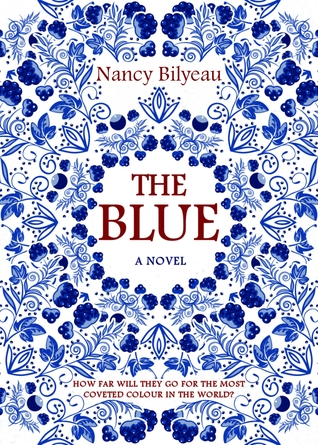
The Blue by Nancy Bilyeau

Since reading the Joanna Stafford trilogy (The Crown, The Chalice and The Tapestry) a few years ago, I’ve been waiting and hoping for a new book from Nancy Bilyeau and here it is at last: The Blue. Bilyeau wrote so convincingly about Tudor England in the Joanna Stafford books that I was surprised to find she was switching to an entirely different period for this latest novel – the Seven Years War of 1756 to 1763, a war which involved most of Europe, with Britain and France on opposite sides. Set against this backdrop, The Blue is an exciting, thrilling tale of espionage, art, religious persecution – and the race to create a new and beautiful shade of blue.

Our heroine, Genevieve Planché, is a young Huguenot woman whose family fled France when it became impossible for them to openly practise their religion. Despite her French ancestry, Genevieve has grown up in London among the silk weavers of Spitalfields and considers herself to be English, viewing the French king as someone to be feared. As a talented artist, she longs to have the chance to study painting and develop her skills, but as a woman she discovers that most of the opportunities open to men are closed to her. Her grandfather has made plans for her to go to a porcelain manufactory in Derby where she can paint pretty designs on plates and vases, but that’s not what Genevieve wants out of life. Then, just as she’s losing hope, she meets Sir Gabriel Courtenay at a party and receives a very tempting offer…

Sir Gabriel urges her to take up the position she has been offered at the Derby Porcelain Works and track down their chemist who is working on the development of a new colour blue. If Genevieve can steal the formula for blue and pass it to Sir Gabriel, he will help her travel to Venice where, he tells her, she will be taken seriously as a female artist. Genevieve is quick to agree, but once she is in Derby and the true scale of her mission becomes apparent, she begins to have doubts. Why is Sir Gabriel so desperate for the blue? What is the colour’s significance? And what will happen if she is caught?

The Blue is a fascinating novel – I learned so much about the production and decoration of porcelain, the meanings of different colours, and the ways in which art and science can combine to create things of beauty – but it is also a gripping and suspenseful historical thriller. One of the things I enjoyed most about the story was that it was so difficult to decide who could and could not be trusted. From the young woman Genevieve shares a room with at the Porcelain Works to Sir Gabriel himself, she has no idea who is on her side and who is likely to betray her. Although she sometimes makes silly mistakes, that is to be expected when she is faced with trying to navigate her way through so many dangerous situations!

This is the first book I have read via The Pigeonhole, a website/app which makes books available in daily instalments (referred to as ‘staves’). Each stave ended on a cliffhanger which left me desperate to get back to the story the following morning and reading it over a period of ten days was a wonderful experience. The book is written in present tense, something I usually find off-putting, but it seemed to work much better in the serialised format because it helped me to feel closer to Genevieve, almost as if I was sharing in her adventures as they happened.

I would love to read a sequel to The Blue, but if that doesn’t happen then I will look forward to whatever Nancy Bilyeau chooses to write about next.

Thanks to The Pigeonhole and Endeavour Quill for the opportunity to read this novel.
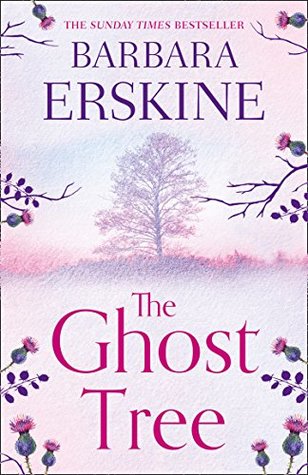
The Ghost Tree by Barbara Erskine

I’m finding that I usually like the sound of Barbara Erskine’s books much more than I like the books themselves! I thought Sleeper’s Castle was an enjoyable read, but I’ve had very mixed feelings about the others that I’ve tried, even Lady of Hay, which I’d heard so much about. Still, when I saw her latest novel, The Ghost Tree, in the library, I couldn’t resist picking it up.

Like most of Erskine’s other books, this one is set in two time periods and includes elements of the supernatural which link them together. In the present day we meet Ruth Dunbar whose father has just died, leaving her his house in Edinburgh. On arriving at the house, she is surprised to find that it is already occupied by a stranger who tells her his name is Timothy and that he has been caring for her father during his final months. According to Timothy, it is actually he and not Ruth who will inherit the house – and although Ruth’s lawyer assures her this is not the case, it seems that Timothy is not prepared to give up his claim.

As she begins to sort through her parents’ possessions, Ruth finds a collection of old diaries and letters written in the 18th century by Thomas Erskine, an illustrious ancestor of her mother’s. Thomas led an eventful, dramatic life and Ruth quickly becomes captivated by his story, but when she starts to think she can see Thomas standing beside her as she reads, the boundary between past and present seems to have been broken.

The Ghost Tree, as the title would suggest and as I have hinted above, is a ghost story, so I am counting it towards the R.I.P. XIII challenge. Thomas himself, as Ruth’s many times-great-grandfather, is no threat to Ruth, but he is not the only ghost who finds his way into the 21st century – there is another, who is a much more menacing and evil presence. Ruth (as seems to be a standard requirement of a Barbara Erskine heroine) just happens to have several friends and acquaintances who are experts in the paranormal and she enlists their help in dealing with her ghostly visitors. As far as ghost stories go, I didn’t find it either particularly scary or very atmospheric, but if you enjoy reading about séances, exorcisms and other aspects of the supernatural, you will probably find a lot to interest you here.

The narrative switches between past and present throughout the novel and as usual it was the historical one that I found most compelling. Thomas Erskine is a real life ancestor of Barbara Erskine’s and she has based his story on what we already know about him and on her own research into his life. Born in Edinburgh in 1750, he served in the Navy in the Caribbean and later joined the army, before returning to Britain to concentrate on a career in politics and the law. You can easily find a wealth of information about him online if you’re interested in knowing more, but if you’re thinking about reading The Ghost Tree you might prefer to read the novel first before looking up all the facts. Personally, I think there would have been enough material for a whole book just about Thomas and his adventures, without needing to involve ghosts or anything else!

I had other problems with the modern day sections of the book. For a start, the villains (one of whom is Timothy, the man contesting Ruth’s inheritance) are stereotypical and lack the sort of nuance and depth I prefer – and I quickly lost patience with the way Ruth and her friends repeatedly put themselves at risk, despite knowing how dangerous the villains were. There’s also an unpleasant storyline involving some cases of ghostly rape, which added very little apart from shock value.

This book was a bit of a disappointment, especially after enjoying Sleeper’s Castle so much, but at least I found Thomas Erskine’s story interesting, so I didn’t feel that it had been a waste of time. I just wish we could have spent more time with Thomas and less with Ruth and the ghost hunters! Can any Barbara Erskine fans tell me whether there are any of her earlier books that I might enjoy more, particularly any that spend a more substantial amount of time in the past or that use the supernatural elements more convincingly?

This is my fourth book read for the R.I.P. XIII challenge (category: supernatural).

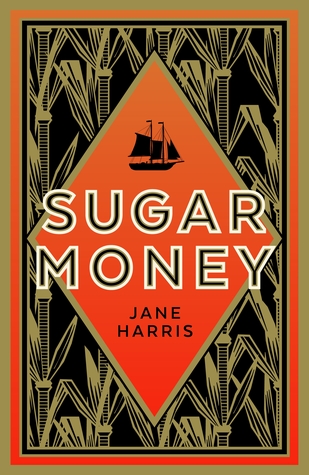
Sugar Money by Jane Harris

When I discovered that there was a new Jane Harris book coming out last year, I couldn’t wait to read it. It had been a long time since the publication of her last one, Gillespie and I, in 2011, but I could still remember how much I loved that book – and her previous one, The Observations, which I read a few months later. I’m not sure why it has taken me until now to get round to picking up Sugar Money, then, but it’s probably just been a combination of too many other books to read (as usual) and a fear that, after anticipating a third Jane Harris book for so long, I might be disappointed by it.

While Gillespie and I and The Observations are both set in 19th century Scotland, Sugar Money takes us to a very different time and place: the Caribbean in the year 1765. Our narrator, teenage Lucien, and his older brother Emile were brought up on the island of Grenada before being taken to nearby French-controlled Martinique as slaves. Their French masters need more workers to labour on the sugar plantations, so the brothers are entrusted with a secret mission: to return to Grenada, once also a French colony but now ruled by the British, and bring a group of forty-two slaves back to Martinique.

Emile and Lucien are the obvious choices to be given this task, with their prior knowledge of Grenada and its people, as well as Lucien’s ability to speak English. It’s not going to be easy, though; there is no guarantee that they will be able to persuade the slaves to join them, when they cannot offer freedom but only the exchange of one master for another – and even if the slaves do agree to come, will they be able to escape from the island without being caught?

Sugar Money, however unlikely it may seem, is based on real historical events which are described in the Afterword at the end of the book. The true story of slaves being involved in the smuggling of other slaves is certainly an interesting idea to base a novel around. Jane Harris grew up in Scotland and she highlights both the Scottish and English involvement in the slave trade, as well as drawing comparisons with slavery in the French colony of Martinique. She doesn’t shy away from describing the brutality of slavery and there are some quite graphic details of the ways in which slaves are treated by their masters and the horrific punishments given to them for the most minor of ‘crimes’, but she writes about all of this in a matter-of-fact sort of way, showing us the evils of slavery without preaching about it, which is something I liked and found quite effective.

I also loved the relationship between Emile and Lucien. Lucien has all the enthusiasm and sense of adventure you would expect in a boy of his age and, of course, it sometimes leads him into danger. Emile, who is much older and wiser, protects him as far as he can, but understandably loses patience at times, while Lucien admires and respects his big brother but doesn’t always understand his actions! I liked them both, but we naturally feel closer to Lucien because he is our narrator. Jane Harris really excels at giving her narrators strong, distinctive voices of their own. To immerse us more fully in the Caribbean of the 18th century, she has Lucien narrate in a sort of Creole mixed with French and English, and an explanation for his unusual speech is given towards the very end of the book. He couldn’t be more different from Bessy Buckley and Harriet Baxter, the narrators of her previous two novels!

I found this a very entertaining read, but it didn’t impress me quite as much as the other two Jane Harris novels. It works well as an adventure novel (Robert Louis Stevenson is mentioned as an inspiration in the acknowledgements), but it lacks all the clever twists and turns that I loved in Gillespie and I. It has impressed the judges of the Walter Scott Prize for Historical Fiction, though, and has been included on this year’s shortlist. The winner will be announced in June; if Sugar Money wins, I’ll be very happy for Jane Harris, but as I haven’t read the rest of the shortlist yet I don’t know whether there’s another book that is more deserving.

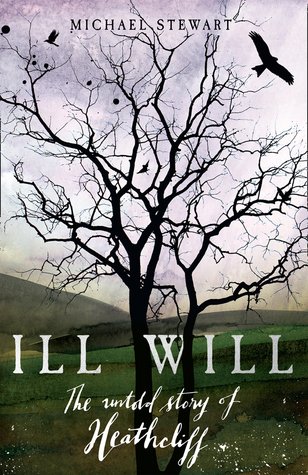
Ill Will by Michael Stewart

Have you read Wuthering Heights? If so, you’ll remember that in the middle of the book, Heathcliff disappears after hearing Cathy say that it would degrade her to marry him. When he returns after a three year absence he has undergone a transformation, but we never find out where he has been and what he has done during that period. In Ill Will, Michael Stewart has created a story for Heathcliff to fill in the gaps.

In Stewart’s version of events, Heathcliff leaves Wuthering Heights with two main goals in mind: first, to find a way to get revenge on Hindley and Edgar Linton, and second, to discover as much as he can about his own background. Knowing that old Mr Earnshaw, Hindley and Cathy’s father, brought him back to Wuthering Heights as a child after a trip to Liverpool, Heathcliff (taking the name William Lee) sets off for the west coast hoping that Liverpool will hold clues to the truth of his parentage. On the way, he rescues a ten-year-old girl, Emily, from a brutal whipping and as she is all alone in the world he allows her to join him on his mission.

As the daughter of a highwayman who has recently met his fate at the end of a hangman’s noose, Emily is used to living by her wits and she suggests that they make use of her unusual talents to earn some money for the journey. If her scheme goes wrong, however, they could find themselves in serious trouble. Will they make it safely to Liverpool – and if they do, what will they find there? Will the secrets of Heathcliff’s past be revealed and will he be able to return to Wuthering Heights as a rich and educated gentleman?

As Wuthering Heights is one of my favourite classics, I was immediately drawn to this book when I saw it on NetGalley, but at the same time I didn’t want to set my expectations too high as I have often been disappointed with sequels, prequels and retellings of classic novels in the past. This had the potential to be a good one – Heathcliff may not be the most pleasant of characters but he is certainly an interesting one and there are an endless number of stories which could be invented to fill in his missing years – but as I suspected, there were things that I disliked as well as things that I liked.

Starting with the positives, there’s some lovely descriptive writing which brings to life the countryside Heathcliff and Emily pass through on their way to Liverpool. These descriptions could only have been written by someone who had visited the area and felt a connection with it, so I was not surprised to read that Michael Stewart had spent some time walking across the moors as part of his research. The novel is set in the 1780s (although Wuthering Heights was published in the nineteenth century, most of the action takes place earlier than that), which is a time of change as the industrial revolution begins to transform the landscape and the lives of the people who inhabit it. The north of England is at the heart of this, and Heathcliff, who has been isolated at Wuthering Heights for years, takes note of the canals, bridges, factories and other signs of technological progress that they see on their journey.

A fascinating setting and time period, then; my main problem with the book was the language. I don’t mind some swearing in a book, if it feels like the natural way that a character would speak, but I didn’t really expect to pick up a novel based on Wuthering Heights and find the f-word and c-word on almost every page, especially coming from a ten-year-old girl (although to be fair, I suppose she is described as ‘foul-mouthed’ in the blurb). I found it irritating and a constant reminder that I was reading a contemporary take on Wuthering Heights, rather than being swept back into the world Emily Brontë had created, which is what I would personally have preferred. It won’t bother everyone, I’m sure, and I know that people did obviously swear in the eighteenth century, but it just didn’t feel right to me in this particular book.

The actual story is quite engaging, which is why I kept reading – and although the explanation of Heathcliff’s origins is predictable, it’s realistic given the time and place and the few clues we have to work with from Brontë’s novel, but despite my love of Wuthering Heights or maybe because of it, this book just wasn’t for me. Stewart’s portrayal of Heathcliff was too different from the way I have always imagined him, so I never felt convinced that I was reading about the same character. I’m sure Ill Will is going to be a big success with other readers, though, and as there’s already talk of a television adaptation I think we could all be hearing a lot more about it in the future.

Thanks to HQ for providing a copy of this book for review via NetGalley.

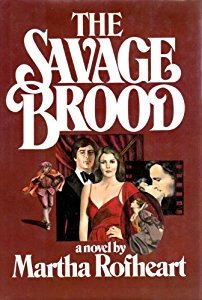
The Savage Brood by Martha Rofheart

Having read two of Martha Rofheart’s other books, Lionheart and Burning Sappho (about Richard I and the poet Sappho, respectively), I decided to try her 1978 novel The Savage Brood next. It sounded different from the others, being a multi-generational family saga and concentrating on fictional characters rather than real historical ones. I liked it enough to finish it but, as I so often find with this kind of book, the earlier sections were the best and I struggled to stay interested as the action moved closer towards the modern day.

The novel follows the fortunes of the Savage family, who have a long history as actors of one sort or another. It is divided into three sections which are set in different periods and work almost as self-contained novellas. We begin in Tudor England where we meet one branch of the family, a group of travelling players who make their living moving from town to town in a horse-drawn wagon and putting on performances for the local people. Finding English law too restrictive, the troupe move to Italy where, under the patronage of Cosimo I de’ Medici, they learn the skills of Commedia dell’Arte.

After a short ‘interval’, the story then jumps forward to 1752 where some of the Italian Savages (or Savaggi, as they have become known in the intervening years), return to London’s Drury Lane to work with the great English actor and producer, David Garrick. Garrick identifies young Miranda Savage as a special talent, but loses her when she moves to America – just in time for the Revolution.

There’s another interval and then we skip forward again, this time to San Francisco in 1906. The Savages have now made a name for themselves as vaudeville entertainers, but this form of theatre is in its final days as the first silent films begin to make their appearance. This section of the novel takes us right through both world wars and follows the careers of comic actor Sammy Savage, showboat musician Solange Sauvage, and Hollywood star JP Savage.

As I said, the first two sections were the most enjoyable, at least in my opinion. The third dragged on for too long, and except for the wartime parts, when the action moves to France for a while, I found the storyline much less interesting. The characters were unlikeable and self-obsessed, lacking the charisma of some of their earlier ancestors and little more than stereotypes of early Hollywood stars. By contrast, I loved the eighteenth century section and was particularly fond of Miranda Savage’s cousin Beau, who rises from humble beginnings to become a stage and fashion icon. Taken as a whole, though, I found the saga of the Savages unconvincing, with too many chance encounters between people who turn out to be distant Savage cousins.

Although Rofheart does acknowledge that women couldn’t act on stage in England until the Restoration, she does depict some of her sixteenth century female characters as acting with a travelling troupe. I didn’t think women were allowed to perform at all during that period (apart from in Italy), so that bothered me while I was reading, although I have since discovered a book on Women Players in England, 1500–1660, which suggests that women may have had more opportunities to act in sixteenth century England than I had imagined, at least on an amateur basis. I really don’t know enough about the subject to comment any further on Rofheart’s historical accuracy.

Despite the problems I had with The Savage Brood, I think it will be a fascinating read for anyone interested in the theatre, incorporating almost every type of acting you can think of – Commedia dell’Arte, Shakespeare, vaudeville, film and more – set against a backdrop of major historical events. I’m not really in any hurry to read the rest of Martha Rofheart’s books, but if anyone has read The Alexandrian, Cry God for Glendower and Fortune Made His Sword I would like to know if you enjoyed them and if you think they’re better than this one?

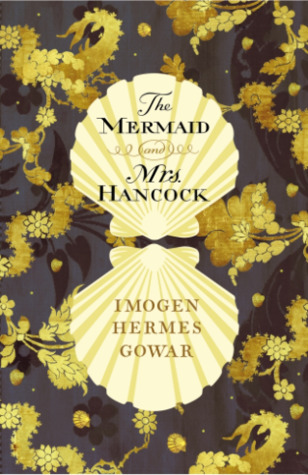
The Mermaid and Mrs Hancock by Imogen Hermes Gowar

The Mermaid and Mrs Hancock opens in 1785 with merchant Jonah Hancock sitting in his London counting house waiting for his ship to return. Imagine his horror when his captain arrives at the door and confesses that he has sold the ship in exchange for a mermaid. The captain assures him that people will come from all over the world to see the mermaid and that it will make him a fortune, but Mr Hancock is not at all convinced…

Angelica Neal has been living in comfort as the mistress of a rich duke. When the duke dies, leaving her with nothing, Angelica needs to find another way to support herself. The obvious solution is to return to her former employment in Mrs Chappell’s brothel, but Angelica is more ambitious these days and decides to make her own way in the world instead. Her path crosses with Mr Hancock’s when his mermaid is exhibited at a party she is attending and an unlikely friendship begins to form between these two very different people.

The first thing to say about The Mermaid and Mrs Hancock is that although mermaids and the legends surrounding them are symbolically important to the story, the part they play in the novel is relatively small. This could be a good or a bad thing depending on how you feel about magical realism, but be aware that the mermaid element of the story might not be what you are expecting. Their role is similar, in some ways, to the role of the serpent in Sarah Perry’s The Essex Serpent, one of several books to which this one has been compared.

As for the humans, I thought Angelica and Mr Hancock were both interesting, well drawn characters. Whenever the ambitious, strong-willed Angelica appeared on the page I was reminded of Becky Sharp from Vanity Fair and Sugar from The Crimson Petal and the White. It took me a while to warm to her and I still can’t say whether I actually liked her, but I did have some sympathy for her and, by the end, some admiration as well. Jonah Hancock is a very different type of character – a quiet, humble, middle-aged widower who is haunted by memories of his wife and son. Since their deaths, he has allowed his sister Hester and niece Sukie to take charge of his life, but his relationship with Angelica introduces another dynamic into the household.

There’s a colourful cast of secondary characters too, particularly the girls from the ‘nunnery’ as they ironically call it, and their grotesque ‘abbess’, Mrs Chappell, but I found that I was less interested in finding out what would happen to these characters than I was in reading about Mr Hancock and Angelica. One of them, Polly – a prostitute from a mixed race background who finds herself, like the mermaid, viewed as a sort of curiosity by the men who visit the brothel – had a lot of potential but her storyline was not really developed until late in the book.

The novel’s setting (Georgian England) is one I usually like and I was quite impressed by the author’s attention to detail and her attempts to recreate an 18th century world. The language and dialogue generally feels suited to the period, although I think Francis Spufford’s wonderful Golden Hill does this more effectively. Actually, it’s difficult to read this book without drawing comparisons with Golden Hill and if you enjoy one of them I think there’s a good chance you’ll enjoy the other!

The Mermaid and Mrs Hancock will be published in the UK on Thursday and although I didn’t love it as unreservedly as I’d hoped, I predict it will be a big success for Imogen Hermes Gowar.

Thanks to Harvill Secker for providing a copy of this book for review via NetGalley.

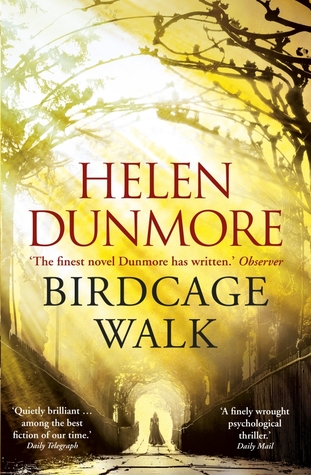
Birdcage Walk by Helen Dunmore

Helen Dunmore’s Exposure was one of my favourite books of 2016, so when I saw that she had a new one coming out last year, I knew I wanted to read it. The early reviews seemed to be very mixed, though, so I didn’t rush to get hold of a copy and it wasn’t until the days between Christmas and New Year that I finally got round to reading it.

I mustn’t have read those reviews very closely because I had the impression that this was a book about the French Revolution – but that’s not really true. The story is set in England and although events taking place across the Channel do have an effect on the lives of our characters, all of this is happening at a distance and is not the focus of the novel. The main theme of Birdcage Walk, according to Helen Dunmore herself and hinted at in the opening chapters, is the temporary nature of human life and the way so many of us leave behind very little evidence of our existence when we die. Dunmore states in her Afterword that she wanted to show that everyone has shaped the future in some way, by influencing those around them, even if they then disappear without trace. This is particularly poignant when you consider that while she was writing this novel she was already seriously ill with the cancer that would soon take her life.

But back to the plot of Birdcage Walk. The main part of the story is set in Bristol in 1792. Lizzie Fawkes’ husband, John Diner Tredevant (known simply as Diner) is a property developer who has started to build a terrace of houses with magnificent views of the Avon Gorge. With war against France on the horizon, however, this is a bad time to be trying to sell houses. Lizzie can see that her husband is troubled but is he just worried about the failure of his building project or is there something else on his mind?

Dunmore’s portrayal of Diner is excellent; he is a jealous, possessive and controlling husband who resents Lizzie having relationships with any other friends or family members apart from himself – but it is clear that something terrible has happened in his past, leaving him unhappy and disturbed. We find out very early in the novel what that something probably is, which takes away part of the suspense, but I think there is still plenty of tension in waiting to see when and how Lizzie will learn the truth.

The characterisation in general is very good; I found Lizzie’s mother, the writer Julia Fawkes and her husband Augustus particularly interesting to read about. Julia’s role in the story is brief, but she is one of the characters Dunmore uses to illustrate her point about a person’s influence living on after their words have faded away. Augustus, with his strong political views but lack of insight when it comes to the everyday things going on around him, also feels believable and real.

As I’ve said, the French Revolution is played out in the background with news reaching our characters mainly in the form of letters and newspaper reports. This means we don’t have the excitement of being thrown directly into the events of the Revolution, but it is still interesting to see things from the perspective of people who were less directly involved. Most of the novel, though, is concerned with more domestic issues: Lizzie’s personal relationship with Diner and her efforts to care for her baby brother Thomas despite Diner’s opposition.

I didn’t like Birdcage Walk quite as much as Exposure, but I still found it atmospheric and beautifully written. It’s so sad that there won’t be any more books from Helen Dunmore, but as I have only read three of them so far (The Lie is the other) I can still look forward to reading her others.