Dark Quartet by Lynne Reid Banks

As someone who loves the work of all three Brontë sisters, I have been interested in reading Dark Quartet for a long time. I have read some more recent fictional accounts of the Brontës’ lives and work, such as Jude Morgan’s The Taste of Sorrow and Robert Edric’s Sanctuary, but this is an older book, first published in 1976, and I was curious to see what it was like.

Lynne Reid Banks’ novel tells the story of Charlotte, Emily and Anne – and their brother, Branwell, who makes the fourth of the ‘quartet’. It begins with the Brontës growing up at Haworth Parsonage in Yorkshire in the care of their father, the Reverend Patrick Brontë, and their Aunt Elizabeth, who helps to raise them following the early death of their mother. The four children are very close, with particularly strong bonds between Charlotte and Branwell and between Emily and Anne, who entertain themselves by writing stories set in the fictional worlds of Angria and Gondal. There are also two elder Brontë sisters, Maria and Elizabeth, who die of tuberculosis early in the novel while attending Cowan Bridge School along with Charlotte and Emily.

As the three surviving girls reach adulthood, they find work as teachers and governesses, with varying levels of success, but they each continue to write, drawing inspiration from their experiences and surroundings. As Branwell, having suffered a series of disappointments and setbacks, descends into alcoholism and drug addiction, his sisters go on to achieve their ambition of becoming published authors, albeit under male pseudonyms.

I have given a very brief summary of the plot here, but I think that’s enough. If you’re already familiar with the Brontës’ lives and work, you won’t need me to go into any more detail; if not, and if you’re planning to read Dark Quartet, I’m sure you’ll prefer to have a few things left to discover for yourself. Banks does stick closely to the facts, but it’s important to remember two things: first, however biographical this book may feel, it is a work of fiction; and second, a lot of research into the Brontës has taken place since the book was written, so interpretations and opinions will have changed in that time. As the author says in the foreword to the novel:

…I have not let my imagination run riot. I have kept it harnessed to the truth. For the rest, I offer my answers to some of the mysteries.

Probably the most controversial area of the book is the portrayal of Branwell, particularly a scene, which was presumably invented, in which he meets a group of Irish labourers in a tavern. I saw this scene, and what happens in it, as the author’s way of providing an additional explanation for Branwell’s sense of hopelessness and disillusionment with himself and his life, so I accepted this as her ‘answer to one of the mysteries’, but I suppose it depends on how far you think a biographical novel should deviate from historical fact. For the rest of her treatment of Branwell, Banks acknowledges Daphne du Maurier, who wrote The Infernal World of Branwell Brontë, as one of her sources and, like du Maurier, she clearly has some sympathy for Branwell. He is a frustrating and infuriating character who wastes every opportunity he is given, but he is often his own worst enemy, and his story, as it is told here, is quite sad.

Of the three sisters, Charlotte is given far more attention than either Emily or Anne, but this is usually the case in books about the Brontës and I can understand why. Charlotte lived longer than the others, she had more of her writing published (four novels as opposed to Anne’s two and Emily’s one), and her life was more closely documented – she was the subject of a biography by Elizabeth Gaskell in the 19th century. However, I find Emily – solitary, independent and intensely private – a much more intriguing personality and I would have preferred to have spent more time with her and with Anne rather than Charlotte.

Lynne Reid Banks doesn’t explore the Brontës’ novels in much depth, but I think she does a good job of showing how the sisters’ work was influenced by people, places and events from their personal lives. Cowan Bridge School, with its damp, unhealthy location, inadequate food and strict discipline, was the model for Lowood School in Jane Eyre; the badly behaved children in the households where Anne serves as governess find their way into Agnes Grey; and Emily’s beloved Yorkshire moors become the setting for Wuthering Heights. There are also several chapters devoted to Charlotte’s time as a teacher in Brussels, which will be familiar to anyone who has read Villette or The Professor.

Dark Quartet has recently been made available in a new ebook edition from Sapere Books and I was delighted to receive a copy for review through NetGalley a few weeks ago. I really enjoyed reading it and, although my favourite Brontës are no longer living by the end of the novel, I am still tempted to read the sequel, Path to the Silent Country, about Charlotte’s final years.
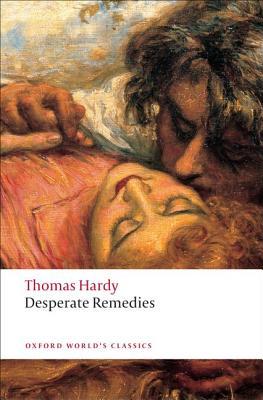
Desperate Remedies by Thomas Hardy

Desperate Remedies (1871) was Thomas Hardy’s first published novel, following an earlier manuscript which failed to find a publisher and was later destroyed. I love Thomas Hardy’s books and have been looking forward to reading this one as it has been described as a sensation novel, a genre of Victorian fiction that I’ve enjoyed since I first discovered authors like Wilkie Collins, Mary Elizabeth Braddon and Ellen Wood, in the years before I started my blog.

At the beginning of the novel, we learn that our heroine, Cytherea Graye, was named after her father’s one true love, a woman who disappeared without explanation and left him heartbroken. Mr Graye later married and had two children – Cytherea and her brother Owen – whom he raised alone after his wife’s death. When Mr Graye himself dies, having made some poor business decisions in the final years of his life, Cytherea and Owen are faced with making their own way in the world. Owen decides to pursue a career as an architect, while his sister advertises for work as a governess.

Finding it harder to get a job than she had expected, Cytherea eventually accepts a position as lady’s maid to Miss Aldclyffe, a middle-aged unmarried woman who seems to be hiding a number of secrets. Why does she have so much affection for Cytherea, whom she has never met until now? Why does she go to such great lengths to employ the mysterious Aeneas Manston as steward on her estate – and why is she so keen to encourage Cytherea to marry him? Manston is another person with secrets and Cytherea is reluctant to marry someone she feels she can’t fully trust, especially as she has already fallen in love with Edward Springrove, her brother’s friend. Unfortunately, Edward is engaged to another woman – and when Cytherea’s financial situation becomes increasingly desperate, she finds herself drawn into Aeneas Manston’s schemes.

I loved Desperate Remedies! It starts off slowly, introducing Cytherea and her family background and explaining the circumstances that lead to her arrival at Miss Aldclyffe’s house, but it quickly develops into an intriguing and entertaining page-turner with plenty of twists and surprises. I liked Cytherea; there are stronger, more interesting heroines in some of Hardy’s later novels, but Cytherea is by no means a weak and helpless woman and I enjoyed following her story.

I did find two of the novel’s big secrets quite easy to guess, but there were still times when I wasn’t sure where the story was going and when the actions of one character or another left me mystified. The plot makes it feel quite similar to a Wilkie Collins novel, but there are still some elements which make it recognisable as a book written by Thomas Hardy, such as the descriptions of the landscape and the portrayal of a small rural community. This isn’t one of my absolute favourite Hardy novels – I think some of his later ones are better – but it’s still a great read.

The remaining novels I have left to read by Hardy are all books that I know nothing about: The Well-Beloved, Two on a Tower, A Laodicean, The Hand of Ethelberta and The Trumpet-Major. Does anyone have any recommendations from those five? I also haven’t read any of his short story collections, Wessex Tales, Life’s Little Ironies and A Group of Noble Dames, so I still have lots of Hardy to look forward to.

This is book 4/20 of my 20 Books of Summer and book 6/50 from my second Classics Club list.

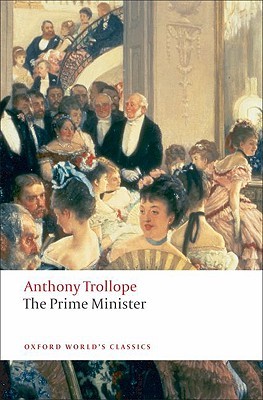
The Prime Minister by Anthony Trollope

I love Anthony Trollope’s books, but sometimes I need to be pushed into picking them up; I know I’m going to enjoy them, but they are all so long and, once you start reading and become caught up in the lives of the characters, so intense, that I really have to be in the right mood before starting one. As I have already read the first four books in the Palliser series, I added the last two – The Prime Minister and The Duke’s Children – to my Classics Club list to ensure that I got to them sooner rather than later.

The Prime Minister is the fifth in the series and, as predicted, once I got into it I loved it. It had been a while since I read the previous novel, Phineas Redux, (two years, in fact) but that didn’t matter at all – yes, we are reunited with some old friends, but there are new characters and new storylines too, so it wasn’t really necessary to be able to remember everything that happened in the last book. One of those new characters is Ferdinand Lopez, a handsome, charismatic adventurer, thought to be of Portuguese-Jewish descent, who sets his sights on marrying Emily Wharton, the daughter of a wealthy London lawyer.

Emily is in love with Lopez, but Mr Wharton is not at all happy at the prospect of having him as his son-in-law. He has always hoped to see Emily marry her friend Arthur Fletcher, whose family have connections with the Whartons. However, as his main objection to Lopez as a suitor is based on the fact that he is not an Englishman and nobody knows who his parents are, Mr Wharton eventually agrees to let Emily choose her own husband. Will she be happy with her choice or will she end up regretting her decision?

Ferdinand Lopez is a wonderful character; it is obvious from the start that he is going to be the villain of the novel, but we don’t know exactly what form his villainy will take. Watching him plot and scheme as he tries to make himself rich and rise up the social ladder is what drives the story forward. It’s disappointing, from a modern day perspective, that Ferdinand’s background is seen as one of the factors against him, but of course it’s realistic that a conservative, conventional Victorian gentleman like Mr Wharton would have held those views. Anyway, he is much more interesting to read about than Emily’s other love interest, the likeable, socially acceptable but slightly boring Arthur Fletcher. The relationship between the three of them reminded me of the two similar storylines in the first Palliser novel, Can You Forgive Her?

But this book is called The Prime Minister and so far I haven’t mentioned the title character at all! He is a man we already know from the previous books in the series: Plantagenet Palliser, who has recently inherited the title of Duke of Omnium. With neither main political party able to form a government on their own, a coalition has been formed and Plantagenet has been made Prime Minister, mainly because no one else is considered suitable. And Plantagenet is not entirely suitable either; he is an honest, dignified, principled man but lacks the ruthlessness and the leadership skills that are needed in his new job.

The Duchess of Omnium – formerly Lady Glencora Palliser – is much happier in her role as Prime Minister’s wife than Plantagenet is in his as Prime Minister! In some ways she has a better understanding of politics than he does, but their very different methods of dealing with their new position in the world lead to some conflict and tension in their marriage – particularly when Ferdinand Lopez arrives at one of Glencora’s parties hoping to be shown some favour by the new Prime Minister.

Both stories – the story of Emily and her husband and the story of the Prime Minister – are interesting and compelling. Although it was published in 1876 some aspects of the plot still have a lot of relevance today, such as the power of the press and the integrity of politicians being called into question. This is one of my favourite books in the Palliser series and I’m now looking forward to reading the final one, The Duke’s Children.

This is book 4/50 from my second Classics Club list.

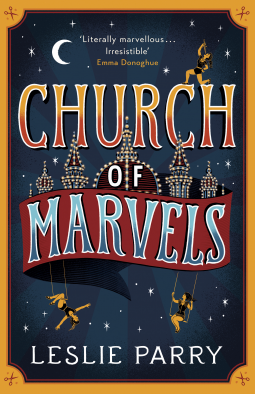
Church of Marvels by Leslie Parry

Church of Marvels, published in 2015, is Leslie Parry’s first and, so far, her only novel but I enjoyed it so much I hope she will be writing more. It’s a dark, complex and unusual story set in New York City in 1895 and, despite comparisons with The Night Circus, I think it’s a very different sort of book.

There are three main characters to get to know. First there’s Sylvan Threadgill, a ‘night-soil collector’ who makes his living from cleaning privies, as well as fighting in the occasional amateur boxing match. One night, Sylvan finds a newborn baby girl who has been abandoned and left to lie in the dirt of the street. He rescues the baby and, as an orphan himself, resolves to find out what has happened to her parents.

Next, there’s Odile Church, who performs in a Coney Island sideshow as the girl on the wheel of death – spinning in circles as a blindfolded man throws knives in her direction. Odile is trying to come to terms with the tragic death of her mother in a fire and the disappearance of her twin sister Belle, a sword-swallower and contortionist, who has run away to Manhattan with no explanation. Worried about her sister’s state of mind, Odile decides it’s time to go and look for her.

Finally, we meet Alphie, an undertaker’s wife, who has found herself imprisoned in Blackwell’s Island Lunatic Asylum. She can’t remember how she came to be there, but she’s sure it’s part of a plot dreamed up by her mother-in-law who has never liked her and wants her out of her son’s life.

At first these felt like three completely separate storylines and I couldn’t see how they could be connected in any way. Of course they do eventually come together and then I could appreciate how cleverly structured the whole novel is, with things being revealed only when we really need to know them and the biggest plot twists kept until near the end of the book. For this reason, I can’t discuss some of the most intriguing aspects of the novel, but I will say that there is a lot going on and that there is much more to each of the characters above than meets the eye!

The circus element, which is probably one of the things that draws a lot of readers to this novel, is actually a fairly small part of the story and only a few scenes are set at Coney Island. Most of the action takes place in New York and, more specifically, in the dark side of New York, a world of asylums, opium dens and underground tunnels. The people who populate these dark and unpleasant places are those who are considered to be social outcasts; misfits; men, women and children who are ‘different’ in some way. Odile, Belle, Sylvan and Alphie all fit into this category and I had a lot of sympathy for each of them – life has not been easy for them and all they want is to have a chance of happiness.

Although it is certainly not the most cheerful or uplifting of novels, I found Church of Marvels a fascinating read and, as I’ve said, I would love to read more by Leslie Parry.

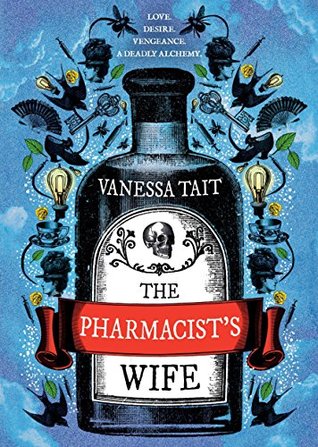
The Pharmacist’s Wife by Vanessa Tait

Vanessa Tait is a new author for me, although it seems she has written one previous novel, The Looking Glass House – a book inspired by Alice in Wonderland, which sounds particularly intriguing as Tait is the great-granddaughter of ‘the real Alice’, Alice Liddell. I was drawn to her latest novel, The Pharmacist’s Wife, by the eye-catching cover and then by the promise of “A dark and thrilling tale of Victorian addiction, vengeance and self-discovery, perfect for fans of Sarah Waters, Jessie Burton’s The Miniaturist and Sarah Perry’s The Essex Serpent.”

The Pharmacist’s Wife is set in Victorian Edinburgh, a setting which interested me immediately. There are so many novels set in Victorian London, it always makes a nice change to find one set somewhere else! Although I felt that the sense of place could have been strengthened by the use of more Scottish dialect, I did like the contrasting descriptions of the Old Town and the New Town.

North Bridge, the road linking Old to New, is the location Rebecca Palmer’s husband Alexander has chosen for his new pharmacy, the Grand Opening of which is celebrated with a brass band and a performing monkey. These are exciting times for Rebecca who, as a spinster of twenty-eight, had given up hope of ever marrying anyone, let alone such a clever and distinguished man as Alexander. Almost as soon as they move into their new home, however, Rebecca is forced to question whether her husband really is the man he appears to be. She suspects him of having an affair with Evangeline, a woman from the Old Town, and when she finds a ladies’ red shoe on his desk she’s sure her suspicions have been confirmed.

Alexander doesn’t like a wife who asks questions or has too many ideas of her own and, with this in mind, he has been developing a new medicine in his laboratory above the pharmacy – a medicine which he hopes can be used to control women and which he persuades Rebecca to try by telling her it will make her happy and content. Soon Rebecca is dependent on her medicine, taking it more and more often and relying on her husband to provide it for her. It is, of course, heroin – and it seems that Rebecca is not the only woman on whom Alexander has been testing his new invention…

This is certainly a dark novel but I didn’t find it a particularly thrilling one and it wasn’t until near the end that I started to feel gripped by the story. I suppose I was expecting more from the plot; there are lots of good ideas and plenty of interesting topics are touched on, but it’s only when (without wanting to spoil too much) things begin to go less smoothly for Alexander that it becomes really compelling, in my opinion. What this book does do, very well, is explore the inequalities between men and women in 19th century society. Although Alexander is not a real person and his discovery of heroin is fictitious, he uses the drug to keep his wife quiet and submissive and to take away whatever small amount of independence and freedom she may have had. Rebecca’s situation is oppressive and frightening and as her addiction to the drug deepens it becomes difficult to see how she is going to break out of the cycle in which she has found herself.

I liked Rebecca as a character and was pleased to see that she does develop as a person as the novel progresses, but I thought the villains, Alexander and his friend Mr Badcock, were too obviously ‘villainous’ and could have been given more depth. As well as the drugs, it seems that there’s no type of cruelty or depravity of which they’re not capable! Thankfully, there are two decent male characters to balance things out slightly – Lionel, the apprentice who helps Alexander in the pharmacy, and Gabriel, Rebecca’s first love.

The Pharmacist’s Wife is an interesting novel and, as I’ve said, a very dark one. I couldn’t love it, but I would be happy to read more books by Vanessa Tait. Has anyone read The Looking Glass House? What did you think of it?

Thanks to Atlantic Books for providing a review copy via NetGalley.

Marry in Haste by Jane Aiken Hodge

This is the third Jane Aiken Hodge novel I’ve read and my favourite so far. Based on an earlier story, Camilla, which was serialised in Ladies’ Home Journal in 1961, Marry in Haste was originally published in 1969 and has just been reissued by Ipso Books. It is set in England and Portugal during the Napoleonic Wars and has just the combination of romance, suspense and history that I am coming to expect from her novels.

The saying “marry in haste and repent at leisure” perfectly describes Camille de Forêt’s situation. Having fled to England with her father, a French Comte, and changed her name to Camilla Forest to distance herself from her French origins, she has spent several years in the home of the Duchess of Devonshire. Following the death of the Duchess, Camilla found a position as governess in another household but when we meet her at the beginning of the novel she has been dismissed from her job and sent away with no money and nowhere to go.

A chance encounter with the Earl of Leominster when his carriage passes her on the road seems to provide the perfect solution to Camilla’s problems. She needs a husband, a home and some money; Leominster (or Lavenham, as he is known to his friends) needs a wife in order to claim his inheritance. In the sort of plot development which will be familiar to readers of Georgette Heyer’s Regency romances, Lavenham proposes to Camilla and she accepts – on the condition that it will be a marriage in name only. Of course, it doesn’t take long for Camilla to discover that she is falling in love with her husband after all…but will Lavenham, who has a distrust of women based on a bad experience in his past, ever return her feelings?

Marry in Haste is an enjoyable and entertaining novel; it’s not particularly original (as I said, it feels quite similar to some of Georgette Heyer’s books, among others) and most of the plot twists are very predictable, but that doesn’t make it any less fun to read. The romance between Lavenham and Camilla is thwarted by misunderstandings, lies and communication problems, which makes it feel very contrived at times, but it’s satisfying overall – and anyway, things which would be likely to annoy me in a more ‘serious’ novel feel much more acceptable in this sort of book. There’s also a secondary romance later in the book, involving Lavenham’s younger sister, the lively and irresponsible Chloe, and I enjoyed this storyline too.

Most of the action takes place in Portugal, where Lavenham is sent early in the novel to carry out secret diplomatic work. Camilla and Chloe accompany him there and promptly find themselves caught up in the conflict involving France, Britain, Spain and Portugal which has been escalating in Europe. There are some lovely descriptions of Portugal and enough historical detail to give the reader a basic understanding of the Peninsular War, but the focus is always on the characters and the relationships between them. I was disappointed that Lavenham kept abandoning his wife and sister for long periods while he was away on undercover work, but I can see that it was necessary for the plot and enabled them to have some adventures of their own while trying to escape the French and make their way back to the safety of England.

I’m looking forward to reading more Jane Aiken Hodge as so far I’ve only read this one, Strangers in Company and Watch the Wall, My Darling (three very different books). I already have a second-hand copy of Red Sky at Night on my shelf as well as another new reissue, First Night, from NetGalley – and I think it’s time I tried her sister, Joan Aiken’s, books too!

Thanks to Ipso Books for providing a copy of this book for review via NetGalley.

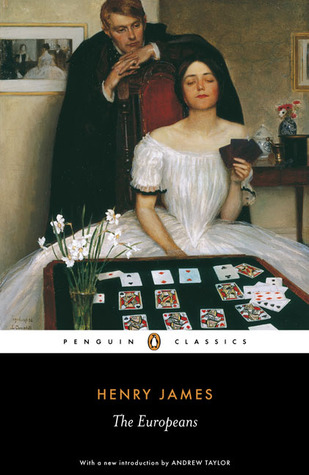
The Europeans by Henry James

I’m ashamed to say that this is the first book I’ve read by Henry James. Despite my love of 19th century literature, he is just not an author who has ever appealed to me and although I have started to read one or two of his novels in the past, I have never made it to the end of any of them. When I started to compile my new Classics Club list last year, Ottavia of Novels and Non Fiction recommended a few Henry James books that I might like and I decided on The Europeans based mainly, I have to admit, on the fact that it seemed quite short so I thought I would have a better chance of finishing it. I did finish it – and although I didn’t love it, I now feel more confident about reading more of his books in the future.

The ‘Europeans’ of the title are thirty-three-year-old Eugenia, Baroness Münster, and her younger brother, Felix Young, an artist. Eugenia’s morganatic marriage to Prince Adolf of Silberstadt-Schreckenstein looks to be in danger of falling apart. The prince’s family want to dissolve the marriage for political reasons and, although Eugenia has not yet given her consent, she has come to America with Felix to look for a rich American husband. The Youngs have cousins who live in Boston and on their arrival in New England, they spend some time getting to know them.

The American branch of the family consists of Mr Wentworth, his son Clifford, and his two daughters, Charlotte and Gertrude. Another cousin, Robert Acton, also lives nearby with his younger sister, Lizzie. Although she makes an effort at first, Eugenia decides that she has no desire to become part of the Wentworth’s social circle:

She had come to this quiet corner of the world under the weight of a cruel indignity, and she had been so gracefully, modestly thankful for the rest she found there. She had joined that simple circle over the way; she had mingled in its plain, provincial talk; she had shared its meagre and savorless pleasures. She had set herself a task, and she had rigidly performed it. She had conformed to the angular conditions of New England life, and she had had the tact and pluck to carry it off as if she liked them.

Felix, on the other hand, enjoys spending time with his cousins, especially Gertrude, with whom he has fallen in love. However, he is not the only one interested in Gertrude – Mr Brand, the minister, is expected to marry her, even though he is clearly better suited to Charlotte. Meanwhile, Clifford Wentworth, who has been sent home from Harvard for drinking, becomes attracted to both Eugenia and Lizzie Acton – while Robert Acton, recently returned from business in China, also turns his attentions to Eugenia. If you think this sounds confusing, you’re right. I was reminded of A Midsummer Night’s Dream as the relationships between these characters gradually became disentangled and each person found themselves with the right partner (apart from one, but I will leave you to discover who that one is).

The main theme of the book appears to be the differences between European and American people – or rather, the differences as Henry James perceived them in 1878, when the novel was written. The European characters, Felix and Eugenia, are portrayed as emotional, free-spirited people living bohemian lifestyles, while their American cousins are presented as serious, reserved and unsophisticated. They are stereotypes, of course, but probably quite different from the sort of stereotypes that would be used today.

This is a novel driven by the characters and the relationships between them, but I would have preferred more plot as I just didn’t find the characters strong enough to keep me interested from beginning to end. Eugenia intrigued me as it is never quite clear what her motives are or what decisions she is going to make, and the cheerful, optimistic Felix brightens every scene in which he appears, but the others were less memorable and I didn’t feel that I really got to know any of them. As I’ve said, though, this is only a short book and I’m sure that when I get round to reading some of James’ longer novels there will be more development of characters and ideas.

Which Henry James book do you think I should try next?

This is book 3/50 from my second Classics Club list.