Cleopatra by Natasha Solomons

This is a novel about Cleopatra, as you’ll have already guessed from the title and cover! Beginning with a visit to Rome with her father – the first time Cleopatra, then thirteen, has ever left Egypt – and ending just after the death of Julius Caesar in 44 BC, it’s a retelling of the life of one of history’s most famous women.

Although I love history and historical fiction, Cleopatra is not one of the historical figures I have a particular interest in and I haven’t read a lot of factual information about her. This means I can’t really comment on the accuracy of the book or how the choices Solomons makes on what to cover or not cover compare with choices made by other authors. Purely as a work of fiction, I found it quite enjoyable, especially the parts of the book dealing with Cleopatra’s personal life – her friendship with her beloved servant, Charmian; the development of her relationship with Caesar; and the birth of her son, Caesarion (depicted here as Caesar’s child). Solomons also delves into the politics of the period, the shifting allegiances and power struggles and the changing dynamics between Egypt and Rome. I found some of this a bit difficult to follow and I think including dates at the start of the chapters may have helped me keep track of the passing of time.

The novel is narrated mainly by Cleopatra herself, which allows us a lot of insight into what she is like as a mother, lover, sister and friend. However, there are also some chapters narrated by another woman: Servilia, sister of Cato the Younger and a mistress of Caesar’s (as well as the mother of his eventual assassin, Brutus). There weren’t enough of these chapters for me to fully connect with Servilia on an emotional level, but seeing things from her point of view did provide a very different (and more negative) impression of Cleopatra. I can understand why Solomons chose Servilia, but it would have been interesting if she had also written from other perspectives such as Charmian’s or maybe one of Cleopatra’s brothers and sisters.

The novel ends soon after Caesar’s death, leaving a lot of Cleopatra’s story still untold – her relationship with Mark Antony and the events leading to her suicide, for example. I haven’t seen any indication that there’s going to be a sequel, but there would definitely be enough material for one. Maybe Natasha Solomons will move on to something else for her next book, though; her previous work has included a novel narrated by the Mona Lisa, a reimagining of Romeo and Juliet, and a saga about a wealthy banking family, so clearly she likes to write about a wide range of topics and characters!

Thanks to Manilla Press for providing a copy of this book for review via NetGalley.

Death Comes as the End by Agatha Christie

This month’s prompt for Read Christie 2023 is a murder method: ‘a fall from height’. I’ve missed the previous two months of the challenge as I’ve been reading other things, but I decided to take part in this one as the suggested title – Death Comes as the End – was one I hadn’t read before and which has always sounded particularly intriguing to me.

First published in 1944, Death Comes as the End is the only historical novel Christie wrote. Unlike her other books, which are all set in the 20th century, this one takes place in Ancient Egypt, a setting that would have been familiar to Christie through her interest in archaeology. I’ve seen it described as the first full-length historical mystery, although I’m not sure if that’s true.

The novel is written mainly from the perspective of Renisenb, a young widow who, following her husband’s death, has returned to her family home by the Nile. Her father Imhotep, a mortuary priest, is away on business in the north, but Renisenb is reacquainted with the other members of the household: her older brothers Yahmose and Sobek and their wives; her younger stepbrother, Ipy; her grandmother, Esa; and several of the family’s servants, including Henet, the housekeeper and Hori, the scribe. There are already some tensions simmering below the surface, but when Imhotep returns with a new concubine, Nofret, things become much worse.

Nofret is a bitter, spiteful woman who seems determined to cause trouble for everyone else. She attempts to manipulate Imhotep into disinheriting his three sons and her plan seems to be working – until Nofret herself is found dead at the bottom of a cliff. As nobody had liked her, there are plenty of suspects, but the situation quickly becomes more complex when more deaths occur. Some of the family believe that Nofret’s spirit is taking her revenge, while others are convinced that a human hand is behind the murders. Renisenb isn’t sure what to think or who to trust, but she knows that if the murderer isn’t caught soon, her own life could be in danger.

I really enjoyed this book, although I felt that the absence of a detective made it difficult for the reader to solve the mystery as there’s no discussion of clues or questioning of witnesses to point us in the right direction. I’m sure you could still correctly identify the murderer if you were paying attention, though; looking back, there are two moments in particular that hint at who the culprit is, but I didn’t pick up on either of them while I was reading. The pool of suspects is considerably narrowed down by the end of the book as well – there’s such a high body count it started to remind me of And Then There Were None. There’s also a romantic element to the novel and although it only forms a small part of the story, I was pleased with the way it was resolved at the end. I would have made that choice myself!

I was surprised to read in Christie’s foreword that “Both places and time are incidental to the story. Any other place at any other time would have served as well.” On the one hand, I can see what she means, because the plot, the characters, and the relationships between the family members are very much what you would expect to find in one of her 20th century country house mysteries. On the other, it seems a strange thing to say because why choose a particular setting if any other would have done just as well? In any case, much as I love her Poirot and Miss Marple novels, I enjoyed being transported back to Thebes in 2000 BC for this one – it was something different and unusual!

This is book 9/20 of my 20 Books of Summer 2023

This is book 30/50 for the 2023 Historical Fiction Reading Challenge.

Historical Musings #47: Exploring Ancient Egypt

Welcome to my monthly post on all things historical fiction. This month I’m going to be asking for some recommendations…

In January I read When Women Ruled the World by Kara Cooney, a non-fiction book about six female rulers of Ancient Egypt. I didn’t particularly enjoy that book as I thought it was too preoccupied with drawing parallels with modern politics, but it did make me aware of how little I’ve actually read about Ancient Egypt! I can’t think of any other non-fiction books I’ve read on the subject and not much historical fiction either.

Years ago, before I started blogging, I read some of Christian Jacq’s Ramses novels about the pharaoh Ramses II, although I can’t remember which ones – The Lady of Abu Simbel, I think, and at least one or two others. More recently, I have read Cleopatra’s Daughter by Michelle Moran, about Cleopatra Selene, the daughter of Cleopatra and Marc Antony – although that book was set mainly in Rome rather than Egypt. I’ve read Shakespeare’s Antony and Cleopatra too, but otherwise I’m really struggling to think of anything at all that I’ve read set even partly in Ancient Egypt. As I’ve mentioned before, in my posts on Ancient Rome and Ancient Greece, I have never really felt drawn to books about the ancient world and am much more comfortable with later periods of history.

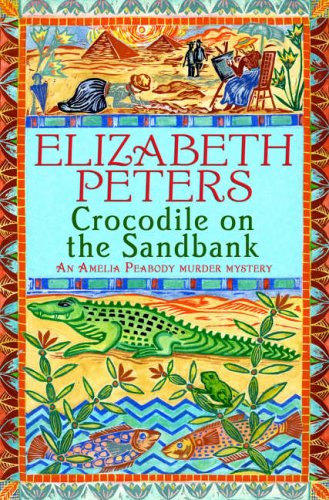
I have read the first two books in the Amelia Peabody series by Elizabeth Peters – Crocodile on the Sandbank and Curse of the Pharaohs – but they are set in 19th century Egypt with storylines revolving around Ancient Egyptian archaeology rather than being set in Ancient Egypt itself, so they’re not really the sort of books I’m looking for here.

I found a list of Best Egyptian Historical Fiction on Goodreads, but I want to hear your suggestions too.

Have you read any books set in Ancient Egypt? Which would you recommend?

When Women Ruled the World by Kara Cooney

Despite my love of history I know very little about Ancient Egypt, so when I was given the opportunity via National Geographic and TLC Book Tours to read When Women Ruled the World, I was immediately interested. Written by Kara Cooney, professor of Egyptology at UCLA, the book explores the lives of six female rulers – Merneith, Neferusobek, Hatshepsut, Nefertiti, Tawosret and Cleopatra – asking how each was able to come to power, what challenges they faced during their reign and what the modern world can learn from studying them.

Apart from Cleopatra, I had never read about any of the other five rulers before, so I was looking forward to adding to my knowledge, but I don’t feel that I’ve learned as much about these six women as I would have expected to from this book. I can appreciate that the author was doing her best to work with the limited amount of factual information we have available to us, but there’s still a lot of speculation, interpretation and uncertainty. The book has clearly been thoroughly researched and there are detailed notes at the back, as well as an impressive list of resources and further reading; I just don’t feel that I’ve come away from the book with any real idea of what these female pharaohs may have been like as people, what their style of ruling was like or what their main accomplishments were.

To be fair, the author does point out that one of the reasons why we know so little about these women’s achievements is because the male pharaohs who followed tried to remove all traces of their predecessor from the historical records. Thutmose III, who ruled after his aunt Hatshepsut, “smashed her statues to bits, chiseled away the reliefs of the Punt expedition, and reassigned kingly images to her husband or father.”

This is a book with a very strong feminist message, which is fascinating when related directly to the Egyptians, for example when Cooney discusses how Nefertiti may have had to assume a male name and identity in order to rule, or how Hatshepsut had herself depicted wearing masculine clothes and with the appearance of a man. However, the author spends too much time drawing parallels with modern politics, discussing the stereotypes directed at female leaders and the language used to describe women like Hillary Clinton, Margaret Thatcher or Angela Merkel. It seems that the purpose of the book is to show that women have qualities which make them better equipped to rule the world than men and that the stories of the six female pharaohs of Egypt are being used to illustrate that point, rather than because they are interesting historical figures in their own right whose stories deserve to be remembered.

On a more positive note, I thought this book was written at the right level to make it accessible to the general reader. It wasn’t necessary to have any prior knowledge of Ancient Egypt and I found it easy enough to follow and to understand. There’s a map at the beginning and a useful chronology showing each ruler’s place in history, as well as an interesting selection of photographs and illustrations. Although this book wasn’t quite what I’d expected, I’m pleased to have at least been made aware of women like Merneith, Neferusobek and Tawosret, whose names weren’t even familiar to me before. I would like to read more about them one day.

The Sacred River by Wendy Wallace

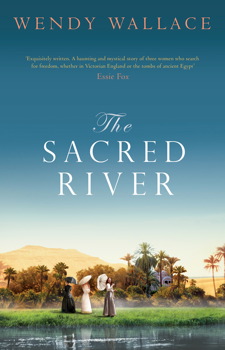
The Sacred River This is Wendy Wallace’s second historical fiction novel. I remember hearing about her first, The Painted Bridge, last year but never got round to reading it so I was pleased to have a chance to read this one, The Sacred River. This book is set in the nineteenth century and is the story of three women and how their lives are changed during a visit to Egypt.

Harriet Heron is twenty three years old but still feels that she is treated like a child. She has suffered from severe asthma for many years and feels stifled by her over-protective parents. Having always been fascinated by the Ancient Egyptians, Harriet is delighted when the doctor manages to convince her mother and father that a trip to Egypt for a change of air will improve her health. Finally she has a chance to escape from her sheltered life in London and see the world.

Harriet soon sets off on her voyage to Egypt in the company of her mother, Louisa, and her Aunt Yael but before they reach their destination, Alexandria, a meeting with an artist on board the ship causes tension between Harriet and her mother. It seems that the secrets of Louisa’s past could be about to be revealed, destroying Harriet’s happiness in the process. But this is not just the story of Harriet and Louisa; another character with an interesting story is Yael, Harriet’s aunt. On their arrival in Alexandria, Yael is shocked by the lack of health care available to the city’s children and plans to start a clinic to educate their mothers, but she soon discovers that the people she had been relying on to help her are reluctant to get involved.

Harriet is a wonderful character and I loved the way she grew and blossomed as a person over the course of the novel, as her health improved and she began to find the freedom she had always longed for. But I also liked Yael and admired her for her energy, determination and desire to make a difference. Like Harriet, she discovers a happiness and fulfilment in Alexandria that was lacking from her life at home in England. Louisa is the only one not enjoying life in Egypt and the reason for this is only revealed very slowly. We know it’s due to something that happened in her past and that it involves Eyre Soane, the artist the women meet on the ship, but the details remain a mystery until later in the book.

Egypt is always a fascinating and atmospheric setting, yet I don’t seem to have read many books that are set there. Harriet’s (and presumably the author’s) enthusiasm for the wonders of the ancient world, for archaeology and hieroglyphics shines through and it was good to have the opportunity to learn a little bit about the subjects Harriet is so passionate about. I must remember to look out for Wendy Wallace’s first novel, The Painted Bridge, having enjoyed this second one so much!

Thanks to Simon & Schuster for providing a review copy.