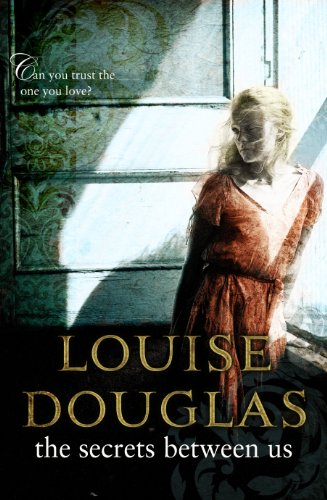
The Secrets Between Us by Louise Douglas

Suffering from the trauma of a stillborn baby and the end of her relationship with her boyfriend, Sarah agrees to accompany her sister and brother-in-law to Sicily for a holiday. Here she meets Alexander and his six-year-old son, Jamie, who are having problems of their own: Alexander’s wife, Genevieve, has left him and disappeared without trace. When Alex offers Sarah a job as housekeeper at his home in England, she agrees. Despite her family’s concerns, Sarah thinks it’s the right decision: she’s attracted to Alex, adores his little boy, and is desperate to make a fresh start and move on with her life.

But after joining Alex and Jamie at Avalon, their home in the village of Burrington Stoke in Somerset, Sarah begins to wonder exactly what happened to Genevieve. The missing woman’s family are convinced Alex knows more about the disappearance than he’s admitting to, but Sarah knows that can’t be true…or can it?

The Secrets Between Us was my final choice for the Transworld Book Group. Louise Douglas is not an author I’ve ever read before, so I didn’t know what to expect from this book, but I was immediately drawn to it when I saw that it had been compared to Rebecca by Daphne du Maurier, one of my favourite books. And there are definitely some similarities. Genevieve, like Rebecca, is described as beautiful, popular, talented and loved by everyone who knew her – and although she’s not there physically, she’s still a very strong presence and always at the heart of the story. The two books also share a gothic atmosphere and a sense of uneasiness and foreboding.

But this is also an excellent book in its own right. The author expertly keeps us guessing right to the end by adding some unexpected plot twists and ensuring that we can never be quite certain whether Alexander can be trusted or not. It’s also possible that Sarah, as the narrator, may not always be completely reliable. Some very strange and spooky things happen at Avalon and we are made to wonder whether they have supernatural causes or whether Sarah’s emotional state is making her see things that aren’t really there.

I did find it hard to believe that Sarah would agree to move in with a man she’d only met on a couple of brief occasions in Sicily, but at least this meant we were thrown into the action almost immediately, with only a short build-up. And Sarah is a narrator who is easy to like and to have sympathy for. I could really feel her fear and confusion as more and more facts about Genevieve were revealed, and her sense of growing isolation as the people of Burrington Stoke turned against her, believing that she and Alexander were trying to cover up the truth about Genevieve’s disappearance.

The Secrets Between Us is an excellent psychological thriller, with just the right amount of tension and suspense. Although Louise Douglas’ previous novels sound very different to this one, I really liked her writing and would be happy to try her other books at some point too.

I received a copy of this book from Transworld for review.

Under the Greenwood Tree by Thomas Hardy

Under the Greenwood Tree, set in the small village of Mellstock in Thomas Hardy’s fictional Wessex, is both a love story and a nostalgic study into the disappearance of old traditions and a move towards a more modern way of life. The book is divided into five sections, one for each of the four seasons of the year plus a final concluding section. The story begins in the winter, when we meet a group of villagers who play stringed instruments in the church choir. There’s a new vicar in Mellstock, the Reverend Maybold, and he has plans to replace the traditional choir with a new mechanical church organ. The organ will be played by another newcomer to the village, a pretty young schoolteacher whose name is Fancy Day.

The musicians are upset when they learn that they are going to be replaced, but one of them, Dick Dewy, finds himself falling in love with Fancy Day. However, unknown to Dick he has several rivals for Fancy’s love, including a rich local farmer and even the Reverend Maybold himself. The story of Dick and Fancy’s romance is played out over the course of a year, against a backdrop of the changing seasons and the changing landscape of Mellstock.

Hardy’s novels have a reputation for being bleak and depressing, but I can promise you that this one is neither. It’s actually quite an uplifting, optimistic story with an (almost) happy ending – very different from the other three Hardy books I’ve read (Tess of the d’Urbervilles, Jude the Obscure and A Pair of Blue Eyes). It doesn’t have the depth and complexity of Tess or Jude and to be honest, I do personally prefer Hardy’s tragedies, but I enjoyed this one too and it did make a nice change from the darker books I’ve been reading recently. The strengths of Under the Greenwood Tree are its gentle humour and its portrayal of life in 19th century rural England. As usual with Hardy, his pastoral descriptions are beautifully written and I love the way he paints four different portraits of country life appropriate to each season of the year, from singing carols and making cider in the winter to gathering nuts and collecting honey from beehives in the autumn.

Where the book was less successful, in my opinion, was with the characters of Dick Dewy and Fancy Day, because they just weren’t strong enough or interesting enough for me to really care about their romance. Fancy was actually quite an advanced and ‘modern’ character for the time and place, being well-educated and independent. However, she’s depicted here as being very silly and shallow and I felt that we never got to understand her properly. Dick was easier to like but his character wasn’t given a lot of depth either. I do think Hardy captured the naiveté of their relationship perfectly, but I would have preferred to have read more about the rest of the village community, with the love story pushed further into the background. Apparently Hardy had originally wanted to call the book “The Mellstock Quire” and it did seem to me that he was maybe more comfortable with that aspect of the book.

Although I’ve only read a few of Thomas Hardy’s novels he’s quickly becoming one of my favourite Victorian authors. I hope to read all of his books eventually, but I wish I’d left Under the Greenwood Tree until later as it’s turned out to be the first one I haven’t loved. There were a lot of things I liked about it, but it didn’t have the same emotional impact on me that the others had and it’s not a book I would want to read again and again.

Devil Water by Anya Seton

Several years ago I had the pleasure of discovering Anya Seton’s historical fiction novels. The first one I read was Katherine, the story of Katherine Swynford and John of Gaunt, quickly followed by Green Darkness, Avalon and The Winthrop Woman. After that I moved on to other authors and never got round to reading Seton’s other novels. And so I was pleased to come across one I hadn’t read, Devil Water, in the library. This book was originally published in 1962 and the story takes place during the Jacobite Rebellions of 1715 and 1745.

Devil’s Water is the name of the river that flows past Dilston, a village in Northumberland in the north east of England. In the early 18th century, when Anya Seton’s novel begins, Dilston is home to the Radcliffe family. James Radcliffe, the 3rd Earl of Derwentwater, and his younger brother, Charles, are descendants of King Charles II and were both real historical figures.

The first half of the book concentrates on the life of Charles Radcliffe and his secret marriage to a working-class Northumberland girl, Meg Snowdon, with whom he has a daughter, Jenny. Both Charles and his brother, the Earl, are Catholics and Jacobites (supporters of the Catholic James Stuart who is living in exile in France while his half-sister, the Protestant Queen Anne, reigns in his place). In 1715 the Radcliffes join the Jacobite Rising in an attempt to put James, who they consider their rightful king, on the throne. When the rebellion ends in defeat, Charles escapes to France and leaves Jenny to be raised in London by his friend, Lady Betty Lee. Throughout the second half of the book the focus is on Jenny’s adventures which take her across the Atlantic to the plantations of colonial Virginia in search of Rob Wilson, the man she loves.

This book was particularly interesting to me as I’m from the north east of England myself. There are very few novels set in this part of the country so it was nice to read about places that I’m familiar with. I appreciated the effort Seton made to reproduce various local dialects, depending on whether a character comes from Northumberland, London, Scotland, Ireland, Virginia or elsewhere. Although the northern dialects didn’t always seem quite right to me, it wasn’t a bad attempt and it gave the book a more authentic feel. And the characters never sounded too modern or used language that felt out of place either.

Although I knew absolutely nothing about the Radcliffes before reading Devil Water, you can always trust that an Anya Seton novel would have been well researched and as historically accurate as she could make it, while bearing in mind that it’s still fiction and not everything that happens in the book will be completely factual. This book includes two author’s notes at the beginning and end in which she details the research she carried out and explains which parts of the story are likely to be true. There are also some useful maps and family trees which I found myself referring to occasionally. Don’t worry though, because the book is easy enough to read and doesn’t feel like a history lesson at all.

So, I loved the settings and the time period (I’ve read historical fiction about the Jacobites before and it always makes me feel sad, knowing what the outcome will be) but I did have one or two problems with the book. I thought it was much longer than it needed to be and seemed to take forever to read; the pacing didn’t feel right either – some parts of the book dragged and there were some big jumps forward in time, often leaving gaps of ten years. But the main thing that prevented me from really loving this book was that some of the characters were very difficult to like. I never managed to feel any connection to Charles and was more interested in his brother, the Earl of Derwentwater. And another character, who I had just started to warm to, does something really unforgivable that completely changed my impression of them. I did like Jenny (and a few of the minor characters, such as Betty Lee) but because the people around her were so unlikeable, the story didn’t have the emotional impact on me that it might otherwise have done.

Have you read any other Anya Seton books that I haven’t read yet? Which ones would you recommend?

The Swimmer by Roma Tearne

The Swimmer is a beautifully written novel by Roma Tearne set in the small English town of Orford in Suffolk. It’s the story of Ria, a forty-three-year-old poet, and Ben, a young refugee from Sri Lanka.

Ria is a single woman who lives alone in Eel House, a cottage which once belonged to her uncle. She’s quite happy to be there on her own; if she needs company there’s Eric, an older man from the neighbouring farm, and her brother and his family visit occasionally too – although these visits aren’t entirely welcome. Sometimes, though, life can be lonely for Ria. After a few failed relationships in the past she’s almost given up hope of finding someone to love…until she discovers Ben swimming in the river behind her house.

Ben, a Tamil refugee, left Sri Lanka to escape from the violence there. His asylum application has not yet been processed and so he’s living and working in Britain as an illegal immigrant. Although he’s eighteen years younger than Ria and from an entirely different background, the two begin to fall in love.

I really liked the first section of this book and enjoyed watching Ria and Ben’s relationship slowly develop. I thought the rest of the novel would continue in the same way, but then something happened which I wasn’t prepared for. The plot started to go in another direction, there was a new narrator to get used to, and I felt as if I was reading a completely different book to the one I had been expecting. This wasn’t necessarily a bad thing, though; the second part of the book was interesting, moving and relevant and the narrator was a more passionate person than Ria.

The third, and shortest, section of the book also switches narrator and again took me by surprise. Although I found the third narrator difficult to like, I thought seeing things from this person’s point of view helped to pull the story together and set up a perfect ending to the book.

I was impressed by Roma Tearne’s wonderfully descriptive writing and the way she portrayed the hot summer days in Orford and the Suffolk landscape with its marshlands and rivers. I particularly liked the references to the eels in the rivers which migrate from the Sargasso Sea (‘swimmers’, like Ben). But at times there was too much description, too much detail, which made the story move at a very slow pace.

I was pleased to find that I enjoyed this book because before I started it I wasn’t sure if it would be for me. I can imagine that if you’ve read a lot of other novels about immigration and refugees you might find this book unoriginal and contrived, but I haven’t read much fiction on this subject so The Swimmer did leave me with a few things to think about.

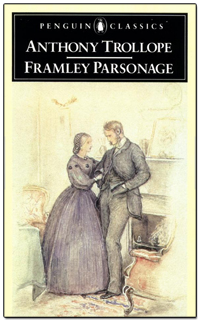
Framley Parsonage by Anthony Trollope

Framley Parsonage is the fourth novel in Anthony Trollope’s Chronicles of Barsetshire series. I’ve been slowly working my way through these books during the last year and in my opinion this one is neither the best nor the worst of the four I’ve read so far.

A common question asked by people new to Trollope is whether this series needs to be read in the correct order. Well, I don’t think it’s necessary at all and I’m sure this book could be enjoyed as a first introduction to Trollope, but personally I would recommend beginning with The Warden and reading each book in the series in turn. Framley Parsonage draws together a lot of characters from the first three books, including the Grantly and Proudie families from Barchester Towers and the Thornes and Greshams from Doctor Thorne, as well as some that I hadn’t expected to meet again, including one of my personal favourites, Miss Dunstable. I’m glad I chose to read the series in order because it’s nice to be able to recognise references to people, places and events and to feel that I’m getting to know the whole Barsetshire community.

Framley Parsonage consists of two main storylines. In the first, we follow Mark Robarts, the vicar of Framley. Mark became vicar at a younger age than would normally be expected, due to the influence of his friend, Lord Lufton, and his mother, Lady Lufton of Framley Court. He is still very ambitious and to Lady Lufton’s dismay he begins to mix with unscrupulous politicians whom he believes can help him further his career. When one of these politicians, Nathaniel Sowerby, persuades him to sign his name to a note for five hundred pounds, Mark finds himself getting deeper and deeper into debt – which is not the way a respectable clergyman should behave!

The second storyline involves Mark’s sister, Lucy Robarts, who comes to live at Framley Parsonage following the death of their father. Lucy falls in love with Lord Lufton, who soon proposes to her. However, Lucy is aware that Lord Lufton’s mother does not consider her a suitable wife for her son, so she vows not to marry him until she wins Lady Lufton’s approval – even though it means sacrificing her own happiness.

I found this book harder to get into than the previous three that I’ve read – it seemed to have a very slow start and didn’t really pick up until the character of Lucy Robarts made her first appearance. But as with all Trollope’s novels, once I did get into the story I became completely absorbed in the moral dramas and dilemmas taking place. Based on the first three Barsetshire books, I had a strong suspicion that all of Mark’s and Lucy’s problems would be resolved by the end, and yet this didn’t stop me from enjoying the book and wondering exactly how those problems would be resolved. As usual, Trollope’s characters feel completely believable with understandable motives and emotions. We can have sympathy with Mark Robarts because he is not a bad person – just young and naïve. And even when a character is cast as one of the villains of the book, such as Mr Sowerby, Trollope still asks us to remember that they do have some good qualities.

Although Anthony Trollope is not my favourite Victorian author (that would be either Wilkie Collins or Thomas Hardy) he does have a wonderful warm and observant writing style all of his own and if you haven’t tried one of his books yet then I highly recommend spending some time in Barsetshire soon.

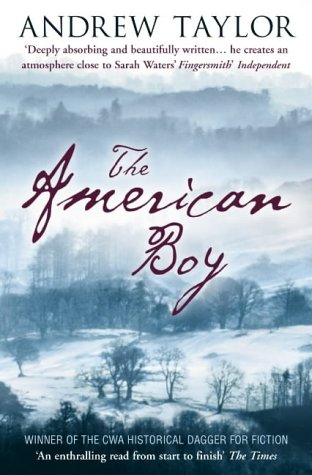
The American Boy by Andrew Taylor

After I read The Anatomy of Ghosts earlier in the year, I asked for opinions on Andrew Taylor’s other books. Well, I’d like to thank the three people who left comments recommending The American Boy (published in the US as An Unpardonable Crime) as I thought this one was even better than The Anatomy of Ghosts. As someone who loves classic sensation novels (Wilkie Collins, Mary Elizabeth Braddon, Ellen Wood etc) it’s maybe unsurprising that I enjoyed this book so much. It has all the elements of a sensation novel and although it was published in 2003 it almost feels as if it could have been written in the 19th century.

The American Boy is set in England during the final months of the reign of George III. The story begins in September 1819 when our narrator, Thomas Shield, is starting a new job as a teacher at a small private school in the village of Stoke Newington. One of the boys at the school is the ten-year-old Edgar Allan Poe, the ‘American boy’ of the title. Shield is given special responsibility for tutoring Edgar and his best friend, Charles Frant, and through the two boys he becomes acquainted with two rich banking families – the Frants and their cousins, the Carswells. He soon becomes caught up in the dramas that are unfolding within the Frant and Carswell families and when two murders take place it seems that Shield’s own life could also be in danger.

The plot is so intricate and complex I won’t even try to go into any more detail, but in addition to the murders, there’s also a disputed will, mistaken identities, family secrets, betrayal, revenge and even romance. Thomas Shield’s adventures take place in a variety of wonderfully atmospheric locations from the dark, foggy streets and over-crowded slums of London to the snowy landscape of the Carswells’ country estate in Gloucestershire, complete with an ice house and ruined abbey. Taylor made his settings feel vivid and real without going into pages and pages of description.

I should point out that although Edgar Allan Poe does have an important part to play in the story, he’s really just a minor character. I actually thought this whole aspect of the book was unnecessary as the plot would have been strong enough without it and a fictional character could easily have been used in his place. I’m not complaining as I do like Poe and found his brief appearances interesting, but I don’t want to mislead anyone into thinking this is a book about Poe because it really isn’t.

Although I hadn’t included this book on my list for the RIP challenge, I’m going to count it as my first book for RIP anyway (I don’t know why I bother making lists for challenges as I never, ever stick to them!) The American Boy isn’t what I would describe as a scary book, but it is a very dark and suspenseful mystery – a perfect book to curl up with and enjoy at this time of year.

I know it’s a cliché but I didn’t want to put this book down and the very short chapters made it even more tempting to keep reading. If it hadn’t been so long (500 pages) I could have read it all in one sitting. I also appreciated the author’s attempts to make the book feel like an authentic 19th century novel through his use of language and Thomas Shield’s narrative style. It won’t be for everyone though; you either like this type of book or you don’t, but for anyone who has enjoyed books such as The Quincunx by Charles Palliser, The Meaning of Night by Michael Cox or The Woman in White by Wilkie Collins, I can highly recommend this one.

The Champion by Elizabeth Chadwick

Considering how much I enjoy historical fiction, Elizabeth Chadwick is one of those authors I feel I should probably love. Until recently though, I had only tried to read one of her books – which I think was Lords of the White Castle – and couldn’t get into it at all. On a visit to the library a couple of weeks ago I decided it was time to give her another chance and as I don’t know much about any of her books, I chose this one almost at random.

The Champion is set in France, Wales and England towards the end of the 12th century. Our hero is Alexander de Montroi, a seventeen-year-old novice monk who runs away from the monastery after being abused by the sub-prior. Deciding to swap the religious life for the battlefield, Alexander asks his older brother, Hervi, to help him become a knight. He proves to be a skilled fighter and is soon an important member of Hervi’s camp, jousting and taking part in tourneys (tournaments).

It’s here that Alexander meets and falls in love with Monday de Cerizay, the daughter of Hervi’s friend and fellow knight. Despite having wealthy relatives in England, Monday has spent her whole life travelling around the tourney circuit. Having seen what this lifestyle has done to her parents, Monday longs to better herself. So when Alexander asks her to marry him, she panics and leaves the camp without letting him know where she is going. Years later, Monday and Alexander meet again and have to begin rebuilding their relationship all over again, despite the attempts of Monday’s rich and powerful grandfather to split them up – and the reappearance of Alexander’s sworn enemy, Eudo Le Boucher.

The medieval world Elizabeth Chadwick has created in The Champion is amazingly vivid and believable. The amount of detail she goes into when describing clothes, fabrics, food and drink etc is very impressive. In particular I thought the descriptions of the knights’ camps at the tourneys were very well written and felt realistic. Chadwick shows us the less glamorous side of a knight’s life: worrying about money, searching for a rich man to sponsor them in the tourneys, looking for work in the winter, as well as the constant travelling around from camp to camp, running the risk of being defeated in battle and losing their horse, their possessions or even their life.

There are a few real historical figures who appear in the book, including Richard Coeur de Lion (Richard the Lionheart), his brother John, Count of Mortain (the future King John of England) and the knight, William Marshal. But it’s not really necessary to be familiar with the history of this period, as the focus is very much on the fictional lives of Alexander and Monday. I liked Alexander from the beginning, though I wasn’t so fond of his brother Hervi (maybe because his first appearance in Chapter One doesn’t really endear him to the reader) but as the story progressed I loved watching his relationship with Alexander develop, playing the role of the protective older brother. In fact, I thought the male characters in this book were stronger overall than the female ones. I didn’t find Monday a very memorable character and I didn’t always agree with or understand her actions either.

Once I got into this book, I really enjoyed it. I didn’t think the romantic storyline was very original or imaginative, but the wonderful medieval setting more than made up for it. I feel more like giving Elizabeth Chadwick’s other books a chance now that I know I do enjoy her work and my failure with Lords of the White Castle was probably just a case of the wrong book at the wrong time. Any suggestions as to which one I should try next?