Twenty Years After by Alexandre Dumas

Twenty Years After At last! I’ve been meaning to read the sequel to The Three Musketeers for about five years now and I regret not having read it earlier as I loved it every bit as much as I expected to. I’ve done my best to avoid any big spoilers here but if you haven’t read The Three Musketeers yet you might prefer not to read the rest of this post until you have.

Twenty Years After, as you might have guessed, is set twenty years after The Three Musketeers. The political situation in France has changed during this time period: Cardinal Richelieu is dead and has been succeeded by the Italian Cardinal Mazarin, who is in league with the widowed Anne of Austria, mother of the young King Louis XIV of France. The French people are divided between Mazarin’s supporters and his opponents, the Frondeurs, who are unhappy with the way the country is being run. As Twenty Years After begins, France is close to civil war and when Mazarin meets our old friend d’Artagnan and hears of the brave exploits he has performed in the past, he asks him for help, along with his companions, the three musketeers – Athos, Porthos and Aramis.

D’Artagnan and his three friends have drifted apart over the years but he sets out to find them and invite them to join him in the Cardinal’s service. But while Porthos (hoping that Mazarin will reward him with a barony) is happy to go along with d’Artagnan, the other two have already taken the opposite side in the conflict. The story that follows is the story of how the friendship between d’Artagnan, Athos, Porthos and Aramis is tested by their differing political views and loyalties. Their work takes them to England, where King Charles I is facing capture and execution, and again they find themselves in opposition – but ultimately their loyalty is still to each other, especially when faced with a new enemy in the form of Mordaunt, the son of Milady, the previous book’s villain.

I found Twenty Years After a much more complex book than The Three Musketeers; I’m completely unfamiliar with this period of French history and even after finishing the book I’m not sure I really understood all of the historical background or exactly which of the various princes and dukes was on which side of the conflict. It’s a more mature book too – the characters are twenty years older and have different motivations and priorities, which allows Dumas to explore some different ideas and themes. But there’s still plenty of swashbuckling adventure and I definitely thought this book was just as much fun to read as the first one. As in The Three Musketeers there are some great and memorable scenes and set pieces – the scene on the scaffold during the execution of Charles I is one of the best – and I also loved the sequence of chapters describing the imprisonment of the Duc de Beaufort and his attempts to escape (which involved a trained dog, lobsters, some tennis balls and a giant pie).

The novel begins with an introduction to Cardinal Mazarin, but we don’t have to wait too long until we meet d’Artagnan again, still a lieutenant in the musketeers and dreaming of a captaincy. The other three musketeers and their servants are then reintroduced gradually one by one: first d’Artagnan’s old valet, Planchet, then Aramis with Bazin, Porthos and Mousqueton, Athos and finally Grimaud. I was a bit disappointed, though, that I had read more than 200 pages before all four of our heroes were reunited and together again in the same scene. And that was really the only problem I had with this book – the fact that throughout most of the story the four are divided into two pairs working towards different goals, with Porthos and d’Artagnan on one side and Athos and Aramis on the other.

The basic personality traits of the musketeers are the same, but they have also changed in many ways since the previous book, which is what you would expect after a gap of twenty years. D’Artagnan has matured from the naïve, passionate, brave young man we met in The Three Musketeers into a clever, cunning, quick-thinking man of forty who is now the natural leader of the group. Aramis has fulfilled his ambition of entering the church but isn’t fully committed, still being too interested in women and fighting. As d’Artagnan tells him, “when you were a musketeer you were forever becoming the abbé, and now you are an abbé you appear to me to have a strong leaning to the musketeers.”

Athos was my favourite character in The Three Musketeers but in this book he has become so honourable and saintly that I found him very frustrating at times. I still liked him but I much preferred the younger Athos of the wine cellar and the Bastion Saint-Gervais! In contrast, Porthos, who was never the brightest of the four, seems to have become even less intelligent. I’m sure he wasn’t quite as stupid in the first book! It does result in some great comedy moments though, and I do admire Dumas for making changes rather than leaving his characters static and undeveloped. It was also good to see that the musketeers’ four servants are given more personality in this book, particularly Grimaud and Mousqueton who even have some separate adventures of their own.

As I expected, Twenty Years After has definitely been one of my most enjoyable reads of the year! The Vicomte de Bragelonne awaits…
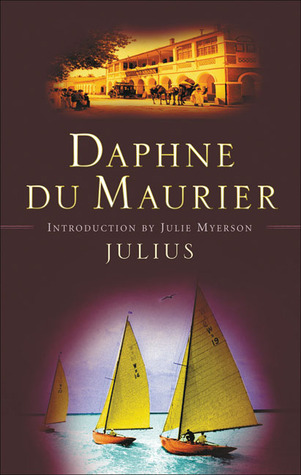

Julius by Daphne du Maurier

Julius This book was originally published under the title The Progress of Julius and is the chilling story of an ambitious and ruthless man who goes through life determined to get “something for nothing” and not caring who gets hurt in the process.

The novel begins in 1860 when Julius Levy is born into a family of French peasants who live in a small village on the banks of the Seine. The biggest influences on Julius’s early life are his loud, coarse grandfather and irresponsible mother, but he later grows closer to his father, Paul, a quiet Jewish man. With the outbreak of the Franco-Prussian war the Levys take refuge in Paris until a tragedy results in Julius and his father fleeing for the safety of Paul’s home country, Algeria.

At first, Julius plans to follow a religious life, but he soon finds that buying and selling in the marketplace holds more attraction for him and that he enjoys cheating people out of their money. When life in Algeria starts to bore him, Julius travels to England where he begins to build up a huge business empire. But even as Julius becomes one of the richest and most successful men in the world, he continues to show a complete lack of regard for the people around him, using and manipulating them to get what he wants…until his daughter Gabriel is born.

This was Daphne du Maurier’s third novel, published in 1933 when she was only twenty six years old and it amazes me that she was able to write such a sophisticated, powerful novel at such an early stage of her career. I’ve found that all of du Maurier’s books have some dark and disturbing elements, but this must surely be the darkest and most disturbing of them all – though not in a gothic way like Rebecca or Jamaica Inn. The main reason I found this book so disturbing is because Julius Levy is one of the most horrible, despicable characters I’ve ever come across in literature.

He’s completely heartless, cruel and callous with no redeeming features at all. Early in the story when the Levy family are forced to leave their village for Paris, Julius drowns his beloved cat rather than leave her with a neighbour, because if he can’t have her he doesn’t want anyone else to have her. This is an early indication of what Julius is like and as the story continues there are dozens of other examples of his selfishness and cruelty. And yet, for some reason, he still inspires feelings of love and friendship in other people, which is hard to understand as he rarely, if ever, shows any consideration or compassion for anybody but himself – they always come second to his latest money-making schemes.

As usual, du Maurier’s settings are wonderfully atmospheric, from the small French village of Puteaux to the dusty marketplaces of Algeria to the area of London in which Julius gets his first job in a bakery. The historical setting, beginning with the Franco-Prussian War and the Siege of Paris, is interesting too. This was not one of my favourite du Maurier novels (it was much too uncomfortable and unpleasant for that) but, like all of her books, it kept me gripped and fascinated from the first page to the last.

Paris by Edward Rutherfurd

Paris Of all the new books being published this year, this is one that I’ve really been looking forward to, having read and enjoyed all seven of Edward Rutherfurd’s previous books – my two personal favourites, Sarum, set in and around the English city of Salisbury, and Russka, which covers almost two thousand years of Russian history; his other two ‘big city’ novels, London and New York (probably the two I’ve enjoyed the least); his two books on the history of Ireland, Dublin and Ireland Awakening; and The Forest, the story of England’s New Forest.

After reading all of those, I thought I knew exactly what to expect from Paris but I was surprised to find that I was wrong. With all of his other novels, Rutherfurd has followed the same format: beginning in the distant past then moving forward chronologically through the centuries, he attempts to tell the story of a city or a country’s entire history by following several families down through the generations. Paris has a very different structure.

In this book we concentrate on one set of characters who are living in Paris during the late 19th and early 20th centuries (the era known as the Belle Époque). Most of these characters are introduced in the first few chapters of the book and belong to six families, all of different social classes and political backgrounds. First, there’s the bourgeois Blanchard family – Jules Blanchard, the owner of the Josephine department store, and his three children, Gerard, Marc and Marie. Next, there’s Thomas Gascon, an iron worker, and his charismatic younger brother, Luc. There’s the aristocratic Roland de Cygne and his enemy, the revolutionary Jacques Le Sourd. And finally, a Jewish family, the Jacobs, and the Renards, who are merchants. The personal stories of all of these people and their ancestors are cleverly woven around the events that shaped the history of Paris.

Interspersed with this main storyline are several chapters in which we go further back in time and meet some of the earlier generations of our six families. There’s a chapter telling the story of the St Bartholomew’s Day massacre of 1572, for example, and another set in the city’s Jewish community in the 14th century. However, I was disappointed that some of the earlier periods in France’s history were given very little attention at the expense of the Belle Époque chapters. There was nothing prior to the 13th century so the Romans were completely ignored, Napoleon was barely mentioned at all, and I also couldn’t believe that we were only given one short, thinly plotted chapter on the French Revolution. I can see that choosing to focus more on the 1875-1940 thread of the novel allowed Rutherfurd to develop more complex storylines, but unfortunately his characters are just not strong enough to make this new format work. I still thoroughly enjoyed Paris and don’t want to give the impression that I didn’t; it’s just that I’m sure I would have loved it more if it had followed the same chronological structure as the previous books.

While I don’t have any problems with the factual content of Rutherfurd’s books, they do require you to suspend disbelief. You have to be able to accept that Thomas Gascon works on both the Statue of Liberty and the Eiffel Tower and is singled out by Gustave Eiffel from all the other hundreds of workers, that another of our fictional characters spends an evening with Ernest Hemingway and another one models for Coco Chanel, to give just a few examples. Another method he uses is to have the characters conveniently taking sightseeing tours of famous buildings and landmarks, such as the Palace of Versailles or the Père Lachaise cemetery. But although this kind of name-dropping can be annoying in other historical fiction novels, I actually don’t mind it in Rutherfurd’s books and I know he does it because it enables him to show us as many of the city’s famous figures and important events as he possibly can. Sometimes, though, it’s the smaller details and snippets of information that I enjoy the most – a description of a beautiful mille-fleur tapestry or a mention of the famous book shop, Shakespeare and Company.

I know these aren’t the sort of books that would appeal to everyone, though, as you do need to be genuinely interested in learning about the history of the locations each book covers and you also have to be prepared for the fact that most of his books are around 800-1000 pages long. I think of Rutherfurd’s books as interesting, entertaining history lessons. The quality of his writing is nothing very special and his characters are often very thinly drawn, but when you reach the end of one of his novels you feel that you’ve really learned a lot and have gained a good understanding of the place you’ve been reading about.

While this book was not without its flaws, I did love Paris. It’s not his best book by any means, and I definitely prefer the more linear structure of Sarum, Russka and the others, but this book was still a big improvement on his last one, New York. One problem I had noted with New York was that Rutherfurd seemed to run out of ideas towards the end, making the last few chapters very weak. This was not the case at all with Paris – in fact, the final chapter, on World War Two and the French Resistance was one of my favourites. It has definitely been worth the time and effort it took to read this book – and it has left me wanting to visit Paris again soon. I’m not officially taking part in Paris in July (I read this book in June) but Paris would have been a perfect choice!

The Ladies’ Paradise by Émile Zola

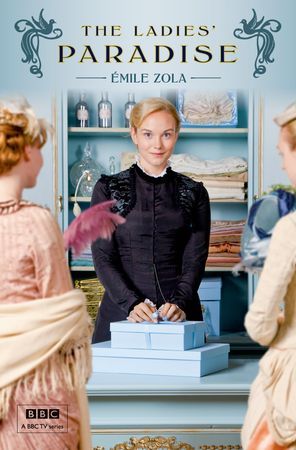
The Ladies' Paradise The Ladies’ Paradise is only the second book I’ve read by Zola; my first was Thérèse Raquin and the two are very, very different. Au Bonheur des Dames, to give it its French title, was published in 1883 and is the story of a Paris department store, based on the real-life Le Bon Marché.

At the beginning of the novel, Denise Baudu arrives in Paris with her two younger brothers, hoping to find work in her uncle’s draper’s shop. She is disappointed to discover that he is unable to offer her a job because his shop, along with the other small shops in the street, is losing business to a new department store, the Ladies’ Paradise. The new store is able to offer a larger selection of products at cheaper prices all under one roof, and none of the smaller traders can hope to compete. Still, Denise desperately needs to earn money to support her brothers so although she understands how her uncle feels, she is pleased when she is offered a job at the Paradise.

Denise quickly finds that life as a salesgirl at the Paradise is not easy but she’s determined to succeed and overcome whatever obstacles are put in her way. And when she catches the eye of the owner of the Paradise, Octave Mouret, he soon discovers that she is a woman with morals and principles; it’s obvious that she is not going to give him any encouragement – but this only makes him want her more.

I was hoping to love this book as much as Thérèse Raquin but that didn’t happen. The Ladies’ Paradise is a book that I enjoyed, but not one that I loved. It offers some fascinating insights into both Parisian life and the rise of the department store in the late 19th century – and of course, the idea of a larger, cheaper store putting all the small, independent shops out of business is still very relevant today – but I disliked most of the characters and while the long descriptions of the silks, satins and other fabrics sold at the Paradise were beautifully detailed I did get a bit bored after a while. Maybe I just don’t like shopping enough!

However, I did find it fascinating to read about the way the Paradise was run and what it was like to work there. In some ways working at the Paradise was a very different experience from working in retail today, one of the biggest differences being that the salesgirls employed by the Paradise lived and ate on the premises and were treated almost like servants. But from a selling and marketing perspective, I was surprised to learn how modern and sophisticated Mouret’s methods were; a lot of the ideas he had for running the store, advertising its products and attracting customers are still used today (though I didn’t really like the implication that women are so easy to trick and tempt into parting with their money).

The only character I really liked was Denise. I had sympathy with all the ordeals she faced after starting her new job: having trouble fitting in with the other women, feeling that her clothes and hair weren’t right, being bullied by other employees, and worrying about making enough money to take care of her two younger brothers. I found it harder to like or care about any of the other characters (Denise’s brother, Jean, particularly annoyed me – surely he was old enough to take more responsibility for himself and his actions), though I did admire what Mouret had achieved in making the Paradise such a success.

I don’t want to sound too negative about this book because I still found a lot of things to enjoy about it, but I’m hoping the next Zola novel I read will be more to my taste than this one. Any suggestions are welcome!

Meeting Katherine de Valois

I have read two historical fiction novels recently both on the subject of the fifteenth century French princess, Katherine of Valois, the wife of King Henry V of England. The Forbidden Queen by Anne O’Brien and The Agincourt Bride by Joanna Hickson both tell Katherine’s story but in very different ways and as I’ve read them so close together, I thought it would be interesting to combine my reviews into one post.

The Forbidden Queen Let’s start with The Forbidden Queen by Anne O’Brien, my favourite of the two books. The novel is narrated by Katherine herself and covers most of the significant events of her life. The youngest daughter of King Charles VI of France and his wife, Isabeau of Bavaria, Katherine is married to Henry V several years after the English victory over the French at the Battle of Agincourt in 1415. Queen Isabeau has agreed to a settlement with Henry that would make him heir to the throne of France in place of Katherine’s own younger brother, the Dauphin.

When Henry dies just a few years into their marriage, Katherine falls in love with his cousin, Edmund Beaufort – but does Edmund love her in return or is he more interested in the power he would gain as husband of the Queen Dowager? It’s not until Katherine gets to know her Welsh Master of Household, Owen Tudor, that she finally has a chance of true happiness.

This is quite a romance-based novel, but maybe that’s to be expected as Katherine sadly didn’t seem to have much of a part to play in politics or in the reign of her son, the young Henry VI. O’Brien did such a good job of making me see how Katherine was desperate for love and affection and how disappointed she was when she realised that she was going to get neither of these from the King. Henry V was not portrayed as a cruel or deliberately unkind husband, just one who was insensitive and indifferent, and it was so sad when Katherine realised the true nature of the man she was married to. But while I could have a lot of sympathy for the young, naïve Katherine I did start to wish that, as she got older, she would become more mature and independent. It was sad and frustrating to see her making the same mistakes again and again, looking for love where there was obviously none.

Although Katherine sometimes irritated me, I did like her. I also thought O’Brien’s characterisation of the three very different men in Katherine’s life was very well done: the distant, preoccupied King, interested only in battle strategies and military campaigns; the charismatic but ambitious and untrustworthy Edmund Beaufort; and the proud, quiet Welshman Owen Tudor. This is the first Anne O’Brien book I’ve read and I was quite impressed with the overall quality of her writing and her ability to tell a good story.

I received a copy of this book from Netgalley for review.

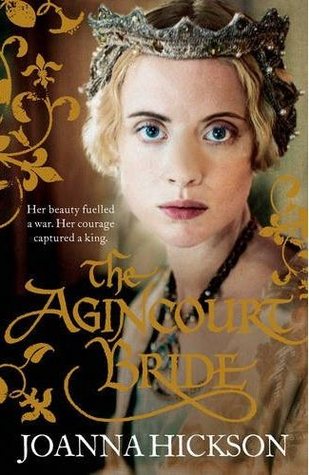
The Agincourt Bride Now for The Agincourt Bride by Joanna Hickson. In this book, the author has used the alternative spelling, Catherine, rather than Katherine, so I have done the same in this review. This is actually the first of two volumes and covers only the early part of Catherine’s life, from her childhood until shortly after her marriage to Henry. The sequel, The Tudor Bride, is due out later this year.

This novel is narrated by Catherine’s nursemaid, Guillaumette Dupain (known as Mette). Mette, the daughter of a baker, is brought to the royal household to act as wet nurse for the baby Catherine, having recently had a stillborn child of her own. With Catherine neglected and ignored by her parents, Mette becomes almost like a mother to the princess. They are separated during Catherine’s years in the convent at Poissy but are reunited when Catherine is thirteen. Despite the attempts of others to part them again, Mette is devoted to Catherine and manages to stay with her, becoming her Mistress of the Wardrobe and her friend and confidante.

While both this book and the one above are at the lighter end of the historical fiction range (as you would probably expect from the cover designs and titles) this one was a bit too light for me. I also thought it was too long and I’m not sure there was really enough material for a book this length focusing on only the first years of Catherine’s life. Mette’s own personal story didn’t interest me much; her main function in the novel is to provide the perspective of someone close to Catherine, and there have been so many historical fiction novels published in recent years narrated by a conveniently placed servant that I think it’s becoming boring and formulaic. Seeing Catherine only through Mette’s eyes, I couldn’t engage with her the way I did in Anne O’Brien’s book and as a result I didn’t like this version of Catherine very much.

Joanna Hickson does go into a lot of depth in areas of Catherine’s early life that O’Brien didn’t have time to explore. I was intrigued by the storyline involving John the Fearless, Duke of Burgundy, who is portrayed here as a violent monster and I would be interested to know if there’s any evidence that he really behaved like this. We also get to know Catherine’s brothers and sisters much better than in the O’Brien book. None of them are particularly endearing characters, but Mette, having known them all since they were children, displays an amazing amount of patience and understanding with each of them. Their mother, Isabeau, comes across as completely selfish and heartless, and their father, Charles VI, suffers from a mental illness that causes him to believe he is made of glass and will shatter if anyone touches him. I got a real feeling for the sadness and loneliness Catherine and her siblings may have experienced as children, and could also see how France had been left in a vulnerable position without strong leadership.

The Agincourt Bride ends as Catherine travels to England for her coronation. It’s quite an abrupt ending, but presumably the next book is going to pick up the story from this point.

Having read both of these novels I’m glad to have had the opportunity to learn about a period of history I previously knew very little about. If you only want to read one book about Catherine (or Katherine) of Valois, I would say read The Forbidden Queen as it covers Catherine’s whole life and I enjoyed it a lot more than The Agincourt Bride. I would be happy to read more books by Anne O’Brien but I’m not sure about Joanna Hickson yet and will have to decide whether or not I want to continue with The Tudor Bride.

Sir Percy Leads the Band by Baroness Emmuska Orczy

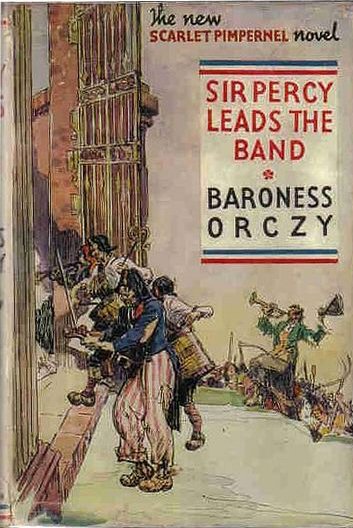
Sir Percy Leads the Band This is one of the many sequels to Baroness Orczy’s classic historical adventure novel, The Scarlet Pimpernel. The story is again set during the French Revolution and at the beginning of the novel, in January 1793, King Louis XVI of France – now known simply as Louis Capet – has been found guilty of ‘conspiring against liberty’.

With their former king sentenced to death it’s a dangerous time for the French aristocracy, and Sir Percy Blakeney and his men are in France to help the La Rodière family avoid the guillotine. Knowing that his old enemy Chauvelin will be determined to track him down, a disguise is necessary – so Sir Percy becomes the fiddle-playing leader of a disreputable band of musicians entertaining crowds of revolutionaries in a tavern near the Château de la Rodière. This means Percy and the League of the Scarlet Pimpernel are ideally placed to be able to protect the family when the mob decides to attack the Château…but could someone within the League be about to betray their plans?

After reading (and loving) The Scarlet Pimpernel last year, I wanted to try another book in the series. I wasn’t sure which one to choose as I’ve seen a few different recommended reading orders, but I decided on this one as it is set immediately after the events of The Scarlet Pimpernel. I enjoyed it but it wasn’t as good as the original book. With all the action taking place in France, this means we don’t see anything of Sir Percy’s wife, Marguerite, which I thought was a bit disappointing as their relationship had formed such a big part of the story in The Scarlet Pimpernel. Marguerite was not a particularly strong character but I connected with her more than I did with either of the two female characters in this book, Blanche Levet or Cécile de la Rodière.

We do spend a lot of time with the other men of the League of the Scarlet Pimpernel. I remembered some of them from the previous book – Lord Anthony Dewhurst, Sir Andrew Ffoulkes and Lord Hastings – but there was also one who was new to me, St John Devinne. From the start it seems that Devinne is distrusted by everyone except Sir Percy and as Percy has previously proved to be so good at judging people and situations, the reader is made to wonder who is right and who is wrong. A lot of the novel’s tension and suspense comes from waiting to see whether he is going to betray Percy and the rest of the League.

Sir Percy Leads the Band was entertaining enough but I didn’t think it was anything very special and there’s really not a lot more I can say about it! Although I didn’t like it as much as The Scarlet Pimpernel it won’t deter me from trying some of the other books in the series at some point. Maybe those of you who are Scarlet Pimpernel fans can tell me whether it’s best to continue reading the series chronologically or if there’s another order you would recommend.

The Three Musketeers by Alexandre Dumas (re-read)

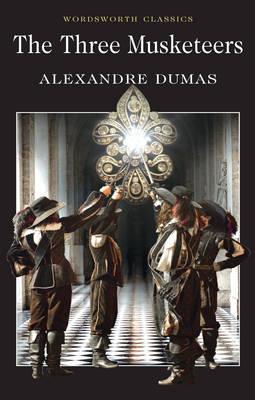
The Three Musketeers One of my goals for 2013 was to re-read more of my favourite books, something I’ve been neglecting in recent years. Well, here we are in the middle of April and so far I’ve only re-read one!

The Three Musketeers may be the title, but our hero is not a musketeer when we first meet him at the beginning of the novel, in the year 1625; his name is d’Artagnan and he’s a young man from Gascony in France, on his way to Paris where he hopes to join the King’s Musketeers under the command of Monsieur de Tréville. On his arrival in Paris, d’Artagnan encounters three of the musketeers – Athos, Porthos and Aramis – in one of those wonderful openings to a book that once you’ve read you’re unlikely ever to forget.

Soon d’Artagnan and the three musketeers become the best of friends, and when d’Artagnan meets and falls in love with Constance Bonancieux, one of the Queen of France’s ladies, all four of them are drawn into the intrigue surrounding the Queen’s affair with the powerful English nobleman, the Duke of Buckingham. With the King’s advisor, Cardinal Richelieu, hoping to expose the affair, Constance, d’Artagnan and his three friends become targets of the Cardinal and his spy, the beautiful Lady de Winter. But Milady, as she is known, is hiding a secret of her own and if d’Artagnan discovers the truth, he and Constance could find themselves in even greater danger.

I first read The Three Musketeers five years ago and when I finished it I had intended to read the other books in the trilogy (the second is Twenty Years After and third is the three-volume The Vicomte de Bragelonne/Louise de la Valliere/The Man in the Iron Mask) but as so often happens other books got in the way and I never did get around to continuing with the d’Artagnan series. And so when I made my list for the Classics Club I put all of them on there – along with a re-read of The Three Musketeers as I thought it would be a good idea to remind myself of the characters and story before embarking on Twenty Years After – and anyway, I never need an excuse to re-read a book that I enjoyed so much the first time!

I love Alexandre Dumas and although The Three Musketeers is not my favourite of the three novels of his that I’ve read (that would be The Count of Monte Cristo) I still think it’s a wonderful book with some great characters. The musketeers all have such different personalities: the aristocratic, melancholy Athos, the loud, brash Porthos, the fastidious would-be priest, Aramis, and of course, the brave, passionate d’Artagnan. Everyone will be able to pick a favourite musketeer, and mine is Athos. In her recent post on The Count of Monte Cristo, Lisa compared the character of Edmond Dantes with Francis Crawford of Lymond from the Lymond Chronicles by Dorothy Dunnett (two other great fictional characters, by the way); I agree, but I can also see some of Athos’ character traits in Lymond too, especially during one of the most memorable set pieces in the book, where the four friends eat breakfast in a fortress surrounded by enemy soldiers because it’s the only place they can find to talk in private.

It seems five years is a good length of time to wait between re-reads of a book. I had forgotten enough so that I could be surprised by the twists and turns of the plot, but remembered just enough to be able to look forward to some of my favourite parts: the breakfast scene I mentioned above, the episode with the Queen’s diamond studs, and especially the sequence of chapters in the middle (entitled Porthos, The Thesis of Aramis and The Wife of Athos) which is just a joy to read. The friendship between d’Artagnan, Athos, Porthos and Aramis is so inspiring and heartwarming (all for one, one for all!) and this is why, for me, there’s a change in the tone of the book when towards the end, the focus switches from the musketeers to Milady and I don’t enjoy the final third quite as much as the first two thirds.

Now, a note on the translation. I read the Wordsworth Classics edition of The Three Musketeers which uses the first English translation by William Barrow in 1846 (I think this is also the one used by Oxford World’s Classics). I would be interested to try a newer translation, such as Richard Pevear’s, to see how it compares – and also because I’m aware that the older translations altered certain parts of Dumas’ original text because they considered it too sexually explicit for Victorian readers. I can see that some readers today would probably find the Barrow translation too literal and antiquated but I didn’t have a problem with it at all; I actually quite like the way the sentences are constructed and I think it has a certain romantic, old-fashioned quaintness about it.

I’ll be moving on to Twenty Years After very soon!