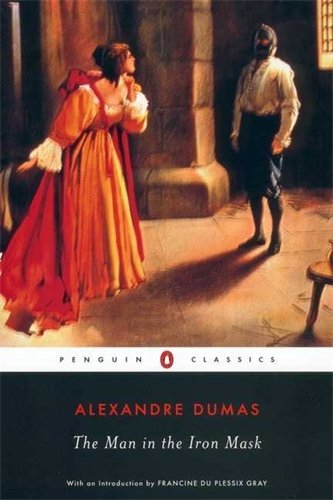
The Man in the Iron Mask by Alexandre Dumas

the-man-in-the-iron-mask I had considered starting 2017 by posting some reading plans and resolutions but, to be honest, after failing to keep most of last year’s, I don’t want to make any for this year. I do have one goal for 2017, though: I would like every book I read to be a potential book of the year. That’s unrealistic, I know, but it’s something to keep in mind when I’m choosing which books to read and when I’m deciding whether or not it’s worth continuing with a book I’m not enjoying. And I’m already off to a great start with my first January read – The Red Sphinx by Alexandre Dumas! I’m looking forward to telling you about that one after I’ve finished reading it, but in the meantime here are my thoughts on another Dumas novel I read just before Christmas.

The Man in the Iron Mask is the last book in the d’Artagnan series which began with The Three Musketeers and continued with Twenty Years After, The Vicomte de Bragelonne and Louise de la Vallière. The final three in the series were originally published as one novel, which must have been enormous; it’s easy to see why most publishers now split it into separate volumes! I think most people probably just go straight from The Three Musketeers to The Man in the Iron Mask – after all, they are the two best known and the most often filmed of the d’Artagnan stories – but I don’t regret having taken the time to read the ones in between. I did enjoy them all, particularly Twenty Years After, and it meant that I went into this, the final book, with the background knowledge I needed to be able to get straight into the story.

Unlike The Vicomte and Louise, which deal mainly with the political and romantic intrigues of various members of the 17th century French court, in The Man in the Iron Mask, the focus returns to d’Artagnan and his three friends, Athos, Porthos and Aramis. The first half of the novel revolves around Aramis and a plot involving a man imprisoned in the Bastille who bears a striking resemblance to the King of France. I won’t say too much about this as I wouldn’t want to spoil the story for future readers, but suffice it to say that things don’t go exactly as according to plan and both Aramis and Porthos (who, as usual, has become implicated in the schemes of others while blissfully unaware of what is really going on) find themselves in trouble.

We then catch up with Raoul, the young Vicomte de Bragelonne, who is trying to come to terms with the discovery that his beloved Louise de la Vallière is now the mistress of Louis XIV. Devastated by the loss of Louise, Raoul agrees to accompany the Duc de Beaufort on an expedition to Africa. How will his father, Athos, cope in his absence? D’Artagnan, meanwhile, has remained loyal to the king and for much of this novel he is caught up in the final power struggle between the two rival finance ministers, Fouquet and Colbert. When his duties bring him into conflict with Aramis and Porthos, however, d’Artagnan must find a way to serve his king without betraying his friends.

This is a much more exciting, action-packed book than the two preceding ones. The actual ‘man in the iron mask’ has a relatively small role to play but the plot has serious consequences which are explored throughout the remainder of the novel as we follow our old friends, the musketeers, to the end of their careers. I was pleased to see so much more of d’Artagnan and his friends than we did in the last two books, but I was disappointed by the lack of scenes with all four together (it was the relationship between the four of them, in my opinion, that made the first Musketeers novel such a joy to read) and that Athos’ storyline seemed to barely intersect with the others. Athos was my favourite character in the original Musketeers book and I really dislike the direction Dumas took him in throughout the later books in the series, particularly after Raoul became more prominent in the story. It’s funny that Aramis, my least favourite, ended up being the character I found the most interesting!

Towards the end, The Man in the Iron Mask also becomes a very sad book; after spending so much time with these characters – literally thousands of pages over the last few years – I didn’t want to have to say goodbye to any of them. Dumas ties things up very neatly in the final chapters…a bit too neatly for me; I would have preferred a happier ending with more left to the imagination! Still, I did enjoy this book and was delighted to discover that Dumas had written yet another, often forgotten, sequel to The Three Musketeers. It’s called The Red Sphinx and is being made available in a new English translation this month. I’m reading it now and am pleased to say that so far it’s definitely living up to my expectations!

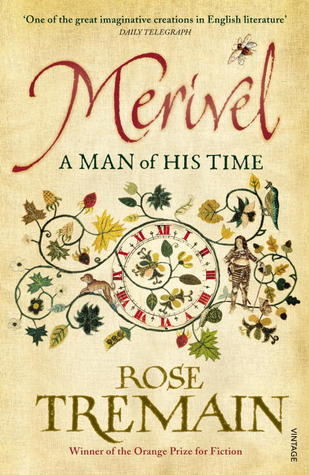
Merivel: A Man of His Time by Rose Tremain

merivel I wasn’t planning to read Merivel so soon after finishing Rose Tremain’s Restoration, but when I saw a copy on the library shelf a few days later, I couldn’t resist bringing it home so I could catch up with Robert Merivel again and see how he was getting on. I didn’t expect this book to be as good as Restoration, as sequels written many years later often aren’t, so I was surprised to find that I actually preferred this one. Looking at other reviews, I can see that I’m in the minority with that opinion, but I think the reason I liked this book better was because I liked Merivel himself better.

At the beginning of Merivel, our narrator, Robert Merivel, is back at his Norfolk estate of Bidnold, where he returned at the end of Restoration. It’s 1683 and sixteen years have gone by since we last saw him; he’s now a middle-aged man, very aware that time is slipping away and bringing changes to himself and the people around him. His faithful servant, Will, is getting old and is struggling to carry out his duties, while his little girl, Margaret, is now a young lady and planning to spend Christmas in Cornwall with friends. Facing the prospect of being left at home alone, Merivel decides to make the most of the time remaining to him and sets off to Versailles – with a letter of introduction from his friend, King Charles II – in the hope of finding some excitement and intellectual stimulation.

Unfortunately, Versailles fails to live up to Merivel’s expectations; he finds little to admire at the French court and it’s not long before he’s on his way home to England. Apart from a brief romance with an attractive botanist, Louise, and an invitation to visit her at her father’s estate in Switzerland, the only thing Merivel has to show for his time in France is a large bear called Clarendon whom he has rescued from captivity and brought back to Norfolk. On arriving at Bidnold, however, Merivel discovers that he has more to worry about than Louise and his bear: his daughter, Margaret, is seriously ill and requires all of his skills as a physician if she is to survive.

Although there are some humorous scenes in this book, I found this quite a sad and sombre novel, especially in comparison to the liveliness of Restoration. The passing of time is a major theme (it’s no coincidence that Merivel shares lodgings in France with a clockmaker) and there’s always a sense that things are coming to an end, that Will, Merivel – and even the King – won’t live forever. Merivel is not so much searching for his place in the world as he was in the previous book, but trying to understand himself and come to terms with his own nature. He still gets things wrong sometimes, he still makes some poor decisions, and has a tendency to neglect the things that are most important, but he also has a good heart and I found him completely endearing! I remember thinking he was a very frustrating character in Restoration, but in this book I had more patience with him because I could see that he was doing his best.

Merivel is a book with many layers, giving the reader a lot to think about. Even the headings of the four sections – The Great Enormity, The Great Captivity, The Great Consolation and The Great Transition – have a significance which is worth considering. But this is also a very entertaining novel. The pace is quite leisurely, but there’s always something happening: a duel, an encounter with highwaymen, an illness, or a visit from the King. The mood of the late 17th century is captured beautifully; Tremain even gives some of the nouns capital letters to enhance the feeling of authenticity, something which I thought might be irritating at first but which, after a few pages, I decided I liked.

The ending, when it came, was not entirely unexpected, but I was still a bit surprised because I think a lot of authors would have chosen to end Merivel’s story in a different, happier way. Considering the themes of this novel, though, I thought it was the perfect conclusion. I loved revisiting Merivel’s world and I would definitely recommend this book to anyone who has read and enjoyed Restoration. It could probably be read as a standalone but I think you’ll get more out of it if you’ve been following Merivel’s story from the beginning.

This book also counts towards my Reading the Walter Scott Prize project. It was shortlisted in 2013.

The Romance of the Forest by Ann Radcliffe

the-romance-of-the-forest If you were going to write a Gothic novel, what sort of things would you include? Dark forests? Ruined abbeys? Stormy weather? Wicked noblemen? Secret manuscripts? Skeletons? Well, you’ll find all of those and more in Ann Radcliffe’s 1791 classic, The Romance of the Forest. Radcliffe was one of the earliest pioneers of the Gothic novel and, while I can see that her books won’t appeal to everyone, I’ve now read four of them and enjoyed them all – although this one is not her best.

The story is set in 17th century France and opens with Pierre de la Motte, who has found himself in debt, fleeing Paris with his wife and servants, hoping to get as far away from his creditors as possible. Losing their way in the dark, they see lights shining from a house in the distance and Pierre knocks on the door to ask for help. He gets more than he bargained for, however, when the man who answers the door pushes a beautiful young lady towards him and begs Pierre to take her away with him. Pierre agrees and the family, with the addition of the girl, whose name is Adeline, continue on their way.

They find refuge in an old, deserted abbey and decide to settle there for a while, safe in the knowledge that their pursuers are unlikely to find them in such a remote and gloomy place. Inside the abbey, though, there are new terrors to face. The discovery of a skeleton, a rusty dagger and a faded manuscript point to a murder in the abbey’s history – and when the sinister Marquis de Montalt arrives on the scene, Adeline senses that her own life could also be in danger.

Ann Radcliffe is not known for her strong heroines and Adeline is no exception, so be prepared for some fainting and swooning and lots of melodrama. Having said that, she does have strong principles, and tries, in her own way, to fight for what she wants and believes in. Like Emily St Aubert in The Mysteries of Udolpho, she also has a habit of picking up her lute and breaking into song from time to time (giving Radcliffe an opportunity to insert her own poems into the text).

I didn’t find this book quite as atmospheric as her others (certain sections of The Italian, in particular, have a darkness and an eeriness that are never matched in this book), but her descriptive writing is still beautiful:

Dark woods, intermingled with bold projections of rock, sometimes barren, and sometimes covered with the purple bloom of wild flowers, impended over the lake, and were seen in the clear mirror of its waters. The wild and alpine heights which rose above were either crowned with perpetual snows, or exhibited tremendous crags and masses of solid rock, whose appearance was continually changing as the rays of light were variously reflected on their surface, and whose summits were often wrapt in impenetrable mists.

I also enjoyed seeing the plot unfold in the final third of the novel, with revelation following upon revelation. There are some coincidences which are too convenient or too ridiculous to be believed and any big holes in the plot are explained away as ‘fate’ or ‘destiny’. These are things that would bother me in any other type of novel, but in an 18th century Gothic novel, they’re exactly what I would expect and so I was able to suspend my disbelief without any problems!

This is a weaker Radcliffe novel, in my opinion, so if you’ve never read any of her books before I would probably recommend beginning with a different one. The Italian, The Mysteries of Udolpho and A Sicilian Romance are the others I’ve read and any of those might be a better starting point.

Louise de la Vallière by Alexandre Dumas

Louise de la Valliere Louise de la Vallière is the fourth book (or in some cases, the fifth – more on that later) in the series of d’Artagnan novels which began with The Three Musketeers. Looking at other readers’ reviews, this seems to be one of the least popular books in the series and I can understand why, even though I did enjoy it.

In Louise de la Vallière, the story is picked up directly where the previous book, The Vicomte de Bragelonne, ended and follows all the romance and intrigue of the court of Louis XIV. As the novel opens, the king’s brother, Philippe (known as Monsieur), has just married Charles II’s sister, Henrietta of England (Madame). An instant attraction has formed between the king and his new sister-in-law, so to avert suspicion they decide that Louis will pretend to turn his attentions to Louise de la Vallière, Madame’s young lady-in-waiting. Things don’t go exactly according to plan, however, and the king and Louise end up really falling in love with each other, breaking the heart of poor Raoul, the Vicomte of Bragelonne, who was hoping to marry Louise.

Apart from a few brief scenes here and there, there’s an almost total absence in Louise de la Vallière of the swashbuckling action and adventure which formed such a large part of the earlier volumes of the series. This could be disappointing if you’re expecting more of the same, but I do think the antics of Louis’ court are fun to read too. It’s amusing to watch the king’s desperate attempts to steal some time alone with Louise – passing letters hidden in handkerchiefs, climbing ladders to reach her window and installing secret staircases in her room!

What does all of this have to do with d’Artagnan, you may be asking? Well, the answer is – very little. He does appear from time to time, but this is not really his story. We don’t see much of Athos or Porthos either, although what we do see assures us that they are still the same characters we know and love: Athos is still noble and honourable, while Porthos is still the gentle giant, as good-natured and trusting as ever. I didn’t care for Aramis in this book, though – he’s preoccupied with a mysterious prisoner in the Bastille and when we do see him, he’s plotting and scheming, reluctant to confide in his fellow musketeers. His storyline ends on a cliffhanger which has left me wanting to start The Man in the Iron Mask as soon as possible!

Now, a note on the structure of this series. The first two books are The Three Musketeers and Twenty Years After, which I have written about in previous posts. The third book was originally intended to be one very long novel, but most publishers now split it into three: The Vicomte de Bragelonne, then Louise de la Vallière and finally The Man in the Iron Mask. Some versions (such as the free Project Gutenberg ebooks – see the notes here), split the chapters differently, including an extra volume, Ten Years Later, between The Vicomte and Louise. Be sure to check the editions you’re reading or you could miss part of the story.

This may not have been my favourite Musketeer novel, then, but I did still find a lot to like about it and can’t wait to finish the series with The Man in the Iron Mask.

The Travels of Daniel Ascher by Déborah Lévy-Bertherat

The Travels of Daniel Ascher When I read The People in the Photo a few weeks ago for Women in Translation Month (#WITMonth on Twitter), I didn’t expect to have time to read another book for the same event, but I’ve had this one on my Kindle for a while and have managed to squeeze it in before the end of the month. The Travels of Daniel Ascher was originally published in French in 2013; I read an English translation by Adriana Hunter.

At the beginning of the novel, twenty-year-old Hélène Roche has just moved to Paris to begin studying archaeology at university. Her great-uncle, Daniel Ascher, also lives in Paris and has offered to let her rent one of the upstairs rooms in his house, but when Hélène arrives she finds that he is out of the country, on a trip to Tierra del Fuego. This is nothing surprising – for as long as Hélène can remember, Daniel has been off on his travels, visiting one exotic location or another – and actually, his absence doesn’t bother her too much as she has always found her eccentric great-uncle slightly embarrassing.

As Hélène gets to know her fellow students, she discovers that most of them are fans of The Black Insignia, a series of novels in which the hero travels the world, having exciting adventures in locations as varied as the Amazon, Machu Picchu and Pompeii. Hélène alone has never read a Black Insignia book, partly because she thinks the stories sound childish and uninteresting and partly because the author of the series is her great-uncle Daniel, writing under the name HR Sanders. Her new friend Guillaume, however, is so enthusiastic about the books that Hélène is persuaded to look at them again – and in the process she makes some surprising discoveries about the life of Daniel Ascher.

The Travels of Daniel Ascher is a very short book (I easily read it in one evening) and I think it’s probably aimed at young adults, although that’s not to say it has nothing to offer an adult reader too. When the truth about Daniel Ascher’s childhood begins to emerge (I’m trying not to spoil anything here) it’s a story which has been written about many times before, but the way in which Déborah Lévy-Bertherat chooses to approach that story feels fresh and different.

I thought the book was generally well written, although as with all translated novels, unless you’re able to read the original, it’s difficult to know whether anything has been lost in translation. I do have a criticism, though, and that relates to the dialogue, which is written without quotation marks and presented as one continuous paragraph, with what one character says separated from the next by a comma. I’m really not sure why so many contemporary authors think this sort of thing is a good idea – I find anything other than conventional dialogue very distracting and unnecessary. In this particular novel, I suppose it helped to create a dreamlike atmosphere, but at the same time it made it difficult to connect with the characters and took away some of the emotional impact of the story.

WITMonth 2016 The Travels of Daniel Ascher wasn’t a perfect book, then (at least not for me), but it was an interesting and unusual one and I don’t feel that I wasted my time reading it.

The Poisoners by Marjorie Bowen

The Poisoners I have read several novels by Marjorie Bowen this year and this is one of my favourites so far. First published in 1936, The Poisoners originally appeared under one of her other pseudonyms, George Preedy, and now that I’ve read it I can see why she chose to use a different name for this one. Although this book, like the others I’ve read, is set in the past, it is more of a mystery/thriller which should appeal to readers of vintage crime as well as to fans of historical fiction.

The story takes place in 17th century Paris during the reign of the Sun King, Louis XIV, and revolves around a famous murder scandal known as L’affaire des poisons (Affair of the poisons). Our hero is Charles Desgrez, newly arrived in Paris with his wife, Solange, to take up a position as Lieutenant of Police and keen to make a name for himself. At the beginning of the novel, the couple are attending a party for Solange’s birthday, when one of the guests – the Widow Bosse, a supplier of perfumes – drunkenly boasts of becoming rich by helping wives to become widows. “I’ve only got three more poisonings to do and I shall be a very wealthy woman,” she says.

To satisfy his curiosity, Desgrez asks Solange to visit the Widow in disguise, posing as a wife unhappy with her husband – and he is shocked by what he learns. Reporting his findings to the Chief of Police, M. de la Reynie, the two begin to investigate and gradually discover that the network of poisoners operating in Paris is much larger and more sophisticated than they could ever have imagined. To complicate things further, some of the people involved are closely connected to the Sun King himself – so Desgrez and de la Reynie must find a way to bring the criminals to justice while avoiding the publicity the King would prefer to avoid.

The Affair of the Poisons is a dark and fascinating episode in Parisian history. I’ve read about it before, in The Oracle Glass by Judith Merkle Riley, and it was good to revisit the same subject from a different angle. As far as I can tell, Bowen’s novel sticks to the basic historical facts of The Affair, with the addition of a few fictional characters and plot developments. The result is an atmospheric and suspenseful crime novel featuring fortune tellers and spies, counterfeiters and apothecaries, an empty house which hides sinister secrets, mysterious letters marked with the sign of a pink carnation, and a society thought to be involved in black magic.

The plot is excellent – fast-paced and exciting – but there’s not a lot to say about the characters in The Poisoners. Many of them are based on real historical figures, such as the king’s mistress, Madame de Montespan, and the notorious poisoner, La Voisin. Although they are all interesting to read about, none of them are developed in any great depth. I enjoyed reading about the work of the police officers in the novel (I hadn’t realised the French police were so well organised in the 17th century, which is something Bowen talks about in her author’s note) and I did like Charles and Solange Desgrez, but they are not the sort of characters who stay in your thoughts after finishing the book. This is a novel you would read for the plot rather than the characters, and maybe this is one of the differences between the books which were originally published under the Marjorie Bowen and George Preedy names.

If you’ve read anything by Marjorie Bowen (or any of Margaret Gabrielle Vere Campbell’s other pseudonyms) I’d love to hear what you thought!

The Royal Succession by Maurice Druon

The Royal Succession The Royal Succession is an English translation of Maurice Druon’s 1957 French novel La Loi des mâles, the fourth volume of his Accursed Kings series which began with The Iron King. Described by George R.R. Martin as “the original Game of Thrones”, the seven books in this series tell the story of Philip IV the Fair of France and the kings who follow him, said to have been cursed “to the thirteenth generation” by the vengeful Grand Master of the Knights Templar.

Books two and three – The Strangled Queen and The Poisoned Crown – described the troubled reign of Philip’s son, Louis X. As The Royal Succession opens in the year 1316, Louis is dead, leaving no clear heir to the throne. There is some doubt over the parentage of Jeanne, his five-year-old daughter from his first marriage, so all eyes are on Queen Clémence, his pregnant second wife.

While France looks forward to the birth of Clémence’s child, a regent is needed; the obvious choices are Louis’ younger brother, Philippe of Poitiers, and his uncle, Charles of Valois. At this crucial moment, Philippe is away in Lyon awaiting the election of a new pope, but by resorting to some underhand methods he is able to turn the situation to his advantage and becomes regent on his return to Paris. However, his mother-in-law, Mahaut, Countess of Artois, is even more ambitious and vows to clear the path to the throne for Philippe.

Nobody is safe from Mahuat’s plotting, and when Clémence gives birth to Louis’ posthumous child, the sickly Jean I, the baby king finds himself at the centre of one of her schemes. Meanwhile, Philippe searches for a way to deal with the claim of his little niece, Jeanne, and finds a possible solution in the Salic Law, which excludes females from the line of succession.

I hope I haven’t made all of this sound too complicated! Some concentration is needed, but Druon does explain everything clearly and the plot is easy enough to follow, especially if you have also read the previous three books (something I would highly recommend). The period covered in this particular novel is fascinating and I found this a much more gripping and entertaining read than The Poisoned Crown.

The Accursed Kings series is based closely on historical fact, but there is one part of The Royal Succession which feels more like fiction – and that is the storyline surrounding the fate of little Jean I. However, having looked this up, it seems that Druon has developed this storyline out of a theory which has never been proved or disproved. It’s unlikely, but not impossible, and other books have been written on the subject. It also explained for me the role in the series of Guccio Baglioni and Marie de Cressay, something I’ve been wondering about since the first book as their story had previously seemed so disconnected from the central history.

There are three books left in the series and I’m looking forward to continuing with the next one, The She-Wolf.