Today, as part of a Classics Circuit Tour, I’m hosting a duel between two very different authors: Jane Austen and Charles Dickens!
Tour participants were invited to choose a novel by either Austen or Dickens – or both. As there were still a couple of Austen novels I hadn’t read, as well as a whole pile of unread Dickens books, I decided this would be a good opportunity to read one of each. But which one would I like the best?
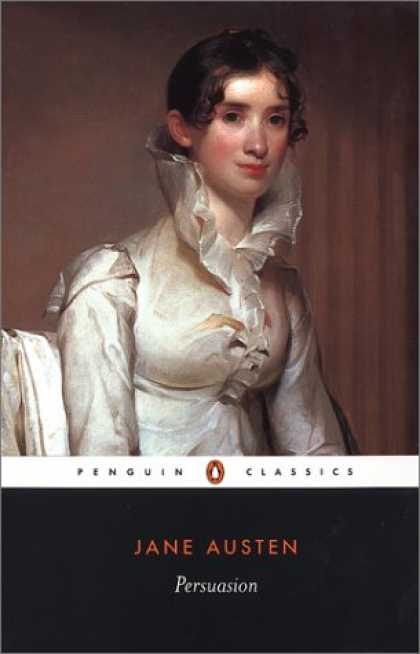 The first book I want to discuss is Jane Austen’s Persuasion, a moving story of mistakes, misunderstandings and second chances.
Austen begins by introducing us to the Elliot family: the vain and conceited Sir Walter of Kellynch Hall and his three daughters, Elizabeth, Anne, and Mary. Mary is married with children of her own, but Elizabeth and Anne still live at home. Elizabeth is very like her father but Anne is gentle, kind-hearted and intelligent. We also meet Lady Russell, a family friend who took on the role of advisor to the girls following the death of their mother.
Several years prior to the beginning of our story, Lady Russell persuaded Anne against marrying Frederick Wentworth, who at that time was a poor young naval officer. Anne has tried to move on with her life but has been unable to forget her first love and she is still unmarried eight years later when she hears that he has returned as the wealthy and respectable Captain Wentworth. Unexpectedly thrown back into his company and forced to see him with another woman, Louisa Musgrove, Anne knows she still loves him – but can Wentworth forgive her for breaking off their engagement all those years ago?
In comparison to the other Austen books I’ve read this one feels more serious and subdued. Anne Elliot is twenty-seven years old which makes her the oldest of Austen’s heroines and this could explain the different tone of the book (as well as the fact that Jane Austen herself was older, this being her final novel). We don’t see Anne as a younger girl in the days of her original romance with Wentworth; instead we meet her when she’s older and more mature. Anne is not a lively, spirited young woman like Elizabeth Bennet or Emma Woodhouse but she has a quiet strength and a warm heart and it’s easy to see what Captain Wentworth loved in her.
It’s slightly disappointing that Anne and Wentworth are kept apart through most of the novel and have little direct interaction with each other, but I appreciated the way Austen kept the reader waiting and wondering, giving the story a sense of restraint and tension. I loved this book and I think it might even have become my favourite Austen novel – although that could still change after I read Sense and Sensibility, which is the only one of her books that I still need to read.
Moving on to Charles Dickens…
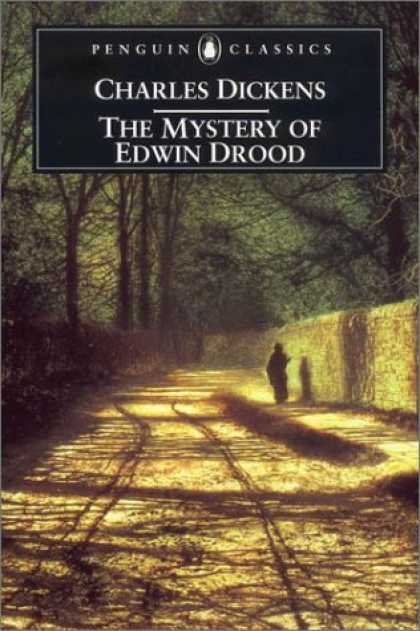 There were plenty of Dickens books I could have chosen, as I’ve only read three of them so far (A Christmas Carol, Bleak House and Our Mutual Friend) but as I’d also committed to reading a Jane Austen book I thought I’d better pick one of his shorter novels.
Trying to avoid one of his eight hundred page tomes played a large part in my decision to read The Mystery of Edwin Drood for the Duelling Authors tour. In comparison to other Dickens novels it’s relatively short – and for a good reason. It’s the novel Dickens was working on when he died in 1870 and unfortunately he was unable to complete it. I wasn’t sure how I would feel about reading an unfinished book but I can tell you that reaching the final page and realising that the mystery wasn’t going to be solved was every bit as frustrating as you might expect!
A large part of the novel is set in the fictional cathedral town of Cloisterham, which is thought to have been based on Rochester, where Dickens lived. We are also taken on a journey into the darker side of Victorian London; the opening scenes of the book take place in Princess Puffer’s opium den, to which Cloisterham choirmaster and piano teacher John Jasper is a regular visitor.
We learn that Jasper is in love with Rosa Bud, an orphan who lives at the Nun’s House in Cloisterham. There are only two problems with this: the first is that Rosa finds Jasper terrifying; the second is that she’s already engaged to his nephew, Edwin Drood, who is only a few years younger than Jasper himself. So when Drood disappears and is presumed to have been murdered it should be obvious who’s to blame, shouldn’t it? Well, no. There’s another suspect: Neville Landless, recently arrived in Cloisterham with his twin sister Helena, who is known to have previously had a violent argument with Drood and was with him the night before his disappearance.
Unfortunately we never find out what really happened to Drood and a number of other storylines are also left unresolved. We can guess what might have been going to happen, and I was able to find lots of possible theories online, but maybe Dickens had a few surprise twists planned for us – we’ll probably never know for certain.
Compared to the other Dickens books I’ve read, I found this one more direct and easy to follow, with less sub-plots and superfluous characters. Almost every chapter helps to move the story forward significantly. It was also quite funny in places, which was good as I haven’t really got on with Dickens’ sense of humour in the past. I can’t help thinking I’ve done things backwards though: I read Drood by Dan Simmons last year, which meant that when I started this book I felt I knew part of the story already. Many of the characters’ names were familiar and I could appreciate how cleverly Simmons had incorporated elements of Dickens’ novel into his own: the opium dens, the tours of the cathedral vaults and crypts, Drood’s interest in Egypt, the ‘hideous small boy’ who throws stones at Durdles. I think it would have been more sensible to have read this book first before the Dan Simmons one!

So who has emerged as the victor of this duel? Well, The Mystery of Edwin Drood was a fun, entertaining read but Persuasion I’m sure will be one of my books of the year – so I think Jane Austen is the winner here!
If you’re still not sure which author you prefer, the other Classics Circuit participants’ Austen and Dickens reviews might help you decide – you can find a full list of tour stops on the Classics Circuit blog.


