 Jane Johnson is a British author who has set several of her novels in Morocco, her husband’s country, with each book exploring a different period in Morocco’s history. The Black Crescent is set in the 1950s, during the time of the French protectorate, when support for Moroccan independence was building momentum.
Our narrator, Hamou Badi, grows up in the remote mountain village of Tiziane, a place where the people still cling to ancient traditions and superstitions. Due to the lines on his hands, Hamou himself is said to be a ‘zouhry’, a legendary figure blessed by a djinn and capable of locating treasure and detecting sources of water. However, it is not treasure that eleven-year-old Hamou finds one day in 1939, but the body of a woman, hidden amongst the palm trees by a dried up riverbed. The lack of interest shown by the French authorities in trying to solve this murder leads to Hamou’s decision to become a police officer and ensure that future victims of crime are given the justice they deserve.
Several years later, in 1955, we rejoin Hamou in Casablanca, where he is now working for the Sûreté, the police force of the French colonialists who are still ruling the country. Hamou takes his job seriously, trying to maintain law and order on the streets of Casablanca, but he quickly discovers that many of his fellow Moroccans see him as a traitor and someone not to be trusted. As the independence movement continues to gather force, Hamou finds himself caught between the two sides and must decide which is most important to him – loyalty to his country or to the employer who pays his wages.
The Black Crescent is a fascinating novel, particularly as I previously had such limited knowledge of French-ruled Morocco. I knew nothing about the work of the Istiqlal (independence) Party or the tensions and unrest following France’s exile of Sultan Mohammed V in 1953. Hamou is the perfect choice of narrator, with one foot in both worlds, showing us that there are good and bad people on both sides. Johnson has clearly researched this period thoroughly (she provides a list of her sources in her author’s note) and writes with an understanding and sympathy for the aims of the Moroccans in attempting to overthrow their French occupiers, but without condoning the violence used by some groups such as the ‘Black Crescent’ of the title.
Hamou is portrayed as an honourable, kind-hearted man trying to navigate his way through a difficult situation and I found him easy to like. He also has a love interest – a young woman he meets in Casablanca – but it only plays a small part in the book and I was just as captivated by the relationship he forms with Madani, the little black cat he rescues and adopts. The book did feel very slow-paced and took much longer to read than I’d expected based on the length, but it held my interest throughout and I learned a lot from it. I wish I’d known there was a glossary at the end of the book, but I was able to understand most of the Moroccan terms from the context anyway, so that wasn’t too much of a problem!
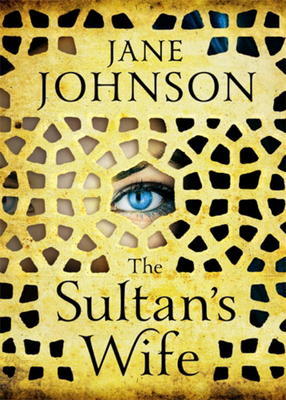
I think The Sultan’s Wife, set in 17th century Morocco, is still my favourite Jane Johnson book so far, but there are three of her earlier novels I haven’t read yet, so that could change!
Thanks to Head of Zeus for providing a copy of this book for review via NetGalley.
This is book 49/50 for the 2023 Historical Fiction Reading Challenge.



 She Reads Novels