Nonfiction November 2019: Week 1 – Your Year in Nonfiction

I enjoyed taking part in Nonfiction November for the first time last year, so I thought I would join in again this year. This event runs for five weeks, with five weekly discussion topics, giving us a chance to highlight and talk about our non-fiction reads. Our hosts for 2019 are Katie of Doing Dewey, Julz of Julz Reads, Rennie of What’s Nonfiction, Sarah of Sarah’s Book Shelves, and Leann of Shelf Aware.

This week’s topic is:

Week 1: (Oct. 28 to Nov. 1) – Your Year in Nonfiction (hosted by Julz of Julz Reads):

Take a look back at your year of nonfiction and reflect on the following questions – What was your favorite nonfiction read of the year? Do you have a particular topic you’ve been attracted to more this year? What nonfiction book have you recommended the most? What are you hoping to get out of participating in Nonfiction November?

I have read six non-fiction books so far this year and five of them are history, with the other one being an author’s memoir. These are the topics I’m usually drawn to when it comes to non-fiction; I would like to be more adventurous and try something different, but I always find myself coming back to the same sort of books! Here are the links to my reviews, in the order that I posted them:

When Women Ruled the World by Kara Cooney

Margaret Tudor by Melanie Clegg

The Afterlife of King James IV by Keith J. Coleman

Richard III: Fact and Fiction by Matthew Lewis

Decoding the Bayeux Tapestry by Arthur C. Wright

Rosie: Scenes from a Vanished Life by Rose Tremain

Of these, my favourite was Melanie Clegg’s biography of Margaret Tudor, sister of Henry VIII and wife of James IV. I found all of the other books interesting and entertaining too, apart from When Women Ruled the World, which was supposed to be about the lives of female Egyptian pharaohs but turned out to be more concerned with women in modern politics.

As well as the books above, I have almost finished Bookworm by Lucy Mangan, which I’ve been dipping into over the last few weeks, and am halfway through Big Sister, Little Sister, Red Sister by Jung Chang.

I also have the following on my TBR:
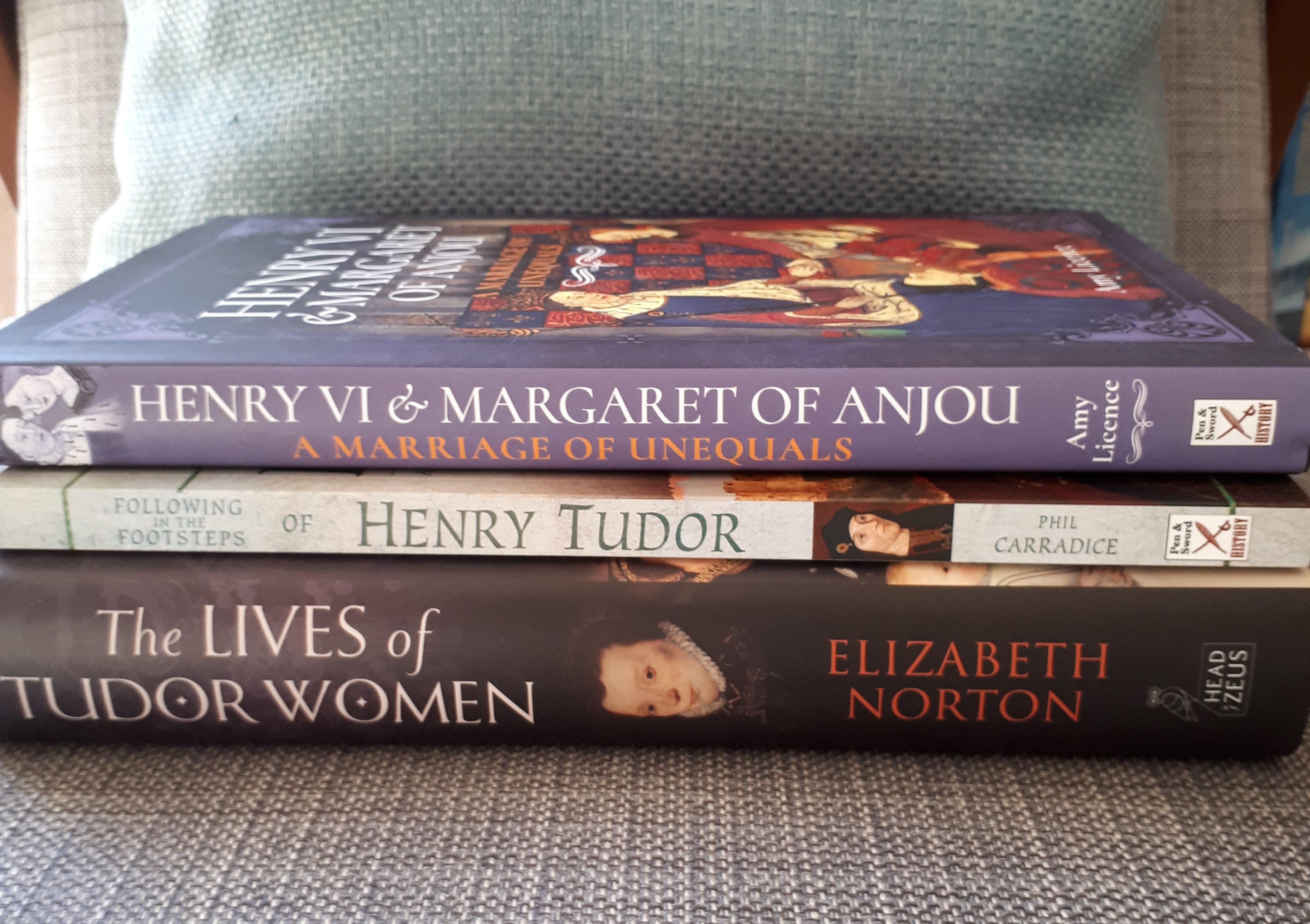
Henry VI and Margaret of Anjou: A Marriage of Unequals by Amy Licence
Following in the Footsteps of Henry Tudor by Phil Carradice
The Lives of Tudor Women by Elizabeth Norton

And on my Kindle:

The Brothers York by Thomas Penn
Elizabeth Widville, Lady Grey by John Ashdown-Hill

To answer the final question above (What are you hoping to get out of participating in Nonfiction November?), I would be happy if I could read at least some of the books above, but I’m also hoping that visiting other participants’ posts will help me to discover other books that I might enjoy and wouldn’t have otherwise thought of picking up.

~

How has your year in non-fiction been? What are the best non-fiction books you’ve read this year?
Nonfiction November Week 4: Reads Like Fiction

For Week 4 of Nonfiction November, we are asked to consider the following questions:

(Nov. 19 to 23) – Reads Like Fiction (hosted by Rennie at What’s Nonfiction?): Nonfiction books often get praised for how they stack up to fiction. Does it matter to you whether nonfiction reads like a novel? If it does, what gives it that fiction-like feeling? Does it depend on the topic, the writing, the use of certain literary elements and techniques? What are your favorite nonfiction recommendations that read like fiction? And if your nonfiction picks could never be mistaken for novels, what do you love about the differences?

I don’t really expect nonfiction to feel like fiction, so I tend to approach it in a different frame of mind and hoping to gain different things from it. The type of nonfiction I read most often is history and I think there does need to be a distinction between historical nonfiction and historical fiction.

When I read historical fiction I want the author to create a realistic and convincing historical setting which has been thoroughly researched and to stick to the facts as far as possible regarding things such as dates, outcomes of battles, major events, the clothes people would have worn and the food they would have eaten. However, I also want to be entertained by a good story which will take me through a range of emotions and I want the author to bring the characters to life, showing me how they thought, how they felt and what they said. When writing fiction, the author can obviously use their imagination to do these things, but with nonfiction it’s more difficult and sometimes impossible.

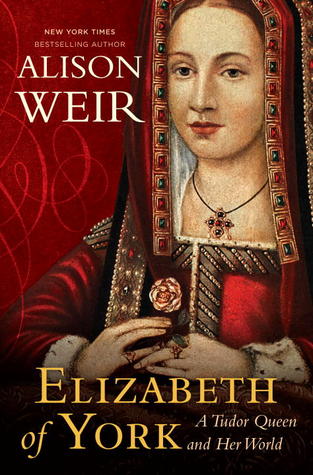
In Alison Weir’s biography of Elizabeth of York, for example, because there is a limit to what we can know about Elizabeth from a distance of five hundred years, there are lots of occasions where she speculates on what Elizabeth might have done or thought and uses the words ‘probably’ and ‘maybe’. This is obviously much more of a problem with nonfiction than with fiction, and although I did enjoy that book overall, I would have preferred to stick to the known facts.

Going back to the questions posed at the beginning of this post, I think there are definitely certain literary elements and techniques that can be used to give a book a more fiction-like feeling. The Plantagenets by Dan Jones is a good example: I mentioned in my review that “instead of just telling us that Henry I’s son died in a shipwreck, he describes the sails of the ship billowing in the wind, the shouts of the crew and the freezing water pouring into the ship.” This sort of detail can add life and colour and make a nonfiction book feel more like a novel.

I think it does depend on the type of nonfiction, though. Autobiographies and memoirs can often feel much more fictional than an impersonal biography of a historical figure; the author is writing about his or her own life, so they can draw on firsthand experience, they can talk about their thoughts, words and actions, and they probably don’t need to resort to imagination or speculation to fill in gaps.

One book that I think gets the fiction/nonfiction balance right and that has an element of autobiography is Wild Swans by Jung Chang. I described it in my review as “the most riveting non-fiction book I’ve ever read – I kept thinking ‘I’ll just read a few more pages’ then an hour later I was still sitting there unable to put the book down.” Because Jung Chang is writing about her own family history – her grandmother, her mother and herself – Wild Swans has a personal feel which gives it the sort of power and emotion I love in fiction. Knowing that it is a true story makes it an even more moving and compelling read.

At the other end of the scale are books that could never be mistaken for fiction and aren’t intended to be, such as reference books and books of facts and figures. Books like The Gothic: A Very Short Introduction and The Renaissance: The Best One-Hour History feel nothing like novels and I wouldn’t expect or want them to!

~

What are your opinions on this? Does it matter to you whether nonfiction reads like a novel?

Nonfiction November Week 3: Be (and ask) the Expert

For Week 3 of Nonfiction November, the topic is as follows:

(Nov. 12 to 16) – Be The Expert/Ask the Expert/Become the Expert (hosted by Julie at JulzReads): Three ways to join in this week! You can either share three or more books on a single topic that you have read and can recommend (be the expert), you can put the call out for good nonfiction on a specific topic that you have been dying to read (ask the expert), or you can create your own list of books on a topic that you’d like to read (become the expert).

I haven’t really read enough non-fiction on any subject to be able to call myself an expert, but here are three books I have read about one of my favourite periods of history, the Wars of the Roses:

The Hollow Crown: The Wars of the Roses and the Rise of the Tudors by Dan Jones

This is a sequel to Dan Jones’ previous book, The Plantagenets. The book covers the whole of the Wars of the Roses period, beginning with the marriage of Henry V and Catherine of Valois and ending with the reign of Henry VII. It’s both factual and entertaining, although I found it slightly biased towards the Lancastrian/Tudor side.

The Women of the Cousins’ War: The Duchess, the Queen and the King’s Mother by Philippa Gregory, David Baldwin and Michael Jones

A companion book to Philippa Gregory’s Cousins’ War series of novels. The book contains essays on three of the most important female historical figures of the period – one by Philippa Gregory on Jacquetta of Luxembourg, another by David Baldwin on Elizabeth Woodville and the final one by Michael Jones on Margaret Beaufort. It’s not necessary to have read the novels first.

Blood Sisters: The Women Behind the Wars of the Roses by Sarah Gristwood

Another non-fiction book that looks at the period from a female perspective. The seven women whose lives are covered in this book are: Margaret of Anjou, Cecily Neville, Elizabeth Woodville, Margaret of Burgundy, Anne Neville, Margaret Beaufort and Elizabeth of York.

~

Now I’m going to ‘Ask the Expert’…

Have you read any good nonfiction about the Wars of the Roses or any of the historical figures who lived during that time? I would love some recommendations!

Nonfiction November Week 2: Book Pairings – Tapestry of War and The Desert War

For Week 2 of Nonfiction November, the topic is as follows:

(Nov. 5 to 9, hosted by Sarah’s Bookshelves) – Fiction / Nonfiction Book Pairing – This week, pair up a nonfiction book with a fiction title. It can be a “If you loved this book, read this!” or just two titles that you think would go well together. Maybe it’s a historical novel and you’d like to get the real history by reading a nonfiction version of the story.

I’ve recently read two books that fit this week’s topic perfectly…

Fiction: Tapestry of War by Jane MacKenzie

Tapestry of War follows the very different experiences of two young women during World War II. In Egypt, we meet Fran Trevillian, a journalist working for the Alexandria Journal, reporting on the issues that are important to the diverse communities that have made the city their home. As Rommel’s forces draw closer to Alexandria, Fran falls in love with Jim MacNeill, a Scottish radar specialist. Meanwhile, in Scotland, Jim’s sister Catriona has finished training to be a nurse and is hoping to use her new skills to provide therapy for injured soldiers who have been sent home from the war. On the Isle of Islay, where she lives with her father, however, nursing opportunities seem limited and Catriona longs to move away to somewhere where she feels her work can really make a difference.

Although there is occasionally some drama in the stories of our two main characters and their friends, this is a very character driven novel. Both women change and grow as people as a result of the work they carry out during the war and the new relationships they develop. I enjoyed each storyline equally, drawn more to Fran’s at the beginning because it was set closer to the action, but appreciating Catriona’s more and more as the novel progressed. I became completely invested in the lives of each woman, sharing in their happiness as each finds love when they least expect it and in their sadness as the tragedy of war strikes again and again.

Most of my previous World War II reading has concentrated on the war in Europe, so my knowledge of what was happening in North Africa is more limited. I found that I was learning a lot from Tapestry of War, but I knew I needed to read some non-fiction to fill in the gaps…

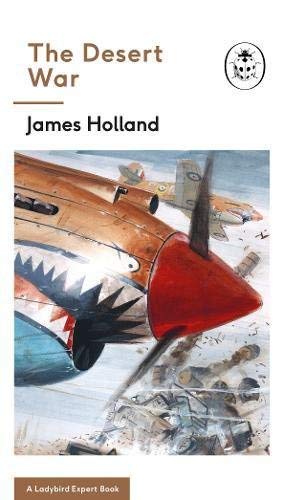
Nonfiction: The Desert War by James Holland

This little book is part of the Ladybird Expert series, aimed at adult readers but published in the same format that those of us who loved Ladybird books as children will remember. Written in a clear and concise style, the left hand pages contain the text while on the right there’s a map, a photograph or an illustration.

Beginning in 1940, when the Italians, under Mussolini, entered the Second World War, James Holland takes us in chronological order through each stage of the war in North Africa, the Mediterranean and the Middle East. It’s all very factual and straight to the point, with none of the author’s own personality coming through, but in a book with only 50 pages (half of them pictures) and a lot of information to cover, that’s understandable. Battles and raids are described briefly, concentrating on the outcome and any notable tactics or weapons that were used.

The Desert War is a perfect introduction to the subject and can easily be read in less than an hour. If, when you’ve finished it, you want to explore things in more detail, some recommendations for further reading are given, although there are no references or sources provided. I didn’t mind this as all I wanted from this book was a chance to learn some basic facts and to get the timeline of events straight in my mind – it’s obviously not intended to be a comprehensive, in-depth read. Looking at the other titles in the Ladybird Experts series, I see there are several more by James Holland covering different aspects of the war, as well as books by other authors on topics as diverse as witchcraft, genetics and Beowulf.

Thanks to Allison & Busby for providing a review copy of Tapestry of War and to Penguin Random House for a review copy of The Desert War.

Do you like to read fiction and non-fiction on the same subject? Can you think of any pairs of books that go well together?

Nonfiction November: Week 1 – Your Year in Nonfiction

Today is the first day of 2018’s Nonfiction November, hosted by Kim of Sophisticated Dorkiness, Rennie of What’s Nonfiction, Katie of Doing Dewey, Julz of JulzReads and Sarah of Sarah’s Bookshelves. I’ve never taken part in this event before as I don’t tend to read nonfiction very often, but it has occurred to me that maybe that is precisely why I should be joining in – so that I can look back at the nonfiction I’ve already read, focus on the nonfiction I would like to be reading in the future, and hopefully pick up some good recommendations from other bloggers along the way.

This week’s topic is:

Week 1: (Oct. 29 to Nov. 2) – Your Year in Nonfiction

Take a look back at your year of nonfiction and reflect on the following questions – What was your favorite nonfiction read of the year? Do you have a particular topic you’ve been attracted to more this year? What nonfiction book have you recommended the most? What is one topic or type of nonfiction you haven’t read enough of yet? What are you hoping to get out of participating in Nonfiction November?

Here are all of the nonfiction books I have read so far this year (there aren’t many):

The Oaken Heart by Margery Allingham
A Distant Mirror: The Calamitous 14th Century by Barbara W Tuchman
Golden Lads by Daphne du Maurier
Murder by the Book by Claire Harman
A Tudor Christmas by Alison Weir
Henry VII by Gladys Temperley

I will be posting my reviews of the last three books during November.

Of these, the book I enjoyed the most was The Oaken Heart, Margery Allingham’s memoir of life in her small English village during the Second World War. However, A Distant Mirror was a fascinating read and I found that I was learning a huge amount from it. I would recommend it to anyone interested in the 14th century.

As usual, the topic I’ve been attracted to this year has been history. I’ve read some wartime history, some medieval history, a biography of Francis and Anthony Bacon, a book about a true historical crime, a book on Tudor Christmas traditions and a biography of Henry VII! Therefore my answer to the question “What is one topic or type of nonfiction you haven’t read enough of yet?” has to be anything other than history!

I’m hoping that participating in Nonfiction November will inspire me to read more nonfiction and will point me in the direction of some books I might enjoy.

~

How has your year in nonfiction been? What are the best nonfiction books you’ve read this year?