Six Degrees of Separation: From Uprooted to Jamaica Inn

It’s the first Saturday of the month which means it’s time for another Six Degrees of Separation, hosted by Kate of Books are my Favourite and Best. The idea is that Kate chooses a book to use as a starting point and then we have to link it to six other books of our choice to form a chain. A book doesn’t have to be connected to all of the others on the list – only to the one next to it in the chain.
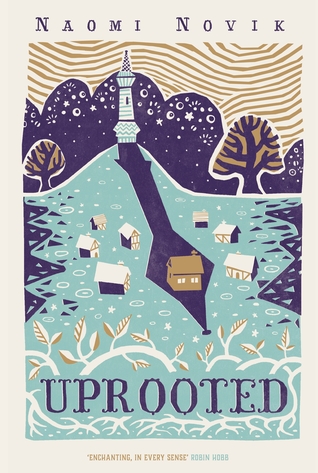
This month is slightly different as we’ve been given the freedom of starting with any book with which we ended a previous chain. As I’ve been taking part in Six Degrees of Separation most months for nearly three years, I had plenty of options but decided to choose the book that ended my chain this time last year, in November 2019. That book was Uprooted by Naomi Novik, a fantasy novel set in a world closely resembling sixteenth century Poland. Our narrator, Agnieszka, lives in a village on the edge of a dark, forbidden forest until her seventeeth birthday when she is selected by a great wizard known as the Dragon who takes her away with him to his tower.
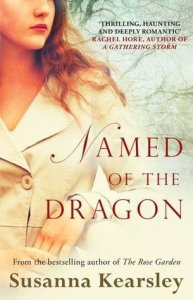
Thinking of the name of the wizard in Uprooted leads me to a book with the word ‘Dragon’ in the title: Named of the Dragon by Susanna Kearsley (1). This is not one of my favourite Kearsley novels, but I did enjoy it. It’s set in modern day Wales but steeped in Arthurian myths and legends.

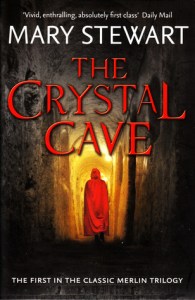
Staying with those myths and legends, my next link is to Mary Stewart’s series of Arthurian novels which begins with The Crystal Cave (2). The title refers to a magical, crystal-filled cave near Merlin’s home in Wales where Merlin retreats on several occasions throughout the series to receive visions and revelations.

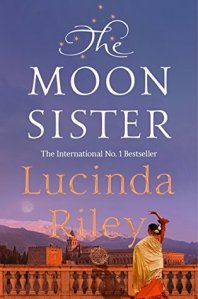
Another novel in which some of the characters live in caves is The Moon Sister by Lucinda Riley (3). This is the fifth book in Riley’s Seven Sisters series and is set in both present day Scotland and in Spain during the Spanish Civil War. There are some wonderful descriptions of the caves of Sacromonte, the traditional home of the Spanish gitano community.
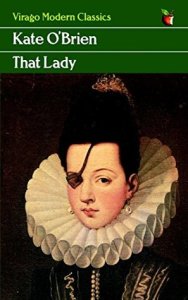
That Lady by Kate O’Brien (4) is also set in Spain, but in a much earlier period. Beginning in 1576, it tells the story of Ana de Mendoza, Princess of Eboli, and her relationship with King Philip II. As you can see from the portrait on the book cover, Ana wore an eye patch which, according to the novel, was because she lost an eye fighting a duel.

Someone else who lived in the same century as Ana and also wore a patch after losing an eye was Francis Bryan, the subject of a non-fiction book by Sarah Beth-Watkins which I read earlier in the year. Sir Francis Bryan: Henry VIII’s Most Notorious Ambassador (5) gives a short and factual account of Bryan’s life at the Tudor court. Bryan was nicknamed ‘the Vicar of Hell’ and this takes me to the final book in my chain.

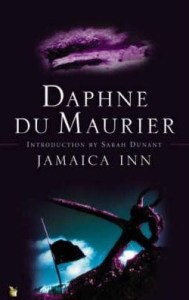
Jamaica Inn (6), Daphne du Maurier’s Gothic novel of smugglers and shipwrecks on the Cornish coast also features a ‘vicar’ whose name is Francis: Francis Davey, the Vicar of Altarnun. I first read Jamaica Inn many years ago, immediately after reading Rebecca, and found it disappointing in comparison; I read it again more recently and really enjoyed it the second time.

~

And that’s my chain for this month! My links have included dragons, Arthurian legends, cave-dwellers, Spanish history, eye patches and vicars called Francis.

In December we are starting with a book I remember from my childhood: Are You There God? It’s Me, Margaret by Judy Blume.

Six Degrees of Separation: From The Turn of the Screw to The Turn of the Key

It’s the first Saturday of the month which means it’s time for another Six Degrees of Separation, hosted by Kate of Books are my Favourite and Best. The idea is that Kate chooses a book to use as a starting point and then we have to link it to six other books of our choice to form a chain. A book doesn’t have to be connected to all of the others on the list – only to the one next to it in the chain.

This month we are starting with a book that I have actually read – not something that happens very often! The book is The Turn of the Screw by Henry James and if you haven’t read it, here is the blurb from Goodreads:

In what Henry James called a ‘trap for the unwary’, The Turn of the Screw tells of a nameless young governess sent to a country house to take charge of two orphans, Miles and Flora. Unsettled by a dark foreboding of menace within the house, she soon comes to believe that something malevolent is stalking the children in her care. But is the threat to her young charges really a malign and ghostly presence or something else entirely?
John Harding’s Florence and Giles (1), a Gothic novel about two children who believe their lives are in danger after the arrival of a sinister governess, is inspired by The Turn of the Screw (as you might have guessed from the very similar names of the characters: Florence and Giles, and Flora and Miles).  I loved it, although I hadn’t actually read The Turn of the Screw at the time, so didn’t fully appreciate the extent to which it was a homage to that other book.     
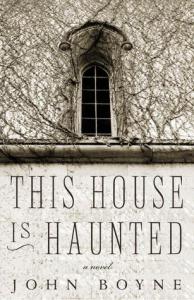
Another book with lots of ghostly and Gothic elements and a plot involving a governess with two young charges is This House is Haunted by John Boyne (2).  The influence of The Turn of the Screw is clear here too, although the story probably owes as much to Charles Dickens or Wilkie Collins as it does to Henry James.  It was the first John Boyne novel I’ve read and still one of my favourites.

Sheridan Le Fanu’s classic novel, Uncle Silas (3), also features a governess – an evil and villainous one called Madame de la Rougierre, who arrives at the Ruthyn family estate of Knowl to become a companion to Maud Ruthyn. A very entertaining tale of “gloomy, eerie mansions, graveyards, laudanum addiction, an evil governess, locked rooms and locked cabinets, poison and family secrets.” 

Not all governesses are as evil as Madame de la Rougierre!  Linda Martin in Nine Coaches Waiting by Mary Stewart (4) is a governess and she is the heroine of the novel. As soon as Linda arrives at the de Valmy family chateau in France to become governess to young Philippe de Valmy, she is convinced that something is wrong and the tension builds and builds until the truth is revealed. I’ve read most of Stewart’s novels and this is probably my favourite; it’s certainly the most exciting and atmospheric. 

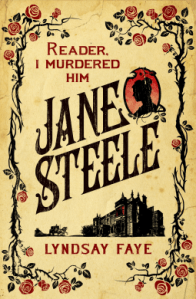
Nine Coaches Waiting shares some plot elements with Jane Eyre, as does Jane Steele by Lyndsay Faye (5).  Jane Steele herself is a fan of the Charlotte Bronte classic and becomes aware of some of the parallels between her own life and Jane Eyre’s.  After her unhappy schooldays come to an end, Jane returns to her childhood home, Highgate House, to take up a position as governess to Sahjara, the young ward of the house’s new master, Mr Thornfield.  Mystery, romance and suspense follow!

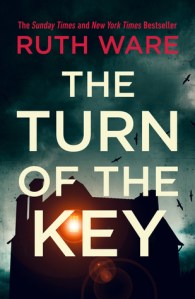
It’s not often that I am able to link the last book in one of my chains back to the first, but as soon as I saw that we were beginning this month with The Turn of the Screw I knew I would have to end with The Turn of the Key by Ruth Ware (6).  Not quite a governess, but a ‘live-in nanny’, our narrator Rowan Caine arrives at Heatherbrae House in Scotland to find that she is just the latest in a long string of nannies in a very short time period. Could the ghostly occurrences taking place in the house be the reason?

~

Well, that’s my chain for October. I usually try to link each book to the one before in a different way each time, but this month I’ve kept it very simple: all of the books in my chain include a governess, children and a house that is either haunted or hiding secrets of some sort.

For November’s starting point, we can use a book with which we’ve ended a previous chain and continue from there.

Six Degrees of Separation: From Rodham to Cold Comfort Farm

It’s the first Saturday of the month which means it’s time for another Six Degrees of Separation, hosted by Kate of Books are my Favourite and Best. The idea is that Kate chooses a book to use as a starting point and then we have to link it to six other books of our choice to form a chain. A book doesn’t have to be connected to all of the others on the list – only to the one next to it in the chain.

This month we are starting with Rodham by Curtis Sittenfeld. I haven’t read it, but I know that it’s an alternate history imagining what might have happened if Hillary Rodham had never married Bill Clinton.

However, I have read one of Curtis Sittenfeld’s earlier novels, Prep (1), which follows four years in the life of Lee Fiora, a teenage girl with social anxiety who attends a boarding school in Massachusetts. This seems to be a book that people either love or hate; I think whether or not you enjoy it probably depends on how strongly you can relate to the main character.

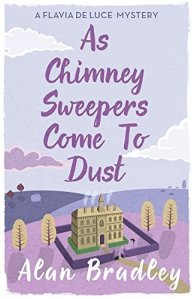
Another girl who goes to boarding school, in Canada this time, is Flavia de Luce in Alan Bradley’s As Chimney Sweepers Come to Dust (2). This is the seventh book in a series of mysteries starring Flavia and in this one she is investigating the disappearances of three girls at Miss Bodycote’s Female Academy. Not my favourite in the series, but I do love the Flavia books overall.

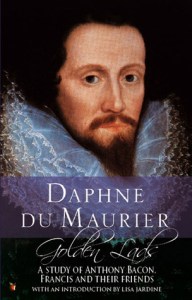
The title of that book comes from the lines from Shakespeare’s Cymbeline: “Golden lads and girls all must, As chimney-sweepers, come to dust.” Another book which also takes its inspiration from the same source is Golden Lads by Daphne du Maurier (3), a biography of two important Elizabethan figures, Francis and Anthony Bacon.

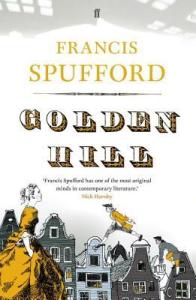
My next link is to another book with the word ‘Golden’ in the title: Golden Hill by Francis Spufford (4). I found this a very entertaining novel set in 18th century New York, in those days still a small community just beginning to expand into the city we know today.

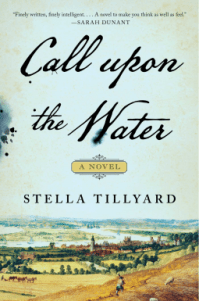
Stella Tillyard’s Call Upon the Water (5) is also set, at least partly, in the same location – but a century earlier, when the settlement was known as New Amsterdam. The rest of the novel is set in England and follows a Dutch engineer working on the draining of the marshlands in the Fens.

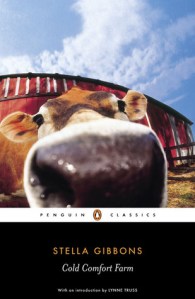
Finally, I’m going to link to a book written by another Stella – Stella Gibbons. Gibbons wrote many novels, as well as some short stories and poetry, but the only one I have read is her most famous one, Cold Comfort Farm (6). Because I didn’t enjoy this book as much as I’d hoped to, I haven’t attempted any of her other work yet but maybe I will one day.

~

And that’s my chain for this month! My links included school stories, Cymbeline, the word ‘golden’, old New York and the name Stella. In October, we will be starting with The Turn of the Screw by Henry James – finally a book that I’ve read!

Six Degrees of Separation: From How to do Nothing to The Great Impersonation

It’s the first Saturday of the month which means it’s time for another Six Degrees of Separation, hosted by Kate of Books are my Favourite and Best. The idea is that Kate chooses a book to use as a starting point and then we have to link it to six other books of our choice to form a chain. A book doesn’t have to be connected to all of the others on the list – only to the one next to it in the chain.

This month we are starting with How to Do Nothing by Jenny Odell. As usual, I haven’t read it, but here is the blurb:

This thrilling critique of the forces vying for our attention re-defines what we think of as productivity, shows us a new way to connect with our environment and reveals all that we’ve been too distracted to see about our selves and our world.

When the technologies we use every day collapse our experiences into 24/7 availability, platforms for personal branding, and products to be monetized, nothing can be quite so radical as…doing nothing. Here, Jenny Odell sends up a flare from the heart of Silicon Valley, delivering an action plan to resist capitalist narratives of productivity and techno-determinism, and to become more meaningfully connected in the process.

I don’t think this is a book I would be interested in reading, but if you’ve read it let me know what you thought.

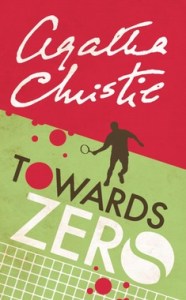
Another word for ‘nothing’ is ‘zero’, so my first link takes me to Towards Zero by Agatha Christie (1), one of only five Christie novels to feature the detective Superintendent Battle. In this book, which I remember enjoying, Battle is investigating the murder of Lady Tressilian in her home by the sea.

Tressilian is also the name of the main character in Rafael Sabatini’s The Sea-Hawk (2). Sir Oliver Tressilian is a gentleman from Cornwall who is betrayed and sold into slavery before being liberated by Barbary pirates who operate from the city of Algiers. I love Sabatini’s books and can highly recommend this one!

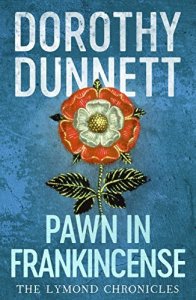
Pawn in Frankincense by Dorothy Dunnett (3) is also set partly in Algiers, as well as several other beautifully described locations around the Mediterranean and North Africa. This, and the other five novels that make up Dunnett’s Lymond Chronicles, are some of my absolute favourites, but if you haven’t read them yet you really need to start with The Game of Kings.

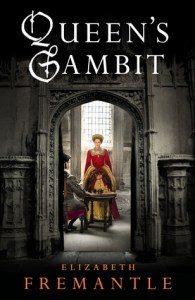
All of the books in the Lymond Chronicles have titles inspired by the game of chess. So does Queen’s Gambit by Elizabeth Fremantle (4), a novel set at the Tudor court and telling the story of Katherine Parr, Henry VIII’s sixth and final wife. The story is told partly from Katherine’s perspective and partly from her maid, Dorothy Fownten’s. Although I think some of Fremantle’s later books are better, I did enjoy this one.

My next link is to another book about a queen – a self-proclaimed queen this time, rather than a real one! Queen Lucia by EF Benson (5) is the first book in Benson’s Mapp and Lucia series; it was my choice for the 1920 Club earlier this year and kept me entertained during the early stages of lockdown when I really needed something fun and light!

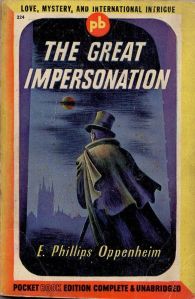
Like Queen Lucia, The Great Impersonation by E Phillips Oppenheim (6) was also published in 1920 and is also a lot of fun to read. It has a very clever plot involving a case of mistaken identities and keeps the reader guessing until the end.

~

And that’s my chain for this month. My links have included synonyms for ‘nothing’, the name Tressilian, Algiers, chess-related titles, queens and the year 1920. In September we will be starting with Curtis Sittenfeld’s latest novel, Rodham.

Six Degrees of Separation: From What I Loved to Britannia Mews

It’s the first Saturday of the month which means it’s time for another Six Degrees of Separation, hosted by Kate of Books are my Favourite and Best. The idea is that Kate chooses a book to use as a starting point and then we have to link it to six other books of our choice to form a chain. A book doesn’t have to be connected to all of the others on the list – only to the one next to it in the chain.

This month we are starting with What I Loved by Siri Hustvedt. It’s not a book that I’ve read, but here’s the blurb:

In 1975 art historian Leo Hertzberg discovers an extraordinary painting by an unknown artist in a New York gallery. He buys the work, tracks down its creator, Bill Weschler, and the two men embark on a life-long friendship.

This is the story of their intense and trouble relationship, of the women in their lives and their work, of art and hysteria, love and seduction and their sons – born the same year but whose lives take very different paths.

Like Leo, the heroine of Nicola Cornick’s supernatural time-slip novel, The Phantom Tree (1) finds a painting in a gallery which changes her life. The painting is of Mary Seymour, the daughter of Henry VIII’s sixth wife, Katherine Parr, and Thomas Seymour, whom Katherine married following Henry’s death.

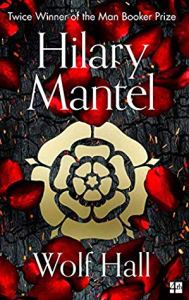
Mary Seymour, born in 1548, disappears from historical records after 1550, but in The Phantom Tree, Cornick imagines that she was raised at Wolf Hall with her Seymour cousins. This provides an obvious link to Wolf Hall (2), the first book in Hilary Mantel’s trilogy of Tudor novels about Thomas Cromwell.

The word ‘wolf’ makes me think of Wolf Among Wolves by Hans Fallada (3), a novel first published in 1937. Set in Germany, it follows a group of people struggling to survive in the aftermath of the First World War with hyperinflation leaving the economy in ruins.

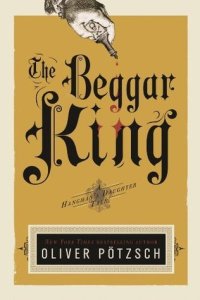
Wolf Among Wolves is translated from the original German. Another German novel I’ve read in translation is The Beggar King by Oliver Pötzsch (4), the third in a series of historical mysteries following the adventures of a 17th century Bavarian hangman and his daughter.

This leads me to The Weed that Strings the Hangman’s Bag (5), one of Alan Bradley’s Flavia de Luce novels, starring an eleven-year-old detective and chemistry genius. In this book, Flavia is investigating a murder which takes place during a puppet show.

In Britannia Mews by Margery Sharp (6), our heroine marries a man who creates wonderful hand-made puppets and she later opens a successful puppet theatre in a coach house in her street, Britannia Mews. I highly recommend this book; I loved watching the changing nature of Britannia Mews and its inhabitants over the course of the novel.

And that’s my chain for July. My links have included paintings in galleries, the Seymours of Wolf Hall, the word ‘wolf’, German translations, hangmen and puppets.

In August we will be starting with How To Do Nothing by Jenny Odell.

Six Degrees of Separation: From Normal People to The Ivy Tree

It’s the first Saturday of the month which means it’s time for another Six Degrees of Separation, hosted by Kate of Books are my Favourite and Best. The idea is that Kate chooses a book to use as a starting point and then we have to link it to six other books of our choice to form a chain. A book doesn’t have to be connected to all of the others on the list – only to the one next to it in the chain.

This month, the book we are starting with is Normal People by Sally Rooney. I haven’t read this book and probably won’t, but here is the blurb:

Connell and Marianne grow up in the same small town in the west of Ireland, but the similarities end there. In school, Connell is popular and well-liked, while Marianne is a loner. But when the two strike up a conversation – awkward but electrifying – something life-changing begins.

Normal People is a story of mutual fascination, friendship and love. It takes us from that first conversation to the years beyond, in the company of two people who try to stay apart but find they can’t.

Thinking of another book with the word ‘people’ in the title leads me to The Good People by Hannah Kent (1), a novel set in Ireland in the 1820s and steeped in legend, folklore and ancient beliefs.

Stories of fairies, changelings and people being swept away to fairyland feature heavily in The Good People, as they do in one of my recent reads, The Ninth Child by Sally Magnusson (2), although this book has a different setting – Scotland during the construction of the Loch Katrine Waterworks.

One of the main characters in The Ninth Child is Isabel, a doctor’s wife. This immediately made me think of the title character in Mary Elizabeth Braddon’s The Doctor’s Wife (3), whose name is also Isabel.

The Doctor’s Wife is a Victorian novel which explores the feelings of a woman who is trapped in a boring, unexciting marriage and dreams of adventure and romance. One of her heroines is Edith Dombey, who appears in Dombey and Son by Charles Dickens (4), the next link in my chain. I read Dombey earlier this year and will try to post a review soon!

I have written in the past about the number of books with ‘daughter’ in the title. Other than Dombey and Son, I can only think of a few books I’ve read with ‘son’ in the title and one of them is The Devil and Her Son (5) by Maxwell March, a pseudonym of Margery Allingham.

The Devil and Her Son is an entertaining novel about a young woman who switches identities with a friend, only to find herself the victim of an even bigger deception. Another book about impersonations and stolen identities is The Ivy Tree (6) by one of my favourite authors, Mary Stewart – a good choice to bring this month’s chain to an end!

~

And that’s my chain for June. My links have included the word ‘people’, fairies, doctor’s wives, Edith Dombey, the word ‘son’ and identity switches.

Next month we will be starting with What I Loved by Siri Hustvedt.

Six Degrees of Separation: From The Road to Queens of the Conquest

It’s the first weekend of the month which means it’s time for another Six Degrees of Separation, hosted by Kate of Books are my Favourite and Best. The idea is that Kate chooses a book to use as a starting point and then we have to link it to six other books of our choice to form a chain. A book doesn’t have to be connected to all of the others on the list – only to the one next to it in the chain.

This month, the book we are starting with is The Road by Cormac McCarthy, a book I haven’t read but have heard a lot about. Here is the blurb from Goodreads:

A father and his son walk alone through burned America, heading through the ravaged landscape to the coast. This is the profoundly moving story of their journey. The Road boldly imagines a future in which no hope remains, but in which two people, ‘each the other’s world entire’, are sustained by love. Awesome in the totality of its vision, it is an unflinching meditation on the worst and the best that we are capable of: ultimate destructiveness, desperate tenacity, and the tenderness that keeps two people alive in the face of total devastation.

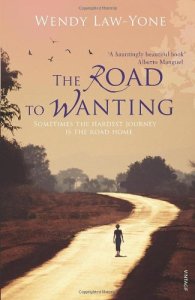
I don’t really want to think too much about post-apocalyptic worlds at the moment, so I will quickly move my chain in a different direction, linking through the words ‘The Road’. This leads me to The Road to Wanting by Wendy Law-Yone (1), a novel about a young woman who arrives at a hotel in Wanting, a town on the Chinese-Burmese border, and during her time at the hotel reflects on the dramatic series of events that have brought her to Wanting.

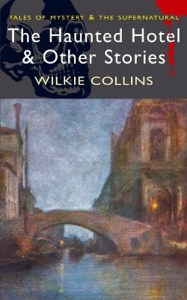
Hotels provide the link to my next book: The Haunted Hotel and Other Stories by Wilkie Collins (2). Apart from the title novella, which is set in a Venice hotel, the book also contains several other ghostly or supernatural stories, my favourites being A Terribly Strange Bed and Miss Jeromette and the Clergyman.

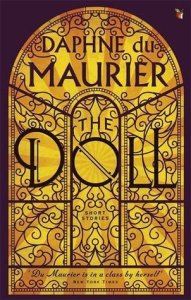
I wouldn’t describe myself as a big fan of short stories, but there are some authors, such as Wilkie Collins, whose work I love reading in any format. Daphne du Maurier is another. I have read and enjoyed all of her short story collections, most recently The Doll (3), a collection of stories written very early in her career.

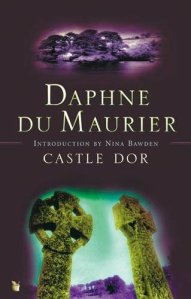
I still have some of Daphne du Maurier’s non-fiction to read, but I have now read all of her fiction apart from Castle Dor (4), a novel begun by Arthur Quiller-Couch and completed by du Maurier. I’m hoping to read it for Ali’s upcoming Daphne du Maurier Reading Week.

Another book I’ve read that was started by one author and finished by another is Winter Siege by Ariana Franklin and Samantha Norman (5). Samantha Norman is the daughter of Diana Norman (Ariana Franklin’s real name) and she completed the novel after her mother’s death. Winter Siege is set in England in 1141 during the conflict between King Stephen and the Empress Matilda.

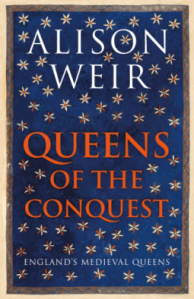
The life of Empress Matilda – also known as Empress Maud – is covered in Queens of the Conquest by Alison Weir (6), a biography of five medieval queens. The other four discussed in the book are Matilda of Flanders (wife of William the Conqueror), Matilda of Scotland and Adeliza of Louvain (the two wives of Henry I) and Matilda of Boulogne (wife of King Stephen).

~

And that’s my chain for this month. My links have included the words ‘The Road’, hotels, short stories by favourite authors, novels started by one writer and finished by another, and the Empress Matilda.

Next month we are starting with Normal People by Sally Rooney.