Six Degrees of Separation: From The Book of Form and Emptiness to Elizabeth and Her German Garden

It’s the first Saturday of the month which means it’s time for another Six Degrees of Separation, hosted by Kate of Books are my Favourite and Best. The idea is that Kate chooses a book to use as a starting point and then we have to link it to six other books of our choice to form a chain. A book doesn’t have to be connected to all of the others on the list – only to the one next to it in the chain.
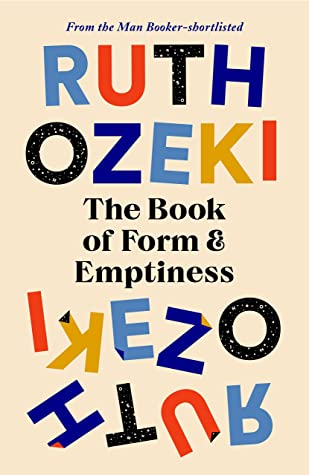
This month we’re starting with the winner of the 2022 Women’s Prize for Fiction, The Book of Form and Emptiness by Ruth Ozeki. I haven’t read it, but here’s what it’s about:

One year after the death of his beloved musician father, thirteen-year-old Benny Oh begins to hear voices. The voices belong to the things in his house – a sneaker, a broken Christmas ornament, a piece of wilted lettuce. Although Benny doesn’t understand what these things are saying, he can sense their emotional tone; some are pleasant, a gentle hum or coo, but others are snide, angry and full of pain. When his mother develops a hoarding problem, the voices grow more clamorous.

At first Benny tries to ignore them, but soon the voices follow him outside the house, onto the street and at school, driving him at last to seek refuge in the silence of a large public library, where objects are well-behaved and know to speak in whispers. There, he falls in love with a mesmerising street artist with a smug pet ferret, who uses the library as her performance space. He meets a homeless philosopher-poet, who encourages him to ask important questions and find his own voice amongst the many. And he meets his very own Book – a talking thing – who narrates Benny’s life and teaches him to listen to the things that truly matter.

~

I struggled to find a way to get started with this month’s chain, so I’m afraid I’ve had to take the easy way out again and use shared words in titles for my first link. Miss Buncle’s Book by D.E. Stevenson (1) is another novel with the word ‘Book’ in the title. It was the first I read by Stevenson and although it’s not a favourite, I did find it entertaining: Barbara Buncle decides to write a book, drawing on her friends and neighbours for inspiration – but not all of them are happy when they discover what she has done!

I sent a copy of Miss Buncle’s Book to another blogger as part of a Persephone Secret Santa back in 2010. Alas, Poor Lady by Rachel Ferguson (2) was the book published by Persephone that I received from my Secret Santa in return. I was very grateful to the blogger who chose it for me because I loved it! It tells the story of the Scrimgeour family, beginning in the Victorian period and ending in the 1930s. The Scrimgeours, once very wealthy, have fallen on hard times and the novel describes the attempts of several of the daughters to find work in a world where their gender and class means their options are limited.
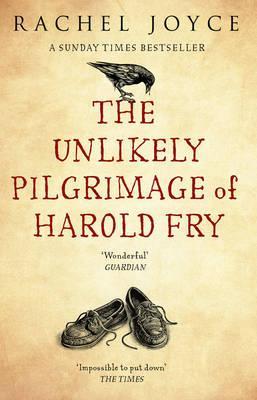
Next, I’m linking to another book by an author with the name Rachel: The Unlikely Pilgrimage of Harold Fry by Rachel Joyce (3). This is a lovely novel about a man who sets out to walk five hundred miles from Devon to Berwick-upon-Tweed to visit an old friend who has been diagnosed with cancer. He hopes that his walk will somehow help her to stay alive. I never read the sequel, The Love Song of Miss Queenie Hennessy and now there’s a third book on its way – Maureen Fry and the Angel of the North. I think I’ve got some catching up to do!
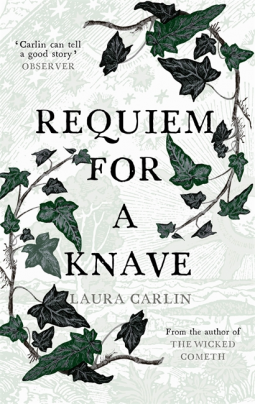
A different sort of pilgrimage takes place in Requiem for a Knave by Laura Carlin (4). Set in the 14th century, our narrator, Alwin of Whittaker, travels to the shrine of Our Lady of Walsingham in search of clues to his father’s identity. Along the way he is joined by a small group of other pilgrims who help him to uncover the truth about his past. This was an interesting novel but was spoiled for me by some very heavy-handed messaging regarding feminism and the abuse of women by men which would have been far more effective if it had been more subtle.

Walsingham is the name of a place in North Norfolk, but it can also be a surname. Probably the most famous historical figure to have that surname is Francis Walsingham, secretary and ‘spymaster’ to Elizabeth I. He has appeared in several novels I’ve read, including Elizabeth I by Margaret George (5), a fictional account of the final years of Elizabeth’s reign – the period between the defeat of the Spanish Armada in 1588 and her death in 1603. Although I had some problems with the length and pace of the book, I found it an interesting, if slightly dry, portrayal of the older Elizabeth. I’ve only read this book and The Confessions of Young Nero by Margaret George, but I do have a few of her others on the TBR.
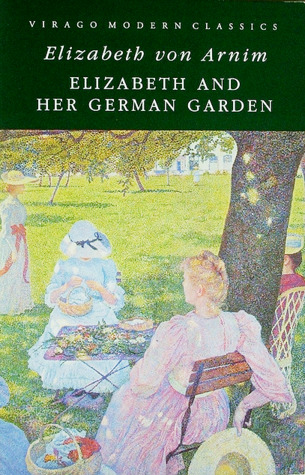
My final link is to a book about a very different Elizabeth. In Elizabeth and Her German Garden by Elizabeth von Arnim (6), our narrator describes a year in her life and the changes she sees in the garden of her home in northern Germany as the seasons go by. First published in 1898 and written in the form of a diary, this is a charming and often funny read. I still need to read the sequel, The Solitary Summer.

~

And that’s my chain for August! My links have included the word ‘book’, Persephones, authors called Rachel, pilgrimages, Walsingham and the name Elizabeth.

In September, we’ll be starting with the book that finished this month’s chain.
Six Degrees of Separation: From Wintering to The Strangers in the House

It’s the first Saturday of the month which means it’s time for another Six Degrees of Separation, hosted by Kate of Books are my Favourite and Best. The idea is that Kate chooses a book to use as a starting point and then we have to link it to six other books of our choice to form a chain. A book doesn’t have to be connected to all of the others on the list – only to the one next to it in the chain.

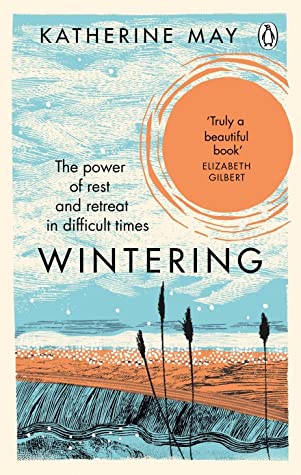
This month we’re starting with Wintering by Katherine May – yet another book that I haven’t read! This is what it’s about:

In Wintering, Katherine May recounts her own year-long journey through winter, sparked by a sudden illness in her family that plunged her into a time of uncertainty and seclusion. When life felt at is most frozen, she managed to find strength and inspiration from the incredible wintering experiences of others as well as from the remarkable transformations that nature makes to survive the cold.

This beautiful, perspective-shifting memoir teaches us to draw from the healing powers of the natural world and to embrace the winters of our own lives.

Although I haven’t read Wintering, it seems that Katherine May is using the idea of ‘winter’ as a metaphor for depression. In Mr Chartwell by Rebecca Hunt (1), depression is represented by a black dog. The ‘black dog’ is how Winston Churchill referred to his own periods of depression and in this very unusual novel, Rebecca Hunt brings the dog to life, giving him the name Mr Chartwell and describing his visits to Churchill’s home.

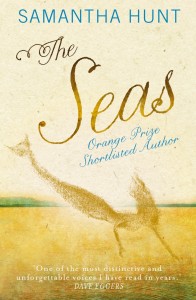
My next link is simply to another book with an author whose surname is Hunt: The Seas by Samantha Hunt (2), a novel about a young woman who lives in an isolated town by the sea and believes she is a mermaid. This is a beautifully written novel which combines mermaid mythology with the Iraq War, post traumatic stress disorder and the creation of a new dictionary, but it was a bit too strange for me and not a book I particularly enjoyed.

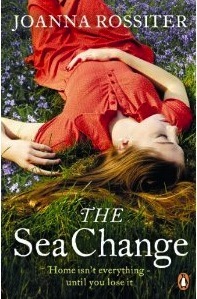
The sea also plays a part in the plot of The Sea Change by Joanna Rossiter (3). This is a novel set in two different countries and two different time periods: India in 1971 where a newly married couple are separated by a tsunami, and England during World War II, where the village of Imber is evacuated for use by the Army (and remains uninhabited to this day).

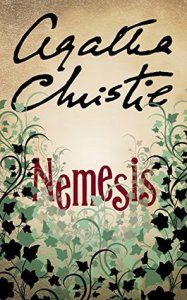
Some of the events of The Sea Change take place in 1971, so my next link is to a book that was published in 1971: Nemesis by Agatha Christie (4). This is a late Miss Marple novel in which Marple agrees to investigate a crime for an old friend – without having any idea of what the crime is or what she will need to do. During a coach tour of Britain’s historic houses and gardens, the details of her mission begin to unfold.

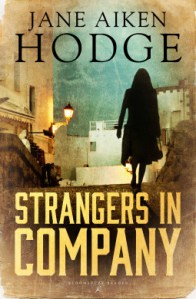
Strangers in Company by Jane Aiken Hodge (5) is also a mystery that takes place on a bus tour – this time it’s a tour of Greece’s famous archaeological sites. I’ve read quite a lot of Hodge’s novels now and this is the only contemporary one (the others I’ve read have been Gothic or Regency novels). It reminded me of Mary Stewart’s or M.M. Kaye’s romantic suspense novels, although I didn’t enjoy it quite as much as those.

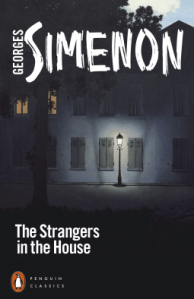
My final link takes us to another book with ‘Strangers’ in the title: The Strangers in the House by Georges Simenon (6). This is one of Simenon’s romans dur, or ‘hard novels’; I have read a few of them over the last year or two and enjoyed them (I’m actually reading another one at the moment which I’ll be reviewing soon). The Strangers in the House is about a lawyer who fell into a depression and became an alcoholic after his wife left him. When his daughter becomes implicated in a murder investigation, he finds that he has a chance to redeem himself and repair his damaged relationships.

The theme of depression and finding a way to heal links back to Wintering, so I’ve managed to bring the chain full circle this month!

In August we’ll be starting with the winner of the 2022 Women’s Prize, The Book of Form and Emptiness by Ruth Ozeki.

Six Degrees of Separation: From Sorrow and Bliss to Long Summer Day

It’s the first Saturday of the month which means it’s time for another Six Degrees of Separation, hosted by Kate of Books are my Favourite and Best. The idea is that Kate chooses a book to use as a starting point and then we have to link it to six other books of our choice to form a chain. A book doesn’t have to be connected to all of the others on the list – only to the one next to it in the chain.

This month we’re starting with Sorrow and Bliss by Meg Mason. I haven’t read it, but here’s what it’s about:

Everyone tells Martha Friel she is clever and beautiful, a brilliant writer who has been loved every day of her adult life by one man, her husband Patrick. A gift, her mother once said, not everybody gets. So why is everything broken? Why is Martha – on the edge of 40 – friendless, practically jobless and so often sad? And why did Patrick decide to leave?

Maybe she is just too sensitive, someone who finds it harder to be alive than most people. Or maybe – as she has long believed – there is something wrong with her. Something that broke when a little bomb went off in her brain, at 17, and left her changed in a way that no doctor or therapist has ever been able to explain.

Forced to return to her childhood home to live with her dysfunctional, bohemian parents (but without the help of her devoted, foul-mouthed sister Ingrid), Martha has one last chance to find out whether a life is ever too broken to fix – or whether, maybe, by starting over, she will get to write a better ending for herself.

It can be hard to find that all-important first link when the starting book is one you haven’t read, so I often take a word from the title for inspiration. In Tess of the d’Urbervilles by Thomas Hardy (1), ‘Sorrow’ is the name Tess Durbeyfield gives her baby son. I won’t tell you why, except that the circumstances of his birth are not very happy. Poor Tess has very little happiness in her life at all; this is a heartbreakingly bleak novel, but one that I loved. Many of Hardy’s books have been adapted for film and television and the edition of Tess I read is a tie-in with the BBC adaptation from 2008 – which has a screenplay written by the author David Nicholls, whose most recent book is coincidentally called Sweet Sorrow.

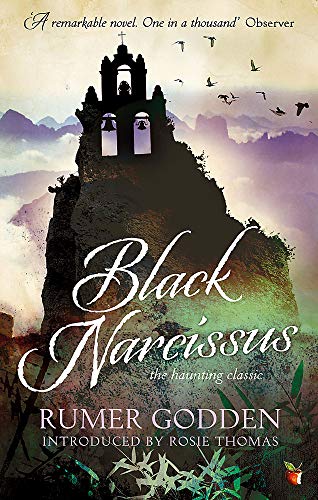
But that’s not my next link! The same adaptation starred Gemma Arterton as Tess, who also played Sister Clodagh in the BBC’s version of Rumer Godden’s novel Black Narcissus (2) in 2020 – and that’s the next book in my chain. Black Narcissus tells the story of a group of Anglican nuns who set out to establish a new convent in an abandoned palace in Mopu, high in the Himalayas. It’s the only Rumer Godden book I’ve read so far, but I loved the atmosphere she created and the way she wrote about the tensions between the nuns as their repressed feelings and desires rose to the surface in the isolation of Mopu. I’m sure I’ll be reading more of her novels.

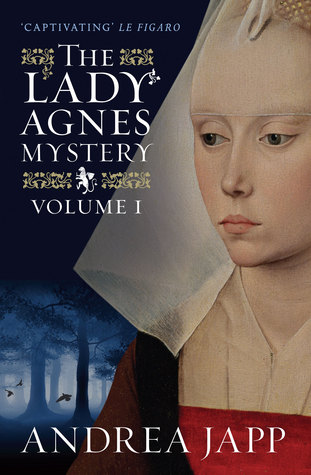
Another book that features a nunnery is The Lady Agnes Mystery by Andrea Japp (3). I read this a few years ago for the Women in Translation month that takes place every August – it’s a French historical crime novel translated into English by Lorenza Garcia. The story is set in the Perche region of France in 1304 and follows the adventures of Lady Agnes de Souarcy, a young widow who is arrested for heresy by the Inquisition and becomes embroiled in a series of poisonings taking place at nearby Clairets Abbey. This was an entertaining read but the introduction of another storyline involving a secret prophecy gave it too much of a Da Vinci Code feel for my taste. This edition of the book only contains Volume 1 of the mystery; there is a sequel, Volume 2, which I haven’t read and probably won’t.

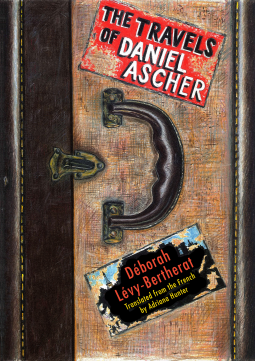
The Travels of Daniel Ascher by Déborah Lévy-Bertherat (4), is another French novel I read in translation for an earlier Women in Translation month. The translator this time is Adriana Hunter. In this book, a young archaeology student sets out to discover the truth about her mysterious great-uncle Daniel, the author of a series of adventure novels known as The Black Insignia. This was a short novel, which I think was probably aimed at younger readers. I found it quite an interesting, unusual read, but the way the dialogue was written spoiled it for me – no quotation marks and no breaks between sentences to indicate who was speaking. Why do authors do it?

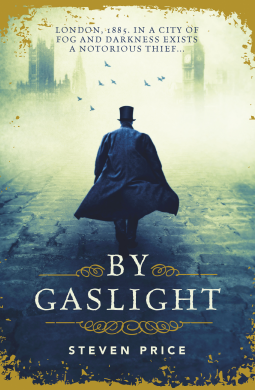
By Gaslight by Steven Price (5) is another book where the author has chosen not to use punctuation correctly. Again, this irritated me because this was otherwise a fascinating novel! Set in the 19th century, it follows an American detective who travels to London in pursuit of a mysterious criminal known only as Edward Shade. It’s a very autumnal novel and in my review I said the following: “…not only are gaslights mentioned frequently, the whole novel feels misty and murky and everything seems to happen either at night or in the fog and rain.”

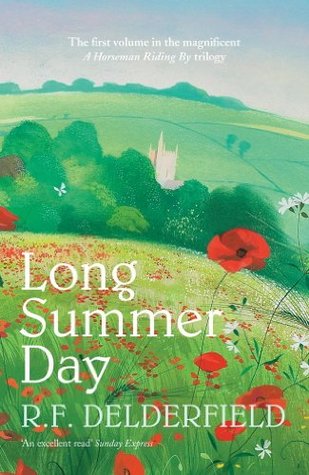
Well, here we are at the beginning of June, the start of summer, and hopefully we won’t be seeing too much mist, fog and rain for a while yet! So, for my last book (and I know this is a bit of a tenuous link), I have chosen something more appropriate to the season: Long Summer Day by RF Delderfield (6). This is the first in Delderfield’s A Horseman Riding By trilogy, a wonderful family saga set in a farming community in rural Devon during the first half of the 20th century. I loved all three books and am hoping to read more by Delderfield soon.

~

And that’s my chain for June! My links have included ‘sorrow’, Gemma Arterton, nuns, women in translation, punctuation (or lack of it) and seasons.

In July we’ll be starting with Wintering by Katherine May.

Six Degrees of Separation: From True History of the Kelly Gang to The Moonlit Cage

It’s the first Saturday of the month which means it’s time for another Six Degrees of Separation, hosted by Kate of Books are my Favourite and Best. The idea is that Kate chooses a book to use as a starting point and then we have to link it to six other books of our choice to form a chain. A book doesn’t have to be connected to all of the others on the list – only to the one next to it in the chain.

This month we’re starting with True History of the Kelly Gang by Peter Carey. I haven’t read it and it doesn’t really appeal to me, but here’s what it’s about:

To the authorities in pursuit of him, Ned Kelly is a horse thief, bank robber and police-killer. But to his fellow Australians, Kelly is their own Robin Hood. In a dazzling act of ventriloquism, Peter Carey’s Booker Prize-winning novel of adventure and heroism brings the famous bushranger wildly and passionately to life.

The title of the Peter Carey book immediately made me think of The True and Splendid History of the Harristown Sisters by Michelle Lovric (1). This unusual novel tells the story of Manticory Swiney and her six sisters who escape from poverty in 19th century Ireland to find fame on stage with their song and dance act, ending each performance by letting down their ankle-length hair. The book is not quite the ‘true history’ it claims to be, as the Swineys are fictional characters – but they are based on the real-life American singing group, the Sutherland Sisters, who really were famous for their very long hair.

And long hair is my next link! Bitter Greens by Kate Forsyth (2) is a retelling of the fairy tale, Rapunzel. Rapunzel, of course, is famously locked in a high tower by a witch and throws her long hair out of the window to form a rope that the witch can climb up and down. In Bitter Greens, she is given the name Margherita and her story alternates with the story of Charlotte-Rose de Caumont de La Force, the real historical woman who wrote Persinette, the original fairy tale on which Rapunzel was based. Even if you don’t like fantasy, I think this novel is still worth reading for the fascinating details of Charlotte-Rose’s life at the 17th century French court.

Another book in which fairy tales play a part is Gretel and the Dark by Eliza Granville (3). This very dark and unsettling novel opens in 1890s Vienna with a psychoanalyst treating a patient who claims to be a machine, not a human being. Several decades later in Nazi Germany, we meet a little girl who is neglected by her father, another doctor, and entertains herself by remembering the fairy tales her nurse read to her – including her favourite, Hansel and Gretel. The two storylines seem unrelated at first but do come together towards the end! I remember finding this a very disturbing book, but also a clever one with some surprising twists.

Madensky Square by Eva Ibbotson (4) is also set in Vienna, where our narrator, Susanna Weber, is a dressmaker with a busy shop on the city’s Madensky Square. Beginning in the spring of 1911, Susanna keeps a journal in which she writes about the daily lives of her friends, customers and neighbours. It’s a lovely novel and I enjoyed getting to know all of the characters – I particularly loved Susanna’s relationship with Sigismund, a lonely Polish orphan. Including this book in my chain has reminded me that I really need to read more by Eva Ibbotson!

I’m going to stay with books about dressmakers and link to a non-fiction book this time: The Dressmaker of Khair Khana (5). In this book, journalist Gayle Tzemach Lemmon describes her trip to Afghanistan in 2005 in order to report on female entrepreneurs working in war zones. Here she meets Kamila Sidiqi, a young Afghan woman who started her own dressmaking business with her sisters and friends in an attempt to make money while also staying on the right side of the Taliban. Kamila’s story is fascinating and a real inspiration! She even opens a school to teach other women to sew, so that they can also support themselves and their families.

Back to fiction, now. I’ve read a few other books set in Afghanistan and I’m going to finish my chain with one that I particularly liked, The Moonlit Cage by Linda Holeman (6). I read a lot of Holeman’s novels a few years ago and enjoyed them all, but she seems to have stopped writing now. The Moonlit Cage is the story of Darya, a 19th century Afghan woman who escapes from an arranged marriage and flees through the Hindu Kush mountains to India. I loved the descriptions of Afghan life and culture, as well as finding Darya’s story quite moving. I still need to read The Linnet Bird, which I think is the only one of Holeman’s adult novels I haven’t read.

~

And that’s my chain for May! My links included: ‘true history’ titles, long hair, fairytales, Vienna, dressmaking and Afghanistan.

In June we’ll be starting with Sorrow and Bliss by Meg Mason.

Six Degrees of Separation: From Our Wives Under the Sea to Full Dark House

It’s the first Saturday of the month which means it’s time for another Six Degrees of Separation, hosted by Kate of Books are my Favourite and Best. The idea is that Kate chooses a book to use as a starting point and then we have to link it to six other books of our choice to form a chain. A book doesn’t have to be connected to all of the others on the list – only to the one next to it in the chain.

This month we’re starting with Our Wives Under the Sea by Julia Armfield. Yet another book I haven’t read! Here’s what it’s about:

Miri thinks she has got her wife back, when Leah finally returns after a deep-sea mission that ended in catastrophe. It soon becomes clear, though, that Leah is not the same. Whatever happened in that vessel, whatever it was they were supposed to be studying before they were stranded on the ocean floor, Leah has brought part of it back with her, onto dry land and into their home.

Moving through something that only resembles normal life, Miri comes to realize that the life that they had before might be gone. Though Leah is still there, Miri can feel the woman she loves slipping from her grasp.

Our Wives Under The Sea is the debut novel from Julia Armfield, the critically acclaimed author of salt slow. It’s a story of falling in love, loss, grief, and what life there is in the deep deep sea.

Although I haven’t read the Julia Armfield book, the title and blurb immediately made me think of another novel about women who work in the sea: The Island of Sea Women by Lisa See (1). This book is set in South Korea and tells the story of Young-sook, a woman who belongs to the haenyeo community – female divers who gather seafood from the waters surrounding the island of Jeju. It’s a fascinating novel, but also a powerful and poignant one, as the time period in which it’s set covers World War II and the Korean War.

The haenyeo are a semi-matriarchal society, with the family relying on the woman’s income while the husband stays at home to look after the children. The Mark of the Horse Lord by Rosemary Sutcliff (2) set during the time of the Roman Empire, also features a matriarchal society – the Caledones who worship the ‘Great Mother’. The novel follows the gladiator Phaedrus who becomes part of a plot to impersonate King Midir of the Dalriadain.

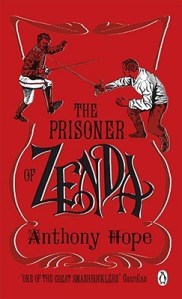
I’ve read several novels about imposters, but the one I’ve chosen to link to next is a classic from 1894: The Prisoner of Zenda by Anthony Hope (3). This novel is set in the fictitious central European kingdom of Ruritania. When the new king is kidnapped and imprisoned by his half-brother Black Michael, his distant cousin Rudolf Rassendyll is persuaded to impersonate him at his coronation. I found this book great fun to read, although I still haven’t continued with the sequel, Rupert of Hentzau.

Another book set in a fictional land is First Night by Jane Aiken Hodge (4), which takes place in 1802 in a European principality known as Lissenberg. The novel follows Cristabel Sallis, a talented young singer, as she sets out to launch a career in opera. I’ve read several of Jane Aiken Hodge’s novels and this is the only one that I haven’t really enjoyed. It’s the first in a trilogy, but I probably won’t continue with it while there are so many of her other books I could be reading instead.

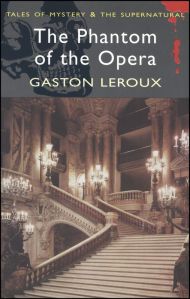
Thinking about books featuring opera, The Phantom of the Opera by Gaston Leroux (5) is obviously the first one that comes to mind! It’s not a favourite classic, but I did find it an entertaining read and loved the descriptions of the Paris Opera House with its underground tunnels and lakes. It’s worth reading even if you’ve seen one of the many film, TV or stage adaptations.

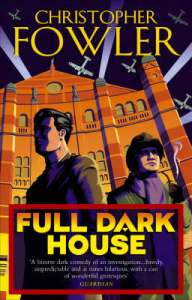
In Full Dark House by Christopher Fowler (6) our octogenarian detectives Arthur Bryant and John May are remembering a case from their younger days in which they investigated a series of murders in a theatre carried out by a killer known as ‘the Palace Phantom’. This is the first in the Bryant and May series and has a wonderful wartime London setting. I also enjoyed the next three books in the series and must continue with the fifth one soon!

~

And that’s my chain for April! My links included women who work in the sea, matriarchal societies, imposters, fictional lands, opera singers and phantoms.

In May we’ll be starting with True History of the Kelly Gang by Peter Carey.

Six Degrees of Separation: From The End of the Affair to Earth and High Heaven

It’s the first Saturday of the month which means it’s time for another Six Degrees of Separation, hosted by Kate of Books are my Favourite and Best. The idea is that Kate chooses a book to use as a starting point and then we have to link it to six other books of our choice to form a chain. A book doesn’t have to be connected to all of the others on the list – only to the one next to it in the chain.

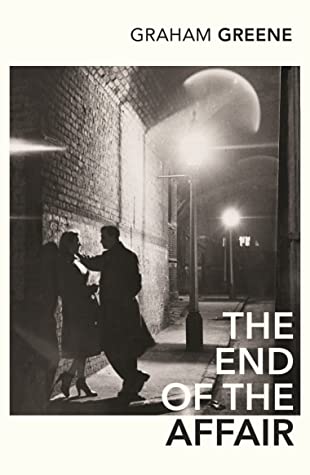
This month we’re starting with The End of the Affair by Graham Greene. As usual, it’s a book that I haven’t read! Here’s what it’s about:

“This is a record of hate far more than of love,” writes Maurice Bendrix in the opening passages of The End of the Affair, and it is a strange hate indeed that compels him to set down the retrospective account of his adulterous affair with Sarah Miles.

Now, a year after Sarah’s death, Bendrix seeks to exorcise the persistence of his passion by retracing its course from obsessive love to love-hate. At first, he believes he hates Sarah and her husband, Henry. Yet as he delves deeper into his emotional outlook, Bendrix’s hatred shifts to the God he feels has broken his life, but whose existence at last comes to recognize.

~

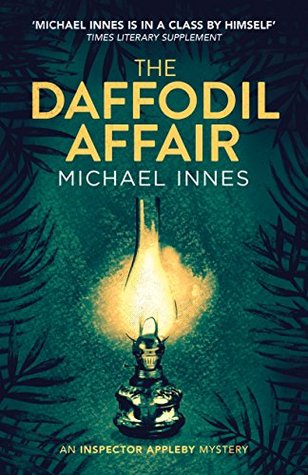
I really didn’t know where to start with this month’s chain. I haven’t read anything at all by Graham Greene, so I tried to think of other books about the end of an affair but came up with nothing. I’m afraid I’ll have to take the easy way out and just link to another book with the word ‘affair’ in the title: The Daffodil Affair by Michael Innes (1). This is part of the Inspector Appleby mystery series but is not a typical detective novel at all. It has a very bizarre plot involving a mind-reading horse, a missing girl and a haunted house! It’s not an Appleby novel that I can recommend; I found it too strange and not what I’d expected when I picked it up.

Daffodil is the name of the horse in the above novel; a book which really is about a flower is The Black Tulip by Alexandre Dumas (2). Dumas is a favourite author of mine and although this book, set in the Netherlands in the 17th century, is much less well known than The Count of Monte Cristo or The Three Musketeers, I still loved it. A book about a contest between two men who both hope to grow the world’s first black tulip may not sound very exciting, but in Dumas’ hands it certainly is! It actually has some similar themes to The Count of Monte Cristo, but is a much shorter novel and could be a good starting point if you’re new to Dumas and daunted by the length of his other books.

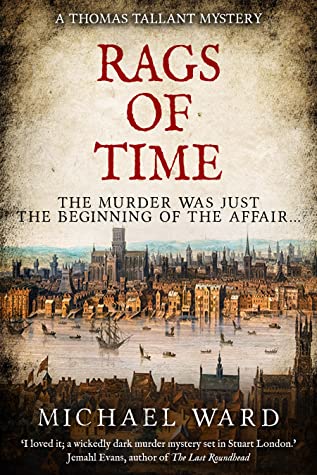
Rags of Time by Michael Ward (3) is the first book in a series of historical mysteries featuring Tom Tallant, a London spice merchant, and set, like The Black Tulip, in the 17th century. This first novel takes us to Amsterdam during the period known as ‘Tulipmania’ where tulip bulbs are being bought and sold for higher and higher prices. I found this part of the book fascinating, particularly the descriptions of the Dutch practice of windhandel, or ‘trading in promises’. As I was putting this post together, I noticed that the cover of the book says “The murder was just the beginning of the affair,” so I could actually have linked this to The End of the Affair and used it as the first link in my chain!

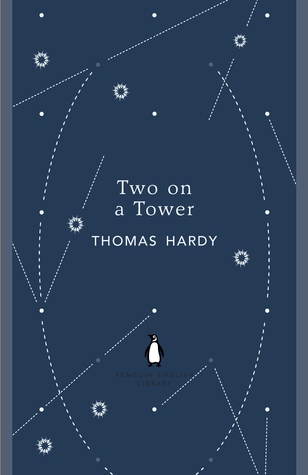
In Rags of Time, Tom teams up with Elizabeth Seymour, a young woman who is a keen astronomer. Swithin St Cleeve in Two on a Tower by Thomas Hardy (4), is also an astronomer – or at least he dreams of becoming one. When Lady Constantine allows him to create an observatory in a tower on her land, the two meet in the tower to study the beauty of the night sky and gradually begin to fall in love, determined to overcome their differences in class and age. I found this a gentler story than some of Hardy’s others, less tragic but also less moving and although it’s still a book that I liked very much, it’s not a favourite of mine.

Although I don’t think Two on a Tower is one of his very best novels, I do love Thomas Hardy and have read most of his books now. A few years ago, I enjoyed dipping into this brief but beautiful guide to his life and work by Jane Drake, titled simply Thomas Hardy (5). The book includes a fold-out map of Hardy’s fictional Wessex, illustrations and colour photographs, some snippets of biographical information, quotations and extracts from several of his novels and poems. At only 32 pages, it’s too short to be completely satisfying and you won’t really learn a lot from it, but I think it would make a nice gift for a Hardy fan.

Drake is also the surname of Erica Drake, one of the main characters in Gwethalyn Graham’s Earth and High Heaven (6). This 1944 novel published by Persephone is set in Canada and follows Erica’s relationship with Marc Reiser. Marc comes from a Jewish family and Erica’s parents – who are English-Canadian – refuse to accept him as a suitable husband for their daughter. This fascinating novel explores the tensions and divisions between these two groups, and also the French-Canadian community. I enjoyed this book and, like many Persephones, it explores themes that are still important and relevant today.

~

And that’s my chain for March! My links have included the word ‘affair’, flowers, Tulipmania, astronomers, Hardy’s Wessex and the name Drake.

Next month we’ll be starting with Our Wives Under the Sea by Julia Armfield.

Six Degrees of Separation: From No One is Talking About This to A Moment of Silence

It’s the first Saturday of the month which means it’s time for another Six Degrees of Separation, hosted by Kate of Books are my Favourite and Best. The idea is that Kate chooses a book to use as a starting point and then we have to link it to six other books of our choice to form a chain. A book doesn’t have to be connected to all of the others on the list – only to the one next to it in the chain.
This month we’re starting with No One is Talking About This by Patricia Lockwood. Here’s what it’s about:

As this urgent, genre-defying book opens, a woman who has recently been elevated to prominence for her social media posts travels around the world to meet her adoring fans. She is overwhelmed by navigating the new language and etiquette of what she terms “the portal,” where she grapples with an unshakable conviction that a vast chorus of voices is now dictating her thoughts. When existential threats–from climate change and economic precariousness to the rise of an unnamed dictator and an epidemic of loneliness–begin to loom, she posts her way deeper into the portal’s void. An avalanche of images, details, and references accumulate to form a landscape that is post-sense, post-irony, post-everything. “Are we in hell?” the people of the portal ask themselves. “Are we all just going to keep doing this until we die?”

~

I haven’t read No One is Talking About This and probably never will, but as soon as I saw the title I knew that my first link this month was going to be to a book about someone who doesn’t talk: The Silent Boy by Andrew Taylor (1). This historical mystery set during the French Revolution features a boy who witnesses a murder and, having been told by the culprit never to say a word, takes this warning literally and refuses to speak to anyone at all.

Gervase Frant, the hero of Georgette Heyer’s The Quiet Gentleman (2), is not a silent man but he is a quiet one (and his cousin Theo is even quieter). This is not really a typical Heyer novel – it’s classed as one of her Regency romances, but it has a strong mystery element and the romance is quite a subtle one. It’s also one that I particularly enjoyed – although I wished we had seen more of the heroine!

Another book with ‘quiet’ in the title is Death on a Quiet Day by Michael Innes (3). This book from 1956 is one of Innes’ series of Inspector Appleby novels. I’ve found the books in this series quite varied; Death on a Quiet Day is more thriller than mystery, with the protagonist being chased through the Dartmoor countryside after discovering a dead body.

The opposite of quiet is loud, so the next book in my chain is Grace Williams Says it Loud by Emma Henderson (4). This very moving novel tells the story of a young girl in the 1950s who has difficulty communicating verbally and her experiences after being sent to live at the Briar Mental Institute. Although I found this an uncomfortable book to read at times due to the subject, there were still some moments of warmth and humour and it’s a book that I’m very glad I decided to read.

‘Saying it loud’ can cause echoes, so the next book in my chain is Echoes from the Dead by Johan Theorin (5). This is the first in a series of crime novels set on the Swedish island of Öland; there are four books (although I’ve only read three of them) and each one takes place during a different season of the year. I loved the atmosphere and the elderly Gerlof, one of the recurring characters, and I should really find time to read the last of the four books.

Another book which is the first in a crime series (and has a sound-related title) is A Moment of Silence by Anna Dean (6), an entertaining murder mystery set in an English country house in the early 19th century. I loved the heroine, Miss Dido Kent, and had fully intended to continue with the series but never did.

~

And that’s my chain for February! My links have included silent boys and quiet gentlemen, quiet days, loud voices, echoes and crime novels. In March we’ll be starting with the modern classic, The End of the Affair by Graham Greene.