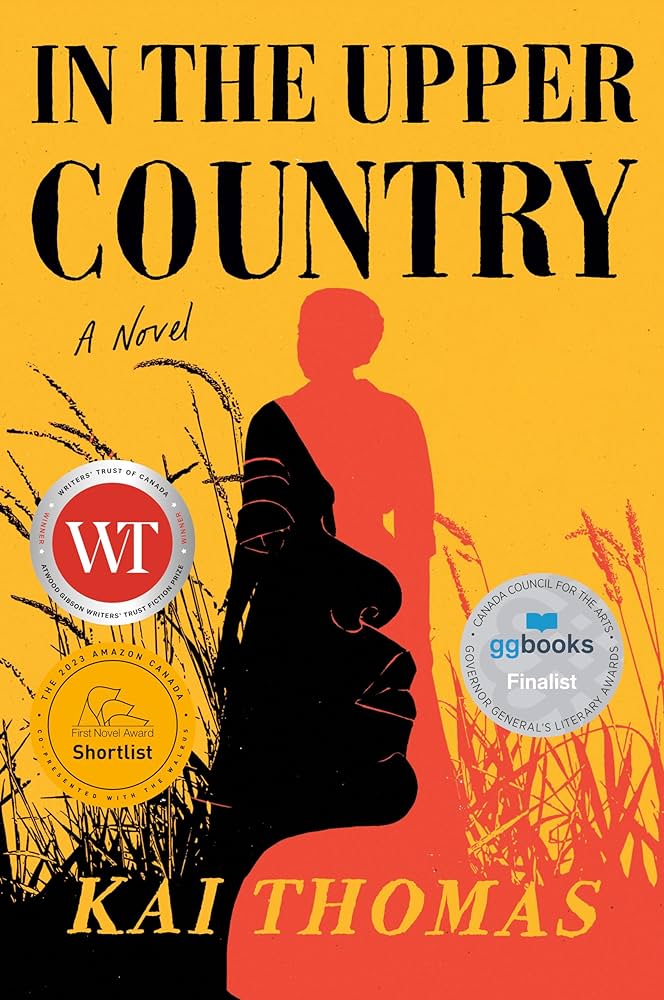
 In the Upper Country came to my attention earlier this year when it was shortlisted for the Walter Scott Prize and as I’ve been looking out for historical fiction set in Canada (see my Historical Musings post from last year) it’s one I was particularly interested in reading.
The novel opens in 1859 in Dunmore, Ontario, a fictional town settled by people fleeing slavery in the American South. It is home to Lensinda Martin, a young black journalist who works for a local newspaper. When an old woman who has recently arrived in Dunmore through the Underground Railroad kills a slave hunter and is arrested, Lensinda is sent to interview her in jail. The old woman insists that if she’s going to tell her story, Lensinda must tell one in return and so, over the course of several days, the two women begin to exchange tales.
The stories they tell reveal not only how the old woman came to be in Dunmore and to kill a man, but also the journeys of other slaves and the significance of all of this on Lensinda’s own life. They also explore the connections between the Black and Indigenous communities of North America – something which Kai Thomas in his author’s note points out is usually ignored in other novels about slavery. It’s certainly not a subject I know much about, so I found that aspect of the book interesting.
Although Dunmore is not a real place, Thomas explains that it’s inspired by similar towns that did exist, such as North Buxton, Ontario. It had never occurred to me that there were whole towns settled by slaves in Canada; in fact, everything I’ve previously read about the Underground Railroad has focused more on how the slaves manage to escape and begin their journey rather than on what happens to them after they reach their destination. It’s a book with lots of interesting themes and topics, then – and it’s always good when you reach the end of a novel feeling that you’ve learned something new.
On a more negative note, the structure of the book didn’t work very well for me at all. There were too many different stories, too many different voices and I found it difficult to follow what was happening and engage with the characters. I almost abandoned it several times because I just couldn’t get into the flow of the writing, but I kept going and did manage to finish it. I don’t regret reading it, but for me it was definitely more of an educational book than an enjoyable one!

This is book 17/20 of my 20 Books of Summer 2024.

Book 35/50 for the Historical Fiction Reading Challenge 2024


 She Reads Novels