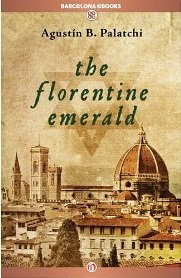
The Florentine Emerald by Agustín Bernaldo Palatchi

The Florentine Emerald The Florentine Emerald is historical fiction set in Florence during the Renaissance. The story begins in 1478 at Cardona Castle in Spain, where Mauricio Coloma is visiting his father, Pedro, who has been chained in a dungeon after being falsely accused of treason. Knowing that he is facing execution, Pedro reveals to Mauricio the truth that until recently converting to Christianity, their ancestors had been Jews. Before he is put to death he also tells his son of a valuable emerald ring hidden under a tile in the floor of their home in Barcelona and advises him to take it to Florence to sell to the Medici, the powerful Florentine family of bankers.

Arriving in Florence with the priceless jewel, Mauricio finds himself in the right place at the right time to thwart an assassination attempt on Lorenzo de’ Medici, the man who rules the Florentine Republic. As a sign of his gratitude, Lorenzo helps Mauricio establish himself in Florence. But then he meets and falls in love with Lorena Ginori, a girl whose parents are planning a more ambitious marriage for her with a man she dislikes. As the years go by, both Lorena and Mauricio have to confront some secrets from their pasts, while around them Florence is thrown into turmoil by the prophecies of the priest Savonarola and the conspiracies of those who want to cause the downfall of both Mauricio and the Medici.

This is an English translation of a Spanish novel by Agustín Bernaldo Palatchi, published by Barcelona eBooks, who if I’ve understood correctly are a spin-off of the Spanish publisher Roca Editorial and partners of Open Road Media, specialising in digital versions of Spanish and English translations. I was pleased to have the opportunity to read the ebook via Netgalley, but as I know not everyone likes or is able to read ebooks I thought it was only fair to point out that I’m not sure if or when The Florentine Emerald might be available in English in any other format.

Something I really enjoyed about this book was learning more about Renaissance-era Florence. In the fifteenth century, Florence was one of the most important centres of European trade and culture, which makes it an ideal setting for historical fiction. There were so many things happening both within Florence itself and in Europe in general during this period that had an effect on Mauricio’s story: outbreaks of plague; the voyages of Christopher Colombus; and the Spanish Inquisition and the threat to the Jews of expulsion from Florence. The first part of the novel is set during roughly the same period as Dorothy Dunnett’s House of Niccolò series which I read recently and so I was already familiar with some of the characters and events that were covered in the book (the papal alum monopoly, the Medici and Strozzi families, the Duke of Urbino and King Ferrante of Naples). This was useful as I would probably have found some of the historical details much more confusing otherwise!

I did find it a bit hard to believe that Mauricio would have been befriended by Lorenzo de’ Medici and given a position at the Medici bank almost as soon as he arrived in Florence and I had to suspend disbelief again as Mauricio immediately began to associate with Leonardo da Vinci, Christopher Columbus and so many other famous people of the period. However, this was only a small part of the story and overall I did enjoy the inclusion of so many real historical figures, especially as there were some I had previously known little or nothing about, including the philosopher Marcilio Ficino and the Dominican friar and preacher, Girolamo Savonarola who plans to reform Florentine society.

I thought the translation was generally good – the writing flowed well and I didn’t have any problems with it, except that it was maybe slightly lacking in emotion and passion. I enjoyed following the adventures of Mauricio and Lorena but something got in the way of me really being able to connect with them emotionally and whether that was due to the translation or not it’s difficult to say without having read the original. I liked the characterisation of Lorenzo de’ Medici, though, and it was interesting to read about the position of power and influence he held in Florence and the much less successful rule of his son and heir, Piero, who followed him. All of this left me wanting to read a good biography of the Medici family or even another fictional account, so any recommendations are welcome!
The Iron King by Maurice Druon

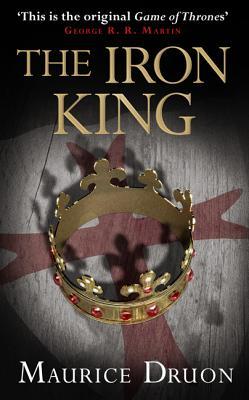
The Iron King “This is the original Game of Thrones” it says on the front cover, but anyone picking this book up hoping for an epic fantasy novel is going to be disappointed. The French novelist Maurice Druon may have been George R.R. Martin’s inspiration (I haven’t read Martin’s books so wouldn’t know how strong the influence actually is), but this is definitely not fantasy – it’s an historical fiction novel and an excellent one too. While I think it’s good that Martin’s recommendation is encouraging people to read The Iron King, I do think it was maybe a mistake for the publisher to market the book in this way, as looking through the various reviews on Amazon it seems a lot of people have not got the novel they were expecting and as a consequence The Iron King has ended up with a lower rating than it deserves.

Anyway, now that we’ve established what type of book this is, let me tell you what it’s about! Originally published in the 1950s, this is the first in the seven-volume “Accursed Kings” series and tells the story of a fascinating period of French history. The Iron King of the title is Philip IV of France, who was also known as Philip the Fair. For seven years Philip has been persecuting the Knights Templar who he wishes to destroy because of their power and riches, and he finally succeeds in having their Grand Master, Jacques de Molay, burned at the stake. But before the Grand Master goes to his death, he puts a curse on the King and his descendants – “accursed to the thirteenth generation!”

Things soon start to go badly for Philip and his family when it emerges that his sons’ wives are cheating on them with two young courtiers. Philip’s daughter Isabella, who is in a loveless marriage to King Edward II of England, sees an opportunity to bring their adultery to light, with the assistance of her ambitious and vengeful cousin, Robert of Artois, who is forming a plot of his own to reclaim his lands from his hated Aunt Mahaut. It seems that the Grand Master’s curse has been successful…

As this is a novel first published in 1955 and translated from French, it does have a very different feel in comparison to most of the historical fiction novels that are being written today and this was something I really liked about the book. Unfortunately I don’t have the language skills to be able to read it in its original French, but as far as I could tell, the translator (Humphrey Hare) has done a good job and The Iron King was one of the most entertaining historical fiction novels I’ve read for a while. There were so many interesting things to learn about – the origins of the famous ‘Tour de Nesle affair’; the demise of the Knights Templar; the community of Lombard bankers in Paris – and with a plot involving murder, torture, poisonings, court intrigue, and family feuds, there was always something happening.

Don’t worry if you know nothing about this period of French history – I had absolutely no previous knowledge of Philip the Fair and his family before reading this book but that was not a problem at all because this edition of the book makes the story easy to understand and follow. Everything you need to know regarding the historical background, the politics or the causes of feuds and disputes is clearly explained in the notes at the back of the book and the character list at the front helped me remember who everyone was and how they were related to each other. I am now looking forward to the second Accursed Kings book, The Strangled Queen. I hope the publisher will continue to reissue the rest of the series!

A Small Circus by Hans Fallada

Of all the books I read last year, my favourite was Hans Fallada’s Alone in Berlin (US title Every Man Dies Alone), the story of a German couple who decide to resist the Nazi regime after their son is killed fighting in the war. It was such an exciting, moving and powerful book, and when I saw that Penguin Classics were publishing a new translation of another of Fallada’s novels, A Small Circus, I couldn’t wait to read it.

A Small Circus is set in and around Altholm, a fictional German town, in 1929. Within the town there are lots of different groups and factions who are all in conflict with each other, including the mayor, various political parties, farmers, journalists and the police. None of these opposing groups are able to cooperate and work together. The novel describes the events leading up to and following a demonstration by the protesting farmers which ends in violence, causing things to quickly spiral out of control.

I have to admit, based on the synopsis alone this was not the kind of book I would normally have chosen to read but I decided to give it a chance anyway, remembering how much I had loved Alone in Berlin. And I really wanted to love A Small Circus too, but I have to be honest and say that, for me, this book was a big disappointment. I found the plot confusing and difficult to follow, partly because of my lack of knowledge of early 20th century Germany and the politics involved, but also because so much of the story was told through dialogue. Almost two thirds of the novel is written in the form of dialogue (according to the Foreword) and it was just too much for me.

I also disliked the translation style. Obviously I haven’t read the original German edition of this book from 1931 so I don’t know what Fallada’s actual writing was like, but this translation feels too modern and full of words and phrases that I wouldn’t have thought would have been used at the time. I’m sure there will be a lot of other readers who will love this lively, slang-filled style, but it didn’t have any appeal for me personally. Alone in Berlin was translated by the same person, Michael Hofmann, but for some reason the language in that book didn’t bother me at all, maybe because I was so gripped by the story.

A bigger problem for me was that there wasn’t a single character in the book that I liked. I can see that I probably wasn’t intended to like them, and this was maybe the whole point of the story (to show the effects of hatred, violence and corruption on a small town and how this was being replicated across Germany, opening the way for the Nazis), but it didn’t make it much fun to read. It’s really important for me to have at least one or two characters that I can enjoy reading about or connect with in some way, but without exception I found everyone in A Small Circus greedy and selfish, with few or no redeeming qualities. And not only were there no heroes to side with, there were no great villains that I could love to hate either – just a lot of very unpleasant people.

I want to finish this very negative post by pointing out that although I didn’t enjoy it very much I didn’t actually think this was a bad book. For the right type of reader, A Small Circus would probably be a fascinating read and the other reviews I’ve seen have been mostly very positive. Unfortunately I was obviously not the right type of reader for this book, though I think I would still be prepared to try more of Fallada’s novels in the future.

Burned by Thomas Enger

Burned is the first in a new series of crime novels by Norwegian author Thomas Enger. This book is set in Oslo and introduces us to Henning Juul, a journalist working for 123news, an internet-based newspaper. When we first meet Henning he is trying to come to terms with the tragic death of his son, Jonas, in a house fire. On his first day back at work after a long absence, he is asked to cover the story of a young woman who has been found brutally murdered in a tent on Ekeberg Common. Henning’s research leads him from Oslo’s Muslim community to the world of film-making, but will his investigations make him the killer’s next target?

This series has a lot of potential and I’m pleased I could be there at the beginning rather than coming in halfway through the series which is what usually seems to happen to me! Although I didn’t think it was an outstanding book, there was a lot to like about Burned and I’m pleased to have discovered another Scandinavian crime writer whose work I enjoy. With its short chapters and fast-paced plot the book was difficult to put down and despite its length was a quick read.

There were plenty of twists and turns in the plot which helped to keep me interested, but while plot twists can be an important element of a good crime novel, I thought there were too many towards the end of the book. I wasn’t quite sure exactly what was supposed to be happening and I started to get slightly confused. The writing doesn’t always flow very well either, though this could be due to the translation (the book has been translated from the original Norwegian by Charlotte Barslund).

I enjoyed the descriptions of daily life in an internet newspaper office and the processes involved in researching, writing and publishing news items. I’ve never worked as a journalist but it all seemed quite realistic to me (which is to be expected as I believe Thomas Enger has experience in journalism himself). I also really liked Henning Juul and found him an intriguing character. I was left thinking that there must be a lot of aspects of his history and his personality still to explore, and that is why I’m already looking forward to the publication of the second book in the series.

I received a copy of this book from LibraryThing Early Reviewers

Thérèse Raquin by Émile Zola

Thérèse is a young woman trapped in an unhappy marriage to her sickly cousin, Camille Raquin. On the surface she appears quiet and passive, never voicing an opinion of her own. But underneath Thérèse is a passionate person who longs to break away from her boring, oppressive existence. When Camille introduces her to an old friend, Laurent, the two begin an affair. Desperate to find a way in which they can be together, Thérèse and Laurent are driven to commit a terrible crime – a crime that will haunt them for the rest of their lives.

If you think I’ve given too much away then I can tell you that this crime takes place quite early in the story and is not the climax of the book. The point of the story is what happens afterwards when Zola begins to explore the psychological effects this action has on the characters.

Thérèse Raquin, as you will have guessed, is a very dark book which becomes increasingly feverish and claustrophobic with scenes of violence and cruelty. I haven’t read much 19th century French literature, apart from a few books by Alexandre Dumas and Victor Hugo, and one thing that struck me about Zola’s writing was how much more daring and graphic this book is than British novels from the same period. The reader becomes locked inside the tormented minds of Thérèse and Laurent, sharing their fear and terror, their nightmares and sleepless nights, their inability to enjoy being together because the horror of what they have done stands between them. If you’ve read Dostoevsky’s Crime and Punishment or Edgar Allan Poe’s The Tell-Tale Heart, there are some similarities here.

This book could be enjoyed just for the dramatic plot (it’s as tense and gripping as any modern thriller) but I also thought the four main characters – Thérèse, Laurent, Camille and Madame Raquin – were fascinating and very vividly drawn. Zola apparently said that his aim was to create characters with different temperaments and see how each of them reacted to the situation they were in.

As the first book I’ve read by Zola, I wasn’t sure what I could expect from Thérèse Raquin but I thought it was excellent and I’ll certainly be reading more of his books.

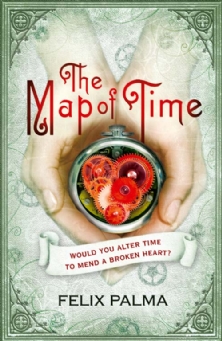
The Map of Time by Felix Palma

The Map of Time, translated from the original Spanish, is an interesting mixture of historical fiction, science fiction and romance. The book appealed to me as soon as I read the synopsis and saw that it was set in Victorian London, involved time travel and featured several real historical figures including Jack the Ripper, Joseph Merrick (The Elephant Man) and the authors H.G. Wells, Henry James and Bram Stoker. It sounded fascinating and it was, though there were a few aspects of the book that didn’t work for me at all. I thought it was too long and ambitious and tried to do too much.

The starting point for the story is 1896, shortly after the publication of H.G. Wells’ novel, The Time Machine, which captured the imaginations of his readers and convinced them that time travel could become a reality. One of the people hoping to travel through time is Andrew Harrington whose lover, Marie Kelly, was killed by Jack the Ripper eight years ago. Andrew believes that if he could go back to the night of the murder it might be possible to save Marie’s life – so he decides to approach Wells and ask his advice.

Wells also becomes involved in the life of Claire Haggerty, a young woman who has trouble conforming to Victorian society and longs to escape to the year 2000 where the ‘brave Captain Derek Shackleton’ is thought to have saved the world from destruction by evil automatons. But is it really possible for Andrew and Claire to travel through time or is time travel something that only exists in fiction?

I’ve read a lot of novels that involve time travel as a part of the plot, and while all of them obviously require the reader to suspend disbelief, some of them manage to make it seem more plausible than others. There are a number of theories put forward in The Map of Time and it all started to become very confusing, but for anyone with an interest in the intricacies of time travel, parallel worlds, paradoxes (is it possible to meet a future version of yourself, for example?) and the effects our actions have on history, you should find it interesting.

The biggest problem I had with this book was that the pacing and structure of the story didn’t feel quite right to me. The book is divided into three very distinct sections: the first deals with the Andrew Harrington story, the second follows Claire Haggerty and the third concentrates on H.G. Wells himself. This had the effect of making the book feel almost like three separate books in one and it took me a while at the start of each section to get used to the new characters and completely different direction of the plot. Then there’s the omniscient narrator who intrudes into the story at times in a mock-Victorian style. This can work well in original Victorian classics, but here I thought it felt forced and unnatural and it ended up annoying me.

I realise I’m making it sound as if I didn’t enjoy this book at all, but that’s not true. There were parts that I found fascinating and times when I couldn’t put the book down. I thought the quality of the writing was good overall and I probably wouldn’t have guessed it was a translation. But for a book which sounded so exciting and original, it didn’t quite live up to my expectations.

Baba Yaga Laid an Egg by Dubravka Ugresic

Baba Yaga Laid an Egg is part of the Myths series by Canongate Books, in which authors retell traditional myths from around the world in a new and original way. This book by Croatian author Dubravka Ugresic takes a fresh and unusual approach to the Slavic myth of Baba Yaga.

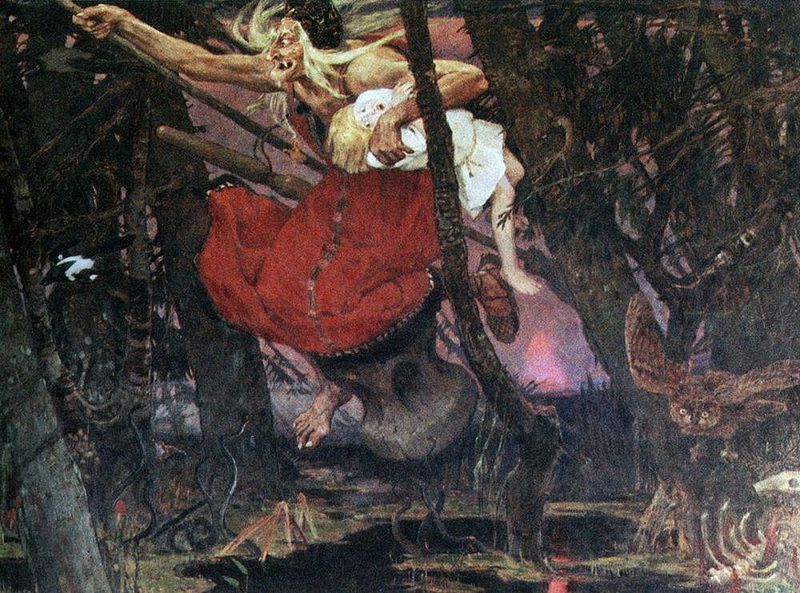
Baba Yaga (shown here in a painting by Viktor Vasnetsov – picture from Wikipedia in public domain) is usually portrayed as a hag or witch who lives in a log cabin mounted on a pair of chicken legs. She uses a giant mortar and pestle to fly through the air, kidnapping and threatening to eat small children. Although she has a terrifying appearance, Baba Yaga is also said to possess great wisdom and will sometimes give help and advice to anyone brave enough to ask.

Rather than simply reiterating this myth, Ugresic relates the myth to the lives of modern women and explores a large number of topics including ageing, feminism, love and loneliness. The book does not follow the format of a conventional novel and is divided into three separate and seemingly unconnected stories.

In the first story, the narrator travels to Varna in Bulgaria, the childhood home of her mother who is now old and ill. In the second story, we meet Beba, Pupa and Kukla, three old women who are staying together at a spa in the Czech Republic. But what is the connection between these two stories and what do they have to do with Baba Yaga? I have to admit, by this point I was starting to feel slightly confused. Yes, I had learned a lot about growing old, but how did all of these things relate to the myth of Baba Yaga? Luckily, I found the answers to my questions in the third and final section of the book.

Part 3 is presented as if a folklore expert was responding to a request for information about Baba Yaga and had been asked to explain the meaning of the first two sections. This part of the book was fascinating but began to feel like a very, very long encyclopedia entry. I previously knew almost nothing about Baba Yaga though, so it was good to learn something about the myth. I was also pleased at how well this final section pulled all the threads of the book together and helped me understand the significance of everything I had just been reading.

This book should appeal to anyone who has ever worried about growing old or anyone with an interest in mythology as it relates to feminism. I can’t honestly say that I loved this book or even that I particularly enjoyed it, but it was a very interesting concept and I’m glad I decided to give it a try.

Has anyone read any of the other Canongate Myths books. Are they similar to this one?