Six Degrees of Separation: From The Night Circus to A Small Circus

It’s the first Saturday of the month – and of 2026! – which means it’s time for another Six Degrees of Separation, hosted by Kate of Books are my Favourite and Best. The idea is that Kate chooses a book to use as a starting point and then we have to link it to six other books of our choice to form a chain. A book doesn’t have to be connected to all of the others on the list – only to the one next to it in the chain.

This month we’re starting with the book with which we finished last month’s chain (or the last book we read if we didn’t take part last month). For me, this was The Night Circus by Erin Morgernstern. Here’s how I described it in my review:

The Night Circus tells the story of Celia and Marco, two young magicians who have been selected by their mentors to take part in a very special contest. The rules of the competition are shrouded in mystery and even the two illusionists themselves aren’t sure what they have to do to win. And the venue for this magical battle? Le Cirque des Rêves, or the Circus of Dreams, one of the strongest, most vivid fictional worlds I’ve ever come across in a novel.
The Night Circus was a great starting point, with lots of options to move forward with the chain. Usually I choose books that I’ve actually read and reviewed on my blog, but instead I’m going to start with a first link suggested to me by one of my blog readers. Thanks Paul! Round the Bend by Nevil Shute (1), which I haven’t read yet, follows the story of two aircraft engineers who begin their careers with Alan Cobham’s Flying Circus. I would like to read this eventually as I enjoyed the one Shute novel I’ve read (Pied Piper) and am looking forward to reading more.

The Hazelbourne Ladies Motorcycle and Flying Club by Helen Simonson (2) is set in 1919 and features a group of women who buy a damaged fighter plane to restore so that they can begin training female pilots. I enjoyed this book – it’s a fascinating portrayal of life in the aftermath of the First World War when the War Practices Act meant that many women were dismissed from their jobs to make way for the returning soldiers.

I’m going to break my own rule of only including books I’ve reviewed again, because the next book that comes to mind is one I read years before I started blogging: Zen and the Art of Motorcycle Maintenance by Robert M. Pirsig (3). It was published in 1974, although I think I read it in the 90s. It’s about a man who travels across America with his young son by motorcycle, discussing philosophy along the way. I remember finding it interesting but I probably only understood half of it and wouldn’t want to read it again today.

I want to get away from transport related books now, so I’m linking next to another novel published in 1974 – Cashelmara by Susan Howatch (4). This novel, like some of Howatch’s others, is a family saga retelling Plantagenet history in a more recent setting. In this one, Edward I, Edward II and Edward III of England are recreated as Edward de Salis, his son Patrick and grandson Ned, a fictional 19th century family. It’s not necessary to be familiar with the history, but if you can spot the parallels it makes the story even more interesting!

An author who shares a name with Susan Howatch is Susan Hill, who wrote The Small Hand (5), a ghost story in which an antiquarian book dealer begins to have several unsettling experiences where he feels a child’s small hand holding his own. I found this an eerie, atmospheric novel rather than a particularly scary one, though maybe that’s because I read it in the summer – it’s a story for a dark winter night, I think!

The word ‘small’ also appears in the title of A Small Circus by Hans Fallada (6), which brings my chain full circle this month! I usually love Fallada, but this novel, first published in German in 1931, wasn’t for me. It does have an interesting setting, describing tensions and corruption in a small German town in the period between the two world wars, but I struggled with the unpleasant characters and confusing plot. I read a modern translation by Michael Hofmann.

~

And that’s my chain for this month! My links have included circuses, flying, motorcycles, books published in 1974, authors named Susan and books with ‘small’ in the title.

In February we’ll be starting with Flashlight by Susan Choi.

Top Ten Tuesday: Books set in snowy places

This week’s topic for Top Ten Tuesday (hosted by That Artsy Reader Girl) is “Books Set in Snowy Places”.

I love books with snowy settings! Here are ten I’ve read and reviewed on my blog:

1. The Snow Child by Eowyn Ivey -The first book to come to mind is definitely Eowyn Ivey’s beautiful retelling of The Snow Maiden set in 1920s Alaska.

2. The Sittaford Mystery by Agatha Christie – This very enjoyable standalone mystery is set in a small village cut off from the outside world by snow.

3. Ethan Frome by Edith Wharton – I loved all the winter imagery in Wharton’s classic novella – it reflects the bleakness of the plot as the title character falls in love with his wife’s cousin.

4. Winter Siege by Ariana Franklin and Samantha Norman – Set in 1141 during the period of English history known as the Anarchy, heavy snowfall and a long winter siege both play a big part in the story.

5. Winternight Trilogy by Katherine Arden – I loved all three books in this historical fantasy trilogy set in a wintry medieval Russia (The Bear and the Nightingale, The Girl in the Tower and Winter of the Witch).

6. The Ringed Castle by Dorothy Dunnett – This book, the fifth in Dunnett’s Lymond Chronicles, is set mainly in 16th century Russia where the cold, bleak landscape matches Lymond’s own state of mind as he deals with the traumas of the previous four novels.

7. The Fake Wife by Sharon Bolton – A large part of this novel is set outside on a snowy night as the police search for a woman who has gone missing after leaving her hotel.

8. White Corridor by Christopher Fowler – I reviewed this book, part of the Bryant and May mystery series, just last week. Our two elderly detectives become stranded in a line of cars during a snowstorm with a killer on the loose!

9. Death in Kashmir by M.M. Kaye – My favourite of Kaye’s Death In… romantic suspense novels is set at a ski resort in Kashmir, which makes for a very atmospheric and eerie setting.

10. Miss Winter in the Library with a Knife by Martin Edwards – A recent read set in the tiny, remote village of Midwinter where a group of people are taking part in a murder mystery game during a period of heavy snow.

~

Have you read any of these? Which other books set in snowy places have you enjoyed?

Six Degrees of Separation: From Seascraper to The Night Circus

It’s the first Saturday of the month which means it’s time for another Six Degrees of Separation, hosted by Kate of Books are my Favourite and Best. The idea is that Kate chooses a book to use as a starting point and then we have to link it to six other books of our choice to form a chain. A book doesn’t have to be connected to all of the others on the list – only to the one next to it in the chain.

This month we’re starting with Seascraper by Benjamin Wood. I read it last month for Novellas in November and loved it. Here’s what it’s about:

Thomas lives a slow, deliberate life with his mother in Longferry, working his grandpa’s trade as a shanker. He rises early to take his horse and cart to the grey, gloomy beach to scrape for shrimp; spending the rest of the day selling his wares, trying to wash away the salt and scum, pining for Joan Wyeth down the street and rehearsing songs on his guitar. At heart, he is a folk musician, but it remains a private dream.

When a striking visitor turns up, bringing the promise of Hollywood glamour, Thomas is shaken from the drudgery of his days and begins to see a different future. But how much of what the American claims is true, and how far can his inspiration carry Thomas?

Haunting and timeless, this is the story of a young man hemmed in by his circumstances, striving to achieve fulfilment far beyond the world he knows.

~

Seascraper reminded me very much of The Horseman by Tim Pears (1), first in a trilogy of novels set in Devon in the early 20th century. They are both quiet, gentle novels with rural settings and descriptions of the protagonist’s daily work (catching shrimp for Thomas, farming tasks for Leo in The Horseman). Horses also play an important role in both novels. I still haven’t continued with the trilogy and haven’t decided if I want to as I didn’t enjoy the first book as much as I’d hoped.

The title of the Tim Pears book made me think of the headless horseman in Washington Irving’s classic short story The Legend of Sleepy Hollow (2). First published in 1820, it’s set in an old Dutch settlement in New York and revolves around the legend of a ghostly soldier who lost his head in battle and rides through Sleepy Hollow every night in search of his missing head. You may have seen the 1999 Tim Burton adaptation, but the original story is definitely worth reading as well.

Another book with the word ‘hollow’ in the title is The Hollow by Agatha Christie (3). The Hollow is the name of a country house where a group of people have gathered for the weekend when a murder takes place. This is a Poirot novel although he doesn’t play as big a part in it as he usually does and Christie herself described it as “the one I ruined by the introduction of Poirot”.

The Hollow was published in 1946 and so was Ride the Pink Horse by Dorothy B. Hughes (4). The novel is set in Santa Fe during the Fiesta festival, which ends with the burning of Zozobra, a wooden effigy symbolic of worries and gloom. The story follows Sailor, a blackmailer on the trail of a senator whose wife has been murdered. I loved this book mainly for the setting but was also gripped by the plot.

The cover of the Hughes novel brings to mind the carved wooden horses on the carousel in Fiza Saeed McLynn’s The Midnight Carousel (5). The carousel of the title was built for the Grand Exhibition in Paris by Gilbert Cloutier and gains a sinister reputation when Gilbert disappears immediately afterwards. As the years go by and more people disappear while riding the carousel horses, Detective Laurent Bisset begins to investigate. I read this book earlier this year and really enjoyed it.

The Night Circus by Erin Morgenstern (6) is the obvious next link. Both books have fairground/circus settings and a similar magical atmosphere, although this one is more fantasy whereas the Saeed McLynn is a mystery. Although I found the plot and characters slightly disappointing, I loved the vivid descriptions of Le Cirque des Rêves, or the Circus of Dreams, and wished I could visit it myself!

~

And that’s my chain for December! My links have included: rural life, horsemen, the word ‘hollow’, books published in 1946, carousel horses and fairground/circus settings.

Nest month is a wildcard to begin the year. We can either start with the book we finished this month’s chain with or, if we didn’t participate in December, begin with the last book we read.

Top Ten Tuesday: Stepping out of my comfort zone

This week’s topic for Top Ten Tuesday (hosted by That Artsy Reader Girl) is “Books I Enjoyed that Were Outside My Comfort Zone”.

When I first saw this topic I thought I would struggle to put a list together as I tend to stick to the sort of books I know I’ll enjoy. However, after thinking about it I was able to come up with ten books I enjoyed that are definitely out of my comfort zone – for ten different reasons! Here they are:

1. Persepolis by Marjane Satrapi – A graphic novel

2. The Dog Stars by Peter Heller – Post-apocalyptic fiction

3. The Sisters Brothers by Patrick DeWitt – A Western

4. The Silver Pigs by Lindsey Davis – Audiobook

5. The Importance of Being Earnest by Oscar Wilde – A play

6. The Twyford Code by Janice Hallett – Written in an unusual style

7. Amours de Voyage by Arthur Hugh Clough – A narrative poem

8. Live Alone and Like It by Marjorie Hillis – Self-help nonfiction

9. The Epic of Gilgamesh – An ancient epic

10. Master and Commander by Patrick O’Brian – Nautical fiction

~

Have you read any of these? Which books have you read that are out of your comfort zone – and did you enjoy them?

Top Ten Tuesday: Ten random books waiting to be read!

This week’s topic for Top Ten Tuesday (hosted by That Artsy Reader Girl) is “The First 10 Books I Randomly Grabbed from My Shelf”. I’ve modified this slightly and have listed ten books from my Goodreads ‘to-read’ shelf. This includes books that I already own as well as books that are on my wish list. I used a random number generator to select ten random titles.

1. Down and Out in Paris and London by George Orwell – Non-fiction about poverty in the two capital cities.

2. The Norman Pretender by Valerie Anand – A sequel to Gildenford, about the Norman Conquest of 1066.

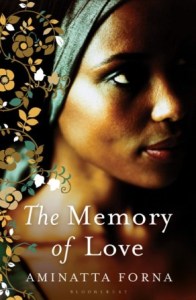
3. The Hired Man by Aminatta Forna – A novel about a woman renovating a farmhouse in Croatia.

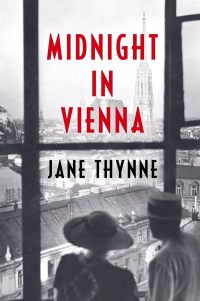
4. Appointment in Paris by Jane Thynne – A spy thriller set in the 1940s.

5. The Book of Madness and Cures by Regina O’Melveny – Historical fiction set in the 16th century.

6. Above Suspicion by Helen MacInnes – Another spy novel by an author I still haven’t tried.

7. A Lost Lady by Willa Cather – One of several books by Cather I would like to read.

8. Sacred Hearts by Sarah Dunant – Historical fiction set in an Italian convent.

9. Zofloya, or The Moor by Charlotte Dacre – A 19th century Gothic novel

10. Transcription by Kate Atkinson – Yet another wartime espionage story!

~

Have you read any of these? If so, let me know what you thought.

Six Degrees of Separation: From We Have Always Lived in the Castle to The Confessions of Frannie Langton

It’s the first Saturday of the month which means it’s time for another Six Degrees of Separation, hosted by Kate of Books are my Favourite and Best. The idea is that Kate chooses a book to use as a starting point and then we have to link it to six other books of our choice to form a chain. A book doesn’t have to be connected to all of the others on the list – only to the one next to it in the chain.

This month we’re starting with We Have Always Lived in the Castle by Shirley Jackson. For once, this is a book that I’ve actually read – and also one that I enjoyed. Here’s my synopsis of the plot, taken from my review posted in 2011:

The book is narrated by eighteen-year-old Mary Katherine Blackwood, or ‘Merricat’, who lives with her sister Constance, their Uncle Julian, and Jonas the cat in a big house on the edge of town. Near the beginning of the story we see Merricat walking home with some shopping, being taunted and chanted at by everyone she passes. It seems the Blackwoods are very unpopular, but at first we don’t know why.

When Merricat returns home, it becomes even more apparent that something is wrong. Merricat herself does not seem like a normal eighteen-year-old – she likes to bury things in the grounds of the Blackwood house and believes that using magic words and rituals will protect her home and family. Constance is agoraphobic and afraid to walk any further than the garden. Uncle Julian, confined to a wheelchair, is obsessed with the book he’s writing about a tragedy that occurred six years earlier. And what exactly has happened to the rest of the Blackwood family?

We Have Always Lived in the Castle is a dark, unsettling novel. My first link is to another dark novel with the word ‘castle’ in the title: The Nightingale’s Castle by Sonia Velton (1). This is a reimagining of the story of Countess Erzsébet Báthory (often anglicised to Elizabeth Bathory), thought to be a possible inspiration behind Bram Stoker’s Dracula. Bathory and her servants were accused of murdering hundreds of Hungarian peasant girls, making her one of the most notorious serial killers in history.

The Angel Makers by Patti McCracken (2) is a nonfiction book about another Hungarian serial killer. Zsuzsanna Fazekas, known in the book as Auntie Suzy, was a midwife and the ringleader of a circle of women responsible for the deaths of over one hundred men between 1914 and 1929. Suzy was the one who sold bottles of arsenic to the other women in her village and, in the absence of a village doctor, the one who dictated the causes of death to be put on the death certificates.

Poisoning also plays a big part in Marjorie Bowen’s The Poisoners (3), originally published in 1936. The book is set in 17th century Paris during the reign of the Sun King, Louis XIV, and revolves around a famous murder scandal known as L’affaire des poisons. I described it in my review as a story featuring “fortune tellers and spies, counterfeiters and apothecaries, an empty house which hides sinister secrets, mysterious letters marked with the sign of a pink carnation, and a society thought to be involved in black magic.”

I don’t want a whole chain full of serial killers, so I’ll try to send things in a slightly different direction now. Another book published in 1936 is A Shilling for Candles by Josephine Tey (4). This is one of Tey’s Alan Grant mysteries (of which I’m sorry to say I’ve still only read two) and was adapted for film by Alfred Hitchcock under the title Young and Innocent.

A shilling is a coin, so that leads me to Sugar Money by Jane Harris (5). This novel is set in the Caribbean in the year 1765. Our narrator, teenage Lucien, and his older brother Emile are slaves working on a sugar plantation in French-ruled Martinique. It’s a fascinating book exploring some aspects of slavery I had never read about before – and it’s also partly based on a true story.

The final book in my chain is The Confessions of Frannie Langton by Sara Collins (6). The book begins with Frannie, a former slave, awaiting trial in London for the murder of her employers (sorry, it seems I couldn’t get away from murderers this month after all). However, the crime element is only one small part of the story – a large part of the novel is devoted to Frannie remembering her childhood on a sugar plantation in Jamaica and her experiences on arriving in England.

~

And that’s my chain for November! My links have included: The word ‘castle’, Hungary, female poisoners, 1936, money and sugar plantations.

In December we’ll be starting with Seascraper by Benjamin Wood.

Top Ten Tuesday: Ten Horror Novels I Read Before Blogging

This week’s topic for Top Ten Tuesday (hosted by That Artsy Reader Girl) is “Halloween Freebie”.

Usually, when I put my TTT lists together I only include books I’ve reviewed on my blog, but this time I decided to highlight some books I read long before I started blogging in 2009. To fit the Halloween topic, these are all horror novels, a genre I don’t read as much as I used to – I do still like dark, unsettling novels but I prefer not to be too frightened! I think I was braver when I was younger.

1. The Shining by Stephen King

Let’s start with probably the most famous horror writer of them all. I read quite a few Stephen King books as a teenager and I think my favourite was his 1977 novel The Shining, set in the lonely Overlook Hotel, although I also remember enjoying Misery, The Dark Half and Rose Madder. His fantasy novel, The Eyes of the Dragon, was another one I liked.

2. The Fog by James Herbert

I also read several James Herbert novels, but the only ones I can really remember are The Magic Cottage and this one, The Fog, about a sinister fog that descends over England and begins to drive people mad.

3. The Resurrectionists by Kim Wilkins

I read this one sometime in the early 2000s and loved it. It’s about an Australian woman uncovering family secrets in a small Yorkshire village and has a wonderfully atmospheric setting with a lonely cottage beside a clifftop cemetery.

4. Obsession by Ramsey Campbell

I really enjoyed this psychological horror novel about a group of teenagers who receive a letter from an unknown sender promising to make their wishes come true. Later, they find that there’s a terrible price to pay.

5. The Violin by Anne Rice

I never read any of Anne Rice’s more famous Interview with the Vampire books, but I did read this one, which I think was more of a ghost story.

6. The Point Horror series

I’m cheating slightly here and including this whole series of young adult horror novels, because I read a lot of them and can’t remember much about the individual books. They were written by a variety of different authors; I think my favourites were Richie Tankersley Cusick and R.L. Stine.

7. The Town by Bentley Little

This is a completely bizzare novel set in a small town in Arizona. All I remember about it is that a woman gives birth to a cactus and a church grows hair. I think I may have read other books by Bentley Little but this is the only one that has stayed in my mind.

8. The Silence of the Lambs by Thomas Harris

I’m sure many of you will be familiar with this one, if not the book then the film starring Jodie Foster and Anthony Hopkins in which a young FBI trainee tries to catch a serial killer who removes the skin of his victims. I read it, but it wasn’t really for me!

9. The Amityville Horror by Jay Anson

This book terrified me as a teenager. It’s supposedly the true story of George and Kathy Lutz, who move into a house that was the scene of a mass murder the previous year and flee again four weeks later after experiencing paranormal activity. There have since been various lawsuits over the book’s accuracy and truthfulness.

10. Audrey Rose by Frank De Felitta

I often find books about reincarnation very creepy. In this book, Eliot Hoover becomes convinced that eleven-year-old Ivy Templeton is the reincarnation of his own daughter, Audrey Rose, killed in a car crash at the age of three. There’s a sequel, For Love of Audrey Rose, but I didn’t like that one as much.

~

Do you read horror? Have you read any of these?