Top Ten Tuesday: Ten books to read if you love the Brontës

This week’s topic for Top Ten Tuesday (hosted by Jana at That Artsy Reader Girl) is “Books to Read If You Love/Loved X (X can be a genre, specific book, author, movie/TV show, etc)”.

I have chosen to list ten books with connections to the Brontë family – a mixture of non-fiction, historical fiction, classics and retellings! These are all books that I have read and reviewed on my blog.

1. The Taste of Sorrow by Jude Morgan – My favourite of the ten books listed here, this is a beautifully written fictional biography of Charlotte, Emily and Anne with strong characterisation bringing all three sisters to life.

2. Wide Sargasso Sea by Jean Rhys – This is probably one of the best-known Brontë-inspired novels, giving a voice to Mr Rochester’s wife Bertha, and has become a modern classic in its own right.

3. Sanctuary by Robert Edric – A fictional account of the life of Branwell Brontë, a young man who starts out with so much potential only to find himself living in the shadow of his sisters.

4. Ill Will by Michael Stewart – In the middle of Wuthering Heights, Heathcliff disappears for three years. This novel imagines what may have happened to him during that time. An interesting idea, but the anachronistic language ruined this book for me!

5. The Madwoman Upstairs by Catherine Lowell – A contemporary novel about a young American woman who is the last living descendant of the Brontë family and finds herself searching for the lost Brontë literary estate.

6. Dark Quartet by Lynne Reid Banks – Another fictional biography of Charlotte, Emily, Anne and Branwell, published in the 1970s. There’s a sequel covering the final years of Charlotte’s life, but I haven’t read that one yet.

7. Jane Steele by Lyndsay Faye – Part historical crime/part Jane Eyre retelling, this is the story of Jane Steele, a murderer whose life seems to mirror that of the heroine of her favourite Brontë novel. I loved all the Jane Eyre parallels, but found the crime aspect less successful.

8. Nelly Dean by Alison Case – A retelling of Wuthering Heights with a focus on the life of the housekeeper Nelly Dean. I didn’t enjoy this as much as I’d hoped; I liked Nelly, but her story wasn’t as interesting as Cathy and Heathcliff’s – which is why Emily Brontë wrote that book and not this one!

9. The Infernal World of Branwell Brontë by Daphne du Maurier – Another book about Branwell Brontë, but a non-fiction one this time – and written by another of my favourite authors! Several of du Maurier’s novels also show a strong Brontë influence.

10. Mr Rochester by Sarah Shoemaker – This version of Jane Eyre is written from the perspective of Mr Rochester. I enjoyed the earlier sections of the novel that imagine Rochester’s childhood and time in Jamaica, but the final part – retelling the familiar events of Jane Eyre – didn’t work as well.

~

What do you think? Have you read any of these? What other books have you read that are about or inspired by the Brontës?

Six Degrees of Separation: From What Are You Going Through to Tomorrow

It’s the first Saturday of the month which means it’s time for another Six Degrees of Separation, hosted by Kate of Books are my Favourite and Best. The idea is that Kate chooses a book to use as a starting point and then we have to link it to six other books of our choice to form a chain. A book doesn’t have to be connected to all of the others on the list – only to the one next to it in the chain.

This month we are beginning with What Are You Going Through by Sigrid Nunez. I haven’t read it and although it does sound interesting, I don’t think it’s my kind of book and I have no plans to read it. Here’s what it’s about:

A woman describes a series of encounters she has with various people in the ordinary course of her life: an ex she runs into by chance at a public forum, an Airbnb owner unsure how to interact with her guests, a stranger who seeks help comforting his elderly mother, a friend of her youth now hospitalized with terminal cancer. In each of these people the woman finds a common need: the urge to talk about themselves and to have an audience to their experiences. The narrator orchestrates this chorus of voices for the most part as a passive listener, until one of them makes an extraordinary request, drawing her into an intense and transformative experience of her own.

In What Are You Going Through, Nunez brings wisdom, humor, and insight to a novel about human connection and the changing nature of relationships in our times. A surprising story about empathy and the unusual ways one person can help another through hardship, her book offers a moving and provocative portrait of the way we live now.

I often struggle to come up with a first link when the starting book is not one that I’ve read and doesn’t have any obvious similarities to other books I’ve read. I’m afraid I’m just going to have to find a connection through the author’s name and link to Kristin Lavransdatter by Sigrid Undset (1). This is actually a trilogy published between 1920 and 1922, but the edition I read included all three in one very long book of over 1000 pages. However, I thought it was definitely worth the time and effort it took to read this fascinating, tragic story of a young woman’s life in 14th century Norway. Sigrid Undset was awarded the 1928 Nobel Prize in Literature “principally for her powerful descriptions of Northern life during the Middle Ages”.

I read Kristin Lavransdatter in a very readable English translation by Tiina Nunnally. Another book by a Norwegian author and originally published in Norwegian is Burned by Thomas Enger (2), translated by Charlotte Barslund. This is the first in a crime series set in Oslo and featuring the journalist Henning Juul. Although I enjoyed it, with a few reservations, I never continued with the rest of the series or any of Thomas Enger’s other books. Maybe I should.

The title Burned makes me think of other titles to do with flames and fires. Dark Fire (3) is the second book in CJ Sansom’s Shardlake mystery series set in Tudor England. ‘Dark Fire’ refers to Greek Fire, a weapon said to be able to destroy a ship in minutes, and in this book Shardlake is searching for the secret formula to produce more of the weapon, while also trying to clear a young girl of a murder accusation. I have read all of the Shardlake novels apart from the newest one and enjoyed them all; this one introduces one of my favourite characters in the series, Jack Barak.

Dark Fire is set during the summer heatwave of 1540. Case Histories by Kate Atkinson (4) opens during a summer heatwave in 1970 during which a little girl disappears while sleeping in a tent in the garden. Private detective Jackson Brodie – who features in another four Atkinson novels after this first one – investigates this and two other historical cases which at first seem to be completely unrelated. As a mystery novel I don’t think this one was particularly strong, but I loved the characters and their personal stories.

A very different scene involving a tent appears in Three Men in a Boat by Jerome K Jerome (5). This is such a funny, entertaining book; I sometimes pick it up and re-read a few pages if I need to cheer myself up! It follows the adventures of three men who take a boat trip along the River Thames, where everything that can go wrong does go wrong – including a disastrous attempt to put up a tent in the rain!

The full title of the above book is Three Men in a Boat (To Say Nothing of the Dog), a reference to the dog Montmorency who accompanies the men on their trip. Tomorrow by Damien Dibben (6) also features a dog – in fact, the narrator is a dog! He’s also over two hundred years old and Tomorrow tells the story of how he and his owner came to live for such a long time, describing some of the events they have witnessed and places they have visited along the way, from the court of Versailles to the battlefield of Waterloo. I can’t really say that I loved this book, but it was certainly different!

~

And that’s my chain for November! My links have included the name Sigrid, Norwegian translations, ‘fiery’ titles, heatwaves, tents and dogs.

In December we’ll be starting with the classic novella Ethan Frome by Edith Wharton, a book I have actually read for once!

Six Degrees of Separation: From The Lottery to The Haunting of Hill House

It’s the first Saturday of the month which means it’s time for another Six Degrees of Separation, hosted by Kate of Books are my Favourite and Best. The idea is that Kate chooses a book to use as a starting point and then we have to link it to six other books of our choice to form a chain. A book doesn’t have to be connected to all of the others on the list – only to the one next to it in the chain.

This time we’re beginning with The Lottery, a story by Shirley Jackson. I hadn’t read it, but when I saw how short it was and that it was available online, I managed to read it in preparation for this month’s post. Here’s what it’s about:

In a small American town, the local residents are abuzz with excitement and nervousness when they wake on the morning of the twenty-seventh of June. Everything has been prepared for the town’s annual tradition — a lottery in which every family must participate, and no one wants to win.

“The Lottery” stands out as one of the most famous short stories in American literary history. Originally published in The New Yorker, the author immediately began receiving letters from readers who demanded an explanation of the story’s meaning. “The Lottery” has been adapted for stage, television, radio and film.

The story reminded me of Uprooted by Naomi Novik (1), which also features a lottery (of sorts) that nobody really wants to win. In this book, a seventeen-year-old girl from a village on the edge of a sinister wood is selected once every ten years to go and live in a tower with a mysterious and powerful wizard known as the Dragon. What happens to the girls while living in the Dragon’s tower is unknown, except that they return ten years later changed by their experiences. I really enjoyed this book and its blend of fairy tales, magic and folklore.

Another book about a girl in a tower is…The Girl in the Tower by Katherine Arden! (2) This is the second novel in the wonderful Winternight trilogy, a fantasy series set in medieval Russia. Like Uprooted the story is grounded in mythology and folklore and we meet such fascinating characters as Morozko the frost-demon, Koschei the Deathless, and the legendary Firebird.

The Firebird (3), one of my favourite novels by Susanna Kearsley, traces the history of a wooden carving of a firebird which once belonged to Empress Catherine of Russia. The story takes us from a castle in Scotland to a convent in Belgium and finally to eighteenth century St Petersburg and a community of Jacobites working to gather support in Russia to restore the deposed Stuart kings to the British throne.

In Redgauntlet by Sir Walter Scott (4), Darsie Latimer and his friend, Alan Fairford, find themselves caught up in a fictional third Jacobite Rebellion. Told through a mixture of letters, diary entries and first person narratives, this is an entertaining read but knowing that the rebellion never actually happened took away some of the suspense. The novel also features a ghost story called Wandering Willie’s Tale – it’s worth reading Redgauntlet for this story alone!

This same ghost story is one of several myths and legends explored in The Afterlife of King James IV by Keith J Coleman (5), a non-fiction book about the death of the Scottish King who was killed at the Battle of Flodden in 1513. Before I read this book I’d had no idea there were so many conspiracy theories surrounding the fate of James IV, most of which seem to have arisen from the fact that the body removed from the battlefield was not wearing a chain the king was known to have worn around his waist. In the book, Coleman examines some of these theories as well as discussing the ghostly apparitions and prophecies said to have predicted the outcome of the battle.

Staying with the ghostly theme, I’m able to bring the chain full circle by linking to another Shirley Jackson book, The Haunting of Hill House (6). I didn’t enjoy this one as much as We Have Always Lived in the Castle, the only other Jackson novel I’ve read, but I did love the ambiguity of the story: how much of the ghostly activity at Hill House is real and how much is in the mind of the protagonist? It’s not a typical haunted house story and leaves you with a lot to think about.

~

And that’s my chain for October! My links included lotteries, towers, the Russian firebird, Jacobite Rebellions, Wandering Willie and ghostly phenomena.

In November we’ll be starting with What Are You Going Through by Sigrid Nunez.

Top Ten Tuesday: From One to Ten

This week’s topic for Top Ten Tuesday (hosted by Jana at That Artsy Reader Girl) is “Books with Numbers in the Title”. I’m sure a similar topic has come up before, but I didn’t take part that time so thought I’d join in today – and to make things more difficult, I have chosen a different title for each number from one to ten and have only used books that I have read and reviewed!

One Night in Winter by Simon Sebag Montefiore – There were a few books I could have used for number one, but I’ve chosen this thriller set in Stalin’s Moscow at the end of World War II and based on a true story.

Two on a Tower by Thomas Hardy – This is a lesser known Hardy novel, but I still really enjoyed this story of Lady Viviette Constantine and her love for the young astronomer, Swithin St Cleeve.

Three Singles to Adventure by Gerald Durrell – I avoided the more obvious choices here, such as The Three Musketeers and Three Men in a Boat and went with this non-fiction account of Durrell’s expedition to Guyana in 1950. I loved the descriptions of the animals and birds he finds there and the funny anecdotes about things that happen to Durrell and his companions during the journey.

The Four Emperors by David Blixt – Ancient Rome has never been one of my favourite periods to read about, but this novel brought to life the Rome of AD 69, the year in which four different emperors ruled in quick succession.

Five Little Pigs by Agatha Christie – This 1942 Poirot mystery is slightly unusual in that Poirot is trying to solve a crime that took place many years before the story begins. It’s one of several Christie novels with a title based on a children’s rhyme!

Daisy Jones and the Six by Taylor Jenkins Reid – I didn’t think this would be my kind of book, but I enjoyed it much more than I expected to. Written in a documentary style, it tells the story of a fictional 1970s rock band.

The Seven Sisters by Lucinda Riley – I had several choices for number seven too, but I decided on this one, the first in Lucinda Riley’s Seven Sisters series. Each book in the series tells the story of one of seven adopted sisters and in this first novel we meet the eldest, Maia, as she traces her family history back to Brazil during the creation of the statue of Christ the Redeemer.

Around the World in Eighty Days by Jules Verne – I’m cheating slightly here as I don’t seem to have read any books with ‘eight’ in the title. Anyway, I enjoyed this classic tale of a man who sets out to prove that it’s possible to travel round the entire world in eighty days – although it seemed such a waste to visit so many different countries and not have time to actually explore any of them!

Nine Coaches Waiting by Mary Stewart – I love Mary Stewart! This wonderful Gothic suspense novel set in France was the first of her books that I read and probably still my favourite.

Ten-Second Staircase by Christopher Fowler – This is the fourth novel in Fowler’s Bryant and May series about a pair of elderly detectives who work for the Peculiar Crimes Unit. In this book, Arthur Bryant and John May are on the trail of a mysterious serial killer dressed as an 18th century highwayman.

~

Have you read any of these books? Could you put your own ‘one to ten’ together?

Six Degrees of Separation: From Second Place to The Leopard

It’s the first Saturday of the month which means it’s time for another Six Degrees of Separation, hosted by Kate of Books are my Favourite and Best. The idea is that Kate chooses a book to use as a starting point and then we have to link it to six other books of our choice to form a chain. A book doesn’t have to be connected to all of the others on the list – only to the one next to it in the chain.

This month we’re beginning with Second Place by Rachel Cusk. I haven’t read it and probably never will, but here’s what it’s about:

A woman invites a famed artist to visit the remote coastal region where she lives, in the belief that his vision will penetrate the mystery of her life and landscape. Over the course of one hot summer, his provocative presence provides the frame for a study of female fate and male privilege, of the geometries of human relationships, and of the struggle to live morally between our internal and external worlds. With its examination of the possibility that art can both save and destroy us, Second Place is deeply affirming of the human soul, while grappling with its darkest demons.

Second Place has been longlisted for this year’s Booker Prize. I haven’t read any of the other titles on the longlist either, although there are plenty of authors on there that I’ve read in the past such as Kazuo Ishiguro, Damon Galgut, Nadifa Mohamed and Francis Spufford. The last Booker Prize winner I read was The Testaments by Margaret Atwood (1), which shared the prize in 2019. It’s a sequel to her earlier novel, The Handmaid’s Tale, set in Gilead, a dystopian community ruled by a patriarchal regime.

Gilead is a place I certainly wouldn’t want to live in. For a Top Ten Tuesday topic in 2018, I made a list of other unpleasant fictional worlds. One of these was ‘the future’, as described by HG Wells in his classic science fiction novel The Time Machine (2). The world Wells imagines, where humanity has evolved into the beautiful, childlike Eloi and the savage, brutal Morlocks is bleak and depressing, but difficult to forget once you’ve read it.

I think if I had my own time machine I would be too afraid to see what the future might hold, so I would prefer to visit the past. A book in which the characters use their time machines to travel back in time rather than forwards is Just One Damned Thing After Another by Jodi Taylor (3), the first of her Chronicles of St Mary’s. The series follows Madeleine Maxwell (known as Max), a time travelling historian who has some exciting adventures while personally experiencing some of the greatest events in history.

The name of the main character in the Jodi Taylor novel, Max, and the name of her mentor, Mrs de Winter, naturally makes me think of Max (or Maxim) de Winter in one of my favourite books, Rebecca by Daphne du Maurier (4). However, that’s where the similarities end because Taylor’s time travel novel has nothing else in common with du Maurier’s classic tale of Maxim’s young and innocent second wife, haunted by the memories of his first, whose presence is still felt throughout the estate of Manderley even after her death.

A novel that does closely mirror Rebecca is The Secrets Between Us by Louise Douglas (5). This modern Gothic novel tells the story of Sarah, who becomes housekeeper to Alex and his six-year-old son at their home, Avalon. But as Sarah begins to fall in love with Alex, she hears some disturbing rumours about his wife, Genevieve, who has disappeared without trace. I really enjoyed this book, with its twisting, turning plot, ghostly occurrences and dark, tense atmosphere.

Although most of the above book is set in England, Sarah and Alex first meet while on holiday in Sicily and Louise Douglas also uses Sicily as the setting for one of her later novels, The House by the Sea. Another, very different book set in Sicily is The Leopard by Giuseppe Tomasi di Lampedusa (6), which explores the 19th century Risorgimento (movement for the unification of Italy) through the eyes of a Sicilian nobleman, Don Fabrizio Corbera, Prince of Salina.

~

And that’s my chain for September. My links included: Booker Prize winners, unpleasant fictional worlds, time machines, Max and de Winter, books inspired by Rebecca and the island of Sicily.

In October, we will be starting with The Lottery, a short story by Shirley Jackson.

Six Degrees of Separation: From Postcards from the Edge to The Return of the Soldier

It’s the first Saturday of the month which means it’s time for another Six Degrees of Separation, hosted by Kate of Books are my Favourite and Best. The idea is that Kate chooses a book to use as a starting point and then we have to link it to six other books of our choice to form a chain. A book doesn’t have to be connected to all of the others on the list – only to the one next to it in the chain.

This month we’re beginning with Postcards from the Edge by Carrie Fisher, a book I haven’t read and don’t have any plans to read. Here’s what it’s about:

Carrie Fisher’s first novel is set within the world she knows better than anyone else: Hollywood, the all-too-real fantasyland of drug users and deal makers. This stunning literary debut chronicles Suzanne Vale’s vivid, excruciatingly funny experiences – from the rehab clinic to life in the outside world. Sparked by Suzanne’s – and Carrie’s – deliciously wry sense of the absurd, Postcards from the Edge is a revealing look at the dangers and delights of all our addictions, from success and money to sex and insecurity.

When I saw which book we were starting with this month I thought I would struggle to put a chain together, but actually a first link came to mind very quickly, using the theme of postcards. Alone in Berlin by Hans Fallada (1) is set during World War II and tells the story of Otto and Anna Quangel, an ordinary German couple who start a campaign of resistance by writing anti-Nazi messages on postcards and dropping them in public places across Berlin. Also titled Every Man Dies Alone, this wonderful novel was first published in German in 1947. I read it in 2011 and it was my favourite book read that year.

Another book with the word ‘alone’ in the title is Live Alone and Like It by Marjorie Hillis (2), a self-help book for single women from 1936 which I read earlier this year. As someone who lives alone, I hoped Hillis would have some good advice for me – and although some of the things in the book are obviously very dated, I was surprised by how much of it is still relevant today!

A fictional character who lives alone and likes it is Mildred Lathbury in Excellent Women by Barbara Pym (3). Mildred, an unmarried woman in her thirties, is thought of as one of those nice, dependable, ‘excellent women’ who can always be relied upon to provide advice, comfort and a cup of tea. At the beginning of the book, Mildred is leading a quiet life devoted to helping out at the parish church, but when new neighbours move in she finds herself becoming more involved in their problems than she really wants to be.

Mildred is not a very common name in fiction, but I can think of a few others – including Aunt Mildred in The Murder of My Aunt by Richard Hull (4). The story is set in the small Welsh village of Llwll and is narrated by Edward Powell, an unpleasant and unlikeable young man who spends the entire book thinking of various ways to murder his equally unpleasant aunt. Despite the dark-sounding plot, this is actually a very funny and entertaining novel and one of the best books I have read in the British Library Crime Classics series.

My next link is to another book set in Wales. There are plenty to choose from, but I have decided on Blow on a Dead Man’s Embers by Mari Strachan (5). This moving and atmospheric novel tells the story of Non Davies, one of the lucky women whose husbands come home alive at the end of World War I. However, Non’s husband Davey is suffering from shell shock and Non knows that before she can help him recover she needs to find out exactly what happened to him during the war.

The final book in my chain, Rebecca West’s The Return of the Soldier (6), is also about a soldier whose experiences during the war have left him with shell shock and a result, he has lost his memory. Unable to remember marrying his wife, Kitty, he is still in love with another woman he knew fifteen years ago, which causes difficulties for everyone involved. This is a short book but a poignant and beautifully written one.

~

And that’s my chain for this month. My links have included postcards, the word ‘Alone’, women who live alone and like it, the name Mildred, books set in Wales and returning soldiers.

In September we will be starting with 2021 Booker Prize nominee, Second Place by Rachel Cusk.

Have you read any of the books in my chain? Are you taking part in Six Degrees of Separation this month?

Six in Six: The 2021 Edition

We’re more than halfway through the year and Six in Six, hosted by Jo of The Book Jotter, is back again! I love taking part in this as I think it’s the perfect way to look back at our reading over the first six months of the year.

The idea of Six in Six is that we choose six categories (Jo has provided a list of suggestions or you can come up with new topics of your own if you prefer) and then fit six of the books or authors we’ve read this year into each category. It’s more difficult than it sounds, especially as I try not to use the same book in more than one category, but it’s always fun to do.

Here is my 2021 Six in Six, with links to my reviews:

~

Six Agatha Christie novels read for the Read Christie 2021 challenge

1. JANUARY – A story set in a grand house…The Body in the Library
2. FEBRUARY – A story featuring love…Sad Cypress
3. MARCH – A story featuring a society figure…Sparkling Cyanide
4. APRIL – A story set before WWII…Murder in Mesopotamia
5. MAY – A story featuring tea…A Pocket Full of Rye
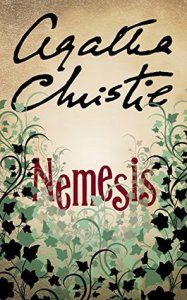
6. JUNE – A story featuring a garden…Nemesis

~

Six mysteries, thrillers or crime novels NOT by Agatha Christie

1. The Pact by Sharon Bolton
2. The Deadly Truth by Helen McCloy
3. The Royal Secret by Andrew Taylor
4. The Decagon House Murders by Yukito Ayatsuji
5. Hare Sitting Up by Michael Innes
6. Daughters of Night by Laura Shepherd-Robinson

~

Six non-fiction books read this year

1. Myself When Young by Daphne du Maurier
2. The Killer of the Princes in the Tower by MJ Trow
3. Live Alone and Like It by Marjorie Hillis
4. The Light Ages by Seb Falk
5. The Fall of the House of Byron by Emily Brand
6. The Haunting of Alma Fielding by Kate Summerscale

~

Six books that took me on a tour of Europe

1. The Manuscript Found in Saragossa by Jan Potocki (SPAIN)
2. Ashes by Christopher de Vinck (BELGIUM)
3. Ariadne by Jennifer Saint (GREECE)
4. Still Life by Sarah Winman (ITALY)
5. The Missing Sister by Lucinda Riley (IRELAND)
6. The Paris Library by Janet Skeslien Charles (FRANCE)

~

Six books with titles connected to rivers, seas and storms

1. The Land Beyond the Sea by Sharon Penman
2. Islands of Mercy by Rose Tremain
3. A Net for Small Fishes by Lucy Jago
4. The Drowned City by KJ Maitland
5. River of Stars by Guy Gavriel Kay
6. The Wrecking Storm by Michael Ward

~

Six books I’ve enjoyed reading this year but couldn’t fit into another category

1. Good by Stealth by Henrietta Clandon
2. The Rose Code by Kate Quinn
3. China by Edward Rutherfurd
4. The Metal Heart by Caroline Lea
5. The Hardie Inheritance by Anne Melville
6. The Last Daughter by Nicola Cornick

~

I was pleased to find that I’d read six non-fiction books so far this year – it’s not often that I’ve read enough to fill a whole category. However, I’m disappointed that I haven’t read six classics (apart from the classic crime). I’ll have to make up for that between now and December!

Have you taken part in Six in Six or are you planning to? Have you read any of the books I’ve mentioned?