Six Degrees of Separation: From The End of the Affair to Earth and High Heaven

It’s the first Saturday of the month which means it’s time for another Six Degrees of Separation, hosted by Kate of Books are my Favourite and Best. The idea is that Kate chooses a book to use as a starting point and then we have to link it to six other books of our choice to form a chain. A book doesn’t have to be connected to all of the others on the list – only to the one next to it in the chain.

This month we’re starting with The End of the Affair by Graham Greene. As usual, it’s a book that I haven’t read! Here’s what it’s about:

“This is a record of hate far more than of love,” writes Maurice Bendrix in the opening passages of The End of the Affair, and it is a strange hate indeed that compels him to set down the retrospective account of his adulterous affair with Sarah Miles.

Now, a year after Sarah’s death, Bendrix seeks to exorcise the persistence of his passion by retracing its course from obsessive love to love-hate. At first, he believes he hates Sarah and her husband, Henry. Yet as he delves deeper into his emotional outlook, Bendrix’s hatred shifts to the God he feels has broken his life, but whose existence at last comes to recognize.

~

I really didn’t know where to start with this month’s chain. I haven’t read anything at all by Graham Greene, so I tried to think of other books about the end of an affair but came up with nothing. I’m afraid I’ll have to take the easy way out and just link to another book with the word ‘affair’ in the title: The Daffodil Affair by Michael Innes (1). This is part of the Inspector Appleby mystery series but is not a typical detective novel at all. It has a very bizarre plot involving a mind-reading horse, a missing girl and a haunted house! It’s not an Appleby novel that I can recommend; I found it too strange and not what I’d expected when I picked it up.

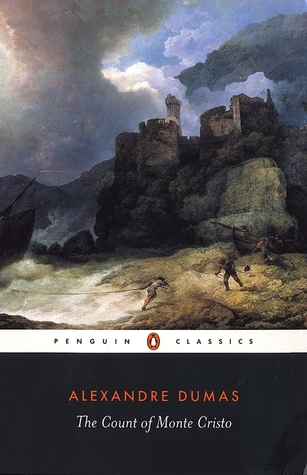
Daffodil is the name of the horse in the above novel; a book which really is about a flower is The Black Tulip by Alexandre Dumas (2). Dumas is a favourite author of mine and although this book, set in the Netherlands in the 17th century, is much less well known than The Count of Monte Cristo or The Three Musketeers, I still loved it. A book about a contest between two men who both hope to grow the world’s first black tulip may not sound very exciting, but in Dumas’ hands it certainly is! It actually has some similar themes to The Count of Monte Cristo, but is a much shorter novel and could be a good starting point if you’re new to Dumas and daunted by the length of his other books.

Rags of Time by Michael Ward (3) is the first book in a series of historical mysteries featuring Tom Tallant, a London spice merchant, and set, like The Black Tulip, in the 17th century. This first novel takes us to Amsterdam during the period known as ‘Tulipmania’ where tulip bulbs are being bought and sold for higher and higher prices. I found this part of the book fascinating, particularly the descriptions of the Dutch practice of windhandel, or ‘trading in promises’. As I was putting this post together, I noticed that the cover of the book says “The murder was just the beginning of the affair,” so I could actually have linked this to The End of the Affair and used it as the first link in my chain!

In Rags of Time, Tom teams up with Elizabeth Seymour, a young woman who is a keen astronomer. Swithin St Cleeve in Two on a Tower by Thomas Hardy (4), is also an astronomer – or at least he dreams of becoming one. When Lady Constantine allows him to create an observatory in a tower on her land, the two meet in the tower to study the beauty of the night sky and gradually begin to fall in love, determined to overcome their differences in class and age. I found this a gentler story than some of Hardy’s others, less tragic but also less moving and although it’s still a book that I liked very much, it’s not a favourite of mine.

Although I don’t think Two on a Tower is one of his very best novels, I do love Thomas Hardy and have read most of his books now. A few years ago, I enjoyed dipping into this brief but beautiful guide to his life and work by Jane Drake, titled simply Thomas Hardy (5). The book includes a fold-out map of Hardy’s fictional Wessex, illustrations and colour photographs, some snippets of biographical information, quotations and extracts from several of his novels and poems. At only 32 pages, it’s too short to be completely satisfying and you won’t really learn a lot from it, but I think it would make a nice gift for a Hardy fan.

Drake is also the surname of Erica Drake, one of the main characters in Gwethalyn Graham’s Earth and High Heaven (6). This 1944 novel published by Persephone is set in Canada and follows Erica’s relationship with Marc Reiser. Marc comes from a Jewish family and Erica’s parents – who are English-Canadian – refuse to accept him as a suitable husband for their daughter. This fascinating novel explores the tensions and divisions between these two groups, and also the French-Canadian community. I enjoyed this book and, like many Persephones, it explores themes that are still important and relevant today.

~

And that’s my chain for March! My links have included the word ‘affair’, flowers, Tulipmania, astronomers, Hardy’s Wessex and the name Drake.

Next month we’ll be starting with Our Wives Under the Sea by Julia Armfield.

Six Degrees of Separation: From No One is Talking About This to A Moment of Silence

It’s the first Saturday of the month which means it’s time for another Six Degrees of Separation, hosted by Kate of Books are my Favourite and Best. The idea is that Kate chooses a book to use as a starting point and then we have to link it to six other books of our choice to form a chain. A book doesn’t have to be connected to all of the others on the list – only to the one next to it in the chain.

This month we’re starting with No One is Talking About This by Patricia Lockwood. Here’s what it’s about:

As this urgent, genre-defying book opens, a woman who has recently been elevated to prominence for her social media posts travels around the world to meet her adoring fans. She is overwhelmed by navigating the new language and etiquette of what she terms “the portal,” where she grapples with an unshakable conviction that a vast chorus of voices is now dictating her thoughts. When existential threats–from climate change and economic precariousness to the rise of an unnamed dictator and an epidemic of loneliness–begin to loom, she posts her way deeper into the portal’s void. An avalanche of images, details, and references accumulate to form a landscape that is post-sense, post-irony, post-everything. “Are we in hell?” the people of the portal ask themselves. “Are we all just going to keep doing this until we die?”

~

I haven’t read No One is Talking About This and probably never will, but as soon as I saw the title I knew that my first link this month was going to be to a book about someone who doesn’t talk: The Silent Boy by Andrew Taylor (1). This historical mystery set during the French Revolution features a boy who witnesses a murder and, having been told by the culprit never to say a word, takes this warning literally and refuses to speak to anyone at all.

Gervase Frant, the hero of Georgette Heyer’s The Quiet Gentleman (2), is not a silent man but he is a quiet one (and his cousin Theo is even quieter). This is not really a typical Heyer novel – it’s classed as one of her Regency romances, but it has a strong mystery element and the romance is quite a subtle one. It’s also one that I particularly enjoyed – although I wished we had seen more of the heroine!

Another book with ‘quiet’ in the title is Death on a Quiet Day by Michael Innes (3). This book from 1956 is one of Innes’ series of Inspector Appleby novels. I’ve found the books in this series quite varied; Death on a Quiet Day is more thriller than mystery, with the protagonist being chased through the Dartmoor countryside after discovering a dead body.

The opposite of quiet is loud, so the next book in my chain is Grace Williams Says it Loud by Emma Henderson (4). This very moving novel tells the story of a young girl in the 1950s who has difficulty communicating verbally and her experiences after being sent to live at the Briar Mental Institute. Although I found this an uncomfortable book to read at times due to the subject, there were still some moments of warmth and humour and it’s a book that I’m very glad I decided to read.

‘Saying it loud’ can cause echoes, so the next book in my chain is Echoes from the Dead by Johan Theorin (5). This is the first in a series of crime novels set on the Swedish island of Öland; there are four books (although I’ve only read three of them) and each one takes place during a different season of the year. I loved the atmosphere and the elderly Gerlof, one of the recurring characters, and I should really find time to read the last of the four books.

Another book which is the first in a crime series (and has a sound-related title) is A Moment of Silence by Anna Dean (6), an entertaining murder mystery set in an English country house in the early 19th century. I loved the heroine, Miss Dido Kent, and had fully intended to continue with the series but never did.

~

And that’s my chain for February! My links have included silent boys and quiet gentlemen, quiet days, loud voices, echoes and crime novels. In March we’ll be starting with the modern classic, The End of the Affair by Graham Greene.

Top Ten Tuesday: Classics with names in the titles

This week’s topic for Top Ten Tuesday (hosted by That Artsy Reader Girl) is “Books with Names/Character Names in the Titles”.

I have decided to focus on classic novels and have listed five female characters and five male – interestingly, I had much more choice when it came to the women! As usual with my Top Ten Tuesday posts, I have tried to stick to books that I’ve read and reviewed on my blog.

1. Ann Veronica by HG Wells – This novel about a young woman’s struggle for independence and her involvement with the suffrage movement isn’t something you would normally associate with science fiction author HG Wells, but I thought it was an interesting read.

2. My Cousin Rachel by Daphne du Maurier – Du Maurier liked using names in her titles! As well as the most obvious choice, Rebecca, there’s also Julius, Mary Anne – and this one, My Cousin Rachel, a dark and atmospheric novel which is one of my personal favourites by du Maurier.

3. Lorna Doone by RD Blackmore – Set in 17th century England, I loved this novel about a man who falls in love with a woman from a clan of violent outlaws. Although Lorna is the title character, I actually found some of the minor characters more interesting, and I could probably say the same about a few of the other books on this list too.

4. Sylvia’s Lovers by Elizabeth Gaskell – I’ve read several of Gaskell’s novels and this is one that I particularly liked. Set on the North Yorkshire coast during the Napoleonic Wars it’s a beautifully written novel but I agree with Gaskell when she said it’s “the saddest story I ever wrote”.

5. Shirley by Charlotte Brontë – I’ve chosen to highlight this one rather than Charlotte’s more popular Jane Eyre. Although it’s not one of the strongest novels by the Brontë sisters, I think it deserves to be more widely read. It’s an interesting fact that Shirley was seen as a male name rather than a female one until the publication of this book.

6. Lord Jim by Joseph Conrad – I thought this was a fascinating book, but also a difficult one to read and understand because of the structure and the complex, morally ambiguous title character. I can’t really say that I enjoyed it, but I was pleased to at least make it to the end.

7. David Copperfield by Charles Dickens – Another author who used a lot of names in titles! I haven’t read all of them, but those I have read and could have chosen from include Oliver Twist, The Mystery of Edwin Drood and Dombey and Son. I decided on this one because it’s a book I particularly enjoyed, with a selection of fascinating characters – apart from the very annoying Dora Spenlow!

8. Jude the Obscure by Thomas Hardy – If Sylvia’s Lovers is sad, this book is heartbreaking. It follows the story of a young man from a humble background whose attempts to gain an education and live with the woman he loves leads to tragedy. I love Hardy but can see why he doesn’t appeal to everyone!

9. Uncle Silas by Sheridan Le Fanu – This Victorian classic has everything you could wish for in a Gothic novel and after a slow start, I loved it. A good choice for a Halloween reading list or to curl up with on a dark winter’s night.

10. Phineas Finn by Anthony Trollope – Phineas Finn is a young Irish politician who appears in Trollope’s Palliser series. His name actually features in two of the books from this series – this one and Phineas Redux, both of which I enjoyed.

Have you read any of these? Which other classics can you think of with character’s names in the title?
Top Ten Tuesday: Authors I discovered in 2021

This week’s Top Ten Tuesday (hosted by That Artsy Reader Girl) gives us a chance to look back at our 2021 reading and pick out ten authors we read for the first time last year. I have listed below a mixture of new-to-me authors I loved and others I’m still not sure about.

~

1. Kate Quinn – I read The Rose Code in 2021 and loved it; in fact it was one of my books of the year. I want to read her new one, The Diamond Eye, which is being published in March, but she also has plenty of earlier novels for me to explore.

2. Leïla Slimani – I chose to read The Country of Others because I thought it would be interesting to read a book set in 1940s Morocco written by a French-Moroccan author. I did find it interesting, but it was also very bleak and depressing. I’m not sure whether I’ll try more of Slimani’s books.

3. Jennifer Saint – I really enjoyed Ariadne and am looking forward to starting my review copy of Jennifer Saint’s new book, Elektra, in which she tells the stories of three more women from Greek mythology.

4. Angela ThirkellHigh Rising had been on my Classics Club list for years and I eventually picked it up last summer. I don’t think Thirkell is going to become a favourite author, but I found a lot to like in this book and will try to read the second one in the series soon.

5. Gill Hornby – I read Miss Austen just before Christmas and really enjoyed it. Her earlier novels don’t appeal to me, but her next one, due out this year, is also Austen-inspired so I’m definitely interested in reading it.

6. Joan Aiken – I had been meaning to try Joan Aiken’s books for years and finally got round to it in 2021 with her 1976 Gothic novel Castle Barebane. I’m hoping to read more of her work soon.

7. Tim Pears – I read The Horseman, the first in Tim Pears’ West Country Trilogy, in 2021 and hoped that I would love it and want to read the rest of the trilogy immediately. However, although I thought it was beautifully written I found it very slow and am unsure whether to continue.

8. Rumer GoddenBlack Narcissus was one of my final reads of 2021. Although I didn’t love it as much as I’d hoped to, I found it interesting and atmospheric and I’m planning to read more by Rumer Godden.

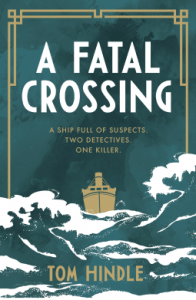
9. Tom Hindle – I loved Tom Hindle’s debut novel, A Fatal Crossing, which I reviewed last week but read towards the end of 2021, hence its inclusion on this list. I can’t wait to see what he writes next.

10. John Bude – I read The Sussex Downs Murder last year and enjoyed it, although I found the mystery too easy to solve. British Library Crime Classics have published a lot of Bude’s other crime novels, so I will probably try another one.

~

Have you read any of these authors? Which new (or new-to-you) authors did you discover last year?

Top Ten Tuesday: Most Recent Additions to my Book Collection

This week’s Top Ten Tuesday (hosted by That Artsy Reader Girl) asks us for the ten most recent additions to our book collections.

Here are mine:

1. The Wolf Den by Elodie Harper – I’ve seen this novel set in ancient Pompeii mentioned on a lot of best of 2021 lists, so I’ve added it to my TBR.

2. The Appeal by Janice Hallett – I am currently reading Janice Hallett’s new mystery novel, The Twyford Code, and before I was even halfway through I knew I wanted to read her previous book too. The Appeal sounds just as good, so I have high hopes for it.

3. Go Tell the Bees That I am Gone by Diana Gabaldon – I loved the earlier books in Diana Gabaldon’s Outlander series but have been disappointed with the more recent ones. Still, having come this far with the series I am committed to finishing it now! This is the ninth and newest book, which was published just before Christmas.

4. The Story of the British Isles in 100 Places by Neil Oliver – This was an unexpected Christmas present. I’ve seen some very positive reviews of this guide to one hundred of Britain’s historic sites, so I’ll look forward to dipping into it soon.

5. The Inugami Curse by Seishi Yokomizo – My favourite of several Japanese crime authors I’ve tried over the last few years. I enjoyed The Honjin Murders and The Village of Eight Graves and am looking forward to meeting detective Kosuke Kindaichi again in this one.

6. The Dark Queens by Shelley Puhak – The most recent book I received for review via NetGalley. This is a biography of two Early Medieval French queens, Brunhild and Fredegund. I know nothing at all about these queens or the Merovingian dynasty they belonged to, so I think this will be a fascinating read.

7. Traitor in the Ice by KJ Maitland – This is the second book in Maitland’s Daniel Pursglove mystery series, after last year’s The Drowned City. The series is set in the 17th century and follows Pursglove’s attempts to uncover a Catholic conspiracy.

8. The Fugitive Colours by Nancy Bilyeau – Another NetGalley book. This is a sequel to Bilyeau’s The Blue, which I really enjoyed, and continues the story of Genevieve Planché, a young Huguenot woman in the 18th century.

9. In a Lonely Place by Dorothy B Hughes – Two of Hughes’ other novels have won places on my best books of the year lists in both 2021 and 2020. I’m hoping this will be another one that I’ll love!

10. The Sugar Pavilion by Rosalind Laker – This was a free Kindle book listed in a recent Lume Books newsletter. I have enjoyed some of Rosalind Laker’s books but others not so much, so I’ll see what I think of this one, set during the French Revolution.

~

Have you read any of these? What are the most recent additions to your book collection?

Six Degrees of Separation: From Rules of Civility to Giant’s Bread

It’s the first Saturday of the month – and of 2022 – which means it’s time for another Six Degrees of Separation, hosted by Kate of Books are my Favourite and Best. The idea is that Kate chooses a book to use as a starting point and then we have to link it to six other books of our choice to form a chain. A book doesn’t have to be connected to all of the others on the list – only to the one next to it in the chain.

This month we are starting with Rules of Civility by Amor Towles. I haven’t read it, but I did enjoy Towles’ A Gentleman in Moscow, so maybe I should try this one. Here’s what it’s about:

This sophisticated and entertaining first novel presents the story of a young woman whose life is on the brink of transformation. On the last night of 1937, twenty-five-year-old Katey Kontent is in a second-rate Greenwich Village jazz bar when Tinker Grey, a handsome banker, happens to sit down at the neighboring table. This chance encounter and its startling consequences propel Katey on a year-long journey into the upper echelons of New York society — where she will have little to rely upon other than a bracing wit and her own brand of cool nerve. With its sparkling depiction of New York’s social strata, its intricate imagery and themes, and its immensely appealing characters, Rules of Civility won the hearts of readers and critics alike.

~

I had trouble getting started with this month’s chain, but finally settled on New York as my first link. I can think of several books I’ve read that are set in New York, but I’ve chosen the most obvious one: New York by Edward Rutherfurd (1). This very long but fascinating novel tells the story of New York from its early years as a 17th century Dutch trading post right through to the present day, exploring some of the key events and important historical figures from the city’s history.

In New York, Rutherfurd focuses on several generations of one fictional family, the Masters, who are merchants and bankers. Another novel about a banking family is House of Gold by Natasha Solomons (2). The family in this book, which is set in Europe before and during World War I, are the Goldbaums, who are fictional but loosely based on the real-life Rothschilds. I really enjoyed this one and am looking forward to reading more of Natasha Solomons’ books (I have only read this one and The Novel in the Viola so far).

Gold makes me think of silver and leads me to The Silver Pigs by Lindsey Davis (3), the first book in the Marcus Didius Falco mystery series. This book is set in Rome and Britannia in the year 70 AD and follows Falco as he investigates a conspiracy involving a secret stockpile of silver ingots known as ‘silver pigs’. Ancient Rome is not one of my favourite historical periods and I wasn’t thrilled with the audiobook version I listened to either, but I found it interesting enough to want to continue with the series (in print format, I think).

The Silver Pigs has a silver coin on the cover. Using that as my next link takes me to the Hesperus Press edition of A Rogue’s Life by Wilkie Collins (4), which has lots of coins on the cover. Collins is one of my favourite Victorian authors and although this novella-length book about the money-making schemes of a loveable young rogue is not the best example of his work, I still thought it was a lot of fun to read.

The word ‘rogue’ brings me to my next book, Rogues’ Holiday by Maxwell March (5). This book is great fun too; first published in 1935, it’s a thriller in which a Scotland Yard Inspector stumbles upon a group of criminals while taking a two-week break in a seaside hotel. Maxwell March is a pseudonym of Margery Allingham, the Golden Age crime novelist best known for her Albert Campion mystery series.

Agatha Christie was another Golden Age Queen of Crime who wrote under a pseudonym. Giant’s Bread (6) is one of six novels published under the name Mary Westmacott. I found this story about a young man’s love of music entirely different from Christie’s detective novels, but just as enjoyable in its own way. I’m sure I’ll be reading more of her Mary Westmacott books.

~

And that’s my first chain of the year! My links this month included: New York, bankers, precious metals, coins, rogues and authors with pseudonyms.

In February we will be starting with No One Is Talking About This by Patricia Lockwood.

Six Degrees of Separation: From Ethan Frome to Murder Under the Christmas Tree

It’s the first Saturday of the month which means it’s time for another Six Degrees of Separation, hosted by Kate of Books are my Favourite and Best. The idea is that Kate chooses a book to use as a starting point and then we have to link it to six other books of our choice to form a chain. A book doesn’t have to be connected to all of the others on the list – only to the one next to it in the chain.

This month we are beginning with the classic novella Ethan Frome by Edith Wharton. I’ve read this one and liked it, although it’s still the only book I’ve read by Wharton. Here’s what it’s about:

Ethan Frome works his unproductive farm and struggles to maintain a bearable existence with his difficult, suspicious and hypochondriac wife, Zeena. But when Zeena’s vivacious cousin enters their household as a ‘hired girl’, Ethan finds himself obsessed with her and with the possibilities for happiness she comes to represent. In one of American fiction’s finest and most intense narratives, Edith Wharton moves this ill-starred trio towards their tragic destinies.

It’s been ten years since I read Ethan Frome, but I still remember the atmospheric setting of Starkfield, Massachusetts with its cold, harsh winters. My first link, then, is to a recent read which is also set in winter, Midnight in Everwood by MA Kuzniar (1). This is a retelling of ETA Hoffmann’s The Nutcracker and follows aspiring ballerina Marietta as she hides inside a grandfather clock on Christmas Eve and steps out into the enchanting world of Everwood. The descriptions of snow-covered landscapes are lovely, but I was disappointed with the writing style and the general lack of depth.

Another book with a very strong sense of place – and another wintry setting – is Touch by Alexi Zentner (2). This is a beautifully written novel about three generations of a family who live in a Canadian gold mining and logging town. There are elements of the supernatural and we meet lots of creatures from Canadian and Inuit folklore – sea witches, golden caribou, wood spirits and water monsters – but although I’m not always a fan of magical realism, I thought it worked well here.

I could easily have continued with the winter theme, but I like to have some variety in my chains so I’m going to link instead to another book with the word ‘touch’ in the title: Touch Not the Cat by Mary Stewart. This is one of Stewart’s later novels, published in 1976, and tells the story of Bryony Ashley who returns to her ancestral home, Ashley Court, to investigate after her father dies under suspicious circumstances leaving her a cryptic message warning her of danger. I enjoyed this book, although it’s not one of my favourites by Stewart.

Bryony Ashley, the heroine of Touch Not the Cat is able to communicate with an unidentified secret lover using telepathy. In Robin Hobb’s fantasy novel Fool’s Assassin (4), the characters use two forms of magic known as the Skill and the Wit in order to form telepathic connections with other people and animals. It’s a great book, but if you’re new to Robin Hobb don’t start with this one – it’s part of a much longer series and you really need to start at the beginning with Assassin’s Apprentice.

Although Fool’s Assassin is the fourteenth book in the sequence and therefore reacquaints us with lots of old friends, it also introduces a fascinating new character, Bee, and a large part of the story is written from her perspective. Her name makes me think of The Beekeeper’s Apprentice by Laurie R King (5). This mystery novel teams up a teenage orphan, Mary Russell, with Arthur Conan Doyle’s famous detective, Sherlock Holmes, who has retired to the countryside to keep bees. It’s the first in a series, of which I’ve still only read two!

There’s a Sherlock Holmes story included in the anthology Murder Under the Christmas Tree edited by Cecily Gayford (6). This Christmas-themed collection features stories by classic crime authors including Dorothy L Sayers, Edmund Crispin and Margery Allingham, as well as more recent authors such as Val McDermid and Ian Rankin. I think this book brings my chain to an appropriate end!

~

And that’s my chain for December. My links have included wintry settings, the word ‘touch’, telepathic connections, bees and Sherlock Holmes!

Next month we’ll be starting with Rules of Civility by Amor Towles.