Six Degrees of Separation: From Memoirs of a Geisha to A Tale of Two Cities

It’s the first Saturday of the month, which means it’s time for another Six Degrees of Separation hosted by Kate of Books are my Favourite and Best. The idea is that Kate chooses a book to use as a starting point and then we have to link it to six other books of our choice to form a chain. A book doesn’t have to be connected to all of the others on the list – only to the one next to it in the chain.

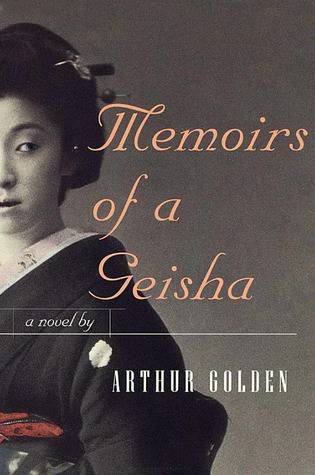
The first book this month is Memoirs of a Geisha by Arthur Golden. I have never read it, but I know it is set in Japan.

Thinking about other books I’ve read that are also set in Japan, the first one to come to mind is Shogun by James Clavell, but I prefer to only link to books that I have actually reviewed on my blog. My next choice, then, is The Shogun’s Queen by Lesley Downer. I really enjoyed this novel about Atsu, wife of the Shogun Tokugawa Iesada.

The Shogun’s Queen was part of a quartet of novels, although I still haven’t read the other three in the series. Another quartet of novels I have started (but not finished) is Johan Theorin’s Öland Quartet, which begins with Echoes from the Dead.

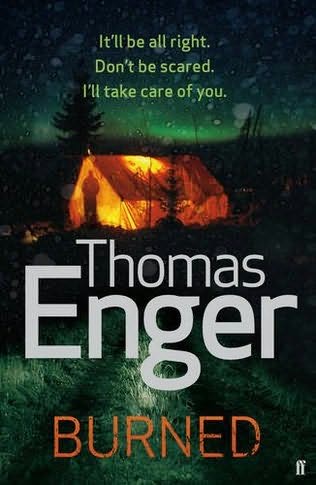
These four crime novels are all set on the Swedish island of Öland, which is a very atmospheric setting, and each book takes place in a different season. The other two I have read are The Darkest Room and The Quarry. I don’t often read Scandinavian crime fiction, but apart from the Theorin books, another that I enjoyed was Burned by Norwegian author Thomas Enger.

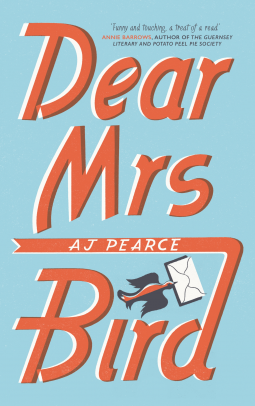
The main character in Burned, Henning Juul, is a journalist. Journalism makes me think of a book I read recently and loved – Dear Mrs Bird by AJ Pearce, about a young woman who dreams of becoming a Lady War Correspondent but finds herself typing up letters for the problem page instead.

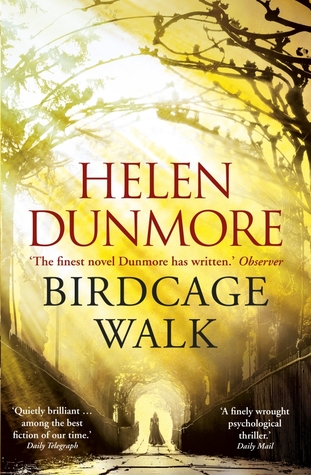
For my next link, I thought of other books I’ve read with ‘bird’ in the title and decided on Birdcage Walk by Helen Dunmore. This was Dunmore’s last novel before her death and although the story is set in England, the French Revolution is played out in the background.

I have read quite a few novels about the French Revolution so I had plenty of options for the last book in my chain. The one I’m going to choose is A Tale of Two Cities, which, so far, is my favourite Charles Dickens novel.

So, that’s my chain for this month! From Japan to France via Sweden, Norway and England. Have you read any of these books?

Next month, the starting point will be The Poisonwood Bible by Barbara Kingsolver, yet another book I haven’t read!

Top Ten Tuesday: Books on my Spring TBR

This week’s Top Ten Tuesday, hosted by That Artsy Reader Girl, asks for ten books on our spring TBR. I’m sometimes hesitant to make lists like this because saying that I’m planning to read a book seems to guarantee that I won’t do it. There are still four books from the winter TBR list I posted in November that I haven’t read yet. Anyway, here are ten books that I really do intend to read in the next few months!

~

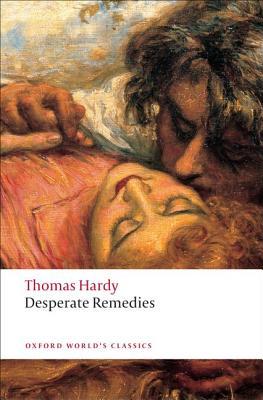
1. Desperate Remedies by Thomas Hardy (1871)

This was the book chosen for me in the recent Classics Club Spin, so I need to read it before the end of April.
Cytherea has taken a position as lady’s maid to the eccentric arch-intriguer Miss Aldclyffe. On discovering that the man she loves, Edward Springrove, is already engaged to his cousin, Cytherea comes under the influence of Miss Aldclyffe’s fascinating, manipulative steward Manston.

Blackmail, murder and romance are among the ingredients of Hardy’s first published novel, and in it he draws blithely on the ‘sensation novel’ perfected by Wilkie Collins. Several perceptive critics praised the author as a novelist with a future when Desperate Remedies appeared anonymously in 1871. In its depiction of country life and insight into psychology and sexuality it already bears the unmistakable imprint of Hardy’s genius.

~

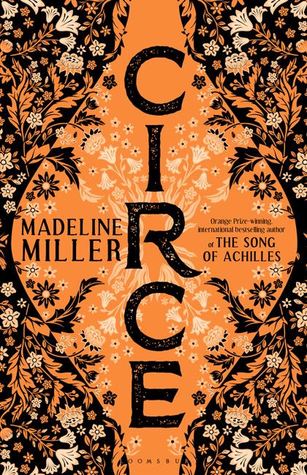
2. Circe by Madeline Miller (2018)

Review copy received from NetGalley.
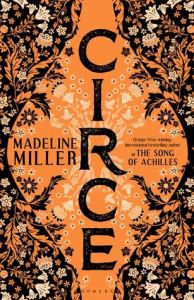
In the house of Helios, god of the sun and mightiest of the Titans, a daughter is born. But Circe is a strange child – not powerful, like her father, nor viciously alluring like her mother. Turning to the world of mortals for companionship, she discovers that she does possess power – the power of witchcraft, which can transform rivals into monsters and menace the gods themselves.

Threatened, Zeus banishes her to a deserted island, where she hones her occult craft, tames wild beasts and crosses paths with many of the most famous figures in all of mythology, including the Minotaur, Daedalus and his doomed son Icarus, the murderous Medea, and, of course, wily Odysseus.

But there is danger, too, for a woman who stands alone, and Circe unwittingly draws the wrath of both men and gods, ultimately finding herself pitted against one of the most terrifying and vengeful of the Olympians. To protect what she loves most, Circe must summon all her strength and choose, once and for all, whether she belongs with the gods she is born from, or the mortals she has come to love.

~

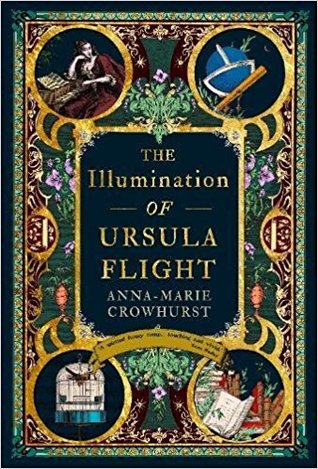
3. The Illumination of Ursula Flight by Anna-Marie Crowhurst (2018)

Another review copy received from NetGalley.
Born on the night of an ill-auguring comet just before Charles II’s Restoration, Ursula Flight has a difficult future written in the stars.

Against the custom of the age she begins an education with her father, who fosters in her a love of reading, writing and astrology.

Following a surprise meeting with an actress, Ursula yearns for the theatre and thus begins her quest to become a playwright despite scoundrels, bounders, bad luck and heartbreak.


~

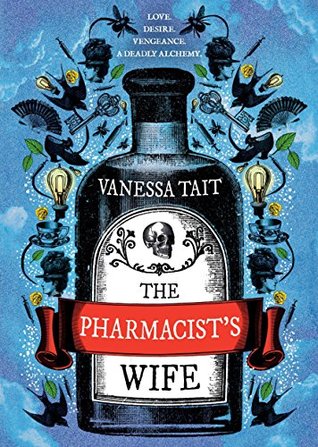
4. The Pharmacist’s Wife by Vanessa Tait (2018)

And one more NetGalley book.
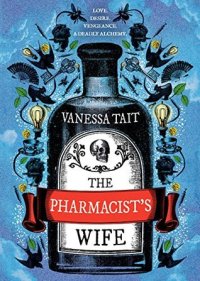
When Rebecca Palmer’s new husband opens a pharmacy in Victorian Edinburgh, she expects to live the life of a well-heeled gentlewoman. But her ideal is turns to ashes when she discovers her husband is not what he seems. As Rebecca struggles to maintain her dignity in the face of his infidelity and strange sexual desires, Alexander tries to pacify her so-called hysteria with a magical new chemical creation. A wonder-drug he calls heroin.

Rebecca’s journey into addiction takes her further into her past, and her first, lost love, while Alexander looks on, curiously observing his wife’s descent. Meanwhile, Alexander’s desire to profit from his invention leads him down a dangerous path that blurs science, passion, and death. He soon discovers that even the most promising experiments can have unforeseen and deadly consequences…

Reminiscent of the works of Sarah Waters, this is a brilliantly observed piece of Victoriana which deals with the disempowerment of women, addiction, desire, sexual obsession and vengeance.

~

5. Munich by Robert Harris (2017)

One of those unread books from my winter list that I do still want to read as soon as possible!

September 1938
Hitler is determined to start a war.
Chamberlain is desperate to preserve the peace.
The issue is to be decided in a city that will forever afterwards be notorious for what takes place there.
Munich.

As Chamberlain’s plane judders over the Channel and the Fürher’s train steams relentlessly south from Berlin, two young men travel with secrets of their own.

Hugh Legat is one of Chamberlain’s private secretaries; Paul Hartmann a German diplomat and member of the anti-Hitler resistance. Great friends at Oxford before Hitler came to power, they haven’t seen one another since they were last in Munich six years earlier. Now. as the future of Europe hangs in the balance, their paths are destined to cross again .

When the stakes are this high, who are you willing to betray? Your friends, your family, your country or your conscience?

~

6. Thrice the Brinded Cat Hath Mew’d by Alan Bradley (2016)

The latest Flavia de Luce mystery, The Grave’s a Fine and Private Place, has recently been published but I need to catch up with this one first.
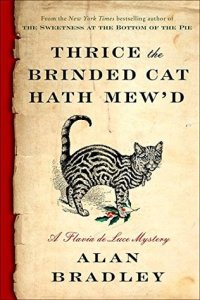
In spite of being ejected from Miss Bodycote’s Female Academy in Canada, twelve-year-old Flavia de Luce is excited to be sailing home to England. But instead of a joyous homecoming, she is greeted on the docks with unfortunate news: Her father has fallen ill, and a hospital visit will have to wait while he rests. But with Flavia’s blasted sisters and insufferable cousin underfoot, Buckshaw now seems both too empty—and not empty enough.

Only too eager to run an errand for the vicar’s wife, Flavia hops on her trusty bicycle, Gladys, to deliver a message to a reclusive wood-carver. Finding the front door ajar, Flavia enters and stumbles upon the poor man’s body hanging upside down on the back of his bedroom door. The only living creature in the house is a feline that shows little interest in the disturbing scene. Curiosity may not kill this cat, but Flavia is energized at the prospect of a new investigation. It’s amazing what the discovery of a corpse can do for one’s spirits. But what awaits Flavia will shake her to the very core.

~

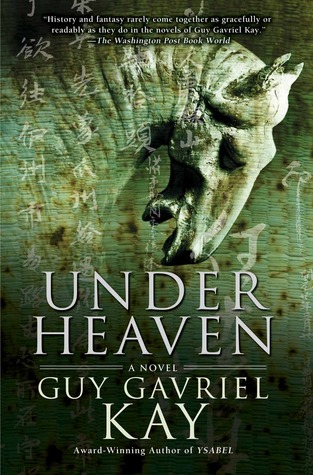
7. Under Heaven by Guy Gavriel Kay (2010)

It’s been a while since I last read any of Guy Gavriel Kay’s books so I would like to read this one soon.
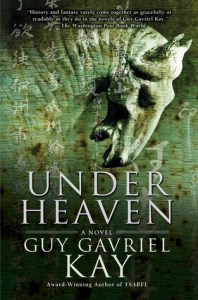
It begins simply. Shen Tai, son of an illustrious general serving the Emperor of Kitai, has spent two years honoring the memory of his late father by burying the bones of the dead from both armies at the site of one of his father’s last great battles. In recognition of his labors and his filial piety, an unlikely source has sent him a dangerous gift: 250 Sardian horses.

You give a man one of the famed Sardian horses to reward him greatly. You give him four or five to exalt him above his fellows, propel him towards rank, and earn him jealousy, possibly mortal jealousy. Two hundred and fifty is an unthinkable gift, a gift to overwhelm an emperor.

Wisely, the gift comes with the stipulation that Tai must claim the horses in person. Otherwise he would probably be dead already…

~

8. Gentian Hill by Elizabeth Goudge (1949)

For the last three years I have joined in with Lory’s Elizabeth Goudge Day; she isn’t hosting one this year but I will still be celebrating Goudge’s birthday in April.
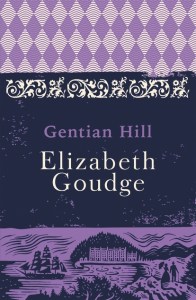
Unable to bear the prospect of a life at sea, young Anthony O’Connell deserts his ship at Torquay and escapes into the Devonshire countryside under a new name. When Stella Sprigg, adopted daughter of a local farmer, encounters ‘Zachary’, the pair instantly know they are destined to be together.

Intertwined with the local legend of St. Michael’s Chapel, Stella and Zachary’s story takes them from the secluded Devonshire valley to the perilous Mediterranean seas and finally to the poverty and squalor of eighteenth-century London.

~

9. Cashelmara by Susan Howatch (1974)

Having recently re-read Penmarric (review coming soon), I’m looking forward to continuing my Howatch re-reads with Cashelmara and then The Wheel of Fortune.
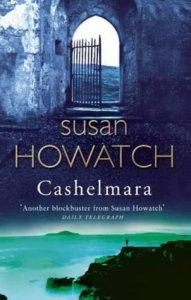
There were two subjects which lonely widower Edward de Salis never discussed: his dead wife and his family home in Ireland, ‘matchless Cashelmara’. So when he meets Marguerite, a bright young American with whom he can talk freely about both, he is able to love again and takes her back to Ireland as his wife. But Marguerite soon discovers that married life is not what she expected, and that she has married into a troubled family bitterly divided by love and hatred. Cashelmara becomes the curse of three generations as they play out their fates in a spellbinding drama, which moves inexorably towards murder and retribution.

~

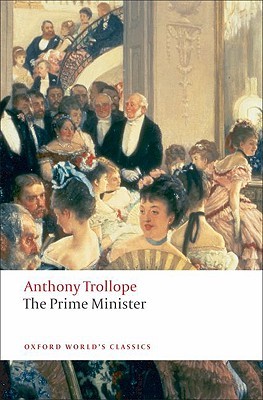
10. The Prime Minister by Anthony Trollope (1876)

Another book from my Classics Club list. I started to read it earlier this year but the time wasn’t right and I’m ready for another attempt now.
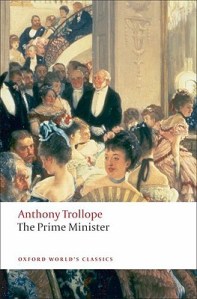
Despite his mysterious antecedents, an unscrupulous financial speculator, Ferdinand Lopez, aspires to marry into respectability and wealth and join the ranks of British society. One of the nineteenth century’s most memorable outsiders, Lopez’s story is set against that of the ultimate insider, Plantagenet Palliser, Duke of Omnium, who reluctantly accepts the highest office of state, becoming “the greatest man in the greatest country in the world.”

The Prime Minister is the fifth in Trollope’s six-volume Palliser series and a wonderfully subtle portrait of a marriage, political expediency, and misplaced love.

~

Have you read any of these? What do you have on your own spring TBR?
Top Ten Tuesday: Wise, Witty, Wonderful Words

This week’s Top Ten Tuesday hosted by That Artsy Reader Girl asks us to list our ten favourite quotations from books, but I have taken a slightly different approach to the topic. There are so many passages I love from so many books that I would never be able to narrow them down to ten favourites – or even remember them all (which is why, for the last few years, I have been putting together my monthly Commonplace Book posts so that I will have some sort of record to look back on in the future).

Back to today’s post, though, and I have turned to Goodreads for help. Those of you who use Goodreads may know that there is a ‘Quotes’ function where you can find, ‘like’ and save notable quotations – and I have quite a few stored there, from which I have picked out ten that I found beautiful, funny, interesting or memorable in some way. Not necessarily all-time favourites, then, but I hope you’ll enjoy reading them anyway.

~

1. One that all book lovers will understand:

“What she was finding also was how one book led to another, doors kept opening wherever she turned and the days weren’t long enough for the reading she wanted to do.”

Alan Bennett – The Uncommon Reader

~

2. One from a favourite children’s book:

“Animals don’t behave like men,’ he said. ‘If they have to fight, they fight; and if they have to kill they kill. But they don’t sit down and set their wits to work to devise ways of spoiling other creatures’ lives and hurting them. They have dignity and animality.”

Richard Adams – Watership Down

~

3. One I find beautiful and inspiring:

“A hard truth: that courage can be without meaning or impact, need not be rewarded, or even known. The world has not been made in that way. Perhaps, however, within the self there might come a resonance, the awareness of having done something difficult, of having done…something.”

Guy Gavriel Kay – The Last Light of the Sun

~

4. One of my favourite opening lines:

“He was born with a gift of laughter and a sense that the world was mad.”

Rafael Sabatini – Scaramouche

~

5. One that I can identify with at the moment:

“Are there any leading men in your life?”

“Several, but they’re all fictional.”

Catherine Lowell – The Madwoman Upstairs

~

6. One with which anyone who has read Dorothy Dunnett’s Lymond Chronicles will sympathise:

“I wish to God,” said Gideon with mild exasperation, “that you’d talk – just once – in prose like other people.”

Dorothy Dunnett – The Game of Kings

~

7. One from a favourite classic:

“Some of us rush through life and some of us saunter through life. Mrs. Vesey sat through life.”

Wilkie Collins – The Woman in White

~

8. One of Dickens’ best:

“That was a memorable day to me, for it made great changes in me. But it is the same with any life. Imagine one selected day struck out of it, and think how different its course would have been. Pause you who read this, and think for a moment of the long chain of iron or gold, of thorns or flowers, that would never have bound you, but for the formation of the first link on one memorable day.”

Charles Dickens – Great Expectations

~

9. One which gives us some good advice:

“The past can teach us, nurture us, but it cannot sustain us. The essence of life is change, and we must move ever forward or the soul will wither and die.”

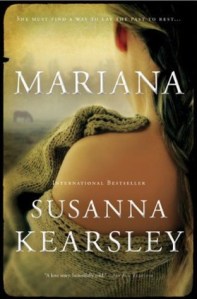
Susanna Kearsley – Mariana

~

10. One I find comforting when I’m having a bad day:

“Come what come may, time and the hour run through the roughest day.”

William Shakespeare – Macbeth

~

Do you have any favourite quotations? How do you remember them? Do you keep a notebook or do you record them online somewhere?
Six Degrees of Separation: From The Beauty Myth to Death in Venice

It’s the first Saturday of the month, which means it’s time for another Six Degrees of Separation hosted by Kate of Books are my Favourite and Best. The idea is that Kate chooses a book to use as a starting point and then we have to link it to six other books of our choice to form a chain. A book doesn’t have to be connected to all of the others on the list – only to the one next to it in the chain.

The first book this month is The Beauty Myth by Naomi Wolf. For the first time since I started taking part in Six Degrees in January, I haven’t read the starting book in the chain – and I have to confess that I hadn’t even heard of it. It seems that The Beauty Myth was originally published in 1990 and was “the bestselling classic that redefined our view of the relationship between beauty and female identity.” It sounds interesting, but is probably not a book I will ever read.

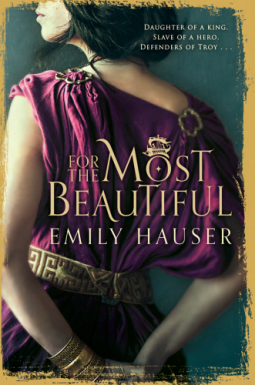
I struggled for a while trying to decide where to take the chain next, but in the end I went with another book with a ‘beautiful’ title: For the Most Beautiful by Emily Hauser. This is a novel based on Homer’s Iliad, retelling the story from a feminine perspective and focusing on two female characters – Krisayis and Briseis.

It’s the first of three books which form the Golden Apple trilogy, which brings me to my next link: books with an apple connection. I had two to choose from here – one was The Wilding by Maria McCann, about a 17th century cider-maker, but the book I’m going to include in my chain is At the Edge of the Orchard by Tracy Chevalier, the story of a family trying to establish an orchard in the Black Swamp of Ohio.

Another book with an orchard in the title (not one containing apples, though) is The Orchard of Lost Souls by Nadifa Mohamed. This is a novel set in 1980s Somalia, following the lives of three women as the country heads towards civil war.

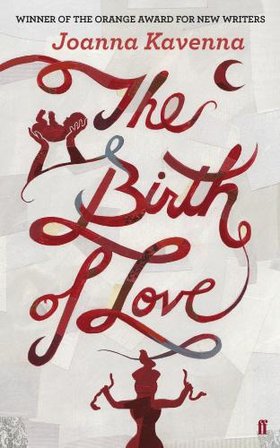
In 2013, Nadifa Mohamed was named one of Granta’s Best of Young British Novelists. Also nominated in the same year was Joanna Kavenna, who wrote The Birth of Love, a novel about childbirth and motherhood. This turned out not to be my sort of book, but I think a lot of readers would love it.

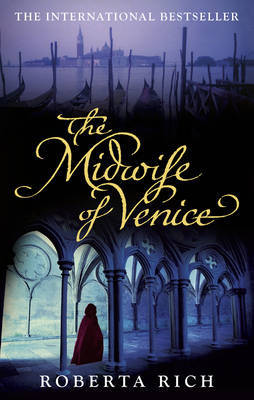
Staying on the subject of childbirth, the next link in my chain is to The Midwife of Venice by Roberta Rich. Set in 16th century Venice and Malta, this is the story of Hannah Levi, a Jewish midwife accused of witchcraft after assisting at a difficult birth.

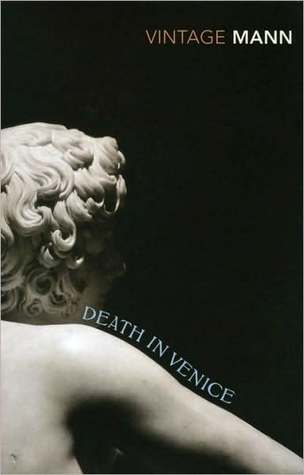
Venice is a wonderful place to visit and to read about. The book I have chosen to finish my chain is Death in Venice by Thomas Mann. I read it for German Literature Month in 2015 and although I didn’t love the book, I did love the atmospheric descriptions of Venice.

~

Have you read any of the books in my chain? What did you think of them?

Next month’s chain will begin with Memoirs of a Geisha by Arthur Golden, another book I haven’t read.

Top Ten Tuesday: Last year’s love affairs

This week’s Top Ten Tuesday (hosted by That Artsy Reader Girl) is a ‘Love Freebie’. I have decided to approach this topic by choosing ten of the most interesting, moving or memorable romances and love affairs from my last year of reading (February 2017 to February 2018).

***

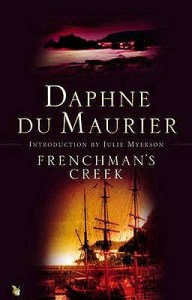
1. Frenchman’s Creek by Daphne du Maurier

This isn’t one of my favourite du Maurier novels but I still enjoyed this story of Dona St Columb who, having grown bored and disillusioned with her marriage, heads for Cornwall to spend some time away from her husband and his friends. Here she meets the pirate Jean-Benoit Aubéry and as she begins to fall in love with him, she struggles to reconcile her impressions of the polite, cultured Frenchman with the terrible tales she has heard from the neighbours.

~

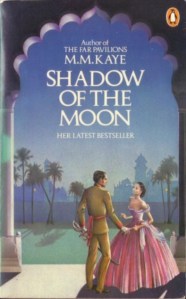
2. Shadow of the Moon by MM Kaye

I loved this book which I read as part of a readalong last summer. Set before and during the Sepoy Mutiny of 1857 it follows the story of Winter de Ballesteros, who travels across the sea to India to marry her fiance, the Commissioner of Lunjore. Captain Alex Randall is sent to escort her on the journey, but falls in love with her himself. Will he be able to prevent the marriage or is Winter too infatuated with the Commissioner to see clearly?

~

3. Wuthering Heights by Emily Brontë

I’m sure this one needs no introduction! This is one of my favourite books and I re-read it last February for the first time in years. As I said in my review, “the relationship between Heathcliff and Cathy is hardly a conventional romance and although there is love, it is an obsessive and unhealthy love”. It may not be the most romantic of love stories, but I have always liked the darkness, the passion and the melodrama.

~

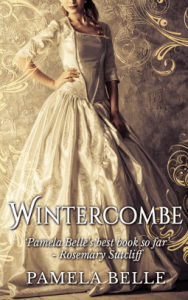
4. Wintercombe and Herald of Joy by Pamela Belle

During the English Civil War, the home of Silence St Barbe, wife of a Parliamentarian officer, is garrisoned by Royalist soldiers. The romance between Silence and one of the enemy captains, which develops slowly over the course of two novels, was one of my favourites of last year. There’s more to these books than romance, though, and I would recommend them to anyone interested in this period of history.

~

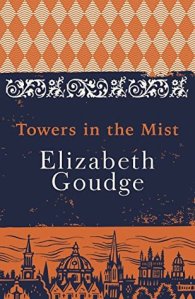
5. Towers in the Mist by Elizabeth Goudge

The romance in this one forms a relatively small part of the novel. Published in 1937, it’s set in Oxford during the Elizabethan period and follows the story of fourteen-year-old Faithful Crocker who is welcomed into the household of Canon Leigh of Christ Church. We get to know all of the members of the family, but the romance between eldest daughter Joyeuce Leigh and the student Nicolas de Worde was one of my favourite storylines.

~

6. Long Summer Day by RF Delderfield

The first volume in Delderfield’s A Horseman Riding By trilogy introduces us to Paul Craddock who uses his inheritance to buy an estate in rural Devon. There are two love interests for Paul: sensible, kind-hearted Claire Derwent, daughter of one of his tenant farmers, and the strong and independent suffragette, Grace Lovell. I won’t tell you which way the story plays out!

~

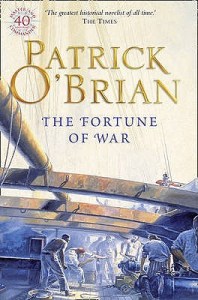
7. The Fortune of War by Patrick O’Brian

Surgeon and spy Stephen Maturin and Diana Villiers met in the second book in O’Brian’s Aubrey/Maturin series; this is book number six and their tempestuous relationship still hasn’t been resolved. Will they find any happiness in the next volume? I have the seventh book lined up to read soon, so I’ll be able to find out!

~

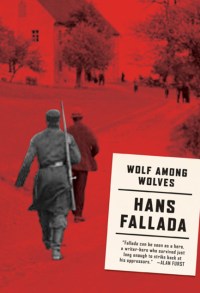
8. Wolf Among Wolves by Hans Fallada

Set in Germany in 1923, gambler Wolfgang Pagel loses his money at roulette – and loses his fiancee, Petra Ledig, who refuses to see him again until he reforms. The two are separated for most of the novel, as Wolfgang tries to build a new life away from the temptations of the city, but their relationship and the question of whether they will ever be reunited was one of my favourite aspects of the book.

~

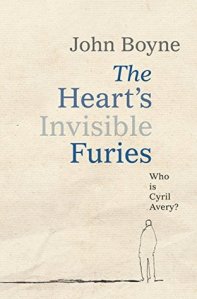
9. The Heart’s Invisible Furies by John Boyne

A very one-sided love affair! Our hero Cyril, whom we follow from birth to old age, is still a teenager when he falls in love with his more popular, more sophisticated friend, Julian Woodbead. Will he ever have the courage to tell Julian how he feels – and if he does, will his feelings be returned?

~

10. Anne Boleyn: A King’s Obsession by Alison Weir

This may seem an unusual one to include in a list of romances, especially when you consider how it ended, but surely the love affair between Henry VIII and Anne Boleyn was one of the most important in English history. After all, it was one of the factors leading to the king’s divorce from Katherine of Aragon, the break with Rome and the start of the Reformation. Alison Weir’s novel tells Anne’s story right from her early years through to her beheading.

~

What about you? Have you read any books with interesting romances or love affairs recently? What are your all-time favourites?

Top Ten Tuesday: Books that have been on my TBR the longest

This week’s Top Ten Tuesday, hosted by That Artsy Reader Girl, asks us to list the ten books that have been on our TBR the longest. I keep track of my TBR through Goodreads so I decided that the easiest way to approach this week’s topic was simply to take the first ten books on my Goodreads ‘to-read’ shelf, which were all added in 2010/2011. Before I started blogging I was very good at reading the books that I’d bought before buying more, so I don’t have any very old books on my TBR.

***

1. The Rose of Sebastopol by Katharine McMahon

Historical fiction set during the Crimean War. I remember buying this on a visit to my favourite bookshop, Barter Books; I did start to read it once but didn’t get very far with it.

2. The House at Riverton by Kate Morton

I added this to my TBR – and then read two other Kate Morton books instead. Because I was disappointed by The Distant Hours, I never went back to read this one. Maybe I should.

3. The Blasphemer by Nigel Farndale

A dual timeline novel divided between the First World War and the modern day. I won this one in a giveaway by the publisher, so I feel very guilty that I still haven’t read it!

4. Mornings in Jenin by Susan Abulhawa

I don’t know much about this one except that it’s set in Palestine, but I remember reading some glowing reviews from other bloggers a few years ago, which was why it was added to my TBR.

5. Year of Wonders by Geraldine Brooks

This novel about a 17th century village ravaged by plague has been recommended to me many times, but every time I’ve picked it up I’ve found that I was in the wrong mood for it.

6. Annie Dunne by Sebastian Barry

I love Sebastian Barry’s writing and have read several of his other books about the Dunne and McNulty families, but this one has been languishing on my shelf for years while I’ve been drawn to the newer ones instead.

7. Trespass by Rose Tremain

I added this to the TBR at a time when I hadn’t read anything else by Rose Tremain and I wasn’t sure whether or not I would like her writing. I’ve now read three of her other books and enjoyed them, so I think it could be time to try Trespass!

8. Oscar and Lucinda by Peter Carey

The Booker Prize winner from 1988. It has never felt like the right time to read it, but I said recently that I wanted to read more books set in Australia, so perhaps the time has now come.

9. Blood Harvest by Sharon Bolton

This is the only one of Sharon Bolton’s crime novels that I still haven’t read. I’ve no idea why not as I’ve loved all of her other books and her standalones, like this one, tend to be my favourites.

10. Beloved by Toni Morrison

I included this book on my original Classics Club list but removed it to replace it with something else. I do still want to read it and will hopefully find time for it soon.

***

Have you read any of these? Which books have been on your TBR the longest?

Six degrees of separation: Lincoln in the Bardo to The Ashes of London

I took part in Six Degrees of Separation hosted by Kate of Books are my Favourite and Best for the first time last month and enjoyed it, so I thought I’d try it again this month. The idea is that Kate chooses a book to use as a starting point and then we have to link it to six other books of our choice to form a chain. A book doesn’t have to be connected to all of the others on the list – only to the one next to it in the chain.

The first book this month is Lincoln in the Bardo by George Saunders, last year’s Booker Prize winner, which I read just before Christmas. With its unusual and experimental structure it wasn’t really my sort of book, but I did appreciate the originality and creativity.

In Lincoln in the Bardo, Abraham Lincoln visits Oak Hill Cemetery to grieve over the body of his eleven-year-old son, Willie. This brings to mind another book set in a cemetery: Pure by Andrew Miller. Pure is the story of a young engineer from Normandy who arrives in Paris to begin work on the destruction of the overcrowded and unsanitary cemetery of Les Innocents.

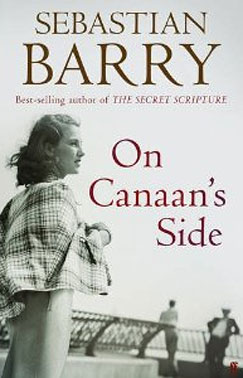
Pure appeared on the shortlist for the Walter Scott Prize in 2012. Another book shortlisted in the same year – the eventual winner, in fact – was On Canaan’s Side by Sebastian Barry. This beautifully written novel is narrated by Lilly, an elderly woman looking back on the eighty-nine years of her life.

Sebastian Barry is one of my favourite Irish authors. Another Irish author I love is John Boyne and the first of his books that I read was This House is Haunted.

This House is Haunted is a wonderfully entertaining and atmospheric ghost story set in Victorian England. At the beginning of the book the narrator and her father go to watch a public reading by Charles Dickens. I could have chosen a Dickens novel as my next link, but instead I’m going to highlight Claire Tomalin’s biography, Charles Dickens: A Life.

Claire Tomalin has written several other biographies on subjects including Thomas Hardy, Jane Austen and Mary Wollstonecraft, but apart from the Dickens book the only other one I’ve read so far is Samuel Pepys: The Unequalled Self.

In his diary, Samuel Pepys famously wrote about the Great Fire of London of 1666. The fire provides the setting for The Ashes of London by Andrew Taylor. It’s the first in a series of historical mysteries, with the second book, The Fire Court, due to be published soon.

~

Have you read any of the books in my chain? What did you think of them?

Next month’s chain will begin with a book I haven’t read and know nothing about – The Beauty Myth by Naomi Wolf.