The Classics Club Gothic Book Tag

I don’t often take part in book tags, but I couldn’t resist this Gothic-themed one hosted by The Classics Club.

If you want to join in too, here are the rules:

* Answer the 13 questions with classic books in mind.
* How you define ‘classic’ is up to you.
* How you define ‘scary’ is up to you (it could be content, size of book, genre etc).
* If you’re feeling social, visit other blogs and leave a comment or share your thoughts on twitter, fb, instagram or goodreads using #CCgothicbooktag
* Join in if you dare.

1. Which classic book has scared you the most?

The Complete Tales and Poems of Edgar Allan Poe. Not all of his tales and poems are scary ones, but there are definitely some very eerie, atmospheric ones in that collection.

2. Scariest moment in a book?

The scene from Ray Bradbury’s Something Wicked This Way Comes where the blind Dust Witch hovers over the rooftops of Green Town in a hot air balloon.

3. Classic villain that you love to hate?

I thought Madame de la Rougierre, the governess from Uncle Silas by Sheridan Le Fanu was a truly horrible villain!

4. Creepiest setting in a book?

Hill House in The Haunting of Hill House by Shirley Jackson. Haunted houses are always the settings I find the creepiest!

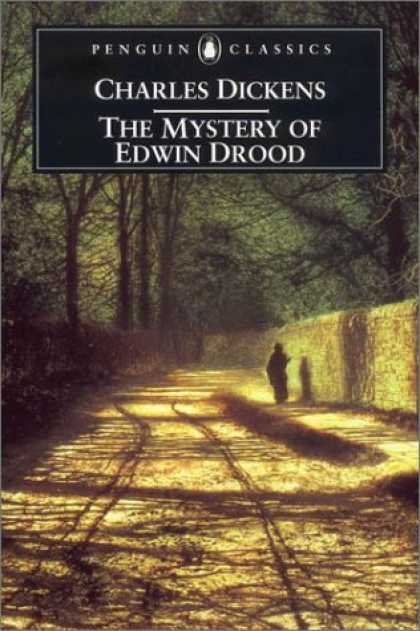
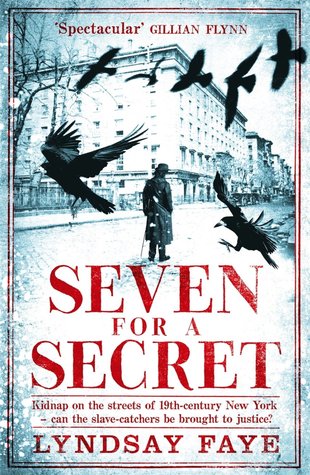
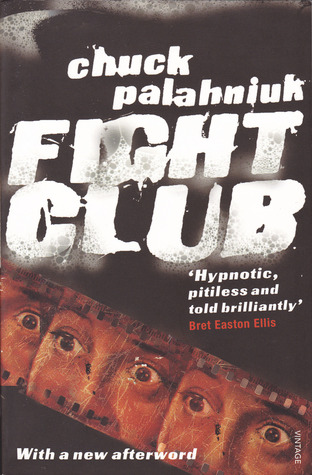
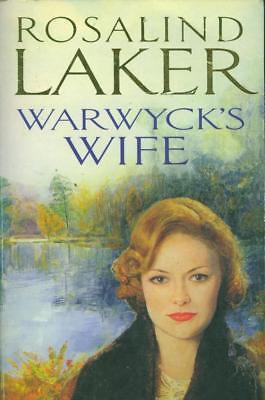
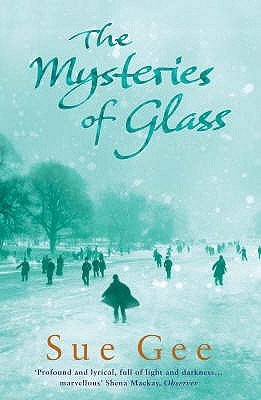
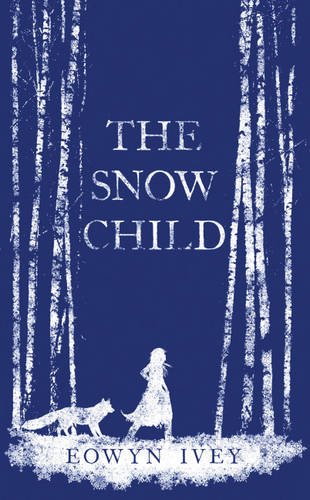
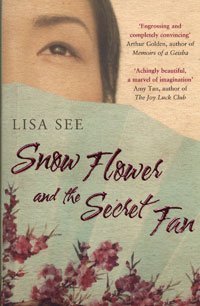
5. Best scary cover ever?

6. Book you’re too scared to read?

Are Stephen King’s books considered classics now? I think they probably are. If so, I’m scared to re-read my copy of The Shining, although I loved it when I was about fifteen!

7. Spookiest creature in a book?

I’ll have to say the triffids in The Day of the Triffids by John Wyndham. The thought of seven-foot tall plants walking the streets and lashing out with their long, stinging arms sounds terrifying to me!

8. Classic book that haunts you to this day?

I first read Rebecca by Daphne du Maurier as a teenager and when I re-read it last year I still found the atmosphere, the sense of place, the characters and the beautiful writing as haunting as ever.

9. Favourite cliffhanger or unexpected twist?

The moment in Agatha Christie’s And Then There Were None when the solution to the mystery is finally revealed. Still my favourite of all the Christie novels I’ve read.

10. Classic book you really, really disliked?

The Catcher in the Rye by J.D. Salinger. Maybe I was just too old for it by the time I read it – I think I was probably past the age when I might have been able to appreciate it.

11. Character death that disturbed/upset you the most?

One death scene that I found particularly disturbing occurs in Thomas Hardy’s Jude the Obscure. I don’t want to spoil anything for future readers, but anyone who has already read Jude will know exactly what I’m talking about!

12. List your top 5 Gothic/scary/horror classic reads.

I’ve already mentioned some of my top reads in my answers to the previous questions above, so I’m going to choose a different five to list here:

The Monk by Matthew Lewis
The Woman in White by Wilkie Collins
Frankenstein by Mary Shelley
Wuthering Heights by Emily Brontë
The Italian by Ann Radcliffe

13. Share your scariest/creepiest quote, poem or meme.

Linking back to my answer to Question 1, here is the beginning of Edgar Allan Poe’s Ulalume:

“The skies they were ashen and sober;
The leaves they were crisped and sere –
The leaves they were withering and sere;
It was night in the lonesome October
Of my most immemorial year:
It was hard by the dim lake of Auber,
In the misty mid region of Weir –
It was down by the dank tarn of Auber,
In the ghoul-haunted woodland of Weir.”

~

What are your favourite spooky or Gothic classics?

Six Degrees of Separation: From The Outsiders to Cat Among the Pigeons

It’s the first Saturday of the month which means it’s time for another Six Degrees of Separation, hosted by Kate of Books are my Favourite and Best. The idea is that Kate chooses a book to use as a starting point and then we have to link it to six other books of our choice to form a chain. A book doesn’t have to be connected to all of the others on the list – only to the one next to it in the chain.

The first book this month is The Outsiders by S. E. Hinton, As usual this is a book that I haven’t read and know almost nothing about. I have discovered that Hinton wrote the novel as a teenager and was only eighteen when it was published in 1967.

Another author who wrote her first novel as a teenager was Marjorie Bowen – sixteen at the time of writing The Viper of Milan, although the book didn’t find a publisher for a few more years because it was considered too violent for such a young woman to have written. Graham Greene described it as one of the books which influenced his own writing career, so I did try to use that fact as my next link, but found it too difficult as I have never actually read anything by Greene.

Instead, I am going to link to another book with ‘Viper’ in the title: Viper Wine by Hermione Eyre, a novel set at the court of Charles I. I haven’t read it yet, but hope to read it soon for my Walter Scott Prize Project (it was shortlisted for the prize in 2015). Reading the reviews, I’m not sure whether it will really be my sort of book, but I’m looking forward to trying it.

Seeing the name Hermione always reminds me of Harry Potter. That would be too obvious, though, so I tried to think of another book which features a character with that name and came up with Hermione Danglars, the wife of one of the villains in The Count of Monte Cristo by Alexandre Dumas. Unfortunately, on checking my copy of the book I discovered that Madame Danglars is actually Hermine, not Hermione – but I think that’s close enough and, anyway, The Count is one of my favourite books of all time, so I really want to include it in the chain!

My next link is another tenuous one, but because it’s October and Halloween is on its way I think it’s quite appropriate. In The Count of Monte Cristo, the main character, Edmond Dantès, is referred to several times as ‘Lord Ruthven’, because of the paleness of his skin. Lord Ruthven is the vampire in John Polidori’s 1819 story, The Vampyre, one of the earliest and most influential vampire stories in English literature.

Polidori was a friend of Lord Byron’s and The Vampyre was actually inspired by Byron’s own attempt at writing a vampire novel (which remained unfinished and has become known as Fragment of a Novel). I have read a few books in which Byron features as a character (Passion by Jude Morgan and Glorious Apollo by E Barrington come to mind) but the one I’m going to use in my chain is The White Devil by Justin Evans.

The White Devil is a ghost story set at the British public school, Harrow, where a new boy bearing a strange resemblance to Byron has just arrived. Another novel I enjoyed which is set in a school, but with no ghosts this time, is Cat Among the Pigeons by Agatha Christie. It’s a Poirot mystery, but Poirot only appears towards the end – it was the school setting which made this book so much fun to read.

And that’s my chain for October! Have you read any of these books?

Next month we will be starting with Vanity Fair by William Makepeace Thackeray – finally, a book that I’ve actually read!

Top Ten Tuesday: Books on my autumn TBR

This week’s Top Ten Tuesday, hosted by That Artsy Reader Girl, asks for ten books on our fall/autumn TBR. I’ve already mentioned some of the books I’m hoping to read for the R.I.P. challenge this month and next, so I’ve chosen a different ten to list here.

~

1. Zennor in Darkness by Helen Dunmore

“Spring, 1917, and war haunts the Cornish coastal village of Zennor: ships are being sunk by U-boats, strangers are treated with suspicion, and newspapers are full of spy stories.

Into this turmoil come D. H Lawrence and his German wife, Frieda hoping to escape the war-fever that grips London. They befriend Clare Coyne, a young artist struggling to console her beloved cousin, John William, who is on leave from the trenches and suffering from shell-shock.
Yet the dark tide of gossip and innuendo means that Zennor is neither a place of recovery nor of escape…”

~

2. Harriet by Elizabeth Jenkins
“When a handsome, unscrupulous fortune hunter approaches Harriet, a young woman of means whom most people would call half-witted, no good can result. Elizabeth Jenkins’s artistry, however, transforms the bare facts of this case from the annals of Victorian England’s Old Bailey into an absolutely spine-chilling exploration of the depths of human depravity.”

~

3. The Witches of St Petersburg by Imogen Edwards-Jones

“Two Montenegrin princesses, Militza and Stana, are married into the Russian aristocracy of the last Tsar by their father. Initially shunned by society and, in Stana’s case, married to a man she detests, life isn’t easy.

Fascinated by the occult, the sisters soon become close to the Tsarina Alexandra who is willing to try anything to precipitate the birth of the son and heir the country longs for. If she puts her faith in them, Militza and Stana promise they can help the Tsarina produce a boy.

The girls hold seances, experiment with a variety of rituals and bring various men to the Tsarina who they feel have spiritual power. Their closeness to the Empress and power in court is undisputed: until, that is, Grigori Rasputin arrives. Militza and Stana, along with most of female Russian society, are intoxicated, but by bringing Rasputin into their lives, have they taken a fatal step too far?”

~

4. The Moon Sister by Lucinda Riley

“After the death of her father – Pa Salt, an elusive billionaire who adopted his six daughters from around the globe – Tiggy D’Aplièse, trusting her instincts, moves to the remote wilds of Scotland. There she takes a job doing what she loves; caring for animals on the vast and isolated Kinnaird estate, employed by the enigmatic and troubled Laird, Charlie Kinnaird.

Her decision alters her future irrevocably when Chilly, an ancient gipsy who has lived for years on the estate, tells her that not only does she possess a sixth sense, passed down from her ancestors, but it was foretold long ago that he would be the one to send her back home to Granada in Spain …

In the shadow of the magnificent Alhambra, Tiggy discovers her connection to the fabled gypsy community of Sacromonte, who were forced to flee their homes during the civil war, and to ‘La Candela’ the greatest flamenco dancer of her generation. From the Scottish Highlands and Spain, to South America and New York, Tiggy follows the trail back to her own exotic but complex past. And under the watchful eye of a gifted gypsy bruja she begins to embrace her own talent for healing. But when fate takes a hand, Tiggy must decide whether to stay with her new-found family or return to Kinnaird, and Charlie…”

~

5. The Green Gauntlet by RF Delderfield

“World War II is over. But for Craddock and his family there are new battles to be fought and won. The new property laws enable speculators to reap huge profits from agricultural lands, and Paul’s livelihood is threatened. With the help of his children and children’s children, Paul struggles to preserve the happiness and peace he has built up over the years. In doing so, he comes to discover deeper, richer ties with those around him. Ties which hold a ripe promise for the future…”

~

6. The Clockmaker’s Daughter by Kate Morton

“In the summer of 1862, a group of young artists led by the passionate and talented Edward Radcliffe descends upon Birchwood Manor on the banks of the Upper Thames. Their plan: to spend a secluded summer month in a haze of inspiration and creativity. But by the time their stay is over, one woman has been shot dead while another has disappeared; a priceless heirloom is missing; and Edward Radcliffe’s life is in ruins.

Over one hundred and fifty years later, Elodie Winslow, a young archivist in London, uncovers a leather satchel containing two seemingly unrelated items: a sepia photograph of an arresting-looking woman in Victorian clothing, and an artist’s sketchbook containing the drawing of a twin-gabled house on the bend of a river.

Why does Birchwood Manor feel so familiar to Elodie? And who is the beautiful woman in the photograph? Will she ever give up her secrets?”

~

7. The Magick of Master Lilly by Tobsha Learner

“In 1641, the country of England stands divided. London has become a wasps’ nest of spies, and under the eyes of the Roundheads those who practice magic are routinely sent to hang.

Living in exile in the Surrey countryside is the Master Astrologer and learned magician William Lilly. Since rumours of occult practice lost him the favour of Parliament, he has not returned to the city. But his talents are well-known, and soon he is called up to London once more, to read the fate of His Majesty the King.

Only Lilly and a circle of learned astrologers – Cunning Folk – know that London is destined to suffer plague and fire before the decade is through, and must summon angel and demon to sway the political powers from the war the country is heading toward. In doing so, Lilly will influence far greater destinies than his own and encounter great danger. But there will be worse to come…”

~

8. Transcription by Kate Atkinson

“In 1940, eighteen-year old Juliet Armstrong is reluctantly recruited into the world of espionage. Sent to an obscure department of MI5 tasked with monitoring the comings and goings of British Fascist sympathisers, she discovers the work to be by turns both tedious and terrifying. But after the war has ended, she presumes the events of those years have been relegated to the past for ever.

Ten years later, now a producer at the BBC, Juliet is unexpectedly confronted by figures from her past. A different war is being fought now, on a different battleground, but Juliet finds herself once more under threat. A bill of reckoning is due, and she finally begins to realize that there is no action without consequence.”

~

9. A Ladder to the Sky by John Boyne

“If you look hard enough, you can find stories pretty much anywhere. They don’t even have to be your own. Or so would-be writer Maurice Swift decides very early on in his career. A chance encounter in a Berlin hotel with celebrated novelist Erich Ackermann gives him an opportunity to ingratiate himself with someone more powerful than him. For Erich is lonely, and he has a story to tell. Whether or not he should do so is another matter entirely.

Once Maurice has made his name, he sets off in pursuit of other people’s stories. He doesn’t care where he finds them – or to whom they belong – as long as they help him rise to the top. Stories will make him famous but they will also make him beg, borrow and steal. They may even make him do worse.”

~

10. Confusion by Elizabeth Jane Howard

“Confusion is the third novel in Elizabeth Jane Howard’s bestselling Cazalet Chronicles.

London and Sussex, 1942. The privileged English family in turmoil…

The long, dark days of struggle provide the poignant background to the third book of the Cazalet Chronicles. As the war enters its fourth year, chaos has become a way of life.

Both in the still peaceful Sussex countryside, and in air-raid-threatened London, the divided Cazalets begin to find the battle for survival echoing the confusion in their own lives.”

~

Have you read any of these books? What do you have coming up on your own TBR?

Six Degrees of Separation: From Mara Wilson to Edgar Allan Poe

It’s the first weekend of a new month which means it’s time for another Six Degrees of Separation, hosted by Kate of Books are my Favourite and Best. The idea is that Kate chooses a book to use as a starting point and then we have to link it to six other books of our choice to form a chain. A book doesn’t have to be connected to all of the others on the list – only to the one next to it in the chain.

This month we begin with Where Am I Now? by Mara Wilson. When I first saw that this was the starting point for the chain, I struggled to think of who Mara Wilson was, but I discovered she was the child actress in Mrs Doubtfire and Matilda.

Roald Dahl’s Matilda is a great children’s book, but that’s not the book I’m going to choose for my first link. Instead I’m going to link to a non-fiction book about not just one Matilda, but four – Matilda of Flanders, Matilda of Scotland, Matilda of Boulogne and the Empress Matilda (sometimes known as Maud). The lives of these four medieval queens are explored in Alison Weir’s Queens of the Conquest.

One of the anecdotes I remember reading about Empress Matilda involves her escape from Oxford Castle during a siege wearing a white cape as camouflage against the snow. Thinking of women dressed in white leads me, quite obviously, to The Woman in White by Wilkie Collins.

The Woman in White is one of my favourite Victorian novels and the intelligent, resourceful Marian Halcombe is one of my favourite heroines. Another Victorian novel with a strong and memorable, though very different, female protagonist is Vanity Fair by William Makepeace Thackeray.

It’s been a long time since I last read Little Women by Louisa May Alcott, but it’s a book I loved when I was younger and read over and over again. I was sure I could remember a chapter with ‘Vanity Fair’ in the title, so I checked my old copy and yes – Chapter 9: Meg Goes To Vanity Fair. It’s amazing the things you remember!

Louisa May Alcott is one of several historical figures to appear as a character in Mrs Poe by Lynn Cullen, a novel telling the story of the poet Frances Sargent Osgood. Frances is known to have exchanged a series of romantic poems with Edgar Allan Poe and this book explores their relationship.

And that brings me to my final link: The Complete Tales and Poems of Edgar Allan Poe. I chose a selection of stories from the book to re-read last Halloween and I’m thinking about doing the same this year.

That’s my chain for this month! Have you read any of these books?

Next month we will be starting with The Outsiders by S. E. Hinton.

Six Degrees of Separation: From Atonement to Something Wicked This Way Comes

It’s the first Saturday of the month which means it’s time for another Six Degrees of Separation, hosted by Kate of Books are my Favourite and Best. The idea is that Kate chooses a book to use as a starting point and then we have to link it to six other books of our choice to form a chain. A book doesn’t have to be connected to all of the others on the list – only to the one next to it in the chain.

The starting point this month is Atonement by Ian McEwan. As usual, I haven’t read it – but I do at least own a copy, which is a step in the right direction. Even without having read it, I know that it is often described as ‘metafiction’, which Wikipedia defines as ‘a form of literature that emphasizes its own constructedness in a way that continually reminds the reader to be aware that they are reading or viewing a fictional work’.

Taking metafiction novels as the first link in my chain this month, I could think of plenty of other examples, but the one I have chosen is The French Lieutenant’s Woman by John Fowles.

The French Lieutenant’s Woman is set in Lyme Regis, which is where Louisa Musgrove in Jane Austen’s Persuasion falls and injures herself on the harbour steps. I struggled to think of where to take the chain next from Persuasion, though, so I decided to pick another book with a Lyme Regis setting instead – and that book is Remarkable Creatures by Tracy Chevalier

Remarkable Creatures is a fictional account of the lives and careers of two real-life 19th century fossil-collectors, Mary Anning and Elizabeth Philpot. Another 19th century woman, fictional this time, who is trying to make her way in the male-dominated world of natural sciences, is Cora Seaborne, the amateur naturalist in Sarah Perry’s The Essex Serpent. Mary Anning is one of Cora’s heroines, forming a strong link between these two books!

Moving on from The Essex Serpent, I have selected another novel with the word ‘serpent’ in the title. The Serpent Sword by Matthew Harffy is also historical fiction, but it’s a very different type of story, following the adventures of young warrior Beobrand, who sets out to avenge his brother’s death in 7th century Northumbria.

Northumbria was the name of the medieval kingdom which once encompassed a large part of northern England and the south-east of Scotland, and included the area now known as Northumberland. My next choice is a crime novel set in contemporary Northumberland: Dead Woman Walking by Sharon Bolton.

Dead Woman Walking opens with a group of people enjoying an early morning flight in a hot air balloon over the Northumberland National Park. And that leads me to my final link in the chain – Something Wicked This Way Comes by Ray Bradbury, in which a very creepy character known as the Dust Witch flies above the rooftops of Green Town in a balloon.

And that’s my chain for August! Have you read any of these books?

Next month we will be starting with Where Am I Now? by Mara Wilson.

Top Ten Tuesday: Best Books I’ve Read In 2018 (So Far)

We’re into the second half of the year now, but this week’s Top Ten Tuesday – hosted by That Artsy Reader Girl – asks us to look back on the first six months of 2018 and list our favourite books of the year so far.

I found it easy enough to pick out ten books from my 2018 reading, although there were a few others I would have included if I hadn’t been limited to ten. Maybe some of them will appear on my final end-of-year list in December, when I don’t have to restrict myself to a certain number! For now, here is my list of ten, not in any particular order:

~

1. Britannia Mews by Margery Sharp

~

2. The Crowded Street by Winifred Holtby

~

3. Dear Mrs Bird by AJ Pearce

~

4. Circe by Madeline Miller

~

5. The Prime Minister by Anthony Trollope

~

6. Penmarric by Susan Howatch (reread)

~

7. House of Gold by Natasha Solomons

~

8. The Feast by Margaret Kennedy

~

9. The Winds of Heaven by Monica Dickens

~

10. The Seven Deaths of Evelyn Hardcastle by Stuart Turton

~

Have you read any of these? What are the best books you’ve read in the first six months of the year?

Six Degrees of Separation: From Tales of the City to Wolf Hall

It’s the first Saturday of the month which means it’s time for another Six Degrees of Separation, hosted by Kate of Books are my Favourite and Best. The idea is that Kate chooses a book to use as a starting point and then we have to link it to six other books of our choice to form a chain. A book doesn’t have to be connected to all of the others on the list – only to the one next to it in the chain.

The starting point this month is Tales of the City by Armistead Maupin. I haven’t read it, but it seems that it is set in San Francisco.

Sometimes when I’m not familiar with the first book, I find it very difficult to get started with the chain, but this time I could think of several different directions to take. I eventually decided to go with books set in San Francisco; I can think of a few options, but the one I’ve chosen is Frog Music by Emma Donoghue. I remember really enjoying this novel, based on a true crime which happened in the 1870s.

The story takes place during a heatwave. We are in the middle of one now here in the UK. It’s been too hot for me, actually, but it is nice to be able to sit outside and read for a while when I get home from work. Thinking of other books that are set during long, hot summers, the first that comes to mind is Case Histories by Kate Atkinson, one of her Jackson Brodie mysteries in which a child goes missing while sleeping in a tent in the garden.

I’ve enjoyed everything I’ve read by Kate Atkinson so far. The first book I read by her was Life After Life, in which Ursula Todd begins her life over and over again. The name Ursula makes me think of one of my recent reads, The Illumination of Ursula Flight by Anna-Marie Crowhurst, the story of a young woman in Restoration England – and that is the next book in my chain.

The Illumination of Ursula Flight has an unusual structure, with part of the story being told in the form of scripts from plays. I don’t read plays very often, but one that I did enjoy was French poet and playwright Edmond Rostand’s Cyrano de Bergerac. At one point during the first act, Cyrano fights a duel while composing a ballad at the same time.

I love a good fictional swordfight! Thinking of others that I’ve read, one of the most memorable is the one that takes place towards the end of The Game of Kings by Dorothy Dunnett. Unfortunately I can’t say any more about that wonderful scene, as to tell you who it involves or how it came about would most certainly mean spoiling the story!

The Game of Kings appeared on my list of favourite books read in 2012. Looking back at my 2012 list, it seems that I read some great books that year – and, in particular, some great historical fiction novels. One of these was Wolf Hall by Hilary Mantel, the first of her excellent novels on the life of Thomas Cromwell, and this brings my chain for this month to an end.

Have you read any of the books in my chain? Did you take part yourself this month?

In August, we are going to begin with Atonement by Ian McEwan.