Howards End by E.M. Forster

howards-endThis is only the second book I’ve read by E.M. Forster – the first one being A Room with a View. With plenty of his books left to choose from, I decided that the next one I read would be Howards End, which was recommended to me by almost everyone who commented on my review of A Room with a View back in 2013!
Howards End is the story of two sisters, Margaret and Helen Schlegel, and their relationship with the Wilcox family. At the beginning of the novel, Helen – the younger and more impulsive of the two – accepts an invitation to visit Howards End, the Wilcox country home, where she becomes romantically involved with the younger son, Paul Wilcox. Although their romance is quickly broken off, the two families stay in touch and the elder Schlegel sister, the more practical and sensible Margaret, becomes good friends with Paul’s mother, Ruth.

Ruth Wilcox longs to show Margaret Howards End, feeling that her new friend will appreciate the house more than her own children do. Margaret never gets a chance to visit while Mrs Wilcox is alive, but when she dies, early in the novel, she tries to bequeath Howards End to Margaret. However, the rest of the Wilcox family choose not to inform Margaret and burn the note which describes Ruth’s dying wish, leaving Margaret none the wiser. As time goes by, Margaret gets to know Ruth’s widowed husband, Henry, and a friendship forms which soon develops into something more. Could Margaret end up living at Howards End one day after all?

Meanwhile, Helen has also made a new friend: Leonard Bast, a young insurance clerk who is married to an older woman, Jacky. Acting on advice from Henry Wilcox, the Schlegels warn Leonard that the company he works for is in trouble and that he should look for another job. Leonard follows this advice, but when things go wrong and he ends up with nothing, Helen blames Henry for his misfortunes.  Will she ever be able to forgive him?

Published in 1910, Howards End explores the relationships between these three families, each occupying a different position in the British class system. The Wilcoxes are wealthy, materialistic capitalists who have made their money from the Imperial and West African Rubber Company. The Schlegels, who are half German, are cultured, intellectual and idealistic, and apparently based on the real-life Bloomsbury Group. Finally, the lower-middle class Leonard Bast has found himself impoverished and stuggling to get by, but is trying to improve his lot in life by exposing himself to music and literature.

Class is obviously an important theme in this novel, then, but there are others too, such as gender roles and feminism. With such a variety of characters, we get a variety of views ranging from Henry Wilcox saying that “the uneducated classes are so stupid”, Mrs Wilcox’s opinion that “it is wiser to leave action and discussion to men”, and Margaret thinking to herself, “Ladies sheltering behind men, men sheltering behind servants – the whole system’s wrong.” It’s interesting to think that within a few years of this book being published, the outbreak of war in Europe and also the progress of the women’s suffrage movement would bring social change to Britain and the world Forster is describing would no longer exist.

Howards End is a beautifully written novel and a fascinating and thought-provoking one. However, I don’t think I can say that I loved it, partly because I found so many of the characters difficult to like and care about.  Although Forster himself writes about each character with warmth and empathy, I didn’t feel that I was forming a very strong connection with any of them.  I preferred A Room with a View, but I’m probably in the minority with that as so many people have told me that this one is their favourite by Forster. I’m still looking forward to reading more of his novels, though, and I think A Passage to India will be next.

The Man in the Iron Mask by Alexandre Dumas

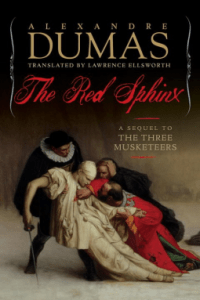
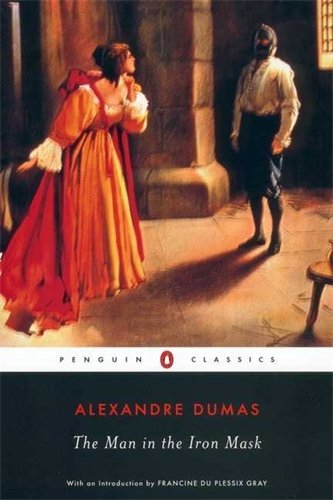
the-man-in-the-iron-mask I had considered starting 2017 by posting some reading plans and resolutions but, to be honest, after failing to keep most of last year’s, I don’t want to make any for this year. I do have one goal for 2017, though: I would like every book I read to be a potential book of the year. That’s unrealistic, I know, but it’s something to keep in mind when I’m choosing which books to read and when I’m deciding whether or not it’s worth continuing with a book I’m not enjoying. And I’m already off to a great start with my first January read – The Red Sphinx by Alexandre Dumas! I’m looking forward to telling you about that one after I’ve finished reading it, but in the meantime here are my thoughts on another Dumas novel I read just before Christmas.

The Man in the Iron Mask is the last book in the d’Artagnan series which began with The Three Musketeers and continued with Twenty Years After, The Vicomte de Bragelonne and Louise de la Vallière. The final three in the series were originally published as one novel, which must have been enormous; it’s easy to see why most publishers now split it into separate volumes! I think most people probably just go straight from The Three Musketeers to The Man in the Iron Mask – after all, they are the two best known and the most often filmed of the d’Artagnan stories – but I don’t regret having taken the time to read the ones in between. I did enjoy them all, particularly Twenty Years After, and it meant that I went into this, the final book, with the background knowledge I needed to be able to get straight into the story.

Unlike The Vicomte and Louise, which deal mainly with the political and romantic intrigues of various members of the 17th century French court, in The Man in the Iron Mask, the focus returns to d’Artagnan and his three friends, Athos, Porthos and Aramis. The first half of the novel revolves around Aramis and a plot involving a man imprisoned in the Bastille who bears a striking resemblance to the King of France. I won’t say too much about this as I wouldn’t want to spoil the story for future readers, but suffice it to say that things don’t go exactly as according to plan and both Aramis and Porthos (who, as usual, has become implicated in the schemes of others while blissfully unaware of what is really going on) find themselves in trouble.

We then catch up with Raoul, the young Vicomte de Bragelonne, who is trying to come to terms with the discovery that his beloved Louise de la Vallière is now the mistress of Louis XIV. Devastated by the loss of Louise, Raoul agrees to accompany the Duc de Beaufort on an expedition to Africa. How will his father, Athos, cope in his absence? D’Artagnan, meanwhile, has remained loyal to the king and for much of this novel he is caught up in the final power struggle between the two rival finance ministers, Fouquet and Colbert. When his duties bring him into conflict with Aramis and Porthos, however, d’Artagnan must find a way to serve his king without betraying his friends.

This is a much more exciting, action-packed book than the two preceding ones. The actual ‘man in the iron mask’ has a relatively small role to play but the plot has serious consequences which are explored throughout the remainder of the novel as we follow our old friends, the musketeers, to the end of their careers. I was pleased to see so much more of d’Artagnan and his friends than we did in the last two books, but I was disappointed by the lack of scenes with all four together (it was the relationship between the four of them, in my opinion, that made the first Musketeers novel such a joy to read) and that Athos’ storyline seemed to barely intersect with the others. Athos was my favourite character in the original Musketeers book and I really dislike the direction Dumas took him in throughout the later books in the series, particularly after Raoul became more prominent in the story. It’s funny that Aramis, my least favourite, ended up being the character I found the most interesting!

Towards the end, The Man in the Iron Mask also becomes a very sad book; after spending so much time with these characters – literally thousands of pages over the last few years – I didn’t want to have to say goodbye to any of them. Dumas ties things up very neatly in the final chapters…a bit too neatly for me; I would have preferred a happier ending with more left to the imagination! Still, I did enjoy this book and was delighted to discover that Dumas had written yet another, often forgotten, sequel to The Three Musketeers. It’s called The Red Sphinx and is being made available in a new English translation this month. I’m reading it now and am pleased to say that so far it’s definitely living up to my expectations!

Redgauntlet by Sir Walter Scott

redgauntlet Redgauntlet, one of Scott’s Waverley novels, is set in Scotland and the north of England in 1765, twenty years after the failed Jacobite Rising of 1745. Although the rising was unsuccessful and ended in disaster for Charles Edward Stuart and his supporters, there were still those who dreamed of restoring the exiled Stuarts to the throne. Redgauntlet centres around a fictional third Jacobite Rebellion and the lives of two innocent young men who accidentally become caught up in the plot.

The novel is made up of a mixture of letters, journal entries and first person narrative written from the perspectives of Darsie Latimer and his friend, Alan Fairford. Darsie, an orphan, has grown up in Scotland knowing very little about his family background, aware only that he has been forbidden to cross the border into England until he turns twenty-five, which is also when he will come into his inheritance. The reason for this unusual condition is unknown to Darsie but eventually becomes clear as the story unfolds and the truth about his past is revealed.

Kidnapped on a fishing expedition to the Solway Firth, Darsie discovers that he has fallen into the clutches of the mysterious Hugh Redgauntlet, a former Jacobite who seems to know more about Darsie than Darsie does himself. Help is on its way, however – when Alan Fairford, who is completing his legal studies in Edinburgh, receives a message from a beautiful young lady known only as Green Mantle, warning him that Darsie is in danger, he sets off at once in search of his friend.

Redgauntlet is the third Scott novel I’ve read (the others were Ivanhoe and The Heart of Midlothian) and my favourite so far. In fact, I was ready to name it one of my books of the year until the plot began to fizzle out towards the end, which meant it lost its place on my list. Up to that point, though, I was completely engrossed in the adventures of Darsie and Alan. No, it’s not a particularly easy book to read, and yes, there are some long, dry passages where Scott discusses the politics of the period or describes obscure points of Scottish law, but otherwise I loved it. I loved the setting, the characters, the air of mystery and foreboding, the exciting plot and the way the novel was structured to incorporate different forms of writing and different viewpoints. I particularly enjoyed reading the letters sent between Darsie and Alan in which the personality of each man – the practical, unimaginative Alan and the romantic, adventurous Darsie – come through strongly.

The problem I had with this novel was with the storyline surrounding the third Jacobite Rising. Knowing that it never happened historically took away some of the suspense and Scott didn’t manage to convince me that Redgauntlet’s schemes would ever come to anything. I enjoyed the build-up, but when the rebellion started to come to the forefront of the novel near the end of the book, this was when I lost interest. It all seemed such an anti-climax after sticking with the story through so many pages. Still, the good bits of Redgauntlet are very, very good – my favourite part was Wandering Willie’s Tale, a wonderful ghost story which appears in the middle of the book. It’s worth reading Redgauntlet for this story alone.

I’m looking forward to reading more of Scott’s novels. Having only read three so far, I certainly have plenty left to choose from. If you’ve read any of them, please let me know which you think I should read next. And I would love to hear other readers’ thoughts on Redgauntlet. Brilliant but flawed is my verdict!

The Woodlanders by Thomas Hardy

the-woodlanders I love Thomas Hardy but have been resisting the temptation to rush through his novels too quickly. I’m dreading there being none left for me to discover for the first time, so since reading Tess of the d’Urbervilles in 2010, I have been limiting myself to one or two a year. It’s been a while since my last Hardy, The Return of the Native, so a few weeks ago I decided it was time to read another one.

The Woodlanders, published in 1887, is set in the small woodland community of Little Hintock. For generations, the people of Little Hintock have made their living from the trees around them. The timber merchant George Melbury, however, is keen for his daughter, Grace, to experience life outside the woodlands and so he sends her away to be educated. The novel opens as she returns to the village after several years of absence and finds herself looking at her old home through new eyes.

Although Grace is promised to Giles Winterborne, a neighbouring woodsman, now that she has become used to a different way of life she can’t help noticing his lack of sophistication, causing her father to question whether the marriage he had planned for her is still appropriate. Grace’s return to Little Hintock coincides with the arrival of a newcomer – Edred Fitzpiers, a young doctor whom Melbury decides will make a much more suitable husband for his daughter than Giles. Despite his good intentions, however, Melbury’s meddling only succeeds in making everyone unhappy in typical Thomas Hardy fashion!

One thing I love about Hardy’s books is that although most of them are set in his fictional Wessex, each one covers a different aspect of Wessex life, from the rural farms of Far From the Madding Crowd and the country fairs and markets of The Mayor of Casterbridge to The Return of the Native’s wild and beautiful Egdon Heath. In The Woodlanders, we see how the lives of the characters have become defined by the woods which surround them, we see Giles Winterborne cutting down trees and pressing apples to make cider, and we see his neighbour, a young woman called Marty South, stripping bark from branches and shaping wood into spars to sell for thatching. It’s the two outsiders in the story – the newly arrived Dr Fitzpiers and the lady of the manor, Felice Charmond – who disrupt the harmony of life in Little Hintock, and Grace who is caught between the sophisticated, cultured world they represent and the simple traditions of her childhood home and friends.

Although this book isn’t as dramatic or tragic as some of Hardy’s others, there were still some scenes near the end that moved me to tears and others that had me holding my breath – and I found the final page beautifully sad and poignant. Not everyone gets the happy ending I would have liked, but that’s true to life, I suppose, and I don’t really expect happy endings from Hardy anyway.

The Woodlanders was apparently one of Hardy’s own favourites; he is quoted as having said, “On taking up The Woodlanders and reading it after many years, I like it as a story best of all”. Now that I’ve read more than half of his novels, I have to say that I think I agree with him. It’s not as powerful or as heartbreaking as Tess or Jude the Obscure, for example, but I really enjoyed it and would definitely include it in my top two or three Hardy novels read so far.

The Mill on the Floss by George Eliot

the-mill-on-the-floss Whenever I think about my favourite Victorian authors, George Eliot never seems to be a name that comes to mind – and yet I’ve liked everything I’ve read by her…Middlemarch, Romola and, years ago, Silas Marner. The Mill on the Floss is another one I can now add to this list; it was one of the titles on my Classics Club list I had been putting off reading and I really don’t know why. I didn’t love it as much as Middlemarch but I did enjoy it. It’s a beautifully written novel, though I wouldn’t expect anything less from George Eliot.

The Mill on the Floss was published in 1860, but set several decades earlier, beginning before the Reform Act of 1832. The story takes place in the fictional English town of St Ogg’s and at Dorlcote Mill which stands on the banks of the River Floss. The mill is owned by Mr Tulliver who lives there with his wife and two children, Tom and Maggie. He is keen for his son to receive a good education, so Tom is sent to school, but it’s nine-year-old Maggie who shows the most interest and aptitude for books and learning.

Remembering how much I loved reading myself when I was Maggie’s age and how much I value my 20th century education, I had a lot of sympathy for her when Tom’s tutor tells her that girls have a “great deal of superficial cleverness, but couldn’t go far into anything; they’re quick and shallow” or when she finds herself having a conversation like this one with her brother:

“Why, you couldn’t read one of ’em,” said Tom, triumphantly. “They’re all Latin.”

“No, they aren’t,” said Maggie. “I can read the back of this, – ‘History of the Decline and Fall of the Roman Empire.'”

“Well, what does that mean? You don’t know,” said Tom, wagging his head.

“But I could soon find out,” said Maggie, scornfully.

“Why, how?”

“I should look inside, and see what it was about.”

Although they don’t always see eye to eye (and despite Tom’s sense of superiority) Maggie and Tom do care about each other and their relationship is quite a strong one – until the day Philip Wakem, a lawyer’s son, joins Tom at Mr Stelling’s school. Tom dislikes Philip from the start, but Maggie grows very close to him and as the years go by they begin to have feelings for each other. Unfortunately for Maggie and Philip, their fathers have become sworn enemies following a lawsuit which has resulted in Mr Tulliver losing Dorlcote Mill. Maggie is forbidden to see any more of Philip, but when Tom discovers that they are still meeting in secret, she is forced to choose between her family and the man she is beginning to love.

There’s more to the story than this – a second love interest appears later in the novel and we also get to know several of Maggie’s aunts, uncles and cousins – but I’m not going to describe the plot in any more detail. I do want to mention the ending, though. It’s one of those endings which, when you first read it, is shocking, unexpected and not very satisfactory – but after you’ve had time to think about it, you decide it was perfect after all. That’s how I felt about it, anyway; I imagine other readers would have had a different reaction.

I don’t know very much about George Eliot as a person, but she writes so convincingly about Maggie’s childhood and about the ups and downs of sibling relationships that I wonder how much of it was autobiographical. These were my favourite sections of the book, but I liked, and had some sympathy for, the older Maggie too.

The Mill on the Floss is not a fast-paced novel and not a short one either, so it’s not the sort of book you can read quickly. I took my time with it, enjoying the beautiful writing, the descriptions of the town, the mill and the river, and the insights into life. And now I’m looking forward to reading the rest of Eliot’s books; I think Daniel Deronda will probably be next.

The Romance of the Forest by Ann Radcliffe

the-romance-of-the-forest If you were going to write a Gothic novel, what sort of things would you include? Dark forests? Ruined abbeys? Stormy weather? Wicked noblemen? Secret manuscripts? Skeletons? Well, you’ll find all of those and more in Ann Radcliffe’s 1791 classic, The Romance of the Forest. Radcliffe was one of the earliest pioneers of the Gothic novel and, while I can see that her books won’t appeal to everyone, I’ve now read four of them and enjoyed them all – although this one is not her best.

The story is set in 17th century France and opens with Pierre de la Motte, who has found himself in debt, fleeing Paris with his wife and servants, hoping to get as far away from his creditors as possible. Losing their way in the dark, they see lights shining from a house in the distance and Pierre knocks on the door to ask for help. He gets more than he bargained for, however, when the man who answers the door pushes a beautiful young lady towards him and begs Pierre to take her away with him. Pierre agrees and the family, with the addition of the girl, whose name is Adeline, continue on their way.

They find refuge in an old, deserted abbey and decide to settle there for a while, safe in the knowledge that their pursuers are unlikely to find them in such a remote and gloomy place. Inside the abbey, though, there are new terrors to face. The discovery of a skeleton, a rusty dagger and a faded manuscript point to a murder in the abbey’s history – and when the sinister Marquis de Montalt arrives on the scene, Adeline senses that her own life could also be in danger.

Ann Radcliffe is not known for her strong heroines and Adeline is no exception, so be prepared for some fainting and swooning and lots of melodrama. Having said that, she does have strong principles, and tries, in her own way, to fight for what she wants and believes in. Like Emily St Aubert in The Mysteries of Udolpho, she also has a habit of picking up her lute and breaking into song from time to time (giving Radcliffe an opportunity to insert her own poems into the text).

I didn’t find this book quite as atmospheric as her others (certain sections of The Italian, in particular, have a darkness and an eeriness that are never matched in this book), but her descriptive writing is still beautiful:

Dark woods, intermingled with bold projections of rock, sometimes barren, and sometimes covered with the purple bloom of wild flowers, impended over the lake, and were seen in the clear mirror of its waters. The wild and alpine heights which rose above were either crowned with perpetual snows, or exhibited tremendous crags and masses of solid rock, whose appearance was continually changing as the rays of light were variously reflected on their surface, and whose summits were often wrapt in impenetrable mists.

I also enjoyed seeing the plot unfold in the final third of the novel, with revelation following upon revelation. There are some coincidences which are too convenient or too ridiculous to be believed and any big holes in the plot are explained away as ‘fate’ or ‘destiny’. These are things that would bother me in any other type of novel, but in an 18th century Gothic novel, they’re exactly what I would expect and so I was able to suspend my disbelief without any problems!

This is a weaker Radcliffe novel, in my opinion, so if you’ve never read any of her books before I would probably recommend beginning with a different one. The Italian, The Mysteries of Udolpho and A Sicilian Romance are the others I’ve read and any of those might be a better starting point.

Witch Week Readalong: Something Wicked This Way Comes

witch-week-2016 I read this Ray Bradbury novel for a readalong as part of Witch Week, hosted by Lory at The Emerald City Book Review, but I’m sure I would have read it eventually anyway. It’s a book I’ve been interested in reading for a while – mainly, I have to confess, because I liked the title. It comes from a line spoken by one of the witches in Shakespeare’s Macbeth: “By the pricking of my thumbs, Something wicked this way comes”. I didn’t really have any idea what the novel itself was about, so the Witch Week readalong seemed a good opportunity to find out!

Published in 1962, Something Wicked This Way Comes tells the story of two teenage boys, Will Halloway and Jim Nightshade, who live in Green Town, Illinois. Not only are Will and Jim neighbours and best friends, they share another special bond: they were born just a few minutes apart, Will one minute before Halloween and Jim one minute after. They are inseparable, but they also have very different personalities – Will is the more sensible and cautious of the two, whereas Jim is more reckless and daring. The boys are thirteen years old as the novel opens one day in October when they have an encounter with a mysterious lightning rod salesman who warns that a storm is approaching.

something-wicked-this-way-comes That same night, a carnival – Cooger & Dark’s Pandemonium Shadow Show – is heading towards Green Town. Will and Jim watch it arrive at three o’clock in the morning, excited that a carnival has come so late in the year. Their excitement quickly starts to fade, however, as strange things begin to happen in connection with the carnival and its sinister owners. When they spot Mr Cooger riding on a carousel while the music plays backwards, they realise they are witnessing something which shouldn’t have been possible, something which tells them that this is no ordinary carnival – and that their lives could be in danger.

I didn’t know what to expect from this novel, as it’s the first I’ve read by Ray Bradbury, but I’m pleased to say that I enjoyed it. The writing style is unusual and took a while to get used to, but I found the use of language very intriguing. The streets are ‘footstepped’, for example, the rain ‘chuckles’ and ‘nuzzles’ at the windows, the people of the town ‘breathe back and forth’ to the carnival and laughter ‘walks on panther feet’. I’m not sure if I particularly liked the writing – the choice of words and the structure of the sentences are often so unconventional that I found it quite distracting – but it’s certainly one of the things I’ll remember most about this book.

I’ll also remember the philosophical musings of Charles Halloway, Will’s father:

So in sum, what are we? We are the creatures that know and know too much. That leaves us with such a burden again we have a choice, to laugh or cry. No other animal does either. We do, depending on the season and the need.

And the many wonderful descriptions of the library, where he works:

When rivers flooded, when fire fell from the sky, what a fine place the library was, the many rooms, the books. With luck, no one found you. How could they! – when you were off to Tanganyika in ’98, Cairo in 1812, Florence in 1492!?

Some of the readalong participants have discussed the fact that the two main characters (in the first half of the book, at least) are teenage boys and how the age we are when we first read the book could affect our ability to relate to the boys and their lives. Although I did still enjoy it anyway, I do wonder whether I might have had a different impression of it if I’d read it when I was younger. Later in the book, Charles Halloway begins to play a bigger part in the story, providing an adult perspective and bringing his experience, knowledge and wisdom to the fight against the evil forces of the carnival.

Good versus evil is obviously one of the major themes of the novel. A feeling of malice and danger hangs over the carnival from the moment it arrives and the people connected with it are both strange and sinister – particularly the blind Dust Witch who hovers over the boys’ houses in a hot air balloon in one of the creepiest scenes in the book. There are other themes too, though, such as life and death, age and the passing of time, the ties of friendship and the power of happiness and of love. Something Wicked This Way Comes is a fascinating read and one which left me with a lot to think about.