Royal Mistress by Anne Easter Smith

Royal Mistress After reading Marjorie Bowen’s Richard III novel, Dickon, a few weeks ago, my interest in the Wars of the Roses was rekindled and the next book I picked up was Royal Mistress, another novel set in the same period…but from a very different perspective. Anne Easter Smith’s heroine is Jane Shore, famous for being a mistress of Edward IV. Jane is not usually given a lot of attention, so I looked forward to seeing her character fleshed out and brought to life, and to learning more about her beyond her relationship with the king.

Born Elizabeth Lambert, Jane is the daughter of a prosperous London silk merchant (the name ‘Jane’ is thought to have been the invention of a 17th century playwright, but in this novel we are told that Elizabeth has taken the name Jane to distinguish her from an Aunt Elizabeth). Jane is married off at the age of twenty-two to William Shore, another mercer, or dealer in textiles. The marriage is not what she’d hoped it would be and Jane quickly discovers that while her husband is not above using her beauty to advertise his silks and satins, in the privacy of their own home he is cold, distant and has no interest in giving her the children she so desperately wants. To make things worse, Jane is still in love with Thomas Grey, with whom she’d had a brief romance before discovering that not only was he married, he was also the son of Elizabeth Woodville, queen of England.

As she begins to seek an annulment of her marriage, Jane catches the eye of Will Hastings, the king’s chamberlain, and through him she gets to know Edward IV. Royal Mistress follows Jane throughout the years of her relationship with the king, as she becomes an important part of Edward’s life and finds some of the warmth and affection that was missing in her marriage. After Edward’s death, however, Jane finds herself at the mercy of Richard III, who disapproves of her behaviour and wants to have her dismissed from court. Jane turns to Will Hastings for protection…but he is also out of favour with the new king and Jane’s safety cannot be guaranteed.

Royal Mistress is the first book I’ve read by Anne Easter Smith and I’ll be completely honest and say that, based purely on the title and front cover, I didn’t expect much from it. And after reading the first few chapters, I thought I was right. The story is slow to start, concentrating on a purely fictional romance between Jane and Tom Grey (it’s true that Jane was a mistress of Grey’s after Edward’s death, but there is no evidence of an earlier relationship between them) and while I did like Jane – she is portrayed as generous, warm-hearted and down-to-earth – her character didn’t seem to have a lot of depth or a lot of purpose other than being the mistress of various men.

As I got further into the novel, though, more characters are introduced, parts of the story are told from perspectives other than Jane’s, and I was swept away by the retelling of a period of history that I love. Reading the author’s note at the end of the book, I could see how much care had gone into her interpretations of the characters and their actions and motivations (even if I didn’t always agree with these interpretations). It’s interesting that Smith says she is a staunch supporter of Richard III and yet with this novel being written mainly from Jane’s point of view, it was necessary for her to portray Richard in a less than positive light. Where the disappearance of the princes in the tower is concerned, though, I was happy with the theory she puts forward as it’s one I find quite convincing.

I see Anne Easter Smith has written four more novels set during the same period, but while I did end up enjoying this one, I’m not sure yet whether I will want to read any of her others. I would like to read more about Jane Shore, though; I have a copy of Vanora Bennett’s Queen of Silks on my shelf which I hope to read soon, but if you can recommend any other books please let me know. I was interested to see that Jean Plaidy’s 1950 novel on Jane is called The Goldsmith’s Wife, as it was thought until recently that William Shore was a goldsmith rather than a mercer. Proof that history is still evolving!

The Master of Ballantrae by Robert Louis Stevenson

The Master of Ballantrae My experiences with the work of Robert Louis Stevenson so far have been mixed. I liked Dr Jekyll and Mr Hyde, although knowing the basic plot beforehand spoiled it slightly; I gave up on Kidnapped halfway through (but would like to give it another chance); and while I did read Treasure Island as a child, it was an abridged version for children, and I have no idea what I would think of the book as an adult. I wasn’t sure what to expect from The Master of Ballantrae, then, but I’m pleased to say that I enjoyed it.

Published in 1889, The Master of Ballantrae: A Winter’s Tale is set much earlier, opening in Scotland in 1745, just before the Jacobite Rising. When news of Bonnie Prince Charlie’s arrival in Scotland reaches the Duries of Durrisdeer and Ballantrae, the family must decide what to do. There is no question of Lord Durrisdeer himself joining the rebellion, but his two sons – James Durie (the Master of Ballantrae), his eldest son and heir, and Henry, his younger brother – are both keen to go. A coin is tossed and it is decided, to Henry’s disappointment, that the Master will join the Jacobites while Henry stays at home and remains loyal to King George. This way, the family titles and estates will be safe no matter which side wins.

As history tells us, the rising will fail – and it is not long before the Duries receive reports that James has been killed. Henry becomes heir in his brother’s place and, at his father’s urging, marries the Master’s grieving fiancée, Alison. These are difficult times for Henry: his neighbours see him as a traitor for not taking part in the rising, and he knows that his father and wife will never stop mourning for James, always the favourite son. But things are about to get a lot worse for Henry – it seems that the Master of Ballantrae is not dead after all and is about to come home to Durrisdeer to take his revenge.

The Master of Ballantrae has all the elements of a typical adventure story – duels, pirates, sea voyages, buried treasure – but it is also a fascinating psychological novel about the relationship between two very different brothers. James, the Master, is the charming, charismatic brother whom everyone seems to love, yet he is also devious, scheming and manipulative. Henry is his opposite – quiet, responsible and dutiful, but less glamorous and less popular. At first it seems that this is another Jekyll and Hyde story, with one character representing good and the other evil, but it soon becomes obvious that it is not as simple as this and Henry’s personality begins to change as his obsession with his brother starts to rule his life.

We get to know these two men from the perspective of Ephraim Mackellar, a family servant at Durrisdeer, but I couldn’t help thinking that Mackellar is not a very reliable narrator. It is clear from the start that he is loyal to Henry and his narration is definitely biased towards the younger brother, but whenever he spends time alone with the Master his opinion seems to change slightly and he is able to acknowledge that the elder brother also has some good points as well as bad.

Not all aspects of The Master of Ballantrae worked as well for me as others: the purely ‘adventure’ scenes, such as the encounters with pirate ships at sea and the treasure hunts in the American wilderness, became a bit tedious, especially whenever the narration switched away from Mackellar while another narrator took his place. But I loved the central storyline and the rivalry between the two brothers; I particularly loved the Master, who may have been the devilish brother, but was so much more interesting to read about than poor Henry! I will read more by Robert Louis Stevenson, though I’m not sure whether to move straight on to one of his other books, maybe The Black Arrow, or to try re-reading Treasure Island and Kidnapped first.

Dickon by Marjorie Bowen

Dickon Marjorie Bowen (1885-1952) was a very prolific author of historical fiction, romance, crime and horror, producing over one hundred and fifty books during her lifetime. Endeavour Press have gradually been making some of them available to modern readers and there are several that I’m interested in reading, but I decided to start with this one, Dickon, as it is set during one of my favourite historical periods: the Wars of the Roses.

The title refers to Richard III (Dickon, of course, is a nickname for Richard) and the novel follows Richard throughout his entire life, beginning with the moment when, as a child, he learns that his father, the Duke of York, and elder brother, Edmund, have been killed at the Battle of Wakefield. The book is divided into three sections; the first is called The Three Suns, which refers to the parhelion which appeared in the sky at the Battle of Mortimer’s Cross, but could also be a pun on the three remaining ‘sons’ of the Duke of York – and covers Richard’s childhood up to the point where his brother wins the throne for York, becoming King Edward IV.

The middle section, The Bear and Ragged Staff (a reference to the emblem of the Earl of Warwick) concentrates on 1470-1472, the period of the rebellion of Warwick and George, Duke of Clarence. Finally, The White Boar takes us through Edward’s death and the period immediately afterwards – Richard’s own brief reign and his tragic end at the Battle of Bosworth in 1485. There is no doubt that Richard suffered a lot of misfortune and tragedy and this is symbolised in the novel in the form of Jon Fogge, a man-at-arms whom Richard believes has been haunting him throughout his life, bringing bad news and bad luck to the Plantagenets.

Dickon was published in 1929 and I think it’s fair to say that it’s quite different from the majority of historical fiction that is being published today. The dialogue has a very old-fashioned feel, being sprinkled with words like ‘thou’, ‘thee’, ‘doth’ and ‘hath’, something that seems to have been dropped by most modern historical novelists, and the whole novel also has an air of innocence, with sex scenes only hinted at rather than explicitly described. I do like ‘older’ historical fiction but I suspect some readers will find this book too archaic and romanticised.

In her preface to the novel, Marjorie Bowen says that she has studied all of the known sources and “has violated no known fact, nor presented any character or action in any light that is not probable, as well as possible”. I did notice a few historical inaccuracies, but as I’m not completely sure how much material was available in 1929 and how much has only come to light in more recent years, I’m not going to be too critical. There are also a lot of controversies surrounding Richard III and his reign – there is no one version of events that has been accepted by everybody – so different authors and historians do have different theories and different interpretations. I was particularly curious to see how Bowen was going to approach the mystery of the disappearance of the Princes in the Tower, so I was disappointed to find that her solution was simply to ignore the whole episode!

Richard himself is portrayed as sensitive, loyal and trusting, a brave warrior and a devoted brother, father and husband. His character lacks the depth and complexity I would have liked and sometimes seems too good to be true, although I can appreciate that this is one of the earliest pro-Ricardian novels, written decades before books like The Daughter of Time or The Sunne in Splendour, and that the author was trying to provide an alternative to the usual view of Richard as the hunchbacked villain of Shakespeare’s play.

If you’re completely new to this period of history and the life of Richard III, this book is maybe not the best place to start, but I did find it quite enjoyable and a good addition to my collection of Wars of the Roses fiction. I will be reading more by Marjorie Bowen.

Thanks to the publisher for providing a review copy via NetGalley.

Master of Shadows by Neil Oliver

Master of Shadows There were several things that drew me to Master of Shadows: the setting (the fall of Constantinople in 1453) was one, and the protagonist (the Scottish engineer, John Grant) was another. Most of all, I was curious to see what Neil Oliver’s fiction would be like. Oliver is best known as a television presenter and historian – he recently presented the BBC series Celts: Blood, Iron and Sacrifice – and although he has previously published some non-fiction, Master of Shadows is his first novel.

I have mentioned Constantinople, but much of the first half of the novel is actually set in Scotland, where the soldier Badr Khassan has come to fulfil a deathbed promise, having sworn to protect the wife and child of his friend, the late Patrick Grant. He finds Jessie Grant and young John just in time to interrupt an attempt on their lives by the men of Patrick’s enemy, Sir Robert Jardine of Hawkshaw. Pursued by the vengeful archer, Angus Armstrong, Badr and John leave Scotland and travel across Europe, making a living by fighting as mercenaries. Along the way they meet a mysterious female warrior called Lena who is also a target of the same group of Scots and who is hiding some important secrets regarding her own identity and John’s.

Eventually John arrives in Constantinople, one of the final strongholds of the Byzantine Empire, now under threat from the mighty Ottoman army. As the Emperor Constantine XI prepares to defend his city and Sultan Mehmet II gathers his forces outside the walls, two more characters come to the forefront of our story: Prince Constantine, the Emperor’s crippled son, and Yaminah, the girl he loves. The lives of John, Yaminah and the Prince come together during the dramatic Siege of Constantinople and the final days of the Byzantine Empire.

Master of Shadows is a combination of history, adventure and romance set against a backdrop of what is surely one of the most fascinating and significant periods in Europe’s history – the collapse of one empire and the expansion of another. I thought the book was generally well written and, knowing that the author is an archaeologist and historian, I also felt confident that it would have been well researched. However, he does take some liberties with certain historical characters; I really disliked Lena’s story, although I can’t explain why without telling you who she really is and that would be a spoiler! There’s also a supernatural aspect to the novel – John Grant is able to feel the Earth moving through space and can sense the people around him without using sight or touch – but this didn’t become such a big part of the story as I’d feared at first.

I had previously encountered John Grant as a character in Dorothy Dunnett’s House of Niccolò series (under the slightly different name of John le Grant) and was quite fond of him, so I was looking forward to seeing how he would be portrayed by another author. Very little is known about the real John Grant; records show that a Johannes Grant was employed as an engineer by the Byzantine Empire and his expertise in counter-tunnelling prevented the Turks from invading Constantinople from under the walls. He was originally thought to have been German but more recent research suggested that he was actually Scottish. This lack of historical information has allowed Neil Oliver to create a whole backstory for John to explain how he came to be in Constantinople. The character is quite different from the one in Dunnett’s novels, but I did still like him (although I found it irritating that he is always given his full name of John Grant, sometimes multiple times in the same paragraph, and is never just referred to as John).

Master of Shadows is an interesting first novel – I particularly liked the Scottish chapters near the beginning and the romance between Prince Constantine and Yaminah – but there were too many little things that didn’t work for me. As well as the Lena storyline and the supernatural element I’ve mentioned above, there’s a lot of jumping around in time which makes it slightly difficult to follow what is happening. I’m not sure whether I’ll read any more of Neil Oliver’s fiction, but I might try one of his non-fiction books instead.

Review copy provided by the publisher via NetGalley.

Lustrum by Robert Harris

Lustrum Lustrum (also published under the title Conspirata) is the second of a trilogy of fictional biographies of the Roman statesman, Marcus Tullius Cicero. The first book in the trilogy, Imperium, was one of my favourite reads of the year so far and I’m pleased to say that I enjoyed Lustrum even more. A note from the author at the beginning of the book states that both novels can be read independently, but my advice would still be to read them in order, particularly if, like me, you have never read about Cicero’s life before.

The three novels (the third is called Dictator) are narrated by Cicero’s slave and secretary, Tiro, a real historical figure believed to have invented an early form of shorthand and thought to have written a genuine biography of Cicero which was lost during the fall of Rome. Imperium is a recreation of the first part of Tiro’s biography and covers the beginnings of Cicero’s political career, ending just as he is elected one of Rome’s two consuls. Lustrum continues the story, taking us through the year of Cicero’s consulship and the four years that follow (the term ‘lustrum’ is the name given to a five-year period in Ancient Rome).

The period of Cicero’s life covered in Lustrum is a time of highs and lows. As consul for the year 63 BC, he faces the biggest challenge of his career so far when he uncovers a conspiracy led by the senator Catilina to assassinate him and overthrow the Roman Republic. Cicero is awarded the title “Father of the Country” for the part he plays in dealing with this threat to Rome, but even his newfound popularity can’t protect him from the further plots and machinations of his enemies Gaius Julius Caesar and Publius Clodius Pulcher.

What a great book this is! I was completely gripped from beginning to end, immersed in Cicero’s world, watching as he struggles with his conscience, tries to make difficult moral decisions and attempts to outwit powerful men like Caesar, Crassus and Pompey the Great (the First Triumvirate). I realise a book about Roman politicians may not sound very exciting, but this one really is.

While I found it difficult to keep track of some of the minor characters and the relationships between them (bearing in mind I have very little knowledge of Ancient Rome) there is some great characterisation when it comes to the more well known names. I particularly loved the portrayal of Cato the Younger! Caesar comes across very much as the villain in this trilogy, but remembering that we only see things from the perspective of Cicero (via Tiro), we are obviously being given a biased view of his actions. The same story told from Caesar’s point of view would clearly be very different.

By Glauco92 (Own work) [GFDL (http://www.gnu.org/copyleft/fdl.html) or CC BY-SA 3.0 (http://creativecommons.org/licenses/by-sa/3.0)], via Wikimedia Commons

Bust of Cicero, Musei Capitolini, Rome

Tiro himself remains in the background, as he did in Imperium, but there is a small amount of character development for him; he even finds a love interest, although nothing really comes of it. But at the heart of the story, of course, is Marcus Tullius Cicero. The portrait of Cicero given to us by Tiro is generally very positive – he is clever and ambitious and usually (though not always) tries to do what he believes is best for the Roman Republic. But he also has a lot of faults and flaws: his arrogance and overconfidence lead him to make some poor choices and he is not above entering into dubious political alliances with men such as his fellow consul, Hybrida, whom he knows are corrupt or incompetent and don’t have Rome’s best interests at heart.

One of the things I love about the way Robert Harris portrays Rome is that he manages to make it feel historically accurate yet strangely contemporary at the same time. There are debates over foreign policy, a court case involving a sex scandal and questions asked over politicians’ expenses, all things which still happen in modern politics. As with Imperium, the scenes set in the senate are particularly dramatic and full of tension, making me wish I had been there to hear one of Cicero’s famous speeches for myself.

Lustrum was shortlisted for the Walter Scott Prize for Historical Fiction in 2010. I am grateful to the Prize for pointing me in the direction of Robert Harris; as well as the two Cicero books, I also loved An Officer and a Spy (the 2014 winner). I’m now looking forward to finishing this trilogy with Dictator and also to reading more fiction set in the Roman Republic and seeing how other authors portray the same characters and events.

The Silvered Heart by Katherine Clements

The Silvered Heart This is Katherine Clements’ second novel, following her debut The Crimson Ribbon, which I read last year. Both books are set during the English Civil War, but while The Crimson Ribbon is written from a Parliamentarian perspective (the main character is a servant in the household of Oliver Cromwell), The Silvered Heart takes us into the Hertfordshire countryside and shows us what life was like for the Royalists after they found themselves on the losing side. Our heroine this time is Katherine Ferrers, a legendary seventeenth century highwaywoman, known as “the Wicked Lady”.

The story begins in 1648 in an England divided by war – a war which seems to be entering its final stages following a series of Royalist defeats and the imprisonment of the King at Carisbrooke Castle. Orphaned heiress Lady Katherine Ferrers is on her way to Ware Park, home of Thomas Fanshawe to whom she is being married off, when her carriage is attacked by a band of highwaymen. She survives this encounter, but what she experiences that day will go on to shape the course of her life.

Katherine’s marriage to Thomas is not a happy one, even after the war ends. Her husband spends most of his time in London plotting with his friends and dreaming of the day the monarchy will be restored, while Katherine struggles to get by at Ware Park, now impoverished and neglected, like many of the once great Royalist estates. With her own inheritance – her childhood home, Markyate Cell – lost to her, Katherine’s future looks bleak, especially as she is unable to give Thomas the child he so desperately wants. It’s only after meeting Rafe Chaplin, brother of her maid Rachel, and learning about his way of life, that Katherine discovers another option is open to her…if she chooses to take it.

I enjoyed The Silvered Heart – I thought it was a better book than The Crimson Ribbon – but it wasn’t quite what I’d expected. I had imagined lots of scenes involving moonlit roads, coaches appearing out of the mist, and shouts of “stand and deliver”. There was a little bit of that, but not as much as I was hoping for. I was disappointed that I was almost two hundred pages into the book before there was any hint of Katherine’s new career as a highwaywoman – and when it did happen, I wasn’t entirely convinced that the woman I had been getting to know in the first half of the novel would have chosen to turn to a life of crime.

Where The Silvered Heart does excel is in its portrayal of England in the aftermath of civil war, during the period known as the Interregnum: a time when those who had been loyal to their king find that they have their homes taken from them or are so heavily taxed and fined they can no longer afford to live in the manner they are used to; a time when men with Royalist sympathies risk exile or imprisonment in the Tower of London, and when networks of spies and double agents are formed as loyalties shift and allegiances change. This is the world in which Katherine finds herself and the backdrop against which her story is played out.

While the highway robbery aspect of the novel isn’t given as much attention as I would have liked, there is a lot of focus on Katherine’s romantic entanglements and relationships with the other main characters in the novel. I have already mentioned her unhappy marriage to Thomas Fanshawe and her partnership with Rafe Chaplin, but there are two more characters whom I found particularly interesting: Rachel, Katherine’s maid, whose relationship with her mistress is much more complex than it appeared to be at first, and Richard Willis, a scheming Royalist officer who knows more about Katherine than she is comfortable with.

I enjoyed reading the author’s note at the end of the book in which Clements tells us about the real life Lady Katherine Ferrers and shares with us a picture of the only known portrait of our heroine. It seems that there is a lack of actual evidence to link the real woman with the Wicked Lady of legend – Clements has drawn on both the historical facts and the details of the legend to create her version of events – but it’s interesting to consider the circumstances that may have led to these stories springing up around Katherine.

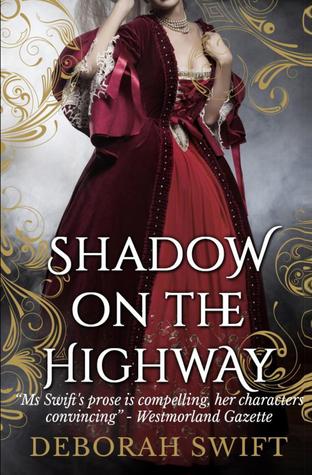
It appears that Katherine Ferrers has inspired a number of other novels (Deborah Swift’s recent young adult novel, Shadow on the Highway, is one) and also some films, including a 1945 adaptation starring James Mason and Margaret Lockwood. I’m surprised that I had never heard of her before reading The Silvered Heart, but I’m pleased to have been introduced to this fascinating woman at last!

Flood of Fire by Amitav Ghosh

Flood of Fire Flood of Fire is the third and final part of Amitav Ghosh’s Ibis Trilogy and I think it’s probably my favourite of the three books. Set in India and China before and during the First Opium War, the trilogy follows the adventures of a group of people thrown together on board a former slaving ship called the Ibis.

This third novel pulls together threads from the first two and while it may be possible to still enjoy this book without having read the others, I would strongly recommend reading all three in order. While Sea of Poppies and River of Smoke took us through the build up to the conflict, describing the disputes over the trade of opium and the deterioration of relations between Britain and China, Flood of Fire covers the war itself.

The novel opens in 1839 and the first character we meet is Kesri Singh, brother of our old friend, Deeti. Kesri is a havildar (a rank equivalent to sergeant) in the Bengal Native Infantry, part of the East India Company, and through his storyline we are given some insights into army life and the contribution made by Indian regiments to Britain’s military victories in China. Next we are reunited with Zachary Reid, the American carpenter-turned-sailor who played a major part in Sea of Poppies but was absent from River of Smoke. In this book, Zachary begins an affair with his new employer, Mrs Burnham, before setting his sights on becoming a successful businessman.

We also rejoin Neel Rattan Halder, the former Raja of Raskhali, who is now living in Canton where he is able to use his skills as an interpreter to assist China’s war effort. Neel’s story is told mainly in the form of a journal and gives us a Chinese perspective of events. Finally, the widowed Shireen Modi is travelling to Hong Kong to visit the grave of her husband, Bahram, and to try to recover some of the money he lost when his cargo of opium was confiscated in River of Smoke. These are the four main characters in Flood of Fire, but other characters from the previous two novels also make appearances, including the French botanist Paulette Lambert; her childhood friend, Jodu; Bahram Modi’s illegitimate son, Ah Fatt (known as Freddie); and Baboo Nob Kissin, the Burnhams’ agent.

Before reading these books I knew nothing at all about the First Opium War, so this trilogy has provided a perfect introduction. Devoting three long novels to a relatively short period of history allows the author to go into a lot of depth, describing first the production of opium in India (Sea of Poppies), the merchants who transported the drug to China (River of Smoke) and finally, in Flood of Fire, the reasons why Britain went to war with China after the trading of opium was banned in Canton. The events of the war itself are given a lot of attention too, from descriptions of battles and strategies to the negotiations that would lead to the British acquisition of Hong Kong.

Although there were times when I felt too much time was being spent on one character and not enough on another, I did find all of their storylines compelling and interesting – with the exception of Zachary’s affair. It was obviously intended to add some comedy to the book, but it didn’t work for me at all and I didn’t think it fit the tone of the rest of the trilogy. Zachary is the character who changes the most over the course of the three novels – and not for the better; his transformation in Flood of Fire could be seen as an example of how greed and ambition can lead to corruption, and is written quite convincingly, but I still found it disappointing as he was such a likeable person at first. As for the other characters, some of their stories end in happiness and others in sadness or tragedy, but I was pleased that they were all given a proper resolution.

The book finishes with a very long list of sources, showing the amount of research which must have gone into the writing of the Ibis Trilogy. We are told that these sources were taken from the archives of Neel Rattan Halder (one of the characters in the story) and that Neel and his descendants have left behind more information which has not yet been used. This gave me hope that, although Flood of Fire is the last of this particular trilogy, it would be possible for Amitav Ghosh to continue the story by moving forward to another period of history. Whether he does or not, I am still happy to have had the opportunity to read these three wonderful novels!