A Brightness Long Ago by Guy Gavriel Kay

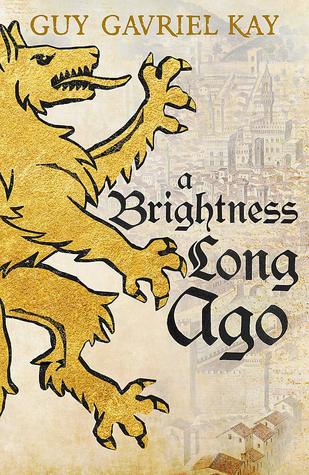
Guy Gavriel Kay’s newest novel, A Brightness Long Ago, is a prequel to 2016’s Children of Earth and Sky but although they are set in the same world and share one or two characters, each book also works as a standalone. I think this is probably my favourite of the two, although I enjoyed both.

Like most of Kay’s novels, A Brightness Long Ago takes place in a land which closely resembles a real historical setting – in this case, Renaissance Italy. Our narrator is Guidanio Cerra of Seressa, a city which, with its lagoon and canals, clearly corresponds to Venice. Guidanio is looking back at events from his past, beginning with his time at the court of Uberto of Mylasia, a cruel tyrant who once ‘sealed an enemy in a cask to see if he might observe the soul escaping when his prisoner died’ and who has become known as the Beast due to his treatment of the young girls and boys he summons to his chamber at night. As the son of a humble Seressan tailor, Guidanio knows it is a great honour to have been given a position at Uberto’s court but he quickly discovers what sort of man he is serving and so he is not at all sorry when the Beast is assassinated one night by the latest young woman who has been brought to his rooms.

Her name is Adria Ripoli, the Duke of Macera’s daughter, and she is acting on the orders of her uncle, Folco Cino, a leader of mercenaries. Having witnessed Adria enter Uberto’s chamber to carry out the assassination, Guidanio helps her to escape before she can be captured. He expects never to see her again, but as chance would have it their paths do soon cross again and Guidanio finds himself drawn into the conflict between Folco Cino and his rival mercenary commander, Teobaldo Monticola, two powerful men whose actions could determine the fate of Batiara (Italy).

A Brightness Long Ago explores some of Kay’s favourite themes, such as chance encounters, the spinning of Fortune’s Wheel, and the idea that the small decisions each of us make every day of our lives could have wider repercussions, affecting not only our own future but the future of others too – in other words, that everything we do matters. These are topics that Kay returns to again and again in his novels but they seemed particularly dominant in this one and that was my only slight criticism of the book – not the ideas themselves, but the way the authorial voice is constantly reminding us that ‘things matter’. I would have preferred a more subtle approach, I think! Anyway, the writing was still as beautiful as I’ve come to expect; as some of you will know, I choose a quotation from every book I read for my end-of-month Commonplace Book posts – I will have a difficult choice when I come to put this month’s post together as almost every sentence in this book was worthy of being quoted!

The 15th century Italian (or Batiaran) setting was already familiar to me from Children of Earth and Sky, but even if you haven’t read that book, if you have any knowledge of Renaissance Italy you will probably be able to draw parallels between some of Kay’s characters and members of the Medici, Borgia and Sforza families, among others. There’s a dramatic horse race – one of the most memorable set pieces in the book – inspired by the real life Palio race which has taken place in Siena for centuries, and the fall of Sarantium (Constantinople) is also covered. The different names Kay uses for these people, places and events, along with the two moons in the sky – one blue and one white – mean this book can be classed as ‘historical fantasy’, but there aren’t really any other fantasy elements in the story at all. That’s not a problem for me, but if you’re new to Guy Gavriel Kay and hoping for something with magic and wizards, I would recommend starting with Tigana instead.

Thanks to Hodder & Stoughton for providing a copy of this book for review via NetGalley.
Wakenhyrst by Michelle Paver

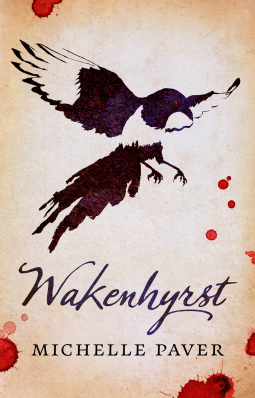
Michelle Paver is an author I’ve been meaning to try for years, since I noticed all the hype surrounding her 2010 novel Dark Matter. For some reason I never got round to reading that book or any of her others, but I put her new one, Wakenhyrst, on my 20 Books of Summer list to ensure that I would read it.

Wakenhyrst begins in the 1960s with the elderly Maud Stearne coming under pressure from journalists to tell the story of a murder committed by her father many years earlier. Maud is the only person who knows why Edmund Stearne left the house one day in 1913, armed with an ice-pick and a geological hammer, and killed the first person he came across ‘in the most bizarre and horrible way’. Edmund spent the rest of his life in an asylum and Maud stayed on alone in the family home – the old manor house, Wake’s End, in Suffolk – never speaking about the tragedy to anyone. But now the house needs urgent repairs and Maud can’t afford to pay for them. It seems that she will have to sell her story after all.

Maud then gives her account of the events leading up to the murder, beginning by describing her lonely childhood, growing up at Wake’s End on the edge of Guthlaf’s Fen, ‘the oldest, deepest, rottenest fen ever’, with a father who is cold and domineering and a mother who is constantly pregnant (although most of the pregnancies result in stillbirths or miscarriages). Edmund, her father, is a historian and enlists Maud’s help in transcribing a book believed to be written by Alice Pyett, a medieval mystic. The book that really interests Maud, however, is her father’s secret notebook in which he records his innermost thoughts and fears. Maud already knows that Edmund is not a nice person, but even she is shocked by some of the things she reads in his journal. And when he becomes obsessed with a medieval painting of the Last Judgement, known as ‘the Doom’, she worries about her father’s mental state. Are there really evil forces at work in the fens or are they all a product of Edmund Stearne’s imagination?

I enjoyed Wakenhyrst, but it wasn’t quite what I’d expected. I think because I’d seen Dark Matter and Paver’s other recent novel, Thin Air, described as creepy ghost stories, I assumed this book would be the same, but I didn’t find it very scary at all – although I’m not necessarily complaining about that! There are plenty of Gothic elements, and the setting – a remote fenland community steeped in folklore and superstition – is certainly atmospheric, but it is not really a horror story in the usual sense. The horror in this book is more of the psychological kind, in the portrayal of a man’s descent into madness and obsession. Edmund’s notebook entries, which are interspersed throughout Maud’s narrative, become more and more disturbing and outlandish as his fears of the Doom and of demons in the fens spiral out of control.

I can’t really say that I liked Maud, but my sympathies were with her, particularly after her mother dies – weakened by too many pregnancies, or ‘groanings’ as the young Maud thinks of them (because that’s how each one ends). Maud’s life from this point becomes very isolated and unhappy, trapped in the oppressive atmosphere of Wake’s End as her father, never the most pleasant of men to begin with, gradually loses his grip on reality. The only bright spots in her life are her love for her tame bird, Chatterpie, and her relationships with Clem, the under-gardener, and Jubal Rede, the ‘wild man’ who lives in the fen.

After a slow start, I found Wakenhyrst quite an entertaining novel and I do still want to try some of Michelle Paver’s other books. I’m sure I will get round to reading Dark Matter eventually and will be interested to see how it compares.

Thanks to Head of Zeus for providing a copy of this book for review via NetGalley.

This is book 5/20 of my 20 Books of Summer.

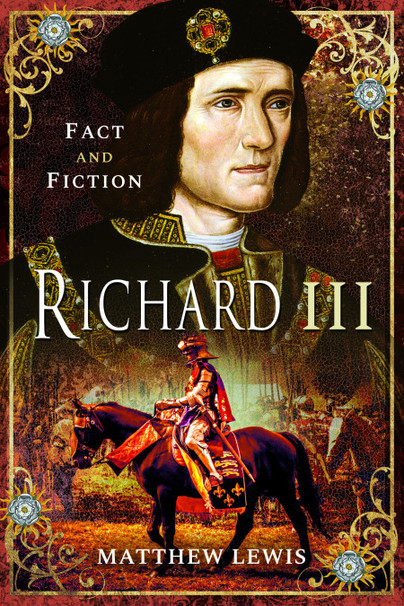
Richard III: Fact and Fiction by Matthew Lewis

I find most periods of history interesting, but there are none that fascinate me quite as much as the Wars of the Roses, the name given to the conflict between two rival branches of the royal House of Plantagenet – York and Lancaster. This period included the reigns of Henry VI, Edward IV and Richard III and ended following Henry Tudor’s victory at the Battle of Bosworth. Matthew Lewis (not to be confused with the Gothic author of the same name!) has written several non-fiction books on this subject, as well as two novels; Richard III: Fact and Fiction, was published earlier this year by Pen and Sword and is the first of his books that I’ve read.

Richard III is surely one of England’s most controversial kings; no two historians seem to agree on any of the mysteries surrounding his life and reign, while fictional depictions range from the saintly to the wicked. As Lewis explains in his introduction:

Contradictory facts are launched from either side causing the deafening cacophony of explosive opinions that can make the real facts hard to discern and deter some from becoming embroiled in the debate.

Lewis then takes one question or supposed ‘fact’ about Richard at a time and attempts to separate the facts from the fiction. Some of these are very basic (such as “Was Richard III the Duke of York?”) and can be given simple, factual answers (No – that was his father’s title) but others give rise to longer, more involved discussions. The various crimes of which Richard is often accused – including the murders of Edward, Prince of Wales, and King Henry VI, and the alleged poisoning of Queen Anne, which would clear the way for Richard to marry his niece, Elizabeth of York – are all examined, setting out the evidence for and against Richard being responsible. The author manages to stay largely neutral and unbiased, which I’m sure is no easy feat when writing about Richard! I was a bit disappointed that the greatest mystery of them all – the disappearance of the Princes in the Tower – was covered relatively briefly, but I see Matthew Lewis has written another book devoted to that topic, so maybe didn’t see the need to explore it in depth here too.

Although I’ve already read a lot about Richard III, there was enough new information in this book to keep me interested; for example, I can’t remember having read anything before about Richard’s dispute with Thomas Stanley over the ownership of Hornby Castle, which could be one reason for Stanley’s treachery at Bosworth fifteen years later. However, I think this book would be a particularly good choice for someone who knew much less than me about Richard III and was looking for a place to start learning. The way the book is divided into short sections, with each question and answer followed by a ‘Little Known Fact’ and a brief Glossary picking out one or two words which might be unfamiliar to the reader, makes it easy to read and to digest what we are being told. There are also lots of pictures interspersed throughout the text, including some of the author’s own photographs of castles and monuments from his private collection, which I thought added a nice personal touch.

Thanks to Pen and Sword for providing a copy of this book for review.

If you’re interested in reading about Richard III and the Wars of the Roses, you can see a full list of all the fiction and non-fiction books I’ve read on the subject on my Wars of the Roses page.

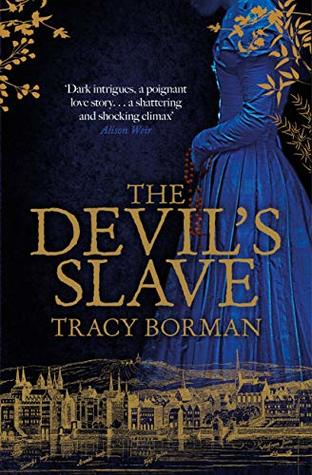
The Devil’s Slave by Tracy Borman

Almost a year ago, I read Tracy Borman’s The King’s Witch for last year’s 20 Books of Summer challenge; now the second novel in the trilogy is available and has become my fourth book for this year’s 20 Books of Summer!

In The King’s Witch we met Frances Gorges, a young 17th century noblewoman whose knowledge of the healing properties of herbs and flowers leads to accusations of witchcraft. The book ends shortly after the foiling of the Gunpowder Plot, in which Frances has become embroiled, and The Devil’s Slave picks up the story just a few months later, in April 1606.

Following the dramatic events that brought the previous novel to a close, Frances has retreated to her family’s estate, Longford in Wiltshire, to mourn the loss of the man she loved and give birth to their child. But Longford is now in the hands of her hostile brother, Edward, and is no longer the safe place she remembers. When she receives a proposal of marriage from Thomas Tyringham, the king’s ‘Master of the Buckhounds’, who agrees to raise her young son as his own, she accepts, although she doesn’t think she will ever be able to love again. Promising to stay out of any more political or religious intrigue, Frances tries to settle into her new life at Tyringham Hall – but it is not long until she and Thomas are drawn back to court and Frances finds herself caught up in a new Catholic conspiracy.

I loved this book; the reservations I had about the first one (mainly the slow pace at the beginning and the story being not quite what I’d expected) were not problems this time and I was engrossed from the first page. This is such a fascinating period of history, yet being sandwiched between the end of Elizabeth I’s reign in 1603 and the Civil Wars of 1642-1651, it often tends to be overlooked. There’s so much going on in this novel – the court of James VI of Scotland and I of England appears to be a hotbed of plotting and scheming, and with her Catholic background and previous connections with the Gunpowder conspiracists, Frances is right at the heart of it all. It’s never clear who can and can’t be trusted and Tracy Borman does an excellent job of showing how dangerous life at court is, particularly for a woman like Frances whose previous actions have already aroused suspicion.

When I read The King’s Witch, I felt surprised that the witchcraft element wasn’t as strong as the title had made me expect. This time, I had different expectations. I knew that it wasn’t going to form a very big part of the story, although it is always there in the background; every time Frances uses her skills to help someone who is ill or dying, you know that someone could be watching and remembering, storing away the information to bring up at a later date and use it against Frances and her family. Halfway through the novel we see Frances visiting Belvoir Castle, home of the Earl of Rutland, and there are hints that some of the castle servants are involved in witchcraft. Tracy Borman states in her author’s note that this will be brought to life in the third novel, so I’m looking forward to that!

Although Frances Gorges was a real person, very little is known about her, so not everything that she does in the novel is based on historical fact. However, we also meet some well-known figures of the period, ranging from Sir Walter Raleigh (imprisoned in the Tower of London for the duration of the novel), the king’s two sons Prince Henry and the future Charles I, and Arbella Stuart, a possible claimant to the throne. I was intrigued by the characterisation of Robert Cecil – he had been very much the villain of the previous novel but in this one there is a suggestion that there may be another side to him! I also loved Thomas Tyringham (who also really existed) and was pleased to see that Frances’s feelings towards him grew warmer as time went by.

The way the book ended made it clear that there is more trouble ahead for Frances, but I hope there will be happiness too. I can’t wait to see what Tracy Borman has in store for her in the third book in the trilogy.

Thanks to Hodder & Stoughton for providing a copy of this book for review via NetGalley.
This is book 4/20 of my 20 Books of Summer.

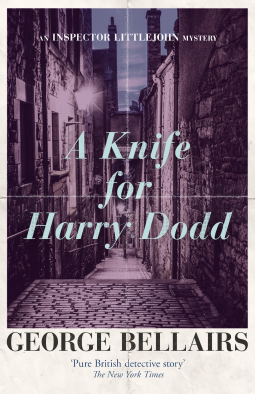
A Knife for Harry Dodd by George Bellairs

George Bellairs was a very prolific crime author, with over fifty books published between 1941 and 1980. This is the first one I’ve read and I enjoyed it, which means I have a lot to look forward to! Although Bellairs (a pseudonym of Harold Blundell) did write some standalone novels, most of his books were part of his Inspector Littlejohn series of which A Knife for Harry Dodd is the nineteenth. Fortunately, this is not a series which needs to be read in order!

As the title suggests, the novel begins with Harry Dodd being stabbed in the back as he begins to walk home from his local pub one night. Instead of calling the police or an ambulance, Harry summons his girlfriend Dorothy Nicholls and her mother, who immediately set off in the car – with great difficulty, as neither of them can actually drive. Eventually they manage to find Harry and help him into the car, but they are unaware of how badly wounded he is and by the time they get him home he is dead.

Inspector Littlejohn of Scotland Yard is called in to investigate the crime and, with the help of his assistant Sergeant Cromwell and the local police, he begins to unravel the secrets of Harry Dodd’s personal life in an effort to identify the murderer. At first, Dorothy and her mother are under suspicion, but the range of suspects soon widens to include another of Harry’s mistresses, his estranged wife and their sons and daughters, and his brother, an influential politician. As the story unfolds, we begin to understand what sort of man Harry Dodd was and the nature of his relationships with the various people in his life. It’s not an easy mystery for the reader to solve, as some of the information we need isn’t provided until later in the book, but I enjoyed following Littlejohn’s investigations and trying to guess who the culprit could be.

Although it’s disappointing that most of the women in the book are portrayed as either silly and helpless or loud and domineering, there’s some great characterisation too. I particularly liked Ishmael Lott, a timid little man who sells parrot seed and dreams of making his fortune on the stock market, and Mr Glass, a patient in an asylum that Littlejohn visits in his search for one of the suspects. In fact, Littlejohn himself is probably the least memorable of all the characters in the book! In a way, I liked the fact that he just gets on with solving the mystery unobtrusively, but it would still have been nice to have known a little bit more about him. Maybe his background is given in the earlier novels and Bellairs assumed he didn’t need to tell us again.

The next Inspector Littlejohn mystery I read will probably be Corpses in Enderby, which I received as a free ebook when signing up for updates from the George Bellairs website. I’m not sure if and when this offer will end, so hurry if you want a free George Bellairs book too!

Thanks to Agora Books for providing a copy of this book for review via NetGalley.
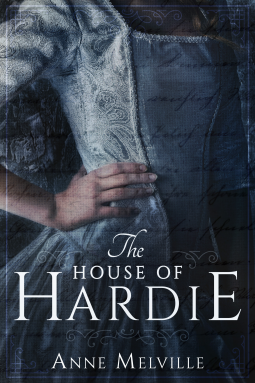
The House of Hardie by Anne Melville

The House of Hardie is the first in a trilogy published between 1987 and 1990 and telling the story of several generations of the Hardie family. In this novel, set towards the end of the Victorian era, we meet Gordon Hardie who, ever since running away to sea as a boy, has dreamed of becoming a famous explorer and discovering new lands. Gordon has been back in England for several years, working in the family wine business in Oxford, but has informed his father that this won’t be a permanent arrangement as he intends to set off soon on a voyage to China in search of a rare and beautiful flower.

Meanwhile, Gordon’s younger sister Midge is preparing to begin an exciting new adventure of her own. She has been offered a place at Oxford University, with permission to attend tutorials and lectures – as long as she is chaperoned by an older woman at all times and sits separately from the male students. Midge is determined to make the most of the opportunity she has been given, but she finds an immediate distraction in Archie Yates, a young man who couldn’t be more different from herself. As the grandson of a marquess and with no need to worry about his future, Archie has little interest in studying and plans to spend his time at Oxford having fun. While Midge embarks on a romance with Archie, her brother Gordon also falls in love – with Archie’s sister, Lucy Yates. Because of her class, Lucy’s life has so far been much more conventional and constrained than Midge’s, but she longs to get away from her grandfather’s country estate and experience more of what the world has to offer.

The two storylines – one following Midge’s relationship with Archie and the other Gordon’s with Lucy – move forward in parallel with each other, a few chapters at a time spent on each one. I enjoyed getting to know three of the characters, at least; I didn’t like Archie at all and couldn’t understand what an intelligent woman like Midge saw in him! The book was much more than a simple romance, though, with lots of interesting issues covered through the stories of the main characters. First, there was women’s education and how progress in that area was slowly being made, while still being very far away from equality with men. We are shown how frustrating it must have been for Midge to be allowed to study at Oxford and take examinations like the men, yet not to be awarded the equivalent degree just because she is a woman. It’s even more ridiculous that she is forced to use separate entrances to the university buildings, that she has to bring a female companion with her to tutorials and that she could be sent home in disgrace if she is caught alone with a male student, however innocent the circumstances.

Class differences are also explored. The Yates family are upper class people with titles and estates, whereas the Hardies are wine merchants with a background in trade. It doesn’t matter that the Hardies still have a comfortable lifestyle and a nice home and that they are decent, hardworking people; because of the class system, the marquess will never consider them to be good enough for his grandchildren. Gordon and Lucy believe that love should be able to transcend these boundaries, but for Midge and Archie their difference in status will prove much more challenging.

Travel and exploration form another important part of the plot. Most of the final section of the book is set in China where Gordon is hunting for the lily he hopes will make his name as an explorer and botanist. This is fascinating and reads almost like a Victorian travel memoir, describing the scenery, the culture and the people our characters meet along the way. However, the feel of the novel changes at this point with the decision to leave Oxford – and Midge and Archie’s storyline – behind. The balance and variety of the earlier chapters are lost and I finished the book feeling a bit less enthusiastic about it than I had at first. I did enjoy The House of Hardie, though, and I have a copy of the second book in the series ready to start soon.

Thanks to Agora Books for providing a copy of this book for review via NetGalley.
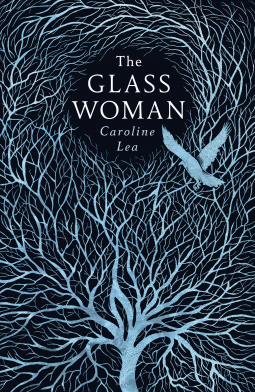
The Glass Woman by Caroline Lea

With its cold Icelandic setting, dark atmosphere and shades of classic Gothic novels, this would have been an ideal winter read, but for me it was a spring one, finished towards the end of April – and now here I am writing about it in June, at the beginning of summer. An indication of how far behind I am with everything, but I know I will catch up eventually!

Anyway, The Glass Woman opens in November 1686 with a body rising to the surface of the frozen sea just off the coast of Iceland. Amongst the crowd who gather to watch and to try to pull the body from the water is one man who knows more than he’s willing to admit. A man who ‘remembers carrying the heavy body in the winding sheet, weighted with stones; remembers his wound paining him as they scraped through the snow and smashed the ice with long staves before sliding the body in’.

We then go back a few months to the August of that year, when Rósa comes to live in the village of Stykkishólmur with her new husband, Jón. She knows very little about Jón but he had promised to see that her ailing mother was cared for if she married him, so she felt she had to accept his proposal. Rósa finds it difficult to settle into her new life; she misses her mother and her childhood friend Páll and her husband is proving to be disappointingly cold and distant. The other women of the village seem to be reluctant to befriend Rósa and she soon discovers that this is because there is some sort of mystery surrounding the death of Jón’s first wife, Anna.

Alone and isolated in Jón’s croft, Rósa listens to strange noises coming from the loft above but she is unable to investigate because her husband keeps the loft door locked and has forbidden her to try to enter. He expects her to be meek and obedient, as symbolised by the small glass woman he gave her as a wedding present, but Rósa has other ideas. She has questions that must be answered. Who or what has been hidden away in that secret locked room? What really happened to Anna? And what sort of man has she married?

The Glass Woman is a beautifully written novel; Iceland is a setting I always find atmospheric and interesting and in this book it is more than just a setting – the landscape itself plays a part in the development of the story. I liked Rósa and understood how difficult the situation was that she found herself in, unable to trust her husband yet doing her best to make the marriage work, while suspecting that he may have done something terrible and that she herself could be in danger.

Most of the novel is written from Rósa’s point of view, but there are also some chapters narrated by another character and set at a slightly earlier time. Although this did help to fill in some of the gaps in Rósa’s knowledge, I thought it was done in a way that confused things rather than clarified them. The structure seemed to slow the story down and I didn’t find myself becoming fully absorbed until near the end of the book when the various threads began to come together and the truth started to emerge.

Overall, though, I did enjoy reading The Glass Woman. Some of the plot elements in the first half of the book made me think of Jane Eyre and others of Rebecca, but as the story moved forward I knew it wasn’t going to be exactly like either of those other novels and that Caroline Lea had written something quite different.

Thanks to the publisher Michael Joseph for providing a copy of this book for review via NetGalley.