West by Carys Davies – #ReadingWales26

This month Karen of Booker Talk and Kathryn of Nut Press are hosting Reading Wales, celebrating the work of Welsh authors. I have chosen a book by Carys Davies, an author born in Llangollen, North Wales. Last year I read and enjoyed her most recent book, Clear, which is set in Scotland during the Highland Clearances. West, published in 2018, was her first novel and the setting and subject matter are very different, but the two books do share some similar themes.

West is set in America in the early 19th century, a few years after the famous Lewis and Clark Expedition, and revolves around Cy Bellman, a widowed mule breeder who lives in Pennsylvania with his ten-year-old daughter, Bess. Inspired by stories of the expedition and by an article he reads in the newspaper describing the discovery of huge animal bones found in a Kentucky swamp, Cy decides to set out on a journey west to find the giant animals he believes must still be roaming in the wild. Everyone else thinks he’s a fool, including his sister Julie, but Cy is determined to prove them all wrong.

As well as following Cy Bellman’s journey into the wilderness, Davies explores the effects his departure has on Bess, left behind on the mule farm with Aunt Julie as her father rides off into uncharted territories. He tells her he’ll back in a year, or maybe two, but that’s a very long time for a ten-year-old girl and she thinks about her father daily. Unlike the others, Bess doesn’t think he’s being foolish – she’s proud of him and thinks of him as a brave, noble figure. She has no doubt that he’ll find the animals he’s searching for and will return safe and well. Her own wellbeing, however, is a different matter, as in Bellman’s absence, their scheming neighbour Elmer Jackson has set his sights on the farm and the women who live there.

Davies writes from the perspectives of both Cy and Bess, with occasional sections from other characters’ points of view. The passages describing the landscape Cy passes through as he travels west are vivid and feel authentic, stressing the vastness of the land, the harshness of the winters and the sense of isolation as he moves further away from civilization. Along the way he acquires a guide, a Shawnee boy with the unflattering name of Old Woman from a Distance, who helps him hunt for food and navigate dangerous river crossings in return for gifts of ribbons, beads and other small items. Cy’s attitude towards his guide is as you would expect, given the time period, and now and then we also get a glimpse of the guide’s thoughts about Cy. The fact that neither speaks the other’s language adds another obstacle to their relationship and despite spending so much time in each other’s company, neither makes the attempt to learn. Instead, they communicate through looks and gestures and through showing emotion. This idea of communication without a common language is explored in more depth in Davies’ later book, Clear.

West is novella-length, which makes it a quick read, but it’s also a powerful, gripping story and I don’t think it needed to be any longer. I’m looking forward to reading Davies’ other novel, The Mission House, and her two short story collections.

Appointment in Paris by Jane Thynne

This is a sequel to Jane Thynne’s Midnight in Vienna, which I read in 2024 and enjoyed. That book was set just before the beginning of the Second World War and followed two characters – former MI5 spy, Harry Fox, and a gifted linguist, Stella Fry – who team up to look into the suspicious death of a famous crime writer. Appointment in Paris brings Harry and Stella together again to investigate a second murder, but this one is a separate mystery so if you haven’t read the first book yet, it’s not completely essential.

The novel opens in April 1940 at Trent Park, a country house in Cockfosters, north London. The house has been requisitioned by the government as a facility for holding captured German pilots who have no idea that their rooms are bugged with microphones while a team of ‘listeners’ eavesdrop on their conversations. One night, a man in a Luftwaffe captain’s uniform is found dead in the grounds and the next morning, it’s discovered that one of the listeners has disappeared. Assuming that the missing man killed the German captain and then fled, the people in charge are desperate to catch him in case he gives away any of Trent Park’s secrets. This is where Harry and Stella come in…

Since the events of the previous novel, Stella Fry has settled into a new job making documentaries for the GPO Film Unit and is not very happy when she’s summoned by Maxwell Knight of MI5 who orders her to go and work at Trent Park as a listener. Stella is reluctant to go but her fluency in German and the fact that the suspected killer is an old friend from her university days means she’s the ideal choice to go undercover and try to find out what really happened. Meanwhile, Harry Fox has also been given orders by Knight – his mission is to stay in London and look for any information that could lead them to the missing man.

I enjoyed Appointment in Paris just as much as the first book, although I would have liked to have seen Harry and Stella working together more closely – they have very separate storylines in this book and their paths only cross occasionally. Stella’s story was the one that interested me most. I loved learning more about Trent Park and the work of the listeners, many of whom were German-Jewish refugees who had fled persecution and were assisting the British war effort. It was an emotionally difficult, often unpleasant job as the listeners would overhear all kinds of disturbing conversations between the German prisoners. As the title suggests, Stella’s investigations eventually take her to Paris, where she meets Noël Coward, who is running Britain’s Bureau of Propaganda. Although most of the characters in the book are fictional, inserting a real person here didn’t feel too forced or unnatural, especially as Coward had already been referenced several times via Stella’s actress friend, Evelyn, who is performing in one of his plays.

As she does in the previous novel, Thynne evokes the time period perfectly, describing the mood of the public during the eight months known as the Phoney War and how things abruptly changed in May 1940 with the invasion of France, Belgium, Luxembourg and the Netherlands, and the increased threat to Britain. It’s the little details that give the novel its colour – people hurrying home earlier than usual in the evenings because the blackout made it difficult to walk in the dark; newspapers shrinking in size because Scandinavian pulp supplies had been cut off; Parisian waiters taking payment before serving food because they are often interrupted by air raid sirens and the patrons forget to pay. The strong sense of time and place makes everything feel real and convincing.

Having enjoyed both books about Stella and Harry, I’m now hoping there’s going to be a third. The way this one ended definitely made me think that there will be – and as we’re still in 1940, there’s a lot more of the war to cover. I would also like to read some of her earlier novels, which also sound interesting.

Thanks to Quercus for providing a copy of this book for review via NetGalley.
Travel Light by Naomi Mitchison

What an unusual book this is! I’ve been interested in reading something by Naomi Mitchison for a long time (I did have The Corn King and the Spring Queen on my Classics Club list at one point, before replacing it), so when I spotted this novella on NetGalley, it seemed like a good opportunity to try one of her books.

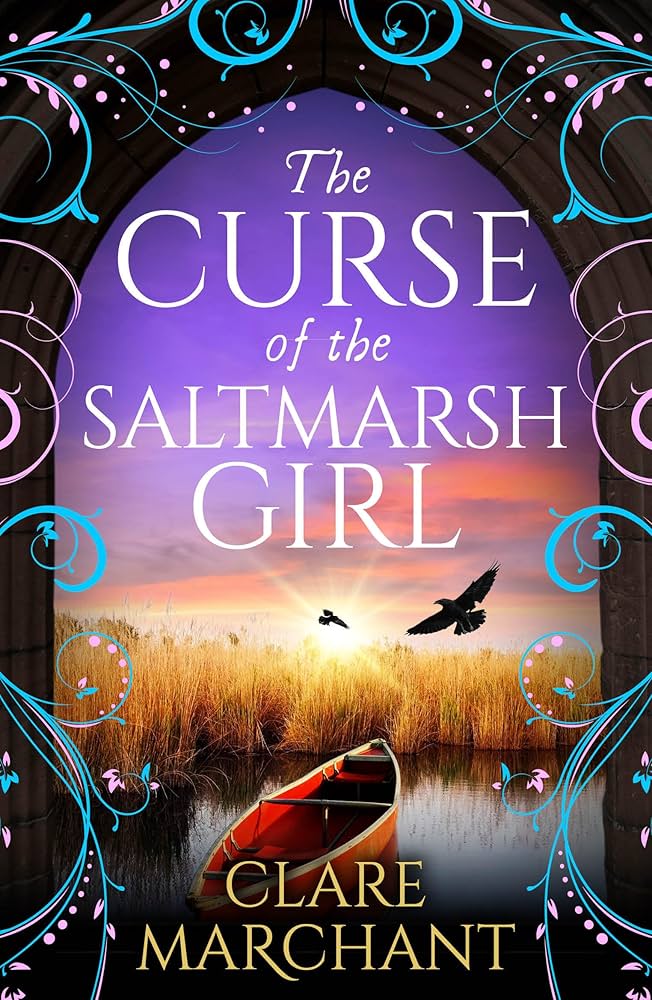
Travel Light was published in 1952, two years before The Lord of the Rings, which Mitchison proofread for her friend Tolkien, and as you can probably guess from the cover, it’s one of Mitchison’s own contributions to the fantasy genre. It tells the story of Halla, a king’s daughter, who is cast out as a baby because the new queen resents her. She is rescued by her nurse, Matulli, who transforms herself into a black bear, picks up the baby in her mouth and carries her into the woods, where she is raised with a group of bear cubs. When Matulli and the other bears prepare for their winter hibernation, Halla is entrusted to the care of Uggi the dragon, who becomes her friend and mentor.

The book is divided into three sections and the first is devoted to Halla’s childhood with the bears and the dragons, as I’ve described above. I really liked this first section; it has the feel of a children’s fairy tale and I particularly enjoyed reading about Halla’s time with the dragons on Dragon Mountain, where she learns about their love of collecting gold and is told stories of heroes rescuing princesses from dragons. These stories lead Halla to question whether the damsels in distress really wanted to be rescued and whether the heroes are really so heroic after all!

Despite growing up feeling that she’s half bear/half dragon, Halla eventually has to accept that she is, in fact, a human, and in the second part of the book she ends up joining a group of men from the fictional land of Marob who are on their way to Micklegard (or Byzantium, later known as Constantinople) to ask the emperor for protection against their cruel governor. The book loses some of its charm after this; it becomes more grounded in reality, the politics and religion of men play a bigger part, and things happen that showed me that it’s not really the children’s fantasy I thought it was at first – or at least not one I would recommend for young children. There are still plenty of enjoyable moments, though – I loved the idea of racehorses deciding amongst themselves who should win the race – and I found the ending of the book quite satisfying.

Norse myth features heavily in the story, with references to the Norns and the weaving of fate, a Valkyrie who keeps popping up at various times throughout the book, and an encounter between Halla and the All-Father (Odin). It’s the All-Father who, just before Halla joins the world of humans, gives her a part of his night-blue cloak for protection and tells her to set aside the treasure-hoarding habits of the dragons and ‘travel light’, without material possessions or mental burdens, as she moves forward into her new life.

At 192 pages in the new Virago edition, this is a quick read. Although I found it uneven, as an example of an older fantasy novel written by a woman and featuring a female protagonist I think it’s well worth reading.

Thanks to Virago for providing a copy of this book for review via NetGalley.
Murder Like Clockwork by Nicola Whyte

This is the second in a series featuring the amateur detective duo Audrey Brooks and Lewis McLennon. I haven’t read the first, 10 Marchfield Square, but I enjoyed this one so much I’m planning to go back and read it, as well as looking out for any future books in the series.

Murder Like Clockwork is set in London and begins with cleaner Audrey Brooks arriving at the house she cleans every Thursday afternoon. She got the job through an agency and has never met the owner of the house, a Russian financier who is rarely in the country but wants someone to wind his collection of clocks and dust his antiques and expensive furniture. On this particular Thursday, Audrey arrives earlier than her usual time but it’s so cold she enters the house anyway and prepares to start work – only to find that she’s not alone. There’s a dead body in one of the bedrooms…with splashes of blood all over the walls and floor, showing that it wasn’t a natural death.

Audrey runs outside to call the police, who arrive twenty minutes later. To her shock, however, she finds herself accused of wasting police time, because there’s no dead body or blood to be seen. Audrey can’t believe it; how can an entire crime scene completely vanish in only twenty minutes? Convinced that she wasn’t imagining things, she contacts her friend, Lewis McLennon, who recently helped her solve another mystery. Lewis is excited to have a second crime to investigate, but how can they even prove that a crime has been committed when the victim and the evidence have disappeared?

I picked up this book after starting and temporarily abandoning two other books that didn’t immediately draw me in. I hoped this would be the quick, entertaining read I needed to help avoid a reading slump – and it was! The characters are well drawn and quirky, the mystery is cleverly plotted without being too difficult to follow and the overall tone is light and humorous. It didn’t really matter that I hadn’t read the previous book as this one works well as a standalone, but I did feel that I didn’t fully understand the role of one of the characters, Celeste, the owner of Marchfield Square, the residential complex where Lewis and Audrey both live. I’m sure I’ll get to know her better when I read the first book.

The novel is written from the points of view of Audrey, Lewis and occasionally Celeste, giving different perspectives on different aspects of the mystery. I found Lewis a particularly interesting character. As a struggling crime writer, he’s enthusiastic about having a real life crime to solve in the hope that it will give him inspiration for his books, but this often leads him to speak without thinking and many people find him annoying. He has a job at a recruitment agency, which he resents because he would rather spend his time writing, and is genuinely surprised when he discovers that other people also have lives outside work and are finding ways to balance their day jobs with pursuing their own dreams. Audrey is a very different personality – she’s warm, friendly and sociable and is happy with her cleaning jobs (although she wishes they were better paid). She and Lewis complement each other perfectly and form a good team.

Although Audrey and Lewis do most of the investigating, I loved the way the other residents of Marchfield Square also get involved. Somehow they all seem to know exactly what’s going on and everyone has an opinion to give or a piece of advice to offer. If you’ve ever watched Only Murders in the Building, that’s what this book reminded me of! I found it very entertaining overall and am looking forward to meeting Lewis and Audrey again.

Thanks to Raven Books for providing a copy of this book for review via NetGalley.
The Night Hag by Hester Musson

Have you ever suffered from sleep paralysis – the feeling that you’re awake but can’t move your body? Maybe it’s accompanied by a sensation of pressure on your chest, as if something is pinning you to the bed, or the impression that someone is in your room. It’s more common than you may think – many people will experience it at least once or twice in their life – and it inspired the famous painting, The Nightmare by Henry Fuseli. In fact, the word ‘nightmare’ itself (originally hyphenated as night-mare) comes from the idea of a mythological female demon (a ‘mare’ or ‘hag’) sitting on the chest of a sleeping person. Someone who has had a lot of experience of these terrifying night-mares is Lil Vincent in Hester Musson’s new novel, The Night Hag.

It’s 1886 and Lil Vincent has been free of the night-mares, as she calls them, for many years, but recently they have started again and are becoming increasingly intense. Frightened and desperate, Lil writes a letter to the renowned Edinburgh doctor, Dr Lachlan. Relieved to be able to open her heart to somebody at last, even somebody she’s never met, she finds herself telling him all about her childhood, growing up as the daughter of a medium who forced her to participate in fraudulent séances.

Her childhood has left scars that still persist, even today as she tries to build a new life for herself as an archaeologist. Lil is assisting Nils and Effie Jensen with a dig on what they believe is a Bronze Age burial mound in the fictional Scottish village of Pitcarden. When they come across two cinerary urns and a bronze knife, Lil thinks they are on the verge of a significant discovery, but it seems that the villagers are unhappy with their presence and they may not be allowed to complete their excavations.

This is the second novel I’ve read by Hester Musson, the first being The Beholders. Although I found this one a more original and intriguing story, I did have some of the same problems I had with the other book – mainly that the first half is very slow and it took me a long time to become immersed in it. It didn’t help that there are several different threads to the story – Lil’s sleep disturbances, the séances and the archaeological dig – and they all feel very separate, never really coming together until the end.

Once I did get into the story, I found it interesting. There’s a good sense of time and place, with the community of rural Pitcarden steeped in superstition and folklore. The second half of the book drew me in much more than the first half did, and I began to have a lot of sympathy for Lil as she discovers that almost everyone in her life has been lying to her or deceiving her in one way or another. The way one particular character betrays her trust is quite shocking and Lil is deeply affected by it all. But although it’s a dark book, there are some glimmers of hope in the final chapters and the ending is satisfying, so I’m glad I persevered with it.

If you read this book and enjoy it, I would also recommend reading The Hill in the Dark Grove by Liam Higginson, another book about archaeology and superstition in a rural setting. It has a similar tone and atmosphere and I think it may appeal to the same readers.

Thanks to 4th Estate and William Collins for providing a copy of this book for review via NetGalley.
The Strawberry House by Rachel Burton

It’s February 1952 and journalist Henry Aldridge is planning an article on the recent death of King George VI when his editor approaches him with a completely different assignment. He wants Henry to report on the restoration of Montagu Manor, a country house near Oxford that was partially destroyed by fire in the summer of 1938 and later requisitioned by the army after the outbreak of war. Henry reluctantly accepts the job, but doesn’t admit that he himself had been a guest at the house during that fateful summer.

In 1938, Montagu Manor was home to Sir Philip Kerrigan, his wife and four children. It was the son, Anthony, who invited Henry to spend the summer with them, relaxing, fishing in the river and contemplating their next steps, having both recently graduated from Oxford University. Henry, the son of a factory owner, is expected to go into the family business, but what he really wants to do is become a newspaper reporter, something he knows his father will never agree to. When he meets Anthony’s sister, Camilla, he discovers that she is in a similar position – she desperately wants to attend Oxford and study for a degree like her brother, but Sir Philip has refused, believing a woman’s duty is to marry and have children. Camilla is determined that she will never marry, but when she and Henry fall in love she begins to reconsider.

The 1952 thread of the novel tells us that something went wrong between Henry and Camilla and they haven’t seen each other since the year of the fire, but we won’t find out what happened until much later in the book. And there are other questions to be answered too. What caused the fire and what was the significance of the unfinished painting that went missing during it? Who exactly were the Kensington Circle, the group of artists staying at the house at the same time as Henry? By moving backwards and forwards between 1952 and 1938, the answers begin to emerge.

I really enjoyed The Strawberry House. I seem to have read a lot of historical novels about English country houses with secrets and at first I thought this one was going to be very similar. What set it apart, though, is how much I liked and cared about the characters, particularly Henry, who seemed like a genuinely nice person torn between following his own heart and trying to keep everyone else happy. I was also fond of his photographer friend, Frank, and Camilla’s little sister, Cassie, who has a talent for writing. Because I was so invested in the characters and their lives, it made me more eager to see how everything would unfold as the truth about the summer of 1938 started to become clear.

In case you’re wondering, the title of the book is inspired by Strawberry Thief, a beautiful design by William Morris. Morris and the Arts and Crafts Movement are referenced throughout the book and the fictional Montagu Manor is located close to Morris’s home, Kelmscott Manor in Oxfordshire. Although this is the first Rachel Burton novel I’ve read, many of her others seem to have a house at the heart of the story and I’ll look forward to exploring more of them.

Thanks to Boldwood Books for providing a copy of this book for review via NetGalley.
All the Fear of the Fair: Uncanny Tales of Circus and Sideshow edited by Edward Parnell

This is the third short story collection I’ve read from the British Library’s Tales of the Weird series and probably my favourite so far. Deadly Dolls was also excellent, but let down by two or three weaker stories, whereas this one is strong throughout, with only one story that I didn’t like very much. As the title suggests, this anthology is themed around fairgrounds, circuses, carnivals and sideshows, all of which provide perfect settings for tales that are creepy, supernatural or in some way ‘weird’.

There are only a few authors in the book whose work I’m already familiar with. One is Edgar Allan Poe, whose story Hop-Frog opens the collection. I have Poe’s complete works and first read Hop-Frog years ago, but couldn’t remember it very well. It’s about a court jester with dwarfism who takes brutal revenge on the king and ministers who have mocked and taunted him. It doesn’t immediately seem to fit the fair and circus theme, but Parnell includes a short introduction to each story explaining why he chose it and for this one he points out that the character of Hop-Frog is probably the earliest example of the ‘evil clown’ trope in horror fiction.

I think my favourite story was possibly Satan’s Circus by Lady Eleanor Smith, an author completely new to me whose other work now sadly seems to be entirely out of print. Smith was one of the group of 1920s socialites known as the Bright Young Things and claimed to have Romani heritage which inspired her interest in circus life. This story involves a travelling circus which has gained a dubious reputation due to the sinister behaviour of the couple who run it. Another one I enjoyed was The Black Ferris by Ray Bradbury; having read his novel Something Wicked This Way Comes, it was fascinating to see how this story (published fourteen years earlier) introduces some of the ideas Bradbury would later develop in the novel, including a carnival and a ride that goes backwards with startling results!

I also loved Freak Show by Robert Silverberg. The idea of the freak show is obviously very outdated and problematic now, due to the exploitation of the people involved, but this particular story is not at all what you might expect. It features visitors from outer space and makes us question which of us really are the ‘freaks’. I thought it was very cleverly done and I would be happy to try more by Silverberg, an author I hadn’t really considered reading before. Charles Birkin’s The Harlem Horror is on a similar subject and was very well written but reminded me of HG Wells’ The Island of Doctor Moreau and was a bit too disturbing for me!

Circus Child by Margery Lawrence was another highlight. I’ve never come across Lawrence before, but apparently she wrote several stories featuring paranormal detective Miles Pennoyer and this is one of them. The story follows Pennoyer as he investigates the case of a young woman who has fallen under the spell of a circus hypnotist. One of the creepiest stories in the collection is Waxworks by W. L. George, in which a young couple out walking in the rain take shelter in an abandoned waxworks. I love the atmosphere the author creates in this one. There are also two stories about magicians making people disappear; my favourite was Charles Davy’s The Vanishing Trick, where a man in the audience offers to replace the magician’s assistant – and disappears for real!

Finally, I want to mention The Little Town by JD Beresford (father of Elisabeth Beresford, who created The Wombles). This unusual and eerie story begins with our narrator walking the streets of a small town late at night and finding himself entering a theatre where a puppet show is taking place. The question is – who is pulling the strings? The conclusion to this story has a very obvious interpretation, but when I read Parnell’s introduction I found that the author himself denied that this was what he intended. If any of you have read it, let me know what you think!

The anthology also includes stories by Richard Middleton, LP Hartley, Tod Robbins, Gerald Kersh, Frederick Cowles, Robert Aickman and an author known only as Simplex, who was published anonymously. The most recent story is from 1975, with the majority being from the first half of the 20th century. I couldn’t help noticing that nearly all of the authors featured in this book, apart from Smith and Lawrence, are white men, which surprised me as the other two collections I’ve read in this series have been quite diverse. Still, it was good to have the opportunity to try so many authors who were new to me and to find a few that I would like to explore further.