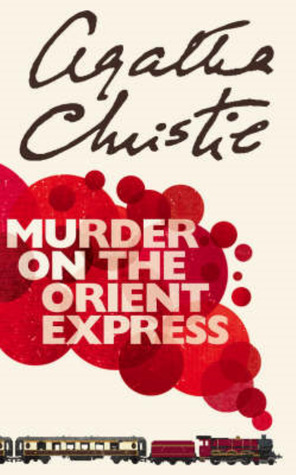
Murder on the Orient Express by Agatha Christie

The January theme for the Read Christie 2020 challenge is ‘a book that changed Christie’s life’. The challenge is hosted by agathachristie.com and their selection for this month was Christie’s first novel, The Mysterious Affair at Styles, but that would be a re-read for me so I chose a different title from their list of alternative suggestions: Murder on the Orient Express!

Murder on the Orient Express is one of Christie’s best known books and has been adapted several times for television, film and stage, but this is precisely why I’ve been putting off reading it for so long – I already knew the solution to the mystery and thought that might affect my enjoyment of the book. Of course, no adaptation is going to be exactly the same as the written version, and once I started reading I could see that some parts of the story were familiar but not all of it.

At the beginning of the novel, Hercule Poirot is in Turkey when he receives a telegram requesting him to return to London. He attempts to book a first-class berth on the Orient Express which is leaving Istanbul that night, but is told that the train is unusually full. It is only with the assistance of Monsieur Bouc, the director of the railway company, who happens to be an old friend of Poirot’s, that he manages to obtain a space in a second-class compartment. Once on board the train, Poirot observes that his fellow passengers are a very diverse group of people of different nationalities, backgrounds and classes. Among them are an American businessman and his secretary, a Russian princess and her German maid, a British Colonel, a Hungarian Count and Countess and several others.

It is the American businessman, Mr Ratchett, who is found stabbed to death in his compartment just after the train comes to a stop in heavy snow near Vinkovci (in what was then part of Yugoslavia). It seems clear that the murderer must be one of the other passengers on the train, but which one? As Poirot begins to investigate, he uncovers clues that, rather than revealing the truth, seem to complicate things further – and the statements he takes from the passengers appear to contradict each other, making the situation even more confusing. Armed with only his ‘little grey cells’, can Poirot solve the mystery?

Yes, of course he can…and for once, so could I, thanks to already knowing the basic outline of the story before I began. It would certainly have been a better – or at least a different – experience to have read the book with no idea of who was responsible for the murder, but as that wasn’t possible, I still enjoyed watching Poirot sort through the evidence and put the pieces of the puzzle together. I think Christie does give us all the information we need, but it’s difficult to say whether I would have been able to guess the solution anyway. Probably not, as I usually don’t.

As well as the mystery, I loved the atmosphere of the book and the claustrophobic feel Christie creates with the simple idea of a train stuck in snow and a murderer onboard. The characterisation is interesting too, although some of the assumptions made about the actions and behaviour of the various suspects based on their nationality feel very dated – for example, M. Bouc’s theory that the murderer must be Italian because the knife is an Italian weapon and Poirot’s reply that he disagrees because the careful, long-term planning requires an ‘Anglo-Saxon brain’. It seems that every passenger on the train has formed a stereotypical view of each of the others and this gives us some insights into attitudes of the time (the book was published in 1934).

Going back to the theme of this month’s Read Christie 2020, I wondered how this book in particular was one that had ‘changed Christie’s life’. Well, it seems that the Orient Express itself did, as she travelled on the train in 1928 to attend an archaeological dig in Syria and it was during this trip that she met the man who would become her second husband. That can certainly be considered a life-changing experience! Anyway, I really enjoyed this book and am looking forward to February’s selection.
The Expendable Man by Dorothy B Hughes

This weekend Jessie of Dwell in Possibility has been hosting another Mini Persephone Readathon and it seemed like the perfect opportunity to read The Expendable Man, one of the thrillers published by Persephone and a book that I’ve been meaning to read for a long time. It turned out to be a great choice.

Published in 1963, the novel opens with a young doctor, Hugh Densmore, driving from Los Angeles to a family wedding in Phoenix. On the way, he spots a teenage girl standing alone at the side of the road. Hugh doesn’t usually stop for hitchhikers but this time he finds himself slowing down…

He simply could not in conscience go on, leaving her abandoned, with twilight fallen and night quick to come. He had sisters as young as this. It chilled him to think what might happen if one of them were abandoned on the lonesome highway, the type of man with whom, in desperation, she might accept a lift. The car was stopped. He shifted to reverse and began backing up.

Hugh quickly begins to regret this impulsive act of kindness. The girl is rude, ungrateful and, when he questions her about who she is and where she is going, it is clear that she is telling lies. When they arrive in Phoenix, Hugh leaves his hitchhiker at a bus station and doesn’t expect to see her again, but that night the girl tracks him down at his hotel, setting in motion a series of events that could ruin the life and career he has built up so carefully for himself.

There’s really not much more I can say about the plot or the characters. If you think you might want to read this book, it’s best that you know as little as possible before you begin. And I do highly recommend reading it! I was completely gripped from beginning to end; when I first picked it up on Friday and started reading, I didn’t expect to actually finish it before the Readathon was over, but as it happened that wasn’t a problem at all. I couldn’t bear to put the book down until I knew what was going to happen to Hugh.

There’s an element of mystery-solving to the novel, but The Expendable Man is much more than a straightforward crime story. A few chapters into the book, there’s a twist – or maybe revelation is a better word to use – that changed the way I felt about what I had read so far and showed me that I had made an unfair assumption without even being aware that I had made it. It was so cleverly done and provided answers to some of the things I’d been wondering about as I read those earlier chapters.

I also loved the author’s beautifully written descriptions of the landscape, particularly near the beginning when Hugh is driving into Arizona. This is the first book I’ve read by Dorothy B Hughes and I was very impressed with every aspect of it! I would like to read more of her books, so if there’s one you would recommend please let me know.

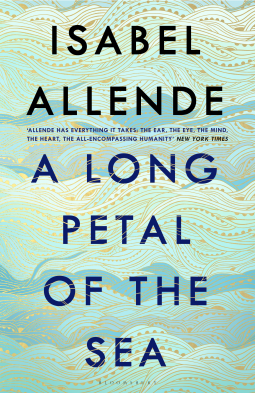
A Long Petal of the Sea by Isabel Allende

“The long petal of sea and wine and snow” is how the poet Pablo Neruda once described Chile, the country in which most of Isabel Allende’s latest novel is set, and Neruda himself plays a small but very important role in this epic story, based on true historical events.

Beginning in Spain in 1938, we meet Victor Dalmau, a young medical student from Barcelona, and Roser Bruguera, an orphan who has been taken in and raised by the Dalmau family. Roser is in love with Victor’s brother Guillem and is pregnant with his child, but like many others, they have their plans for the future destroyed by the civil war which is currently tearing Spain apart. Victor and Roser are Republicans, but when it becomes clear that General Franco and his Nationalists have won the war, they join half a million other refugees crossing the border into France in search of safety. It is here that they learn of Pablo Neruda’s plan to commission a ship, the Winnipeg, to transport two thousand of the refugees to Chile, where they will have a chance to build a new life. The only problem is, while Victor is offered a place on the ship due to his medical training, Roser’s skills are less in demand and she will only be allowed to join him if she can prove she is his wife…

A Long Petal of the Sea is the second book I’ve read by Isabel Allende. My first was The Japanese Lover and although I was disappointed by that one, I wanted to give her another chance to impress me. Sadly, I felt very much the same about this book and am coming to the conclusion that, despite her popularity, Allende is just not an author for me.

The story itself is fascinating. I have read very little about the Spanish Civil War and knew nothing about what happened in the aftermath, with Spanish refugees being placed in concentration camps on their arrival in France. I knew even less about the political history of Chile, which is the focus of the second half of the novel. I think My Beautiful Imperial by Rhiannon Lewis is the only other book I’ve read set in that country – but that story took place in a much earlier period than this one. It’s sad to think that refugees like Victor and Roser, who had already been through so much, would settle in Chile thinking they had found peace and safety, only to face more upheaval with the 1973 military coup and then years of dictatorship under General Pinochet.

My problem with this book was the style in which it was written. As with The Japanese Lover, I felt as though I was reading a long list of facts rather than a compelling story. I found it impossible to care about or engage with the characters because the author was just telling me how people thought and felt instead of showing me through their words and actions. This should have been a moving and emotional novel but instead I thought it was dry and impersonal and seemed much more like non-fiction than fiction.

I’m aware that Isabel Allende has a large and loyal fan base and other reviews of this book are overwhelmingly positive, so it’s obvious that I’m just not the right reader for Allende’s books. I’ve tried two now and I don’t think I need to try any more, but if you think this book sounds interesting don’t let me put you off reading it – you might be able to connect with it in a way that for some reason I just couldn’t.

Thanks to Bloomsbury for providing a copy of this book for review via NetGalley.

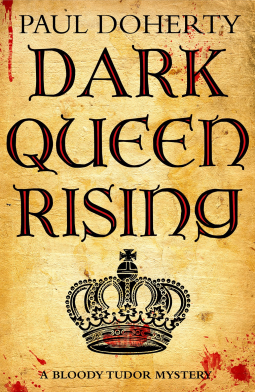
Dark Queen Rising by Paul Doherty

Paul Doherty is a very prolific author of historical mysteries; he has been writing since the 1980s and has written many series under several pseudonyms, set in a variety of periods including medieval England, Ancient Greece and Ancient Egypt. So far, my only experience of his work has been his standalone novel, Roseblood, which I really enjoyed, so when I came across Dark Queen Rising, the first in a new series set during my favourite period – the Wars of the Roses – I immediately wanted to read it.

The novel opens in 1471, just after the Battle of Tewkesbury, a battle which has ended in victory for the House of York and defeat for their rivals, the House of Lancaster. With the deposed Lancastrian king, Henry VI, held prisoner in the Tower of London, the victorious Yorkist army sets about destroying the other prominent noblemen who fought for Lancaster, including Henry’s heir, the young Prince of Wales. The Yorkist king, Edward IV, now sits securely on the throne of England – or does he? Margaret Beaufort, mother of one of the few remaining Lancastrian claimants, Henry Tudor, is making plans on behalf of her son, while Edward IV’s own brother – George, Duke of Clarence – is also gathering information that could bring about the king’s downfall.

Dark Queen Rising is described as the first in a series of ‘Margaret Beaufort mysteries’, which I think is slightly misleading – and looking at other reviews, it does seem that a lot of readers were expecting a different sort of book. There is a mystery, which develops when four men in the service of the Duke of Clarence are found dead in a tavern, but this doesn’t happen until the middle of the book and is never really the main focus of the novel. It’s more of a thriller, delving into the politics of the time and exploring some of the intrigue, plotting and controversy that makes this such a fascinating period of history.

Bearing in mind that Margaret Beaufort is one of the main characters in this book, I was surprised when, early in the novel, I saw a reference to her husband, ‘Sir Humphrey Stafford’. Margaret’s husband, of course, was Henry Stafford. Henry did have a brother called Humphrey who, coincidentally, was also married to another Margaret Beaufort, so I can see where the confusion has come from, but there’s really no excuse for not knowing which Margaret your novel is about. I was even more disappointed when, later in the book, references were made to Margaret’s future husband, William Stanley. This should have been Thomas Stanley, William’s brother. As the names of not just one but two of Margaret’s husbands were wrong, this made me question the accuracy of everything else in the novel, which is a shame as I do love this period and really wanted to enjoy this book.

George, Duke of Clarence has clearly been cast as the villain in this series, which is fair enough as history certainly tells us that he wasn’t the most honourable or trustworthy of people, but the way he is depicted in this book made him feel more like a caricature than a real person. When I think of the much more nuanced portrayals in books like Sharon Penman’s The Sunne in Splendour and Patrick Carleton’s Under the Hog, it’s disappointing. The character who did intrigue me in this book was Christopher Urswicke, who appears to be in Margaret’s employ but whose motives and true loyalties are not always very clear. I found the parts of the story written from Urswicke’s perspective much more interesting.

The second book in the series – Dark Queen Waiting – is out now, but because of the inaccuracies in this one, I’m not planning to read it, although I could possibly still be tempted by a sequel to Roseblood if one is ever written. Meanwhile, I’m now reading Thomas Penn’s new non-fiction book on the Wars of the Roses, The Brothers York, so I should be posting my thoughts on that one soon.

Thanks to Black Thorn for providing a copy of this book for review via NetGalley.

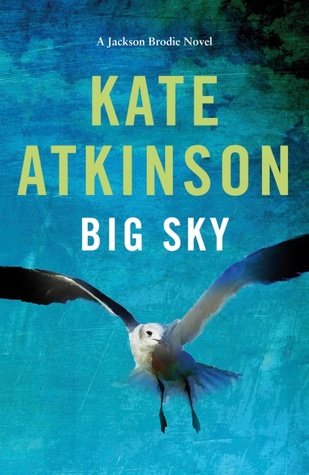
Big Sky by Kate Atkinson

Having finally caught up with the fourth book in Kate Atkinson’s Jackson Brodie series last year (Started Early, Took My Dog), I have now been able to move on to the new one, Big Sky. For those people who have been reading each book in the series as it was published, there has been a nine year wait between books four and five!

In Big Sky, private investigator Jackson is on the trail of a client’s cheating husband, while also trying, without much success, to keep his teenage son, Nathan, entertained. Nathan’s mother – Jackson’s ex-partner Julia – is busy filming the latest episodes of the TV police drama in which she has a starring role, so thirteen-year-old Nathan has been entrusted to Jackson for the summer, along with Julia’s ageing Labrador, Dido.

Meanwhile, we meet Vince, a man for whom everything seems to be going wrong all at once. First he lost his job, then he split up with his wife and had to move out of the family home, and to make matters worse, he feels that he no longer fits in with his group of friends – they are ‘golfing friends, not friend friends’. Depressed and desperate, Vince finds himself standing on the edge of a cliff and it is here that his path crosses with Jackson’s as both men are drawn into a case involving a ring of crime with its roots going back decades.

Beginning with Jackson and his son watching a recreation of a naval battle on the lake in Scarborough’s Peasholm Park and then moving on to Whitby and Bridlington, the story takes place in and around the seaside towns of the North Yorkshire coast, an area I know well from my own childhood summer holidays. The characters in this novel are not having an idyllic summer by any stretch of the imagination, however, as this is a particularly dark Brodie novel with themes including online paedophilia, human trafficking and sexual abuse. Sadly, it’s all very current and topical.

Like the other books in this series, the plot at first seems to consist of several random, unconnected threads. It takes a while for them to start coming together, but of course they do, linked in traditional Kate Atkinson fashion by a series of coincidences and unusual circumstances. Characters who, at the beginning of the book, appear to have no relation to each other, turn out to be connected in the most unexpected ways. Jackson is at the heart of the story and I always enjoy spending time inside his thoughts (I love his dry, cynical sense of humour), but we also see things from the perspectives of many other characters, all of whom are equally important to the plot.

I particularly liked Crystal, the wife of one of Vince’s golfing friends, who at first appears shallow and artificial, but gradually proves to be a brave and compassionate woman trying to overcome her difficult past and protect her little girl Candy and sixteen-year-old stepson Harry (who is another great character – ‘young for his age but also old for his age’). I also became quite fond of Bunny, the kind-hearted elderly drag queen at the theatre where Harry works, and it was good to be reacquainted with Reggie Chase, the teenage girl from When Will There Be Good News? who is now a police officer tasked with investigating historic allegations of sex abuse.

The Jackson Brodie novels are not my favourites of Kate Atkinson’s books, but I have enjoyed them all, including this one. I still have a few of her standalone books left to read and am hoping to get round to reading Transcription soon, as it has been on my TBR since shortly after it was published!

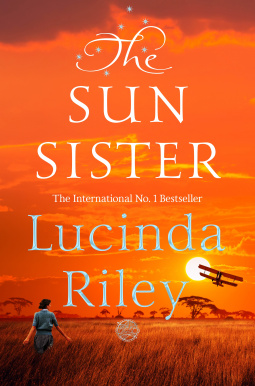
The Sun Sister by Lucinda Riley

This is the sixth book in Lucinda Riley’s Seven Sisters series inspired by the mythology of the star cluster known as the Pleiades or ‘the seven sisters’. Each novel tells the story of one of the adopted daughters of a mysterious billionaire known as Pa Salt who dies at the beginning of the series, leaving each sister some clues to help them trace their biological parents.

The girls all grew up together at Atlantis, Pa Salt’s estate by Lake Geneva in Switzerland, but they were born in different countries and came from a diverse range of cultures and backgrounds. They are each named after one of the stars in the cluster – Maia, Alycone (Ally), Asterope (Star), Celaeno (CeCe), Taygete (Tiggy) and Electra. There should have been a seventh sister, whose name would have been Merope, but for some reason which hasn’t yet been revealed, only six girls were actually brought home to Atlantis by Pa Salt.

In the previous books in the series, we have heard Maia’s story, Ally’s, Star’s, CeCe’s and Tiggy’s. This latest novel, The Sun Sister, tells the story of Electra, and I will admit that I was not particularly looking forward to this one. Whenever Electra briefly appeared in one of the other sisters’ books, she came across as a very unattractive personality and I wasn’t really relishing the thought of following her throughout an entire novel. On the other hand, I had initially felt the same about CeCe and ended up liking her once I had read The Pearl Sister, so I hoped the same would happen here.

At the beginning of The Sun Sister, which opens in 2008, shortly after Pa Salt’s death, Electra is living in New York City, where she has built a successful career for herself as a model. Yet despite her beauty, fame and wealth, we quickly discover that Electra is not a very happy young woman. For a while now, she has been relying on drugs and alcohol to get through the day and the loss of her adoptive father, whom she feels was disappointed in her, has left her struggling to cope. To make things worse, she is aware that all five of her older sisters have by now traced their own origins and come to terms with who they really are. Then, just as she is reaching her absolute lowest ebb, she is visited by Stella Jackson, the grandmother she didn’t know she had – and the story Stella tells her will literally help to save her life.

Stella’s story involves another of Electra’s ancestors – Cecily Huntley-Morgan, a young American woman who, in the 1930s, goes to stay with her godmother in Kenya after having her heart broken not once but twice. Living amongst the notorious Happy Valley set, by the shores of Lake Naivasha, Cecily falls in love with the landscape and the way of life. She ends up staying in Kenya for much longer than she had planned, until she meets a troubled Maasai girl and agrees to help her – a decision that will change the course of Cecily’s life once again.

The two storylines alternate with each other throughout the book, but each section is long enough that we can become fully immersed in one character’s story before moving on to the next. Of the two, Cecily’s was my favourite; in fact, it might even be my favourite of all the historical storylines in this series so far. I loved the descriptions of Kenya and the way some of the real incidents and people from the Happy Valley society were woven into the story. Although I didn’t agree with all of Cecily’s decisions (and I was disappointed in her treatment of a certain person in her life towards the end of the book), I did like her and sympathised with some of the situations she found herself in.

But I also enjoyed reading about Electra and despite my dislike of her at the beginning, I soon began to warm to her and to understand why she behaved the way she did. It was clear that Electra had always felt slightly out of place in her family, so it was good to see her bonding with her eldest sister, Maia, in this book. Now I hope she can resolve her differences with CeCe in the final book!

After not really looking forward to this book, it turned out to be one of the best in the series. Now I’m very curious about the seventh one, which is going to have to provide answers to all of the questions and mysteries raised in the previous six. I hope we don’t have to wait too long for it.

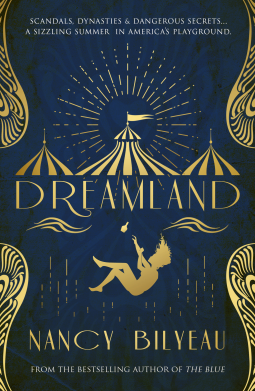
Dreamland by Nancy Bilyeau

I loved this! I have read all of Nancy Bilyeau’s previous novels – The Crown, The Chalice and The Tapestry, set in Tudor England, and The Blue, about an 18th century porcelain painter – and enjoyed them all, but I think Dreamland, her new historical thriller, is her best yet.

It’s the summer of 1911 and twenty-year-old Peggy Batternberg, one of America’s wealthiest heiresses, has just started an unpaid job at New York’s Moonrise Bookstore. Her family disapprove, but Peggy has been feeling uncomfortable with her sheltered, privileged lifestyle and is enjoying the experience of doing something useful for a change and getting to know people from different backgrounds. However, she has hardly had time to settle into her new job when she is ordered to join the rest of her family at the Oriental Hotel near Coney Island to spend the summer there at the invitation of her sister’s fiancé, Henry Taul.

Peggy is disappointed and angry. She resents having to leave her position at the Moonrise and she dislikes Henry, so it is with a lot of reluctance that she agrees to change her plans. Shortly after her arrival at the hotel, she slips away from her Batternberg relatives and ventures through the gates of Dreamland, the newest and most impressive of Coney Island’s three huge amusement parks. It is here that she meets and falls in love with Stefan, a Serbian artist who sells hot dogs from a cart – definitely not the sort of man considered suitable company for a Batternberg heiress! Her family would be even more shocked if they knew that she had become mixed up in a murder investigation, but that’s exactly what happens when the body of a young woman is found on the beach near the hotel…

There was so much to enjoy about this book. First, the setting. I have never been to Coney Island but Nancy Bilyeau describes it all so well – the luxurious hotels, the beach and, most importantly, the rides, shows and other attractions of Dreamland itself – that I could form a clear picture of everything in my mind. In reality, the events that take place towards the end of the novel happened in May 1911, but Bilyeau plays around slightly with the dates so that the story unfolds during the summer heatwave instead, adding even more atmosphere to the novel.

Although Peggy is a fictional character, she is loosely based on the real American heiress and art collector, Peggy Guggenheim. It was interesting to follow her personal development over the course of that summer at Coney Island as she becomes increasingly aware of the disparity between the world in which she has grown up and the world populated by those who are less advantaged. Her visits to Dreamland open her eyes to a whole different way of life and her relationship with Stefan shows her the difficulties faced by immigrants in a society where they are viewed with suspicion and distrust.

I think the mystery aspect of the novel was actually my least favourite part of the book. There were only a few suspects and the eventual solution didn’t surprise me. What interested me more was the prejudiced way in which the investigation was handled by the police and the assumptions they made about various people based on factors such as name, nationality, gender and level of wealth.

The way Dreamland ended seemed to leave things open for another book about these characters; I would love to read a sequel, but if there’s not going to be one then I’m sure Nancy Bilyeau will find another equally fascinating setting and time period to write about next!

Thanks to Endeavour Quill for providing a copy of this book for review via NetGalley.