My Commonplace Book: December 2021

For the last time this year…

A selection of words and pictures to represent December’s reading:
commonplace book
noun
a book into which notable extracts from other works are copied for personal use.

~

One thousand years. Two thousand. In time. Maybe it was the way to do things, not to worry about the now, to wait for time to take care of things. What if the measure of time was one thousand, two thousand years? In time everything was all right.

Ride the Pink Horse by Dorothy B. Hughes (1946)

~
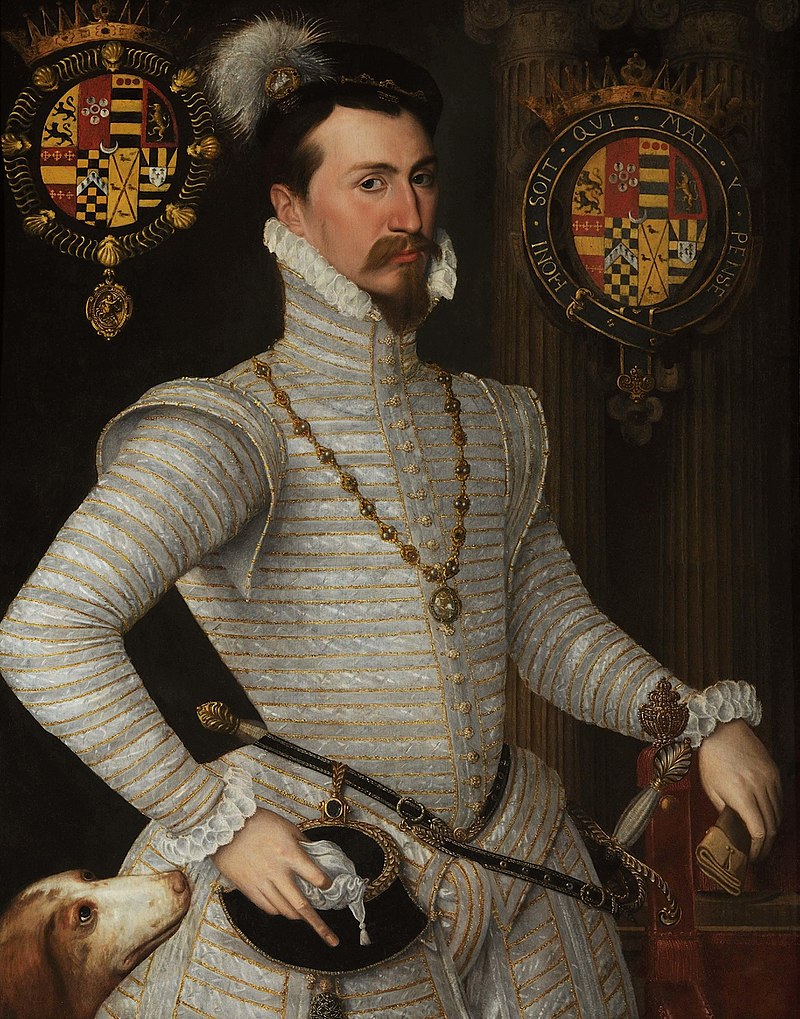
Robert Dudley, Earl of Leicester, c. 1564

Robert’s father had said that life was like storming a castle with many rooms. To be successful you needed not guns, but the right keys. If you could open the doors, you could go in, and up, up, up, until the battlements were scaled.

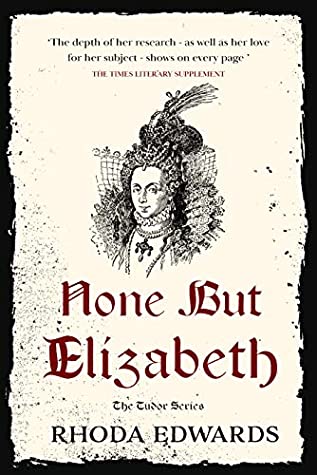
None But Elizabeth by Rhoda Edwards (1982)

~

She seemed ringed with air in which there was no colour, only a sense of colour; of the white walls and the green trees and grass, the dots of nuns wearing their black winter habits and a blue whiteness that was the air itself. She felt her own heart beating, a suffocation in her head and she thought suddenly that if she were one of the eagles flying in the gulf, she would feel like this, seeing on tilted wings the colours of earth and snows and sky. However she soared and struggled, the gulf pressed down on her and she gained not an inch on the mountain.

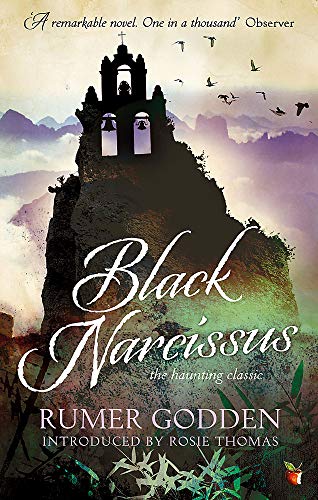
Black Narcissus by Rumer Godden (1939)

~

I stitched my love into this quilt, sewn it neatly, proud and true.
Though you have gone, I must live on, and this will hold me close to you.

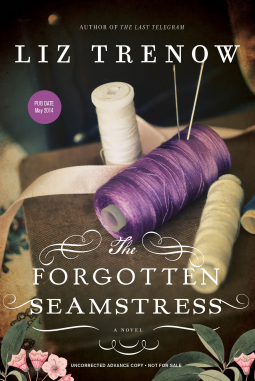
The Forgotten Seamstress by Liz Trenow (2013)

~
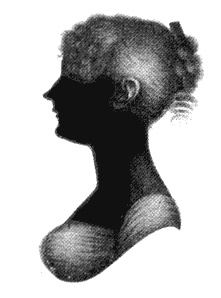
Silhouette of Cassandra Austen (1773-1845), sister of Jane Austen

And she decided that other families must be one of life’s most unfathomable mysteries. It was no use sitting as an outsider and even trying to fathom them. One could have no idea of what it must be like to be there, on the inside. She would share that thought later in her letter to Jane.

Miss Austen by Gill Hornby (2020)

~

It was so hard to get an idea of people you had never seen. You had to rely on other people’s judgment, and Emily had never yet acknowledged that any other person’s judgment was superior to her own. Other people’s impressions were no good to you. They might be just as true as yours but you couldn’t act on them. You couldn’t, as it were, use another person’s angle of attack.

The Sittaford Mystery by Agatha Christie (1931)

~

Favourite books read in December:

Ride the Pink Horse and The Sittaford Mystery

Authors read for the first time in December:

Rumer Godden, Liz Trenow, Gill Hornby

Places visited in my December reading:

New Mexico, India, England

~

Happy New Year!

Historical Fiction Reading Challenge: Looking back at 2021 and forward to 2022

I don’t take part in many year-long reading challenges as I prefer to just join in with shorter reading events and reading weeks. However, there is one that I like to participate in every year – and that is the Historical Fiction Reading Challenge, hosted by Marg at The Intrepid Reader. This is not really much of a ‘challenge’ for me, but I still enjoy linking my reviews to the monthly challenge posts, seeing what other participants are reading and discovering new historical fiction novels and bloggers.

Before I post the details of the 2022 challenge, I want to look back at what I achieved in 2021.

I had signed up at the ‘Prehistoric’ level, which meant reading 50+ historical fiction novels during the year. I managed to read 56 and here they are:

1. The Land Beyond the Sea by Sharon Penman
2. The Queen’s Rival by Anne O’Brien
3. Islands of Mercy by Rose Tremain
4. Rags of Time by Michael Ward
5. The Bird King by G. Willow Wilson
6. The Soul Thief by Cecelia Holland
7. Ashes by Christopher de Vinck
8. The Cottingley Secret by Hazel Gaynor
9. The Paris Library by Janet Skeslien Charles
10. Daughters of Night by Laura Shepherd-Robinson
11. A Net for Small Fishes by Lucy Jago
12. The Lost Diary of Venice by Margaux DeRoux
13. The Rose Code by Kate Quinn
14. The Prophet by Martine Bailey
15. The Puritan Princess by Miranda Malins
16. The Drowned City by KJ Maitland
17. Imperfect Alchemist by Naomi Miller
18. The Damask Rose by Carol McGrath
19. John Saturnall’s Feast by Lawrence Norfolk
20. The Hardie Inheritance by Anne Melville
21. The Metal Heart by Caroline Lea
22. The Royal Secret by Andrew Taylor
23. The Horseman by Tim Pears
24. The Rich Earth by Pamela Oldfield
25. Circus of Wonders by Elizabeth Macneal
26. The Missing Sister by Lucinda Riley
27. China by Edward Rutherfurd
28. Still Life by Sarah Winman
29. The Wrecking Storm by Michael Ward
30. The Protector by S.J. Deas
31. The Last Daughter by Nicola Cornick
32. Red Adam’s Lady by Grace Ingram
33. I Will Repay by Baroness Orczy
34. Cecily by Annie Garthwaite
35. St Martin’s Summer by Rafael Sabatini
36. The Country of Others by Leïla Slimani
37. Rose Nicolson by Andrew Greig
38. The Infernal Riddle of Thomas Peach
39. A Corruption of Blood by Ambrose Parry
40. The Women of Troy by Pat Barker
41. Katharine Parr, the Sixth Wife by Alison Weir
42. Daughters of War by Dinah Jefferies
43. The Mummy Case by Elizabeth Peters
44. A Marriage of Lions by Elizabeth Chadwick
45. Castle Barebane by Joan Aiken
46. Black Drop by Leonora Nattrass
47. The Royal Game by Anne O’Brien
48. The Swift and the Harrier by Minette Walters
49. Lily by Rose Tremain
50. Fallen by Lia Mills
51. The Secret Keeper by Kate Morton
52. The Ambassador’s Daughter by Pam Jenoff
53. The Girl in the Photograph by Kate Riordan
54. None But Elizabeth by Rhoda Edwards
55. A Princely Knave by Philip Lindsay
56. Miss Austen by Gill Hornby (review to follow)

Here are the rules for the 2022 challenge, taken from Marg’s blog:

Everyone can participate! If you don’t have a blog you can post a link to your review if it’s posted on Goodreads, Facebook, or Amazon, or you can add your book title and thoughts in the comment section if you wish.

Any sub-genre of historical fiction is accepted (Historical Romance, Historical Mystery, Historical Fantasy, Young Adult, History/Non-Fiction, etc.)

During the following 12 months you can choose one of the different reading levels:

20th Century Reader – 2 books
Victorian Reader – 5 books
Renaissance Reader – 10 books
Medieval – 15 books
Ancient History – 25 books
Prehistoric – 50+ books

You can sign up for the challenge here. I will be aiming for Prehistoric again in 2022. Let me know if you’re planning to take part too!

Top Ten Tuesday: My favourite books of 2021

This week’s Top Ten Tuesday (hosted by That Artsy Reader Girl) asks us to list our top ten books of 2021. I know there are still a few days of December left, but I’m confident that I’m not going to finish anything before the end of the year that would make it onto my list, so it should be safe to post it today!

~

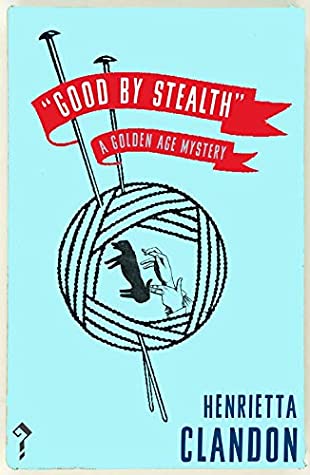
1. Good by Stealth by Henrietta Clandon (1936)

From my review: “This wonderful Golden Age crime novel from 1936 was written by John Haslette Vahey; Henrietta Clandon was one of his many pseudonyms…I found this one so much fun to read, I will certainly be reading more of his books! The book is hugely entertaining and often very funny and although some parts of the story don’t seem at first to have much to do with the overall plot, everything falls into place by the end and the significance of even the smallest detail becomes clear.”

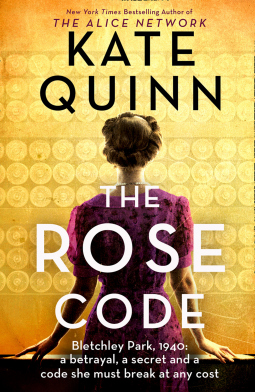
2. The Rose Code by Kate Quinn (2021)

From my review: “I loved this! I’ve never read Kate Quinn before, although she has been recommended to me several times, so I’m pleased that my first experience of her work has been such a good one. The Rose Code wasn’t a perfect book, but the few flaws that I noted were quickly outweighed by the gripping plot, strong characters and interesting historical setting.”

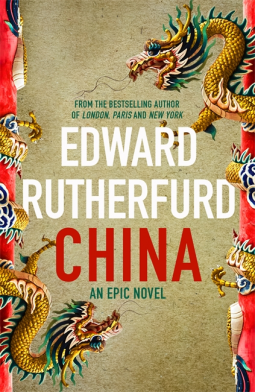
3. China by Edward Rutherfurd (2021)

From my review: “Like all of Rutherfurd’s novels, this one is clearly the result of a huge amount of research…I think anyone with even the slightest curiosity about China, its history, geography and people, will find a lot to interest them in this book – just be aware that it’s quite a commitment and will take a while to get through, even for the fastest of readers!”

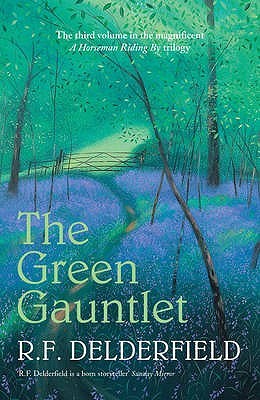
4. The Green Gauntlet by RF Delderfield (1968)

From my review: ” It was lovely to be back in the Shallowford Valley and become reacquainted with Paul and Claire Craddock and their family, friends and neighbours…Although there’s plenty of action and always something happening in the Valley, the story moves along at a leisurely pace and the focus is on the daily lives of the characters and the relationships between them.”

5. Castle Barebane by Joan Aiken (1976)

From my review: “I thoroughly enjoyed reading it – both the domestic parts and the gothic adventure parts. The atmosphere is wonderful, there’s a suitably sinister villain and I loved the remote setting…I’m certainly planning to read more of Joan Aiken’s books and am hoping they’re all as good as this one!”

6. A Marriage of Lions by Elizabeth Chadwick (2021)

From my review: “The main focus of the story, however, is Henry’s younger half-brother, William de Valence, and his wife, Joanna de Munchensy of Swanscombe…There’s not much information available on the real historical figures, particularly Joanna, but Chadwick’s portrayal feels convincing and believable and I enjoyed getting to know them both.”

7. Rose Nicolson by Andrew Greig (2021)

From my review: “I loved Andrew Greig’s last book, Fair Helen, a beautifully written historical novel based on a Scottish Border Ballad, so when I saw that his new one, Rose Nicolson, was going to be set in the same time and place I couldn’t wait to read it. Now that I’ve had the opportunity, I’m pleased to say that I enjoyed it just as much as Fair Helen and can highly recommend it to anyone interested in learning more about Scotland in the 16th century.”

8. The Land Beyond the Sea by Sharon Penman (2020)

From my review: “The Land Beyond the Sea is a fascinating novel. I have read a lot about Europe in the medieval period, but not so much about other parts of the world…As with Sharon Penman’s other books, this one has clearly been very well researched and her afterword and author’s note are almost as interesting as the story itself.”

9. St Martin’s Summer by Rafael Sabatini (1909)

From my review: “I had high hopes for St Martin’s Summer – and I’m pleased to say that it definitely lived up to my expectations. First of all, it’s a lot of fun to read…there are duels, disguises, impersonations and all sorts of other tricks and deceptions, some of which are obvious to the reader, but not to the characters, who repeatedly fall into each other’s traps!

10. Ride the Pink Horse by Dorothy B. Hughes (1946)

From my review: “I would probably never have picked this book up based on the description alone as it didn’t really sound like my usual sort of read. And that would have been a shame, as I thoroughly enjoyed it…The setting is wonderfully atmospheric and Hughes creates an amazing sense of place…I loved this book and am so pleased it came up for me in the Classics Club Spin!”

~

So that’s my top ten…however, I have also read a lot of Agatha Christie novels this year for the Read Christie 2021 challenge and it didn’t seem right not to put any of them on my list – so I’m adding an eleventh book and highlighting my favourite Christie novel of 2021. I enjoyed all of them, but the one that particularly stood out for me was December’s read:

11. The Sittaford Mystery by Agatha Christie (1931)

From my review: “My favourite thing about this book, though, was the setting; many of Christie’s mysteries are set in small villages, but the wintry weather gave this one a special atmosphere. I loved it and am glad the Read Christie challenge prompted me to pick it up this December!”

~

Have you read any of these?

What are your favourite books of 2021?

The Sittaford Mystery by Agatha Christie

The final monthly theme for the Read Christie 2021 challenge is ‘a story set during bad weather’. I have chosen to read The Sittaford Mystery, a standalone novel first published in 1931 – and what a great choice it was both as a Christmas read and as the book to bring this year’s challenge to an end! The bad weather is there from the very first page when Major Burnaby opens the door of his cottage in the village of Sittaford and looks out:

The scene that met his eyes was typical of the English countryside as depicted on Xmas cards and in old-fashioned melodramas. Everywhere was snow, deep drifts of it – no mere powdering an inch or two thick. Snow had fallen all over England for the last four days, and up here on the fringe of Dartmoor it had attained a depth of several feet.

On this snowy day, with the village cut off from the outside world, Major Burnaby and the other residents of Sittaford decide to entertain themselves by holding a séance. It seems like harmless fun, until a spirit suddenly announces that Burnaby’s friend, Captain Trevelyan, has just been murdered. Despite the heavy snow, Burnaby insists on walking the six miles to Exhampton, where Trevelyan lives – and on arriving there more than two hours later, he discovers his friend’s dead body on the floor of his study.

With several family members named in Trevelyan’s will, there are plenty of suspects, but when it emerges that one of them, the dead man’s nephew James Pearson, was in Exhampton that day, he is arrested on suspicion of murder. Pearson’s fiancée, Emily Trefusis, is determined to clear his name and travels to Sittaford to look for clues. She is assisted by Charles Enderby, a journalist from the Daily Wire, who happened to arrive in Exhampton the day after the murder and is staying on the scene in the hope of getting an exclusive story for his newspaper. But will Emily and Charles manage to solve the mystery before Inspector Narracott, the police detective carrying out the official investigations?

Of all the Christie novels I’ve read for Read Christie this year, The Sittaford Mystery is one that I’ve particularly enjoyed. Much as I like Poirot, Miss Marple and Tommy and Tuppence, I do often find that I prefer her standalone mysteries. In this one, I loved the partnership of Emily Trefusis and Charles Enderby; Emily is a wonderful character – intelligent, courageous and with a knack of knowing how to manipulate people in order to get exactly what she wants (and yet, despite this last character trait she’s very likeable). There’s also a strong supporting cast of characters, including the sharp tongued Miss Percehouse and her nephew Ronnie; Mrs and Miss Willett, the new tenants of Sittaford House who have just arrived from South Africa; and the mysterious Mr Duke, of whom nobody in the village seems to know anything at all.

The plot is up to Christie’s usual high standards, with lots of red herrings and misdirections, so that the reader ends up suspecting almost everybody! I didn’t come close to guessing the culprit – in fact, the murderer was someone I had considered and then dismissed very early in the book – but although there is an important clue concealed from us until near the end, I think it would probably still be possible to work out the solution if you were paying enough attention. My favourite thing about this book, though, was the setting; many of Christie’s mysteries are set in small villages, but the wintry weather gave this one a special atmosphere. I loved it and am glad the Read Christie challenge prompted me to pick it up this December!

Merry Christmas!

This is just a quick post to say Merry Christmas to all those who celebrate it.

I also want to send my best wishes to anyone who is not having the sort of Christmas they had expected or is spending it alone due to the pandemic. I hope you’re still able to have a lovely day – and let’s all look forward to a better 2022!

Catching up: Three mini-reviews

I always try to finish reviewing the current year’s reads before the new year begins (although I don’t always manage it), so today I’m catching up by posting some brief thoughts on three books read in November and December.

I added None But Elizabeth to my TBR a few years ago after reading Rhoda Edwards’ two novels about Richard III, Some Touch of Pity and Fortune’s Wheel, both of which I enjoyed. This one, first published in 1982, is a fictional retelling of the life of Elizabeth I. The book is written in a straightforward, linear style as we follow Elizabeth from childhood to old age.

There are some things Edwards does very well – the depiction of Elizabeth’s feelings for Robert Dudley, the man she loves but never marries; Elizabeth’s internal conflict over how to deal with the threat of Mary, Queen of Scots; the symbolism used to mark the passing of time; the way in which Elizabethan poetry is woven into the text – but as someone who has read about Elizabeth many times before, there was nothing new or different here. I would recommend reading Margaret Irwin’s Young Bess or Margaret George’s Elizabeth I rather than this one.

The Forgotten Seamstress by Liz Trenow is a multiple time period novel in which our present day narrator, an aspiring interior designer, finds a beautiful quilt in her mother’s attic with a message embroidered into the lining. She sets out to learn more about the quilt and discovers a connection with a young woman called Maria who spent most of her life in a mental hospital claiming to be a former lover of the Prince of Wales (the future King Edward VIII). As Maria’s story unfolds, in the form of taped interviews recorded by a student in the 1970s, we find out whether she was telling the truth and, if so, what secrets are hidden in the quilt’s design.

I wasn’t expecting too much from this book, but I enjoyed it much more than I thought I would – and for once, I found the modern day storyline as compelling as the historical one. On one level it’s almost a mystery novel, with the narrator hunting for clues to the quilt’s origins, tracking down people who may have known Maria and piecing fragments of information together to try to discover the truth. However, it also provides some insights into social issues such as living conditions in mental institutions, psychiatric treatment in the early 20th century and the later policy of ‘care in the community’. Some parts of the story were too predictable, but it was an interesting read overall and I will probably look for more of Liz Trenow’s books.

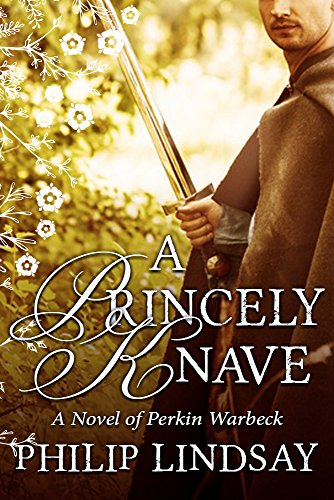
A Princely Knave was the oldest remaining book on my NetGalley shelf (from 2016, I’m ashamed to say). After receiving a copy, I read some negative reviews that put me off it, but in November I finally decided to give it a try. The book was originally published in 1956 as They Have Their Dreams and tells the story of Perkin Warbeck, a pretender to the English throne. Warbeck claimed to be Richard of York, one of the two ‘Princes in the Tower’ – the sons of Edward IV who disappeared from the Tower of London, believed to have been murdered. The novel begins with Warbeck landing in Cornwall in 1497, hoping to lead an army to overthrow Henry VII and take his place on the throne.

Philip Lindsay uses flowery and often antiquated language, a style which was common in older historical novels but feels very dated today. However, I’ve read one or two of his other books so was prepared for this. The biggest problem I had with this particular book was that, apart from Warbeck himself, the characters feel underdeveloped – the group of men who accompany Warbeck in his rebellion are almost indistinguishable and the only significant female character, Warbeck’s wife Katherine Gordon, also lacks depth. Lindsay does explore some fascinating ideas, though; for example, he suggests that even Warbeck himself doesn’t know who he really is – having been told by some that he has royal blood and by others that he is the son of Flemish merchants, he has become unsure of his real identity. I thought it was worth reading, but I probably wouldn’t recommend it unless you’re as interested in this period as I am.

Black Narcissus by Rumer Godden

I started reading this for Brona’s Rumer Godden Reading Week, but didn’t manage to finish it until the week was over. Still, I’m grateful to Brona for motivating me to pick up my first Rumer Godden novel, even if I’m late with this review!

Black Narcissus, published in 1939, is one of Godden’s best known books, made into a successful Powell and Pressburger film in 1947 and adapted again for television by the BBC in 2020. It tells the story of a group of Anglican nuns who set out to establish a new convent in an abandoned palace in Mopu, high in the Himalayas. Once known as ‘the House of Women’, the palace had been home to the General’s harem; now the General’s son has donated it to the nuns for them to use as a hospital and school for the local community. A group of missionary brothers had already tried to do the same, but left after just a few months, giving us an early indication of the difficulties and challenges the nuns will face.

Leading the mission is Sister Clodagh, the newly appointed Sister Superior, and she is accompanied by four other sisters, each with a different role to play in the new convent. As the Sisters try to adapt to their new way of life, Mopu gradually casts its spell upon them and each finds herself being affected in a way she had never expected. Sister Philippa, responsible for the convent gardens, worries that she is becoming ‘too fond of the place’; Sister Honey grows too attached to the children who come to the school and to the hospital; Sister Ruth becomes obsessed with the General’s charismatic agent, Mr Dean; and Sister Clodagh receives constant painful reminders of her past in Ireland and the man she once thought she would marry.

There are other characters – the General’s heir, Dilip Rai, a handsome young man who comes to the convent in search of an education; Kanchi, a beautiful girl from the village whose uncle wants her to spend some time with the Sisters because she is ‘behaving so badly that no one wants her’; and Ayah, the elderly housekeeper at the palace – but the focus of the novel is on the nuns and how they try to adjust to the unfamiliar world in which they find themselves. The culture of Mopu is very different from anything they have previously experienced and despite advice given to them by Mr Dean, the nuns struggle to understand the local traditions and superstitions. As the story progresses it seems that they will never understand and that they are doomed to fail in their mission as others have failed before them.

This is a dark and atmospheric novel, but in a quiet and restrained way. There are some moments of drama but this is a story driven by the characters and their inner thoughts and desires as their repressed feelings rise to the surface and tensions grow, particularly between Sister Clodagh and Sister Ruth. I’m not sure whether it’s a book I would read again, but I’m very pleased to have read it once and will definitely be reading more by Rumer Godden.

This is book 26/50 from my second Classics Club list.