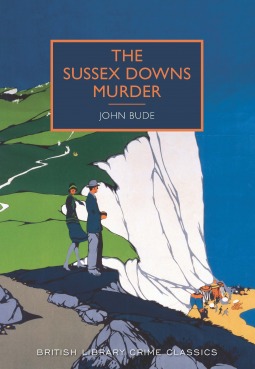
The Sussex Downs Murder by John Bude

I am now halfway through my 20 Books of Summer list and obviously not going to finish all of the remaining books by the end of the month, but I’m pleased that I’ve managed to read this one, The Sussex Downs Murder, as I’ve had it on my shelf for a few years now and could never seem to find the right time to read it. It turns out that summer was the perfect time, as the story takes place in July…

The novel opens on a Saturday evening with John Rother saying goodbye to his brother and sister-in-law and leaving their Sussex farm, Chalklands, to drive to Harlech in Wales for a holiday. He doesn’t get very far, however, and his car is found abandoned the next morning just a few miles away from the farm. John has disappeared, but there are bloodstains inside the car and signs of a violent struggle. Has he been killed? Kidnapped? Superintendent William Meredith is called in and when human bones are found in a delivery of lime from the Chalklands lime-kilns a few days later, it seems that he is dealing with a murder case.

In his careful, methodical way Meredith begins to investigate, examining every clue and interviewing every possible witness. He forms a theory almost immediately, but when a second crime occurs and proves him wrong, he is forced to think again, and slowly – too slowly for his Chief Constable who threatens to bring in Scotland Yard – starts to piece together what has happened.

John Bude, whose real name was Ernest Elmore, is a popular author within the British Library Crime Classics series, but this is the first of his books that I’ve read. Originally published in 1936, it’s the second Superintendent Meredith novel and I enjoyed it enough to want to read more of them. I liked Meredith, although we don’t get to know very much about his background or personal life – apart from some great scenes with his son, Tony – and I appreciated the way his thoughts are shared with the reader, so that we can follow each step of his investigations and see in which direction the clues are leading him. I also liked the Sussex setting; it’s not an area that I know, but there’s a map at the beginning and all of the towns and villages, chalk hills and rings of trees – are real places and geographical features.

My only problem with this book was that the solution to the mystery was far too easy to guess; I had my suspicions from very early in the story and was proved right. I don’t usually manage to solve the crime before the detective does, so I wonder if other readers found this one particularly obvious too.

This is book 10/20 of my 20 Books of Summer 2021

The Infernal Riddle of Thomas Peach by Jas Treadwell

READER! – Good-day to you!
And good-morrow, too! for our acquaintance is destined to be long. We are sure of it. We see it in your eye –

Who is Thomas Peach? Why has he fled London to take up residence in a quiet country village in Somerset? What is in the locked chest he keeps hidden beneath the stairs? Why does Mrs Peach never leave her bedroom and why is she not permitted visitors? Does she even exist – and if not, who is it that Thomas talks to at night, when the curious maidservant stands with her ear to the bedroom door?

These are the questions our narrator, an unnamed person who describes themselves as a necromantic historian, sets out to answer in this strange and fascinating new novel by the equally mysterious Jas Treadwell. By the end of the book, we have answers to these questions, as well as some others that are raised along the way, but what makes this such an intriguing and entertaining read, in my opinion, is not the plot so much as the style in which the book is written. Not everyone will agree, of course; I think whether or not you will enjoy Thomas Peach could depend on how you feel about the sort of book it is parodying – the 18th century novel.

Set in 1785, the book imitates the fiction of that time, with the narrator speaking directly to the reader, commenting on what has happened and what is about to happen and providing footnotes where they feel further information is necessary. If you’ve read Susanna Clarke’s Jonathan Strange and Mr Norrell, you will have an idea of what I mean, although the narrator in this book is much more intrusive and is there with us through every turn of the page. Chapter Ten, for example, begins like this:

Like the rustic, who closes his eyes at sun-set, after his day of wholesome toil, and wakes again with the dawn, we omit the night altogether, by the simple method of opening our new chapter upon the following day.

This is probably the kind of writing you either like or you don’t; it does require some patience, as those 18th century authors never used one word when they could use ten! Treadwell draws heavily on the literature of the period and there are lots of references to Samuel Richardson’s huge 1748 epistolary novel Clarissa (which I was glad I had read, as it meant I knew what the narrator was talking about without having to rely on the footnotes!) as well as books by other authors such as Henry Fielding and Tobias Smollett. You don’t actually need to have read any of these books, but a familiarity with some of them will add to your experience of the novel.

Due to the leisurely pace of the novel and all the diversions and digressions, Thomas Peach’s story unfolds very slowly – and when his secrets do eventually begin to be revealed, I felt that beneath the clever writing, the plot was less complex, less magical and less satisfying than I had expected it to be at first. Still, I enjoyed meeting Thomas Peach and the other characters, particularly Clary, a young woman about whom I can’t really say anything at all without spoiling the surprise! Although I couldn’t read a lot of books like this as the style would quickly become irritating, this one kept me entertained.

Thanks to Hodder & Stoughton for providing a copy of this book for review via NetGalley.

Book 9/20 of my 20 Books of Summer.

Book 38/50 read for the 2021 Historical Fiction Reading Challenge.

Historical Musings #67: August 2021 – HWA Crowns and a reading update

Welcome to this month’s post on all things historical fiction.

Last week the fiction, non-fiction and debut novel longlists for the 2021 HWA (Historical Writers’ Association) Awards were announced. I’ve only read a few of the longlisted titles and don’t have any plans to try to read all of the others, but it was still interesting to see which books the judges had picked – especially in the non-fiction category, as I hadn’t heard of any of them! Here are the three lists:

HWA Gold Crown Award Longlist

Spirited by Julie Cohen
V For Victory by Lissa Evans
Arrowood and the Thames Corpses by Mick Finlay
Tell Me How It Ends by VB Grey
The Silver Collar by Antonia Hodgson
Cathedral by Ben Hopkins
The Unwanted Dead by Chris Lloyd
The Second Marriage by Gill Paul
Daughters of Night by Laura Shepherd-Robinson
Light Perpetual by Francis Spufford
The Last Protector by Andrew Taylor
The Devil and the Dark Water by Stuart Turton

I have read four of these (and have linked to my reviews above). I really enjoyed The Silver Collar, Daughters of Night and The Last Protector, all of which are historical mysteries from series that I’ve been following from the beginning and can highly recommend. The Devil and the Dark Water I found slightly disappointing after loving Stuart Turton’s first book, The Seven Deaths of Evelyn Hardcastle.

HWA Debut Crown Award Longlist

Tsarina by Ellen Alpsten
Brontë’s Mistress by Finola Austin
The Strange Adventures of H by Sarah Burton
The Sin Eater by Megan Campisi
The Puritan Princess by Miranda Malins
Imperfect Alchemist by Naomi Miller
Edge of the Grave by Robbie Morrison
Eight Detectives by Alex Pavesi
The Lost Apothecary by Sarah Penner
The Company Daughters by Samantha Rajaram
The Long, Long Afternoon by Inga Vesper
People of Abandoned Character by Clare Whitfield

I’ve read four books from the debut list too; my favourite of these was The Puritan Princess, about Oliver Cromwell’s daughter, Frances. The other three were all interesting, but didn’t entirely work for me.

HWA Non-Fiction Crown Award Longlist

Britain at Bay by Alan Allport 
The Gun, the Ship and the Pen by Linda Colley
Crucible of Hell by Saul David
The Paper Chase by Joseph Hone
The Ravine by Wendy Lower
Double Lives by Helen McCarthy
Burning the Books by Richard Ovenden
The Dead are Arising by Les Payne and Tamara Payne
A Stranger in the Shogun’s City by Amy Stanley
A Dominant Character by Samanth Subramanian
Ellis Island by Małgorzata Szejnert, translated by Sean Gasper Bye
The Interest by Michael Taylor

I have read none at all from this list, which is disappointing but doesn’t surprise me as I don’t read a huge amount of non-fiction. Some of these sound intriguing, particularly The Paper Chase and Stranger in the Shogun’s City.

You can find out more about all of the longlisted books on the HWA website.

~

My current historical reading:

I’ve just finished The Infernal Riddle of Thomas Peach by Jas Treadwell, a very unusual book written in the style of an 18th century novel; I couldn’t possibly describe it here in just a few sentences, so you’ll have to wait for my review next week! I’m also nearly finished The Green Gauntlet by RF Delderfield, the third book in his Horseman Riding By series and set during and after World War II. Both of these books are from my 20 Books of Summer list and as I’m starting to run out of time to complete my 20 Books, my next two historical reads will also be from that list: A Corruption of Blood by Ambrose Parry and The Women of Troy by Pat Barker.

~

New to my historical TBR in the last few weeks:

Black Drop by Leonora Nattrass, a new historical mystery set in Georgian London, Powers and Thrones by Dan Jones, a non-fiction book telling the story of ‘how the world we know today came to be built’, and The Leviathan by Rosie Andrews, a debut novel set in 17th century England and due to be published in February – these are all books I’ve received through NetGalley.

Also, The Huntress by Kate Quinn, an author I’ve wanted to read more of since loving The Rose Code earlier this year, and A Song for Arbonne, a Guy Gavriel Kay book I’ve been particularly looking forward to reading.

~

Have you been reading any good historical fiction recently? And have you read any of the books on the HWA longlists?

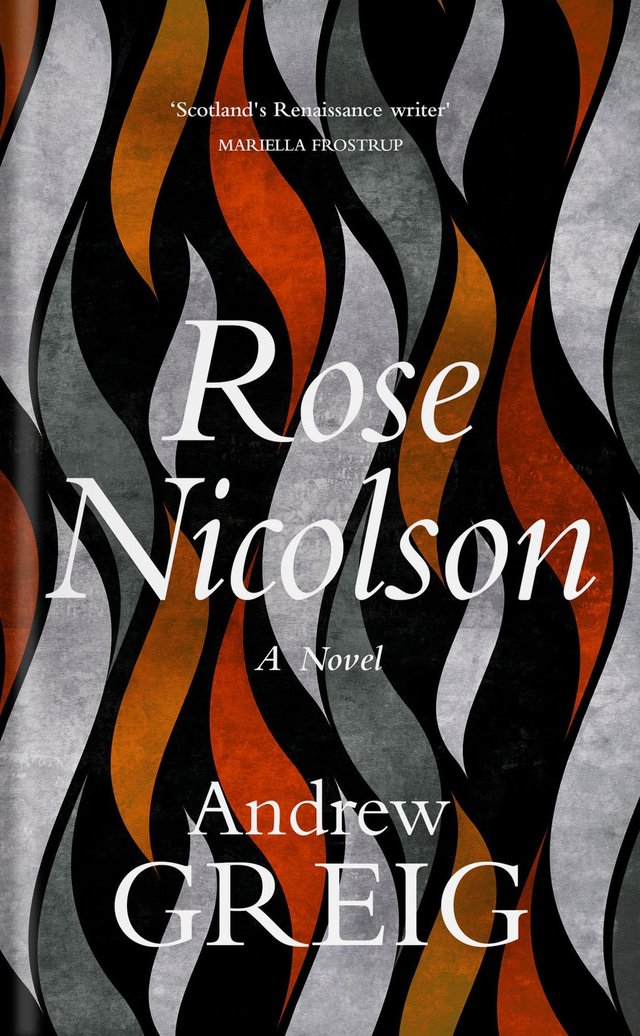
Rose Nicolson by Andrew Greig

I loved Andrew Greig’s last book, Fair Helen, a beautifully written historical novel based on a Scottish Border Ballad, so when I saw that his new one, Rose Nicolson, was going to be set in the same time and place I couldn’t wait to read it. Now that I’ve had the opportunity, I’m pleased to say that I enjoyed it just as much as Fair Helen and can highly recommend it to anyone interested in learning more about Scotland in the 16th century.

Rose Nicolson is a fictional account of the life of a real historical figure, William Fowler, a Scottish makar, or poet, and is presented as his memoir written as an older man looking back on his youth. His story begins in Embra (Edinburgh) in 1574: Mary, Queen of Scots has fled to England leaving her young son, James VI, on the throne, but the real power is held by the Earl of Morton, the latest of four regents to govern Scotland during the young king’s minority. The Protestant religion now dominates but there are still those who have not given up hope of restoring Mary to the throne and returning Scotland to the Catholic church. It is during this time of political and religious uncertainty that William Fowler, the only son of an Edinburgh merchant family, sets out for St Andrews where he will become a student at the university.

William’s time in St Andrews is vividly described: the education he receives; the enlightening conversations and debates on topics such as philosophy, religion, politics and literature; his first tentative attempts at writing poetry; and the friendships he forms with the other students as they bond over drinks at the howff (pub) or during a game of gowf (golf). As you can see, Andrew Greig sprinkles Scots dialect throughout his prose, as well as using language appropriate to the time period – apart from one or two words and phrases here and there that I thought seemed out of place – and the overall effect is a narrative style that feels authentic and convincing. There’s a glossary at the end of the book for anyone who needs it, but I found it easy enough to read without it.

You may be wondering where Rose Nicolson comes into the story. Well, she’s the sister of a friend William makes at university, Tom Nicolson. Rose and Tom are from a Fife fishing family, but while Tom has been given the opportunity to study and to pursue an academic life, that is not possible for Rose. William is captivated by her intelligence, courage and quick mind, but a marriage is already planned for Rose with a local fisherman, so despite William’s love for her it seems that she will never be his wife.

As well as the romantic thread of the novel and the academic one, we also learn a lot about the period of history during which the story is set. The reign of Mary, Queen of Scots is well covered in historical fiction, but the early years of James VI’s reign are written about less often, which is a shame as it’s a complex, interesting and very eventful period. Many of the characters William meets in the novel are people who really existed; these include George Buchanan, the Scottish historian and humanist scholar, who recruits William as a spy; Esmé Stewart, the first of the young king’s many favourites; and most notably, Walter Scott of Branxholme and Buccleuch, the clever and charismatic border reiver who becomes a good friend of William’s and really deserves a whole book to himself! As for our hero William Fowler, I knew nothing at all about him until I read this book; I resisted the temptation to look him up online until I had finished, but it seems that he led a fascinating life. Rose Nicolson only covers the early part of his career, but it looks as though there’s enough material for several more books!

Thanks to Quercus Books for providing a copy of this book for review via NetGalley.

Book 37/50 read for the 2021 Historical Fiction Reading Challenge.

The Country of Others by Leïla Slimani

I’ve never read anything by Leïla Slimani until now, but her latest book, The Country of Others, sounded appealing to me – and as it’s translated from French, it means I can contribute to this year’s #WITMonth (Women in Translation Month).

Originally published as Le pays des autres and available now in an English translation by Sam Taylor, the novel is set in France and Morocco during the 1940s and 50s. Mathilde is a young woman from the Alsace region of France who, in the final years of World War II, falls in love with a Moroccan soldier, Amine, who has been fighting for the French. Bored with her life and looking for adventure, Mathilde marries Amine and moves with him to Meknes in Morocco where he has inherited some farmland. Here, as she struggles to settle into her new home, Mathilde begins to think she has made a huge mistake; this is certainly not the romantic, idyllic life she’d imagined herself leading. Loneliness, hostile neighbours, financial difficulties, an unhappy, abusive husband and political upheaval as Morocco tries to gain independence from France are just some of the problems Mathilde has to deal with.

Mathilde finds that the other French people in Meknes look down on her for marrying a Moroccan Muslim, while Amine’s Moroccan friends are suspicious of his white, European, Catholic wife. It’s not an easy situation for Amine either and he becomes torn between admiration for Mathilde and embarrassment at her refusal to behave the way he believes a woman should, which leads to some unpleasant scenes of domestic violence and cruelty. The novel is written from the perspectives of both Mathilde and Amine, as well as several more characters, all of whom are trying to find a place for themselves in this ‘country of others’: these include Aïcha, Mathilde and Amine’s daughter, who is aware that her mixed race makes her different from the other children at school; Selma, Amine’s teenage sister, a young woman who feels trapped in this male-dominated society and is desperate for freedom; and Omar, their brother, a fierce and violent man who has joined the fight for Moroccan independence and wants the French out of his country.

Although I did have a lot of sympathy for the circumstances in which most of the characters found themselves, many of them were such unlikeable people I found myself less moved by their stories than I would have expected. It didn’t help that the book is written in a strangely detached, passionless style, which I suppose is appropriate for the bleak and miserable events that are being described, but didn’t enable me to form any real emotional connection with any of the characters, not even Mathilde or Aïcha. Sometimes I almost felt that I was reading a work of non-fiction rather than a novel – and in fact, I discovered when I was halfway through the book that it’s the first in a planned trilogy drawing on Slimani’s own family history, which probably explains why it felt like a memoir.

Despite not particularly enjoying or even liking this book, I still found it interesting. I wasn’t really prepared for something so relentlessly depressing and completely without hope and I probably won’t continue with the other two books, but I do feel that I learned a lot from this one – about the challenges faced by interracial couples, the place of women in 1940s Moroccan society, and the political situation as the country moved towards independence. This was a worthwhile read, but I don’t think Slimani is an author for me.

Book 36/50 read for the 2021 Historical Fiction Reading Challenge.

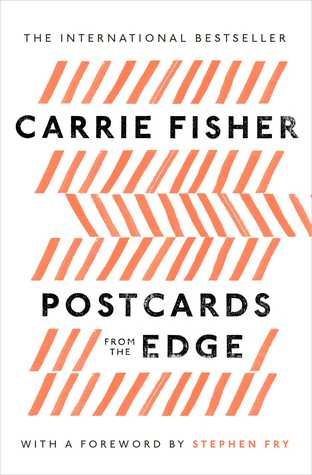
Six Degrees of Separation: From Postcards from the Edge to The Return of the Soldier

It’s the first Saturday of the month which means it’s time for another Six Degrees of Separation, hosted by Kate of Books are my Favourite and Best. The idea is that Kate chooses a book to use as a starting point and then we have to link it to six other books of our choice to form a chain. A book doesn’t have to be connected to all of the others on the list – only to the one next to it in the chain.

This month we’re beginning with Postcards from the Edge by Carrie Fisher, a book I haven’t read and don’t have any plans to read. Here’s what it’s about:

Carrie Fisher’s first novel is set within the world she knows better than anyone else: Hollywood, the all-too-real fantasyland of drug users and deal makers. This stunning literary debut chronicles Suzanne Vale’s vivid, excruciatingly funny experiences – from the rehab clinic to life in the outside world. Sparked by Suzanne’s – and Carrie’s – deliciously wry sense of the absurd, Postcards from the Edge is a revealing look at the dangers and delights of all our addictions, from success and money to sex and insecurity.

When I saw which book we were starting with this month I thought I would struggle to put a chain together, but actually a first link came to mind very quickly, using the theme of postcards. Alone in Berlin by Hans Fallada (1) is set during World War II and tells the story of Otto and Anna Quangel, an ordinary German couple who start a campaign of resistance by writing anti-Nazi messages on postcards and dropping them in public places across Berlin. Also titled Every Man Dies Alone, this wonderful novel was first published in German in 1947. I read it in 2011 and it was my favourite book read that year.

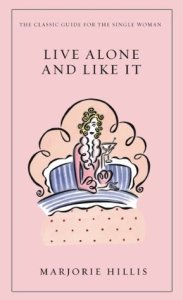
Another book with the word ‘alone’ in the title is Live Alone and Like It by Marjorie Hillis (2), a self-help book for single women from 1936 which I read earlier this year. As someone who lives alone, I hoped Hillis would have some good advice for me – and although some of the things in the book are obviously very dated, I was surprised by how much of it is still relevant today!

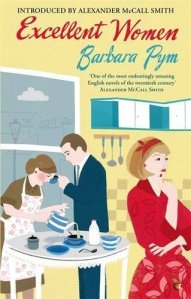
A fictional character who lives alone and likes it is Mildred Lathbury in Excellent Women by Barbara Pym (3). Mildred, an unmarried woman in her thirties, is thought of as one of those nice, dependable, ‘excellent women’ who can always be relied upon to provide advice, comfort and a cup of tea. At the beginning of the book, Mildred is leading a quiet life devoted to helping out at the parish church, but when new neighbours move in she finds herself becoming more involved in their problems than she really wants to be.

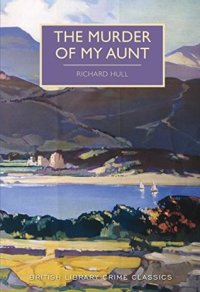
Mildred is not a very common name in fiction, but I can think of a few others – including Aunt Mildred in The Murder of My Aunt by Richard Hull (4). The story is set in the small Welsh village of Llwll and is narrated by Edward Powell, an unpleasant and unlikeable young man who spends the entire book thinking of various ways to murder his equally unpleasant aunt. Despite the dark-sounding plot, this is actually a very funny and entertaining novel and one of the best books I have read in the British Library Crime Classics series.

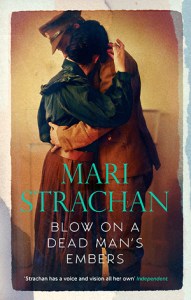
My next link is to another book set in Wales. There are plenty to choose from, but I have decided on Blow on a Dead Man’s Embers by Mari Strachan (5). This moving and atmospheric novel tells the story of Non Davies, one of the lucky women whose husbands come home alive at the end of World War I. However, Non’s husband Davey is suffering from shell shock and Non knows that before she can help him recover she needs to find out exactly what happened to him during the war.

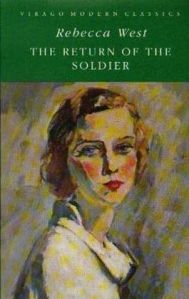
The final book in my chain, Rebecca West’s The Return of the Soldier (6), is also about a soldier whose experiences during the war have left him with shell shock and a result, he has lost his memory. Unable to remember marrying his wife, Kitty, he is still in love with another woman he knew fifteen years ago, which causes difficulties for everyone involved. This is a short book but a poignant and beautifully written one.

~

And that’s my chain for this month. My links have included postcards, the word ‘Alone’, women who live alone and like it, the name Mildred, books set in Wales and returning soldiers.

In September we will be starting with 2021 Booker Prize nominee, Second Place by Rachel Cusk.

Have you read any of the books in my chain? Are you taking part in Six Degrees of Separation this month?

St Martin’s Summer by Rafael Sabatini

St Martin’s Summer is a term used to describe a period of unusually warm weather taking place in early November – but the title of this Rafael Sabatini novel from 1909 has a double meaning, as the name of our hero is also Martin: Martin Marie Rigobert de Garnache. When a young heiress, Valerie de la Vauvraye, writes to the Queen of France requesting urgent help, Garnache is the man the Queen sends to her assistance. Valerie is betrothed to Florimond de Condillac, but Florimond has been away fighting in Italy for the last three years and in his absence his stepmother, the Marquise de Condillac, has been trying to marry the girl to her own son, Marius, instead. Can Garnache rescue Valerie from the Marquise’s clutches and reunite her with Florimond?

Having read Rafael Sabatini’s most famous novels, Scaramouche, Captain Blood and The Sea-Hawk, I have moved on to his lesser known titles and have had mixed success with the ones I’ve chosen so far; some I have enjoyed, while others have been disappointing. I had high hopes for St Martin’s Summer, which seemed to be a popular one and came highly recommended by a blog reader (thank you, Cheryl T) – and I’m pleased to say that it definitely lived up to my expectations.

First of all, it’s a lot of fun to read. Set in early 17th century France, the story itself is quite simple and straightforward, revolving entirely around Garnache’s attempts to free Valerie from her imprisonment in the Chateau de Condillac and the Marquise’s attempts to thwart him. What makes the book so entertaining, though, are the lengths both sides go to in their efforts to get one step ahead: there are duels, disguises, impersonations and all sorts of other tricks and deceptions, some of which are obvious to the reader, but not to the characters, who repeatedly fall into each other’s traps!

Garnache is a wonderful character. Like many of Sabatini’s heroes, he has great courage, a quick brain and an array of other skills and talents, but also one or two serious flaws – in this case an inability to keep his temper under control:

The greatest stumbling-block in Garnache’s career had been that he could never learn to brook opposition from any man. That characteristic, evinced early in life, had all but been the ruin of him. He was a man of high intellectual gifts, of military skill and great resource; out of consideration for which had he been chosen by Marie de Medicis to come upon this errand. But he marred it all by a temper so ungovernable that in Paris there was current a byword, ‘Explosive as Garnache.’

Garnache’s temper gets him into trouble and ruins his plans again and again, which is frustrating to watch but makes him a more believable and sympathetic character than he would otherwise have been. At the beginning of the book he also has a low opinion of women – he has remained single to the age of forty – but as he spends more time in the company of Valerie, as well as being forced to pit his wits against such a formidable female opponent as the Marquise de Condillac, he begins to change his views! The Marquise is obviously a great villain, but I also liked Garnache’s quick-thinking servant Rabecque, who is sometimes more perceptive than his master, and Monsieur de Tressan, the Seneschal of Dauphiny, a cowardly man who tries to ‘run with the hare and hunt with the hounds’.

I really enjoyed this book – it was so much better than my last Sabatini, The Minion, and I hope my next choice will be another good one!

~

Book 22/50 from my second Classics Club list

Book 35/50 read for the 2021 Historical Fiction Reading Challenge.

Book 8/20 of my 20 Books of Summer 2021