Classics Club Spin #27: The Result

The result of the latest Classics Club Spin has been revealed today.

The idea of the Spin was to list twenty books from my Classics Club list, number them 1 to 20, and the number announced by the Classics Club represents the book I have to read before 22nd August. The number that has been selected is…

6

And this means the book I need to read is…

I Will Repay by Baroness Orczy

It has been ten years since Juliette de Marny’s father asked her to swear revenge upon Deroulede for the death of her brother in a duel. At last she finds herself in Deroulede’s house with an opportunity to betray him. Juliette realizes, too late, that she is in love with Deroulede. Can the Scarlet Pimpernel help?

~

Not one that I was particularly hoping for from my list, but still not a bad result. After reading The Scarlet Pimpernel a few years ago and discovering that there was a whole series of Pimpernel books, I decided to continue working through them in chronological order. I have since read Sir Percy Leads the Band and The League of the Scarlet Pimpernel, so I Will Repay is next for me.

Have you read this book? Did you take part in the spin and are you happy with your result?

Classics Club Spin #27: My List

It’s time for another Classics Club Spin! I wasn’t sure whether to take part in this one as I didn’t manage to read my book from the previous spin in April; that was Germinal, which I had expected to love and do still want to finish but I had too much else going on in my life at that time and couldn’t give it the concentration it deserved. However, I’m disappointed by how few classics I’ve read so far this year, so I will see what the spin chooses for me this time and have another try.

If you’re not sure what a Classics Spin is, here’s a reminder:

The rules for Spin #27:

* List any twenty books you have left to read from your Classics Club list.
* Number them from 1 to 20.
* On Sunday 18th July the Classics Club will announce a number.
* This is the book you need to read by 22nd August 2021.

And here is my list:

1. Fire from Heaven by Mary Renault
2. The Trumpet-Major by Thomas Hardy
3. Goodbye Mr Chips by James Hilton
4. The White Guard by Mikhail Bulgakov
5. La Reine Margot by Alexandre Dumas
6. I Will Repay by Baroness Emmuska Orczy
7. Armadale by Wilkie Collins (re-read)
8. Nicholas Nickleby by Charles Dickens
9. Moonfleet by John Meade Falkner
10. Pied Piper by Nevil Shute
11. The Duke’s Children by Anthony Trollope
12. Shadows on the Rock by Willa Cather
13. St Martin’s Summer by Rafael Sabatini
14. The Grapes of Wrath by John Steinbeck
15. Jane and Prudence by Barbara Pym
16. The Brothers Karamazov by Fyodor Dostoevsky
17. A Laodicean by Thomas Hardy
18. The Turquoise by Anya Seton
19. The Chrysalids by John Wyndham
20. The Betrothed by Alessandro Manzoni

~

Are you taking part in the spin this time? Which numbers do you think I should be hoping for?

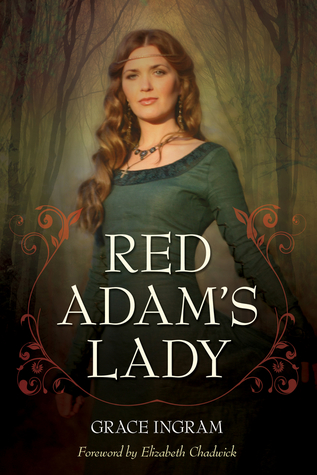
Red Adam’s Lady by Grace Ingram

Although Red Adam’s Lady was first published in 1973, I wasn’t aware of it until a few years ago when it was reissued by Chicago Review Press as part of their Rediscovered Classics series. This edition has a foreword by Elizabeth Chadwick, one of my favourite authors of medieval fiction, and knowing that she rates this book highly was enough to make me want to try it myself.

Julitta de Montrigord is taking shelter from the rain in an alehouse one evening when she is abducted by the drunken Red Adam de Lorismond, the new lord of Brentborough, who carries her off to his castle and into his bedchamber. She manages to defend her virtue by hitting him over the head with a stool and tying him to a bedpost, but is horrified when, in the morning, he insists on making amends by marrying her. Julitta can think of nothing worse – even being sent to a convent seems preferable to her – but her uncle and guardian sees his chance to form an importance alliance with Brentborough and she is eventually left with no option but to agree to the marriage.

Despite the efforts of Julitta’s new husband to redeem himself, she is determined that this will remain a marriage in name only. Meanwhile she has plenty of other distractions; after all, as Red Adam’s Lady she now has a castle to look after and servants to manage – including the jealous chatelaine, Constance, who seems set on making Julitta’s life as difficult as possible.

This vivid and detailed depiction of 12th century castle life is one of the things I particularly enjoyed about this novel. There’s nothing glamorous or fairytale-like about Brentborough Castle; when Julitta first arrives, she discovers that her new home is dirty, neglected and has been badly managed during the lifetime of the previous lord, Adam’s uncle, and it’s fascinating to see how she goes about setting things in order. Away from the domestic setting, we learn a little bit of what is going on elsewhere in the country, with Henry II’s son, the Young King, preparing to rebel against him and England’s nobility facing a choice between one side or the other. Julitta’s uncle and his friends are supporters of the Young King, but Red Adam’s loyalty to Henry II makes him a traitor in their eyes.

There’s also a mystery aspect to the novel, with Julitta and Red Adam trying to find out what really happened to the former lord’s pregnant wife, who was believed to have been murdered although no proof was ever found. When another young man claiming to be the true heir to Brentborough appears on the scene, it becomes more important than ever that the truth is uncovered at last.

As for the romantic element of the story, I think a romance that begins with the hero trying to rape the heroine is always going to be problematic from a modern point of view, though probably not so much in the 1970s when it was written. In this case, it seems so out of character for Adam that the whole opening scene felt to me a little bit contrived, as a way of getting Julitta into the castle and setting up the rest of the story. Apart from that, I thought the characters felt like believable and convincing 12th century people rather than present day people in medieval costume and there was none of the annoying anachronistic language I sometimes come across in the historical fiction being published today.

Grace Ingram’s other novels, Gilded Spurs and several that she wrote under the name of Doris Sutcliffe Adams, all still seem to be out of print. It would be nice if a publisher could give more of them the same treatment as Red Adam’s Lady and make them available to new readers.

Book 32/50 read for the 2021 Historical Fiction Reading Challenge.

Book 4/20 of my 20 Books of Summer 2021

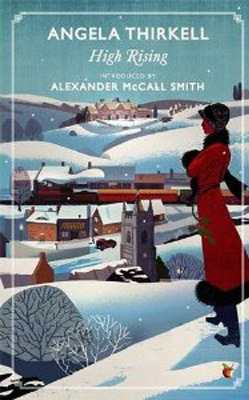
High Rising by Angela Thirkell

Angela Thirkell is an author I’ve never read but have been meaning to try for a long time, so when I put my list together for this year’s 20 Books of Summer I decided to include High Rising. Originally published in 1933, this is the first of her Barsetshire novels, a series of twenty-nine books set in the fictional English county of Barsetshire which was created by Anthony Trollope in the 19th century. I loved Trollope’s Barsetshire novels, so I hoped for a similar experience with Thirkell’s.

The book begins with novelist Laura Morland, a widow with four sons, collecting her youngest, Tony, from school and bringing him home to the village of High Rising for Christmas. High Rising, together with nearby Low Rising, is the sort of small 1930s middle-class community in which everyone knows everyone else’s business and where the arrival of a newcomer causes a great deal of gossip and excitement. The newcomer in this case is Miss Una Grey, who has come to work as a secretary for Laura’s friend and fellow author George Knox. It seems that Miss Grey – or the Incubus as Laura calls her – has set her sights on marrying George and will do whatever it takes to get her wish. As well as trying to save George from the clutches of the Incubus, Laura spots the seeds of a romance between her publisher, Adrian Coates, and George’s daughter Sibyl, and decides to do what she can to push them together.

There’s not really much more to the plot than that, but what makes this book worth reading is not the plot but the characters and the interactions between them. Although some of the characters, such as Adrian and Sibyl, seemed to lack depth, others interested me much more – for example, Anne Todd, Laura’s secretary, who is trying to make a living through typing manuscripts while caring for her invalid mother. It took me a while to warm to Laura herself, but eventually I became quite fond of her; I can’t say the same for Tony, whom I found unbearably irritating with his incessant talk about his toy trains, which carriages and engines he should buy next and the model railway he wants to build in the garden. To be fair, though, I think there are a lot of children like Tony and he was probably the most convincing character in the book!

I couldn’t quite manage to love this book, but I enjoyed it overall. It does have some of the problems common to novels of this period, such as attitudes to race and class, and I also felt that it didn’t have a lot of substance, but otherwise it was a quick, light, entertaining read at a time when that was just what I needed. I don’t think I want to start the next book, Wild Strawberries, immediately, but I’m sure I will read it at some point.

Book 3/20 of my 20 Books of Summer 2021

This is also book 20/50 read from my second Classics Club list.

Six in Six: The 2021 Edition

We’re more than halfway through the year and Six in Six, hosted by Jo of The Book Jotter, is back again! I love taking part in this as I think it’s the perfect way to look back at our reading over the first six months of the year.

The idea of Six in Six is that we choose six categories (Jo has provided a list of suggestions or you can come up with new topics of your own if you prefer) and then fit six of the books or authors we’ve read this year into each category. It’s more difficult than it sounds, especially as I try not to use the same book in more than one category, but it’s always fun to do.

Here is my 2021 Six in Six, with links to my reviews:

~

Six Agatha Christie novels read for the Read Christie 2021 challenge

1. JANUARY – A story set in a grand house…The Body in the Library
2. FEBRUARY – A story featuring love…Sad Cypress
3. MARCH – A story featuring a society figure…Sparkling Cyanide
4. APRIL – A story set before WWII…Murder in Mesopotamia
5. MAY – A story featuring tea…A Pocket Full of Rye
6. JUNE – A story featuring a garden…Nemesis

~

Six mysteries, thrillers or crime novels NOT by Agatha Christie

1. The Pact by Sharon Bolton
2. The Deadly Truth by Helen McCloy
3. The Royal Secret by Andrew Taylor
4. The Decagon House Murders by Yukito Ayatsuji
5. Hare Sitting Up by Michael Innes
6. Daughters of Night by Laura Shepherd-Robinson

~

Six non-fiction books read this year

1. Myself When Young by Daphne du Maurier
2. The Killer of the Princes in the Tower by MJ Trow
3. Live Alone and Like It by Marjorie Hillis
4. The Light Ages by Seb Falk
5. The Fall of the House of Byron by Emily Brand
6. The Haunting of Alma Fielding by Kate Summerscale

~

Six books that took me on a tour of Europe

1. The Manuscript Found in Saragossa by Jan Potocki (SPAIN)
2. Ashes by Christopher de Vinck (BELGIUM)
3. Ariadne by Jennifer Saint (GREECE)
4. Still Life by Sarah Winman (ITALY)
5. The Missing Sister by Lucinda Riley (IRELAND)
6. The Paris Library by Janet Skeslien Charles (FRANCE)

~

Six books with titles connected to rivers, seas and storms

1. The Land Beyond the Sea by Sharon Penman
2. Islands of Mercy by Rose Tremain
3. A Net for Small Fishes by Lucy Jago
4. The Drowned City by KJ Maitland
5. River of Stars by Guy Gavriel Kay
6. The Wrecking Storm by Michael Ward

~

Six books I’ve enjoyed reading this year but couldn’t fit into another category

1. Good by Stealth by Henrietta Clandon
2. The Rose Code by Kate Quinn
3. China by Edward Rutherfurd
4. The Metal Heart by Caroline Lea
5. The Hardie Inheritance by Anne Melville
6. The Last Daughter by Nicola Cornick

~

I was pleased to find that I’d read six non-fiction books so far this year – it’s not often that I’ve read enough to fill a whole category. However, I’m disappointed that I haven’t read six classics (apart from the classic crime). I’ll have to make up for that between now and December!

Have you taken part in Six in Six or are you planning to? Have you read any of the books I’ve mentioned?

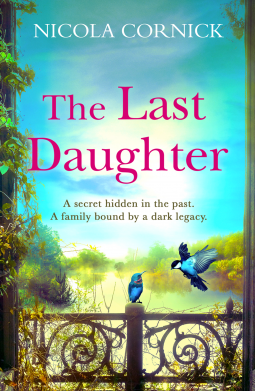
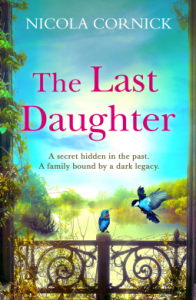
The Last Daughter by Nicola Cornick

I have read several of Nicola Cornick’s time slip novels over the last few years and enjoyed some much more than others, but I think her new one, The Last Daughter, is her best so far. It probably helped that the historical storyline is set during one of my favourite periods of history, the Wars of the Roses, but the modern day narrative interested me too, which isn’t always the case!

Beginning in the present day, we meet Serena Warren, a young woman who is still struggling to come to terms with the disappearance of her twin sister, Caitlin, eleven years earlier – an event so traumatic, she has blocked out all memory of it. Serena is staying with an aunt in California when she receives the news she has been dreading: Caitlin’s body has been found during an archaeological dig close to their grandparents’ old home in Oxfordshire, which stands near the ruins of Minster Lovell Hall. Determined to uncover the truth, Serena returns to England and finds that once she is back in the place where Caitlin vanished all those years ago, she begins to regain her memories.

In the fifteenth century, our narrator is Anne FitzHugh, a niece of the powerful Earl of Warwick. Anne is only five years old when a marriage is arranged for her with eight-year-old Francis Lovell, a ward of Edward IV. Her new husband grows up to become a close friend and supporter of Edward’s younger brother, Richard, Duke of Gloucester (the future Richard III), and he and Anne are drawn into all the conflict and intrigue surrounding Richard’s rise to the throne – including the mystery surrounding the fate of Richard’s two nephews, the Princes in the Tower.

These two narratives are linked in a very intriguing way; I can’t say too much as it would risk spoiling the story, but it involves both a ghost story based on the famous legend of the Mistletoe Bride and the theft of a mysterious relic known as the Lovell Lodestar. Although, as with all time slip novels, there are some elements of the supernatural here, I thought everything felt reasonably convincing in the context of the story and all the different threads of the plot tie together perfectly in the end.

I liked both protagonists, Serena and Anne (and I would love to have Serena’s job, researching and arranging ‘bespoke historical tours’). Serena’s story is probably the more complex; not only is she investigating her sister’s disappearance, she is also trying to uncover the secrets of her family history with the help of her grandfather, who is suffering from dementia. I was surprised to see Lizzie Kingdom, a character from Nicola Cornick’s previous book, make an appearance as an old friend of Serena’s, and I was wary of this at first as the book featuring Lizzie, The Forgotten Sister, is my least favourite novel by Cornick. However, Lizzie fits into this particular story very well and as both books are set in Oxfordshire, it’s believable enough that she and Serena could have known each other.

I also enjoyed reading about Anne and Francis Lovell, who are usually just minor characters in the background of Richard III’s story. Their marriage is portrayed as a loving one, despite it being arranged for them as children, but not without its challenges and its ups and downs. The solution to the mystery of the Princes in the Tower is fascinating and certainly not one I’ve come across before, although I can’t say any more about it than that!

I’m looking forward to Nicola Cornick’s next book and hoping it will be as interesting and entertaining as this one!

Thanks to HQ for providing a copy of this book for review via NetGalley
Book 31/50 read for the 2021 Historical Fiction Reading Challenge.

Book 2/20 of my 20 Books of Summer 2021

Six Degrees of Separation: From Eats, Shoots & Leaves to The Diary of a Provincial Lady

It’s the first Saturday of the month which means it’s time for another Six Degrees of Separation, hosted by Kate of Books are my Favourite and Best. The idea is that Kate chooses a book to use as a starting point and then we have to link it to six other books of our choice to form a chain. A book doesn’t have to be connected to all of the others on the list – only to the one next to it in the chain.

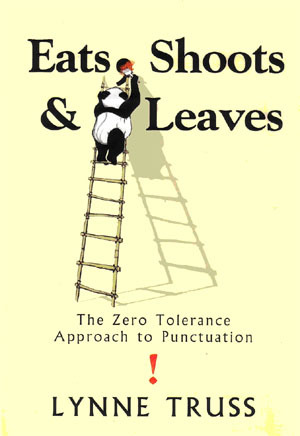
This month we’re starting with Eats, Shoots & Leaves by Lynne Truss. I own a copy of this non-fiction book about the importance of punctuation and read it years ago. I was working as a proofreader at the time, so it was quite appropriate! Here is the description from Goodreads:

Everyone knows the basics of punctuation, surely? Aren’t we all taught at school how to use full stops, commas and question marks? And yet we see ignorance and indifference everywhere. “Its Summer!” says a sign that cries out for an apostrophe, “ANTIQUE,S,” says another, bizarrely. “Pansy’s ready,” we learn to our considerable interest (“Is she?”), as we browse among the bedding plants.

In Eats, Shoots & Leaves, Lynne Truss dares to say that, with our system of punctuation patently endangered, it is time to look at our commas and semicolons and see them for the wonderful and necessary things they are. If there are only pendants left who care, then so be it. “Sticklers unite” is her rallying cry. “You have nothing to lose but your sense of proportion – and arguably you didn’t have much of that to begin with.”

This is the book for people who love punctuation and get upset about it. From the invention of the question mark in the time of Charlemagne to Sir Roger Casement “hanged on a comma”; from George Orwell shunning the semicolon to Peter Cook saying Nevile Shute’s three dots made him feel “all funny”, this book makes a powerful case for the preservation of a system of printing conventions that is much too subtle to be mucked about with.

Punctuation used incorrectly or not at all is something that always annoys me. Rather than single one book out for criticism, I’m going to move away from the subject of punctuation entirely and continue the chain with a completely different link. The cover of Eats, Shoots & Leaves has a ladder on it and this reminds me of the title of a John Boyne book I enjoyed a few years ago: A Ladder to the Sky (1), a novel about an aspiring author who can’t think of any stories of his own so decides to steal other people’s. John Boyne is an Irish author and I read this book in March 2019 for the Reading Ireland Month hosted every year by Cathy and Niall.

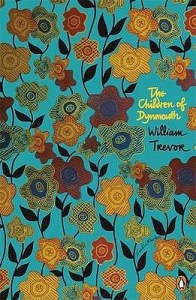
For a previous Reading Ireland Month in 2016, I read The Children of Dynmouth by William Trevor (2). This dark and unsettling novel is set in an English seaside town in the 1970s and follows the story of Timothy Gedge, a lonely and disturbed teenager who wanders the streets of Dynmouth intruding into the lives of people who don’t want him there.

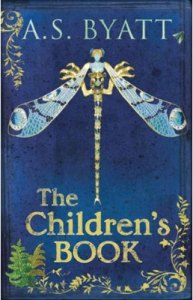
Another book with ‘children’ in the title is The Children’s Book by AS Byatt (3). I loved this long and complex novel about the Wellwood family and all the social and cultural changes going on in the world around them during the late Victorian and Edwardian periods. One of the main characters, Olive Wellwood, is a writer of fairy tales and some of the stories she writes for her children are incorporated into the novel.

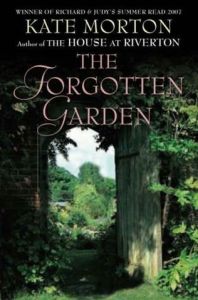
The Forgotten Garden by Kate Morton (4), a novel with multiple narratives and settings, moving between England and Australia and covering a period of more than a hundred years, also features a character who is a writer of fairy tales. Her name is Eliza Makepeace and some of her tales are also included in the novel. The title of the book refers to a house on the coast of Cornwall with a hidden walled garden, surely inspired by The Secret Garden by Frances Hodgson Burnett.

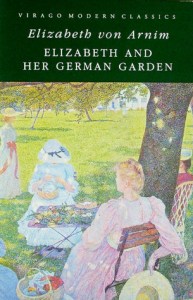
I can think of quite a few other novels about gardens or featuring a garden, but the one I’m going to link to is Elizabeth and Her German Garden by Elizabeth von Arnim (5). This novel from 1898 is written in the form of a diary in which the narrator takes us through a year in her life, describing all the changes she sees in the garden of her home in northern Germany.

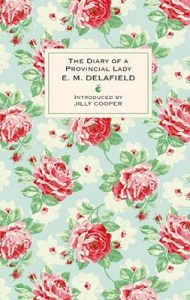
I’m going to finish my chain with another novel written in diary form: The Diary of a Provincial Lady by EM Delafield (6). I had put off reading this for a long time because I wasn’t sure it would be my sort of book, but I enjoyed it much more than I thought I would – a perfect choice if you’re in the mood for something light and funny! I must read the other Provincial Lady books soon.

~

And that’s my chain for this month. My links have included ladders, Irish authors, the word children, fairy tale writers, gardens and diaries.

In August we will be starting with Postcards From the Edge by Carrie Fisher.