Mini-reviews: Ashes; A Net for Small Fishes; The Lost Diary of Venice

Although I usually devote an entire post on my blog to every book I read, sometimes I find that I have very little to say. That’s not always necessarily a reflection on the quality of the book or how much I enjoyed it, but more an inability to put into words my thoughts about a particular book and an awareness that if I don’t just write something soon I will never get round to reviewing it at all! Three of my recent reads fall into that category, so here are a few paragraphs about each of them:
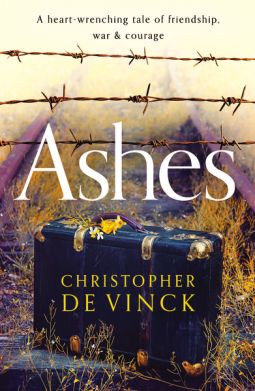
The first is Ashes by Christopher de Vinck, a novel set in Belgium during World War II. Simone Lyon, the daughter of a major general in the Belgian army, meets Hava Daniels while volunteering with the Red Cross in 1939 and despite their different backgrounds – Hava’s family are Jews from Poland – the two become close friends. In those innocent days at the beginning of the war, the girls believe their country will remain safe and neutral, untouched by the horrors starting to sweep across the rest of Europe. Less than a year later, Brussels is under German occupation and Hava and Simone become caught up in everything they’d hoped to avoid.

I found this a moving portrayal of friendship and loyalty, although I struggled to believe that Simone and Hava were really supposed to be eighteen years old as they felt a lot younger than that to me – in fact, I thought the whole story and the way in which it was written felt more like YA fiction than adult. Not a problem, but not what I’d expected! It was interesting to read about the Holocaust from a Belgian perspective and the quotes from politicians, news articles and Nazi propaganda which begin every chapter help to put everything into historical context, but the story was not quite as harrowing as books on this topic usually are. Maybe that was due to the pacing, as a lot more time is spent on building up Hava and Simone’s friendship than on describing the events that follow the Nazi invasion. Overall, this was a worthwhile read, but just didn’t have the sort of depth I prefer in a novel.
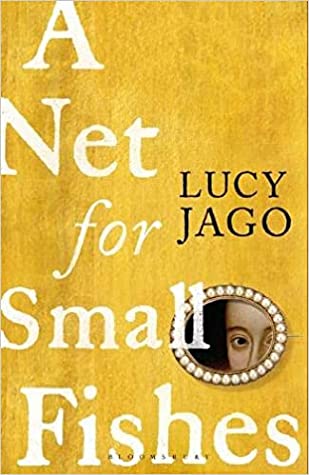
A Net for Small Fishes by Lucy Jago is set much earlier, in Jacobean England, and tells the story of the real life Thomas Overbury Scandal from the perspective of Anne Turner, one of the people involved in the crime. Anne, the wife of a London physician, is also a businesswoman in her own right, holding the patent for yellow starch for collars and ruffs. Early in the novel, she becomes dresser and companion to Frances Howard, the young Countess of Essex – and when Frances falls in love with Robert Carr, the king’s favourite, it is Anne to whom she turns for help. Frances wants to marry Robert, but his friend Sir Thomas Overbury stands in their way; if only she and Anne could somehow get rid of him!

I think I would probably have enjoyed this book more if I hadn’t already read several other versions of the Overbury story, most recently EC Fremantle’s The Poison Bed and Rafael Sabatini’s The Minion. Being familiar with the story in advance took away the suspense and what was left wasn’t really enough to hold my attention. The choice of Anne as narrator, while interesting from the point of view of showing us how an ordinary citizen of the time might have viewed royalty and courtiers, took us further from the action, often leaving a sense that all the excitement was happening elsewhere. I also found Anne’s habit of referring to Frances as ‘Frankie’ very irritating as I didn’t think that name was in common use in the early 17th century. This book just wasn’t for me, but most of the other reviews I’ve seen are much more positive than mine! I do like the title, which is a reference to ‘small fishes’ being caught in the net of justice while the larger fish swim away.
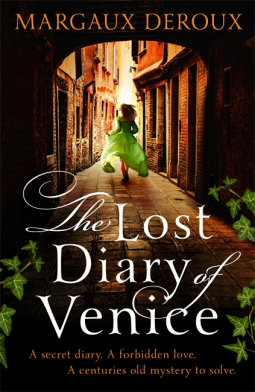
The Lost Diary of Venice by Margaux DeRoux is a dual timeline novel; the present day narrative follows Rose, an expert in book restoration from Connecticut, and the historical one is set in Renaissance Italy. The connection between the two comes when William, an artist, brings a 16th century manuscript into Rose’s bookshop. Rose quickly discovers that the document is a palimpsest, where one set of words has been written over another which has been scraped away. On the surface it is a treatise on art by the great Italian painter Giovanni Lomazzo, but it’s the hidden diary entries and sketches underneath that really intrigue Rose and William.

It’s often the case that when a novel is set in two time periods, I like one much more than the other; with this novel, however, I didn’t find either of them very compelling. The book is well written, with some beautiful descriptions of Venice in the historical sections, but I didn’t feel any emotional connection to any of the characters. Rose’s relationship with the married William didn’t interest me and I was unmoved by Giovanni’s romance with the courtesan Chiara too (although I did have some sympathy for Giovanni as he discovered that he was losing his sight, a terrible thing for an artist to have to come to terms with). I also loved the glimpses we are given of the political situation in Venice at that time, the conflict between the Venetians and the Ottoman Empire, and the events taking place in Cyprus ahead of the Battle of Lepanto. I wished more time had been spent on all of this, as every time I started to become gripped by what was happening, the chapter ended and we switched back to the modern day story. This is not a book I can say I particularly enjoyed, but I’m pleased I was at least able to learn something from it.

Have you read any of these? If so, let me know what you thought.
Book 10, 11 and 12/50 read for the 2021 Historical Fiction Reading Challenge.

The Soul Thief by Cecelia Holland

Cecelia Holland is an American historical novelist who has been writing since the 1960s and whose books cover a huge range of different time periods and geographical settings. To give an example of the variety of her work, I have previously read three of her novels and one was set in Borgia-ruled Rome, one in medieval England and one in 16th century Hungary! The Soul Thief, the first in a six-volume series published between 2002 and 2010, takes us back to Ireland in the 10th century, beginning on the eve of a Viking raid…

Corban Loosestrife has argued with his father and, having been threatened with banishment, has gone off to sleep outdoors in the hope that he will be forgiven the next day. However, when the sun rises in the morning and he heads back home, he finds the family farm burning to the ground, his parents’ dead bodies amongst the ruins and no sign at all of his twin sister, Mav. Making his way to the Viking settlement at Dubh Linn (Dublin), Corban learns that Mav may have been transported across the sea to Jorvik with the other healthy young women to be sold as slaves. Determined to do whatever is necessary to bring her home, Corban sets out on his sister’s trail – a trail that will take him first to Jorvik and then further afield to the Danish trading post of Hedeby.

I know from my earlier experience of Cecelia Holland’s novels that her ‘heroes’ are usually not particularly heroic – and in fact are often very unlikeable. Corban is easier to like than, for example, János Rákossy or Fulk, Earl of Stafford, but he is also another imperfect character. He makes mistakes, he lacks courage at times, and he is often easily distracted from his quest. There’s a lot of scope for character development, yet I felt that there was very little in this book; maybe as this is only the first of six novels we will see Corban grow and change as a person later in the series, although at this point I’m not sure whether I will be continuing. I enjoyed parts of Corban’s story, but this novel had neither the depth nor the level of emotional engagement I prefer and I don’t think I really liked it enough to want to commit to another five books.

I did find Mav’s story intriguing: after being captured during the Viking raid, she falls into the hands of the mysterious Lady of Hedeby, a sort of witch or sorceress who decides to use Mav’s psychic connection with her twin Corban for her own purposes. With this storyline, the novel begins to cross from straight historical fiction into the realms of historical fantasy – although the supernatural elements are really quite subtle and not fully explained (again, maybe this is developed further later in the series). Mav and the Lady interested me much more than Corban did and I would have preferred to have had more of the novel devoted to them.

My knowledge of this period of history is very limited, so I can’t really comment on the historical accuracy of anything that is described in the book. The focus is mainly on the fictional characters, but Corban does cross paths with some of the historical figures of the time, particularly in Jorvik (York), where he is drawn into the court of the Viking king, Eric Bloodaxe, and his wife, Gunnhild. Meanwhile, the Lady of Hedeby plots and schemes with another king, Harald Bluetooth (yes, the one Bluetooth technology is named after). I didn’t feel that I learned a lot about these historical men and women, although they have important roles in the plot, but as this is very much Corban’s story – the series is called The Life and Times of Corban Loosestrife – it’s understandable that he is given most of the attention.

As I’ve said, I’m probably not going to read the second Corban book, but I will continue to read Cecelia Holland’s standalone novels. So far I have read Rákossy, Hammer for Princes and City of God, and am looking forward to reading more.

Book 9/50 read for the Historical Fiction Reading Challenge.

Daughters of Night by Laura Shepherd-Robinson

It’s 1782 and Caroline Corsham – known to her friends as Caro – is waiting for her husband, Captain Harry Corsham, to return to London from France where he has been sent on diplomatic work. Visiting the Vauxhall Pleasure Gardens one evening, Caro is horrified when she comes across the body of her friend, Lady Lucia, an Italian noblewoman, who has been stabbed and left to die. The London authorities seem to have no intention of investigating the murder, which confuses Caro until she discovers that her friend was not who she claimed to be: she was actually a prostitute known as Lucy Loveless. As the police are no longer interested, Caro knows that she will have to avenge Lucy’s death herself – so with the help of thief taker Peregrine Child, she sets out to begin an investigation of her own.

Daughters of Night is a sequel to Laura Shepherd-Robinson’s previous novel, Blood & Sugar, but both books work as self-contained mysteries and I don’t think it will matter if you read them out of order. Those of you who have read Blood & Sugar will remember that it follows Harry Corsham as he investigates the death of an abolitionist friend and uncovers the horrors of the slave trade. Caro was only a minor character in that book, but now, with Harry absent in France, this is Caro’s turn to take centre stage with her own mystery to solve – and again, there is a very dark topic at the heart of the story, in this case prostitution and the treatment of women in 18th century society.

I mentioned in my review of the first book that I found the characters too thinly drawn and not memorable enough, but that was not a problem at all with this second novel. Daughters of Night is written partly from Caro’s perspective and partly from Peregrine Child’s; I liked them both and thought they complemented each other very well. Child’s previous experience as a magistrate means he knows what sort of questions to ask and what clues to look out for, and while he has some personal problems of his own he is a decent and honourable man. Caro is new to crime solving but there are things she understands that Child does not and together they make a perfect team. I certainly had no idea who the murderer was; there were several suspects who all seemed equally likely to me, so I enjoyed following the twists and turns of the plot until the truth is revealed.

Although the Georgian world that has been created here is not always very pleasant, it’s always fascinating to read about and feels thoroughly researched, ranging from larger themes such as the roles of art and classical mythology to the tiniest pieces of arcane knowledge that add colour and intrigue to the story. Laura Shepherd-Robinson has said that her next book will be a standalone but that she might return to this world again for a future novel – and I hope she does, as I would love to find out what else life has in store for Caro and Harry!

Thanks to Mantle for providing a copy of this book for review via NetGalley.

Book 8/50 read for the Historical Fiction Reading Challenge.
Six Degrees of Separation: From Phosphorescence to The Name of the Rose

It’s the first Saturday of the month which means it’s time for another Six Degrees of Separation, hosted by Kate of Books are my Favourite and Best. The idea is that Kate chooses a book to use as a starting point and then we have to link it to six other books of our choice to form a chain. A book doesn’t have to be connected to all of the others on the list – only to the one next to it in the chain.

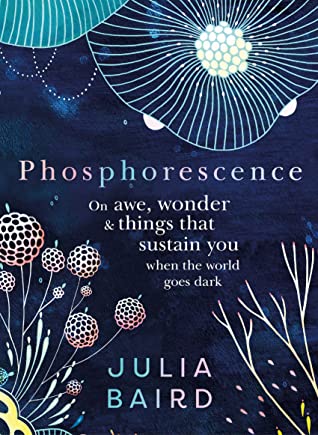
This month we are starting with Phosphorescence by Julia Baird. I haven’t read it, but it is described as:

A beautiful, intimate and inspiring investigation into how we can find and nurture within ourselves that essential quality of internal happiness – the ‘light within’ that Julia Baird calls ‘phosphorescence’ – which will sustain us even through the darkest times.

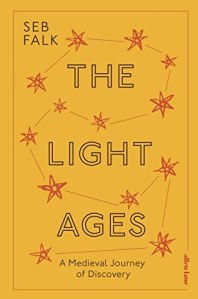
I’m going to take ‘light’ as my first link and feature a non-fiction book by Seb Falk that I read earlier this year: The Light Ages (1). In this book Falk looks at some of the advances in science, mathematics and astronomy during the medieval period and tries to dispel the idea that the Dark Ages were a time when progress stood still. A fascinating book, but I can’t claim to have understood everything in it!

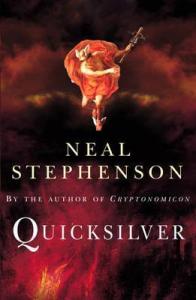
Another book – fiction this time – in which the history of science plays a part is Quicksilver by Neal Stephenson (2), the first volume in his Baroque Cycle. The protagonist Daniel Waterhouse is a 17th century natural philosopher who befriends Isaac Newton and becomes involved in the work of the Royal Society. I had been looking forward to reading this book, which sounded like the sort of thing I would usually love, but unfortunately I didn’t get on very well with it at all. I persevered through all 900 pages but was pleased to reach the end!

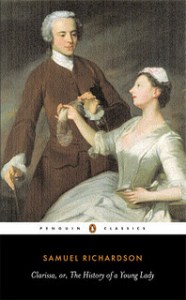
This leads me to another very long novel that I was glad to finish: Clarissa by Samuel Richardson (3). I read this 18th century classic as part of a year-long readalong with other bloggers and this definitely helped me get through what turned out to be a very repetitive and slow-paced novel. Still, I did appreciate the quality of the writing and found myself really enjoying parts of the book – and I felt a sense of accomplishment when I turned the final page.

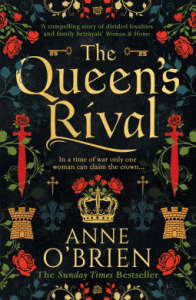
Clarissa is an epistolary novel consisting of letters – 537 of them – in which Clarissa Harlowe’s correspondence with her friend Anna Howe reveals the story of how she defies her parents’ plans for her marriage only to fall into the clutches of the notorious ‘libertine’ Robert Lovelace. A much more recent book I’ve read which is also written mainly in the form of letters is The Queen’s Rival by Anne O’Brien (4), which tells the story of Cecily Neville, mother of Edward IV and Richard III.

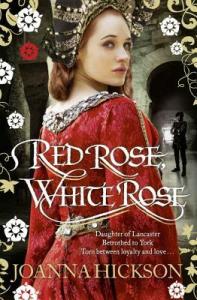
Joanna Hickson’s Red Rose, White Rose (5) is another novel about Cecily Neville and the part she plays in the Wars of the Roses. I preferred this one to the Anne O’Brien book as it is written as a straightforward narrative rather than in letter form and I think it’s always interesting to see how different authors choose to portray the same historical characters.

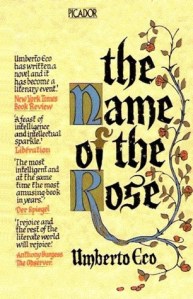
To finish my chain, I’m going to link to another book with the word ‘rose’ in the title. There are a few I could choose from, but I’ve decided on The Name of the Rose by Umberto Eco (6), a book I decided to re-read a few years ago as there was so much I missed the first time I read it. It can be described as a medieval murder mystery but is so much more than that with its themes of religious and political conflict and descriptions of monastic life.

And that’s my chain for March. My links have included: light, science, very long novels, epistolary novels, Cecily Neville and roses.

In April we will be starting with Shuggie Bain by Douglas Stuart

Sad Cypress by Agatha Christie

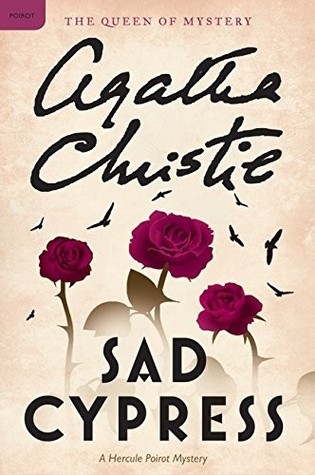
The February prompt for Read Christie 2021 was ‘a story featuring love’; as usual there were several books I could have chosen to fit this theme, but I decided on Sad Cypress, a Poirot title from 1940.

The novel begins with Elinor Carlisle on trial for the murder of Mary Gerrard. All the evidence points to her being guilty – not only was Mary her rival in love, Elinor was also in the right place at the right time to have carried out the murder. Only the village doctor, Peter Lord, believes Elinor didn’t do it and he calls in Hercule Poirot to find proof of her innocence. As Poirot begins to investigate, he discovers that almost everyone connected with the case is telling lies – but Poirot knows that where crimes are concerned, a detective can learn as much from a lie as he can from the truth.

Sad Cypress has not become a favourite Christie novel, but it’s still one that I enjoyed and one that stands out to me as feeling slightly different from most of the other Poirots I’ve read. In fact, Poirot himself doesn’t appear until almost halfway through the book and although he plays his usual vital role in solving the crime, I think the story could have been just as strong without him (apparently this was Christie’s own view as well, when she reflected on the novel after it was published). A large part of the story is written from Elinor’s perspective which gives it an emotional, intimate feel; I particularly liked the sections at the beginning and end of the book which become almost dreamlike as Elinor stands in court ‘as though imprisoned in a thick mist’, waiting to hear the decision of the jury.

As for the mystery itself, I think the plot is perhaps simpler than a lot of Christie’s others, but cleverly constructed and tightly focused. There are really only two or three likely suspects and for once I did correctly guess how the murder had been carried out and therefore who must have been responsible, but I wasn’t completely sure and had to wait for Poirot to provide the evidence. I didn’t manage to solve the mystery entirely, though – there were still lots of things that confused me, including the motive, and the twists towards the end of the book took me by surprise! Finally, in case you’re wondering, the unusual title comes from Shakespeare’s Twelfth Night: “Come away, come away, death, And in sad cypress let me be laid.”

The Read Christie theme for March is ‘a story featuring a society figure’. I’m torn between Lord Edgware Dies and Sparkling Cyanide; if you’ve read either of them, maybe you can help me decide!

Top Ten Tuesday: Characters with theatrical jobs

This week’s topic for Top Ten Tuesday (hosted by Jana at That Artsy Reader Girl) is “Characters Whose Job I Wish I Had”. As Jana says we can put our own unique spin on each topic and as I wanted to join in with Lory’s Reading the Theatre month, I have chosen ten characters who have jobs connected with acting and the theatre. These are not all jobs I would like to have myself, but some of them sound fun!

~

1. Commedia dell’Arte actor
In one of my favourite books, Scaramouche by Rafael Sabatini, Andre-Louis Moreau takes the role of Scaramouche the clown in a Commedia dell’Arte troupe as part of an elaborate plan to avenge his murdered friend.

2. Puppeteer
Adelaide Culver, the heroine of Britannia Mews by Margery Sharp, finds a collection of wonderful hand-made puppets created by her late husband and opens a successful Puppet Theatre in an old coach-house.

3. Theatre manager
In Shadowplay by Joseph O’Connor, Bram Stoker, the author of Dracula, meets the famous Shakespearean actor Sir Henry Irving and becomes manager of his Lyceum Theatre.

4. 6th century actress
Theodora by Stella Duffy is a novel based on the life of Empress Theodora of the Byzantine Empire. Before marrying the Emperor Justinian, Theodora receives training as an actress, dancer and acrobat.

5. Music hall star
Becoming Belle by Nuala O’Connor is a fictional retelling of the life of Belle Bilton, a star of the Victorian music hall who becomes the Countess of Clancarty through marriage and finds herself involved in a controversial court case.

6. Aspiring actor and con artist
The wonderfully entertaining The Way to the Lantern by Audrey Erskine Lindop follows the story of a young actor, pickpocket and con man whose various fake identities lead him into serious trouble during the French Revolution.

7. One of The Lord Chamberlain’s Men
In Fools and Mortals, Bernard Cornwell creates a fictional story for Shakespeare’s brother Richard, imagining that he is an actor with The Lord Chamberlain’s Men and must prevent rival London acting companies from stealing William’s plays.

8. A member of an acting family
The Savage Brood by Martha Rofheart is a multi-generational family saga taking us from Tudor England to 20th century Hollywood and encompassing just about every type of acting you can think of!

9. Pantomime Cat
Who Killed Dick Whittington? by E and MA Radford is a Golden Age crime novel in which a murder takes place on stage during a traditional British pantomime. Suspicion falls on the actor in the Cat costume!

10. Drama teacher
In Hag-Seed by Margaret Atwood, Felix Phillips loses his position as Artistic Director of the Makeshiweg Theatre Festival and gets a new job teaching drama and literacy to the prisoners at Fletcher Correctional, directing them in a production of The Tempest.

~

Have you read any of these? Can you think of any other books you’ve read with characters who work in the theatre? There were a few more I could have included on my list, but I had to limit myself to ten!

My Commonplace Book: February 2021

A selection of words and pictures to represent February’s reading:

commonplace book
noun
a book into which notable extracts from other works are copied for personal use.

~

“Ah, but life is like that! It does not permit you to arrange and order it as you will. It will not permit you to escape emotion, to live by the intellect and by reason! You cannot say, ‘I will feel so much and no more.’ Life, Mr Welman, whatever else it is, is not reasonable.”

Sad Cypress by Agatha Christie (1940)

~

Clearly the answer was that birds have a life of their own which, although over large areas irrational and perplexing, isn’t quite so irrational and perplexing as the life that human beings have been contriving for themselves of late. Work hard on birds, and you may here and there make some sense of them. This scarcely holds true of homo sapiens.

Hare Sitting Up by Michael Innes (1959)

~

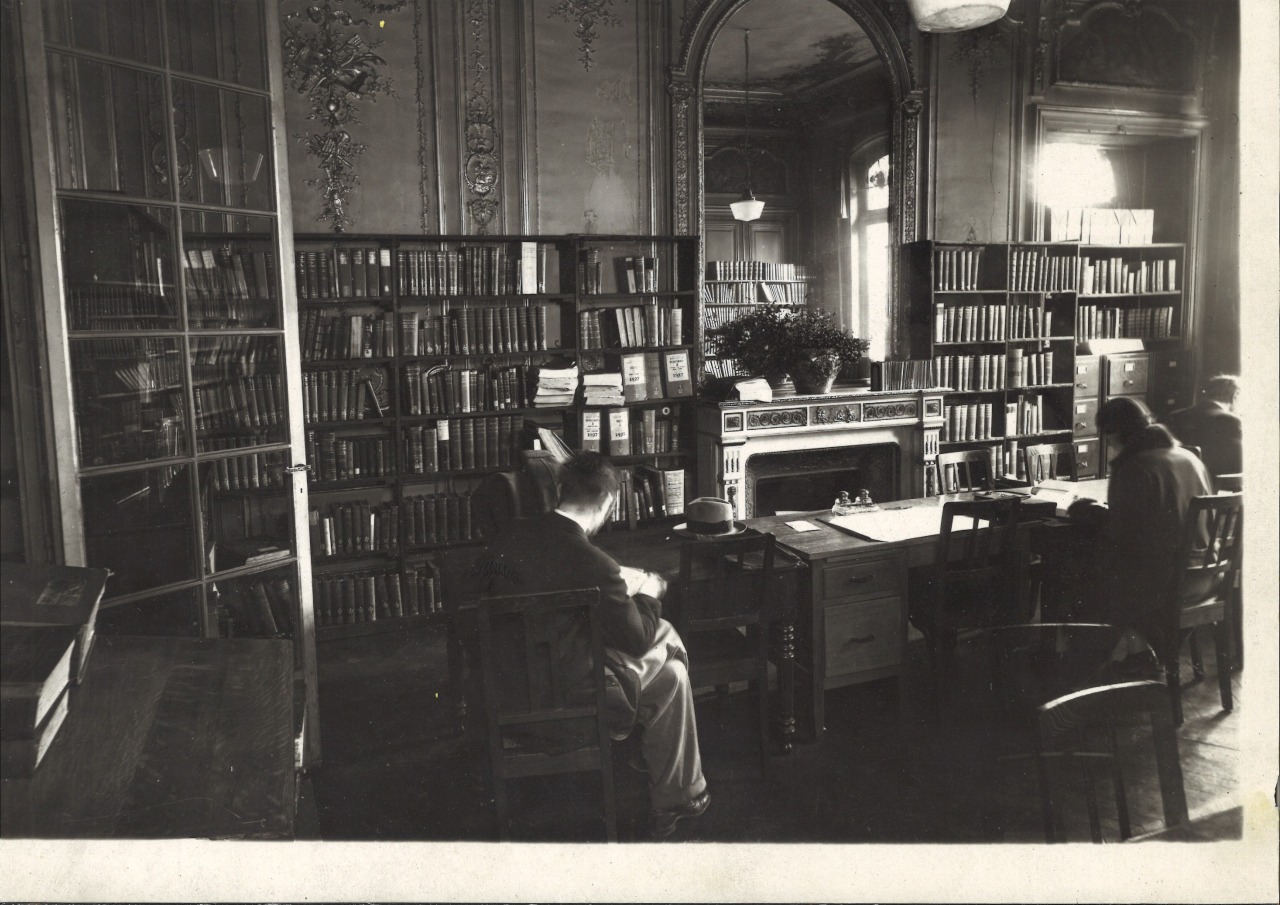
Reading room at the American Library in Paris

‘But seriously, why books? Because no other thing possesses that mystical faculty to make people see with other people’s eyes. The Library is a bridge of books between cultures.’

The Paris Library by Janet Skeslien Charles (2021)

~

Were not Time and Fate sisters? My feeling is that they both work against us, sometimes gently, sometimes harshly, with the briefest interruptions when the tide flows backwards for a happy moment, mainly due to our own endeavours.

A Net for Small Fishes by Lucy Jago (2021)

~

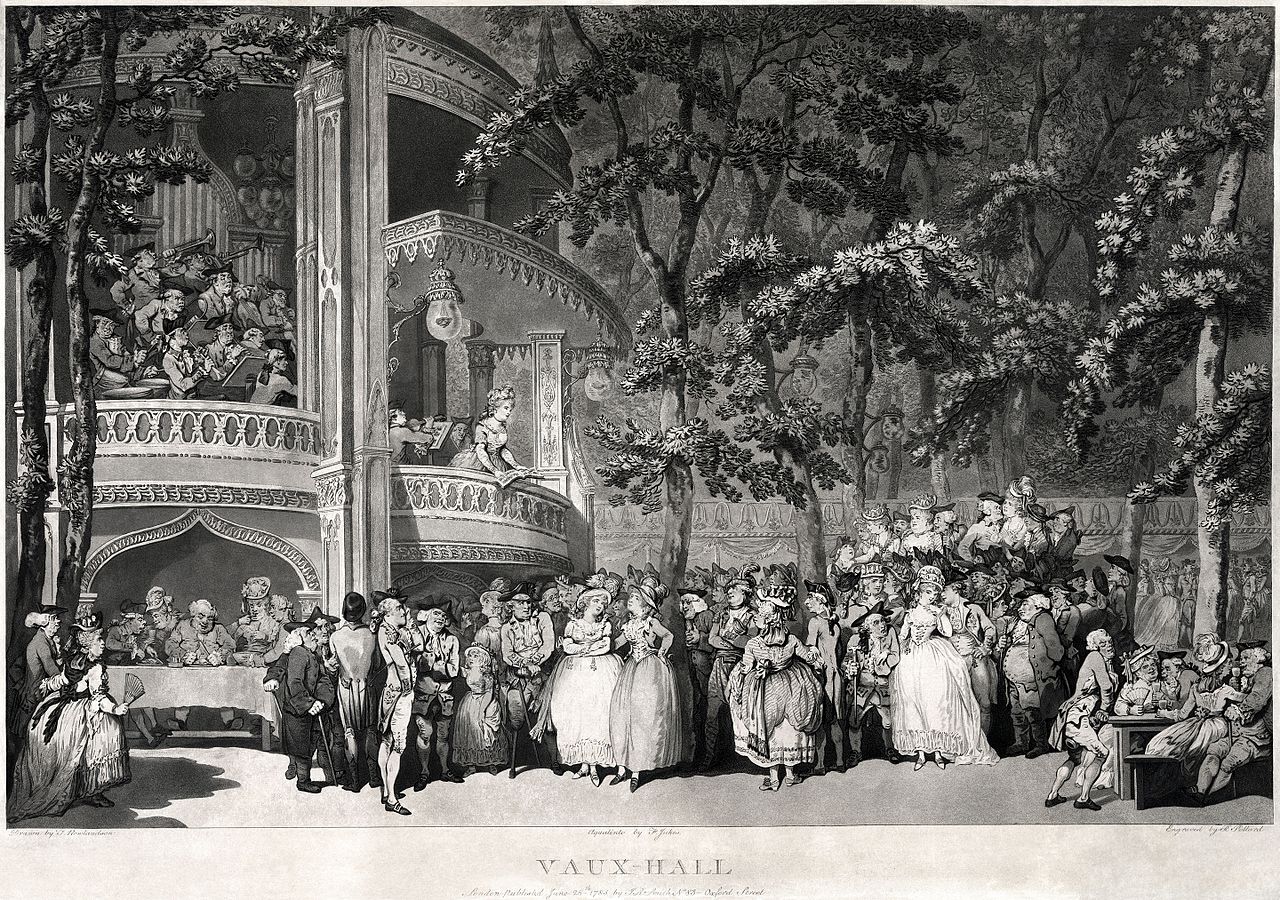
An entertainment in Vauxhall Gardens c. 1779

‘The magistrate says it cannot be one of her clients because the crime was too savage to be committed by a gentleman. Is that also your view?’

‘I think monsters who wear the masks of men are as likely to be found in the clubs of St James’s as they are in the slum rookeries of St Giles. Whether this is the former or the latter, I cannot yet say.”

Daughters of Night by Laura Shepherd-Robinson (2021)

~

My father once said: “If you understand yourself, it is as much as you can be expected to do.” How true that is! Every day I live I realise what a fund of wisdom he had. It poured from him as water pours from a spring, clear and hard, and just right.”

Good by Stealth by Henrietta Clandon (1936)

~

Favourite book read in February:

Good by Stealth

New authors read in February:

Janet Skeslien Charles, Lucy Jago, Henrietta Clandon

Countries visited in February’s reading:

France, USA, England