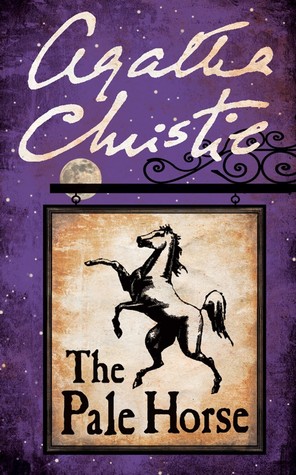
The Pale Horse by Agatha Christie

Last year I took part in the Read Christie 2019 challenge hosted by the Agatha Christie website. The idea was to read twelve Christie books – one per month – corresponding to twelve different categories. I didn’t manage to join in with all twelve, but I read eight of them and enjoyed them all, particularly The ABC Murders, Dumb Witness, and the book for December, The Pale Horse. There’s a new BBC adaptation of The Pale Horse coming soon (not sure of the exact dates, but sometime in 2020) so I’m pleased to have had a chance to read it first.

The Pale Horse is one of Christie’s standalones and doesn’t feature either of her famous detectives, Miss Marple or Hercule Poirot, although there are a few appearances from another recurring character, Ariadne Oliver. The story is narrated by Mark Easterbrook, not a detective but a writer and historian who is researching a book on Mughal architecture. At the beginning of the novel, Mark witnesses two young women fighting in a London coffee shop. A few days later, he is surprised to hear that one of the girls, Tommy Tuckerton, has died of what appear to be natural causes, unconnected with the fight. Presumably this is just a coincidence, but soon afterwards Mark learns of a list of names found in the shoe of a murdered priest – and one of those names is Tuckerton. When Mark recognises another of the names, that of his godmother Lady Hesketh-Dubois, who has also recently died, he becomes convinced that something sinister is happening.

With the help of his crime writer friend Ariadne Oliver and a young woman called Ginger Corrigan, Mark begins to investigate and finds a series of clues leading him to a former inn, The Pale Horse, which is now home to three witches. Not real witches, of course…or are they? Mark isn’t sure what to think, but it certainly seems that The Pale Horse is well known within the community as the place to go if you want to put a curse on somebody.

Christie’s novels are always entertaining, but this is one I particularly enjoyed. The plot intrigued me from the beginning; it seemed such an unusual set of circumstances and while I didn’t really believe that the three women of The Pale Horse were able to kill people through supernatural means, I couldn’t work out how else the murders were being committed. It was all quite unsettling, with a real sense that something evil was taking place. I had to avoid reading this book late at night!

It was good to see Ariadne Oliver again, who plays a small but important part in the solution of the mystery and in her role of crime novelist gives Christie an opportunity to put a little bit of herself into the story. There are plenty of other memorable characters too, though, from the three witches to Ginger Corrigan to Mr Osborne, a pharmacist who witnesses one of the murders and insists that he knows who the culprit is, despite all evidence to the contrary!

The Read Christie Challenge is happening again in 2020, with a new set of monthly categories. January’s theme is ‘a book that changed Christie’s life’ and we have been given a few suggestions to choose from. I have opted for Murder on the Orient Express!
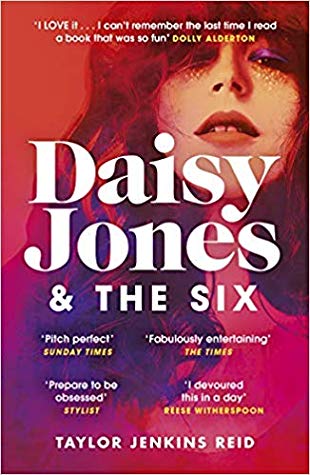
Daisy Jones & The Six by Taylor Jenkins Reid

When I first heard about Daisy Jones & The Six, I dismissed it as not for me. The subject – a fictional 1970s rock band – didn’t appeal to me and it sounded as though the book was written in the sort of experimental style I usually dislike. Then I started to see some very positive reviews from people who often have similar taste in books to me, so when I came across it at the library just before Christmas, I decided to give it a try after all – and am very glad that I did.

The best way to describe Daisy Jones & The Six is like this: Imagine someone has carried out hours of interviews with the members of a rock band and then pieced them all together – a few lines from one member, followed by a short quote from another and then a brief recollection by a third – to form a cohesive narrative telling the complete story of that band, from their early days to their rise to fame and subsequent break-up. The overall effect is like watching a television documentary; it’s a brave and imaginative way to write a novel and could probably have gone badly wrong, but I’m pleased to say that Taylor Jenkins Reid gets it exactly right. In fact, I could easily have believed that Daisy Jones & The Six really existed and that this book really was a documentary transcribed onto the page.

There’s not a lot I can say about the plot of the novel, if you can really call it a ‘plot’. Taylor Jenkins Reid has said that she loosely based Daisy Jones & The Six on Stevie Nicks and Fleetwood Mac, as well as other bands such as The Eagles, so you probably know the sort of things you can expect: rivalries between band members; drink, drugs and wild parties; the stories behind song lyrics; lots of tours and rehearsals and recording sessions. The characters are brought to life both through their own words and through the observations of others, and while some of the band members are very forgettable, a few are much more strongly drawn.

Daisy Jones herself is a bit of a mystery; she’s eccentric, quirky, and a real individual who does as she pleases and doesn’t care what people think of her. She comes across as selfish and reckless, but also tragic and vulnerable, and because she spends so much of the book under the influence of drugs, I felt that I never truly knew or understood the real Daisy Jones. Daisy’s relationship with Billy Dunne, the lead singer of The Six with whom she writes some of the band’s biggest hits, forms an important part of the novel. Billy faces his own problems with addiction early in his career, but unlike Daisy he doesn’t face them alone – he is sustained by the love of the strong, supportive and endlessly patient Camila, whom he meets near the beginning of the book and who ended up being one of my favourite characters.

I also liked Karen Karen, the keyboardist with the Six and, until the arrival of Daisy, the only woman in the band, but the other members, as I’ve said, are much less memorable to the point where I kept confusing Eddie, Pete and Warren and couldn’t tell you which instruments they played. Thinking about it, that was probably the point: most well-known bands do have one or two members who get all the attention while others are kept in the background. This is clearly a source of resentment for some of the lesser members of The Six and, when added to Daisy’s drug problems and the tensions between Karen and Billy’s brother, lead guitarist Graham, the break-up of the band seemed inevitable. However, I had been given the impression from the book’s blurb – which states that “no one knows the reason behind the group’s split on the night of their final concert at Chicago Stadium on July 12, 1979 . . . until now” – that something dramatic was going to happen to bring things to a head and I was disappointed that the eventual reason was much less shocking.

There are one or two twists near the end which I liked, especially as one of them made me think differently about everything that had come before. Really, though, it’s not the story that I will remember about this book and probably not the characters either – it’s the overall atmosphere of the book, the documentary style, the recreation of the 1970s music scene and the effort the author has gone to in order to make Daisy Jones & The Six feel like a real band, right down to including a collection of their song lyrics at the end of the book. I didn’t love this book quite as much as most other people seem to have done, but I’m still glad I decided to take a chance on something different from my usual reads as I enjoyed it a lot more than I expected to!

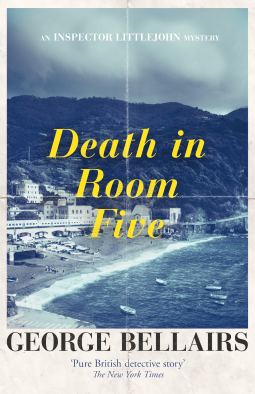
Death in Room Five by George Bellairs

George Bellairs, author of over fifty crime novels, many of them featuring the character of Inspector Littlejohn, seems to be enjoying a resurgence in popularity recently due to various publishers bringing a selection of his titles back into print. This one, Death in Room Five, is the second I’ve read and like my first, A Knife for Harry Dodd, it has been reissued by Agora Books.

In Death in Room Five, first published in 1955, Inspector Littlejohn is looking forward to taking a break from detective work and enjoying the sun, sea and sand of the French Riviera. His holiday has hardly begun, however, when a party of British tourists arrive, one of them is stabbed to death in the street, and Littlejohn finds himself drawn into a murder investigation. The dead man – the Alderman Dawson, from the fictional English town of Bolchester – appears at first to have been a respectable, honourable pillar of the community, but Littlejohn soon discovers that there is no shortage of people who had reasons to dislike Dawson or to benefit from his death.

This is an interesting and well-constructed murder mystery with plenty of suspects all with a possible motive for wanting Dawson dead. In order to understand the background of each suspect’s relationship with the Alderman, Littlejohn has to make a brief journey back to England to interview the residents of Bolchester (leaving the long-suffering Mrs Littlejohn to continue their holiday alone) but most of the action takes place in the south of France. I loved the beautiful descriptions of the Riviera, and the French setting also allows Bellairs to explore an intriguing motive for the murder – Dawson’s involvement with the French Resistance during the war.

It’s quite a complex mystery and although I didn’t find the solution particularly convincing, I appreciated the way Bellairs misleads us with red herrings and keeps us guessing to the end. However, I didn’t enjoy this book quite as much as A Knife for Harry Dodd because I thought the characters in that one were more interesting to read about. Apart from the formidable Mrs Beaumont, I found the characters in this book less memorable and so the novel as a whole was not as entertaining. I did love the setting, though, and was pleased to discover that there are several other Littlejohn mysteries set in France, as well as on the Isle of Man, which is where Bellairs lived after his retirement. I’m looking forward to trying some of them.

Thanks to Agora Books for providing a copy of this book for review via NetGalley.

Six Degrees of Separation: From Daisy Jones & the Six to An Officer and a Spy

It’s the first Saturday of the month which means it’s time for another Six Degrees of Separation, hosted by Kate of Books are my Favourite and Best. The idea is that Kate chooses a book to use as a starting point and then we have to link it to six other books of our choice to form a chain. A book doesn’t have to be connected to all of the others on the list – only to the one next to it in the chain.

This month we are starting with Daisy Jones & The Six by Taylor Jenkins Reid, a book I read before Christmas and enjoyed, although I still need to post my review. It tells the story of a fictional 1970s rock band and is written in a documentary style, in the form of interviews with the band members. Books written in unusual or unconventional styles often don’t work for me, but this one did.

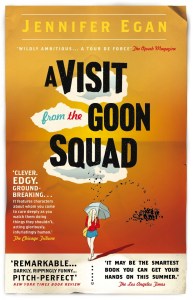
A book written in an unusual, unconventional style that didn’t really work for me was A Visit from the Goon Squad by Jennifer Egan (1), which is also about the music industry. Each chapter is different from the one before: a different narrator, a different time period, even a chapter presented as a series of Powerpoint slides – very imaginative, but I found it overwhelming and confusing.

I haven’t tried any other Jennifer Egan books yet, but eventually I will need to read Manhattan Beach for my Walter Scott Prize Project (I’m reading through the shortlists for that prize and Manhattan Beach appears on the 2018 shortlist). I have still only managed to read one book from the 2018 list and that was Sugar Money by Jane Harris (2), a novel set in the Caribbean in the year 1765.

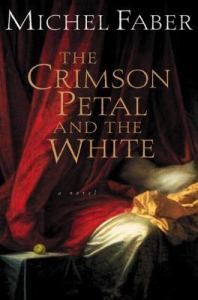
Sugar is the name of the heroine in Michel Faber’s The Crimson Petal and the White (3). I loved that book, which follows the story of a prostitute’s rise through the ranks of society in Victorian London. Crimson is a shade of red and so is scarlet, which leads me to the next book in my chain…

The classic adventure novel The Scarlet Pimpernel by Baroness Orczy (4) is set during the French Revolution. The mysterious and elusive Scarlet Pimpernel is rescuing aristocrats from the guillotine and smuggling them to safety, but who is he and will he ever be caught?

I recently read The Bastille Spy by CS Quinn (5), another French Revolution novel, and couldn’t help noticing the similarities with The Scarlet Pimpernel – something the author definitely intended, as the code name adopted by the spy in the novel is ‘Mouron’, which translates to pimpernel! I will be posting my review of that book soon.

Bringing this month’s chain to an end is another book with the word Spy in the title – the wonderful An Officer and a Spy by Robert Harris (6), a fictional account of the Dreyfus Affair, a political scandal that caused great controversy in 19th century France. A book I would highly recommend!

~

And that’s my chain for January. The links included unusual books about the music industry, sugar, shades of red, pimpernels and spies! In February, we will begin with Fleishman is in Trouble by Taffy Brodesser-Akner, a book I know absolutely nothing about.

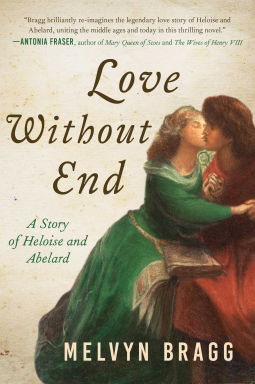
Love Without End: A Story of Heloise and Abelard by Melvyn Bragg

I’ve never read anything by Melvyn Bragg before, although he has been writing since the 1960s and most of his novels fall into my favourite genre, historical fiction. His new book, Love Without End, a retelling of the story of Abelard and Heloise – often described as one of the greatest love stories of all time – sounded appealing to me, so I thought I would give it a try.

The novel opens in 12th century Paris, where Heloise is living with her uncle, the canon Fulbert. She is intelligent, resourceful and exceptionally well educated for a woman of her time, particularly in Latin, Greek and Hebrew. When the renowned philosopher and scholar Peter Abelard returns to Paris after an absence of a few years, Heloise longs to go and sit with the male students listening to his lectures, but she is aware that this is an opportunity open only to men. A solution is found when Canon Fulbert allows Abelard to join his household as private tutor to Heloise, but he quickly comes to regret this decision when he discovers that his niece and her tutor have fallen in love.

I’m not going to say any more about the legend of Heloise and Abelard – if you don’t already know the story you probably don’t want me to spoil it for you, and it’s so well documented the details can easily be looked up online anyway. All I will say is that, like Romeo and Juliet and other legendary lovers, their romance is dramatic and tragic. Melvyn Bragg’s account follows the usual, accepted outline of the story, using sources such as the Penguin Classics collection of the translated letters of Abelard and Heloise, although he also uses his imagination to fill in some of the gaps and mixes some fictional characters in with the real historical ones.

Despite all the drama and tragedy, however, I found this novel strangely flat and emotionless. There seemed to be no real chemistry between Heloise and Abelard; although Bragg tells us that they are passionately in love, I never really felt that for myself. Even the setting never came to life; I wanted to know what it felt like to live in 12th century Paris, what it looked like, sounded like, smelled like…but instead I came away with the feeling that the story might as well have been taking place in any city and at any time.

Even so, I might have still enjoyed this book if it had just concentrated solely on the story of Abelard and Heloise. Recently, though, I’m finding that authors rarely seem to write books set entirely in the past anymore. Instead we get two alternating storylines – one set in the past and one in the present. In this case, the present day story follows an author, Arthur, who is visiting Paris with his daughter, Julia, to finish researching and writing a novel about Abelard and Heloise. It is supposedly Arthur’s novel that we are reading in the historical chapters, while in the modern day chapters he and Julia talk about his work and how he has interpreted various parts of the Abelard and Heloise legend.

The Arthur and Julia storyline appears to exist purely as a way for Bragg to discuss and comment on various aspects of the relationship between Heloise and Abelard or to explain things for the benefit of the modern reader, rather than leaving us to reach our own conclusions. Most of the discussions involve Julia questioning Abelard’s behaviour and Arthur trying to defend him by pointing out that she needs to put things into historical context and judge Abelard by the standards of the 12th century instead of the 21st. I found both Arthur and Julia very irritating; their dialogue seemed unnatural and not the way two people would speak to each other in real life. They just didn’t feel like real human beings at all and were a distraction from the Heloise and Abelard story rather than an interesting addition to it.

This was disappointing, but if you’ve enjoyed any of Melvyn Bragg’s other books maybe you can convince me to give him another chance? Also, if anyone has read anything else about Abelard and Heloise – or even some of the original letters and writings – please let me know what you would recommend.

Thanks to Skyhorse Publishing for providing a copy of this book for review via NetGalley.

A new year begins…

Happy New Year! I hope everyone’s 2020 reading is getting off to a good start. My first read of the year is Big Sky by Kate Atkinson, which I’m enjoying so far. What’s yours?

When I posted my ‘favourite books of 2019’ list a few days ago, I mentioned that although I had read a lot of good books in 2019, there were very few that I can honestly say I loved. I’m not entirely sure why that is, but I think one of the reasons is that, particularly in the final months of the year, I was concentrating mainly on new releases and getting through my backlog of NetGalley review copies, and reading fewer of the older books that usually turn out to be my favourites. I want 2020 to be a more enjoyable reading year so, without being too specific in terms of targets and numbers, I have put together a short list of resolutions:

* Read more of the books that are already on my own shelves, some of which have been waiting for years for the ‘right time to read them’ to arrive.

* Re-read some old favourites – and don’t feel guilty for taking the time to do so.

* Make more progress with my Classics Club list and my personal projects such as Reading the Walter Scott Prize, both of which have been the source of some great discoveries in the past.

* Find a better balance between trying new authors and reading books by authors I already know and love.

* Continue with some of the series and trilogies I started years ago and inexplicably abandoned after one or two books, despite loving those one or two books!

* Be more ruthless about giving up on books that I’m not enjoying, rather than persevering to the end.

I’m hoping that by trying to follow these resolutions throughout 2020 I can make every book I pick up a potential book of the year!

Do you have any reading resolutions or plans for 2020?

My Commonplace Book: December 2019

A selection of words and pictures to represent December’s reading:

commonplace book
noun
a book into which notable extracts from other works are copied for personal use.

~

Lejeune shook his head. “It’s not like that at all,” he said. “Evil is not something superhuman, it’s something less than human. Your criminal is someone who wants to be important, but who never will be important, because he’ll always be less than a man.”

The Pale Horse by Agatha Christie (1961)

~

A house divided against itself cannot stand. A house built on sand will not survive the coming storms and tempests. Such prophecies accurately describe the House of York, and I intend to prove such predictions are correct in all their details.

Dark Queen Rising by Paul Doherty (2018)

~

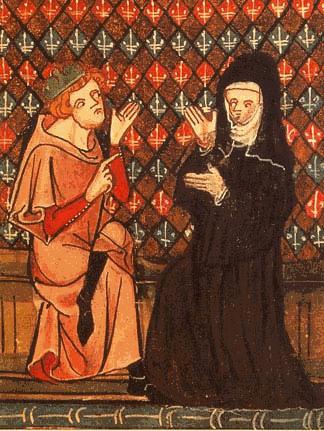
Abelard and Heloïse in a manuscript of the Roman de la Rose (14th century)

Novels can make a unique connection – one person is alone, writing, and contact is made miles and centuries away with another person alone, reading. Receiving the message. Not from outer space but from inner space. And there’s instant connection. It’s a sort of magic.

Love Without End by Melvyn Bragg (2019)

~

“You have to have one person in your life that you know would never do anything to steer you wrong. They may disagree with you. They could even break your heart, from time to time. But you have to have one person, at least, who you know will always tell you the truth.”

Daisy Jones & The Six by Taylor Jenkins Reid (2019)

~

Of one thing though I am most perfectly certain and that is that the case is more completely topsy-turvy than it ought to be. I like my murders to start at the beginning with the corpse and go on to the end with the conviction. But when you start in the middle with the confession — well, all I can say is, that it’s all wrong!”

Left-Handed Death by Richard Hull (1946)

~

Winchester Cathedral

“There’s something quite mysterious about the pattern of bells ringing – more so than if it were a melody, which would be too predictable. A little complexity can be a good thing. I think people sense there is a form holding it all together. Must they know what that form is to enjoy it?”

A Single Thread by Tracy Chevalier (2019)

~

It looked like the posters you see in tourist offices advertising the Riviera. In spite of the traffic whizzing past them on the road, the place was peaceful. More yachts floating about the sea, family parties sporting on the beaches, little cafes with coloured awnings and parasols and painted chairs and tables. Above the road, villas built on terraces on the porphyry rock, with masses of pink and red geraniums, bougainvillaea, hydrangeas blooming in the gardens, and sheltered by palms, olives and lemon trees.

Death in Room Five by George Bellairs (1955)

~

‘I have little interest in it,’ I admit. ‘My attentions are directed to abolishing slavery through more active means. But now I am here and I see your people,’ I conclude, ‘I realize not all slaves wear chains.’

The Bastille Spy by CS Quinn (2019)

~

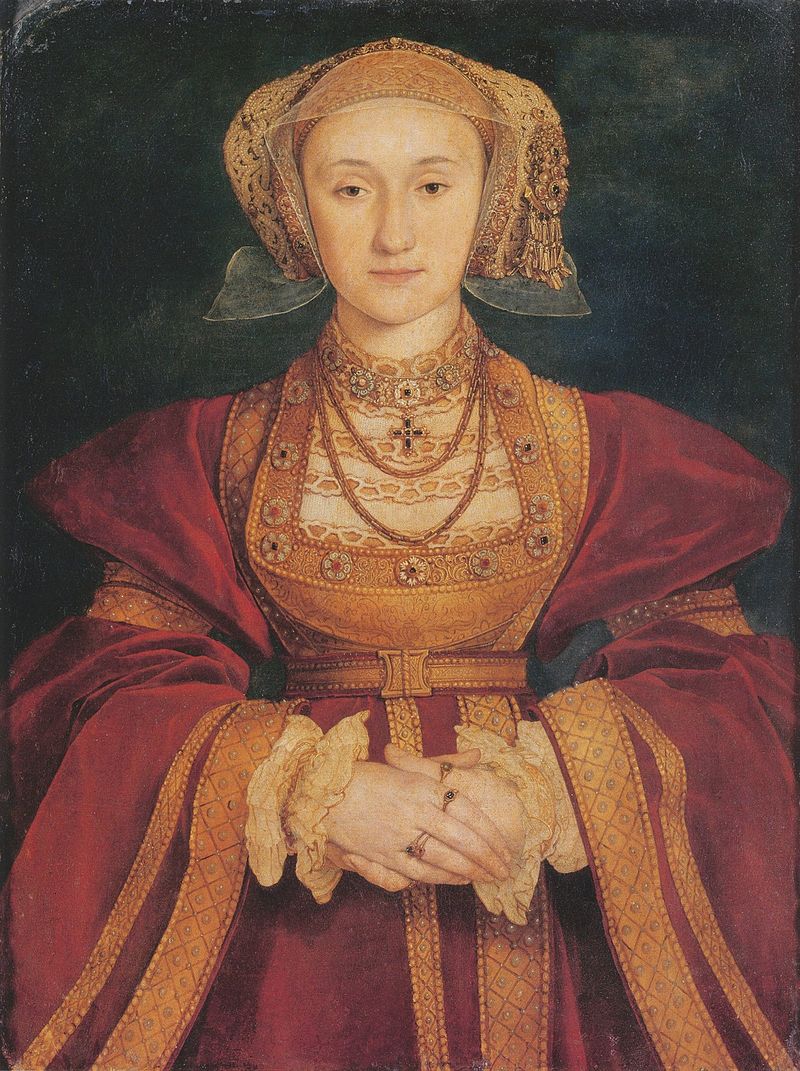
Anne of Cleves, by Hans Holbein the Younger

‘I haven’t seen it, Madam, but I do not need to. I speak as a friend when I say you are a lovely lady; there can be no denying it. Beauty comes from within; it illuminates the features. Others, I know, have seen this in you. The King may come belatedly to see it too.’

Anna of Kleve, Queen of Secrets by Alison Weir (2019)

~

‘Well, I find it fascinating that so much of the world craves fame, yet in my experience, it often brings only misery. People believe that it will grant them the right to do or be anything they choose, but in fact they lose the most precious commodity we humans have, and that is their freedom. Your freedom,’ she added.

The Sun Sister by Lucinda Riley (2019)

~

I never was at table, nor close up to him that first summer; but I looked about me. No man should think because I am a woman and slighter shaped, that my eyes and my thoughts are smaller than theirs. That is a mistake easy to fall into, as others have done.

Call Upon the Water by Stella Tillyard (2018)

~

Favourite books read in December:

The Sun Sister and The Pale Horse

New authors read in December:

Melvyn Bragg, CS Quinn, Taylor Jenkins Reid, Stella Tillyard

Countries visited in my December reading:

England, France, USA, Germany, Kenya

~

Have you read any of these books? Which books did you enjoy reading in December?