 Welcome to my monthly post on all things historical fiction!
Let’s start with the winner of this year’s Walter Scott Prize for Historical Fiction, which was announced yesterday at the Borders Book Festival. Congratulations to Robin Robertson who has won the prize with The Long Take, a book written in a combination of prose and verse. I haven’t managed to read this book yet, but here is what the Walter Scott Prize website has to say about it:
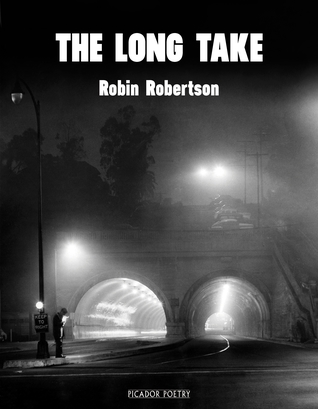
Walker is a Canadian veteran of the Normandy Landings and this extraordinary and exceptional prose/verse narrative tracks the progress of this damaged but decent man through the bleak and violent streets of post-war America. While New York, Los Angeles and San Francisco are in a state of constant change and reinvention Walker is trapped by his searing experiences; his devils too present for him but to remain an outsider. Illustrated with grainy black and white photographs and inviting comparison with cinema The Long Take defies conventional literary boundaries but is a moving, memorable and wholly original work of writing.
The other shortlisted books were:
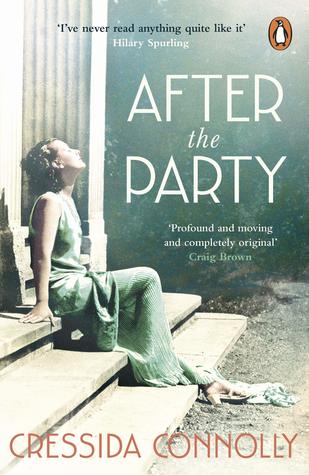
After the Party by Cressida Connolly (my review)
Now We Shall Be Entirely Free by Andrew Miller (my review)
The Western Wind by Samantha Harvey (my review)
Warlight by Michael Ondaatje (not yet read)
A Long Way From Home by Peter Carey (not yet read)
The Long Take was probably the book that sounded least appealing to me from this year’s list, so I will be interested to see what I think of it when I get around to reading it. If you have read it, did you enjoy it and do you think it is a deserving winner?
~
On a different topic, I came across this interesting quote in one of my recent reads, The Mysterious Mr Quin by Agatha Christie:
Mr Quin shook his head gently. “I disagree with you. The evidence of history is against you. The contemporary historian never writes such a true history as the historian of a later generation. It is a question of getting the true perspective, of seeing things in proportion. If you like to call it so, it is, like everything else, a question of relativity.”
Alex Portal leant forward, his face twitching painfully. “You are right, Mr Quin,” he cried, “you are right. Time does not dispose of a question – it only presents it anew in a different guise.”
What do you think? I think the opposite argument could be made – that it could be the contemporary historian who writes a truer history because they are actually experiencing the period and events which they are writing about and will understand them in a way a later historian can’t. On the other hand, somebody in the modern day writing about an earlier period will be able to look at that period in the context of what happened afterwards, has a wider range of sources to study and can draw on research and information that has come to light more recently (such as the discovery of Richard III’s skeleton in 2012).
To give an example from the world of fiction, would we learn more about the Regency period from reading Jane Austen, who lived and wrote during that time, or from an author like Georgette Heyer, who was writing in the 20th century but researched the Regency thoroughly? Which gives us a more accurate idea of Victorian society – Bleak House by Charles Dickens or Tipping the Velvet by Sarah Waters?
What are your opinions on this?


 She Reads Novels