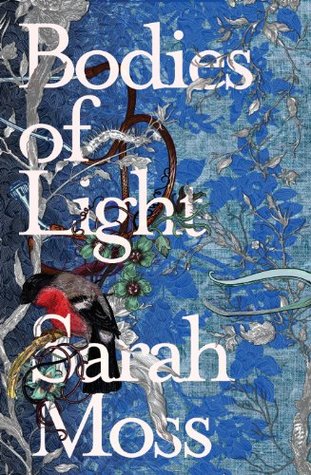
Bodies of Light by Sarah Moss

This is the first book I’ve read by Sarah Moss, an author I had never really thought about trying until I saw so much praise for her latest novel, Ghost Wall, last year. Bodies of Light is apparently loosely linked to an earlier book, Night Waking, but I didn’t feel that I’d missed anything by reading this one first.

The setting for Bodies of Light is Victorian Manchester where, as the novel opens, a newly married couple – Elizabeth and Alfred Moberley – are moving into their new home. Even this early in their marriage, there are clues that suggest they might not be very happy together; Alfred is a painter who appreciates the finer things in life while Elizabeth is passionate about social reform and women’s rights. Their two daughters, Alethea (Ally) and May, grow up trying to please both parents, being asked to model for their father’s latest portrait one day and accompanying their mother on one of her missions to help women in Manchester’s poorest areas the next.

I really enjoyed the first half of this book; after a slow start I found that I had become completely drawn into the lives of the Moberley family. Each chapter starts with a description of a portrait painted by Alfred or one of his circle, giving an idea of what will follow in the pages to come, and I thought that was a nice touch. As the novel progresses and the children grow older, we see that Elizabeth, despite her good deeds in public, can be a harsh and unloving mother; to explain this, Sarah Moss spends some time at the beginning of the book showing us what made her the way she is, focusing on Elizabeth’s relationship with her own mother and the depression she suffered after Ally’s birth.

The second half of the novel is devoted mainly to Ally, as she goes to London to study medicine at the first medical school to accept female students. She is pushed into this career path by her mother, who believes very strongly that women – particularly ‘fallen women’ – should be entitled to request treatment from a female doctor and who likes the idea of her own daughter becoming one of these doctors. Ally is an intelligent young woman who loves learning, so she throws herself into her studies, but there is always a sense that she is doing this mainly to make her mother happy – and yet, whatever she does, it seems that Elizabeth is never happy.

I felt so sorry for Ally, who self-harms and suffers from nightmares as she is growing up, longing for some comfort and compassion from her mother but receiving only criticism and impatience instead, told that she has no right to complain about anything ‘because there is always someone else worse off.’ Interestingly, her younger sister May, who has the same upbringing, doesn’t seem to suffer from Ally’s anxiety-related problems, possibly due to the fact that Ally, as the eldest, has always felt under more pressure.

Once Ally had left home to begin her medical studies, I found the story a bit less compelling but still interesting. It certainly made me appreciate the educational opportunities that are open to women today and how difficult it must have been for those who were among the first to try to enter a field dominated by men. This is a fascinating book and I do like Sarah Moss’s writing, so I now want to read the sequel, Signs for Lost Children, as well as the earlier Night Waking, which I think tells some more of May’s story.
Giant’s Bread by Mary Westmacott

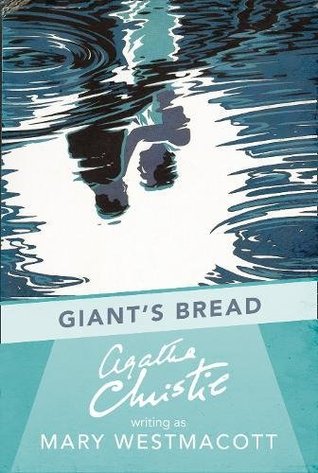
I was aware that Agatha Christie had written several books under the name of Mary Westmacott but I had never really thought about trying one until I saw that the February book for the Read Christie 2019 Challenge was Giant’s Bread. Published in 1930, this is the first of the Westmacott novels, so seemed like a good place to start with them. Now that I’ve read it, I can see why she used a pseudonym as it’s very different from the mystery novels for which she is much more famous, but it’s still enjoyable in its own way and I will definitely be going on to read more Westmacott books.

Giant’s Bread is the story of a young man and his love of music. We first meet Vernon Deyre as a child, growing up in a wealthy household under the care of a succession of nursemaids and servants. With a highly-strung, melodramatic mother and a father who is more interested in other women than in his wife, Vernon retreats into a world of imaginary friends – and imaginary monsters, such as the grand piano, which he thinks of as a vicious ‘Beast’ with teeth. This irrational fear makes him avoid all forms of music until, as an adult, he allows himself to listen for the first time and is enchanted by what he hears.

Although the focus is mainly on Vernon as he pursues a career in music, determined to make up for all the years he has wasted, we follow the stories of several other characters too. There’s Joe (Josephine), Vernon’s cousin and best friend, an independent and rebellious young woman who wants to become a sculptor; the beautiful, timid Nell Vereker, Vernon’s childhood playmate with whom he later falls in love; Jane Harding, an older woman who shares his love of music; and Sebastian Levinne, whose family buy the house next to the Deyres’ estate, Abbots Puissants. Sebastian is Jewish, and yes, you can expect some of the anti-Semitism that appeared in so many books from this era – but despite that, I thought he was portrayed as the most likeable of the five main characters in the novel. The others are all deeply flawed people but, of course, that is what makes them and their struggles so interesting to read about.

Before I started to read Giant’s Bread, I had the impression that Mary Westmacott’s books were light romances, but that’s not how I would describe this one at all. Although characters do fall in and out of love over the course of the novel, it’s not a very romantic story – more a story of the sacrifices we are prepared or not prepared to make in order to get what we want out of life. This is illustrated particularly well with Nell’s storyline, in which she has to decide whether her love for Vernon is more important to her than her love of comfort and luxury.

Towards the end of the novel, things became much more dramatic, with some very implausible plot twists and some coincidences that seemed far too convenient! It was disappointing because up to that point I had really believed in the story and the characters. This did let the book down, in my opinion, but didn’t spoil it too much, as there had been so much else that I’d loved. The early chapters describing Vernon’s childhood were wonderful and captured the way a lonely, imaginative little boy may have looked at the world. Later in the book, I enjoyed reading about Nell’s experiences as a nurse during the First World War.

On finishing the book, I wasn’t entirely sure what message Christie wanted us to take away from it. Yes, Vernon and the others had made sacrifices, but were we supposed to agree that those sacrifices were worthwhile or not? If anyone else has read the book, I would be interested to hear your thoughts on that. I do like books that leave me with something to think about and this one certainly did. I hope the other Mary Westmacott novels will be equally fascinating.

If you’re wondering, the title Giant’s Bread comes from the lines spoken by the giant in Jack and the Beanstalk – ‘Fee-fi-fo-fum, I smell the blood of an Englishman. Be he alive, or be he dead, I’ll grind his bones to make my bread’.

The Trap by Dan Billany

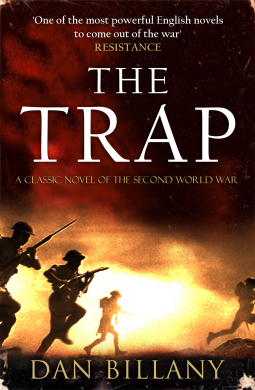
I knew nothing about Dan Billany until I decided to read The Trap, published posthumously in 1950, but his life story sounds dramatic enough to be the plot of a novel in its own right. As a Lieutenant in the British Army during World War II, he was captured in North Africa and transported to a camp in Italy. He wrote The Trap during his internment and, when he made his escape, left his manuscripts with an Italian farmer, who sent them to Billany’s family after the war ended. Billany himself never returned home and is thought to have died in 1943.

The Trap, I think, must be at least partly autobiographical, as its protagonist, Michael Carr, is also a young army officer sent to North Africa in the early years of the war. The first half of the novel, though, describes the quiet life Michael leads in Cornwall before war breaks out and his relationship with his girlfriend, Elizabeth Pascoe. Michael takes his time to tell this part of the story, in a style which is slow and rambling – quite ‘stream of consciousness’ at times – but I liked it. The writing is beautiful, painting a picture of a young working-class couple’s life in the 1930s, as well as delving into Elizabeth’s family background with descriptions of her parents’ marriage and the house in which she and her brother grew up.

I really enjoyed the domestic section of the novel, although it wasn’t what I had expected at all. I had been expecting a war story…which it is, but not until you’re halfway through the book. At this point, after some training at a camp in the English countryside, Michael is sent to fight in the deserts surrounding Tobruk and suddenly his life with Elizabeth seems very far away. As a young officer, Michael has to learn how to lead men and how to care for those under his command. The novel explores some of the problems he experiences with his men, as well as the challenging conditions they face in the desert before they even encounter the enemy. Knowing that Billany had lived through all of this himself, I have no doubt that his descriptions were authentic.

Looking at other reviews of this book, I think most people read it primarily for the story that is told in the second half and were disappointed with the time devoted to Elizabeth and her family. For me, it was the opposite: I preferred the first half set in Cornwall and started to lost interest once Michael arrived in North Africa and the book became more concerned with military tactics and army life. It felt almost like two separate novels in the same book – the two halves have a different tone, a different pace and a different style.

I found The Trap too uneven to be truly satisfying, but still worth reading, as much for its place in history as for its story.

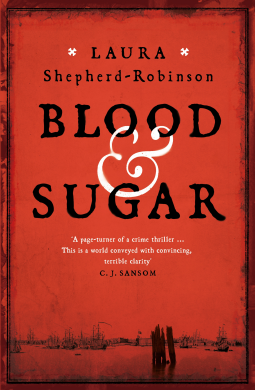
Blood & Sugar by Laura Shepherd-Robinson

This new historical mystery – Laura Shepherd-Robinson’s first novel – deals with one of the darkest subjects in our history. Set in 1781, it follows the investigations of former army officer Captain Harry Corsham into the disappearance of his friend, the lawyer and abolitionist Tad Archer. It seems that Tad had been about to uncover a secret that, once exposed, could damage the reputations of those involved in the British slave trade. Could someone have killed Tad to prevent him from telling what he knows?

Captain Corsham is determined to find out what has happened to his friend, but to do so he will need to continue Tad’s enquiries into a shocking incident which took place onboard a ship carrying slaves across the Atlantic. This brings him into conflict with some very powerful men who could destroy his hopes of a political career. But Harry Corsham is a man with principles and even when he, like Tad before him, begins to receive threatening letters and warnings, he refuses to walk away until he has discovered the truth.

There are many things I liked about Blood & Sugar. The setting and atmosphere are wonderful; with the action taking place partly in London, where Harry Corsham lives with his wife, Caro, and their young son, and partly in the nearby slaving port of Deptford, we see Harry move between both locations in search of answers to his questions. I loved the contrasting descriptions of Deptford, from the elegant homes of the wealthy slave merchants to the notorious dockside alleys with their brothels and opium dens.

We also meet a wide range of characters from very different backgrounds, including magistrates, politicians, mayors and surgeons, prostitutes, innkeepers, sailors and servants. Many of the latter group are black, which is interesting because I think we tend to forget (or are not aware of) how many black people there were living in eighteenth century Britain. It is estimated that there were more than twenty thousand in London alone, yet they rarely appear in fiction set during that period. As for the slavery aspect of the story, there are parts that are not easy to read, as you can probably imagine – particularly when we hear about what happened on the ship, something which is based on a real incident. But unpleasant as it is, we can’t ignore the fact that slavery did happen and I think it’s important that we remember and learn from it.

I was very impressed with this book at the beginning. I liked Laura Shepherd-Robinson’s writing, the mystery seemed intriguing and I was starting to draw comparisons with one of my favourite historical crime authors, Andrew Taylor. However, as the plot continued to develop, I thought it became far too complicated and I struggled to remember who had said what to whom and what the various motives of the characters were. Towards the end, there were so many threads to tie up that everything seemed to take forever to be resolved (and there were one or two revelations which added very little to the overall story and weren’t really necessary, in my opinion). I also felt that as there were so many characters to keep track of, they really needed to be better defined – instead, I thought they were thinly drawn and not very memorable.

I’m disappointed that I didn’t enjoy this book as much as I thought I would at first, but I still think there were more positives than negatives and as this is the author’s first novel I would be happy to read more.

Thanks to Pan Macmillan for providing a copy of this book for review via NetGalley.

The Name of the Rose by Umberto Eco

I can’t remember when I first read Umberto Eco’s The Name of the Rose; it was possibly in the early 2000s – long enough ago to have forgotten most of the story, but recently enough that certain scenes have stayed quite clearly in my mind. I knew I hadn’t understood everything the first time, so when I saw that Annabel of Annabookbel was hosting a readalong in January I thought it would be interesting to read it again. Unfortunately, it was a busier month than I expected and I fell too far behind to be able to participate in the readalong, but I have been re-reading the book anyway and finished a few days ago.

The Name of the Rose is set in 1327 and is narrated by Adso of Melk, a Benedictine novice from Austria. I think the best way I can describe the book is to quote directly from the back cover of my old Picador edition: “Whether you’re into Sherlock Holmes, Montaillou, Borges, the nouvelle critique, the Rule of St. Benedict, metaphysics, library design, or The Thing from the Crypt, you’ll love it. Who can that miss out?” It probably misses out quite a lot of people, actually, but at least that gives you a good idea of the range and number of different topics and influences found in the novel.

The story begins with Adso accompanying a Franciscan friar, William of Baskerville, to a remote Benedictine monastery in the Italian mountains. In a few days’ time, this monastery will host a meeting between an embassy from Pope John XXII and a group of Minorites, but preparations are not going according to plan…Adelmo, a young illustrator known for his beautiful illuminated manuscripts, has been found dead, having supposedly fallen from a window of the Aedificium, the large building which houses the abbey’s renowned library. Was it suicide or was it murder? William, who has already impressed the abbot by successfully locating a lost horse, is asked to investigate.

There’s a reason why Eco has given William the name ‘Baskerville’ – as he moves around the abbey asking questions and uncovering the circumstances behind Adelmo’s death, he uses his powers of deduction just like Sherlock Holmes. Adso, of course, fills the position of Dr Watson, needing William to explain things to him as he goes along (which benefits the reader as well). But when a second death occurs, this one more gruesome than the first, William knows that if he is to have any chance of solving the mystery, he will need to gain access to the library – the secret, forbidden library which only the librarian and his assistant are allowed to enter.

As a murder mystery, The Name of the Rose is quite a good one. Reading it for the second time, I remembered the solution and the culprit, but not every detail of the plot, so I enjoyed watching it all unfold again. There are clues – physical and spoken – there are secrets to uncover, complex relationships to untangle and red herrings which point us in the wrong direction for a while. There are also some wonderful descriptions of the library, a genuinely eerie and sinister place; the scenes in which William and Adso explore its labyrinthine passages and chambers are some of the highlights of the book.

But The Name of the Rose is much more than just a medieval mystery novel. It is also a very detailed and erudite study of the religious history of Europe in the early 14th century, which I think is why some people love the book while others struggle with it. At the time of our story, the papacy has moved from its usual home in Rome to Avignon during a period of conflict between the church and the kings of France. From the very beginning of the novel, we are given page after page of information on the divisions within the church and the various orders and sects, such as the controversial movement led by Fra Dolcino, as well as lots of theological discussions on subjects ranging from poverty to whether Jesus ever laughed. The first time I read the book I found myself skimming over most of this to get to the murder mystery parts; this time, I tried to concentrate and understand the religious detail, but Eco’s style does not make it easy to absorb the facts and I admit there was still a lot that went over my head.

I enjoyed my re-read of this book, although I’m not sure whether I really got much more out of it than I did on my first read. I did love revisiting the library scenes, the descriptions of monastery life, and the characters of William and Adso. I have never tried reading any of Umberto Eco’s other books, but maybe I should. Does anyone have a recommendation?

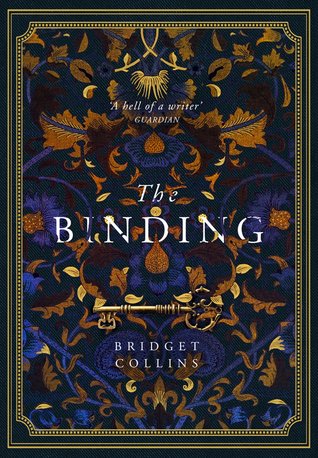
The Binding by Bridget Collins

With its attractive cover and intriguing premise, I hoped for great things from The Binding, but sadly it was not to be. I could tell almost from the beginning that it was probably not the right book for me, but I continued anyway, hoping it would get better – and it did. For a while in the middle I found myself enjoying it…but by the time I reached the end my feelings had turned to disappointment again and I wished I had followed my first instincts and stopped reading early on. For the right reader, though, I think this will probably be the great read it promised to be, so don’t let me put you off if you like the sound of the book!

The Binding is set in an unspecified time period, but there were clues that pointed to the late 19th century. Most of the action takes place in and around Castleford, a town in West Yorkshire, but it really could be anywhere. I’m sure the vagueness is deliberate because, as you’ll see, the world of The Binding is not quite the same as our own.

The novel begins with young Emmett Farmer receiving a summons to take up an apprenticeship as a bookbinder. He is reluctant to go – because he doesn’t want to leave his parents, his sister and the family farm, and also because he has always been told that books are dangerous and should be avoided – but it seems he is to be given no choice in the matter. Arriving at Seredith’s isolated bindery in the countryside, he learns from her the art of producing beautiful leather-bound books. But the real skill is involved in creating the contents…

Binders have a talent for drawing out unhappy or painful memories from people’s minds and trapping them between the covers of a book. With their memory wiped clean that person can then move on with the rest of their life, while the secrets of their past remain locked away in a vault. It’s a fascinating ability, but one which is open to abuse. What if one of these books falls into the wrong hands? What if someone is forced to have their memories bound because someone else wants them to forget? It’s a fascinating concept and the novel explores many of the equally fascinating issues that arise from it.

The book was divided into three sections and I think this structure caused some of the problems. In the first third of the book, we learned very little about Emmett even though he was our narrator and protagonist. His background was not really described in any detail, his relationships with his family and then with Seredith didn’t feel fully developed and I couldn’t even have told you what sort of personality he had. When the middle section of the story began to unfold, I understood why so much had been concealed from us and I was pleased to finally begin learning more about Emmett and the other characters – but by that time it was too late for me to feel the connection to them that I would have liked to have felt from the beginning.

I also think I’d had the wrong expectations for this book. I thought there would be a stronger fantasy element and that the concept of binding would play a bigger part in the story than it actually did. Instead, I couldn’t help feeling that the binding was only really there to provide a sort of framework for a romance between Emmett and another character. It’s disappointing because I think there was a lot of potential here and a lot of other intriguing ways that the binding idea could have been used. I’m sure there will be other readers who love this book, particularly those who enjoy young adult romances, but it just wasn’t quite right for me.

Historical Musings #47: Exploring Ancient Egypt

Welcome to my monthly post on all things historical fiction. This month I’m going to be asking for some recommendations…

In January I read When Women Ruled the World by Kara Cooney, a non-fiction book about six female rulers of Ancient Egypt. I didn’t particularly enjoy that book as I thought it was too preoccupied with drawing parallels with modern politics, but it did make me aware of how little I’ve actually read about Ancient Egypt! I can’t think of any other non-fiction books I’ve read on the subject and not much historical fiction either.

Years ago, before I started blogging, I read some of Christian Jacq’s Ramses novels about the pharaoh Ramses II, although I can’t remember which ones – The Lady of Abu Simbel, I think, and at least one or two others. More recently, I have read Cleopatra’s Daughter by Michelle Moran, about Cleopatra Selene, the daughter of Cleopatra and Marc Antony – although that book was set mainly in Rome rather than Egypt. I’ve read Shakespeare’s Antony and Cleopatra too, but otherwise I’m really struggling to think of anything at all that I’ve read set even partly in Ancient Egypt. As I’ve mentioned before, in my posts on Ancient Rome and Ancient Greece, I have never really felt drawn to books about the ancient world and am much more comfortable with later periods of history.

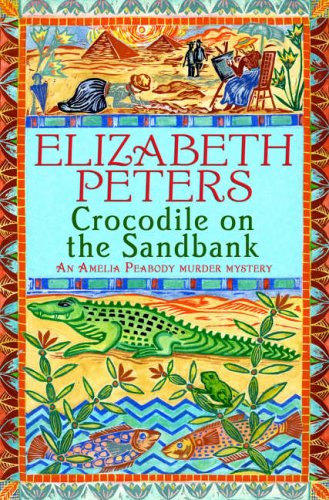
I have read the first two books in the Amelia Peabody series by Elizabeth Peters – Crocodile on the Sandbank and Curse of the Pharaohs – but they are set in 19th century Egypt with storylines revolving around Ancient Egyptian archaeology rather than being set in Ancient Egypt itself, so they’re not really the sort of books I’m looking for here.

I found a list of Best Egyptian Historical Fiction on Goodreads, but I want to hear your suggestions too.

Have you read any books set in Ancient Egypt? Which would you recommend?