Nonfiction November Week 2: Book Pairings – Tapestry of War and The Desert War

For Week 2 of Nonfiction November, the topic is as follows:

(Nov. 5 to 9, hosted by Sarah’s Bookshelves) – Fiction / Nonfiction Book Pairing – This week, pair up a nonfiction book with a fiction title. It can be a “If you loved this book, read this!” or just two titles that you think would go well together. Maybe it’s a historical novel and you’d like to get the real history by reading a nonfiction version of the story.

I’ve recently read two books that fit this week’s topic perfectly…

Fiction: Tapestry of War by Jane MacKenzie
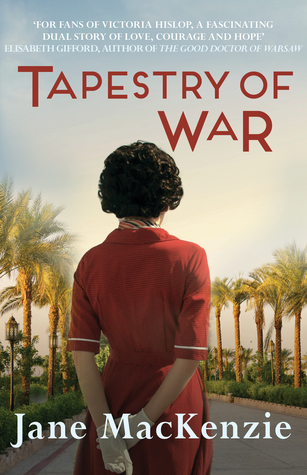
Tapestry of War follows the very different experiences of two young women during World War II. In Egypt, we meet Fran Trevillian, a journalist working for the Alexandria Journal, reporting on the issues that are important to the diverse communities that have made the city their home. As Rommel’s forces draw closer to Alexandria, Fran falls in love with Jim MacNeill, a Scottish radar specialist. Meanwhile, in Scotland, Jim’s sister Catriona has finished training to be a nurse and is hoping to use her new skills to provide therapy for injured soldiers who have been sent home from the war. On the Isle of Islay, where she lives with her father, however, nursing opportunities seem limited and Catriona longs to move away to somewhere where she feels her work can really make a difference.

Although there is occasionally some drama in the stories of our two main characters and their friends, this is a very character driven novel. Both women change and grow as people as a result of the work they carry out during the war and the new relationships they develop. I enjoyed each storyline equally, drawn more to Fran’s at the beginning because it was set closer to the action, but appreciating Catriona’s more and more as the novel progressed. I became completely invested in the lives of each woman, sharing in their happiness as each finds love when they least expect it and in their sadness as the tragedy of war strikes again and again.

Most of my previous World War II reading has concentrated on the war in Europe, so my knowledge of what was happening in North Africa is more limited. I found that I was learning a lot from Tapestry of War, but I knew I needed to read some non-fiction to fill in the gaps…

Nonfiction: The Desert War by James Holland
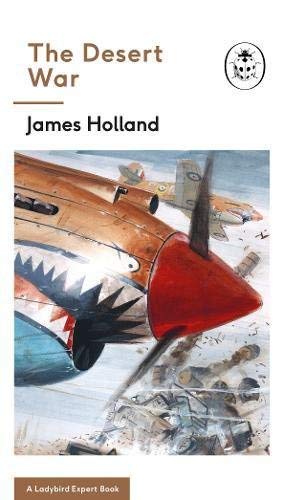
This little book is part of the Ladybird Expert series, aimed at adult readers but published in the same format that those of us who loved Ladybird books as children will remember. Written in a clear and concise style, the left hand pages contain the text while on the right there’s a map, a photograph or an illustration.

Beginning in 1940, when the Italians, under Mussolini, entered the Second World War, James Holland takes us in chronological order through each stage of the war in North Africa, the Mediterranean and the Middle East. It’s all very factual and straight to the point, with none of the author’s own personality coming through, but in a book with only 50 pages (half of them pictures) and a lot of information to cover, that’s understandable. Battles and raids are described briefly, concentrating on the outcome and any notable tactics or weapons that were used.

The Desert War is a perfect introduction to the subject and can easily be read in less than an hour. If, when you’ve finished it, you want to explore things in more detail, some recommendations for further reading are given, although there are no references or sources provided. I didn’t mind this as all I wanted from this book was a chance to learn some basic facts and to get the timeline of events straight in my mind – it’s obviously not intended to be a comprehensive, in-depth read. Looking at the other titles in the Ladybird Experts series, I see there are several more by James Holland covering different aspects of the war, as well as books by other authors on topics as diverse as witchcraft, genetics and Beowulf.

Thanks to Allison & Busby for providing a review copy of Tapestry of War and to Penguin Random House for a review copy of The Desert War.

Do you like to read fiction and non-fiction on the same subject? Can you think of any pairs of books that go well together?
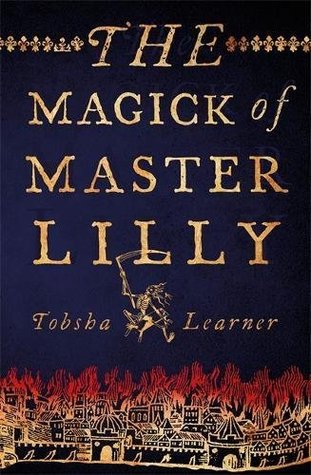
The Magick of Master Lilly by Tobsha Learner

Although I have read a lot of books set in 17th century England, I can’t remember ever reading anything about the astrologer William Lilly so I was immediately intrigued by the title and premise of Tobsha Learner’s new novel which promised to bring Lilly’s story to life.

We first meet Master Lilly in 1641, living quietly in the Surrey countryside after finding himself out of favour with Parliament. Even in exile, though, he is still famous for his knowledge of the occult and his skill at reading fortunes, and it’s not long before he is summoned back to London to draw up an horary (a form of horoscope) for Charles I. As Master Lilly looks to the future to discover what fate has in store for his King and his country, he sees only war, fire and plague on the horizon. He and his fellow ‘Cunning Folk’ will need to use all the magical powers they possess if they are to avert disaster – but is it really possible to change what is written in the stars? Master Lilly thinks it is:

We are all born with our Fates written like maps across the cosmos, but our faith and humanity give us choice. This is what I, William Lilly, believe: the Stars incline, they do not compel, and it is up to us mortals to know when to play our hand and when to fold.

The Magick of Master Lilly had the potential to be a good book, and in some ways it was. As I’ve said, I knew nothing about William Lilly before I started reading, so it was nice to be introduced to him and to learn about his life and work (the author includes some notes at the end to give some indication of what is based on fact and what isn’t). Whether you believe that some people can really see into the future or not, it seems that Lilly, among his other achievements, quite accurately predicted the Great Fire of London. He is also a healer and herbalist, and a writer of astrological texts and almanacs, although his day to day work, as he explains in the first chapter of the novel, consists mainly of “horaries, Natal figures, seduction of reluctant lovers, the finding of lost things, and the location of errant husbands”.

Lilly is not always the most likeable of characters, particularly where his relationship with his wife, Jane, is concerned, but despite this his narration is warm and lively, pulling us into his story. The tone of the novel reminded me of Rose Tremain’s Restoration and Anna-Marie Crowhurst’s The Illumination of Ursula Flight. I could have done without the long, in-depth descriptions of every horoscope Lilly casts, though! I found myself skimming through those sections as I was much more interested in Lilly himself – his interactions with people at court; his meetings with other magicians; his romance with the (fictional) Magdalene de Morisset – than in the intricate details of his work.

My biggest problem with this book was the language. I’m usually the first to complain when the language used in historical fiction is too modern, but sometimes when the author attempts to write in a style appropriate to the period it can be just as distracting and I felt that was the case here. The word ‘hath’, for example, was used in place of ‘have’, but not consistently and not always when it made grammatical sense within the sentence. Modern words and phrases are used alongside the archaic ones, which just felt wrong to me. Also, Lilly often talks about his wife being a Quaker, a term which wasn’t used until the end of the English Civil War.

Just little things, but there were a lot of them, and they meant that I didn’t enjoy this book as much as I’d hoped to. Still, I was pleased to make Master Lilly’s acquaintance. I do love reading about this period of history and with appearances from characters such as the Witchfinder General Matthew Hopkins and the female painter Artemisia Gentileschi, this was still an interesting read at times.

Thanks to Little, Brown Book Group for providing a copy of this book for review via NetGalley.

Six Degrees of Separation: From Vanity Fair to The Red Lily Crown

It’s the first weekend of a new month which means it’s time for another Six Degrees of Separation, hosted by Kate of Books are my Favourite and Best. The idea is that Kate chooses a book to use as a starting point and then we have to link it to six other books of our choice to form a chain. A book doesn’t have to be connected to all of the others on the list – only to the one next to it in the chain.

The first book this month is Vanity Fair by William Makepeace Thackeray, for once a book that I’ve actually read! I used Vanity Fair in a previous chain a few months ago and linked it to Little Women, which has a chapter entitled “Meg Goes to Vanity Fair”. I don’t want to use the same link again, so I’ve come up with a different one this time.

Vanity Fair is a Victorian novel published in 1848, but set in the earlier Regency period. Another novel written in the Victorian era but with an earlier setting (much earlier in this case) is George Eliot’s Romola, a long and detailed story of Renaissance Italy. I found it a challenging book to read but definitely worth the effort.

My next link is easy. I love reading about Renaissance Italy and have read a lot of novels with that setting. Like Romola, Sarah Dunant’s The Birth of Venus is set in 15th century Florence just after the death of Lorenzo de’ Medici and therefore covers some of the same historical events – although the story is very different.

The title, The Birth of Venus, is the name of a painting by Botticelli (although that’s not what the story is about). Another novel which uses the name of a famous painting as its title is Girl with a Pearl Earring by Tracy Chevalier, set in Delft in the 1660s.

Scarlett Johansson played the title character in the film version of this book with Colin Firth as the artist Vermeer. Colin Firth has also appeared in several other adaptations of books and plays, including Oscar Wilde’s The Importance of Being Earnest in which he starred as Jack Worthing. I don’t often read plays but I loved that one so I’m going to use it as the next book in my chain.

Oscar Wilde is known for his humour and The Importance of Being Earnest has a lot of great lines. I don’t always find books funny that are supposed to be funny, but one that I do think is hilarious is Three Men in a Boat by Jerome K. Jerome. I sometimes find myself reaching for it to re-read favourite scenes when I need to cheer myself up.

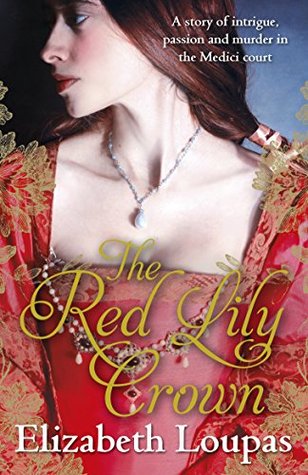
One of those favourite scenes involves Harris getting lost in the Hampton Court Maze. I love mazes and labyrinths and I’ve actually just finished a book that would have been the perfect choice to link to next. I prefer to choose books that I’ve already reviewed here on my blog, though, so instead I am linking to The Red Lily Crown by Elizabeth Loupas, which features a labyrinth in the Boboli Gardens in Florence. Florence, of course, was also the setting for the second and third books in my chain.

And that’s it for this month! My links have included Renaissance Italy, paintings, actors, funny books and mazes. Have you read any of my choices?

Next month we will be starting with A Christmas Carol by Charles Dickens.

My Commonplace Book: October 2018

A selection of words and pictures to represent October’s reading:

commonplace book
noun
a book into which notable extracts from other works are copied for personal use.

~

In the same way, I suppose, that the perfect crime is extremely rare, so is the perfect solution. In real life, we are never able to dot every i, cross every t, or tease out every last strand of what we think of as the evidence.
Real life is messy, and it’s probably best to keep that in mind. We must learn never to expect too much.

Thrice the Brinded Cat Hath Mew’d by Alan Bradley (2016)

~

Human beings are curators. Each polishes his or her own favoured memories, arranging them in order to create a narrative that pleases. Some events are repaired and polished for display; others are deemed unworthy and cast aside, shelved below ground in the overflowing storeroom of the mind. There, with any luck, they are promptly forgotten. The process is not dishonest: it is the only way that people can live with themselves and the weight of their experiences.

The Clockmaker’s Daughter by Kate Morton (2018)

~

Princess Milica (Militza) of Montenegro

Militza laughed. Stana did not. ‘We do not have a choice,’ her sister conceded quietly.

‘A life without choice,’ Stana stared at her sister and slowly shook her head, ‘is no life at all.’

The Witches of St Petersburg by Imogen Edwards-Jones (2018)

~

“My dear nephew, you know absolutely nothing about women. Counting by years, I grant you they grow old. Counting by sensations, they remain young to the end of their days.”

Jezebel’s Daughter by Wilkie Collins (1880)

~

There are my books, for instance. Many of the most charming I have bought in France and brought through the customs with difficulty. I might not be able to get them again, for these things, little masterpieces though they are in their own way, are gossamer trifles that appeal not to the many-headed and, naturally neglected by the multitude, drift away down the breeze of time. I have never met a best-seller yet that I have managed to finish. It is not surprising. One’s taste is, I hope, superior to the average.

The Murder of My Aunt by Richard Hull (1934)

~

Family life was a difficult affair with a father who had repudiated two of his six wives, beheaded two others, and bastardised both his daughters.

Young Bess by Margaret Irwin (1944)

~

Portrait of William Lilly, aged 45, now housed in the Ashmolean Museum at Oxford

It seemed that civil war was inevitable, but would it come in a year, months or days? It would be bloody and terrible, but how bloody we had no idea, for war is only ever an abstract, an imagined nightmare until one is actually in the midst of it. Even then there is disbelief as all one’s higher senses are eclipsed by the grinding and most immediate need to survive.

The Magick of Master Lilly by Tobsha Learner (2018)

~

You might just as well try to see a man through a brick wall as try to see him through a mass of preconceived ideas.

Earth and High Heaven by Gwethalyn Graham (1944)

~

“It has a wonderful sound. A brave new world. There isn’t anything really like that, is there?”

“You don’t believe in it?”

“Do you?”

“There is always a brave new world,” said Poirot, “but only, you know, for very special people. The lucky ones. The ones who carry the making of that world within themselves.”

Hallowe’en Party by Agatha Christie (1969)

~

She had been an attractive girl. But that ‘had been’ was not a conventional gesture to the fact of death. It was an honest admission that without life the most beautiful body is an object of no interest. We are not bodies, thought Nigel, we are lives. And oddly, there came to him at that moment a new and firm conviction of the nature of love.

The Case of the Gilded Fly by Edmund Crispin (1944)

~

Illustration by Ivan Bilibin from the Russian fairy tale ‘Morozko’.

“There are not,” said the Bear. “There are no monsters in the world, and no saints. Only infinite shades woven into the same tapestry, light and dark. One man’s monster is another man’s beloved. The wise know that.”

The Winter of the Witch by Katherine Arden (2019)

~

Fuel and food being fought over, tanks and aircraft being built, and at the front end, lines of men facing each others’ shells and guns, trying to justify what it was all for. The world had gone mad, and there didn’t seem to be a single corner left where people weren’t dying.

Tapestry of War by Jane MacKenzie (2018)

~

They say love is not love, that alters when it alteration finds. Much as it pains me to tell you that your English poets are wrong, how can this be true? Love must change if its object changes. You don’t stand under a tree in winter when the branches are black and admire its green leaves and its shade.

Melmoth by Sarah Perry (2018)

~

In 1632, the Puritan lawyer William Prynne wondered why people could not observe Christmas without ‘drinking, roaring, healthing, dicing, carding, masques and staging plays, which better become the sacrifices of Bacchus than the incarnation of our most blessed Saviour’.

A Tudor Christmas by Alison Weir (2018)

~

Favourite books read in October:

Jezebel’s Daughter, Young Bess, Earth and High Heaven, The Murder of My Aunt and The Winter of the Witch

Where did my reading take me in October?

England, Germany, Canada, Russia, Czechoslovakia, Egypt, Scotland

Authors read for the first time in October:

Gwethalyn Graham, Richard Hull, Imogen Edwards-Jones, Tobsha Learner

~

Have you read any of these books? Which books did you enjoy in October?

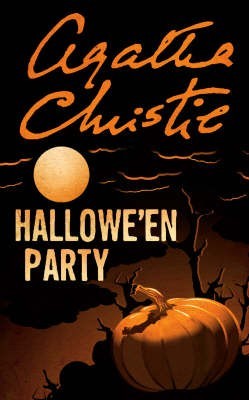
Hallowe’en Party by Agatha Christie

With this year’s R.I.P. Challenge rapidly coming to a close, I decided to squeeze an Agatha Christie novel in before the end of the month. Hallowe’en Party was one I hadn’t read before so I thought it would be a good choice for a late October read. As one of the final Poirot novels, published in 1969 towards the end of Christie’s career, I wasn’t expecting it to be one of her better books – and I don’t think it was – but I did still enjoy reading it.

At the beginning of the book, Mrs Drake is hosting a Halloween party for a group of teenagers. One of them, thirteen-year-old Joyce, who likes to be the centre of attention, tries to impress the others by insisting that she had once been a witness to a murder. Knowing Joyce’s reputation for telling lies, nobody believes her…but at the end of the party, she is found dead, drowned in the bucket of water which had been used for the traditional Halloween game of bobbing for apples. It seemed that somebody may have believed Joyce after all and has murdered her before she can say any more.

Among the adults helping out at the party is the crime novelist, Ariadne Oliver, who summons her old friend, Hercule Poirot, to the village, sure that he will be able to identify Joyce’s killer. But when Poirot arrives he quickly discovers that before he can begin to solve the mystery of Joyce’s death, there’s another murder to investigate first: the one which Joyce claimed to have witnessed and which someone was so desperate to cover up that they were prepared to kill again.

As I said, I found this an enjoyable Poirot novel but not a great one. The solution to the mystery didn’t seem as complex or original as some of the others and I found some of the characters hard to distinguish from each other. Having said that, I did guess who had committed the murders before the truth was revealed – although I have to confess my guess was just based on gut instinct and not because I’m a better detective than Poirot. There are some other surprises towards the end as well, although one particular revelation felt too far-fetched – it seemed to come out of nowhere with no real reason for it.

I enjoyed reading about the preparations for the party and the games that were played at it, but I was slightly disappointed that the Halloween theme didn’t continue after the first few chapters. The rest of the book could have been set at any time of the year, really. It’s still quite an atmospheric book, though; I particularly loved the descriptions of the ‘sunk garden’ in the quarry where some of the later scenes take place.

There’s not much more I can say about this book. It’s a good entry in the series, although not my favourite, and if you’re already a Poirot fan I’m sure you’ll find a lot to like – especially if you’ve read some of the earlier books featuring Ariadne Oliver. If you’re new to Poirot, I would probably recommend choosing a different one to start with.

I’m counting this book towards the R.I.P. XIII challenge (category: mystery).

Top Ten Tuesday: 10 books about witches and witchcraft

This week’s Top Ten Tuesday, hosted by That Artsy Reader Girl, is a “Halloween/Creepy Freebie”. I seem to have read a lot of books about witches in the last few years, so I’ve chosen ten of them to list here.

~

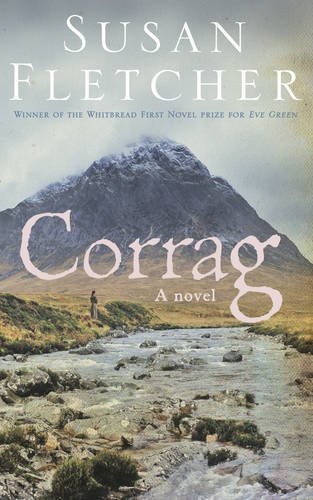
1. Corrag by Susan Fletcher

Also published as Witch Light and The Highland Witch, this is a beautiful, moving story about a young girl accused of witchcraft and the part she played in one of the most tragic moments in Scotland’s history – the Glencoe Massacre of 1692. The writing style is unusual and it took me a while to get used to it, but I’m glad I persevered because this really is a lovely book.

~

2. Thornyhold by Mary Stewart

Not a scary book at all, but a gentle, comforting one. When Gilly’s cousin Geillis dies, leaving her a cottage in the countryside, Gilly finds that she has also inherited a black cat and a collection of magic spells. Could Geillis have been a witch? As with most of Stewart’s novels, there are some beautiful descriptions of nature, a likeable heroine and a touch of romance.

~

3. The Witchfinder’s Sister by Beth Underdown

This novel is narrated by Alice Hopkins, a fictional sister of Matthew Hopkins, the self-styled Witchfinder General who was believed to be responsible for the deaths of hundreds of women in England during the 17th century. Alice’s story didn’t interest me much, but I found it fascinating to read about the methods Hopkins used to identify witches.

~

4. The Craftsman by Sharon Bolton

Sharon Bolton’s latest novel follows an investigation into the murder of three teenagers in a small Lancashire town near Pendle Hill, a place associated with witchcraft since the Pendle Witch Trials of the 17th century. As Florence Lovelady attempts to solve the crime she discovers a coven of modern day witches operating in the town. Could they be connected with the murders?

~

5. The Vanishing Witch by Karen Maitland

Set in the 1380s, this novel has everything I’ve come to expect from Karen Maitland: the dark atmosphere, the elements of the supernatural, and the twisting, turning plot. As well as hints of witchcraft, the story also features a ghost – and every chapter begins with a charm or a spell to protect oneself from witches.

~

6. Circe by Madeline Miller

A mythological witch next! I loved this beautifully written novel by Madeline Miller which fleshes out the character of Circe, the witch from Homer’s Odyssey. I was surprised to see how many different Greek myths Miller incorporates into Circe’s story.

~

7. Widdershins by Helen Steadman

Set in the 17th century, this novel describes the events leading up to the Newcastle Witch Trials of 1650 which resulted in the largest number of people in England’s history being executed for witchcraft in a single day. With half of the book following the witchfinder responsible for hunting down the so-called witches, and the other half following one of the accused women, we are given both sides of the story. The sequel is coming next year!

~

8. A Discovery of Witches by Deborah Harkness

This is the first book in the All Souls Trilogy which follows the adventures of witch Diana Bishop and vampire Matthew Clairmont. I wasn’t at all sure that this would be my sort of book, but I found that I loved the combination of romance, history, adventure and fantasy.

~

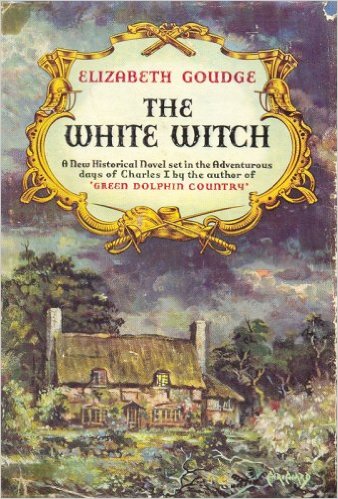
9. The White Witch by Elizabeth Goudge

Set during the English Civil War, the white witch of the title is Froniga, a healer and herbalist. Like Thornyhold above, this is a gentle, beautifully written ‘witch’ story, rather than a creepy one. Although there are themes of magic, mystery and mythology, it was the details of 17th century village life and the lovely descriptions of the countryside that I enjoyed the most.

~

10. The Lost Book of Salem by Katherine Howe

Also published as The Physick Book of Deliverance Dane, the final novel on my list follows a 20th century history student as she attempts to track down a spell book belonging to Deliverance Dane, one of the women accused of witchcraft in the Salem Witch Trials of 1692.

~

Have you read any of these – or any other books about witches or witchcraft?

Nonfiction November: Week 1 – Your Year in Nonfiction

Today is the first day of 2018’s Nonfiction November, hosted by Kim of Sophisticated Dorkiness, Rennie of What’s Nonfiction, Katie of Doing Dewey, Julz of JulzReads and Sarah of Sarah’s Bookshelves. I’ve never taken part in this event before as I don’t tend to read nonfiction very often, but it has occurred to me that maybe that is precisely why I should be joining in – so that I can look back at the nonfiction I’ve already read, focus on the nonfiction I would like to be reading in the future, and hopefully pick up some good recommendations from other bloggers along the way.

This week’s topic is:

Week 1: (Oct. 29 to Nov. 2) – Your Year in Nonfiction

Take a look back at your year of nonfiction and reflect on the following questions – What was your favorite nonfiction read of the year? Do you have a particular topic you’ve been attracted to more this year? What nonfiction book have you recommended the most? What is one topic or type of nonfiction you haven’t read enough of yet? What are you hoping to get out of participating in Nonfiction November?

Here are all of the nonfiction books I have read so far this year (there aren’t many):

The Oaken Heart by Margery Allingham
A Distant Mirror: The Calamitous 14th Century by Barbara W Tuchman
Golden Lads by Daphne du Maurier
Murder by the Book by Claire Harman
A Tudor Christmas by Alison Weir
Henry VII by Gladys Temperley

I will be posting my reviews of the last three books during November.

Of these, the book I enjoyed the most was The Oaken Heart, Margery Allingham’s memoir of life in her small English village during the Second World War. However, A Distant Mirror was a fascinating read and I found that I was learning a huge amount from it. I would recommend it to anyone interested in the 14th century.

As usual, the topic I’ve been attracted to this year has been history. I’ve read some wartime history, some medieval history, a biography of Francis and Anthony Bacon, a book about a true historical crime, a book on Tudor Christmas traditions and a biography of Henry VII! Therefore my answer to the question “What is one topic or type of nonfiction you haven’t read enough of yet?” has to be anything other than history!

I’m hoping that participating in Nonfiction November will inspire me to read more nonfiction and will point me in the direction of some books I might enjoy.

~

How has your year in nonfiction been? What are the best nonfiction books you’ve read this year?