Six Degrees of Separation: From Tales of the City to Wolf Hall

It’s the first Saturday of the month which means it’s time for another Six Degrees of Separation, hosted by Kate of Books are my Favourite and Best. The idea is that Kate chooses a book to use as a starting point and then we have to link it to six other books of our choice to form a chain. A book doesn’t have to be connected to all of the others on the list – only to the one next to it in the chain.

The starting point this month is Tales of the City by Armistead Maupin. I haven’t read it, but it seems that it is set in San Francisco.

Sometimes when I’m not familiar with the first book, I find it very difficult to get started with the chain, but this time I could think of several different directions to take. I eventually decided to go with books set in San Francisco; I can think of a few options, but the one I’ve chosen is Frog Music by Emma Donoghue. I remember really enjoying this novel, based on a true crime which happened in the 1870s.
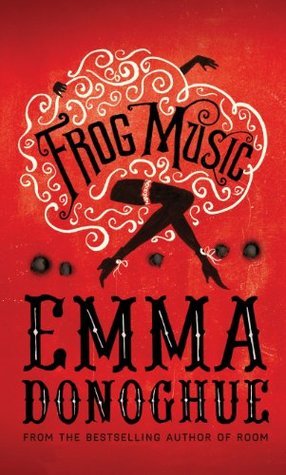
The story takes place during a heatwave. We are in the middle of one now here in the UK. It’s been too hot for me, actually, but it is nice to be able to sit outside and read for a while when I get home from work. Thinking of other books that are set during long, hot summers, the first that comes to mind is Case Histories by Kate Atkinson, one of her Jackson Brodie mysteries in which a child goes missing while sleeping in a tent in the garden.

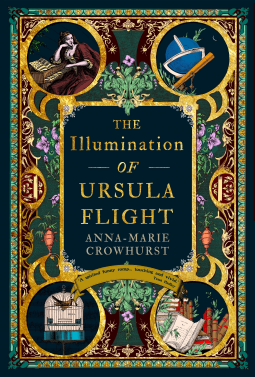
I’ve enjoyed everything I’ve read by Kate Atkinson so far. The first book I read by her was Life After Life, in which Ursula Todd begins her life over and over again. The name Ursula makes me think of one of my recent reads, The Illumination of Ursula Flight by Anna-Marie Crowhurst, the story of a young woman in Restoration England – and that is the next book in my chain.

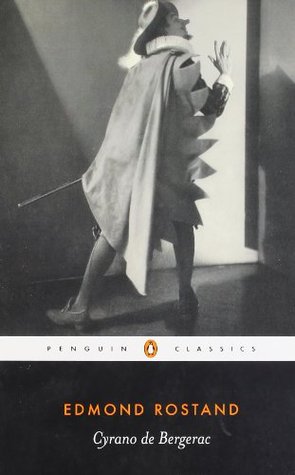
The Illumination of Ursula Flight has an unusual structure, with part of the story being told in the form of scripts from plays. I don’t read plays very often, but one that I did enjoy was French poet and playwright Edmond Rostand’s Cyrano de Bergerac. At one point during the first act, Cyrano fights a duel while composing a ballad at the same time.
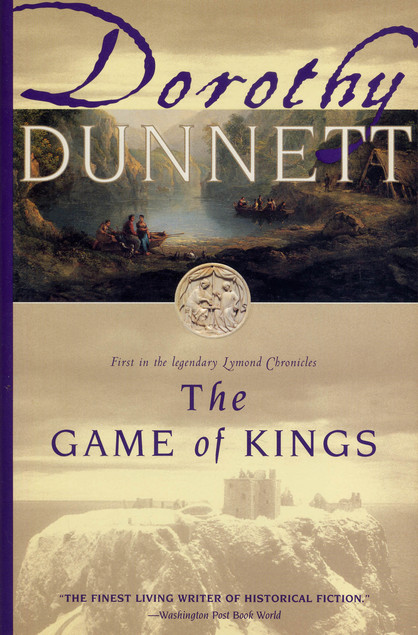
I love a good fictional swordfight! Thinking of others that I’ve read, one of the most memorable is the one that takes place towards the end of The Game of Kings by Dorothy Dunnett. Unfortunately I can’t say any more about that wonderful scene, as to tell you who it involves or how it came about would most certainly mean spoiling the story!
The Game of Kings appeared on my list of favourite books read in 2012. Looking back at my 2012 list, it seems that I read some great books that year – and, in particular, some great historical fiction novels. One of these was Wolf Hall by Hilary Mantel, the first of her excellent novels on the life of Thomas Cromwell, and this brings my chain for this month to an end.

Have you read any of the books in my chain? Did you take part yourself this month?

In August, we are going to begin with Atonement by Ian McEwan.

Six in Six: The 2018 Edition

We’re halfway through the year and the Six in Six meme, hosted by Jo of The Book Jotter, is back! I think this is the perfect way to reflect on our reading over the first six months of the year. The idea of Six in Six is to choose six categories (Jo has provided a list to choose from or you can come up with new topics of your own if you prefer) and then try to fit six of the books or authors you’ve read this year into each category. It’s not as easy as it sounds, but it’s fun to do.

As I have read more than thirty-six books this year, I have managed to avoid any overlap between categories. However, there are some books which I could have placed in more than one category. I had to do some rearranging, but this is what I’ve come up with:

***

Six books set in countries other than my own:

Oman – The English Girl by Katherine Webb
Algeria and Iceland – The Sealwoman’s Gift by Sally Magnusson
Grenada and Martinique – Sugar Money by Jane Harris
Sri Lanka – The Sapphire Widow by Dinah Jefferies
Spain – Court of Lions by Jane Johnson
Thailand and Australia – The Pearl Sister by Lucinda Riley

***

Six books with a touch of mystery or suspense:

Traitor by David Hingley
The Seven Deaths of Evelyn Hardcastle by Stuart Turton
Death in Cyprus by MM Kaye
There Came Both Mist and Snow by Michael Innes
The Coffin Path by Katherine Clements
The Fire Court by Andrew Taylor

***

Six authors read for Jane’s Birthday Book of Underappreciated Lady Authors:

Britannia Mews by Margery Sharp
The Brimming Cup by Dorothy Canfield Fisher
Someone at a Distance by Dorothy Whipple
The Feast by Margaret Kennedy
The Winds of Heaven by Monica Dickens
Diary of a Provincial Lady by EM Delafield

***

Six tales of war and conflict:

The Oaken Heart by Margery Allingham (World War II)
The Winter Prince by Cheryl Sawyer (English Civil War)
Marry in Haste by Jane Aiken Hodge (Peninsular War)
Dear Mrs Bird by AJ Pearce (World War II)
House of Gold by Natasha Solomons (World War I)
A Falling Star by Pamela Belle (Monmouth Rebellion)

***

Six series started, finished or continued:

The Pallisers (The Prime Minister by Anthony Trollope)
Last Hundred Years Trilogy (Early Warning by Jane Smiley)
Six Tudor Queens (Jane Seymour: The Haunted Queen by Alison Weir)
Nigel Strangeways mysteries (The Dreadful Hollow by Nicholas Blake)
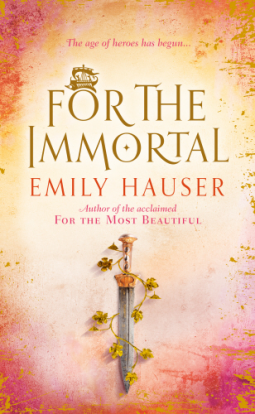
Golden Apple Trilogy (For the Immortal by Emily Hauser)
Brother Cadfael (A Morbid Taste for Bones by Ellis Peters)

***

Six beautiful covers:

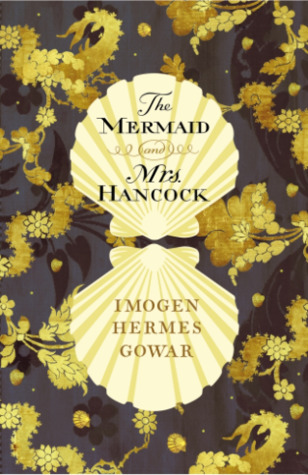
The Mermaid and Mrs Hancock by Imogen Hermes Gowar

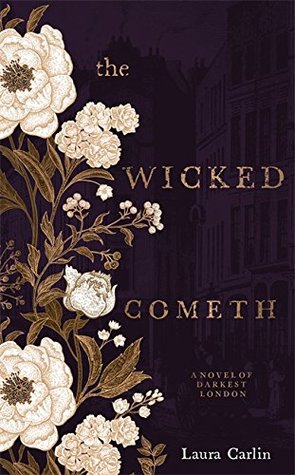
The Wicked Cometh by Laura Carlin

The Illumination of Ursula Flight by Anna-Marie Crowhurst

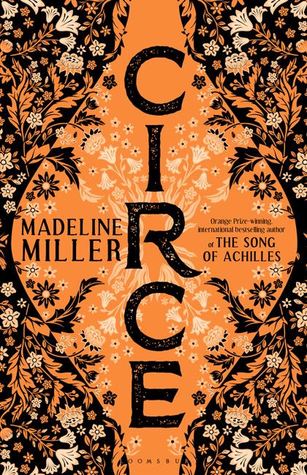
Circe by Madeline Miller

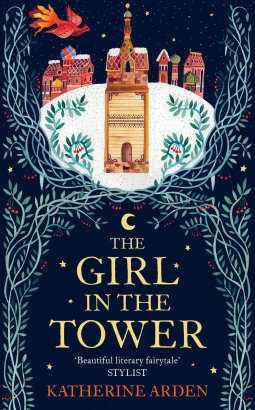
The Girl in the Tower by Katherine Arden

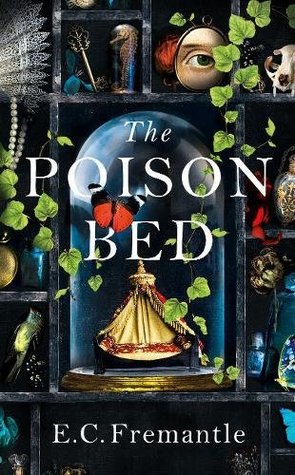
The Poison Bed by EC Fremantle

***

Have you taken part in Six in Six this year – or would you like to give it a try? See Jo’s post for more details on how to take part.

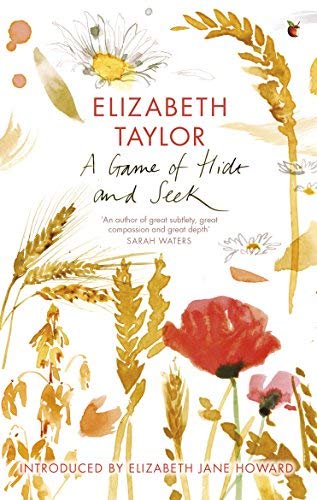
A Game of Hide and Seek by Elizabeth Taylor

Elizabeth Taylor is the next author to be featured in Jane’s Birthday Book of Underappreciated Lady Authors, a project which has been running throughout 2018 and which has already introduced me to some wonderful new books and authors. Elizabeth Taylor is an author I only became aware of after I started blogging and following book blogs; before that, if you had mentioned her name to me, I would probably have thought you were talking about the actress of the same name. Over the last few years, though, I have seen other bloggers reading her books and have been meaning to try one myself, so I decided to put A Game of Hide and Seek on both my Classics Club list and my 20 Books of Summer list to ensure that I got to it sooner rather than later.

Published in 1951, this is a beautifully written novel about love and loss. It begins in the summer – a long, hot summer between the two world wars. Eighteen-year-old Vesey is staying with his Aunt Caroline and Uncle Hugo and has become reacquainted with his childhood friend, Harriet, a girl of the same age. Harriet’s mother and Vesey’s Aunt Caroline are good friends, having once been suffragettes together, so Harriet and Vesey have known each other all their lives. As they spend more and more time together that summer, going for walks and playing hide and seek with Vesey’s young cousins, Harriet falls passionately in love.

When the summer comes to an end, Vesey goes off to university and Harriet is left behind. Over time, their lives drift apart and Harriet gets a job in a shop selling ladies’ gowns until, following the death of her mother, she agrees to marry Charles Jephcott. As a thirty-five-year-old solicitor, Charles provides Harriet with a nice home and a comfortable lifestyle; she could have been happy, except for the fact that she doesn’t love him. And then, fifteen years later, Vesey walks back into her life, reawakening old passions and leaving her more confused than ever.

A Game of Hide and Seek is one of those books which seems quite simple on the surface – there’s not much more to the plot than I’ve already described above – but which is much more complex than it sounds, because it is written with so much insight and wisdom and depth of emotion. It’s such a poignant story; there’s a sense that Harriet’s whole life has been a compromise and that her regret at things not turning out the way she hoped has made it impossible for her to move on. Here her friend Kitty sums up what she thinks is the explanation for Harriet’s enduring love for Vesey:

‘Our feelings about people change as we grow up: but if we are left with an idea instead of a person, perhaps that never changes. After every mistake Charles made, I expect you thought: “Vesey wouldn’t have done that.” But an idea can’t ever make mistakes. He led a perfect life in your brain.’

I liked Harriet from the beginning. I sympathised with the position she was in – as the daughter of a former suffragette, being expected to take advantage of the opportunities and freedoms for which her mother’s generation had fought, yet lacking the talent or ambition to live up to expectations. I found the appeal of Vesey harder to understand, but I did warm to him eventually; there was something very sad about his reappearance later in the book, lonely, dejected and still in love with a woman he can’t have.

There are little touches of humour too, mainly provided by the other sales girls who work in the shop with Harriet and, later, the Jephcotts’ servants, the Dutch maid Elke and the cleaning lady Mrs Curzon. Other memorable characters include Julia, Charles’ mother, a former actress who dislikes Harriet and would love to see her marriage to Charles break down, and fifteen-year-old schoolgirl Betsy, who is infatuated with one of her teachers. But this really is Harriet’s story and Vesey’s – and throughout the novel, Taylor keeps the reader wondering whether there will be a second chance for them and, if so, whether they will take it. The ending, when it comes, is ambiguous and left me with a lot to think about as there are probably a few different ways it could be interpreted.

I’m sure I will be reading more books by Elizabeth Taylor. If you have read any of them, which one do you think I should read next?

This is book 2/20 from my 20 Books of Summer list.

This is also book 5/50 from my second Classics Club list.

My Commonplace Book: June 2018

A selection of words and pictures to represent June’s reading:

commonplace book
noun
a book into which notable extracts from other works are copied for personal use.

~

Charlie asked a lot of questions, and if Henry couldn’t answer them, he bought a book which he read quickly and Charlie read slowly. Henry didn’t seem at all surprised by this overwhelming plenitude of objects to look at or ideas to think about, but Charlie was. It seemed to him that he had spent thirty years circling neighborhoods and buildings without even wondering what was inside. And each building was a Fabergé egg, pleasant on the outside, a treasure trove within. Henry said, “Books are like that, too.”

Golden Age by Jane Smiley (2015)

~

They had talked of it, planned it, and now here I was, to be informed. What would be the simplest way to curb a woman whose loyalties were suspect? For centuries, how had women of influence been robbed of their freedom?

“I have planned a marriage for you,” he said, fists on the arms of his chair to take his weight as he pushed himself to his feet.

Queen of the North by Anne O’Brien (2018)

~

Royal Pavilion, Brighton

Everything about Brighton pleased him: the fine streets and squares and well-planned gardens, the bow-fronted emporia and the libraries, the chop-houses, the coffee shops, the Assembly Rooms at the Castle Inn and countless other places of refreshment and entertainment, all set about that grand arena of elegant promenade, the Steine. As he turned to follow the Steine he looked across at the exotic Marine Pavilion, the King’s seaside palace, which had been that royal gentleman’s favourite residence during his days as Prince of Wales and later as Prince Regent. With its opal-tinted minarets and bulbous domes glinting with gold in the sun it had the appearance of an enormous, many-faceted Arabian Nights’ jewel set down glorious and incongruously within sight and sound of the English Channel.

Warwyck’s Wife by Rosalind Laker (1978)

~

Say good-night to Vicky, looking angelic in bed, and ask what she is thinking about, lying there. She disconcertingly replies with briskness: “Oh, Kangaroos and things.”

(Note: The workings of the infant mind very, very difficult to follow, sometimes. Mothers by no means infallible.)

Diary of a Provincial Lady by E M Delafield (1930)

~

“Very well, then. I want it understood that I’m a full third partner in this enterprise, and intend to remain so. I’m not to be put in a corner and disregarded because I am a woman. My uncle picked a good crew for this voyage; if you gentlemen think you can run away with this ship or go pirating, you’ll discover otherwise.”

The Big Book of Swashbuckling Adventure, ed. Lawrence Ellsworth (2014)

~

Helmeted Amazon with her sword and shield, 510-500 BC

‘To be an Amazon,’ she had said, striding ahead, her boots crunching a path for me, ‘is to fight, whether man or woman, virgin or mother. You are destined to become a queen, so the fight to protect your people will be both your calling and your duty, and nothing, no man, no marriage, no child, shall come before it.’

For the Immortal by Emily Hauser (2018)

~

‘Strawberry blonde!’ his voice boomed.

There had been a field of strawberries on their fruit farm, Cecily remembered. But as much as she searched, she never found a blonde one.

‘Real life,’ her mother Agnes had remarked, ‘is persistently disappointing’.

Real life, then, was like a field of red strawberries.

The Last Pier by Roma Tearne (2015)

~

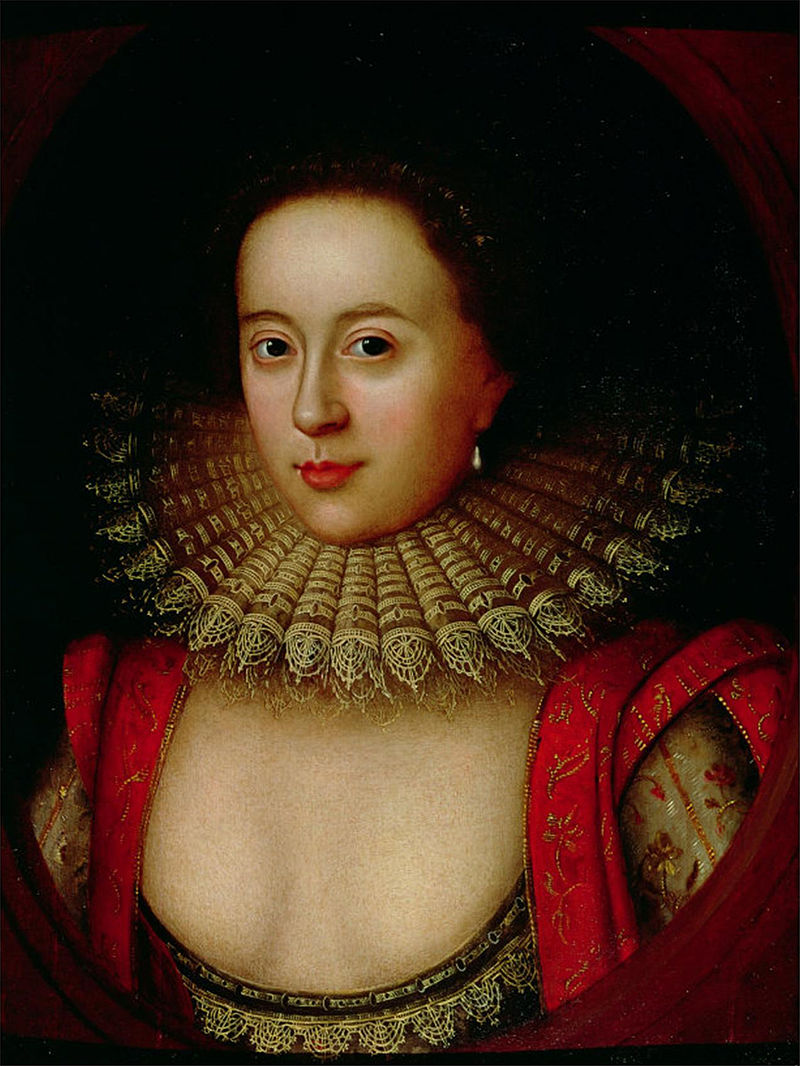
Frances Howard, Countess of Somerset

Frances simplifies it, saying, ‘Imagine the King is a lit candle. The closer you stand the more light you have. But too close and you’re burned. My great-uncle wanted power more than anything, you see.’

The Poison Bed by EC Fremantle (2018)

~

Favourite books read in June:

Queen of the North and The Last Pier

Where did my reading take me in June?

USA, England, Ancient Greece, France, Italy

Authors read for the first time in June:

EM Delafield
H Bedford-Jones, Sidney Levett-Yeats, Jeffery Farnol, Johnston McCulley, Pierce Egan, John Bloundelle-Burton, Harold Lamb, Stanley J Weyman, Marion Polk Angellotti (all in The Big Book of Swashbuckling Adventure)

~

Have you read any of these books? Which books did you enjoy in June?

The Illumination of Ursula Flight by Anna-Marie Crowhurst

Yet another new historical fiction novel with a colourful, eye-catching cover! This one looks like an illuminated manuscript, which is quite appropriate, not just because of the title but also because our heroine, Ursula Flight, has a deep love of books, language and the written word.

Ursula is born in December 1664, on the same night that a great comet appears in the sky. It is believed to be an ill omen, bringing with it bad luck and disaster, but for Ursula’s father this is a time to rejoice and to thank God for the safe delivery of his daughter. As Ursula grows into an intelligent and curious young woman, he decides to educate her himself, sharing with her his knowledge of astronomy, Latin and Greek, mathematics, science and literature. At the age of fifteen, however, everything changes: Ursula is married off to the wealthy Lord Tyringham, who is much older and who has different ideas of how a woman should behave.

It is not a happy, loving marriage, but Ursula is able to find solace in her writing – or her scribbling, as her friends call it – and this provides a way for her to express herself and to cope with the difficulties she encounters in her new life. There is nothing she wants more than to write plays and see them performed on stage but, despite her talent and enthusiasm, Ursula will find that this is still very much a man’s world.

Things do not always go smoothly for Ursula and she faces a series of challenges, obstacles, trials and disappointments both in her personal life and in her attempts to establish a career for herself. Told in a different way, it could have been a rather depressing story, but Ursula’s narrative voice is so strong and warm and witty that the novel never becomes too dark. Her sparkling personality suits the lively writing style and the imaginative format of the book.

I am not always a fan of novels that are written in an unusual or unconventional way, but I could still admire the playfulness and creativity of Ursula Flight. Chapters are given titles like In which I am born under inauspicious circumstances and In which I assert my independence at three years old, while Ursula’s narrative is interspersed with other examples of her writing: letters and lists, diary entries, personal notes to herself, definitions of words and even whole scenes from some of her plays. These all provide us with valuable insights into her state of mind or way of life, while also being quite funny at times; I expect Ursula found that writing about certain episodes of her life in this way made it easier to deal with them.

The Illumination of Ursula Flight is an entertaining read; it’s maybe a little bit lighter than I would have preferred, but it’s fun and different. I would probably recommend it to people who have enjoyed books like Dark Aemilia, The Mermaid and Mrs Hancock and Restoration.

Thanks to Atlantic Books for providing a copy of this book for review via NetGalley.

A Distant Mirror: The Calamitous 14th Century by Barbara W Tuchman

I tend not to read non-fiction very often, but Barbara W Tuchman’s 1978 history of the 14th century, A Distant Mirror, is one I’ve been intending to read for years. It looked like such a long book, and I’d heard that it was also a very detailed one, so I knew I would need to pick the right time to read it – and that time came at the beginning of April this year. It took me all of that month to read it, but I actually found it a much easier read than I’d expected, due partly to the style of Tuchman’s writing and partly, of course, to the 14th century being so fascinating!

I couldn’t possibly list everything that this book covers, but here are some of the topics it explores: the Hundred Years’ War, the conflict between England and France usually dated as beginning in 1337 and ending in 1453 and including the Battles of Crecy and Poitiers; the Black Death which ravaged Europe and then reared its head again and again throughout the rest of the century; the Papal Schism which resulted in a split within the Catholic Church; and the Peasants’ Revolt in England and the similar uprising, the Jacquerie, which occurred in France. A lot of destruction, disaster and devastation, but the book is subtitled The Calamitous 14th Century, after all, and – as Tuchman points out – it tends to be the negative rather than the positive which survives in historical records. It is not really necessary to have any prior knowledge of any of these things before you begin, as Tuchman does take the reader through everything you need to know and more.

In an attempt to pull all of these different threads together, Tuchman uses the life of a French nobleman, Enguerrand de Coucy, as a central point of focus. There are a few reasons for her choice of this particular historical figure: not only did he live through most of the major events of the 14th century (being born in 1340 and dying in 1397), but his noble status means that he appears in historical records and sources, and as the husband of Isabella, daughter of Edward III of England, he had close connections with both the English and the French. When I first started reading, I really liked the idea of seeing the century from one man’s perspective, but actually this aspect of the book wasn’t as successful as I’d hoped. There are whole chapters where Enguerrand is barely mentioned, and others where I felt that too much attention was given to him and his actions when other people or incidents might have been more interesting.

Of course, as well as Enguerrand de Coucy, we do hear about lots of other historical figures of the period – such as Charles the Bad of Navarre, whose horrific-sounding death sticks in the mind! I enjoyed reading about some of the notable women of the time, including the poet Christine de Pisan; Marcia Ordelaffi, left to defend the city of Cesena in her husband’s absence; and in particular, Jeanne de Montfort (Joanna of Flanders), who also proved herself more than capable in moments of crisis:

When Charles de Blois besieged Hennebont, she led a heroic defence in full armour astride a war-horse in the streets, exhorting the soldiers under a hail of arrows and ordering women to cut short their skirts and carry stones and pots of boiling pitch to the walls to cast down upon the enemy. During a lull she led a party of knights out a secret gate and galloped a roundabout way to take the enemy camp in the rear, destroyed half their force and defeated the siege.

War is, understandably, a major theme of the book, as is religion, but Tuchman also covers almost every other aspect of 14th century life you can think of, from food, clothing and housing to music, literature and entertainment. She often goes off on a tangent, for example starting with a description of a visit by the Holy Roman Emperor to the French court then digressing to talking about miracle plays and how they were performed. There are interesting discussions of medieval artwork and why there were so few pictures of children, of the decline of chivalry and the changing role of the knight, and all sorts of odd snippets of information – did you know that during one of France’s failed attempts to invade England they tried to transport an entire portable wooden town across the sea to house the invaders in when they landed?

The book’s title, A Distant Mirror, suggests the mirroring of 14th century events by more recent ones, and Tuchman does draw some parallels with her own century, the 20th, particularly with reference to the two World Wars:

For belligerent purposes, the 14th century, like the 20th, commanded a technology more sophisticated than the mental and moral capacity that guided its use.

She also compares World War I and its effect on society with the devastation caused throughout medieval Europe by the plague:

An event of great agony is bearable only in the belief that it will bring about a better world. When it does not, as in the aftermath of another vast calamity in 1914-18, disillusion is deep and moves on to self-doubt and self-disgust.

However, I’m sure links and similarities could be found between any two periods in history if you looked for them, so I would have liked more specific examples and analysis of why the author considered the 14th century in particular to be ‘a distant mirror’.

I know this sort of long, detailed, in-depth account is not for everyone, especially if you’re not as interested in medieval history as I am, but I enjoyed it and felt that I got a lot out of it. If anyone else has read this book, I would love to know what you thought.

For the Immortal by Emily Hauser

This is the third book in Emily Hauser’s Golden Apple trilogy, which gives a voice to some of the women from Greek mythology. The three books are connected but also work as standalone stories so it is not essential to read them in order. Having enjoyed the first two novels, For the Most Beautiful (the story of Briseis and Krisayis during the Trojan War) and For the Winner (about Atalanta, who joined Jason and the Argonauts on their quest for the Golden Fleece), I was pleased to be offered the chance to take part in the blog tour for the third and final novel, For the Immortal.

At the beginning of the novel, we learn that Alexander, the heir of the King of Tiryns, is dying. His sister, Admete, has some knowledge of healing, but her skills alone are not enough to save Alexander; the only possible cure will be found far away in the Garden of the Hesperides. And so Admete persuades her father to let her accompany her friend Alcides on his upcoming journey to the land of the Amazons, where he has been given the task of obtaining the belt of the Amazon queen, Hippolyta – one of twelve labours he must complete if he is to achieve his goal of becoming immortal. Admete hopes that the Amazons will be able to help her find the cure – the golden apple – that she seeks, but she also has another reason of her own for wanting to meet this legendary tribe of female warriors.

For the Immortal is written from the perspectives of both Admete and Hippolyta, alternating between the two. They initially seem like unrelated stories, but after a while they begin to come together very effectively. The two women are very different people, with different backgrounds and ways of life, but they encounter similar obstacles and attitudes as they each try to succeed in a world very much dominated by men. At first I was slightly disappointed by the negative portrayal of the male characters who are central to the novel, but looking back I think it made sense in the context of the story.

As with the first two books in the trilogy, we also spend some time with the gods as they look down on the mortal world, observing, interfering or trying to help, depending on the outcome they are hoping for. I loved this aspect of the book; the conversations between the gods gave me a lot to think about regarding the differences between fate and personal choice, and what it truly means to be immortal.

The novel combines elements of several myths: the Labours of Hercules (you will have guessed that Alcides is another name for Hercules); the story of Hippolyta, Queen of the Amazons; and the adventures of Theseus, who joins Hercules on his voyage. I was fascinated by Emily Hauser’s notes at the end of the book where she explains the choices she made in deciding which myths and characters to include and how to interpret them – I was particularly interested in what she had to say about Hippolyta and her two sisters. Although I only have quite a basic knowledge of Greek mythology, I’m finding that one of the most intriguing things about it is that there are so many different versions of the myths that no two authors or historians will interpret them in exactly the same way.

I really enjoyed this book; it brings the trilogy to a satisfying close and, although I’ve said that you can certainly read it without having read the first two books, I do recommend reading all three. I think my favourite was the middle one, For the Winner, but I liked them all.

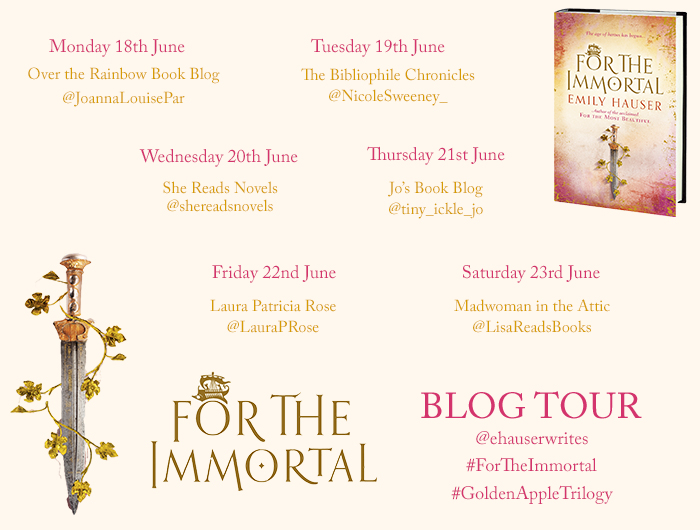
You can find out more about this book by visiting the other stops on the blog tour. Here is the schedule:

Thanks to Transworld for providing a copy of this book for review via NetGalley and for arranging the tour.

This is also book 1/20 from my 20 Books of Summer list.