Dear Mrs Bird by AJ Pearce

It’s 1941 and Britain is at war. Emmeline Lake has always wanted to be a journalist and is thrilled when she sees an advertisement in the newspaper for a job at the London Evening Chronicle. This could be her opportunity to become a Lady War Correspondent. How exciting!

To her delight, Emmy is offered the job and arrives at the Chronicle offices ready to ‘sniff out Political Intrigue, launch Difficult Questions at Governmental Representatives, or best of all, leap onto the last plane to a far-off country in order to send back Vital Reports of resistance and war’. Unfortunately, it soon becomes clear that there has been a misunderstanding. Emmy isn’t going to be a War Correspondent – she won’t even be working for the newspaper at all. Her new job actually involves typing up letters for Mrs Henrietta Bird’s problem page in the weekly women’s magazine Woman’s Friend, which happens to be based in the same building as the Chronicle. Emmy does her best to pretend that Everything Is Absolutely Tip Top (as you can see, she likes to think in capital letters), but really she is devastated. This is not what she had expected at all!

Trying to make the best of things, Emmy begins sorting through the letters, picking out some for Mrs Bird to reply to. She quickly discovers, though, that Mrs Bird has a whole list of words and topics which she considers unsuitable for publication in the magazine. Any letters which mention love, marriages, pregnancies, affairs or romantic relationships of any kind – almost all of them, in other words – must be rejected and thrown away immediately. Emmy can’t bear to see so many readers’ problems being ignored; if only there was something she could do to help…

Dear Mrs Bird was an absolute joy to read from start to finish! I loved Emmy from the beginning and her friendly, enthusiastic narrative voice pulled me straight into her world. She’s such a kind-hearted, well-meaning person, yet she doesn’t always say or do the right thing, which makes her feel very human. The language is perfect for the time period too and I could easily have believed that I was reading a much older book – and as I usually complain about language feeling too ‘modern’, that’s high praise from me!

At first, much as I was enjoying following Emmy’s adventures at Woman’s Friend and meeting the other characters in the story – who include her best friend Bunty, her fellow typist Kathleen, and the formidable Mrs Bird herself – I thought this was going to be a very light-hearted, cheerful novel despite the wartime setting. However, in the second half of the book there’s a noticeable change in the tone, as the bombing raids on London become more frequent and more ferocious. There’s drama, there’s tension and there’s heartbreak…but there’s never too much of any of these things and the book never loses its charm and its warmth.

Dear Mrs Bird is a lovely book and I was pleased to discover that there is already the possibility of a television adaptation. It will be perfect for a Sunday evening, I think. Meanwhile, I highly recommend finding yourself a copy of this book and getting to know Emmy and her friends.

Thanks to Pan Macmillan for providing a review copy via NetGalley.

My Commonplace Book: March 2018

A selection of words and pictures to represent March’s reading:

commonplace book
noun
a book into which notable extracts from other works are copied for personal use.

~

And she wondered then what it would feel like to make a poem from words, as you might make a stitching needle from a sheep’s bone, or a vest from woven wool, or a rope bound so strong from slender horse hair that it could swing a man through the air across a cliff face. To tie one word to another and one line to the next and with it let one person enter the mind and heart of another – would that not be a fine thing to do?

The Sealwoman’s Gift by Sally Magnusson (2018)

~

“She may not have the lifestyle she could have had, but she’s happy – and free. And the two go together: You can’t be happy unless you are free, and you can’t be free until you’re truly happy – which means being true to yourself first and foremost.”

The Snow Globe by Judith Kinghorn (2015)

~

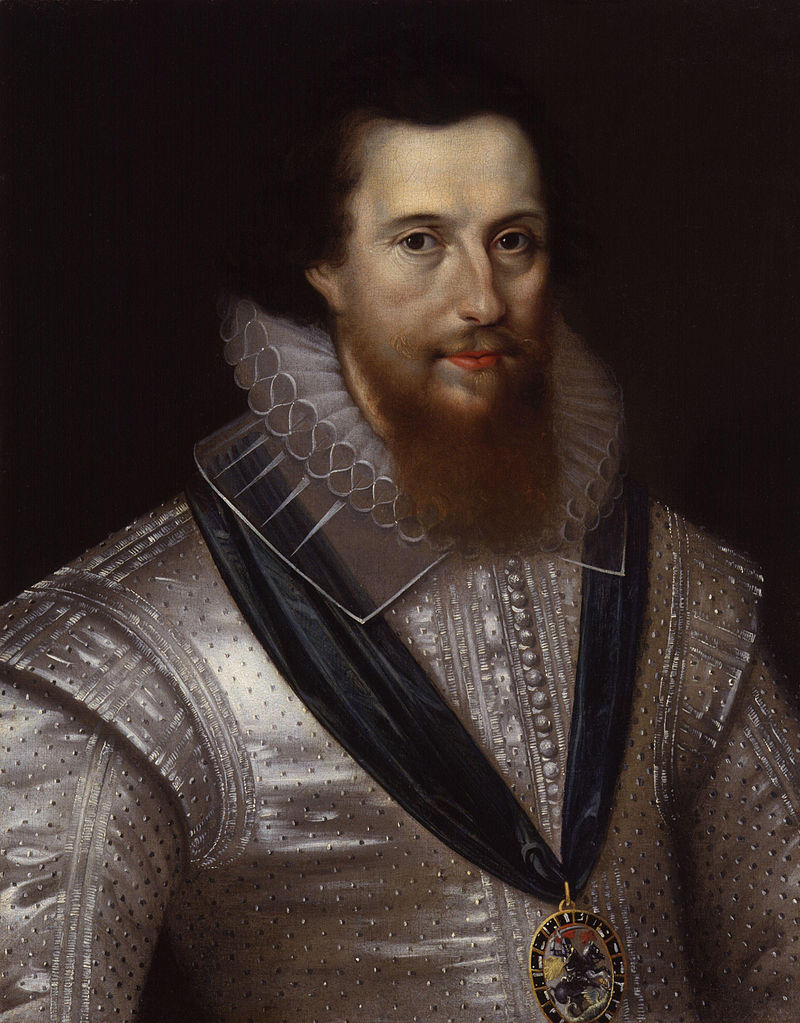
13th-century depiction by Matthew Paris of the Earl of Pembroke’s coat of arms

He raised his head to her. “Because how else do you steer a ship through a storm – especially a ship that’s already battered and leaking, with no certainty of safe harbour? If I abandon the helm and wring my hands in panic with the rest of the crew, then we go down…and fast.”

The Scarlet Lion by Elizabeth Chadwick (2006)

~

“It seems as if all the men in your family have been kindhearted, Alma. There aren’t many people like them in this world of ours.”

“There are a lot of good people, Irina, but they keep quiet about it. It’s the bad ones who make a lot of noise, and that’s why they get noticed…”

The Japanese Lover by Isabel Allende (2015)

~

Why should life be lived as a crushing tedium and unrewarded toil? Why should the haves live in splendour and the have-nots in squalor? Although I did not envy the highwayman his vices – neither drinking, gambling nor whoring were my game – I did envy his freedom. But here I was now, on the open road, as free as any highwayman.

Ill Will by Michael Stewart (2018)

~

His early life, he thought, was like the slow flip of photographs: the images were too sparse and sporadic to make any sense together, but each was so vivid that whenever one flickered to his mind, he was startled by its intensity. How could certain visions like these remain so luminous, and yet he had no recollection at all of what had come before or after?

Church of Marvels by Leslie Parry (2015)

~

With the rest of Auburn and the thousands of villages like us I have found something out, and there is a rock under my feet. Physical fear, recantations under torture, are weapons of the enemy. They are not truths. If we are not free tomorrow, we shall not be happy tomorrow. There will be no living in false content. That in all the world is certain.

The Oaken Heart by Margery Allingham (1941)

~

Parliamentarian propaganda depicting Prince Rupert and his dog, Boy, pillaging Birmingham

Then James realised that the prince had made no complaint about the fact that he too was branded with infamy. What was it like to be a man of twenty-three, called to lead tens of thousands of men onto the battlefields of a country not his own, and to have every aspect of his life, character and high ideals dragged in the dirt for more than twelve burdensome months?

The Winter Prince by Cheryl Sawyer (2007)

~

It was Nigel’s experience that in each of his cases there was a moment when the drama took on a third dimension and became fully alive for him, as when on the stage the entrance of a character, the delivery of a key line, or it may be only a single consummate gesture, a moment of stillness or a change in the lighting, grips the spectator so that he is no longer a spectator but a participant deeply involved with the tragedy enacted before him.

The Dreadful Hollow by Nicholas Blake (1953)

~

“Surely we should be standing up to bullying?”

“I’m sorry.”

She rose as anger surged through her. “So, you’re just going to give in?”

“I have no choice.”

“Then how will we ever change people’s attitudes?”

The Sapphire Widow by Dinah Jefferies (2018)

~

“It is really remarkable,” he said, “how quickly this sort of thing becomes all in the day’s work. But I wonder, would the interest last? Suddenly into one’s life comes a romantic and dangerous episode, and one is excited, keyed-up, acknowledging fear, anger – all sorts of relatively unfamiliar emotions. But – do you know? – I believe I should get a little bored if it went on for long.”

The Secret Vanguard by Michael Innes (1940)

~

“There are enough letters,” I said. “But Mrs Bird won’t answer most of them. Some people are in a real pickle, but she says they’re just Unpleasantnesses.”

“She would,” said Mr Collins. “I have to say, it’s all Greek to me. That’s why I stick to fiction. Making things up is somewhat easier than sorting out real life.”

Dear Mrs Bird by AJ Pearce (2018)

~

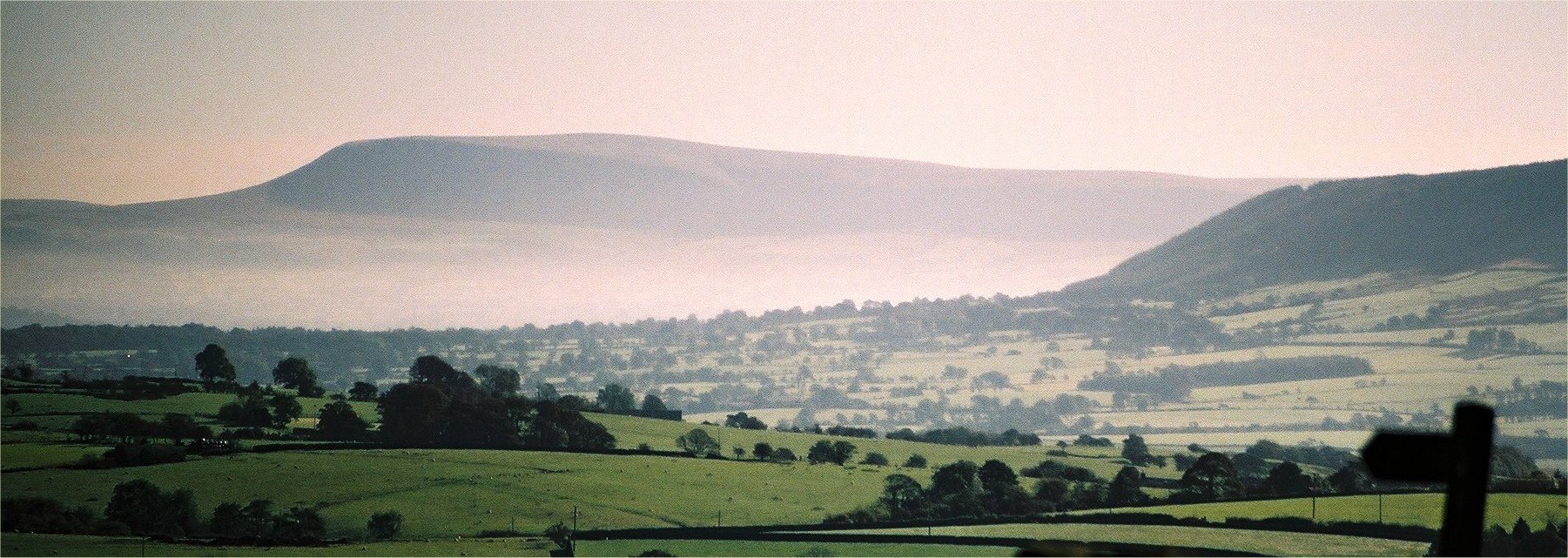
Jebel Akhdar mountain, Oman

Gradually she became aware of the hugeness of the Earth, and its incomprehensible age. She learned, finally, how small she truly was, how fleeting. It was beautiful, and not at all disheartening. Quite the opposite – she finally felt that she knew who she was, and she knew her place, and she felt totally at peace with both. She felt she could go anywhere and do anything; she felt the world turning, peacefully, resolutely, unendingly. The silence was like a magic spell; it seemed to promise infinite time in which to do all the things she wanted to do.

The English Girl by Katherine Webb (2016)

~

We are all fuel. We are born, and we burn, some of us more quickly than others. There are different kinds of combustion. But not to burn, never to catch fire at all, that would be the sad life, wouldn’t it?

Mothering Sunday by Graham Swift (2016)

~

Favourite books read in March:

The Scarlet Lion, Dear Mrs Bird, Church of Marvels, The Sapphire Widow

Where did my reading take me in March?

Iceland, Algeria, USA, England, Scotland, Oman, Sri Lanka

Authors read for the first time in March:

Sally Magnusson, Isabel Allende, Michael Stewart, Leslie Parry, Cheryl Sawyer, Graham Swift, AJ Pearce

~

Have you read any of these books? What have you been reading in March?

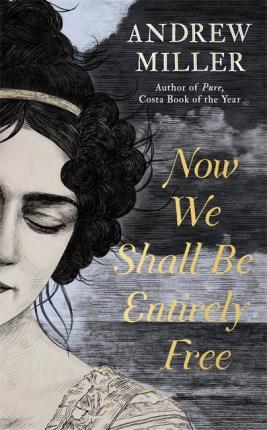
The Japanese Lover by Isabel Allende

The Chilean author Isabel Allende is probably best known for her first novel The House of the Spirits, but since its publication in 1982 she has written over twenty other books, most recently last year’s In the Midst of Winter. The Japanese Lover (2015) is the first one I’ve read; I was drawn to it by its wartime setting and by the fact that, unlike some of her other books, it didn’t seem to include any magical realism, of which I’m not really a fan.

The novel opens in the present day with Irina Bazili, a young woman from Moldova, starting a new job at Lark House, a home for the elderly in San Francisco. Irina soon settles in, getting to know the old people in the home and forming a special bond with one of them, a woman called Alma Belasco who is able to live independently on the ground floor of the building but knows the day could soon come when she no longer can. When Irina is introduced to Seth, Alma’s grandson, the two are united in their concern for Alma and their curiosity over her occasional disappearances from Lark House. Eventually they piece together the story of Alma’s life, but this only happens gradually over the course of the entire novel.

When I first read the synopsis for this book I assumed it was a dual timeline novel with two alternating stories – Irina’s in the present day and Alma’s in the past. Well, it is, but not in the same way as dual timeline novels written by authors like Lucinda Riley, Kate Morton or Susanna Kearsley, for example. In other words, it doesn’t feel like a book with two distinct storylines, but more like a book set in the present with some chapters describing events from Alma’s past.

And Alma is a character with a very interesting past. At the beginning of the Second World War, she is sent away from her native Poland to stay with rich relatives in San Francisco and here she meets Ichimei Fukuda, the son of the family’s Japanese gardener. As time goes by, Alma and Ichimei begin to fall in love, but when war finds its way to America and the Japanese become ‘the enemy’, the Fukudas are sent to an internment camp. The two young lovers are later reunited, only to be separated again, a pattern which will repeat itself several times over the decades and their relationship will endure despite Alma’s marriage to another man. It is this relationship which Irina and Seth find so intriguing and which they hope to learn more about.

Although I struggled to believe in the love Alma and Ichimei felt for each other (I couldn’t sense much passion between them and, for me, it just wasn’t the heartbreaking romance I thought it should have been, given the setting and subject), I did find it interesting to read about the injustices suffered by the Fukuda family, their time in the internment camp, and the racial, cultural and class barriers that stood in the way of Ichimei and Alma’s happiness. However, Allende does not just focus on this storyline; she also delves into Irina’s background and those of some of the other characters, touching on a huge number of issues such as child abuse, homosexuality, pornography, drug use and abortion. All things which are relevant to modern life, but the book was not really long enough to explore them in much depth.

I found plenty of things to like about this book, but there were times when I felt that I was reading a long string of facts and information rather than an engaging story – too much ‘telling instead of showing’ – and there’s also not much dialogue, which could explain why I found it difficult to connect with Alma and Ichimei. I was slightly disappointed, but it’s possible that I just chose the wrong Isabel Allende book to begin with. I know she has a lot of fans who love her writing, so I’m hoping that if I try another of her books I’ll understand why.

This book counts towards this year’s What’s in a Name? Challenge: A title containing a nationality.

Ill Will by Michael Stewart

Have you read Wuthering Heights? If so, you’ll remember that in the middle of the book, Heathcliff disappears after hearing Cathy say that it would degrade her to marry him. When he returns after a three year absence he has undergone a transformation, but we never find out where he has been and what he has done during that period. In Ill Will, Michael Stewart has created a story for Heathcliff to fill in the gaps.

In Stewart’s version of events, Heathcliff leaves Wuthering Heights with two main goals in mind: first, to find a way to get revenge on Hindley and Edgar Linton, and second, to discover as much as he can about his own background. Knowing that old Mr Earnshaw, Hindley and Cathy’s father, brought him back to Wuthering Heights as a child after a trip to Liverpool, Heathcliff (taking the name William Lee) sets off for the west coast hoping that Liverpool will hold clues to the truth of his parentage. On the way, he rescues a ten-year-old girl, Emily, from a brutal whipping and as she is all alone in the world he allows her to join him on his mission.

As the daughter of a highwayman who has recently met his fate at the end of a hangman’s noose, Emily is used to living by her wits and she suggests that they make use of her unusual talents to earn some money for the journey. If her scheme goes wrong, however, they could find themselves in serious trouble. Will they make it safely to Liverpool – and if they do, what will they find there? Will the secrets of Heathcliff’s past be revealed and will he be able to return to Wuthering Heights as a rich and educated gentleman?

As Wuthering Heights is one of my favourite classics, I was immediately drawn to this book when I saw it on NetGalley, but at the same time I didn’t want to set my expectations too high as I have often been disappointed with sequels, prequels and retellings of classic novels in the past. This had the potential to be a good one – Heathcliff may not be the most pleasant of characters but he is certainly an interesting one and there are an endless number of stories which could be invented to fill in his missing years – but as I suspected, there were things that I disliked as well as things that I liked.

Starting with the positives, there’s some lovely descriptive writing which brings to life the countryside Heathcliff and Emily pass through on their way to Liverpool. These descriptions could only have been written by someone who had visited the area and felt a connection with it, so I was not surprised to read that Michael Stewart had spent some time walking across the moors as part of his research. The novel is set in the 1780s (although Wuthering Heights was published in the nineteenth century, most of the action takes place earlier than that), which is a time of change as the industrial revolution begins to transform the landscape and the lives of the people who inhabit it. The north of England is at the heart of this, and Heathcliff, who has been isolated at Wuthering Heights for years, takes note of the canals, bridges, factories and other signs of technological progress that they see on their journey.

A fascinating setting and time period, then; my main problem with the book was the language. I don’t mind some swearing in a book, if it feels like the natural way that a character would speak, but I didn’t really expect to pick up a novel based on Wuthering Heights and find the f-word and c-word on almost every page, especially coming from a ten-year-old girl (although to be fair, I suppose she is described as ‘foul-mouthed’ in the blurb). I found it irritating and a constant reminder that I was reading a contemporary take on Wuthering Heights, rather than being swept back into the world Emily Brontë had created, which is what I would personally have preferred. It won’t bother everyone, I’m sure, and I know that people did obviously swear in the eighteenth century, but it just didn’t feel right to me in this particular book.

The actual story is quite engaging, which is why I kept reading – and although the explanation of Heathcliff’s origins is predictable, it’s realistic given the time and place and the few clues we have to work with from Brontë’s novel, but despite my love of Wuthering Heights or maybe because of it, this book just wasn’t for me. Stewart’s portrayal of Heathcliff was too different from the way I have always imagined him, so I never felt convinced that I was reading about the same character. I’m sure Ill Will is going to be a big success with other readers, though, and as there’s already talk of a television adaptation I think we could all be hearing a lot more about it in the future.

Thanks to HQ for providing a copy of this book for review via NetGalley.

More historical fiction to look out for

Today the Walter Scott Prize Academy has announced its annual list of twenty recommended historical fiction novels published in the UK, Ireland and Commonwealth in 2017. This is in addition to the prize longlist of thirteen books which was released a few weeks ago.

I don’t have any plans to try to read all of these books, but I thought I would list them here because this is such an intriguing selection of titles:

~

The Death of the Fronsac by Neal Ascherson (Apollo, UK)

Mrs Osmond by John Banville (Viking, UK)

Softness of the Lime by Maxine Case (Umuzi, South Africa)

He by John Connolly (Hodder & Stoughton, UK)

Larchfield by Polly Clark (Riverrun, UK)

Goblin by Ever Dundas (Saraband, UK)

The Water Beetles by Michael Kaan (Goose Lane Editions, Canada)

The Iron Age by Arja Kajermo (Tramp Press, Ireland)

My Beautiful Imperial by Rhiannon Lewis (Victorina Press, UK)

Soot by Andrew Martin (Corsair, UK)

Story Land by Catherine McKinnon (4th Estate, Australia)

Amah and the Silk-Winged Pigeons by Jocelyn Nullity (Inanna Publications, Canada)

See What I Have Done by Sarah Schmidt (Tinder Press, Australia)

A Boy in Winter by Rachel Seiffert (Virago, UK)

Speakeasy by Alisa Smith (Douglas & McIntyre, Canada)

A Reckoning by Linda Spalding (McClelland & Stewart, Canada)

The Secret Books by Marcel Theroux (Faber & Faber, UK)

The Esquimaux by Tom Tivnan (Silvertail Books, UK)

City of Crows by Chris Womersley (Picador, Australia)

The Photographer by Mieke Ziervoge (Salt, UK)

~

I do try to keep up to date with newly published historical fiction, but apart from Soot (which I have read and enjoyed), the only others on this list that I know anything about are Larchfield, Mrs Osmond and See What I Have Done. I haven’t even heard of most of the others!

What do you think? Have you read any of these books? Are there any that you think I need to read as soon as possible?

Two more Nicholas Blake mysteries: Head of a Traveller and The Dreadful Hollow

After reading my first Nicholas Blake novel last year, I knew I wanted to read more. Nicholas Blake was a pseudonym of the poet Cecil Day-Lewis and the name under which his series of Nigel Strangeways mysteries was published. With plenty to choose from (sixteen in the series in total) I found myself picking up two in quick succession, so I am writing about both of them here.

Head of a Traveller (published in 1949) is the ninth in the series. At the beginning of the book, private investigator Nigel Strangeways is staying with a friend in Oxfordshire and is introduced to the poet Robert Seaton, who lives at the nearby estate of Plash Meadows with his wife and two children. Nigel is enchanted by their beautiful house and intrigued to hear the history of how it came to be in Robert’s possession. A few months later he is summoned back to Plash Meadows under less happy circumstances: a headless body has been found in the river just upstream from the Seatons’ house. Superintendent Blount has been called in to investigate and Nigel, who has worked with Blount before, decides to make some unofficial enquiries of his own.

This is a complex mystery with a surprisingly simple solution. My first assumptions proved to be right, but I was misled by discussions of alibis and timescales, mistaken identities and who could be protecting whom. I enjoyed following the investigations of Nigel and Blount, who have a great partnership and complement each other perfectly, but they were certainly making things more complicated than they needed to be!

Bearing in mind that this is a book from the 1940s, there are some attitudes which could be offensive to modern day readers, particularly surrounding the character of Finny Black, who is a dwarf, and also regarding the rape of another character ten years earlier. These views are not at all uncommon in books from this era, but are still a little bit uncomfortable to read. Overall, though, I enjoyed this book – not as much as The Corpse in the Snowman, but it still kept me entertained for a while. And as a poet himself, Nicholas Blake writes convincingly about Robert Seaton and his work, and has some interesting thoughts to share.

Now, The Dreadful Hollow, which was first published in 1953. I’ve had a terrible time with that title…I keep wanting to call it The Deathly Hallows, although there’s nothing remotely Harry Potter-ish about the book! The title is actually taken from a poem by Tennyson (“I hate the dreadful hollow behind the little wood”). Anyway, this is the tenth book in the Nigel Strangeways series and in this one, Nigel is commissioned by the financier Sir Archibald Blick to investigate a number of anonymous letters received by the residents of Prior’s Umborne, a small village in Dorset. On his arrival, Nigel is quickly able to identify some possible suspects: Blick’s two sons, the eccentric, reclusive Stanford and the serious, hardworking Charles; Rosebay Chantmerle and her sister Celandine, who has been confined to a wheelchair for many years; and the sinister, religiously obsessed Daniel Durdle.

It doesn’t take Nigel long to solve the mystery of the poison pen letters – or to think that he has, anyway – but everything is thrown into doubt again when a man’s dead body is found in the quarry. Are the murderer and the letter writer the same person or are these two separate crimes?

Again, this is a very complicated mystery and I needed to concentrate to follow Nigel’s deductions and to keep the sequence of events straight in my mind. I thought it was easy to spot the culprit (or culprits, as I’m not saying whether there were one, two or more of them) but the interest is in watching Nigel – and Blount, who arrives in Prior’s Umborne after the murder is committed – try to gather the evidence to prove it. This is my least favourite of the Strangeways novels I’ve read so far, though, and that’s partly because I found the characters in this one so unlikeable. It’s quite normal for a crime novel to have some unlikeable characters, of course, but I really did think the Blicks, the Chantmerles and the Durdles were all particularly unpleasant!

The final chapter is excellent with the tension building as the story moves towards a dramatic conclusion and this helps to make up for the novel’s weaker points. Although I didn’t like either of these books as much as the first Strangeways mystery I read, I think I’ll probably read more of them at some point.

Penmarric by Susan Howatch (re-read)

A long time ago (before I started blogging, anyway, which feels like a lifetime ago!) I picked up Susan Howatch’s 1971 novel Penmarric at the library. I knew nothing about it but, as soon as I started to read, I was drawn into a wonderfully compelling story which begins in 19th century Cornwall and is linked in a unique way to a much older story. I went on to read two of her other novels, Cashelmara and The Wheel of Fortune, which I also loved, and I’ve been thinking for a while now that I would like to read all three again.

Penmarric is divided into five sections, each narrated by a different character, beginning in 1890 with Mark Castallack. Mark’s mother, Maud, has spent her whole life working towards one goal: regaining Penmarric, the family estate which her father left to her cousin Giles rather than herself simply because she was a woman. Maud is determined to see Mark take his rightful place as master of Penmarric and eventually she gets her wish – but this does not bring happiness to any of the Castallacks.

The other four narrators are Mark’s wife, Janna, two of his sons – Philip and Jan-Yves – and one of his illegitimate sons, Adrian. It’s a story which spans six decades, taking us from the Victorian era through the turn of the century to the First and Second World Wars, but in Mark’s little corner of Cornwall a war of a different sort is played out as his marriage with Janna breaks down and his sons turn against each other and then against him.

What makes Penmarric such a great novel and what has made me remember it so vividly over the years, is that the story of the Castallacks mirrors very closely the story of Henry II and Eleanor of Aquitaine and their sons. We know from history that Henry and Eleanor’s marriage was troubled, that she and their sons rebelled against Henry and that she was sent away from court, so Howatch’s fictional story follows the same outline. If you think of Penmarric as the throne of England, the rest begins to fall into place, and if you’re familiar with the period you’ll be able to identify Henry, Eleanor, Richard I, King John and even the King of France amongst the fictional characters in the book.

Each chapter opens with one or two relevant quotations from historical sources, giving an idea of what will happen in the pages that follow and helping the reader to draw parallels between the characters in the novel and their historical counterparts. The first time I read the book I didn’t have the knowledge I have now, so I didn’t pick up on everything, but this time I could appreciate just how well structured it all is and how cleverly Howatch works even minor episodes from history into the plot. Of course, it’s not essential to know anything at all about Henry and Eleanor before you begin as Penmarric can still be enjoyed as a wonderful family saga in its own right.

Of the five narrators, my favourites are the last two: Philip, the son who, being the closest to Janna, is hurt the most by Mark’s actions and who retreats into a single-minded obsession with reopening the Penmarric tin mine, Sennen Garth; and Jan-Yves, the youngest son and the one who stays loyal to their father – until it really matters. Each section is written in a strong, distinctive voice, each one adding to, complementing and contradicting the one before so that a character who seems particularly unpleasant when seen through the eyes of another becomes more sympathetic once they get a chance to tell their own side of the story.

Penmarric is a dark novel – as I’ve said, none of the characters experience much happiness in their lives and none of them are easy to like – but the plot is completely gripping, even when you’re reading the book for the second time. There are some lovely descriptions of Cornwall too; this is one of those books where the setting is as important as the characters and the plot. Although some of the family members move away and do other things, they are all drawn back again and again to Cornwall and Penmarric.

I really enjoyed my re-read of this book, especially now that I have enough familiarity with medieval history to be able to follow both layers of the story. I will be re-reading Cashelmara very soon and am looking forward to it as I can remember very little about that one.