New book arrivals

I’ve acquired some new books recently and thought I would share them here with you:

New books May 2014

The first three books were bought last week on a trip to my favourite book shop, Barter Books:

The Heaven Tree by Edith Pargeter – I’ve wanted to read this for years and was so pleased to find a copy. It’s the first in a trilogy and set during the reign of King John.

The Last Light of the Sun by Guy Gavriel Kay – I’m looking forward to reading this as I enjoyed the other two Guy Gavriel Kay books I’ve read.

Bellarion by Rafael Sabatini – I don’t know anything about this book but I love Sabatini so of course I had to pick this one up!

The next book is a review copy received from Random House:

The Second Duchess by Elizabeth Loupas – The story of Barbara of Austria and her marriage to the Duke of Ferrara. I can’t wait to read this.

I won the final two books in Goodreads giveaways.

The Shining by Stephen King – I’ve read this before, as a teenager, and thought it might be fun to read it again. I didn’t really expect to win it!

The Walls of Byzantium by James Heneage – The first of a new series, The Mistra Chronicles, set in the final decades of the Byzantine Empire.

Have you read any of these books? What did you think of them?

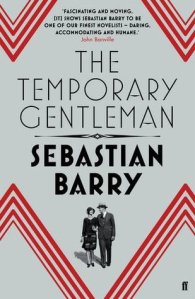
The Temporary Gentleman by Sebastian Barry

The Temporary Gentleman

“It seemed there was more cruelty than joy stored up in the human story, and kindness and comfort only rationed, and the ration book for both indeed not issued to everyone.”

The Temporary Gentleman is the third Sebastian Barry book I’ve read and I was looking forward to it, having loved both The Secret Scripture and On Canaan’s Side. Based on those two novels I knew I could expect a tragic, heartbreaking story and some beautiful, haunting writing – and that’s exactly what I got. Whenever I read a book by Sebastian Barry I am impressed by how much care he gives to each and every sentence, always searching for the perfect word or phrase to use. He can make the most ordinary, mundane things sound poetic and magical.

This is the third, I think, of Barry’s novels to focus on members of the McNulty family. The first, which I haven’t read yet, is The Whereabouts of Eneas McNulty and the second is The Secret Scripture, which tells the story of Roseanne, Tom McNulty’s wife. This new book, The Temporary Gentleman, is narrated by Jack McNulty, the brother of Tom and Eneas. They are all standalone novels and I don’t think they need to be read in any particular order, but I do like the fact that they are all loosely connected.

As an Irishman whose commission in the British Army during the Second World War is not permanent, Jack McNulty is the ‘temporary gentleman’ of the title. In 1957, sitting in his lodgings in Accra, Ghana where he lives alone with only his houseboy, Tom Quaye, for company, Jack begins to write his memoirs. He remembers his early days in Ireland and his first meetings with his future wife, Mai Kirwan. He reflects on the reasons why their relationship became strained and their marriage began to disintegrate. And he thinks of the mistakes he has made and the terrible impact of alcohol on both his own life and the lives of his family. Occasionally we return to the present where we learn a little bit about the political situation in 1950s Ghana, but the majority of the novel is devoted to Jack and Mai’s troubled marriage.

This is such a sad story, made even sadder by the fact that Jack does truly love Mai and although he can see that he is ruining his life and hers, he can’t stop himself from doing it. He knows he has made bad decisions and that he is to blame for the tragic outcome of those decisions – and yet he seems incapable of trying to put things right. Jack is not the most pleasant of people but even while I felt frustrated and angry with him, it was still possible to feel a bit of sympathy for him at times. I was also intrigued by Mai’s character, particularly because we only see her through Jack’s eyes and never have a chance to hear her point of view. It would have been interesting to have been able to read the same story from Mai’s perspective – I would love to know how she really felt about Jack and his actions.

As usual with a Sebastian Barry novel, I found that I was constantly marking lines and passages that I loved and as usual, if I started to quote them here I would have to quote almost the whole book. But despite the gorgeous writing I didn’t like this book quite as much as The Secret Scripture or On Canaan’s Side, maybe because Jack causes so many of his problems through his own behaviour and I didn’t feel as desperately sorry for him as I did for Roseanne McNulty or Lilly Dunne. I also felt that the Ghana sections of the novel added very little to the story. Still, this book was worth reading for the beauty of the writing alone. While I’m waiting for Sebastian Barry’s next novel I would like to go back and read his other books on the McNulty and Dunne families that I haven’t read yet.

I received a copy of this book from NetGalley for review.

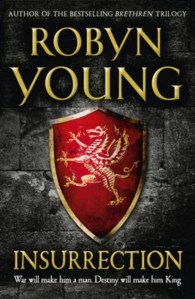
Insurrection by Robyn Young

Insurrection - Robyn Young Insurrection is the first in a trilogy telling the story of Robert the Bruce, who was King of Scotland in the 14th century. The second book, Renegade is available now and the third, Kingdom, will be out this summer. In this first novel, beginning in 1286, we meet Robert as a young boy in a Scotland torn apart by the sudden and unexpected death of King Alexander III. The King has died without a male heir, leaving the succession to the throne undecided. The Bruces believe they have a strong claim, but they face competition from their enemies, John Balliol and the Comyns.

In England, meanwhile, King Edward I is forming his own plans for Scotland. Beginning a search for four ancient relics that will enable Merlin’s Last Prophecy to be fulfilled, Edward enlists the help of a group of young noblemen known as the Knights of the Dragon. When Robert, sent to England to restore his family’s reputation, is approached by the Knights, he must decide exactly where his loyalties and ambitions lie.

Insurrection is exactly the sort of historical fiction I love. As someone who reads a lot of historical novels I often find that they either focus too much on romance and court intrigue or are too action-packed with one long battle scene after another. I had neither problem with this book; I found it to be a fascinating, atmospheric tale of kings and knights, witches and soldiers, treachery, murder and war. The descriptive writing is wonderful and the battles (yes, there are a few) are well written and easy to follow. I admit that my heart sank when I discovered this was yet another book with an ‘ancient prophecy’ storyline, but I needn’t have worried because it is only one small part of the plot and I thought it actually felt quite plausible as it’s true that Edward I really did have a fascination with Arthurian legend.

Robert the Bruce is a name I’ve always been intrigued by without really knowing much about him. I have a memory from years ago of going out with my parents one Sunday afternoon on what my dad always called ‘an aimless drive’ and ending up in Dumfries and Galloway in Scotland where we noticed a sign pointing to ‘Robert the Bruce’s Cave’ – the cave where Robert supposedly went into hiding from Edward I in 1306 and was famously inspired by a spider weaving its web. Not one of the most exciting places I’ve ever visited (there wasn’t even a spider in sight when we went to look inside the cave), but it has stayed in my mind all these years later!

Because I knew so little about Robert and this period of history, I felt that I was really learning a lot from Insurrection. Everything felt accurate and thoroughly researched and although I had to concentrate to keep track of the complex politics and relationships between the characters, I was never bored. At the end of the book there’s a character list, glossary of medieval terms and a chart showing the order of succession to the Scottish throne, all of which I found useful.

Of course, this is a work of fiction rather than non-fiction so there are times when the author doesn’t stick exactly to the known facts. For example, the deaths of Alexander III and his granddaughter Margaret, Maid of Norway may have had more innocent causes than those described in the book. The Knights of the Dragon is also a fictional order, although the men who belong to it really existed. Robyn Young explains some of her choices in her author’s note so that we can see where she has used her imagination to fill in some gaps and provide motivations for the actions of her characters.

I know this book will not suit all tastes in historical fiction (some readers might dislike the inclusion of prophecies and witchcraft or will be disappointed by the lack of significant female characters and the fact that Robert himself is not always easy to like) but I absolutely loved it. I’m looking forward to reading Renegade and Kingdom and also exploring Robyn Young’s earlier trilogy on the Knights Templar.

Gibside

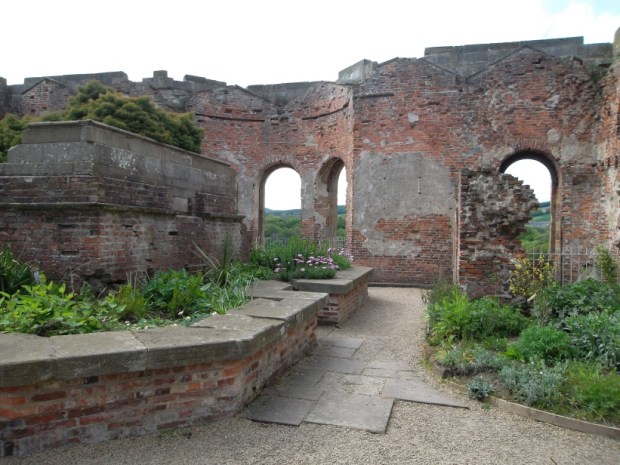
On Saturday I decided to take advantage of the warm, sunny weather and my National Trust membership to visit Gibside, a beautiful 18th century country estate overlooking the Derwent Valley, only a few miles away from where I live. Gibside was formerly the home of the Bowes-Lyon family before becoming a National Trust property. I thought I’d share some of my photos with you today.

This is Gibside Hall, sadly now in ruins:

Gibside Hall 2

Gibside Hall

Several views of the Orangery, also a ruin:

Gibside Orangery 1

Gibside Orangery 2

Gibside Orangery 3

Gibside Orangery 4

The long tree-lined Avenue and the path beside it:

Gibside avenue

Gibside avenue 2

The Column of British Liberty, built in the 1750s:

Column of Liberty

I loved the pretty colours here:

Gibside 2

Gibside 3

Gibside

The estate also includes a chapel, stables and a newly restored walled garden (still a work in progress). I didn’t take any pictures of these this time, but maybe on my next visit!

The Chains of Fate by Pamela Belle

The Chains of Fate This is the second book in Pamela Belle’s Heron series, set in the 17th century and following the adventures of Thomazine Heron and her family in an England torn apart by civil war. I loved this one almost as much as The Moon in the Water, which I read last month, and would highly recommend these books to anyone who enjoys family saga-style historical fiction. The only problem is that they are now out of print, but I definitely think it’s worth trying to find copies.

*Spoiler warning – As this is a sequel and as the previous book ended on such a big cliffhanger, it would be almost impossible for me to discuss this novel without making references to the first one. If you’re interested in this series, please see my review of The Moon in the Water before reading any further!*

The Chains of Fate begins where The Moon in the Water ended, with Thomazine embarking on a journey north to Scotland in search of her cousin and lover, Francis Heron. Believing Francis to have drowned, Thomazine had married Dominic Drakelon before discovering that she had been misled and he was not dead after all. Leaving her husband and baby son behind, she sets off to find Francis with only her friend Grainne, servant Holly and Grainne’s two young children for company. The road north through a country at war is not without its dangers but Thomazine eventually arrives at the Borders home of her Graham cousins – only to discover that convincing Francis of her innocence will not be as easy as she’d hoped.

Will Francis and Thomazine find happiness together in the end or will they be separated forever by war or by the evil scheming of cousin Meraud? I’m not going to say any more because the story that unfolds throughout The Chains of Fate is a wonderful, epic tale of love, war and betrayal and I wouldn’t want to spoil a single page of it for you.

Much as I enjoyed reading this book, however, it’s not without a few flaws that prevented me from loving it quite as much as the first book. While I love Thomazine as a narrator, the fact that she is telling her story in the first person means that she is usually far removed from the centre of the Civil War action. The outcomes of various battles and the movements of the armies are described to Thomazine through letters or gossip picked up in taverns and I thought this became a bit tedious at times. Having said that, I am not a big fan of battle scenes, so I did appreciate the focus on ordinary families and the people who were forced to stay behind, worrying about their loved ones in the thick of the fighting.

I was also slightly disappointed that Thomazine and Francis are kept apart for such long stretches of the book. The other storylines the author brings into the novel – the relationship between Thomazine and her little boy, Kit; the love affairs of Grainne, Lucy and Jamie; and the question of who will inherit Goldhayes – were compelling too and did interest me, but I still found myself getting impatient wondering when Francis was going to make another appearance!

Anyway, this was another great book and I’m now looking forward to reading the third one, Alathea – but apprehensive too because I’m aware that it’s about the next generation of Herons and in my experience sometimes a series is not as good once we leave the original characters behind. I’m hoping this won’t be the case with Alathea and it shouldn’t be too long before I have the chance to find out.

A Dark and Twisted Tide by Sharon Bolton

A Dark and Twisted Tide This is the fourth book in the Lacey Flint series by Sharon (formerly S.J.) Bolton and I’ve been looking forward to it since finishing the third one more than a year ago!

Having been involved in three very traumatic cases in a short space of time (which you can read about in Now You See Me, Dead Scared and Like This, For Ever) Lacey is now living alone on a houseboat in Deptford Creek, just off the River Thames, and trying to come to terms with her recent experiences. She has also abandoned her career as a detective to become a uniformed police officer again, hoping that her new position patrolling the river with the Marine Unit will be less stressful. While out swimming in the Thames early one morning (not something to be recommended!) she discovers a dead body floating in the river, wrapped in a white linen shroud. It seems that Lacey’s plans for a more peaceful life have been thwarted already…

I wish I could discuss the plot in more detail as it was fascinating, but if I say any more I’ll be giving too much away and spoiling the mystery for future readers. Instead I’ll mention the setting and the atmosphere, which were both as wonderful as I’ve come to expect from Sharon Bolton’s novels. The story is set almost entirely on the Thames and I loved the descriptions of the creeks and waterways, the derelict pumping station and the marina where Lacey’s boat is moored. I didn’t find this book quite as creepy as some of Bolton’s others, but there were a few scenes involving crabs that weren’t very pleasant!

If you’re new to this series you could start here if you wanted to (it’s a complete novel, with a beginning, middle and end), but my recommendation would be to begin with Now You See Me and read the series in order so that you can watch Lacey’s character develop book by book. She’s such a complex and secretive person that although you learn a little bit more about her in each novel you’re always left with the feeling that there’s still a lot more to learn. I particularly enjoy reading about her trips to Durham to visit the prisoner Toc, possibly the only person who really knows and understands Lacey and her troubled past.

Of course, Lacey is not the only interesting character in the series – another is Detective Inspector Dana Tulloch. I’ve never liked Dana much before and her treatment of Lacey in the previous book really annoyed me, but I found myself warming to her at last. In this book, she and her partner Helen make the decision to have a child and I’ll be interested to see how that storyline continues in the next book – assuming there is going to be a next book! I was disappointed, though, that Mark Joesbury doesn’t have a big role to play this time – although he does have a very good reason for his absence.

This is not my favourite book in the series – that would still be the third one, Like This, For Ever – but I did enjoy reading this dark and twisted tale.

I received a copy of this book from the publisher via NetGalley for review.

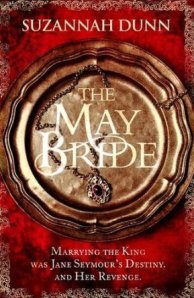
The May Bride by Suzannah Dunn

The May Bride One day in May 1536, Jane Seymour became Henry VIII’s third wife – but she is not the only May bride in Suzannah Dunn’s new novel. The other is Katherine Filliol, the wife of Jane’s elder brother, Edward. Jane is only fifteen when Edward first brings Katherine to Wolf Hall, the Seymour family home, and she is instantly captivated by her beautiful new sister-in-law. Jane and Katherine become close friends – or so Jane thinks, but gradually she discovers that Katherine has been keeping secrets from her and that her marriage to Edward may not be as perfect as it first appeared.

I had my doubts about this book before I started reading it because I had tried to read another of Dunn’s books a few years ago, The Confession of Katherine Howard, and didn’t get very far with it before giving up, not having connected with the writing style or the characters at all. I wondered if I would have the same experience with this book, but luckily that didn’t happen; I found this one much more enjoyable and easier to get into.

I’ve read a lot of novels set during the Tudor period, but this one is slightly different, for several reasons. First, it is a very domestic story, being set almost entirely at Wolf Hall with only the final, shortest section of the book covering Jane’s time at court as lady-in-waiting to Katherine of Aragon and Anne Boleyn. Until that last section there are so few mentions of politics, court intrigues or famous people of the period (apart from the Seymours themselves) that it could almost have been a story about any other wealthy Tudor family going about their daily lives.

I also found it intriguing that although Jane is the most famous Seymour and the one who is narrating, this novel is actually about Katherine Filliol as much as it is about Jane. I didn’t know anything about Katherine before reading the book and although Suzannah Dunn admits in her author’s note that there is very little historical information available on Katherine (and no record of what eventually happened to her) I still appreciated the fact that she had chosen to focus on a little-known character who is not usually the subject of historical fiction.

Finally, this book is written in a style that feels very modern and there is no real attempt to use language appropriate to the period. This is something that usually irritates me, but in this case I think it actually worked quite well once I got used to it. Because this is a family drama, with the emphasis on exploring the relationships between Katherine, Jane and the other Seymours, the fresh and contemporary feel made it easy to identify with the characters. I thought Jane’s brothers, Edward and Thomas, with their very different personalities, were particularly well drawn.

Compared with some of Henry VIII’s other wives, Jane Seymour as queen is often portrayed as quiet and uninteresting but here the young Jane comes to life as a loyal and loving person who is able to see the best in everyone. Unfortunately I didn’t share her fascination with Katherine, but I suppose that’s because I was able to pick up on clues and nuances that wouldn’t have been obvious to an innocent fifteen-year-old girl who is dazzled and enchanted by her new friend.

Although I maybe haven’t learned as much about Jane as I would have done from a more conventional historical novel, I did enjoy reading about her early life and the experiences that shaped the woman and queen she would become.

I received a copy of this book for review from the publisher via NetGalley