Classics Club August Meme: Forewords and Notes

The Classics Club

I haven’t taken part in the Classics Club Meme for a while, but August’s topic is one I feel quite strongly about! This month’s question is:

Do you read forewords/notes that precede many classics? Does it help you or hurt you in your enjoyment/understanding of the work?

I do sometimes read the forewords and notes but I’ve learned from experience to read them at the end rather than the beginning! I’ve never understood why so many publishers think it’s acceptable to give away the entire plot of a novel in the introduction just because it’s a classic. It’s true that many classics have become such a big part of popular culture that most of already know what happens, but that’s not always the case and I hate to think of anyone unsuspectingly reading the introduction first and having the story completely spoiled for them. When I read the Penguin English Library edition of Far from the Madding Crowd recently, I was pleased to find that the ‘introduction’ had been placed at the end of the book as an afterword instead of at the front. I think it would be nice if all publishers could either do the same or at least print a spoiler warning at the beginning the way Wordsworth Classics do.

Personally I like to go into a book knowing as little as possible about the plot and whether it’s a classic or a contemporary novel makes no difference. I might go back to read the introduction after I’ve finished the book, though not always as sometimes I either forget or decide that I’m happy with my understanding of the book and am ready to move straight on to another one. I read classics simply because I enjoy them so I’m not necessarily interested in analysing every little detail. I like to read the information on the author and their life, if any is given, or information that places the story into historical context, but apart from that I don’t usually find the introduction particularly helpful and prefer to interpret a book the way I want to interpret it.

What are your opinions on forewords? Do you like to read them or not?

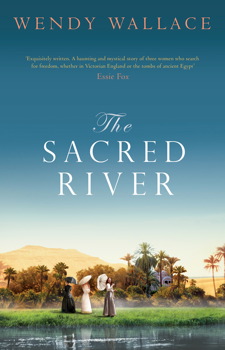
The Sacred River by Wendy Wallace

The Sacred River This is Wendy Wallace’s second historical fiction novel. I remember hearing about her first, The Painted Bridge, last year but never got round to reading it so I was pleased to have a chance to read this one, The Sacred River. This book is set in the nineteenth century and is the story of three women and how their lives are changed during a visit to Egypt.

Harriet Heron is twenty three years old but still feels that she is treated like a child. She has suffered from severe asthma for many years and feels stifled by her over-protective parents. Having always been fascinated by the Ancient Egyptians, Harriet is delighted when the doctor manages to convince her mother and father that a trip to Egypt for a change of air will improve her health. Finally she has a chance to escape from her sheltered life in London and see the world.

Harriet soon sets off on her voyage to Egypt in the company of her mother, Louisa, and her Aunt Yael but before they reach their destination, Alexandria, a meeting with an artist on board the ship causes tension between Harriet and her mother. It seems that the secrets of Louisa’s past could be about to be revealed, destroying Harriet’s happiness in the process. But this is not just the story of Harriet and Louisa; another character with an interesting story is Yael, Harriet’s aunt. On their arrival in Alexandria, Yael is shocked by the lack of health care available to the city’s children and plans to start a clinic to educate their mothers, but she soon discovers that the people she had been relying on to help her are reluctant to get involved.

Harriet is a wonderful character and I loved the way she grew and blossomed as a person over the course of the novel, as her health improved and she began to find the freedom she had always longed for. But I also liked Yael and admired her for her energy, determination and desire to make a difference. Like Harriet, she discovers a happiness and fulfilment in Alexandria that was lacking from her life at home in England. Louisa is the only one not enjoying life in Egypt and the reason for this is only revealed very slowly. We know it’s due to something that happened in her past and that it involves Eyre Soane, the artist the women meet on the ship, but the details remain a mystery until later in the book.

Egypt is always a fascinating and atmospheric setting, yet I don’t seem to have read many books that are set there. Harriet’s (and presumably the author’s) enthusiasm for the wonders of the ancient world, for archaeology and hieroglyphics shines through and it was good to have the opportunity to learn a little bit about the subjects Harriet is so passionate about. I must remember to look out for Wendy Wallace’s first novel, The Painted Bridge, having enjoyed this second one so much!

Thanks to Simon & Schuster for providing a review copy.

Philippa Carr’s Daughters of England, Volumes 1-3

The Daughters of England Philippa Carr is one of the pseudonyms of the author also known as Jean Plaidy, Victoria Holt and others. As Victoria Holt she wrote gothic romance/suspense novels, as Jean Plaidy she wrote more serious historical fiction and it seems that her Philippa Carr books are somewhere between the two. The Daughters of England is a long series of twenty novels following successive generations of one family from the sixteenth century to the twentieth, where the narrator of each book is the daughter of the narrator from the previous one. The series was originally published between 1972 and 1995 but has now been released in ebook format by Open Road Media and I received the first three volumes from the publisher through Netgalley in the form of a 3-in-1 book, which is why I’ve waited until I’ve finished all three before writing my review.

The Miracle at St Bruno’s is where it all begins. Our narrator is Damask Farland, the daughter of a rich lawyer, who grows up in Tudor England during the reigns of Henry VIII, Edward VI and Queen Mary I, a time of political and religious change. The story revolves around Damask’s relationship with Bruno, a boy from the neighbouring St Bruno’s Abbey who believes he must be a miracle child because he was found as a baby in the Abbey’s Christmas crib.

This was a good introduction to the series and an excellent portrayal of what life was like during this time period. While Damask and her family may have been secure and prosperous during the reign of one monarch, as soon as the next one came to the throne with his or her different religious views, their safety was no longer guaranteed. I did find the plot very predictable and could see every ‘surprising’ revelation and dramatic twist coming a mile away, but maybe I’ve just read too many of this type of book!

Book Two, The Lion Triumphant, is the story of Damask’s daughter, Cat Kingsman, and is an exciting historical adventure novel. The setting this time is Elizabethan England and with the country preparing to defend itself against the Spanish Armada, England’s brave sailors are the heroes of the day. One of these sailors, Jake Pennlyon, captain of the Rampant Lion, is determined to make Cat his wife. Cat does everything in her power to convince him that she will never marry him, but when she is captured and taken aboard a Spanish galleon bound for Tenerife she finds herself at the mercy of Don Felipe, the Governor of the Canary Islands, who has sworn revenge against Jake and the woman he loves.

This was a great story and my favourite of the three books, though I actually felt guilty for enjoying it so much because the ‘hero’ is such a violent, arrogant man. Despite the female protagonists and the focus on history from a woman’s perspective, these really aren’t good books from a feminist point of view. Even by sixteenth century standards I’m not sure Jake’s behaviour (and Colum Casvellyn’s in the next volume) would have been considered acceptable! Still, at least Jake does have some redeeming qualities, unlike Colum…

The third book in the series, The Witch from the Sea, is narrated by Cat’s daughter, Linnet. With the Armada defeated and the Elizabethan era coming to an end, Linnet’s father is planning to set up a trading company with a friend, Fennimore Landor. It is expected that Linnet will marry Fennimore…until the night she is abducted by local squire Colum Casvellyn. Colum is a character who makes Jake Pennlyon seem like a saint, yet Linnet is attracted to him and eventually agrees to marry him.

Settling into Colum’s home, Castle Paling in Cornwall, Linnet gradually discovers exactly how her husband has made his fortune and is horrified by what she learns. Life at the castle becomes even more difficult for Linnet after a beautiful woman is found shipwrecked on the shore nearby and becomes part of the household. It will be left to Linnet’s daughter, Tamsyn, to solve the mysteries of Castle Paling and uncover the truth about the ‘witch from the sea’.

This book has a darker, more gothic feel than the first two, with descriptions of the castle and its haunted towers, shipwrecks, ghost stories, and the mysterious Halloween appearances and disappearances of the ‘witch’ Maria. It’s also a sad story at times, as we have to say goodbye to some of the characters who have been around for two or three books. Not as good as The Lion Triumphant, but I still enjoyed this one.

My verdict on the Daughters of England series:

These books will be too melodramatic and romance-based to appeal to everyone (especially if you can’t deal with the chauvinistic male characters and the way the women react to them), but I found them to be interesting, entertaining historical fiction novels and there’s no doubt that Philippa Carr has a good knowledge of the time periods she is writing about. While all three of these books focus on fictional characters and their personal stories, they have a strong historical background covering all the major events of the sixteenth and early seventeeth centuries. I had fun reading these three novels, particularly The Lion Triumphant, though I suspect I would probably have enjoyed them more when I was younger and just starting to get into historical fiction.

I would definitely like to continue with the series – but not immediately as even with their different settings the books do all seem to be very similar and reading three in such a short space of time was a bit too much for me. I’ll probably wait a while before picking up the fourth one, Saraband for Two Sisters.

This Rough Magic by Mary Stewart

This Rough Magic Lucy Waring is a twenty-five-year-old actress who, frustrated with the way her career is going, has decided to visit her sister Phyllida in Corfu. Phyllida and her husband own a large estate which consists of the beautiful, crumbling Castello dei Fiori and two smaller villas. Lucy joins her sister at one of the villas while the other is occupied by the photographer Godfrey Manning, who is working on a new book about Corfu. The old Castello in the middle is being rented by a retired actor, Sir Julian Gale, and his son, Max. Lucy is intrigued to hear of the Gales’ presence as it gives her an opportunity to discover why Sir Julian has left the acting world under such mysterious circumstances.

It quickly becomes obvious that this is not going to be the relaxing break Lucy had planned. Soon after her arrival in Corfu she learns that a local boy, Spiro – who happens to be Julian Gale’s godchild – has fallen overboard and is presumed drowned during a boat trip with Godfrey Manning. When a second fisherman is found dead, Lucy is sure there must be a connection between both accidents…but what is it?

This Rough Magic has everything I’ve come to expect from a Mary Stewart novel – mystery, suspense, romance and a lovely, atmospheric setting. Whenever I start reading one of Stewart’s books I look forward to her beautiful, evocative descriptions of whichever location she is writing about, whether it’s an English country house, a chateau in the Haute-Savoie region of France or a palace in a valley in Damascus. With its Corfu setting, this book had a similar feel to The Moonspinners which is set on another Greek island, Crete. I haven’t been to Corfu but reading This Rough Magic made me want to book a flight there immediately, though maybe I would also need to book a trip in a time machine to be able to experience the island exactly as it was when Lucy was there in 1964.

There were some great characters in this novel and my favourite was Sir Julian Gale. He felt so believable I kept wondering if he was based on a real actor and if so which one. Our narrator, Lucy, is a typical Mary Stewart heroine – intelligent, quick-thinking, courageous and down-to-earth, but also very easy to like. She’s also an animal lover and there are some wonderful scenes involving a dolphin who becomes one of the most important characters in the book!

Stewart’s novels always include a lot of literary allusions and references and this book is no exception. It has been suggested that Shakespeare based the island in The Tempest on Corfu and this is a theme that runs right through the novel, with Tempest quotes at the beginning of each chapter. Even the title of the novel, This Rough Magic, is a line from the play (“this rough magic I here abjure”, spoken by Prospero before announcing that he intends to break his magic staff and drown his book of magic in the sea). Luckily I have read The Tempest otherwise none of this would have meant very much to me. I don’t think it’s really necessary to have read it but it definitely adds something to the story and I was fascinated by Julian Gale’s conversation with Lucy when he explains why he believes Corfu to be Prospero’s island.

Anbolyn is hosting a Mary Stewart Reading Week in September so whether you’re already a Mary Stewart fan or whether you have yet to try one of her novels, I hope you’ll consider joining in.

Midnight in St Petersburg by Vanora Bennett

Midnight in St Petersburg Midnight in St Petersburg begins in the year 1911 and tells the story of Inna Feldman, a young Jewish woman from Kiev. Inna is an orphan living with relatives but when they decide to leave for Palestine to escape the anti-Jewish violence in Kiev, she is left to make her way to St Petersburg on her own to seek refuge with a distant cousin, Yasha Kagan. For a girl travelling alone carrying stolen identity documents, the journey north is dangerous, especially as the Russian Prime Minister has recently been assassinated during a visit to the theatre in Kiev, but with the help of a peasant who calls himself Father Grigory, Inna is able to find her cousin’s home. Through Yasha she meets the Leman family and is given a job in their violin-making workshop.

As the political situation in St Petersburg becomes more unsettled and the country heads towards revolution, Inna finds herself torn between two very different men. The first is her rebellious cousin Yasha, a revolutionary activist who shares her love of violin music. The second is Horace Wallick, a respectable Englishman who paints miniatures for the famous jeweller, Fabergé. Inna must choose between these two men and the completely different lifestyles they offer: one passionate but filled with danger; the other more predictable but secure and safe.

I received a review copy of this book unexpectedly a few months ago and despite being immediately attracted by the title (I love books set in Russia, especially St Petersburg) it has taken me a while to find time to actually read it. I regret not reading it earlier as it turned out to be such an interesting read. The author explained the politics of the period very well, making everything clear and easy to follow, and I liked the fact that we were shown the effects of the revolution on a wide variety of people from different social and cultural backgrounds.

The only problem I had with this book was that I just didn’t find the central romantic storyline very exciting or convincing. This is probably because, for a long time, I didn’t like either of Inna’s two love interests, so wasn’t particularly bothered which of them she would eventually choose. I did start to warm to them both towards the end, though, and after finishing the book and reading the author’s note I was fascinated to discover that Horace’s character was based on the story of Vanora Bennett’s own great-great-uncle who also worked as an artist in pre-revolutionary St Petersburg. I thought this personal connection helped to add a real touch of authenticity to the story I had just been reading.

Luckily, even without being very interested in Inna’s romantic relationships, there were still plenty of other things I could enjoy. One of the most intriguing storylines within the novel, for me, was the one involving Father Grigory, the man Inna met on the train to St Petersburg near the beginning of the book. If you know your Russian history you will know, or be able to guess, who Father Grigory really was, but if not then I’ll leave you to find out for yourself. I also really liked the violin-making aspect of the story as it was something different and unusual. I took violin lessons myself for a few years when I was younger (though I certainly wasn’t as talented as Inna) so I found it interesting to read about the processes of making and repairing violins.

I’m not sure if I liked Midnight in St Petersburg enough to want to look for more of Vanora Bennett’s novels (I know she has written three or four other historical fiction novels) but I did enjoy learning about a period of Russian history I didn’t know much about.

Thanks to the publisher for providing a review copy of this book

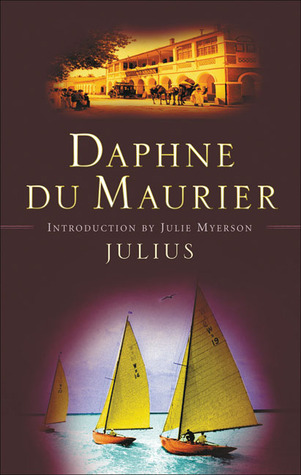
Julius by Daphne du Maurier

Julius This book was originally published under the title The Progress of Julius and is the chilling story of an ambitious and ruthless man who goes through life determined to get “something for nothing” and not caring who gets hurt in the process.

The novel begins in 1860 when Julius Levy is born into a family of French peasants who live in a small village on the banks of the Seine. The biggest influences on Julius’s early life are his loud, coarse grandfather and irresponsible mother, but he later grows closer to his father, Paul, a quiet Jewish man. With the outbreak of the Franco-Prussian war the Levys take refuge in Paris until a tragedy results in Julius and his father fleeing for the safety of Paul’s home country, Algeria.

At first, Julius plans to follow a religious life, but he soon finds that buying and selling in the marketplace holds more attraction for him and that he enjoys cheating people out of their money. When life in Algeria starts to bore him, Julius travels to England where he begins to build up a huge business empire. But even as Julius becomes one of the richest and most successful men in the world, he continues to show a complete lack of regard for the people around him, using and manipulating them to get what he wants…until his daughter Gabriel is born.

This was Daphne du Maurier’s third novel, published in 1933 when she was only twenty six years old and it amazes me that she was able to write such a sophisticated, powerful novel at such an early stage of her career. I’ve found that all of du Maurier’s books have some dark and disturbing elements, but this must surely be the darkest and most disturbing of them all – though not in a gothic way like Rebecca or Jamaica Inn. The main reason I found this book so disturbing is because Julius Levy is one of the most horrible, despicable characters I’ve ever come across in literature.

He’s completely heartless, cruel and callous with no redeeming features at all. Early in the story when the Levy family are forced to leave their village for Paris, Julius drowns his beloved cat rather than leave her with a neighbour, because if he can’t have her he doesn’t want anyone else to have her. This is an early indication of what Julius is like and as the story continues there are dozens of other examples of his selfishness and cruelty. And yet, for some reason, he still inspires feelings of love and friendship in other people, which is hard to understand as he rarely, if ever, shows any consideration or compassion for anybody but himself – they always come second to his latest money-making schemes.

As usual, du Maurier’s settings are wonderfully atmospheric, from the small French village of Puteaux to the dusty marketplaces of Algeria to the area of London in which Julius gets his first job in a bakery. The historical setting, beginning with the Franco-Prussian War and the Siege of Paris, is interesting too. This was not one of my favourite du Maurier novels (it was much too uncomfortable and unpleasant for that) but, like all of her books, it kept me gripped and fascinated from the first page to the last.

A Hero of Our Time by Mikhail Lermontov

A Hero of Our Time - Lermontov

Again, you’ll tell me, no man can be as bad as that; and I’ll ask you why, if you have believed in the possibility of the existence of all the villains of tragedy and romance, you should not believe in the reality of Pechorin? If you have admired inventions far more terrible and monstrous, why does this character, even as an invention, not deserve your mercy? Could it be because there is more truth in him than you would like?

A Hero of Our Time is described as one of the first great Russian novels, though I have to confess that until recently I had never even heard of it or Mikhail Lermontov. Having read the biographical information about the author included in this book, it seems Lermontov’s life was almost as unusual and interesting as his fiction! A Hero of Our Time was published in 1840, just before he was killed in a duel at the age of twenty six.

This is not a novel with a chronological structure or a conventional plot with a beginning and an end. Instead it consists of five separate stories, some very short and some much longer. Together they create a portrait of Grigory Pechorin, a young army officer – though as the author tells us in the preface, it’s also “a portrait built up from the vices of our whole generation, in all the fullness of their development”.

Far from being the hero suggested by the title, Pechorin is actually much more of an anti-hero, selfish, cruel, manipulative and motivated by boredom and disillusionment. He is not a likeable character at all and isn’t supposed to be, but as the novel unfolds and we are given his own version of events as well as seeing him from the perspective of others, we come to understand him better. By the end of the book I found I didn’t hate Pechorin as much as I thought I would at first and for all his faults and flaws I thought he was a fascinating character.

In the first story, an unnamed narrator is travelling through the Caucasus where he is joined by an army captain, Maxim Maximich. As they travel together, the captain tells the narrator about his friendship with Pechorin. In the second story the narrator briefly meets Pechorin and the final three stories are entries from Pechorin’s own journal. With each of these five chapters we learn a little bit more about Pechorin’s life and follow him through a series of adventures, romances and even a thrilling duel. Despite the disjointed and episodic feel of the book it’s fast-paced and never boring. I was also pleased to find that although the main characters are soldiers, the story concentrates on their personal lives and there are no long battle scenes or detailed descriptions of military tactics to struggle with – though there are some great descriptions of the landscape of the Caucasus, where the novel is set.

I really enjoyed A Hero of Our Time. Of all the Russian novels I’ve read, I found this one by far the easiest to read, despite it being written in the early 19th century. This Oxford World’s Classics edition is translated by Nicolas Pasternak Slater (the nephew of Boris Pasternak who wrote Dr Zhivago) and I think it’s an excellent translation; it flows so effortlessly it hardly feels like a translation at all. It’s a very short novel too (the actual story is less than 140 pages long – the rest of the book is made up of the introduction, notes, maps and other additional material) so could be a good choice if you want to read some Russian literature but feel intimidated by Tolstoy or Dostoyevsky.

This edition also includes a piece of writing by Alexander Pushkin entitled A Journey to Arzrum in which Pushkin describes his own travels through the Caucasus. It’s really more of a travelogue or journal than a story but it works as an interesting companion to Lermontov’s novel.

Have you read this book? Which other Russian classics would you recommend?