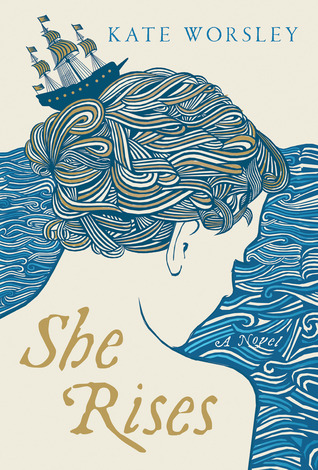
She Rises by Kate Worsley

She Rises She Rises begins in 1740 when Louise Fletcher, a young dairymaid from Essex, is offered a position as lady’s maid in a sea captain’s house in Harwich. Louise has never been more than a few miles away from home, so arriving at the Handleys’ prosperous household in the busy port town is like entering a different world. As Louise settles into her new job and gets to know her selfish, spoiled young mistress Rebecca Handley, she also decides to see if she can find out what happened to her brother, Luke, who went away to sea and has never been seen or heard from again.

In the other main thread of the story we learn how Luke was pressed into the Royal Navy from a tavern in Harwich and found himself taken aboard the warship, the Essex. Luke has never been on a ship this size before and soon discovers that life at sea is harsh and dangerous. Things improve when he is befriended by an older, more experienced seaman, Nick Stavenger, but still Luke wants nothing more than to escape and get back home to the girl he loves.

Louise’s story and Luke’s are told in alternating chapters and both narratives have a distinctive voice and style of their own. Luke’s is in the present tense and is filled with nautical terminology and slang; Louise’s is addressed to a mysterious ‘you’ – though we don’t have to wait long before we learn who ‘you’ is. Having finished the book, I think I can see why Kate Worsley chose to write the story in this way, but I’m not a fan of unusual or experimental writing styles in general and couldn’t help thinking that it made the book harder to read than it really needed to be!

The book was so atmospheric, though! The chapters set at sea felt realistic and gave me a good idea of how hard life could be for a pressed man in the navy, though as usual I struggled with all the references to mizen yards, main-topsails and other seafaring terms. But the descriptions of eighteenth century Harwich were particularly vivid: the labyrinths of dark alleys and smugglers’ tunnels, the smell of fish, the sailors standing in tavern doorways, the way the streets become flooded with sea water when the tide rises.

So, there were some aspects of this book that I loved and others that I didn’t like very much. I found it too slow at the beginning, but when Louise’s and Luke’s stories finally come together, the effect is amazing. I had been starting to get impatient, wondering how the two of them would be linked, but when it happened it was definitely worth waiting for! Things that had confused me earlier suddenly made perfect sense and some of the revelations in the final section of the book made me want to go back and read earlier chapters again.

She Rises reminded me of Sarah Waters, particularly Tipping the Velvet, due to the way both authors deal with themes such as gender and identity within a historical setting – so I wasn’t surprised to read that Sarah Waters was Kate Worsley’s mentor. As a first novel this was a very clever and ambitious book and although I had too many problems with it to be able to say that I loved it, I will be hoping for more books from Kate Worsley in the future.

Another Classics Club Spin!

The Classics Club

It’s time for another Classics Club Spin!

Here are the rules:

* List any twenty books you have left to read from your Classics Club list.
* Number them from 1 to 20.
* Next Monday a number will be chosen.
* This is the book you need to read in May and June!

And here is my Spin List:

Five books I’ve been looking forward to reading:

1. Frenchman’s Creek by Daphne du Maurier
2. Captain Blood by Rafael Sabatini
3. The Heir of Redclyffe by Charlotte M. Yonge
4. Excellent Women by Barbara Pym
5. Family Roundabout by Richmal Crompton

Five books from the 20th century:

6. Cold Comfort Farm by Stella Gibbons
7. The Remains of the Day by Kazuo Ishiguro
8. East of Eden by John Steinbeck
9. The Age of Innocence by Edith Wharton
10. The Midwich Cuckoos by John Wyndham

Five long Victorian books:

11. Vanity Fair by William Makepeace Thackeray
12. David Copperfield by Charles Dickens
13. Shirley by Charlotte Bronte
14. The Mill on the Floss by George Eliot
15. Wives and Daughters by Elizabeth Gaskell

Five picked completely at random:

16. The Betrothed by Alessandro Manzoni
17. Around the World in Eighty Days by Jules Verne
18. The Charterhouse of Parma by Stendhal
19. The Heart of Midlothian by Sir Walter Scott
20. The Time Machine by H.G. Wells

Now I have to wait until Monday to find out what I’ll be reading…

Meeting Katherine de Valois

I have read two historical fiction novels recently both on the subject of the fifteenth century French princess, Katherine of Valois, the wife of King Henry V of England. The Forbidden Queen by Anne O’Brien and The Agincourt Bride by Joanna Hickson both tell Katherine’s story but in very different ways and as I’ve read them so close together, I thought it would be interesting to combine my reviews into one post.

The Forbidden Queen Let’s start with The Forbidden Queen by Anne O’Brien, my favourite of the two books. The novel is narrated by Katherine herself and covers most of the significant events of her life. The youngest daughter of King Charles VI of France and his wife, Isabeau of Bavaria, Katherine is married to Henry V several years after the English victory over the French at the Battle of Agincourt in 1415. Queen Isabeau has agreed to a settlement with Henry that would make him heir to the throne of France in place of Katherine’s own younger brother, the Dauphin.

When Henry dies just a few years into their marriage, Katherine falls in love with his cousin, Edmund Beaufort – but does Edmund love her in return or is he more interested in the power he would gain as husband of the Queen Dowager? It’s not until Katherine gets to know her Welsh Master of Household, Owen Tudor, that she finally has a chance of true happiness.

This is quite a romance-based novel, but maybe that’s to be expected as Katherine sadly didn’t seem to have much of a part to play in politics or in the reign of her son, the young Henry VI. O’Brien did such a good job of making me see how Katherine was desperate for love and affection and how disappointed she was when she realised that she was going to get neither of these from the King. Henry V was not portrayed as a cruel or deliberately unkind husband, just one who was insensitive and indifferent, and it was so sad when Katherine realised the true nature of the man she was married to. But while I could have a lot of sympathy for the young, naïve Katherine I did start to wish that, as she got older, she would become more mature and independent. It was sad and frustrating to see her making the same mistakes again and again, looking for love where there was obviously none.

Although Katherine sometimes irritated me, I did like her. I also thought O’Brien’s characterisation of the three very different men in Katherine’s life was very well done: the distant, preoccupied King, interested only in battle strategies and military campaigns; the charismatic but ambitious and untrustworthy Edmund Beaufort; and the proud, quiet Welshman Owen Tudor. This is the first Anne O’Brien book I’ve read and I was quite impressed with the overall quality of her writing and her ability to tell a good story.

I received a copy of this book from Netgalley for review.
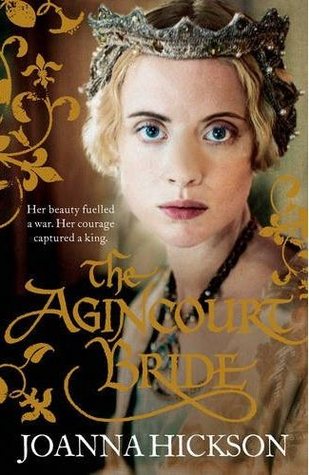
The Agincourt Bride Now for The Agincourt Bride by Joanna Hickson. In this book, the author has used the alternative spelling, Catherine, rather than Katherine, so I have done the same in this review. This is actually the first of two volumes and covers only the early part of Catherine’s life, from her childhood until shortly after her marriage to Henry. The sequel, The Tudor Bride, is due out later this year.

This novel is narrated by Catherine’s nursemaid, Guillaumette Dupain (known as Mette). Mette, the daughter of a baker, is brought to the royal household to act as wet nurse for the baby Catherine, having recently had a stillborn child of her own. With Catherine neglected and ignored by her parents, Mette becomes almost like a mother to the princess. They are separated during Catherine’s years in the convent at Poissy but are reunited when Catherine is thirteen. Despite the attempts of others to part them again, Mette is devoted to Catherine and manages to stay with her, becoming her Mistress of the Wardrobe and her friend and confidante.

While both this book and the one above are at the lighter end of the historical fiction range (as you would probably expect from the cover designs and titles) this one was a bit too light for me. I also thought it was too long and I’m not sure there was really enough material for a book this length focusing on only the first years of Catherine’s life. Mette’s own personal story didn’t interest me much; her main function in the novel is to provide the perspective of someone close to Catherine, and there have been so many historical fiction novels published in recent years narrated by a conveniently placed servant that I think it’s becoming boring and formulaic. Seeing Catherine only through Mette’s eyes, I couldn’t engage with her the way I did in Anne O’Brien’s book and as a result I didn’t like this version of Catherine very much.

Joanna Hickson does go into a lot of depth in areas of Catherine’s early life that O’Brien didn’t have time to explore. I was intrigued by the storyline involving John the Fearless, Duke of Burgundy, who is portrayed here as a violent monster and I would be interested to know if there’s any evidence that he really behaved like this. We also get to know Catherine’s brothers and sisters much better than in the O’Brien book. None of them are particularly endearing characters, but Mette, having known them all since they were children, displays an amazing amount of patience and understanding with each of them. Their mother, Isabeau, comes across as completely selfish and heartless, and their father, Charles VI, suffers from a mental illness that causes him to believe he is made of glass and will shatter if anyone touches him. I got a real feeling for the sadness and loneliness Catherine and her siblings may have experienced as children, and could also see how France had been left in a vulnerable position without strong leadership.

The Agincourt Bride ends as Catherine travels to England for her coronation. It’s quite an abrupt ending, but presumably the next book is going to pick up the story from this point.

Having read both of these novels I’m glad to have had the opportunity to learn about a period of history I previously knew very little about. If you only want to read one book about Catherine (or Katherine) of Valois, I would say read The Forbidden Queen as it covers Catherine’s whole life and I enjoyed it a lot more than The Agincourt Bride. I would be happy to read more books by Anne O’Brien but I’m not sure about Joanna Hickson yet and will have to decide whether or not I want to continue with The Tudor Bride.
Heading Out to Wonderful by Robert Goolrick

Heading Out to Wonderful “When you’re young, and you head out to wonderful, everything is fresh and bright as a brand new penny, but before you get to wonderful, you’re going to have to pass through all right. And when you get to all right, stop and take a good, long look, because that may be as far as you’re ever going to go.”

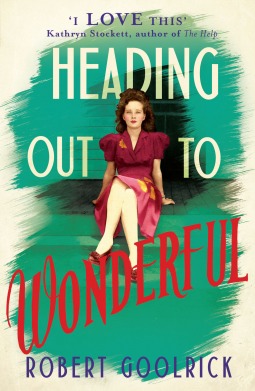
Heading Out to Wonderful is set in Brownsburg, Virginia, a small town where people live quiet, peaceful lives, where everyone goes to church on a Sunday and where no crime has ever been committed. Then one day in 1948, a stranger, Charlie Beale, arrives in the town with a suitcase full of money and another containing a set of butcher’s knives. Deciding that Brownsburg is where he wants to stay, Charlie gets a job working for the butcher, Will Haislett, and soon settles into his new life, getting to know Will, his wife Alma, and their five-year-old son, Sam. He and Sam become particularly close friends, with the little boy accompanying Charlie everywhere he goes.

Things begin to change when Charlie meets the beautiful Sylvan Glass. Sylvan is not like the other women in Brownsburg – she models herself on the Hollywood actresses she admires so much, wearing lipstick, earrings and glamorous dresses – and Charlie is instantly drawn to her. But Sylvan is the wife of the town’s richest man, Boaty Glass, and it’s obvious from the beginning that her relationship with Charlie can only lead to trouble. And when Sam, who is never far from Charlie’s side, witnesses something he really shouldn’t have seen, his loyalty to Charlie will be tested.

I really enjoyed the first half of this book. From the very first chapter there is an atmosphere of mystery. Who is narrating this story? Who is Charlie Beale and where did he come from? Where did he get his money? We learn almost nothing about his background – and maybe that’s the point, as he has come to Brownsburg to start a new life – but we still can’t help wondering what might have happened in his past. Other characters are intriguing too; one of my favourites was the dressmaker, Claudie Wiley. Claudie and Sylvan become friends due to their shared love of pretty clothes, but Claudie fears that it will never be a true friendship because this is Virginia in the 1940s and she is black while Sylvan is white.

In the second half, the tone of the novel becomes a lot darker. I thought I knew where things were heading, but it turned out I was wrong: what actually happened was more shocking and more devastating than I had expected. It’s the combination of the idyllic setting and the feeling of impending disaster that makes this novel so unsettling and causes what seems at first to be a pleasant, gentle story to become something else entirely.

This book wasn’t perfect – there were things that I didn’t understand, actions that didn’t make sense and storylines that could have been developed further – but overall I was impressed and I really liked Robert Goolrick’s writing style. Although the pace was slow, the story was compelling and I loved the portrait Goolrick painted of a small 1940s town and the people who lived there. My verdict is not quite ‘wonderful’ but definitely more than just ‘all right’!

I received a copy of this book from the publisher for review.

Classics Club May Meme

classicsclubI haven’t participated in the last few monthly memes from the Classics Club but I thought I would join in this month as it’s a nice, easy question to answer.

Tell us about the classic book(s) you’re reading this month. You can post about what you’re looking forward to reading in May, or post thoughts-in-progress on your current read(s).

Before I start to discuss this month’s books, I should probably mention the three books from my Classics Club list that I read in March and April and still haven’t found time to write about yet! They are:

Doctor Zhivago by Boris Pasternak
The Last Chronicle of Barset by Anthony Trollope
The Ladies’ Paradise by Emile Zola

I’ve been behind with my reviews all year, but I hope to post my thoughts on these three in the next couple of weeks.

This month I’m planning to read these:

Far from the Madding Crowd

Far from the Madding Crowd by Thomas Hardy

I received a beautiful Penguin English Library edition of this book in a giveaway from Heavenali last year and feel bad that I haven’t had a chance to read it yet. This will definitely be the next classic I read and I’ll probably start it this weekend. I’ve only read a few of Thomas Hardy’s books but I loved them and am really looking forward to reading more of his work.

Twenty Years After

Twenty Years After by Alexandre Dumas

I re-read The Three Musketeers recently and mentioned that I want to continue with the other books in the Musketeers series. Twenty Years After is the second one and I can’t wait to read it as I’ve loved everything else I’ve read by Dumas. This is a very long book, though, so I might not finish it before the end of the month.

And those are my plans for May! I also need to read this month’s section of War and Peace (Book 2, Parts 3 and 4) for the readalong I’m taking part in.

Are there any classics you’re looking forward to reading this month?

Sir Percy Leads the Band by Baroness Emmuska Orczy

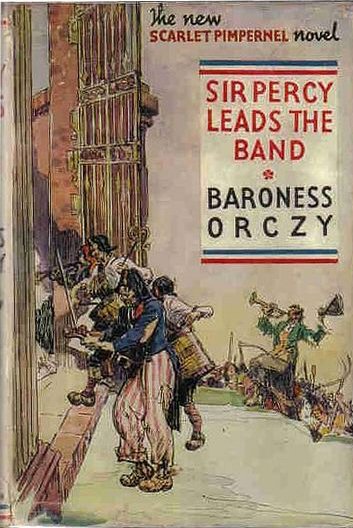
Sir Percy Leads the Band This is one of the many sequels to Baroness Orczy’s classic historical adventure novel, The Scarlet Pimpernel. The story is again set during the French Revolution and at the beginning of the novel, in January 1793, King Louis XVI of France – now known simply as Louis Capet – has been found guilty of ‘conspiring against liberty’.

With their former king sentenced to death it’s a dangerous time for the French aristocracy, and Sir Percy Blakeney and his men are in France to help the La Rodière family avoid the guillotine. Knowing that his old enemy Chauvelin will be determined to track him down, a disguise is necessary – so Sir Percy becomes the fiddle-playing leader of a disreputable band of musicians entertaining crowds of revolutionaries in a tavern near the Château de la Rodière. This means Percy and the League of the Scarlet Pimpernel are ideally placed to be able to protect the family when the mob decides to attack the Château…but could someone within the League be about to betray their plans?

After reading (and loving) The Scarlet Pimpernel last year, I wanted to try another book in the series. I wasn’t sure which one to choose as I’ve seen a few different recommended reading orders, but I decided on this one as it is set immediately after the events of The Scarlet Pimpernel. I enjoyed it but it wasn’t as good as the original book. With all the action taking place in France, this means we don’t see anything of Sir Percy’s wife, Marguerite, which I thought was a bit disappointing as their relationship had formed such a big part of the story in The Scarlet Pimpernel. Marguerite was not a particularly strong character but I connected with her more than I did with either of the two female characters in this book, Blanche Levet or Cécile de la Rodière.

We do spend a lot of time with the other men of the League of the Scarlet Pimpernel. I remembered some of them from the previous book – Lord Anthony Dewhurst, Sir Andrew Ffoulkes and Lord Hastings – but there was also one who was new to me, St John Devinne. From the start it seems that Devinne is distrusted by everyone except Sir Percy and as Percy has previously proved to be so good at judging people and situations, the reader is made to wonder who is right and who is wrong. A lot of the novel’s tension and suspense comes from waiting to see whether he is going to betray Percy and the rest of the League.

Sir Percy Leads the Band was entertaining enough but I didn’t think it was anything very special and there’s really not a lot more I can say about it! Although I didn’t like it as much as The Scarlet Pimpernel it won’t deter me from trying some of the other books in the series at some point. Maybe those of you who are Scarlet Pimpernel fans can tell me whether it’s best to continue reading the series chronologically or if there’s another order you would recommend.

War and Peace Readalong: March and April

warandpeace2013

This year I’m taking part in a year-long group read of War and Peace, hosted by Amy and Iris. I had fallen behind with the reading in March (which is why I didn’t post an update for that month) but I managed to catch up again in April.

After struggling with February’s very war-dominated section I’m now enjoying the book again and I’m pleased that there does seem to be more balance between the war scenes and domestic scenes than I had feared at first! I also made things easier for myself this month by doing what I should probably have done from the beginning and printing off a character list to keep beside me while I read – although as I get further into the book I’m finding the number of characters less overwhelming and easier to keep track of anyway.

Book 1 Part 3

This was the section I really should have read in March. In the first half of this section we return to Russian society and rejoin some of the female characters we haven’t seen since Part 1, including Princess Helene, who marries Pierre, and poor Princess Marya, who turns down the chance of happiness for the sake of her father. In the second half we are with the army again, before and during the Battle of Austerlitz. Although I still don’t think the ‘war’ scenes of War and Peace are ever going to be my favourites, I found these easier to follow and understand than the battle scenes in Part 2 (see my comments from February). They still feel a bit chaotic and confusing, but that’s probably the point!

The most memorable parts of this section for me were Nikolai Rostov getting his first glimpse of Tsar Alexander, and Andrei Bolkonsky meeting his hero, Napoleon. The scene with Napoleon shows how we can build people up in our minds to be something they’re not, which can lead to disillusionment when we finally meet them and discover they are ordinary human beings like ourselves. In Rostov’s case the fact that he idolises the Tsar so much means that when he finally gets the chance to speak to him he is too awestruck to approach him and ends up regretting a missed opportunity.

Book 2 Parts 1 & 2

And this was April’s reading. There was a lot happening this month, including a birth, a death and a duel! With Nikolai Rostov coming home on leave, we are also reacquainted with the members of the Rostov household, including Natasha and Sonya.

From these two sections, I thought some of the scenes that stood out the most were the ones where Pierre, after leaving his wife, meets a mysterious stranger at the station and makes the decision to become a Freemason. There are a few chapters devoted to this part of the story and they had a slightly surreal, otherworldly feel in comparison to what we’ve read so far. I also thought Pierre’s discussions with Andrei were interesting, with Pierre explaining how much happier he has been since he stopped being selfish and started considering other people, and Andrei arguing that his actions could actually be making things worse rather than better.

Towards the end of this month’s reading we return to the ‘war’ when Rostov rejoins the army and feels the same joy on being welcomed back to his regiment that he felt on being welcomed home by his family. But this time, rather than facing chapter after chapter of military tactics and strategies (the reason I wasn’t enjoying the book in February) we are shown more of the human side of war, as the men begin to suffer from starvation and illness. Rostov experiences more of the disillusionment I mentioned earlier when he visits the wounded Denisov in a military hospital and is shocked by the way the patients are being treated.

I really enjoyed April’s two sections and found them surprisingly quick to get through. And we’re now 33% into the book, which is very encouraging!