Like This, For Ever by S.J. Bolton

Like This For Ever Although I don’t read as much contemporary crime fiction as I used to, S.J. Bolton is one author whose books I always look out for. This is the third in her Lacey Flint detective series (or the fourth if you include the novella, If Snow Hadn’t Fallen, which I haven’t read yet). After the events of the previous book, Dead Scared, Lacey has been recovering from her traumatic experiences and is still not ready to return to work. But when young boys start going missing in Lacey’s area of London and their bodies are discovered in the river a few days later drained of blood, Lacey finds herself drawn into another mystery – despite the attempts of DI Dana Tulloch to keep her out of the investigation. However, Dana’s team are making slow progress in solving the crime as whoever is committing these murders does not appear to have a motive and doesn’t seem to fit the typical profile of a serial killer.

The house next door to Lacey’s is the home of eleven-year-old Barney Roberts and his father. Being the same age as the other boys who have disappeared, Barney and his friends are following the case very closely on Facebook. As his father always seems to be working late leaving Barney at home on his own, he has plenty of time to keep up to date with the latest news on the crimes. As Lacey gets to know her young neighbour better she grows concerned for this intelligent boy who is so obsessed with the murders and who still seems to be grieving for the mother who vanished from his life seven years earlier. Can Lacey help Barney find his mother? Will the murderer be caught before he or she has time to kill again? And what is the true identity of the mysterious Peter Sweep, who always seems to be one step ahead of the police?

Bolton’s standalone novels, Awakening and Sacrifice are still my favourites (I loved the gothic elements of her earlier books), but I do like the Lacey Flint series too and Like This, For Ever is the best so far, in my opinion. I found the mystery in this one very difficult to solve – there were several times when I was convinced I knew who the murderer was, only to be proved wrong, wrong and wrong again! I was completely taken by surprise by most of the plot twists (and there are a lot of them). I should have remembered that nothing is ever as it seems in a Bolton novel and if things appear too obvious, it’s usually because they are.

Lacey herself continues to be a flawed and fascinating character and in this book she is more isolated than ever, refusing to allow anyone to get close to her – including Mark Joesbury, another recurring character, with whom she has a very turbulent relationship. In the previous two books, Now You See Me and Dead Scared, Lacey was narrating in the first person, but this story is told in the third person which I thought allowed the real Lacey Flint to be even more obscured from the reader. And with Lacey not at work and on the outside of the investigation, we spend more time getting to know the other members of the Major Investigation Team – especially Dana Tulloch, though I’ve never found Dana a very appealing character and in this book I really disliked her because of the way she was treating Lacey. I did love the character of Barney, the eleven-year-old-boy with a gift for finding everything else apart from his missing mother, and for me he was the real star of the book.

S.J. Bolton’s books can sometimes be very dark and they can sometimes be gory. I tend to avoid this type of crime fiction but am happy to make an exception for Bolton. I didn’t think the gory parts in this book were too excessive, so if you’ve coped with any of her other books you should be fine with this one. While my preference is for historical or vintage mysteries and the traditional methods of detection, it can’t be denied that modern technology opens up lots of fascinating new ways to both commit crimes and solve them. The use of social media, especially Facebook, features very strongly in the plot and we are shown how it can be of help to the police as a source of information and discussion, as well as causing problems when people decide to abuse it.

This is my favourite of the series so far but if you’re new to the Lacey books I would probably recommend starting at the beginning with Now You See Me and reading them in order so that you can get to know the characters and the relationships between them. If you do choose to start with this one, though, it shouldn’t be a problem as Bolton has taken care not to spoil too much of the previous novels. Now I just need to find time to read Blood Harvest, the other S.J. Bolton book I still haven’t read.

Please note that the US title of this book is Lost.

I received a copy of this book via Netgalley for review
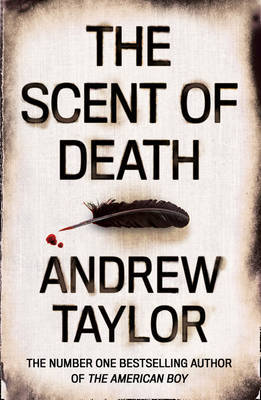
The Scent of Death by Andrew Taylor

The Scent of Death I’ve been looking forward to reading this book, having enjoyed some of Andrew Taylor’s previous novels, including The American Boy (An Unpardonable Crime in the US), so I was pleased to find that The Scent of Death was a similar type of historical mystery, though set in a different time and place.

The story begins in 1778, during the American War of Independence. Our narrator, Edward Savill, is an English clerk who has been sent to Manhattan (an area still under British rule at that time) to investigate the compensation claims of Loyalists who have been dispossessed of their property. Before Savill’s ship even arrives in the port, he sees a dead body being lifted out of the water. Soon another body is discovered – the body of Mr Pickett, a man who has connections with the Wintours, the family Savill will be staying with during his time in New York.

While Savill worries about the people he has left behind in England – his cold, distant wife and his beloved daughter – he also finds himself becoming embroiled in the lives of the Wintour family. As he gets to know Judge Wintour, his invalid wife and his beautiful daughter-in-law Arabella, whose husband is missing in action after the Battle of Saratoga, he starts to suspect they are covering up some secrets. Who killed Mr Pickett and why? Whose is the child Savill hears crying in the night? And what is the mysterious ‘box of curiosities’ he has heard so much about?

One of the things I like about Andrew Taylor’s historical novels is that he makes a real effort to use language appropriate to the time period throughout both the dialogue and the narration. I read a lot of historical fiction and there are a surprising number of authors who make no attempt to do this at all; there are very few who do it as convincingly as Taylor. He doesn’t use any jarring modern words or phrases and it all adds to the atmosphere and authenticity of the story, so that I could almost believe Edward Savill really was an 18th century English gentleman narrating his adventures to us. Remembering that this novel is set in the 1770s, we are also given a range of different opinions on slavery rather than the author just projecting 21st century views onto all of his characters, which would have been unrealistic.

As with Taylor’s other novels, you can never be sure which characters can and can’t be trusted. From Mr Townley and his clerk, Mr Noak, who nursed Savill through his seasickness on the long voyage from England, to the enigmatic Arabella Wintour herself, some of these people turn out to be friends and others enemies. I didn’t actually like any of them apart from Savill himself, but that wasn’t a problem at all – I’m sure we weren’t supposed to like them and were intended instead to get a feel for the hostility and suspicion Savill encountered everywhere he went.

The vivid, atmospheric settings are another strong point of Taylor’s novels. I don’t have much knowledge of the American Revolutionary War and Taylor does such a great job of portraying life in New York during this period: the variety of different people, including soldiers, spies, refugees and slaves, who had made the city their home; the overwhelming heat of summer and the intense cold of winter; and all the danger and intrigue of a city at war. Savill’s investigations take him into the heart of Canvas Town, an area of slums where many of the city’s criminal gangs have settled after it was destroyed by fire, and also away from New York, to the ruins of Arabella’s family plantation, Mount George.

But this was not a perfect book: while parts of it were exciting and absorbing (especially Savill’s journey into the dangerous, lawless ‘Debatable Ground’) and the short chapters made it easy to keep reading, the story moved forward very slowly and at almost 500 pages it felt too long – although admittedly it would be hard to see what could have been taken out. I did enjoy it, though, and while I did come close to solving the mystery, there were still some surprises and plot twists towards the end of the book. So, this was not my favourite Andrew Taylor book and unlike The American Boy will not be one of my books of the year, but it was definitely still worth reading and I hope it’s true that we are going to meet Edward Savill again in a future novel.

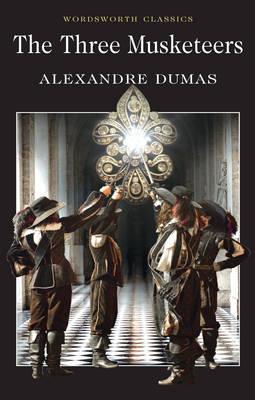
The Three Musketeers by Alexandre Dumas (re-read)

The Three Musketeers One of my goals for 2013 was to re-read more of my favourite books, something I’ve been neglecting in recent years. Well, here we are in the middle of April and so far I’ve only re-read one!

The Three Musketeers may be the title, but our hero is not a musketeer when we first meet him at the beginning of the novel, in the year 1625; his name is d’Artagnan and he’s a young man from Gascony in France, on his way to Paris where he hopes to join the King’s Musketeers under the command of Monsieur de Tréville. On his arrival in Paris, d’Artagnan encounters three of the musketeers – Athos, Porthos and Aramis – in one of those wonderful openings to a book that once you’ve read you’re unlikely ever to forget.

Soon d’Artagnan and the three musketeers become the best of friends, and when d’Artagnan meets and falls in love with Constance Bonancieux, one of the Queen of France’s ladies, all four of them are drawn into the intrigue surrounding the Queen’s affair with the powerful English nobleman, the Duke of Buckingham. With the King’s advisor, Cardinal Richelieu, hoping to expose the affair, Constance, d’Artagnan and his three friends become targets of the Cardinal and his spy, the beautiful Lady de Winter. But Milady, as she is known, is hiding a secret of her own and if d’Artagnan discovers the truth, he and Constance could find themselves in even greater danger.

I first read The Three Musketeers five years ago and when I finished it I had intended to read the other books in the trilogy (the second is Twenty Years After and third is the three-volume The Vicomte de Bragelonne/Louise de la Valliere/The Man in the Iron Mask) but as so often happens other books got in the way and I never did get around to continuing with the d’Artagnan series. And so when I made my list for the Classics Club I put all of them on there – along with a re-read of The Three Musketeers as I thought it would be a good idea to remind myself of the characters and story before embarking on Twenty Years After – and anyway, I never need an excuse to re-read a book that I enjoyed so much the first time!

I love Alexandre Dumas and although The Three Musketeers is not my favourite of the three novels of his that I’ve read (that would be The Count of Monte Cristo) I still think it’s a wonderful book with some great characters. The musketeers all have such different personalities: the aristocratic, melancholy Athos, the loud, brash Porthos, the fastidious would-be priest, Aramis, and of course, the brave, passionate d’Artagnan. Everyone will be able to pick a favourite musketeer, and mine is Athos. In her recent post on The Count of Monte Cristo, Lisa compared the character of Edmond Dantes with Francis Crawford of Lymond from the Lymond Chronicles by Dorothy Dunnett (two other great fictional characters, by the way); I agree, but I can also see some of Athos’ character traits in Lymond too, especially during one of the most memorable set pieces in the book, where the four friends eat breakfast in a fortress surrounded by enemy soldiers because it’s the only place they can find to talk in private.

It seems five years is a good length of time to wait between re-reads of a book. I had forgotten enough so that I could be surprised by the twists and turns of the plot, but remembered just enough to be able to look forward to some of my favourite parts: the breakfast scene I mentioned above, the episode with the Queen’s diamond studs, and especially the sequence of chapters in the middle (entitled Porthos, The Thesis of Aramis and The Wife of Athos) which is just a joy to read. The friendship between d’Artagnan, Athos, Porthos and Aramis is so inspiring and heartwarming (all for one, one for all!) and this is why, for me, there’s a change in the tone of the book when towards the end, the focus switches from the musketeers to Milady and I don’t enjoy the final third quite as much as the first two thirds.

Now, a note on the translation. I read the Wordsworth Classics edition of The Three Musketeers which uses the first English translation by William Barrow in 1846 (I think this is also the one used by Oxford World’s Classics). I would be interested to try a newer translation, such as Richard Pevear’s, to see how it compares – and also because I’m aware that the older translations altered certain parts of Dumas’ original text because they considered it too sexually explicit for Victorian readers. I can see that some readers today would probably find the Barrow translation too literal and antiquated but I didn’t have a problem with it at all; I actually quite like the way the sentences are constructed and I think it has a certain romantic, old-fashioned quaintness about it.

I’ll be moving on to Twenty Years After very soon!

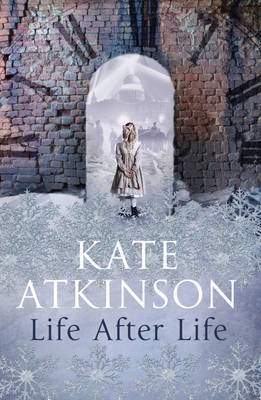
Life After Life by Kate Atkinson

Life After Life Do you ever look back on your life and wish you had done something differently? Do you sometimes regret the decisions you’ve made and wonder what would have happened if you’d chosen another path through life? I’m sure we would all answer ‘yes’ to those questions, but unfortunately most of us only have one chance to get things right. But Ursula Todd is not like the rest of us. If things don’t work out the first time, she does have the chance to go back and try again…and again…and again.

Ursula is born one snowy night in February 1910 with the umbilical cord around her neck. Darkness falls and she dies before the doctor has time to arrive. We turn the page and it’s that same night in February 1910 again. This time the doctor is present and she survives, but this is only the beginning of Ursula’s journey through life. Every time she reaches a turning point, she must be sure to make the right decision – otherwise darkness will soon fall once more and Ursula must return to the night of her birth in 1910 and have another attempt.

As we follow Ursula again and again through some of the major events of the twentieth century – including both the First and Second World Wars (there are some very atmospheric scenes set in London during the Blitz) – she slowly grows in wisdom and learns from her previous mistakes, even without being fully aware of what is happening to her or why. Gradually she develops a sort of intuition or déjà vu that allows her to draw on her past experiences, and this is used to particularly good effect in an early sequence of chapters in which she has several attempts at preventing the maid, Bridget, from going to London and catching Spanish flu.

Apart from Ursula herself, the characters who are almost always there throughout every version of the story are the members of the Todd family – Ursula’s brothers Maurice, Teddy and Jimmy, sister Pamela and parents Hugh and Sylvie – and the servants, Mrs Glover and Bridget. Izzie, Ursula’s wild and irresponsible aunt, also plays a significant role in many of the storylines. Other characters come and go; people who are an important part of Ursula’s life in one existence barely appear at all in another and it’s fascinating to see how something as simple as a chance encounter in the street (and the way she reacts to it) could completely alter the course of her future. Sometimes Ursula is unable to change the outcome of a particular event no matter what choices she makes; on other occasions even a small action has huge consequences.

Life After Life is a very clever, complex novel; I was so impressed by it! With such an unusual and complicated plot it could have been a disaster, but it wasn’t; I thought everything worked perfectly and although I found it confusing at first, after the first few chapters I knew I was going to love the book. It’s actually much less repetitive than you might think and fortunately we don’t have to go right through the entire story from the beginning each time Ursula is reborn! I sometimes felt a bit distanced from Ursula, maybe because in each of her lives she makes different choices, has different ambitions and motives, so is not exactly the same person she was in a previous existence – but that didn’t stop me liking her and hoping things would work out better for her the next time darkness fell and she went back to that snowy February night yet again.

This is the first Kate Atkinson book I’ve read and having enjoyed it so much I will be looking out for her other books now. I understand that her earlier novels are very different to this one but I would still like to read them and would welcome any recommendations.

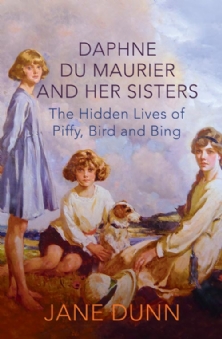
Daphne du Maurier and her Sisters: The Hidden Lives of Piffy, Bird and Bing by Jane Dunn

Daphne du Maurier and Her Sisters I don’t read a lot of biographies but I was pleased to have the opportunity to read this one as Daphne du Maurier is one of my favourite authors. Jane Dunn has previously written a book on Virginia Woolf and her sister Vanessa Bell and another about Elizabeth I’s relationship with Mary Queen of Scots, but this is the first time I’ve read any of her work.

Daphne du Maurier and Her Sisters, as the title suggests, tells the story of not just Daphne, but also her two sisters, Angela and Jeanne – or Piffy, Bird and Bing as they were nicknamed. Rather than looking at each of the sisters’ lives separately, Dunn blends their three stories together and shows us the different ways they reacted to the same experiences and the influence they had on each other both as people and as writers or artists.

The three girls were born into a family of celebrities at the turn of the 20th century. Their father, Gerald, was a famous actor and theatre manager and their mother, Muriel Beaumont, was also an actress, while their grandfather, George du Maurier, was a successful writer. Angela (Piffy), Daphne (Bing) and Jeanne (Bird) had a rich and privileged childhood, but not always a very happy one. With a mother who could often be very distant, it was the flamboyant, theatrical Gerald who was the biggest influence on his daughters’ lives – sometimes in a good way and sometimes bad. He was a popular, charismatic man but also a selfish and spoiled one who liked to be the centre of attention and Daphne, who was less outgoing than her sisters, soon grew to resent the non-stop parties and socialising.

As Daphne is by far the most famous of the du Maurier sisters, it’s natural that most people who pick up this book will do so because they want to learn more about Daphne’s life. Having read Justine Picardie’s novel, Daphne, I already knew some of the basic facts – her difficult marriage to the soldier, Tommy ‘Boy’ Browning; her obsession with Menabilly, the house in Cornwall that became the model for Manderley in Rebecca – but I was keen to find out more about the author whose books I love so much. As a fan of Daphne’s novels I was hoping there would be more information on her work, so I was slightly disappointed that Dunn devotes no more than one or two pages to most of her novels, although it was enough to show me how Daphne’s writing related to various aspects of her life and I can now see how autobiographical many of her books were, particularly The Parasites and I’ll Never Be Young Again.

Yet despite my interest in Daphne, of the three du Maurier sisters the one I found I really liked and sympathised with was Angela. Dunn portrays Angela as a passionate, romantic and naïve girl who was eager to please but often felt inadequate and inferior, aware that she was not as pretty as Daphne and not her parents’ favourite. After a failed acting career, Angela wrote several novels but again found herself overshadowed by the success of her younger sister. Whenever she was mistaken for Daphne and asked if she was the novelist she would reply “I’m only the sister” which even became the title of her autobiography. The youngest sister, Jeanne, is not given as much attention in this book as Daphne and Angela, though this is understandable as less is known about her. Daphne and Angela both left behind a legacy of written work which Dunn is able to quote from, but in Jeanne’s case there is less material to work with especially as her life-long partner, the poet Noël Welch, chose not to cooperate.

I was completely gripped by the first few chapters of this book. I loved reading about the du Mauriers’ early years and meeting these three creative, imaginative little girls who enjoyed re-enacting their favourite scenes from Peter Pan and creating their own games and fantasy worlds. The descriptions of life after World War I – the Jazz Age of the 1920s and the lifestyles of the ‘Bright Young Things’ – were also fascinating. But as the sisters grew older and Dunn began to focus on constant holidays to France and Italy, and an endless cycle of friendships and love affairs, I thought the book started to become more repetitive and less interesting.

While I didn’t find this book as enthralling as the first few chapters led me to expect, I did still enjoy getting to know Piffy, Bird and Bing and have been left wanting to read the remaining Daphne du Maurier novels I still haven’t read, as well as maybe trying to find one of Angela’s.

I received a copy of this book for review via Netgalley

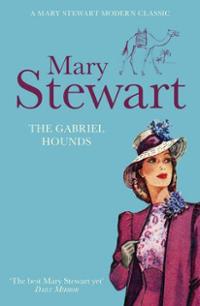
The Gabriel Hounds by Mary Stewart

The Gabriel Hounds The Gabriel Hounds is set in the 1960s and narrated by twenty-two-year-old Christy Mansel who is on a tour of Syria and Lebanon. After unexpectedly meeting her cousin Charles in a street in Damascus, they decide to visit their eccentric Great-Aunt Harriet who has lived near Beirut for several years. ‘Lady Harriet’, as she now calls herself, became a local celebrity after moving into an old, decaying palace by the Adonis River, dressing as a male Arab and modelling herself on the legendary Lady Hester Stanhope. Now over eighty years old, Harriet lives in seclusion with only her servants and her young English companion, John Lethman.

The cousins travel to the palace separately and Christy is first to arrive. She is not made to feel welcome but after a bizarre conversation with the old woman, she is allowed to spend the night there. It quickly becomes obvious that something is not right and when Charles joins her the next day they find that, in typical Mary Stewart fashion, they have stumbled upon a mystery!

Although Christy is in many ways very similar to Mary Stewart’s other heroines – beautiful, confident, brave and intelligent – I never managed to warm to her, or to her cousin Charles either. As Christy herself tells us at the beginning of the story, she and Charles both have “the ‘spoiled’ quality that we were so quick to recognise in one another; a flippant cleverness that could become waspish; an arrogance that did not spring from any pride of achievement but was, I am afraid, the result of having too much too young.” Luckily, though, the fact that I didn’t like the characters very much didn’t stop me enjoying the story and The Gabriel Hounds has joined Nine Coaches Waiting and The Moonspinners as one of my top three Mary Stewart novels so far.

As well as being an exciting page turner, I also loved the atmosphere and the unusual setting. The novel is very dated, I suppose – it’s hard to imagine young tourists like Christy wandering happily through the streets of Damascus and Beirut on their own today – but remembering that the book was written in the 1960s, they sound like fascinating places to have visited and Mary Stewart’s usual beautiful descriptions abound: the beauty of red anemones, the herds of goats grazing on the riverbanks, the scent of jasmine and roses, the fields of sunflowers grown for their oil.

The descriptions of the palace of Dar Ibrahim – with its labyrinth of dusty tunnels and corridors, wall mosaics, cracked marble floors and quiet courtyards – are wonderfully detailed and vivid, especially the scenes set in the old Seraglio, where Christy is given a room for the night. Then, of course, there’s the sound of Harriet’s saluki hounds howling in the distance as Christy explores the palace. Some parts of the book are quite creepy and there are some surprising plot twists too that made me want to immediately turn back and read previous sections again. The story also has what I’m coming to consider one of Stewart’s trademark dramatic, action-packed endings.

The final aspect of this novel I want to mention is the factual element. Lady Hester Stanhope was a real person and if you don’t know anything about her, I can almost guarantee that after reading this book you’ll be completely intrigued and will want to find out more about her amazing life, as I did. Mary Stewart has attributed a lot of Lady Stanhope’s characteristics and habits to the fictional Lady Harriet, including shaving her head and wearing a turban, and only admitting visitors to her room after dark. I’ve discovered that there’s a recent biography by Kirsten Ellis called Star of the Morning: The Extraordinary Life of Lady Hester Stanhope. Has anyone read it or is there another one you would recommend?

Children’s Classics Quiz: The Answers

As promised, here are the answers to the Children’s Classics quiz I posted last weekend. Well done to everyone who participated!

children-reading-1

1. The primroses were over.
Watership Down by Richard Adams

2. Once upon a time, sixty years ago, a little girl lived in the Big Woods of Wisconsin, in a little gray house made of logs.
Little House in the Big Woods by Laura Ingalls Wilder

3. I myself had two separate encounters with witches before I was eight years old.
The Witches by Roald Dahl

4. Roger, aged seven, and no longer the youngest of the family, ran in wide zigzags, to and fro, across the steep field that sloped up from the lake to Holly Howe, the farm where they were staying for part of the summer holidays.
Swallows and Amazons by Arthur Ransome

5. If you want to find Cherry Tree Lane all you have to do is ask a policeman at the crossroads.
Mary Poppins by P.L. Travers

6. It began with the day when it was almost the Fifth of November, and a doubt arose in some breast – Robert’s, I fancy – as to the quality of the fireworks laid in for the Guy Fawkes celebration.
The Phoenix and the Carpet by E. Nesbit

7. “Christmas won’t be Christmas without any presents,” grumbled Jo, lying on the rug.
Little Women by Louisa May Alcott

8. It was seven o’clock of a very warm evening in the Seeonee hills when Father Wolf woke up from his day’s rest, scratched himself, yawned, and spread out his paws one after the other to get rid of the sleepy feeling in their tips.
The Jungle Book by Rudyard Kipling

9. A sudden snow shower put an end to hockey practice.
Many Waters by Madeleine L’Engle

10. The first place that I can well remember was a large pleasant meadow with a pond of clear water in it.
Black Beauty by Anna Sewell

11. The little old town of Mayenfeld is charmingly situated.
Heidi by Johanna Spyri

12. This is a story about something that happened long ago when your grandfather was a child.
The Magician’s Nephew by C.S. Lewis

13. Harriet was trying to explain to Sport how to play Town.
Harriet the Spy by Louise Fitzhugh

14. The tempest had raged for six days, and on the seventh seemed to increase.
The Swiss Family Robinson by Johann David Wyss

15. When Mary Lennox was sent to Misselthwaite Manor to live with her uncle everybody said she was the most disagreeable-looking child ever seen.
The Secret Garden by Frances Hodgson Burnett

16. The Mole had been working very hard all the morning, spring-cleaning his little home.
The Wind in the Willows by Kenneth Grahame

17. “Mother, have you heard about our summer holidays yet?” said Julian, at the breakfast-table.
Five on a Treasure Island by Enid Blyton

18. A tall, slim girl, “half-past sixteen,” with serious gray eyes and hair which her friends called auburn, had sat down on the broad red sandstone doorstep of a Prince Edward Island farmhouse one ripe afternoon in August, firmly resolved to construe so many lines of Virgil.
Anne of Avonlea by L.M. Montgomery

19. The Fossil sisters lived in the Cromwell Road.
Ballet Shoes by Noel Streatfeild

20. When Mrs. Frederick C. Little’s second son arrived, everybody noticed that he was not much bigger than a mouse.
Stuart Little by E. B. White