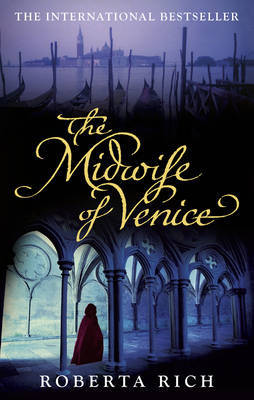
The Midwife of Venice by Roberta Rich

The Midwife of Venice is set in 1575 and is the story of Hannah Levi, a midwife who lives in the Jewish ghetto in Venice. Although Jews are forbidden to attend Christian women in childbirth, when the Conte di Padovani summons her to his wife one night Hannah agrees to go with him. The Conte promises that if she assists in the birth of his heir he’ll reward her with a large sum of money – money that Hannah desperately needs so that she can pay the ransom to free her husband Isaac, who has been captured and taken to Valletta, Malta as a slave of the Knights of St John. But when it proves to be a difficult birth and Hannah is forced to use her special ‘birthing spoons’ (a device similar to forceps) she finds herself threatened with accusations of witchcraft.

The plot moves back and forth between Hannah in Venice and Isaac in Malta, until the two alternating storylines begin to come together. Luckily, I found both Hannah’s and Isaac’s adventures equally interesting to read about, so I didn’t mind leaving one character behind for a while to find out what was happening to the other.

I loved the first few chapters of this book; the story’s various locations (the Jewish ghetto, Venice’s streets and canals, the island of Malta) were vividly described without being too detailed, and it was interesting to learn about the relationship between the Christians and Jews in 16th century Venice. But halfway through, the plot started to take some dramatic twists and turns which I can only describe as unbelievable and ridiculous. Hannah was a likeable enough character, but it seemed to me that everything worked out too easily for her (and for Isaac) – there were too many coincidences, too many last-minute escapes and the villains were too easily defeated. If you can suspend your disbelief it’s all very entertaining I suppose – with murder, kidnapping, blackmail, disguises, slavery and even the plague, it’s certainly never boring – but I think I would have preferred something slightly more serious!

One other little problem I had was with the number of Italian and Jewish terms that were dropped into the text, a lot of which were unfamiliar to me. There was a glossary at the end of the book which I didn’t discover until too late – it would have been helpful to have known about it before I began instead of when I was nearly finished.

Although I prefer historical fiction novels to have a bit more depth than this one, The Midwife of Venice was fun to read. The setting and subject matter were unusual and interesting, and the fast pace and cliffhanger chapter endings made it a quick read. Oh, and I love the cover too!
Pawn in Frankincense by Dorothy Dunnett

Pawn in Frankincense, the fourth of Dorothy Dunnett’s Lymond Chronicles, takes our hero Francis Crawford of Lymond on a journey through North Africa, Greece and Turkey to the court of Sultan Suleiman the Magnificent.

I don’t think it’s necessary for me to say anything about the plot of this novel as I expect most people reading this review will have either already read this book, in which case you won’t need a summary, or if you’re new to the series you’ll need to start with The Game of Kings and presumably won’t want to read too much about this fourth instalment. All I will say is that this book features some of the most heartbreaking moments in the series so far.

I had been looking forward to reading Pawn in Frankincense as the general opinion seems to be that it’s one of the best in the series, and I wasn’t disappointed. I think The Disorderly Knights is still my favourite, but I loved this one too. Like the previous three books it was exciting, emotional and almost impossible to put down. I thought the second half of the book in particular was stunning and the last few chapters were so powerful I’m sure I’ll never forget them; the chess game in the seraglio was one of the most tense, nerve-wracking scenes I can ever remember reading. If you’ve read the book I won’t need to explain why, and if you haven’t then I won’t go into any more detail as I certainly wouldn’t want to spoil it for you. I defy anybody to read it without crying or at least being close to tears!

I missed some of the characters from the previous books who didn’t appear in this one, though I do love Archie Abernethy and by the end of the story I loved Philippa too – I hadn’t liked her before but she really came into her own in this book. I also enjoyed learning about the Ottoman Empire, a world I had previously known very little about – I was maybe slightly overwhelmed by all the detailed descriptions at times but they certainly brought each location to life for me. Due to the nature of the story, with Lymond and his companions sailing through the Mediterranean to Constantinople (Istanbul), we are given vivid descriptions of all the places they visit on the way: Algiers, Djerba, Zakynthos, Thessalonika and others, none of which are places that I’ve read much about before.

I’ve started reading The Ringed Castle now and I’m already feeling sad that after I’ve finished it there’ll only be one more book left!

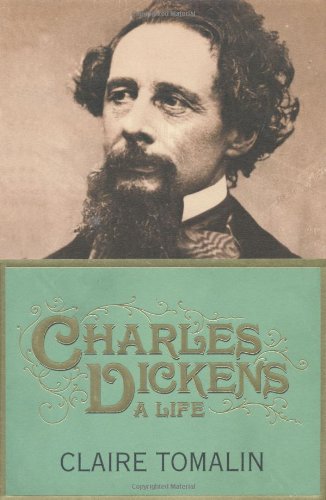
Charles Dickens: A Life by Claire Tomalin

I’ve only read one of Claire Tomalin’s other biographies (Samuel Pepys: The Unequalled Self) but having read that one, Charles Dickens: A Life was everything I was expecting: well researched, thorough and very readable. It took me a long time to finish it but that’s just because I was reading other books at the same time and is no reflection on how much I was enjoying it. Charles Dickens is an ideal subject for a biography as he had such an eventful life and career. One of the things I liked about Tomalin’s Samuel Pepys book was the way she attempted to give us a balanced view of Pepys, looking at both his good points and his bad points, and she does the same here with Dickens.

There are plenty of positive things about Dickens that we can take away from this biography: his incredible energy, his literary talent and the amount of hard work and effort he was prepared to put in to achieve his ambitions. But Tomalin also shows us Dickens’ flaws, particularly the insensitive and cruel way he treated his wife Catherine Hogarth and sometimes his children too. And of course, she discusses his affair with the actress Nelly Ternan (this is the subject of one of Tomalin’s other biographies, The Invisible Woman: The Story of Nelly Ternan and Charles Dickens, which I haven’t read).

It was interesting to read about the progress of Dickens’ career as a writer, and how he went from writing character sketches of the people around him to developing longer stories and eventually producing his famous novels. I enjoyed reading what Tomalin had to say about the Dickens novels that I’ve read – it seems that she admires most of his work though not all of it – but be aware that if you haven’t read all of his books she does include some spoilers. I can understand this, as many of the plot points and characters in Dickens’ novels give us insights into the mind of Dickens himself, and it would be hard to discuss the man without discussing his work. However, I’m sure there will be a lot of people like myself who will read this biography without having read Dickens’ complete works first, so I thought I should warn you that you might come across things you would prefer not to know!

Overall I was left with a negative impression of Dickens rather than a positive one. I can admire the motivation, ambition and talent of someone who worked his way up from a job in a boot blacking factory to become first a journalist and then one of the most famous and successful writers in the world. But the way he treated people in his personal life, as well as the high opinion he seemed to have of himself, makes it hard for me to like him.

I’m not sure how this book compares with other Dickens biographies as this is the only one I’ve ever read, but I enjoyed it, learned a lot from it and was left with a much better understanding of the complex person Dickens was. And as well as the huge amount of information this book contains about the life and work of Dickens himself, as someone who loves reading about the Victorian period in general I was fascinated by all the little details of 19th century life! The book also comes with plenty of additional material including maps, illustrations, a bibliography and a list of the important people in Dickens’ life.

Finally, this has nothing to do with this biography but I was surprised to find how much of Dickens’ life story was already familiar to me through reading novels like Drood and The Last Dickens. This shows that although historical fiction may not always be completely accurate it’s often a good way to absorb historical facts while being entertained at the same time!

March Reading Summary

My two favourite books from March were definitely the two Dorothy Dunnett books I read: Queens’ Play and The Disorderly Knights. I can’t tell you how much I’m loving this series – I finished Pawn in Frankincense today and am looking forward to starting The Ringed Castle!

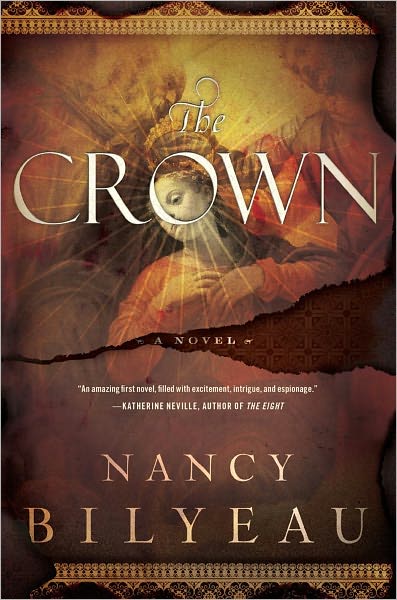
March was a good month for historical fiction – as well as the two books I just mentioned, I also loved The Gods of Gotham by Lyndsay Faye (a crime novel set in 1840s New York) and The Crown by Nancy Bilyeau (a historical thriller set in Tudor England). However, I was disappointed by The Glovemaker by Stacia Brown, the story of a woman accused of murder in Oliver Cromwell’s London.

The Light Between Oceans, M.L. Stedman’s debut novel, was another book that I really enjoyed, and Edward Hogan’s The Hunger Trace was probably my most surprising read of the month – not something I would usually choose to read but I quickly became absorbed in the lives of all three main characters.

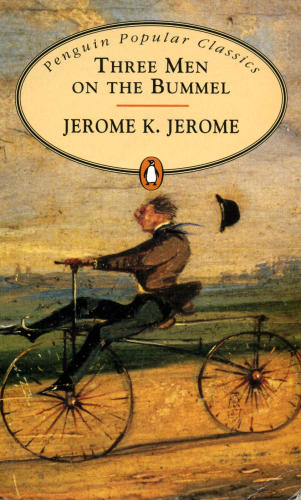
I also read Three Men on the Bummel, the sequel to Jerome K. Jerome’s classic Three Men in a Boat, and although it wasn’t as hilarious as its predecessor it was still fun to read.

The only book I read in March that I still haven’t written about is Claire Tomalin’s Dickens biography, Charles Dickens: A Life. I actually started reading it in the middle of January – it always seems to take me a long time to finish non-fiction books! And I finally started to make some progress with Samuel Richardson’s Clarissa, which I’m reading as part of a group read during the whole of 2012.

Did you read any good books in March? What are you planning to read in April?

Clarissa Group Read: March update

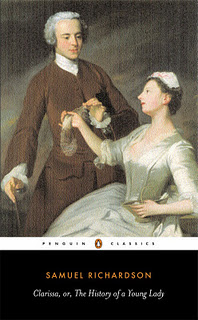
I’m taking part in a year-long group read of Clarissa by Samuel Richardson hosted by JoAnn and Terri. The story is told in the form of 537 letters, the first being dated 10th January and the last 18th December. The idea of reading Clarissa over an entire year is so that the letters can be read on or close to the dates mentioned in the book.

This is my first post on Clarissa since I started reading the book in January – I didn’t post an update in February as I wasn’t very far into the book at that point and felt I didn’t really have much to say about it. Following the group read schedule of reading the letters on or around the correct dates, January and February were lighter months in terms of the number of letters we needed to read (11 in total for those two months); March was much more intense (61 letters) and it didn’t surprise me at all that I soon found myself falling behind. This time last week I was starting to despair of ever making any progress with this book and was wondering whether I really wanted to continue with it – however, I decided to make a big effort to get caught up and I managed to finish the March letters this morning.

Like the January and February letters most of this month’s letters have been between our title character, Clarissa Harlowe, and her friend Anna Howe. Despite the fact that I’m now 3 months and 72 letters into the novel very little has actually happened in terms of plot advancement. Clarissa’s family are determined to keep her away from Lovelace and to force her to marry Mr Solmes, but Clarissa is equally determined not to marry him. It’s all getting very repetitive, with various members of the family pleading with her, commanding her or trying to bully her into doing as they request, and Clarissa refusing to give in to their demands. I was beginning to get impatient, wondering when Lovelace would eventually appear – and we finally heard from him in Letter 31.

Although Lovelace hasn’t yet done anything too bad (other than bribing one of the Harlowe’s servants to spy for him) it’s obvious that he really is going to be the villain Clarissa’s family and friends have suggested he is. He claims to love Clarissa, but it seems that he’s more interested in getting revenge on her family. I was interested to read Samuel Richardson’s footnote where he felt the need to explain some of Lovelace’s motives, as he was apparently disappointed that so many of his readers liked Lovelace and had been misinterpreting his letters. Personally I don’t there’s a single character in this novel that I actually like – though I do have sympathy with the position Clarissa is in and am very glad I’m not living in the eighteenth century!

After Lovelace’s appearance I thought the plot might start to move forward at last, but after Letter 72 things are still the same. The repetitiveness is very effective in showing how Clarissa is running out of options and how hopeless her situation is, but at the moment I feel as if the story is just going round in circles. I’m now ready to start reading the April letters and although I’m feeling much more positive about the book than I was a couple of weeks ago, I hope something is going to happen soon!

Three Men on the Bummel by Jerome K. Jerome

Last year I read Jerome K. Jerome’s Three Men in a Boat (To Say Nothing of the Dog) which was one of my favourite books of 2011 and one of the funniest books I’ve ever read. Three Men on the Bummel is the sequel, less well known but still worth reading. It’s set a few years after Three Men in a Boat but it’s not really necessary to read them in the correct order. In this book we join our old friends J, Harris and George again (this time without Montmorency the dog) on a bicycle tour across Germany’s Black Forest. There’s not much of a plot – like the first book, the whole story really just consists of a series of mishaps and disasters, funny anecdotes told by the three friends, descriptions of the places they visit, and some philosophical musings and observations from our narrator, J.

The humour in this book is very much the same as in the first and some of the stories are very similar too (if you remember reading about Uncle Podger in Three Men in a Boat, for example, there are more Uncle Podger stories here). But I did start to lose interest a little bit towards the end of the book and I couldn’t help feeling that maybe Jerome had used up most of his better ideas in the previous book. There’s nothing here that has stuck in my mind the way the pineapple incident or the Hampton Court maze did, to give just two examples. But there are still some moments that stand out: George being accused of embarking on a life of crime after getting on a train with the wrong ticket, the three of them being lost on a hillside arguing over which way was north, Harris and his encounter with a man watering the road, George’s experiment with a phrase book, and a few others. My favourite was the trick J and Harris play on George, leading him to believe a statue is following him around the town, appearing in four different places at once.

“Why, that thing,” said George; “look at it! There is the same
horse with half a tail, standing on its hind legs; the same man
without his hat; the same–”

Harris said: “You are talking now about the statue we saw in the
Ringplatz.”

“No, I’m not,” replied George; “I’m talking about the statue over
there.”

“What statue?” said Harris.

George looked at Harris; but Harris is a man who might, with care,
have been a fair amateur actor. His face merely expressed friendly
sorrow, mingled with alarm. Next, George turned his gaze on me. I
endeavoured, so far as lay with me, to copy Harris’s expression,
adding to it on my own account a touch of reproof.

“Will you have a cab?” I said as kindly as I could to George.
“I’ll run and get one.”

The German setting in my opinion didn’t work as well as a backdrop for the novel as the River Thames did in Three Men in a Boat but it does give Jerome an opportunity to have fun with British and German stereotypes (though in a gentle way, I thought) and the misunderstandings that could arise from differences in language and culture. He spends a lot of time discussing different attitudes to law and order for example:

Nowhere, and under no circumstances, may you at any time in Germany walk on the grass…The very dogs respect German grass; no German dog would dream of putting a paw on it. If you see a dog scampering across the grass in Germany, you may know for certain that it is the dog of some unholy foreigner. In England, when we want to keep dogs out of places, we put up wire netting, six feet high, supported by buttresses, and defended on the top by spikes. In Germany, they put a notice-board in the middle of the place, “Hunden verboten,” and a dog that has German blood in its veins looks at that notice-board and walks away.

Overall this wasn’t quite as funny as Three Men in a Boat and I can see why it’s not as popular, but I still enjoyed reading it. Both books were written in the late Victorian period (this one was published in 1900) but I would recommend them even to people who don’t usually like Victorian fiction as they do have quite a modern feel and a lot of the humour is still relevant today.

Oh, and if you’re wondering what the word ‘bummel’ means, it is explained but you’ll have to wait until the end of the book to find out!

The Gods of Gotham by Lyndsay Faye

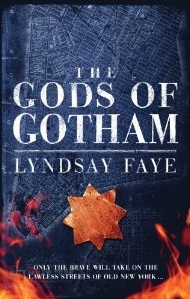
New York City, 1845: When Timothy Wilde loses everything in a fire that destroys a large part of Manhattan, his brother Valentine helps him get a job as a ‘copper star’ in New York’s newly formed police force. Due to his knowledge of ‘flash’, a slang spoken largely by criminals, Timothy is assigned to the Sixth Ward, one of the city’s most notorious areas where crime rates are high and where racial and religious tensions are increasing with the influx of Irish immigrants fleeing the potato famine.

Timothy is unenthusiastic about his new job until one night when he’s walking home from work and a ten-year-old girl runs into him, covered in someone else’s blood. Soon Tim finds himself on the trail of a child killer and discovers that he has an unexpected talent for detective work.

I must admit that when I received a copy of The Gods of Gotham from the publisher, I wasn’t sure this was going to be the type of book I would enjoy. Well, I couldn’t have been more wrong, because I loved it! I could tell from the first page that I liked the writing style and by the end of the first chapter I knew I was going to like the narrator too. But the thing I enjoyed most about The Gods of Gotham was the wonderful setting. Every time I picked up this book and started to read I felt I had left the modern world behind for a while and was actually there, walking through the streets of 19th century New York, which is the highest praise I can give to any historical fiction novel. I’ve read so many books set in Victorian London, and it made a nice change to read one set in New York during the same period.

We also meet lots of strong, interesting characters – Mercy Underhill, the reverend’s daughter and the woman Timothy loves; Bird Daly, the little Irish girl he met in the street at the start of the novel; and Silkie Marsh, who runs the brothel at the centre of the murder investigations. And at the heart of the story is the relationship between Tim and his brother Valentine. Timothy himself is easy to like but he isn’t perfect and has enough flaws to make him a believable character. Although he doesn’t always interpret things correctly, he’s intelligent, observant and compassionate. Val is a very different type of person – tough, aggressive, addicted to morphine and drinking – but by the end of the book we learn that there’s more depth to Val than there seemed to be at first.

The use of flash is something that you will probably either love or hate – personally I thought it added to the atmosphere of the book and made the dialogue feel lively and fun. I was surprised to find that I was already familiar with some of the words and it was interesting to see how many of them have now come into everyday use. But there were other words and phrases that meant nothing to me and so the glossary at the front of the book (based on George Washington Matsell’s Vocabulum, or The Rogue’s Lexicon) was very helpful, especially at first!

For me, the actual crime plot was secondary to the setting, the atmosphere and the characters but it was still good enough to keep me guessing until the truth was finally revealed. The Gods of Gotham was something different and original – I loved it and was pleased to discover that there’s going to be a sequel!

I received a review copy of this book from Headline Review.