The Ghost Writer by John Harwood

Gerard Freeman has grown up in Mawson, Australia, listening to his mother’s tales of her own childhood at Staplefield, a country estate in England. However, when she finds him going through her private papers one day she is furious and from that moment she refuses to say any more about her past.

Gerard continues to investigate his mother’s background and is intrigued when he discovers some ghost stories written by his great-grandmother, Viola Hatherley. Unable to talk to his mother about his discoveries, the only person Gerard can confide in is his English penpal, Alice Jessel. It’s only as Gerard grows older and uncovers more of his family history that he begins to understand the full significance of Viola’s stories and how they relate to his own life.

The Ghost Writer was published in 2004 and seems to have been very popular at the time of its publication, yet I somehow hadn’t even heard of it until I picked it up in the library a couple of weeks ago and thought it sounded perfect for the R.I.P. challenge and for this time of year. And it was a perfect choice – I was very impressed by this book. The closest comparison I can make is to Possession by A.S. Byatt. Both books are very well written and have similar structures, with different sections written in different styles and with letters and stories woven into the plot. I did find this an easier and more entertaining read than Possession, though, and at times it also reminded me of The Forgotten Garden by Kate Morton.

Viola Hatherley’s ghost stories were my favourite parts of the novel. They were very creepy and I could really believe they’d been written during the late 19th and early 20th centuries. I loved the way the ghost stories were connected to Gerard’s own story and yet they would have been good enough to stand alone as a separate short story collection too. Often when I read a book containing stories-within-stories I find myself becoming impatient and wanting to get back to the main plot, but not this time! There were four of Viola’s stories included in the book (one, The Revenant, is much longer than the other three and almost a novella). The highlight for me was The Gift of Flight, with its descriptions of a sinister doll-like child and a mysterious fog that fills the reading room at the British Museum.

Looking through some other reviews of this book, I’ve noticed that a lot of readers felt let down by the ending. I don’t usually mind being left to make up my own mind at the end of a book, but I can definitely understand why people would be disappointed by the way this one ended. It was very ambiguous and left so much open to interpretation. Despite the ending though, there were so many other things to love about this book: the elegant writing, the intricate plot, the clever structure, the gothic atmosphere, the eerie, unsettling mood and most of all, those excellent Victorian-style ghost stories!
September Reading Summary

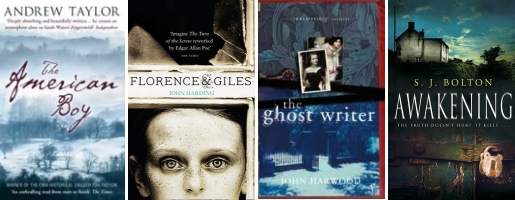
September was a good month for me – I read twelve books and enjoyed all but one of them. Choosing my favourites wasn’t easy, but I think these were the four that really stood out:

The American Boy by Andrew Taylor – 19th century setting, gothic atmosphere, mystery and adventure, even Edgar Allan Poe. This book was perfect for me!
Florence and Giles by John Harding – A great gothic story inspired by The Turn of the Screw.
Awakening by S.J. Bolton – The second book I’ve read by S.J. Bolton and I’ve loved both. I’m looking forward to reading her other two books soon.
The Ghost Writer by John Harwood – I was very impressed by this book, especially considering I had never even heard of it until I picked it up in the library. I’ll be posting my thoughts on this one soon.

Other books read in September

The Obscure Logic of the Heart by Priya Basil
Framley Parsonage by Anthony Trollope
Theodora by Stella Duffy
Devil Water by Anya Seton
The Last Dickens by Matthew Pearl
The Lady of the Rivers by Philippa Gregory
Ragnarok: the End of the Gods by A.S. Byatt (thoughts coming soon)
Uncle Silas by Joseph Sheridan Le Fanu (thoughts coming soon)

Although I limited myself to picking four favourites this month, I did enjoy all of these books with the exception of The Last Dickens, which was slightly disappointing.

Plans for October


This month Simon of Savidge Reads and Polly of Novel Insights are celebrating the work of one of my favourite authors, Daphne du Maurier, with a “Discovering Daphne” event. I managed to find a copy of The Loving Spirit at the library this morning and will hopefully be starting it this week.


I’ve also signed up for this month’s Classics Circuit tour, which has a gothic literature theme this time. I’m reading A Sicilian Romance by Ann Radcliffe for the tour and will be posting on October 25th.

What else am I reading this month? Well, I’m halfway through The Night Circus by Erin Morgenstern at the moment. I’ve been seeing this one mentioned everywhere and couldn’t resist it any longer! I also need to read my next book for the Transworld challenge, The Water Room by Christopher Fowler.

Did you have a good September? What are you reading in October?

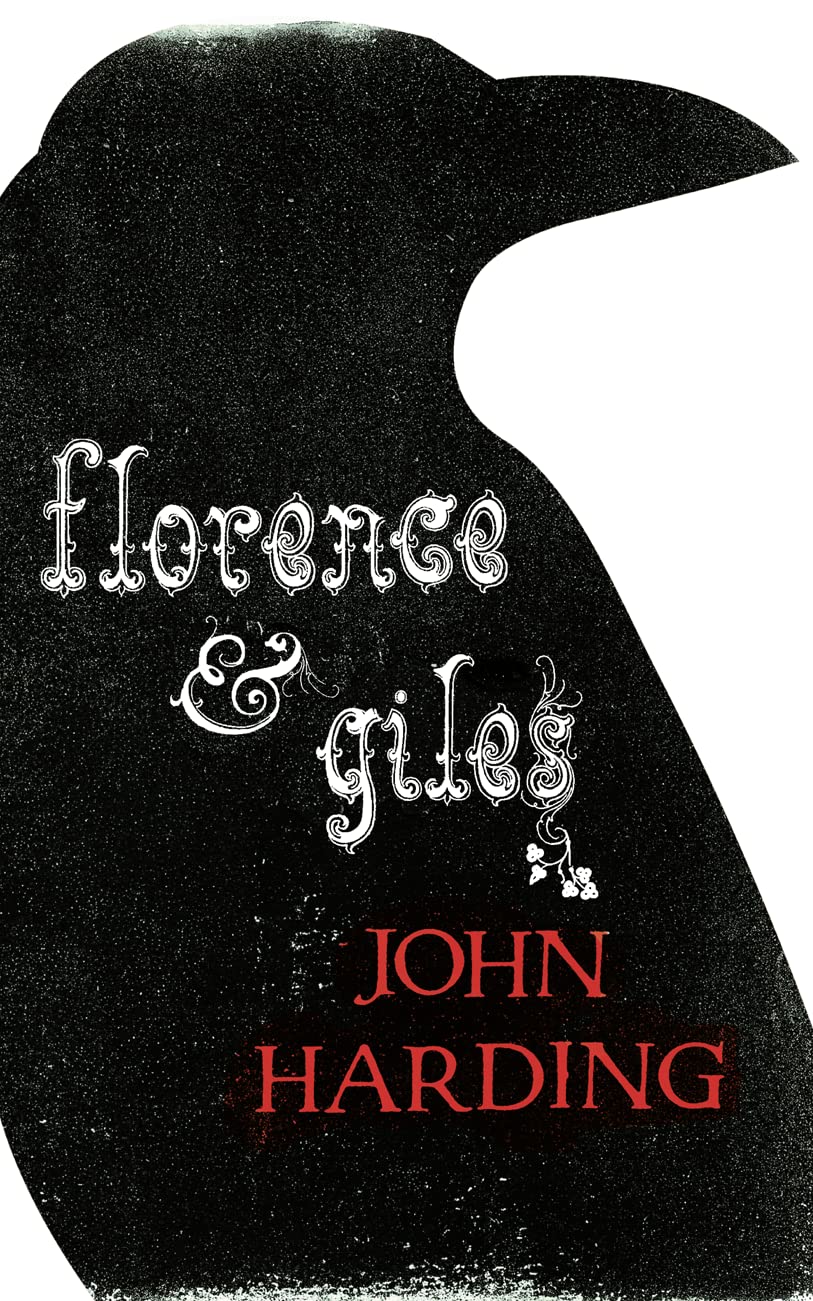
Florence and Giles by John Harding

I hadn’t even heard of Florence and Giles until recently but as soon as I saw that it had been described as a gothic thriller and compared to Henry James and Edgar Allan Poe I knew I wanted to read it – and it went straight onto my list for the RIP challenge!

Florence and Giles could be considered a loose retelling of The Turn of the Screw by Henry James (the first clue is in the title as the children in The Turn of the Screw are called Flora and Miles) but if you haven’t read the Henry James book yet it doesn’t matter at all because this is a great story in its own right.

The book is set in 1891 and the Florence and Giles of the title are two orphans who live at Blithe House, a mansion in New England. The house belongs to their uncle, but Florence and Giles never see him – he never comes to visit and prefers to leave the children under the care of the servants. Soon Giles is sent away to school and twelve-year-old Florence is left behind because her uncle disapproves of education for girls. After secretly teaching herself to read and write, Florence spends her days hiding in a forgotten tower room with books she’s smuggled out of the library.

This seems a good place to mention Florence’s narrative style, which is one of the most unusual I’ve ever come across. Although she’s been denied a formal education, she’s an intelligent and imaginative girl who has created her own private language with a very strange way of using nouns, verbs and adjectives! Here, for example, she describes Blithe House:

A house uncomfortabled and shabbied by prudence, a neglect of a place, tightly pursed (my absent uncle having lost interest in it), leaked and rotted and mothed and rusted, dim lit and crawled with dark corners, so that, even though I have lived here all of my life that I can remember, sometimes, especially on a winter’s eve in the fadery of twilight, it shivers me quite.

The whole story is written in this way. The ‘unbroomed’ library is a ‘dustery of disregard’, her bedroom becomes a ‘smugglery of books’ and she ‘lonelies’ her way around the big house. It did take me a few chapters to get used to Florence’s voice but I loved it because it was so creative and different.

Anyway, back to the story: when Giles is removed from his school after being bullied, a governess is appointed so he can continue his education at home. But as soon as Miss Taylor arrives at Blithe House some strange things begin to happen and Florence starts to believe that she and her brother could be in serious danger. Is Florence right? Can we trust her? We don’t know, but as she’s the book’s only narrator we have no choice but to read on.

Florence and Giles has a wonderfully dark and gothic feel and has everything this type of book should have: the spooky mansion, the mysterious guardian, the sinister governess…Even the quirkiness of Florence’s narrative voice adds to the unsettling feel. Not everything is explained or tied up at the end of the book, but I felt there’d been enough clues throughout the story for me to draw my own conclusions.

I can’t remember who it was that first brought this book to my attention, but as Florence might say, ‘I grateful them!’

The Lady of the Rivers by Philippa Gregory

The Lady of the Rivers is the third book in Philippa Gregory’s Cousins’ War series. This series is set during the Wars of the Roses, with a focus on some of the women who played an important role in this period of English history. The two previous novels, The White Queen and The Red Queen, told the stories of Elizabeth Woodville, wife of King Edward IV, and Margaret Beaufort, mother of King Henry VII. In The Lady of the Rivers it’s the turn of Jacquetta Woodville, Elizabeth’s mother.

Before beginning this book I knew almost nothing about Jacquetta (apart from what I learned about her in The White Queen) and it was good to have the chance to read a historical fiction novel about a woman who has so often been overlooked and forgotten. This novel follows Jacquetta throughout her life, beginning with her teenage years and moving on to her first marriage to the Duke of Bedford, an uncle of England’s King Henry VI. Left a widow at nineteen, Jacquetta marries again, for love this time, to one of the Duke’s squires, Richard Woodville. Over the following years, she becomes a close friend and advisor to Margaret of Anjou, the young wife of Henry VI, and is at the queen’s side during some of the most important moments of Henry’s reign.

Jacquetta’s family claim to have descended from the water goddess, Melusina, and supposedly have magical powers, including the ability to predict the future. For example, Jacquetta hears singing when someone in her family is about to die. As in The White Queen, magic is a major theme of this book. There are lots of references to alchemy, herbalism, tarot cards, and also to the ‘wheel of fortune’, which Jacquetta sees as a reminder that while it’s possible for a woman to rise to the very top, there’s an equal chance that she can fall to the very bottom.

I like the fact that the novels in this series are written from a woman’s perspective, with a focus on how women were treated in 15th century society and how difficult it could be for them to find a place for themselves in a world dominated by men. I also like the way the books take a very personal approach to history, showing how the historical events directly affect the characters and their lives. The present tense gives the feeling that you’re there with the narrator as events unfold, and the first person narration creates an intimate feel. Of the three books in the series so far, this one had the most likeable narrator and I’ve been left with a sense of unfairness at how Jacquetta has been ignored by history.

Finally, in case anyone is wondering where to begin with this series, I don’t think it’s necessary to read them in any particular order as they do all stand alone. In fact, this one, The Lady of the Rivers, despite being the most recently published book, is set before The White Queen so could be a logical place to start. According to Philippa Gregory, the next novel in the series is going to be about Anne and Isabel Neville, the daughters of the Earl of Warwick. I’m already looking forward to that one!

I received a review copy of this book from Simon & Schuster. I also received a copy of the non-fiction companion book to the series, The Women of the Cousins’ War, so you can expect to see my thoughts on that one soon too.

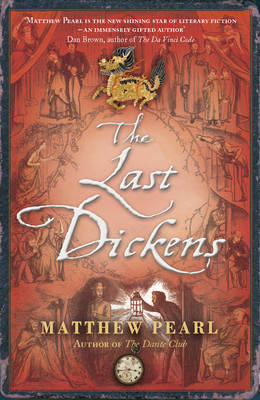
The Last Dickens by Matthew Pearl

The Last Dickens is a literary mystery involving a search for the missing manuscript of the final, unfinished Charles Dickens novel, The Mystery of Edwin Drood. This book didn’t appeal to me when it was published a couple of years ago because at that time I had only read one Charles Dickens book and didn’t have much interest in reading a historical fiction novel about him. Since then, though, I’ve read a few more of Dickens’ books (including Edwin Drood) and so I thought I would give The Last Dickens a try now.

In 1870, the new Dickens novel, The Mystery of Edwin Drood, is being serialised by his American publisher Field, Osgood & Company, who are based in Boston. When Field and Osgood send their young office clerk, Daniel Sand, to the docks to collect the latest instalment which has been sent from England, Daniel is later found dead under suspicious circumstances. With the shocking news that Dickens has also died and left his novel incomplete, James R Osgood travels to England in search of clues as to how the story may have been going to end. Osgood is accompanied by Daniel Sand’s sister, Rebecca, another employee of the publishing house. Can they uncover the truth about Daniel’s death and at the same time find the remaining chapters of The Mystery of Edwin Drood?

Just when Osgood and Rebecca’s adventures start to get exciting, the story is interrupted with a very long flashback to Dickens’s American tour several years earlier. Some of this was interesting (it’s such a shame there was no recording equipment in those days as it would have been fascinating to have been able to hear Dickens reading his books on stage to an audience!), but there was a lot of detail that I didn’t think was absolutely necessary and by the time we returned to Rebecca and Osgood the flow of the story had been completely lost. There were also some shorter sections set in India, where Dickens’s son Frank, serving with the Bengal Mounted Police, is on the trail of opium thieves, but I didn’t think this sub-plot really added anything to the book and I admit I didn’t quite understand what was going on.

One aspect of the book I did enjoy was the insight into the American publishing industry in the 19th century, a time when copyright laws appeared to be virtually non-existent. There are some entertaining descriptions of the lengths publishers would go to in order to obtain manuscripts and be the first to publish them.

Another similar book which was released around the same time as this one was Drood by Dan Simmons. I read Drood last year and although I had a couple of problems with that book too, I think I probably enjoyed it more than The Last Dickens. It’s interesting to see how two different authors can use the same historical material to create such very different books.

The Secret Lives of Baba Segi’s Wives by Lola Shoneyin

Baba Segi is a Nigerian businessman with four wives: Iya Segi, Iya Tope, Iya Femi and Bolanle (each named after their first born child, apart from Bolanle who has not had children). Bolanle is Baba Segi’s newest wife and the only one who is a university graduate. Baba Segi is very proud that a woman with a degree has chosen to join his household, but he is growing concerned about the fact that she has not yet conceived a child – after all, he has already had seven children with his other wives, so what is the problem with Bolanle?

This novel by Lola Shoneyin shows us what it is like to be part of a polygamous marriage and how Baba Segi’s wives feel about it. There are chapters narrated by all four wives and also Baba Segi himself, giving us a range of different perspectives and insights. These alternating narratives allow us to explore the complex relationships between the four women and their husband. As the title suggests, the wives all have secrets in their pasts and not everything is quite as it seems on the surface.

The position of each wife within the family, as well as her personal background, seems to determine the way she reacts to the arrival of Bolanle. The first and third wives, Iya Segi and Iya Femi, are very cruel and hostile towards her, but through their own narratives we gradually learn more about them and why they behave the way they do. They are suspicious of her education; they are jealous because with each new wife the amount of time they can spend with Baba Segi is decreased – and of course, with each new addition to the family, there’s a greater chance of their secrets being discovered.

I found it confusing that we weren’t always told who was narrating each chapter. If the characters had all been given distinct voices of their own I would have had no difficulty working out who was speaking, but they just weren’t distinctive enough for me – I thought Iya Segi and Iya Femi in particular sounded very similar. Sometimes I was halfway through a chapter before it became obvious who the narrator was. I can see why the author decided to write from different perspectives, but something as simple as stating the narrator’s name at the start of each chapter would have avoided any confusion.

Although it deals with some serious subjects, The Secret Lives of Baba Segi’s Wives is written in a very light, humorous style and I’m sure this book would be enjoyed by a wide range of readers. And yet, while I did find it an interesting and entertaining read, I think I would prefer to read a more serious novel on this topic. This was a good book rather than a great one, I think – or maybe I was just in the wrong mood for it.

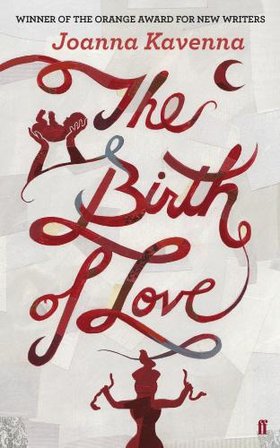
The Birth of Love by Joanna Kavenna

The Birth of Love is a book about childbirth and motherhood. Before I go any further I should point out that I am not a mother myself and was uncertain as to whether or not I should read this book. But after seeing some positive reviews by other readers, not all of them mothers, I decided to give it a try.

The novel consists of four separate storylines, one set in the past, two in the present day, and one in the future, covering a wide range of different aspects of pregnancy and childbirth. At first there doesn’t appear to be much of a connection between the four, but eventually the links become clear.

We begin in 19th century Vienna, where Ignaz Semmelweis has been forced into an asylum. He is convinced that, as a doctor, he is responsible for the murder of hundreds of mothers and is tortured by nightmares and visions of blood and death. In 2009, we meet Michael Stone, an author who has written a book about Semmelweis. And also in 2009, Brigid Hayes is pregnant with her second child and planning a home birth. The final thread of the story takes place in the year 2153 and is in the form of an interview with a prisoner known only as Prisoner 730004. A woman has given birth, something which is no longer allowed, and her friends have been arrested and questioned.

This all sounded very interesting, so I’m sorry to have to say that this book wasn’t really a success with me at all! I found it very difficult to connect with any of the characters, though I suspect that if I had given birth myself I would have felt more empathy with Brigid. But I don’t think that was the only problem. I expected to at least be interested in the historical sections but I struggled with those too. I didn’t want to give up on the book though, because I wanted to find out how the four stories were related and how the author would bring them all together at the end.

I did enjoy the futuristic storyline at first, with its vision of a dystopian future where strict birth control regulations have been introduced to deal with overpopulation, where even the use of words like “mother” and “child” have been banned. If that could be considered a believable picture of the world 150 years into the future, then it’s very frightening to think about. After a while, though, I started to get bored with the interview format and repetitive questions and answers, which was disappointing because these parts of the book could potentially have been my favourites.

On a more positive note, I did like Joanna Kavenna’s writing and I was impressed by the way she created a different style and atmosphere for each section of the book, appropriate to the time period in which it was set. I would be happy to try other books by Kavenna, but this one just wasn’t right for me.