The Secret Lives of Baba Segi’s Wives by Lola Shoneyin

Baba Segi is a Nigerian businessman with four wives: Iya Segi, Iya Tope, Iya Femi and Bolanle (each named after their first born child, apart from Bolanle who has not had children). Bolanle is Baba Segi’s newest wife and the only one who is a university graduate. Baba Segi is very proud that a woman with a degree has chosen to join his household, but he is growing concerned about the fact that she has not yet conceived a child – after all, he has already had seven children with his other wives, so what is the problem with Bolanle?

This novel by Lola Shoneyin shows us what it is like to be part of a polygamous marriage and how Baba Segi’s wives feel about it. There are chapters narrated by all four wives and also Baba Segi himself, giving us a range of different perspectives and insights. These alternating narratives allow us to explore the complex relationships between the four women and their husband. As the title suggests, the wives all have secrets in their pasts and not everything is quite as it seems on the surface.

The position of each wife within the family, as well as her personal background, seems to determine the way she reacts to the arrival of Bolanle. The first and third wives, Iya Segi and Iya Femi, are very cruel and hostile towards her, but through their own narratives we gradually learn more about them and why they behave the way they do. They are suspicious of her education; they are jealous because with each new wife the amount of time they can spend with Baba Segi is decreased – and of course, with each new addition to the family, there’s a greater chance of their secrets being discovered.

I found it confusing that we weren’t always told who was narrating each chapter. If the characters had all been given distinct voices of their own I would have had no difficulty working out who was speaking, but they just weren’t distinctive enough for me – I thought Iya Segi and Iya Femi in particular sounded very similar. Sometimes I was halfway through a chapter before it became obvious who the narrator was. I can see why the author decided to write from different perspectives, but something as simple as stating the narrator’s name at the start of each chapter would have avoided any confusion.

Although it deals with some serious subjects, The Secret Lives of Baba Segi’s Wives is written in a very light, humorous style and I’m sure this book would be enjoyed by a wide range of readers. And yet, while I did find it an interesting and entertaining read, I think I would prefer to read a more serious novel on this topic. This was a good book rather than a great one, I think – or maybe I was just in the wrong mood for it.
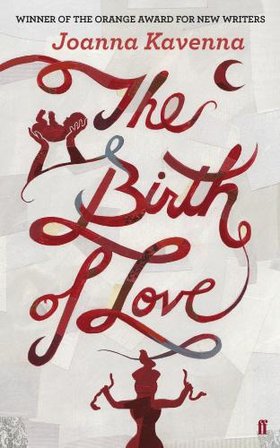
The Birth of Love by Joanna Kavenna

The Birth of Love is a book about childbirth and motherhood. Before I go any further I should point out that I am not a mother myself and was uncertain as to whether or not I should read this book. But after seeing some positive reviews by other readers, not all of them mothers, I decided to give it a try.

The novel consists of four separate storylines, one set in the past, two in the present day, and one in the future, covering a wide range of different aspects of pregnancy and childbirth. At first there doesn’t appear to be much of a connection between the four, but eventually the links become clear.

We begin in 19th century Vienna, where Ignaz Semmelweis has been forced into an asylum. He is convinced that, as a doctor, he is responsible for the murder of hundreds of mothers and is tortured by nightmares and visions of blood and death. In 2009, we meet Michael Stone, an author who has written a book about Semmelweis. And also in 2009, Brigid Hayes is pregnant with her second child and planning a home birth. The final thread of the story takes place in the year 2153 and is in the form of an interview with a prisoner known only as Prisoner 730004. A woman has given birth, something which is no longer allowed, and her friends have been arrested and questioned.

This all sounded very interesting, so I’m sorry to have to say that this book wasn’t really a success with me at all! I found it very difficult to connect with any of the characters, though I suspect that if I had given birth myself I would have felt more empathy with Brigid. But I don’t think that was the only problem. I expected to at least be interested in the historical sections but I struggled with those too. I didn’t want to give up on the book though, because I wanted to find out how the four stories were related and how the author would bring them all together at the end.

I did enjoy the futuristic storyline at first, with its vision of a dystopian future where strict birth control regulations have been introduced to deal with overpopulation, where even the use of words like “mother” and “child” have been banned. If that could be considered a believable picture of the world 150 years into the future, then it’s very frightening to think about. After a while, though, I started to get bored with the interview format and repetitive questions and answers, which was disappointing because these parts of the book could potentially have been my favourites.

On a more positive note, I did like Joanna Kavenna’s writing and I was impressed by the way she created a different style and atmosphere for each section of the book, appropriate to the time period in which it was set. I would be happy to try other books by Kavenna, but this one just wasn’t right for me.

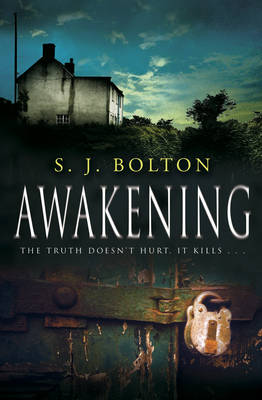
Awakening by S.J. Bolton

If you’re scared of snakes you might want to avoid this book! There are lots and lots of snakes in Awakening, from the harmless grass snake to the British adder and the venomous taipan. And in an isolated English village someone is breaking into people’s houses and leaving some of these snakes behind for the unsuspecting residents to find.

Luckily one of the villagers happens to be an expert on reptiles: her name is Clara Benning and she’s our narrator. Due to something that happened in her childhood, Clara has decided she’s more comfortable with animals than people and is working as a vet at a wildlife hospital. And so when the village becomes overrun with snakes, her neighbours come to her for advice. Clara begins to investigate, although she finds communicating with people difficult and would prefer to be left alone. With the help of two very different men – one a local policeman and the other a celebrity snake-handler – Clara is gradually drawn into a fifty year-old mystery which may explain where the snakes are coming from and at the same time she is forced to confront her own fears and insecurities.

Awakening is the second book I’ve read by S.J. Bolton. The first was Sacrifice, which I read earlier in the year and loved. This book had all the things I liked about Sacrifice – the fast pace, the gripping mystery plot, the interesting and independent female protagonist – but I enjoyed this one even more because I was able to connect with Clara more than I did with Tora Hamilton in the previous book. She seemed a more believable and well-developed character. Her personal background intrigued me immediately and the balance between this part of the story and the snake storyline was perfect.

Something else that I loved about this book was the setting. A lot of the action seems to take place at night and the small rural village feels very eerie and sinister in the dark. There are some gothic elements too, including graveyards, abandoned houses, old churches, underground tunnels and possible sightings of ghosts. As for the snakes, if you actually have a phobia about them you probably wouldn’t want to read this book, but otherwise you should be okay. I don’t particularly like them and certainly wouldn’t want to find one in my bedroom, but reading about snakes isn’t a problem for me and I enjoyed all the little facts about them that were dropped into the story without slowing the plot down at all.

Now I’m looking forward to reading Bolton’s other books, Blood Harvest and Now You See Me.

Devil Water by Anya Seton

Several years ago I had the pleasure of discovering Anya Seton’s historical fiction novels. The first one I read was Katherine, the story of Katherine Swynford and John of Gaunt, quickly followed by Green Darkness, Avalon and The Winthrop Woman. After that I moved on to other authors and never got round to reading Seton’s other novels. And so I was pleased to come across one I hadn’t read, Devil Water, in the library. This book was originally published in 1962 and the story takes place during the Jacobite Rebellions of 1715 and 1745.

Devil’s Water is the name of the river that flows past Dilston, a village in Northumberland in the north east of England. In the early 18th century, when Anya Seton’s novel begins, Dilston is home to the Radcliffe family. James Radcliffe, the 3rd Earl of Derwentwater, and his younger brother, Charles, are descendants of King Charles II and were both real historical figures.

The first half of the book concentrates on the life of Charles Radcliffe and his secret marriage to a working-class Northumberland girl, Meg Snowdon, with whom he has a daughter, Jenny. Both Charles and his brother, the Earl, are Catholics and Jacobites (supporters of the Catholic James Stuart who is living in exile in France while his half-sister, the Protestant Queen Anne, reigns in his place). In 1715 the Radcliffes join the Jacobite Rising in an attempt to put James, who they consider their rightful king, on the throne. When the rebellion ends in defeat, Charles escapes to France and leaves Jenny to be raised in London by his friend, Lady Betty Lee. Throughout the second half of the book the focus is on Jenny’s adventures which take her across the Atlantic to the plantations of colonial Virginia in search of Rob Wilson, the man she loves.

This book was particularly interesting to me as I’m from the north east of England myself. There are very few novels set in this part of the country so it was nice to read about places that I’m familiar with. I appreciated the effort Seton made to reproduce various local dialects, depending on whether a character comes from Northumberland, London, Scotland, Ireland, Virginia or elsewhere. Although the northern dialects didn’t always seem quite right to me, it wasn’t a bad attempt and it gave the book a more authentic feel. And the characters never sounded too modern or used language that felt out of place either.

Although I knew absolutely nothing about the Radcliffes before reading Devil Water, you can always trust that an Anya Seton novel would have been well researched and as historically accurate as she could make it, while bearing in mind that it’s still fiction and not everything that happens in the book will be completely factual. This book includes two author’s notes at the beginning and end in which she details the research she carried out and explains which parts of the story are likely to be true. There are also some useful maps and family trees which I found myself referring to occasionally. Don’t worry though, because the book is easy enough to read and doesn’t feel like a history lesson at all.

So, I loved the settings and the time period (I’ve read historical fiction about the Jacobites before and it always makes me feel sad, knowing what the outcome will be) but I did have one or two problems with the book. I thought it was much longer than it needed to be and seemed to take forever to read; the pacing didn’t feel right either – some parts of the book dragged and there were some big jumps forward in time, often leaving gaps of ten years. But the main thing that prevented me from really loving this book was that some of the characters were very difficult to like. I never managed to feel any connection to Charles and was more interested in his brother, the Earl of Derwentwater. And another character, who I had just started to warm to, does something really unforgivable that completely changed my impression of them. I did like Jenny (and a few of the minor characters, such as Betty Lee) but because the people around her were so unlikeable, the story didn’t have the emotional impact on me that it might otherwise have done.

Have you read any other Anya Seton books that I haven’t read yet? Which ones would you recommend?

The Swimmer by Roma Tearne

The Swimmer is a beautifully written novel by Roma Tearne set in the small English town of Orford in Suffolk. It’s the story of Ria, a forty-three-year-old poet, and Ben, a young refugee from Sri Lanka.

Ria is a single woman who lives alone in Eel House, a cottage which once belonged to her uncle. She’s quite happy to be there on her own; if she needs company there’s Eric, an older man from the neighbouring farm, and her brother and his family visit occasionally too – although these visits aren’t entirely welcome. Sometimes, though, life can be lonely for Ria. After a few failed relationships in the past she’s almost given up hope of finding someone to love…until she discovers Ben swimming in the river behind her house.

Ben, a Tamil refugee, left Sri Lanka to escape from the violence there. His asylum application has not yet been processed and so he’s living and working in Britain as an illegal immigrant. Although he’s eighteen years younger than Ria and from an entirely different background, the two begin to fall in love.

I really liked the first section of this book and enjoyed watching Ria and Ben’s relationship slowly develop. I thought the rest of the novel would continue in the same way, but then something happened which I wasn’t prepared for. The plot started to go in another direction, there was a new narrator to get used to, and I felt as if I was reading a completely different book to the one I had been expecting. This wasn’t necessarily a bad thing, though; the second part of the book was interesting, moving and relevant and the narrator was a more passionate person than Ria.

The third, and shortest, section of the book also switches narrator and again took me by surprise. Although I found the third narrator difficult to like, I thought seeing things from this person’s point of view helped to pull the story together and set up a perfect ending to the book.

I was impressed by Roma Tearne’s wonderfully descriptive writing and the way she portrayed the hot summer days in Orford and the Suffolk landscape with its marshlands and rivers. I particularly liked the references to the eels in the rivers which migrate from the Sargasso Sea (‘swimmers’, like Ben). But at times there was too much description, too much detail, which made the story move at a very slow pace.

I was pleased to find that I enjoyed this book because before I started it I wasn’t sure if it would be for me. I can imagine that if you’ve read a lot of other novels about immigration and refugees you might find this book unoriginal and contrived, but I haven’t read much fiction on this subject so The Swimmer did leave me with a few things to think about.

Theodora by Stella Duffy

Theodora by Stella Duffy is a historical fiction novel based on the life of Empress Theodora of the Byzantine Empire. The book follows Theodora’s rise from her early days as an actress to her position as one of the most powerful women in the Empire.

Theodora’s story begins in 6th century Constantinople, the capital of the Byzantine Empire. When her father, a bear-keeper at the Hippodrome, is killed by one of his own bears, Theodora and her two sisters are sent to the teacher Menander who prepares them for a career in the theatre. Menander gives the girls and their friends instruction in dancing, singing, acting and acrobatics, but Theodora finds that her true talent is in making her audience laugh. A successful stage career follows but the darker side of this is that the girls are also forced into a life of prostitution from an early age.

When Theodora attracts the attention of Hecebolus, the newly appointed Governor of the Pentapolis (five cities in North Africa), he asks her to accompany him. She agrees to go to Africa with him but she knows that as a former actress she will not be allowed to marry and that Hecebolus will eventually lose interest in her. It’s not until she spends some time with a religious community in the desert that Theodora finally reaches a turning point and starts to think about what she really wants from her life.

Theodora is the first book I’ve read by this author and I thought it was a fascinating and inspirational story. This is not a period of history that I’ve ever been particularly interested in reading about and so I didn’t know anything about Theodora until now (I don’t mind admitting I had never even heard of her). This means I can’t comment on the historical accuracy of the book, but judging by the author’s note and bibliography at the back of the book Stella Duffy has obviously carried out a huge amount of research into both Theodora’s life and into the time period in general. I thought there were places where the amount of historical detail, particularly regarding religion and politics, slowed the story down too much, but most of it is very interesting and helps to paint a full and vivid picture of Theodora’s world.

As well as having an eventful and unusual life, Theodora also has a complex personality, which makes her a great subject for historical fiction. I didn’t find her very easy to like as a person, but I loved her as a character! She’s tough, outspoken and daring, but despite her hard exterior she does have a heart. She’s not perfect; she makes mistakes and says things that she shouldn’t, but this only makes her more human. One thing I really liked is that although Theodora does grow and develop as a person over the course of the novel, the changes that she goes through are completely believable and she doesn’t change so much that it’s unrealistic.

I was pleased to discover that there are plans for a sequel as I would love to meet Theodora again and find out what happens to her after her marriage to the Emperor Justinian.

I received a copy of this book from Virago for review.

BBAW: Community

This week I’m taking part in Book Blogger Appreciation Week 2011. Between now and Friday there will be book blog awards, giveaways and a special topic to write about every day.

Here’s today’s topic:

While the awards are a fun part of BBAW, they can never accurately represent the depth and breadth of diversity in the book blogging community. Today you are encouraged to highlight a couple of bloggers that have made book blogging a unique experience for you. They can be your mentors, a blogger that encouraged you to try a different kind of book, opened your eyes to a new issue, made you laugh when you needed it, or left the first comment you ever got on your blog. Stay positive and give back to the people who make the community work for you!

I’ve put a lot of thought into how to approach this topic and how I could thank the people I want to thank without hurting anyone’s feelings by leaving them out. There are so many blogs that I enjoy reading and so many bloggers who I’ve found an inspiration that I would find it impossible to pick out just one or two. And so, although it’s not really answering the question, I’m just going to say a general thank you to everyone who reads my blog, has commented on one of my posts or has offered advice, support or recommendations during the two years since I started blogging – and also thanks to those of you who organise and host the challenges and events that make book blogging so much fun.

What I can do is give a special mention to the people who, according to the WordPress stats section, have left the most comments on my blog. In no particular order, these are Jo of The Book Jotter, Boof of The Book Whisperer, Veens of Giving Reading a Chance, Anbolyn of Gudrun’s Tights, Sue, Stephanie of Reviews by Lola, Annie of The Senior Common Room, Jane of Fleur Fisher in her World and Karen of Books and Chocolate. Thanks to you all and to everyone else!

Don’t forget to visit the BBAW blog to see how other bloggers have answered today’s topic and to keep up with everything else that’s happening this week.